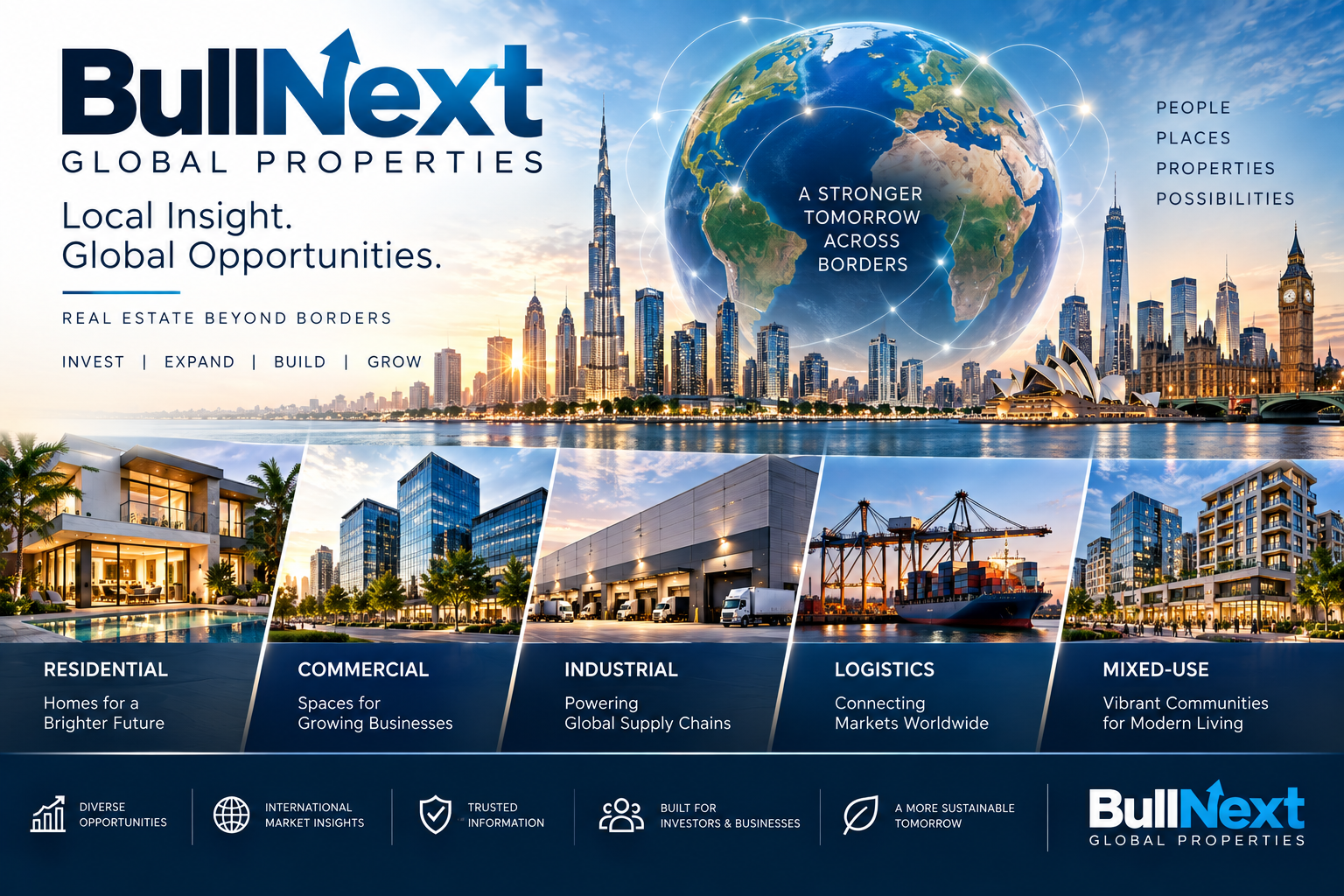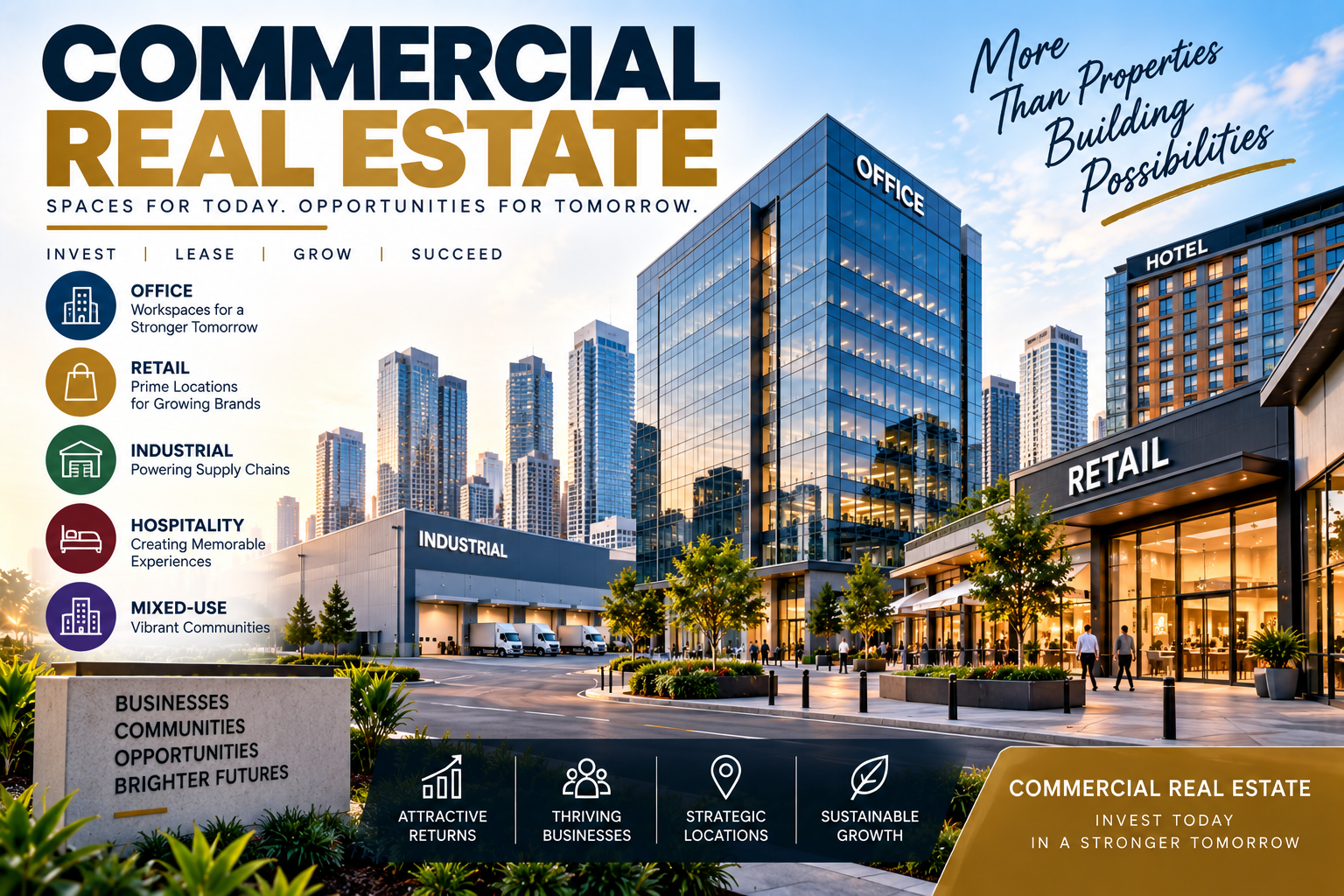

The real estate market is constantly changing as buyers, sellers, investors, developers, and businesses respond to economic conditions and changing consumer needs. Property remains an important asset for millions of people, whether it is purchased as a family home, a rental property, a commercial space, or a long-term investment.
Understanding real estate requires more than looking at property prices. A property's location, condition, rental potential, financing costs, local development, supply and demand, and future market conditions can all influence its overall value.
For anyone planning to buy or invest in property, learning how the real estate market works can make the decision-making process more practical and informed.
Understanding the Real Estate Market
The real estate market is made up of buyers and sellers exchanging different types of properties. Unlike some financial markets, real estate is highly dependent on local conditions.
Property prices can vary significantly between cities, neighborhoods, and even streets. Two homes with similar sizes may have very different values because of their locations, condition, surrounding amenities, or future development potential.
Supply and demand are major forces behind these differences. When demand is high and available properties are limited, prices may increase. When supply exceeds demand, buyers may have more opportunities to negotiate.
Economic conditions also influence the real estate market. Employment, household income, inflation, interest rates, and consumer confidence can affect people's ability and willingness to purchase property.
Different Types of Real Estate
Real estate covers a wide range of property categories.
Residential Real Estate
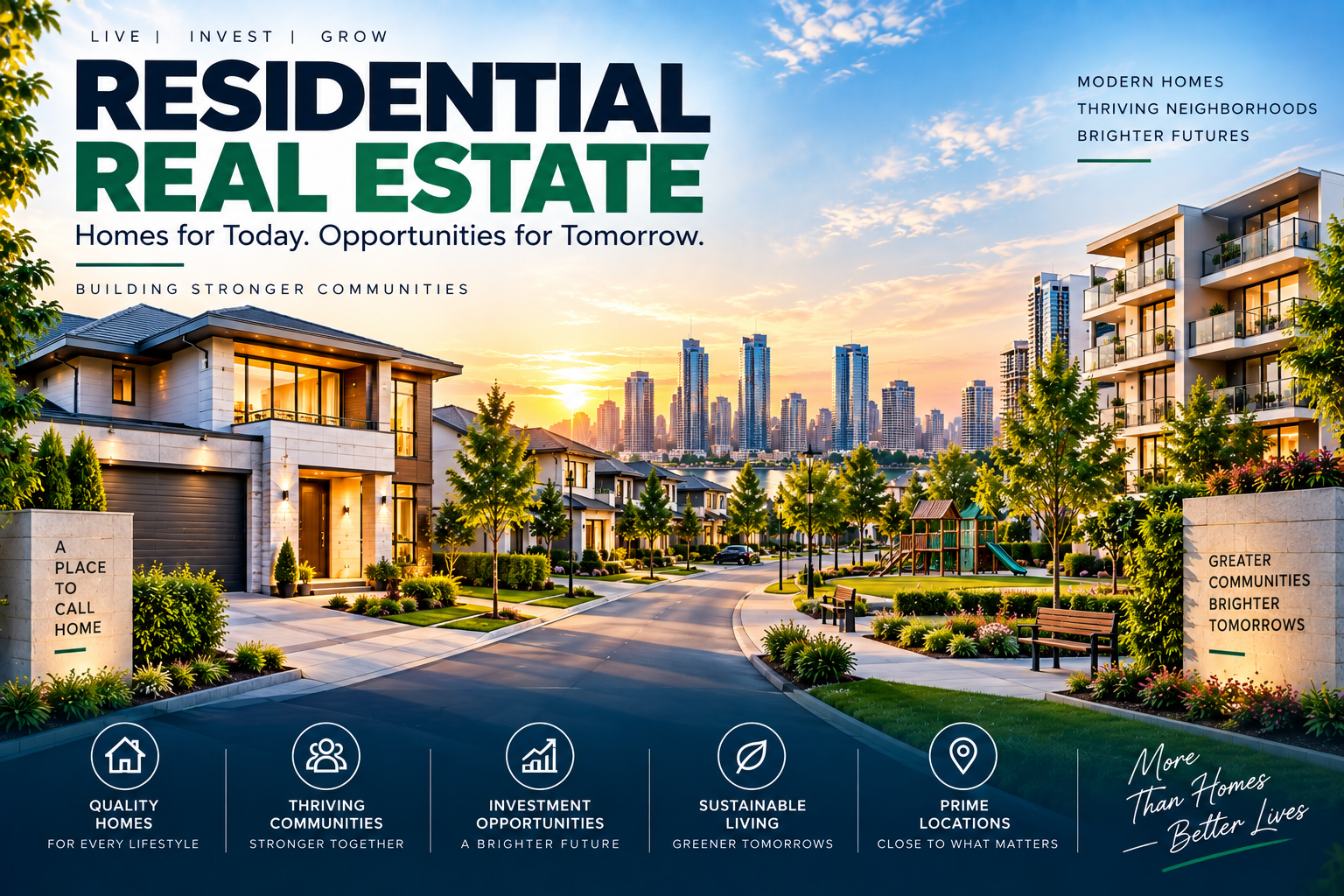
Residential real estate includes houses, apartments, condominiums, townhouses, and other properties designed for housing.
People purchase residential property for personal use or investment. Investors may rent these properties to generate income over time.
Commercial Real Estate
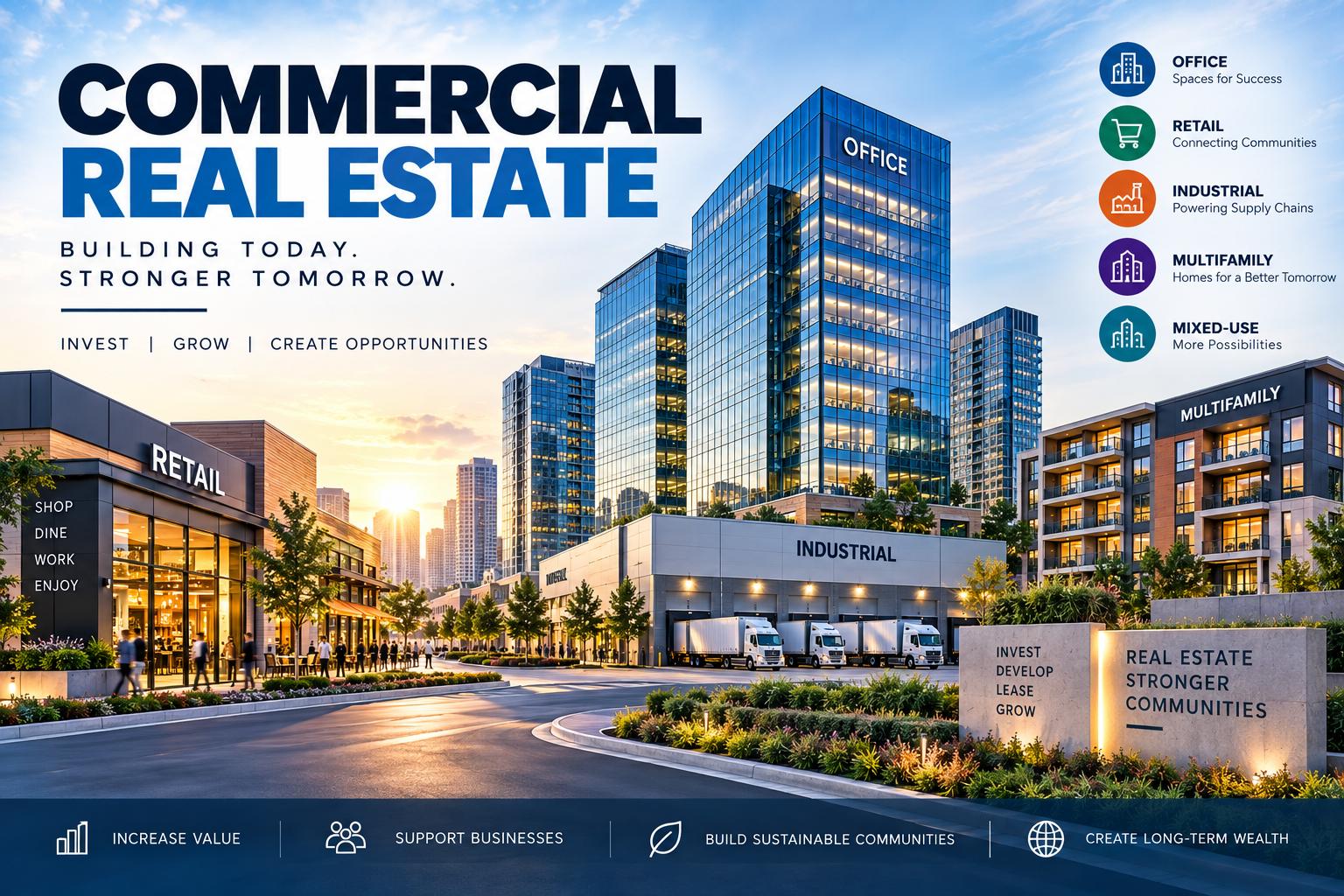
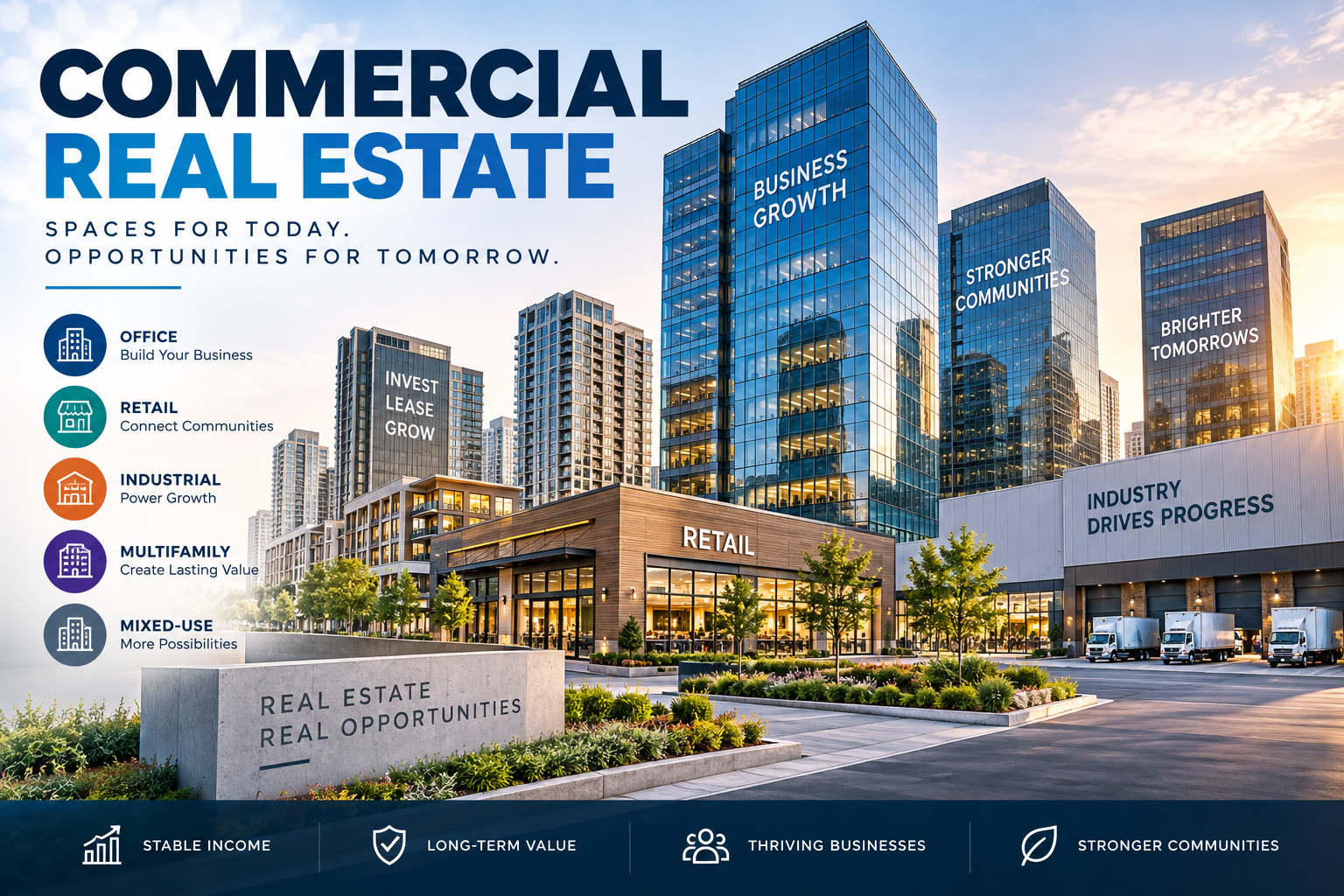
Commercial real estate includes offices, retail stores, shopping centers, restaurants, hotels, and other properties used for business purposes.
Commercial properties are often evaluated based on rental income, tenant quality, location, occupancy, and operating expenses.
Industrial Real Estate
Industrial real estate includes warehouses, factories, distribution centers, and logistics facilities.
Transportation access can be especially important for industrial properties because businesses often need efficient connections to highways, airports, ports, and other transportation networks.
Land
Land can be purchased for agricultural use, future development, residential construction, commercial projects, or investment.
The potential of a piece of land depends on factors such as zoning, infrastructure, accessibility, utilities, and development restrictions.
Why Location Is Critical
Location is one of the strongest factors affecting real estate value.
A property near schools, hospitals, shopping centers, public transportation, offices, and recreational facilities may be more attractive to buyers and tenants.
Accessibility is also important. Convenient road connections and transportation options can increase the usefulness of a property.
However, buyers should not focus only on what exists today. Future development can significantly change an area's potential.
Planned roads, business districts, residential communities, shopping centers, and public facilities may increase demand for properties in surrounding areas.
Factors That Influence Property Prices
Real estate prices are affected by a combination of factors rather than one single element.
Supply and Demand
Limited supply and strong demand can put upward pressure on prices. Higher inventory and weaker demand can create more favorable conditions for buyers.
Interest Rates
Interest rates influence the cost of borrowing. When mortgage rates increase, some buyers may reduce their budgets or delay purchasing property.
Economic Growth
Areas experiencing employment growth and business expansion may attract new residents and increase demand for housing and commercial properties.
Population Growth
Population growth can increase demand for homes, rental properties, retail spaces, offices, and other real estate.
Infrastructure
New roads, transportation systems, schools, hospitals, and commercial developments can affect the attractiveness of a neighborhood.
Buying Real Estate
Buying real estate is a major financial commitment, so preparation is essential.
Start by establishing a realistic budget. Consider not only the property's price but also taxes, legal fees, insurance, financing costs, maintenance, repairs, and utilities.
Once a budget is established, compare properties in several locations. Look at price, size, condition, amenities, accessibility, and potential future demand.
Avoid making a purchase simply because a property looks attractive. A detailed evaluation can reveal issues that aren't immediately obvious.
Property Inspection
A property inspection can help buyers understand the actual condition of a building.
Important areas to examine may include:
Foundation and structure
Roof
Plumbing
Electrical systems
Heating and cooling
Windows and doors
Drainage
Signs of water damage
General maintenance
Identifying problems before purchase can help buyers negotiate repairs or reconsider the transaction.
Checking Property Documents
Legal due diligence is another important part of purchasing real estate.
Buyers should verify ownership and review relevant documentation before completing a transaction.
Depending on the location and property type, this may include ownership records, permits, taxes, boundaries, zoning information, restrictions, and other legal documents.
Professional legal advice can be valuable when a transaction involves complicated documentation.
Real Estate Investment
Real estate investment can take several forms.
An investor may purchase a residential property and rent it to tenants. Another investor may purchase commercial real estate to generate rental income from businesses.
Some investors focus on long-term appreciation by purchasing properties in locations they believe have strong future potential.
Others may renovate properties and sell them after improvements.
Each approach has different financial requirements and risks. Investors should select a strategy that matches their resources, objectives, and ability to manage risk.
Rental Property Investment
Rental properties can provide recurring income, but investors need to look beyond the monthly rent.
A property's expenses can include:
Mortgage payments
Property taxes
Insurance
Repairs
Maintenance
Property management
Utilities
Advertising
Vacancy periods
A property with high rent isn't necessarily a strong investment if operating expenses are also high.
Investors should calculate expected income and expenses before purchasing.
Real Estate Appreciation
Appreciation refers to an increase in property value over time.
Properties may appreciate because of population growth, improved infrastructure, limited supply, economic development, increased rental demand, or improvements to the property itself.
However, appreciation isn't guaranteed. Market conditions can change, and property values can decline.
Investors should therefore avoid relying entirely on future price increases when evaluating a real estate purchase.
Financing a Property
Financing is an important part of many real estate transactions.
Buyers may use mortgages or other forms of financing to purchase property. Before accepting a loan, they should understand the interest rate, repayment period, fees, down payment requirements, and total borrowing cost.
It's also important to consider whether the monthly payment remains affordable if personal expenses increase or financial circumstances change.
Maintaining an emergency reserve can provide additional protection against unexpected costs.
Working With Real Estate Professionals
Real estate transactions often involve multiple professionals.
A real estate agent can help buyers find suitable properties and negotiate transactions. Sellers may work with agents to market their properties and attract potential buyers.
Property inspectors can identify physical problems, while appraisers can provide estimates of market value.
Lawyers can assist with contracts and legal documentation, and financial professionals may help buyers understand financing and investment considerations.
Using qualified professionals can be particularly useful when dealing with complex or high-value transactions.
Technology and Modern Real Estate
Technology has changed almost every stage of the real estate process.
Buyers can search for properties online, compare listings, view photographs, explore virtual tours, and communicate with agents without being physically present.
Property owners and real estate companies use digital marketing to reach buyers and tenants. Data analytics can help identify market trends and evaluate property performance.
Artificial intelligence is also being used in areas such as property recommendations, customer service, market analysis, and property management.
As technology continues to develop, digital tools are likely to become even more important to the real estate industry.
Sustainable Real Estate
Environmental considerations are becoming increasingly important in property development.
Energy-efficient buildings can reduce energy consumption and potentially lower operating costs.
Sustainable real estate may include features such as solar energy, efficient lighting, water-saving systems, improved insulation, smart energy controls, and environmentally responsible construction materials.
These features can improve building efficiency while potentially making properties more attractive to environmentally conscious buyers and tenants.
Common Real Estate Mistakes
One of the biggest mistakes buyers make is failing to research the local market.
A property can appear inexpensive but may have limited demand, high maintenance costs, or poor resale potential.
Another common mistake is exceeding a realistic budget. Buyers should account for unexpected expenses rather than using every available dollar for the purchase.
Skipping a property inspection can also create problems, particularly with older buildings.
Finally, buyers should avoid making decisions based solely on emotions or short-term market excitement.
How to Make Smarter Real Estate Decisions
A successful property decision begins with clear objectives.
Ask yourself what you want to achieve. Are you looking for a home, rental income, business space, or long-term investment?
Next, establish your budget and research the local market.
Compare multiple properties and evaluate their location, condition, price, expenses, and potential future demand.
Before completing the transaction, review the property's legal documents and consider professional inspections and advice.
Taking these steps can help buyers and investors make decisions based on facts rather than assumptions.
Future of the Real Estate Industry
The real estate industry will continue to evolve as technology, demographics, economic conditions, and consumer preferences change.
Urban growth may create new demand for housing and commercial property, while changing work patterns could continue to influence office space.
E-commerce and logistics may support demand for warehouses and distribution centers, while sustainability could become increasingly important in new developments.
Technology will likely remain a major force in property marketing, valuation, management, and investment analysis.
Understanding these changes can help buyers and investors prepare for future opportunities and risks.
Final Thoughts
Real estate can offer opportunities for homeowners, investors, landlords, businesses, and developers. However, successful property decisions require careful research and realistic financial planning.
Before buying or investing, consider the location, market conditions, property condition, financing, operating expenses, legal documentation, and future demand.
There is no universal formula for choosing the perfect property. The right decision depends on your goals, budget, risk tolerance, and long-term plans.
By taking a research-driven approach and avoiding rushed decisions, buyers and investors can better understand the opportunities available in the real estate market.
Frequently Asked Questions About Real Estate
What is real estate?
Real estate refers to land and permanent structures attached to it, including homes, apartments, offices, retail properties, warehouses, and other buildings.
What are the main types of real estate?
The main types are residential, commercial, industrial, and land. Each category serves different purposes and has different market and investment characteristics.
What affects real estate prices?
Real estate prices can be influenced by location, supply and demand, interest rates, economic conditions, population growth, infrastructure, property condition, and future development.
Is real estate a good investment?
Real estate can potentially generate rental income and appreciate over time, but it also involves risks such as vacancies, maintenance costs, financing expenses, and market declines.
What should I consider before buying real estate?
Consider your budget, location, property condition, financing costs, taxes, maintenance expenses, legal documentation, neighborhood quality, and future demand.
Why is location important in real estate?
Location can influence property demand, accessibility, rental potential, and resale value. Nearby schools, hospitals, transportation, businesses, and other amenities can affect a property's appeal.
Can rental property generate income?
Yes. Rental properties can generate income from tenants, but investors must subtract expenses such as maintenance, insurance, taxes, management fees, financing costs, and vacancies.
What is property appreciation?
Property appreciation is an increase in the market value of real estate over time. It can be influenced by demand, location, infrastructure, population growth, and economic development.
Should I inspect a property before buying?
Yes. A professional inspection can help identify structural, electrical, plumbing, roofing, or other issues that may result in significant future expenses.
How does technology affect real estate?
Technology has made it easier to search for properties, conduct virtual tours, market listings, analyze data, manage properties, and communicate with buyers and tenants.
Can real estate prices fall?
Yes. Property prices can decline because of economic downturns, higher interest rates, weak demand, oversupply, or changes in local market conditions.
What are common mistakes when investing in real estate?
Common mistakes include failing to research the market, underestimating expenses, ignoring property inspections, overlooking legal documents, taking on excessive debt, and assuming property prices will always increase.