Commercial real estate (CRE) is an important part of the property market, providing spaces for businesses, investors, retailers, offices, warehouses, and other commercial activities. Unlike residential real estate, which focuses primarily on homes and living spaces, commercial real estate is designed to generate income through business operations, leasing, or property appreciation.
With changing business needs and evolving market conditions, commercial properties continue to attract investors looking for long-term opportunities. Understanding the different types of commercial real estate and the factors that influence their value can help investors and businesses make better property decisions.
What Is Commercial Real Estate?
Commercial real estate refers to properties used primarily for business or income-generating purposes. These properties can range from small retail units to large office buildings, industrial facilities, and shopping centers.
Commercial properties are commonly purchased by investors who generate returns through rental income, property appreciation, or both. Businesses may also purchase commercial properties to establish permanent locations for their operations.
Types of Commercial Real Estate
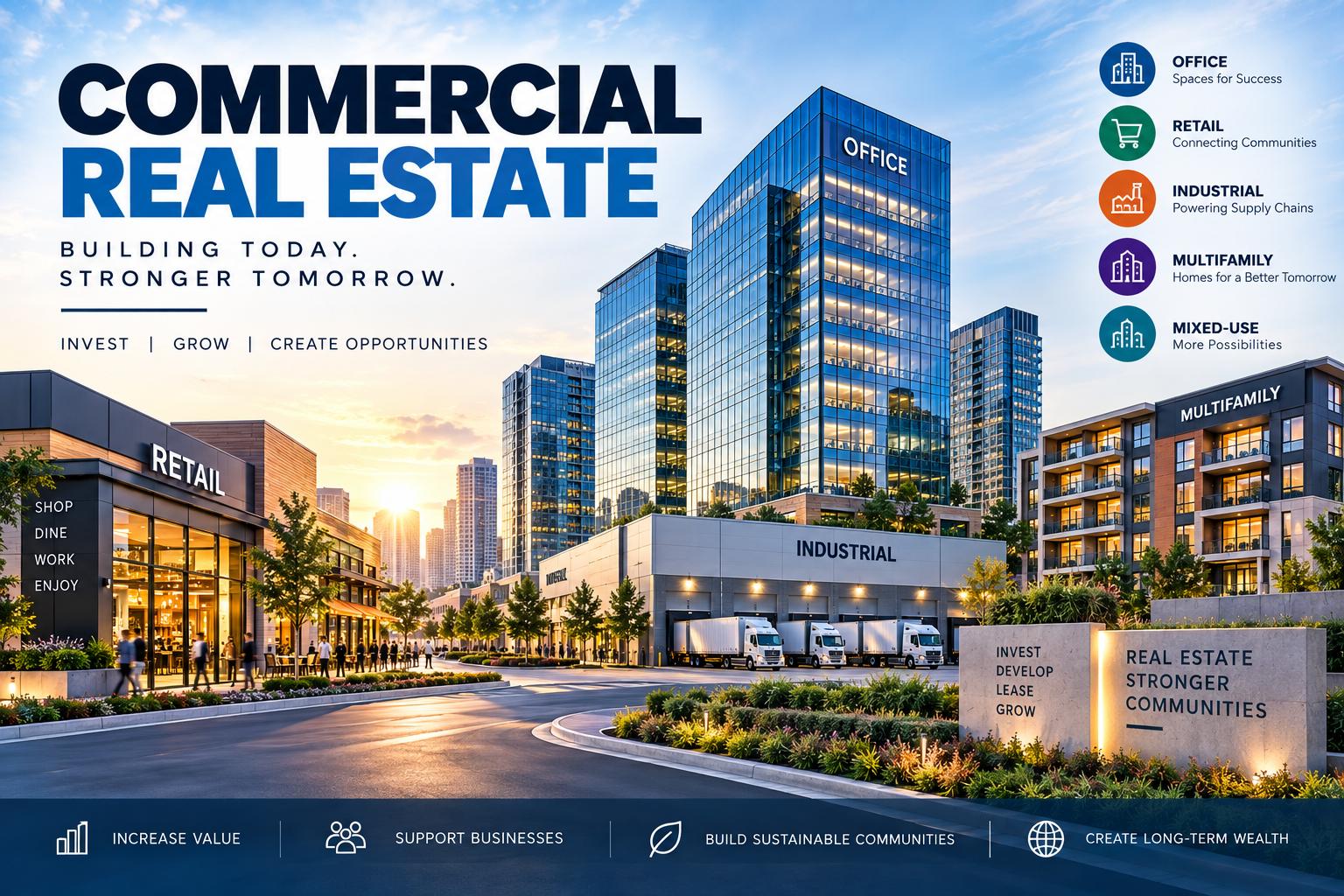
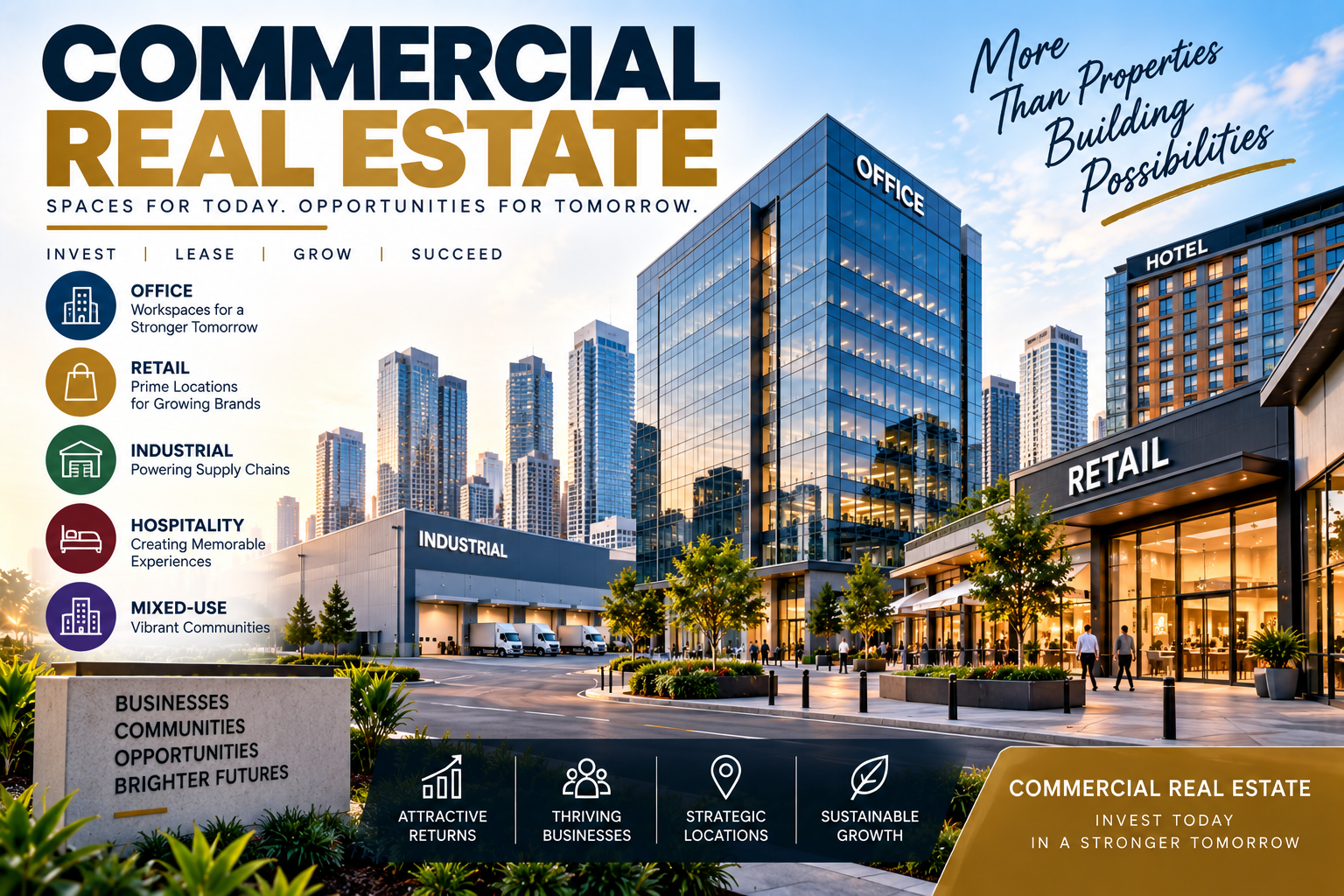
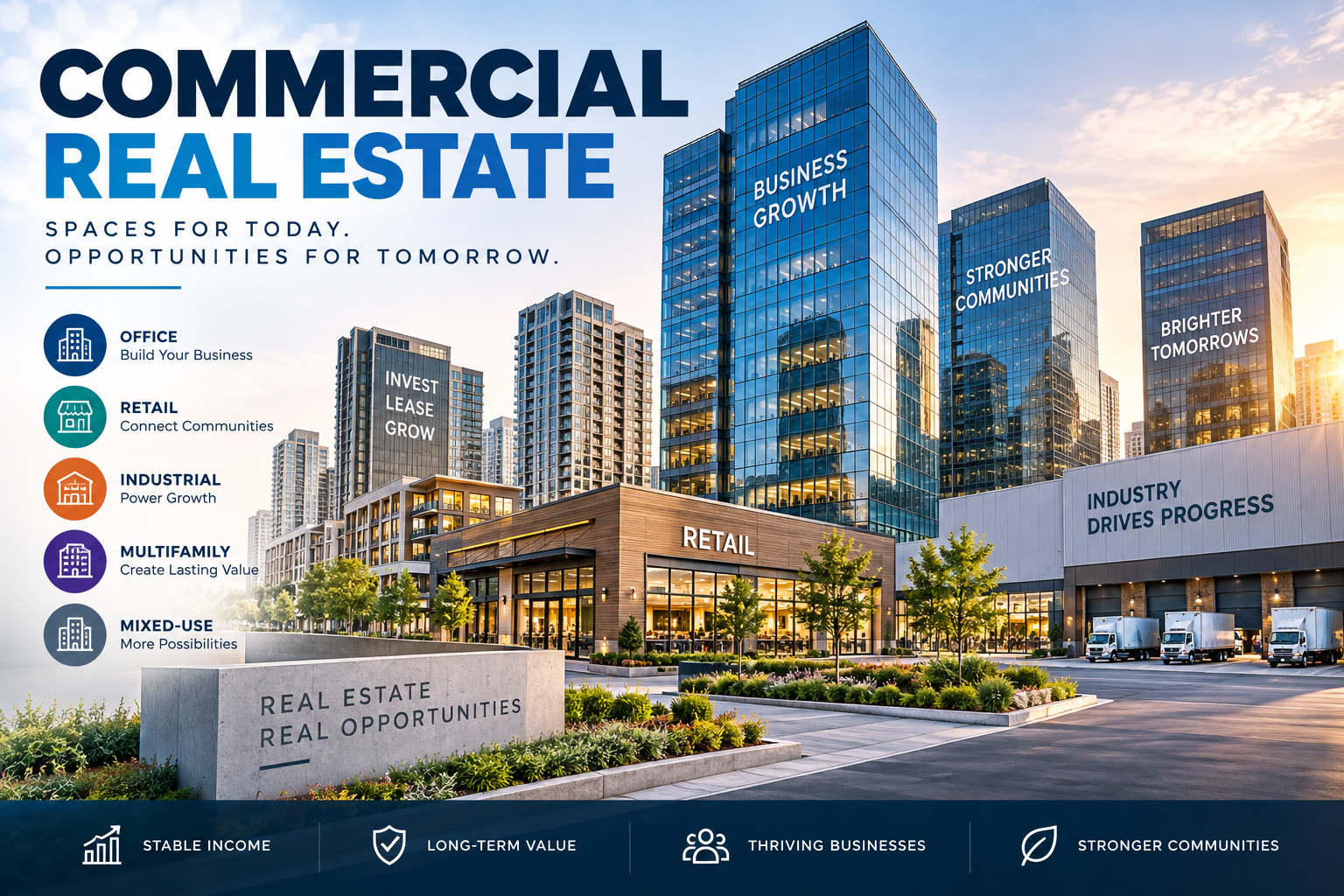
There are several major categories of commercial real estate:
1. Office Buildings
Office properties provide workplaces for companies, professionals, and organizations. They can include small office spaces, business centers, corporate buildings, and large office complexes.
Location, accessibility, building quality, amenities, and demand from businesses can significantly influence office property values.
2. Retail Properties
Retail real estate includes shopping centers, standalone stores, malls, and other properties designed for selling products and services.
For retail properties, factors such as foot traffic, visibility, parking, surrounding businesses, and local demographics can have a major impact on performance.
3. Industrial Properties
Industrial real estate includes warehouses, manufacturing facilities, distribution centers, and logistics properties. The growth of e-commerce and supply-chain operations has increased the importance of well-located industrial properties in many markets.
Access to highways, ports, railways, airports, and major population centers can make industrial properties particularly attractive.
4. Multifamily Properties
Large residential properties such as apartment buildings are often considered a commercial real estate category because they contain multiple rental units and are typically operated as income-producing investments.
Investors often evaluate multifamily properties based on occupancy, rental income, operating expenses, and the strength of the local rental market.
5. Mixed-Use Properties
Mixed-use developments combine multiple property types in one project. A building might include retail stores on the ground floor, offices above them, and residential apartments on higher floors.
These developments can provide convenience for occupants while creating multiple potential sources of income for property owners.
Why Invest in Commercial Real Estate?
Commercial real estate can offer several potential advantages for investors.
Rental income: Commercial properties can generate regular income through leases with tenants.
Long-term appreciation: Properties in desirable locations may increase in value over time.
Portfolio diversification: Real estate can provide diversification alongside stocks, bonds, and other investments.
Business demand: Well-located commercial properties can benefit from continued demand from businesses and consumers.
Potential inflation protection: Depending on lease structures and market conditions, rental rates may increase over time, potentially helping property owners manage rising costs.
However, commercial real estate is not risk-free. Market conditions, vacancies, financing costs, maintenance expenses, and economic downturns can affect investment returns.
Factors to Consider Before Buying Commercial Property
Before purchasing a commercial property, investors should carefully evaluate several factors.
Location
Location is one of the most important considerations in commercial real estate. A property near major roads, transportation networks, business districts, residential communities, or other important facilities may have stronger demand.
Property Condition
The physical condition of a building can affect both its value and operating costs. Investors should evaluate the structure, electrical systems, plumbing, roofing, HVAC systems, parking, and other major components.
Rental Demand
Strong tenant demand can help reduce vacancy risk. Researching local businesses, employment trends, population growth, and competing properties can provide valuable insight into future demand.
Operating Expenses
Commercial properties can involve significant expenses, including property taxes, insurance, maintenance, utilities, management fees, and repairs. Understanding these costs is essential when calculating potential returns.
Financing
Interest rates and loan terms can have a major impact on the profitability of a commercial real estate investment. Investors should compare financing options and understand how changes in borrowing costs could affect cash flow.
Lease Agreements
Existing leases should be carefully reviewed before purchasing an occupied property. Lease duration, rental rates, renewal options, tenant responsibilities, and escalation clauses can all influence the property's income potential.
Commercial Real Estate Market Trends
The commercial real estate industry continues to evolve as businesses adapt to new technologies, consumer behavior, and workplace preferences.
Flexible office arrangements have changed how companies use traditional office spaces. At the same time, logistics and warehouse properties remain important because businesses increasingly rely on efficient distribution networks.
Retail properties are also adapting by focusing on experiences, convenience, and locations that combine shopping with dining and other services.
Technology is becoming increasingly important in commercial property management. Smart building systems, digital leasing platforms, energy-management tools, and data analytics can help property owners improve efficiency and understand tenant needs.
How to Evaluate a Commercial Real Estate Investment
Investors commonly examine several financial metrics when evaluating a property.
Net Operating Income (NOI): This measures the income generated by a property after operating expenses but before financing costs and taxes.
Capitalization Rate (Cap Rate): The cap rate compares a property's NOI with its purchase price and is commonly used to compare income-producing properties.
Cash Flow: Investors should determine how much money remains after operating expenses and debt payments.
Occupancy Rate: A higher occupancy rate can indicate strong tenant demand, although the quality and financial strength of tenants are also important.
A thorough financial analysis should consider both expected income and potential expenses rather than relying on property price alone.
The Future of Commercial Real Estate
The future of commercial real estate will likely be influenced by technology, changing consumer habits, urban development, economic conditions, and evolving business models.
Investors may increasingly focus on properties that offer flexibility, strong locations, efficient operations, and modern amenities. Properties that can adapt to changing tenant requirements may have an advantage in competitive markets.
At the same time, successful commercial real estate investing requires careful research. Market conditions can vary significantly between cities, neighborhoods, and property types, so investors should evaluate each opportunity individually.
Conclusion
Commercial real estate offers opportunities for businesses and investors across office, retail, industrial, multifamily, and mixed-use properties. While commercial property can provide rental income and potential long-term appreciation, it also involves risks that require careful planning.
Understanding location, tenant demand, operating costs, financing, leases, and market trends is essential before making a commercial real estate decision. With thorough research and a well-planned investment strategy, commercial real estate can become an important component of a diversified investment portfolio.
Frequently Asked Questions
What is commercial real estate?
Commercial real estate refers to properties primarily used for business or income-generating purposes, including offices, retail centers, warehouses, industrial facilities, and multifamily properties.
Is commercial real estate a good investment?
Commercial real estate can be a good investment for some investors, but returns and risks vary depending on property type, location, financing, tenants, and market conditions.
What are the main types of commercial real estate?
The main types include office, retail, industrial, multifamily, and mixed-use properties.
How does commercial real estate generate income?
Commercial properties generally generate income through rent paid by tenants. Investors may also benefit from property appreciation when the property increases in value.
What should I check before buying commercial property?
Investors should examine location, property condition, tenant demand, existing leases, operating expenses, financing terms, taxes, and potential future market conditions before purchasing.