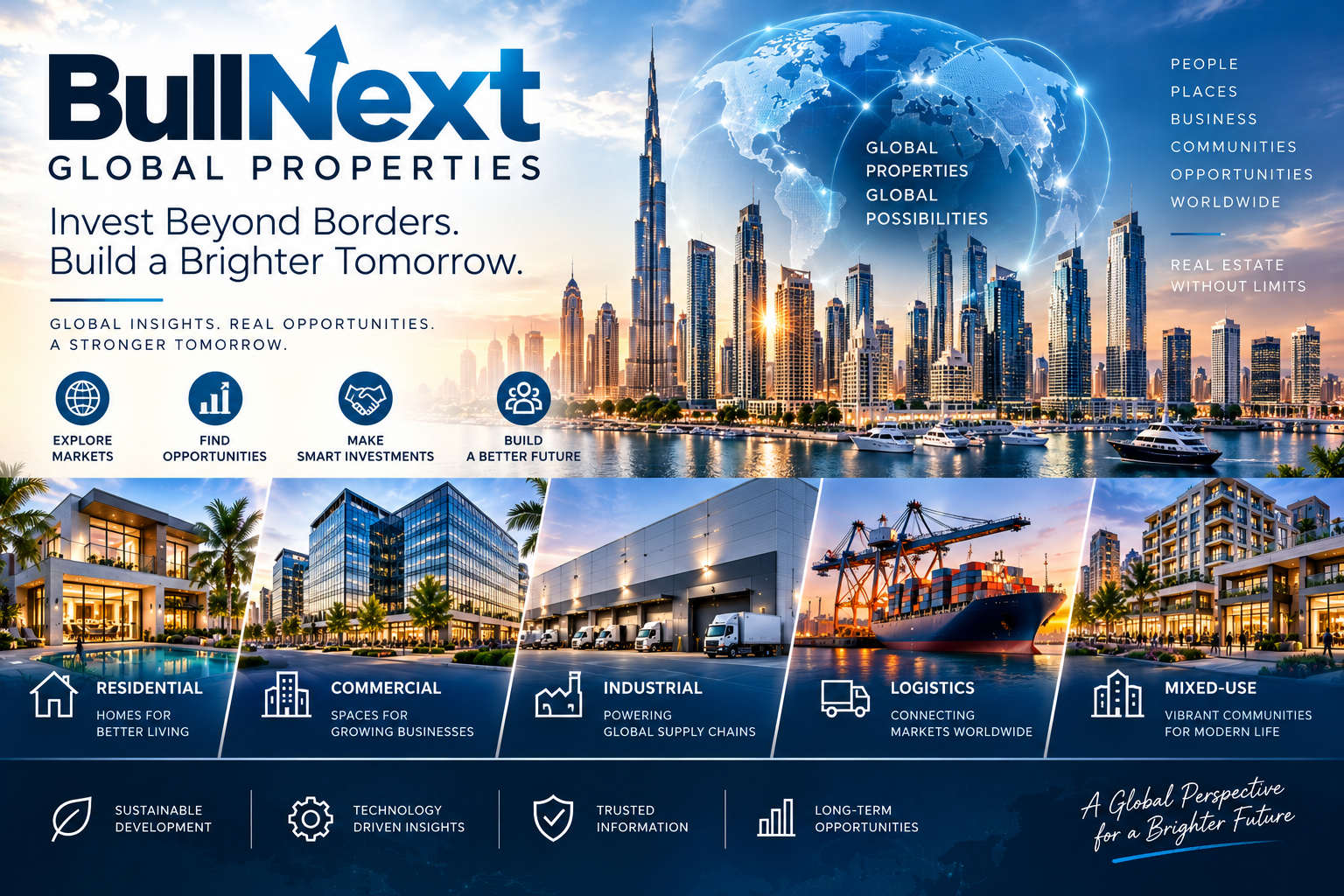
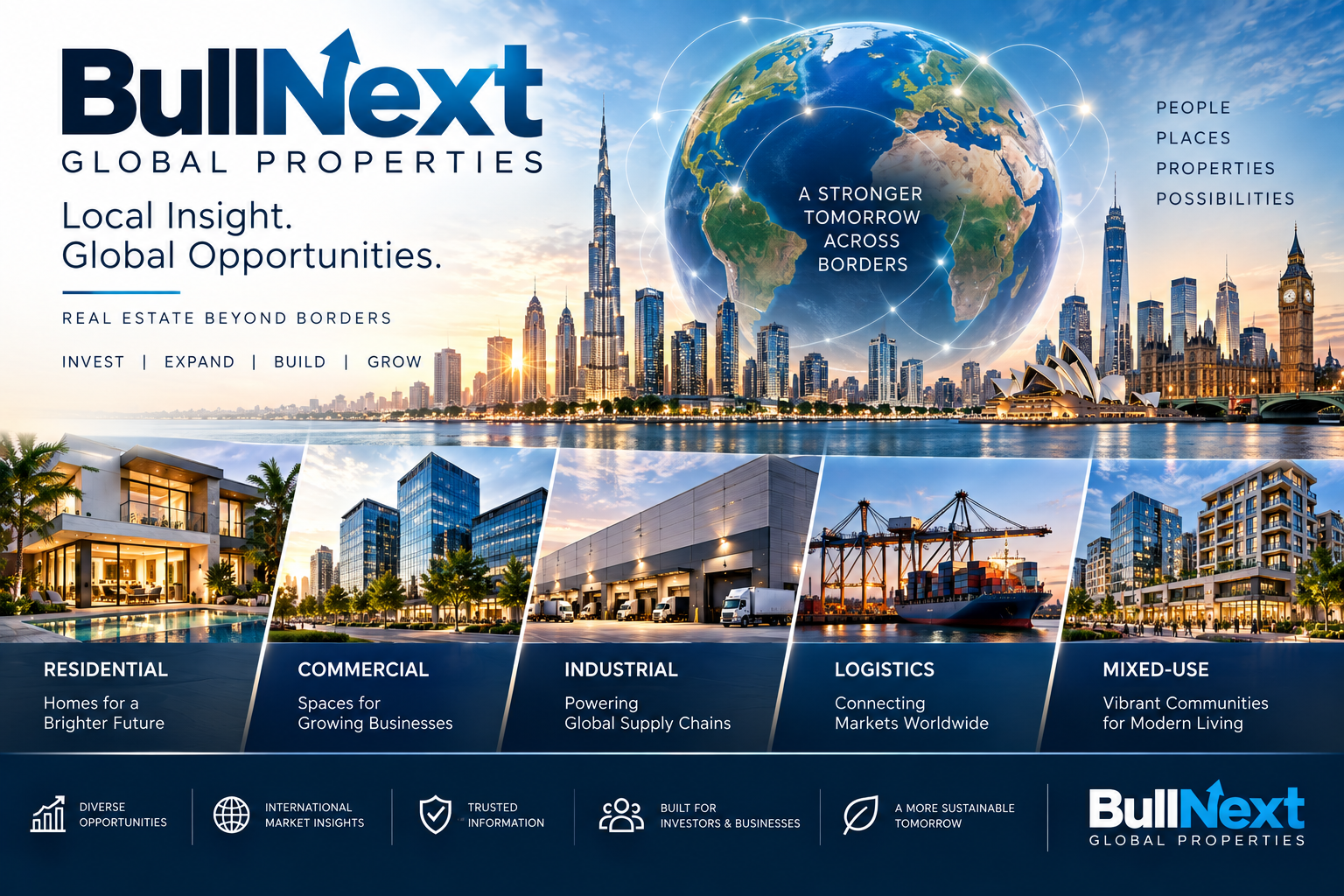
Real estate is one of the most important sectors of the global economy, connecting investors, businesses, developers, homeowners, and communities. As markets become increasingly interconnected, property opportunities are no longer limited to a single city or country.
BullNext Global Properties provides a dedicated perspective on the international real estate landscape, exploring property markets, investment opportunities, development trends, and the forces shaping real estate around the world. BullNext currently features Global Properties alongside its Commercial Real Estate and Residential Real Estate coverage.
What Is BullNext Global Properties?
BullNext Global Properties focuses on the broader world of international real estate. Global property can include residential homes, commercial buildings, office developments, retail centers, industrial facilities, warehouses, hotels, mixed-use developments, land, and development projects.
Each market has its own economic conditions, regulations, infrastructure, financing environment, and demand patterns. Understanding these differences is essential for anyone researching international property opportunities.
Why Global Real Estate Matters
Property markets can perform differently from one location to another.
A growing city may experience increasing demand for housing, while another region may attract businesses because of its expanding technology or manufacturing industries. A logistics hub may see demand for warehouses, while a major tourist destination may create opportunities in hospitality and retail.
This makes global real estate a diverse field with opportunities across many property types and markets.
Rather than focusing only on property prices, investors and businesses can examine broader factors such as population growth, employment, infrastructure, business activity, transportation, and long-term economic development.
Location Remains a Key Factor
Location continues to be one of the most important considerations in real estate.
The potential of a property can be influenced by its proximity to:
Transportation networks
Business districts
Schools and universities
Healthcare facilities
Shopping and entertainment
Airports and ports
Major highways
Employment centers
Public infrastructure
A property's ideal location also depends on its purpose. A warehouse may require excellent highway or port access, while a residential development may benefit more from proximity to schools, employment, retail, and public transportation.
Types of Global Properties
Residential Real Estate
Residential real estate includes houses, apartments, condominiums, and other housing developments.
Demand can be influenced by population growth, employment, household formation, affordability, migration, and changing lifestyle preferences.
Commercial Real Estate
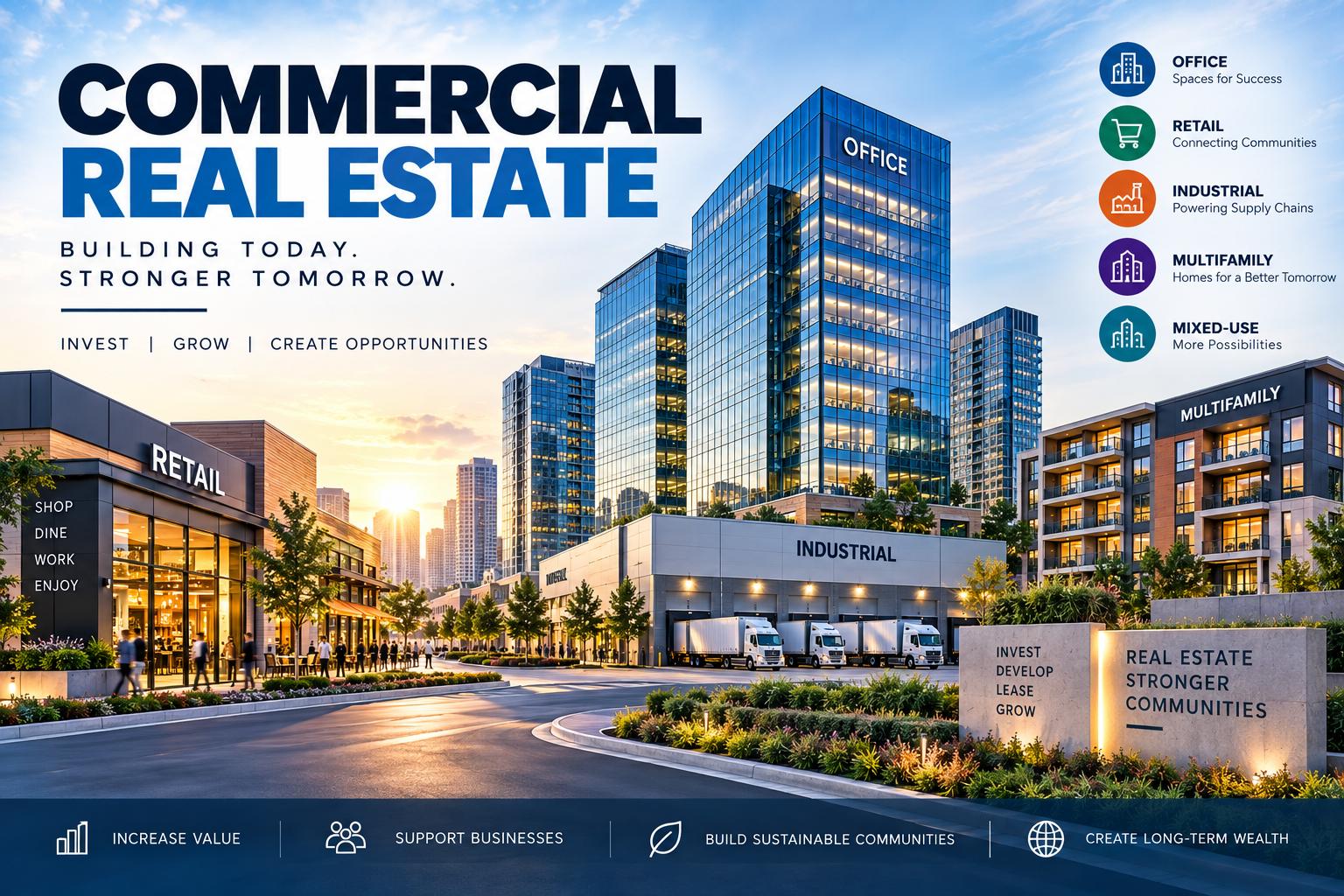
Commercial properties include office buildings, retail spaces, hotels, and other business-oriented properties.
Businesses typically consider accessibility, customer demand, employee convenience, operating costs, and local economic activity when selecting commercial locations.
Industrial and Logistics Properties
Industrial real estate includes warehouses, manufacturing facilities, distribution centers, and logistics properties.
As global supply chains and e-commerce continue to influence business operations, strategically located industrial properties can play an important role in supporting the movement of goods.
Mixed-Use Developments
Mixed-use developments combine several property functions within one project. They may include residential units, offices, retail stores, restaurants, entertainment, and public spaces.
These developments can create communities where people can live, work, shop, and access services within the same area.
Infrastructure and Property Development
Infrastructure can have a significant influence on real estate markets.
New highways, railways, airports, public transportation systems, ports, and utilities can improve connectivity and encourage development.
Areas that were previously difficult to access may become more attractive when new infrastructure is introduced. For this reason, understanding both current infrastructure and planned development can be important when researching property markets.
Technology Is Changing Real Estate
Technology has transformed how people search for, evaluate, purchase, and manage property.
Digital platforms allow investors and buyers to research international markets without immediately traveling to a location. Virtual tours, digital documentation, online property management systems, data analytics, and automated communication are becoming increasingly common.
Artificial intelligence is also being explored for market research, property comparisons, data processing, forecasting, customer service, and administrative tasks.
However, technology works best as a supporting tool. Local knowledge and professional advice remain important because real estate decisions involve legal, financial, physical, and cultural considerations.
Sustainability in Global Properties
Sustainability is becoming an increasingly important consideration in property development and management.
Developers and property owners may focus on:
Energy efficiency
Renewable energy
Water conservation
Sustainable construction materials
Waste reduction
Smart energy systems
Environmentally responsible design
Sustainable buildings can potentially reduce operating costs while responding to changing expectations from tenants, buyers, businesses, and communities.
Understanding International Property Regulations
Buying property internationally can involve regulations that differ significantly from those in an investor's home country.
Potential considerations include:
Property ownership requirements
Foreign investment rules
Property taxes
Zoning regulations
Rental restrictions
Development requirements
Financing rules
Reporting obligations
Before making an international property decision, buyers and investors should seek appropriate legal, tax, and financial advice.
Currency and Financial Considerations
International property transactions can introduce currency risk.
When a property is purchased in a foreign currency, changes in exchange rates can affect the investment's value when converted into the buyer's home currency.
Investors should also consider purchase costs, taxes, financing, insurance, maintenance, property management, and other ongoing expenses when evaluating an international property.
The Importance of Due Diligence
Thorough research is essential before purchasing property, particularly in an unfamiliar market.
Due diligence may include reviewing:
Ownership: Confirm who legally owns the property and whether there are ownership restrictions.
Property condition: Inspect the building, infrastructure, and major systems.
Legal status: Check zoning, permits, disputes, and other legal requirements.
Market demand: Understand rental demand, buyer activity, vacancy, and competing properties.
Financial obligations: Calculate taxes, fees, financing costs, maintenance, and management expenses.
Exit strategy: Consider how and when the property could potentially be sold.
The Role of Local Expertise
International research can identify promising markets, but local expertise can provide valuable insight into conditions that may not be obvious from online research.
Local professionals can help buyers understand neighborhood conditions, market pricing, regulations, property documentation, construction standards, rental demand, and cultural expectations.
Combining global research with local knowledge can create a more informed approach to international property decisions.
Global Real Estate and Business Expansion
Real estate is also important for businesses entering new markets.
An expanding company may require:
Corporate offices
Retail locations
Warehouses
Manufacturing facilities
Distribution centers
Hospitality properties
The right property can support employees, customers, suppliers, logistics, and broader business operations.
As companies expand internationally, property decisions can become an important part of their overall growth strategy.
Future Trends in Global Properties
The global property industry is likely to continue evolving alongside technology, demographics, infrastructure, economic development, and changing consumer preferences.
Several trends may influence future real estate markets:
Greater use of artificial intelligence
Smart building technology
Sustainable construction
Flexible workspaces
Growth in logistics and industrial property
Expansion of mixed-use communities
Digital property management
Changing residential preferences
Infrastructure-led development
Despite these changes, traditional real estate fundamentals will remain important. Location, demand, affordability, infrastructure, quality, regulation, and long-term value will continue to influence property decisions.
A Simple Framework for Evaluating Global Property
Anyone researching international real estate can follow a straightforward process:
Research → Compare → Verify → Calculate → Consult → Decide
Research
Study the market, economy, demographics, infrastructure, and property sector.
Compare
Compare different cities, neighborhoods, property types, and investment opportunities.
Verify
Check ownership records, legal requirements, property condition, and documentation.
Calculate
Estimate the full cost of ownership, including taxes, financing, maintenance, management, and other expenses.
Consult
Work with qualified local property, legal, tax, and financial professionals.
Decide
Choose opportunities that match your objectives, budget, and risk tolerance.
Conclusion
BullNext Global Properties represents a broader look at the international real estate landscape, covering the factors that influence property opportunities across different markets.
From residential and commercial properties to industrial, logistics, and mixed-use developments, global real estate offers a wide range of possibilities for investors, businesses, developers, and property professionals.
However, successful international property decisions require more than identifying an attractive building or market. Understanding location, demand, infrastructure, regulations, financing, currency, sustainability, and long-term economic trends is essential.
The combination of global awareness and local expertise can help create a stronger foundation for making informed real estate decisions.
As cities develop, businesses expand, technology advances, and communities evolve, global properties will remain an important part of the world's economic and investment landscape.