Real estate is an important part of the global economy and a major consideration for homeowners, businesses, landlords, and investors. People purchase properties for many different reasons, from finding a comfortable home to generating rental income or building long-term wealth.
The real estate industry includes residential homes, apartments, commercial buildings, industrial properties, warehouses, land, and mixed-use developments. Each type of property has different characteristics, costs, opportunities, and risks.
Whether you are planning to purchase your first home or considering real estate as an investment, understanding the market is an important first step. Property prices can be influenced by location, supply and demand, interest rates, economic conditions, infrastructure, population growth, and local development.
What Is Real Estate?
Real estate refers to land and permanent structures attached to it. This includes buildings, homes, offices, stores, warehouses, factories, and other property improvements.
The real estate industry covers a wide range of activities, including buying, selling, renting, developing, financing, managing, and valuing properties.
Real estate is generally divided into four main categories: residential, commercial, industrial, and land.
Residential Real Estate
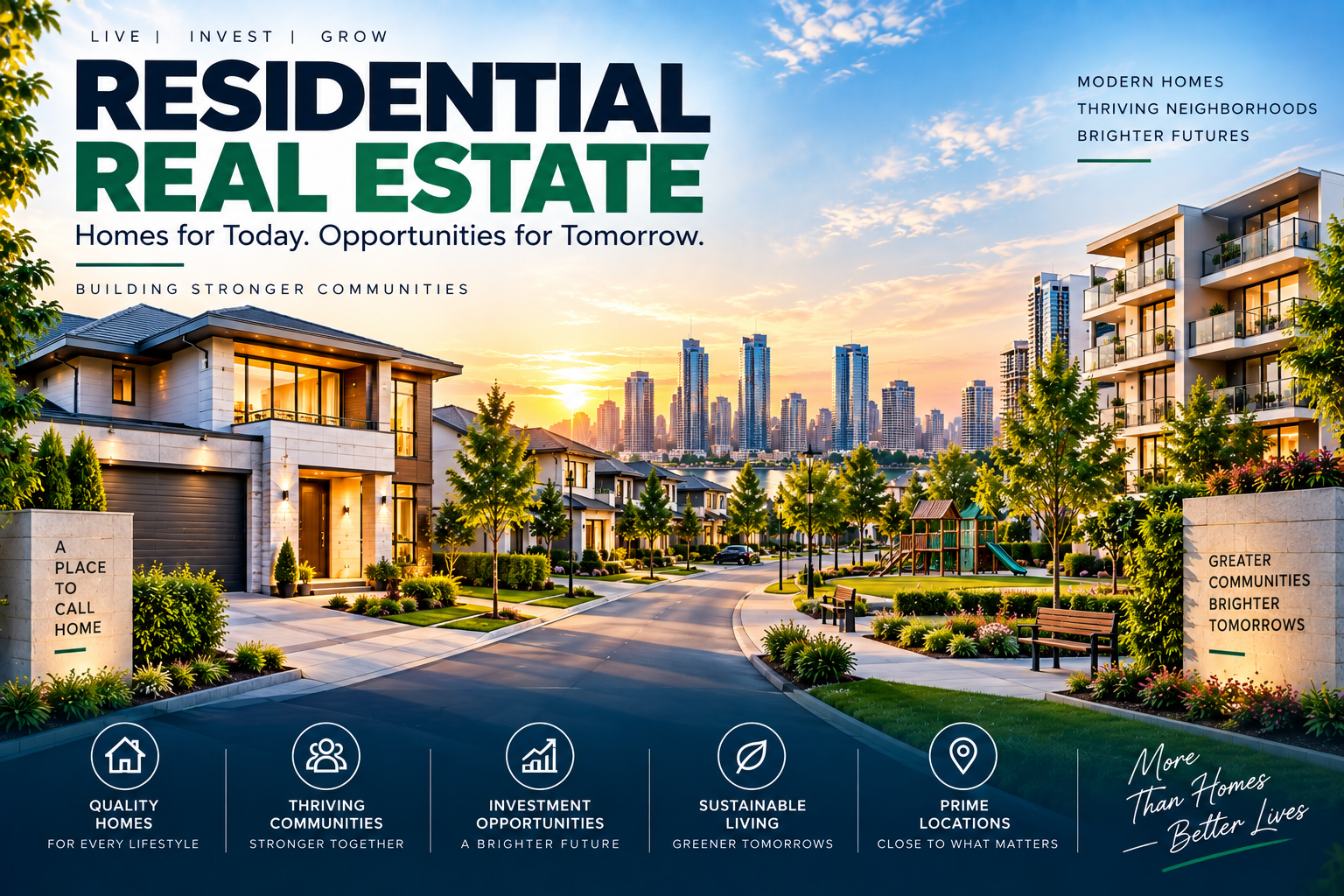
Residential real estate includes properties designed primarily for people to live in. Houses, apartments, condominiums, and townhouses are common examples.
People may purchase residential properties for personal use or as rental investments. Location, neighborhood quality, accessibility, property condition, and nearby amenities are important factors when evaluating residential real estate.
For families, schools, healthcare facilities, transportation, shopping, and safety may be especially important.
Commercial Real Estate
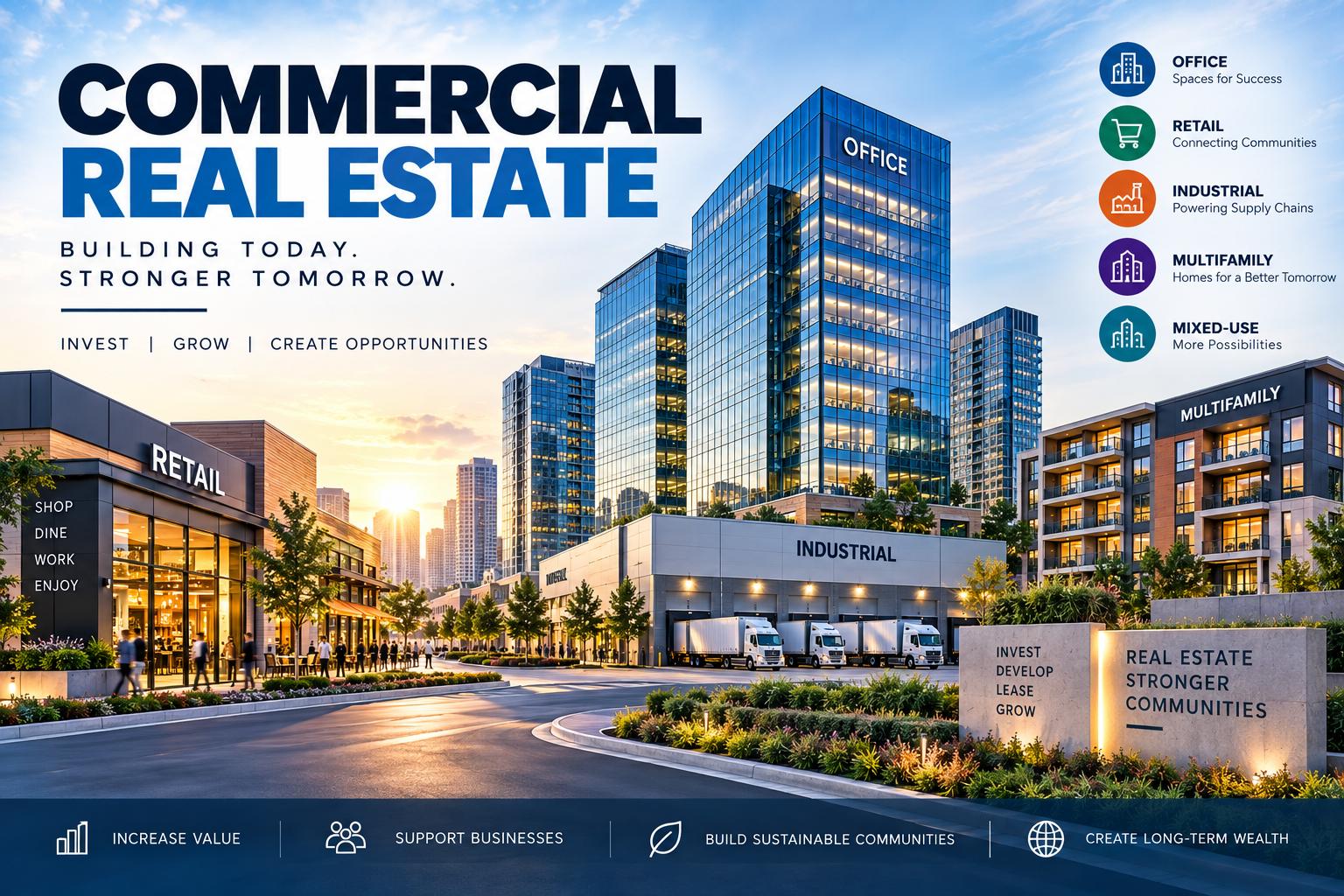
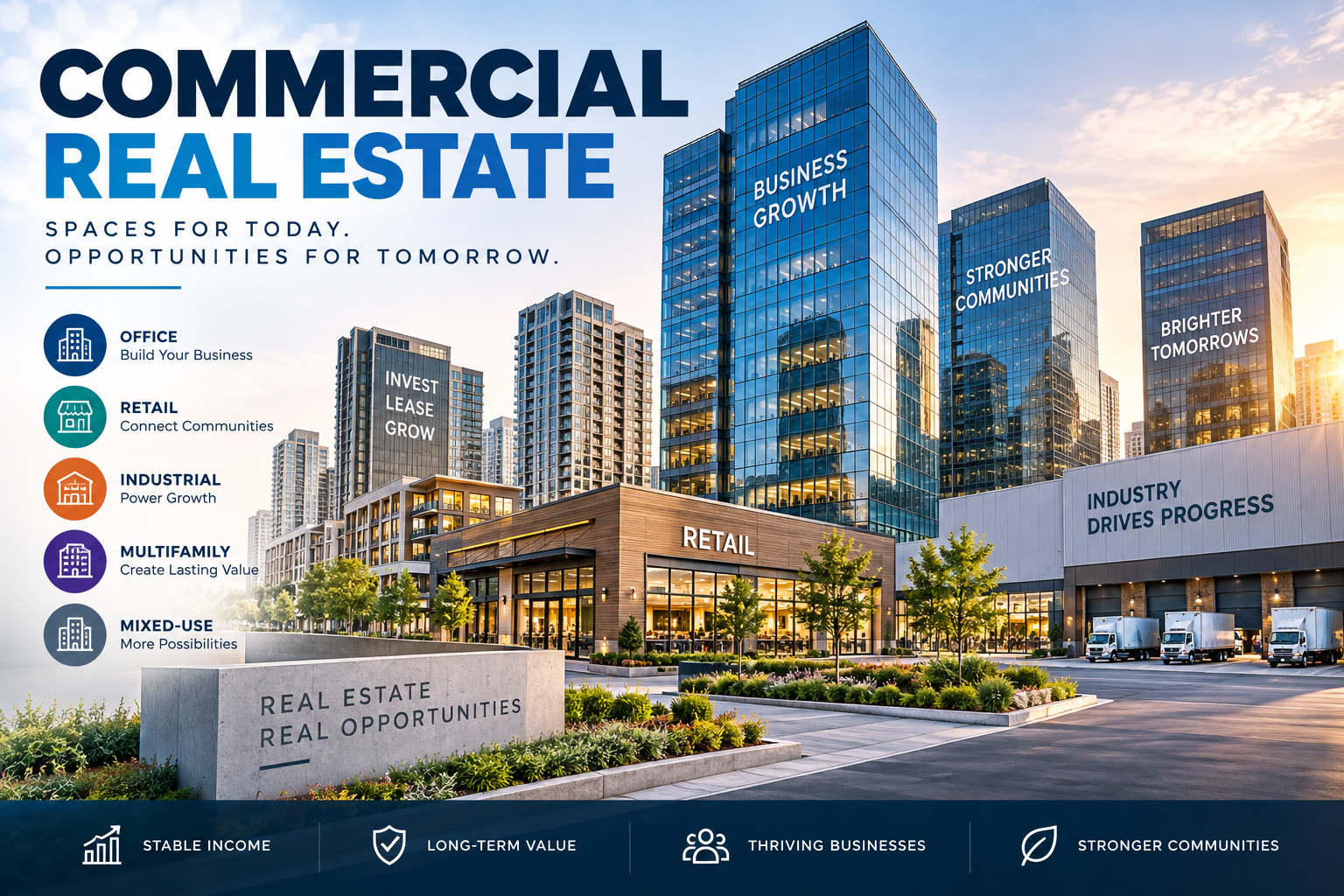
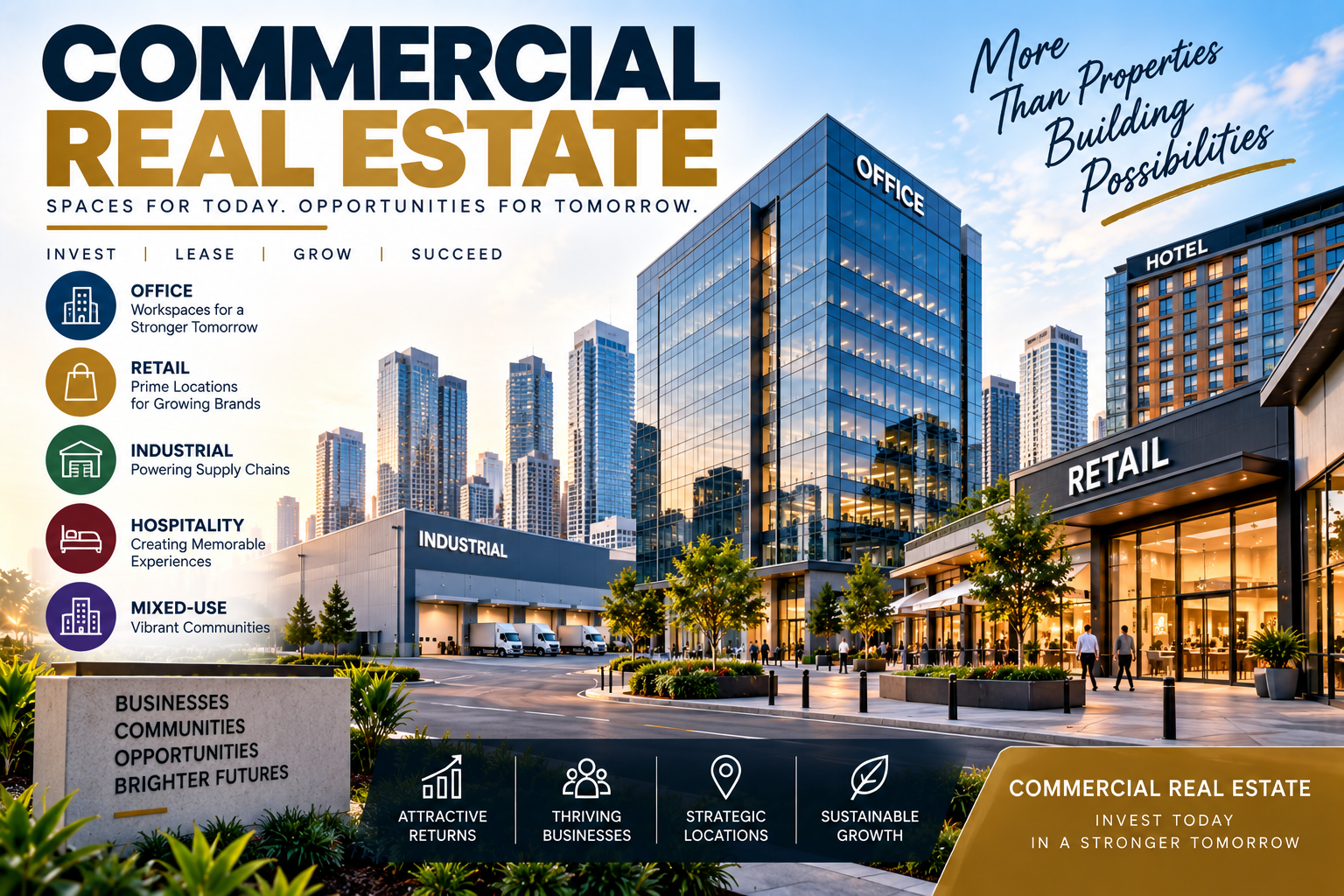
Commercial real estate consists of properties used primarily for business activities. Examples include office buildings, retail stores, restaurants, shopping centers, hotels, and professional facilities.
Commercial property is often evaluated based on factors such as rental income, tenant demand, occupancy, lease terms, operating costs, and location.
Businesses typically want locations that are accessible to customers and employees, making transportation and surrounding development important considerations.
Industrial Real Estate
Industrial real estate includes warehouses, factories, manufacturing facilities, distribution centers, and logistics properties.
The growth of e-commerce and supply-chain networks has increased the importance of strategically located industrial properties.
Access to highways, airports, ports, railways, and major population centers can affect the demand for industrial real estate.
Land and Development
Land is another major category of real estate. Buyers may purchase vacant land for future construction, agriculture, commercial development, or long-term investment.
Before purchasing land, it is important to understand zoning regulations, road access, utilities, environmental conditions, development restrictions, and future infrastructure plans.
Land can have significant potential, but its value and development possibilities depend heavily on local regulations and market conditions.
Why Location Matters in Real Estate
Location is one of the most important factors when evaluating real estate.
A building can be renovated, expanded, or redesigned, but its location remains fixed. Properties in desirable locations may attract stronger demand from buyers and tenants.
Important location factors can include:
Access to major roads
Public transportation
Schools and universities
Hospitals
Shopping centers
Employment areas
Restaurants and entertainment
Parks and recreational facilities
Neighborhood safety
Future development
Buyers should consider both current conditions and future changes in the area.
Understanding Supply and Demand
Supply and demand have a major influence on the real estate market.
When there are many buyers but limited properties available, competition can increase. This may lead to higher prices and faster transactions.
When property supply is high but demand is weaker, buyers may have more negotiating power.
Supply can be affected by construction activity, land availability, development regulations, and the number of existing properties on the market.
Demand can be influenced by population growth, employment, household income, interest rates, and local economic conditions.
Buying Real Estate
Buying real estate requires careful preparation.
Before beginning your property search, establish a realistic budget. Consider both the purchase price and the additional costs associated with property ownership.
These costs may include:
Down payment
Mortgage payments
Taxes
Insurance
Legal fees
Inspection costs
Repairs
Renovations
Maintenance
Utilities
Understanding the complete financial commitment can help buyers avoid purchasing a property that is difficult to afford.
How to Choose the Right Property
The right property depends on your personal or investment goals.
A family purchasing a home may prioritize space, schools, safety, and convenience. An investor may focus more heavily on rental demand, cash flow, property expenses, and future appreciation.
When comparing properties, examine the property's location, size, layout, age, construction quality, condition, parking, amenities, and surrounding neighborhood.
It is also useful to compare similar properties in the same area to determine whether the asking price appears reasonable.
Property Inspection
A property inspection can help buyers identify problems before completing a purchase.
An inspection may reveal issues involving:
Foundation and structure
Roof
Plumbing
Electrical systems
Drainage
Heating and cooling
Windows and doors
Water damage
General maintenance
Discovering problems early can give buyers an opportunity to negotiate repairs or reconsider the purchase.
Checking Legal Documents
Legal due diligence is an essential part of buying real estate.
Buyers should verify ownership and carefully review the relevant property documents before completing a transaction.
Depending on the location, this may include ownership records, property taxes, permits, boundaries, zoning information, restrictions, and other legal requirements.
When the transaction is complicated, professional legal advice can help identify potential issues.
Real Estate Investment
Real estate investment involves purchasing property with the goal of generating income, achieving appreciation, or both.
One popular strategy is rental property investment. An investor purchases a property and rents it to tenants, potentially generating recurring income.
Another approach is long-term investment. An investor may purchase property in an area expected to experience population growth, infrastructure improvements, or increased demand.
Some investors also purchase properties that require renovation and sell them after improvements.
Each strategy has different costs and risks, so investors should choose an approach that fits their financial goals and risk tolerance.
Rental Real Estate
Rental properties can provide an additional source of income, but investors should carefully calculate the property's financial performance.
Expenses may include:
Mortgage payments
Property taxes
Insurance
Maintenance
Repairs
Property management
Utilities
Marketing
Vacancy periods
A property's rental income should be compared with its total operating costs.
Investors should also maintain a financial reserve for unexpected repairs and periods when the property may not have a tenant.
Understanding Property Value
Property valuation helps buyers and sellers understand whether a property is reasonably priced.
Value can be influenced by location, size, condition, age, design, amenities, rental income, and comparable sales.
Comparing similar properties can provide useful information about local market prices.
A professional appraisal may also provide an independent assessment of a property's value.
However, property values can change over time, and an appraisal does not guarantee future appreciation.
Financing Real Estate
Many property buyers use mortgages or other financing options.
Before taking a loan, buyers should understand the interest rate, repayment period, fees, down payment requirements, and total cost of borrowing.
A property that appears affordable based on its monthly payment may still be expensive over the entire loan period.
Buyers should also consider how changes in income, expenses, or interest rates could affect their ability to make future payments.
The Role of Real Estate Professionals
Real estate transactions can involve many different professionals.
Real estate agents can help buyers search for properties, arrange viewings, negotiate offers, and navigate transactions.
Property inspectors can assess physical conditions, while appraisers can estimate market value.
Lawyers can help review contracts and legal documentation, and financial professionals can provide guidance on financing and investment considerations.
Working with experienced professionals can be particularly helpful when dealing with complex or high-value transactions.
Technology in Real Estate
Technology has transformed the way people buy, sell, rent, and manage property.
Online real estate platforms allow buyers to search for properties, compare prices, view photographs, and explore locations.
Virtual tours can make it possible to view properties remotely, while digital communication can speed up interactions between buyers, sellers, agents, and tenants.
Real estate companies also use data analytics and artificial intelligence to analyze markets, improve property recommendations, manage customer relationships, and support decision-making.
Sustainable Real Estate
Sustainability is becoming increasingly relevant in property development and ownership.
Energy-efficient buildings can reduce resource consumption and potentially lower operating costs.
Sustainable properties may include solar energy systems, efficient lighting, water-saving fixtures, improved insulation, smart energy controls, and environmentally responsible construction materials.
These features can improve building efficiency and may appeal to buyers and tenants who prioritize sustainability.
Common Real Estate Mistakes
One of the most common mistakes is failing to research the local market.
Buyers may also underestimate the cost of ownership by focusing only on the purchase price.
Other common mistakes include:
Skipping a property inspection
Failing to check legal documents
Ignoring neighborhood conditions
Taking on excessive debt
Assuming prices will always rise
Making decisions based only on emotions
Failing to budget for repairs
Ignoring future development plans
Careful research and professional guidance can help reduce these risks.
Future of the Real Estate Industry
The real estate industry will continue to evolve as technology, demographics, economic conditions, and consumer preferences change.
Population growth may increase demand for housing in certain areas, while changing work patterns may influence office properties.
E-commerce can continue to support demand for warehouses and logistics facilities, while sustainability and energy efficiency may become increasingly important in property development.
Artificial intelligence and data analytics are also likely to play a larger role in property valuation, market research, marketing, and management.
Final Thoughts
Real estate offers opportunities for homeowners, investors, landlords, businesses, and developers. However, purchasing or investing in property requires careful planning and a clear understanding of the market.
Before making a decision, evaluate the property's location, condition, price, legal documentation, financing requirements, ongoing costs, and future potential.
Whether you are buying a home or exploring real estate investment, taking time to research your options can help you make a more informed decision.
The goal is not simply to purchase property. The goal is to choose real estate that fits your financial situation, personal needs, investment objectives, and long-term plans.
Frequently Asked Questions About Real Estate
What is real estate?
Real estate refers to land and permanent structures attached to it, including houses, apartments, offices, retail buildings, warehouses, and other properties.
What are the main types of real estate?
The main types are residential, commercial, industrial, and land. Each category has different uses, costs, risks, and investment opportunities.
Is real estate a good investment?
Real estate can potentially provide rental income and long-term appreciation. However, it also involves risks such as market declines, vacancies, maintenance expenses, financing costs, and unexpected repairs.
What factors affect real estate prices?
Property prices can be influenced by location, supply and demand, interest rates, economic conditions, population growth, employment, infrastructure, property condition, and future development.
Why is location important in real estate?
Location can influence demand, accessibility, rental potential, convenience, and resale appeal. Properties near schools, transportation, healthcare, employment centers, and other amenities may attract stronger demand.
What should I consider before buying real estate?
Consider your budget, location, property condition, financing costs, taxes, insurance, maintenance, legal documentation, neighborhood quality, and future demand.
Can rental real estate generate income?
Yes. Rental properties can generate income through tenant payments. However, investors should consider vacancies, maintenance, taxes, insurance, management costs, and financing expenses.
What is property appreciation?
Property appreciation refers to an increase in the market value of a property over time. Appreciation can be influenced by demand, location, infrastructure, economic development, and limited supply, but it is not guaranteed.
Should I inspect a property before purchasing it?
Yes. A professional inspection can identify structural, electrical, plumbing, roofing, drainage, and other problems that may not be obvious during a normal property viewing.
How can I determine whether a property is fairly priced?
Buyers can compare similar properties, review recent sales, examine local market conditions, and consider the property's location, condition, size, and features. A professional appraisal can also provide an independent valuation.
How does technology affect real estate?
Technology has made it easier to search for properties, conduct virtual tours, market listings, analyze data, communicate with clients, and manage properties. Artificial intelligence is also increasingly being used in the industry.
Can real estate prices decrease?
Yes. Property prices can fall because of weaker demand, economic downturns, higher interest rates, oversupply, or changes in local market conditions.
What are common real estate investment mistakes?
Common mistakes include failing to research the market, underestimating expenses, ignoring inspections, overlooking legal documents, taking on excessive debt, and assuming property values will always increase.