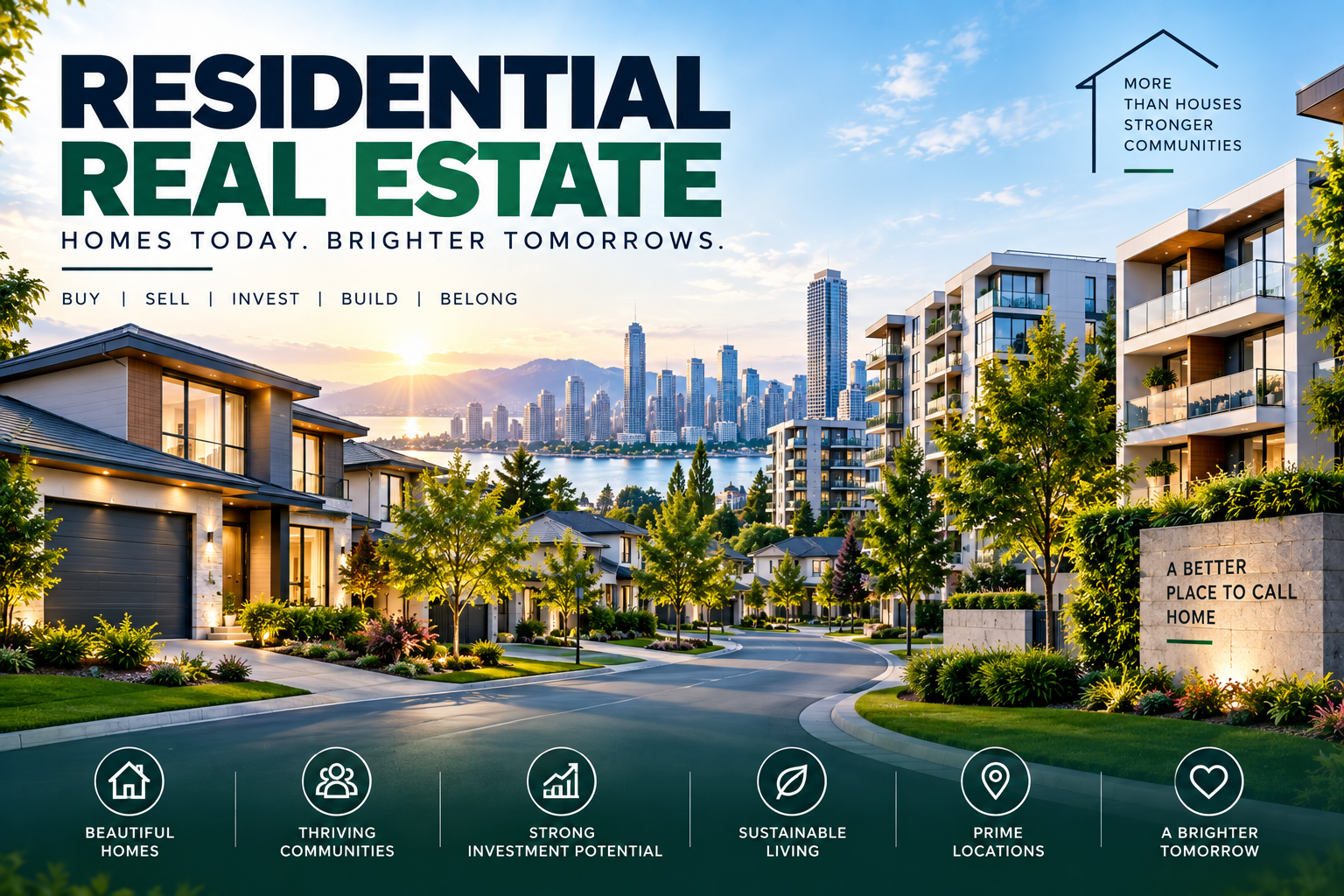
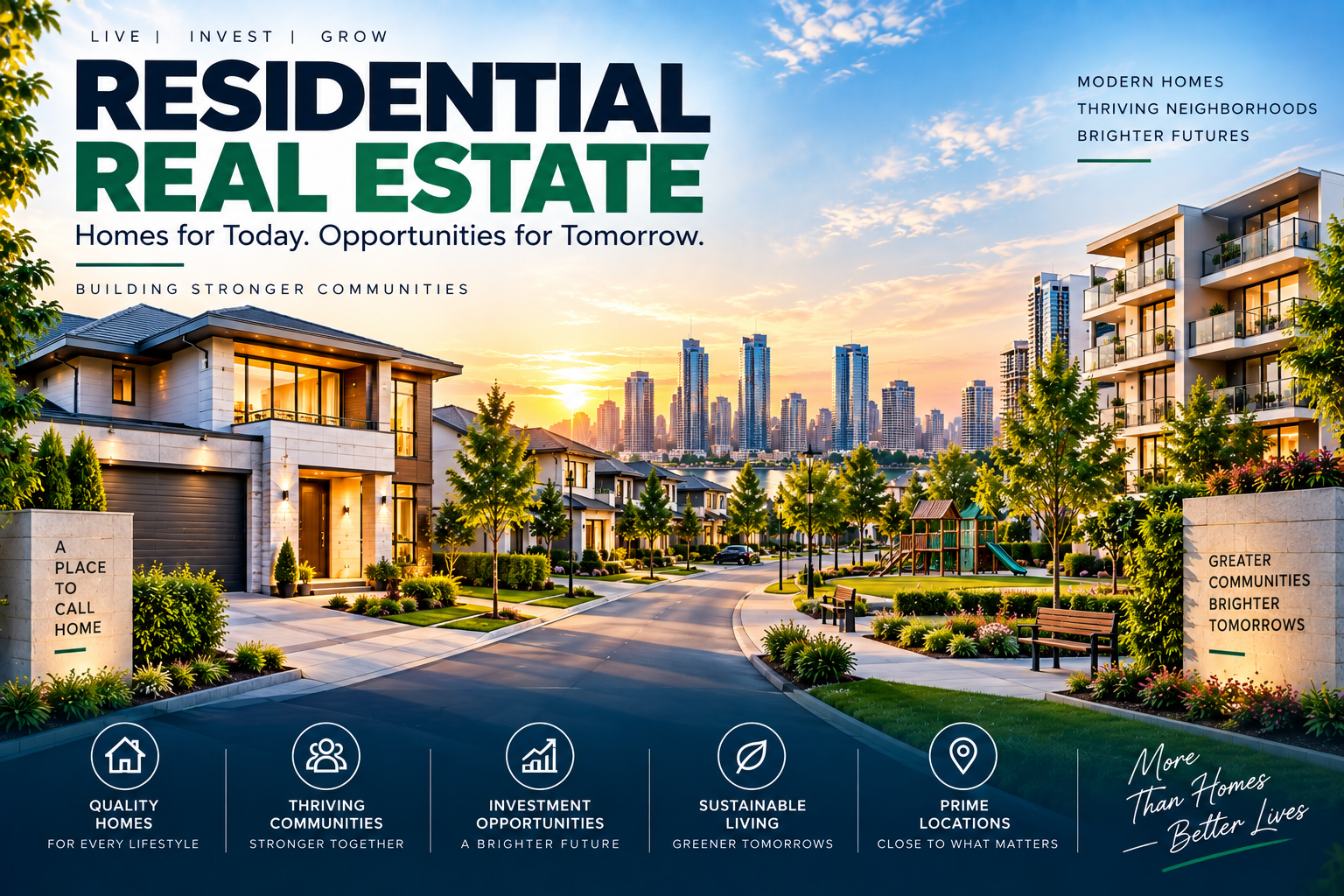
Residential real estate is a fundamental part of the property industry, providing homes for individuals, families, and communities around the world. From single-family houses and apartments to condominiums and modern residential developments, the sector offers a wide variety of properties for homeowners, buyers, landlords, developers, and investors.
The residential real estate market is influenced by economic conditions, population growth, interest rates, employment, housing supply, and changing lifestyle preferences. Understanding these factors can help people make more informed decisions when buying, selling, or investing in residential property.
What Is Residential Real Estate?
Residential real estate includes properties primarily designed for people to live in. These properties may be occupied by owners or rented to tenants.
Common examples include:
Single-family homes
Apartments
Condominiums
Townhouses
Duplexes
Vacation homes
Residential communities
New housing developments
Each type of property can serve different needs. A first-time buyer may prefer an affordable apartment, while a growing family may require a larger home with additional bedrooms and outdoor space.
Why Residential Real Estate Is Important
Housing is more than a financial asset. Residential communities provide the foundation for families, neighborhoods, schools, local businesses, and social development.
A healthy housing market can support construction activity, employment, consumer spending, and economic growth. At the individual level, owning a home can also become an important component of long-term financial planning.
For investors, residential properties can potentially generate rental income while providing opportunities for long-term appreciation.
What Drives Residential Property Demand?
Several factors influence demand for homes.
Population Growth
When a city or region experiences population growth, demand for housing may increase. New residents require places to live, which can create opportunities for developers, landlords, and property owners.
Employment Opportunities
Areas with growing employment opportunities can attract workers and families. New offices, businesses, universities, hospitals, and industrial facilities may contribute to increased housing demand.
Interest Rates
Mortgage rates can influence home affordability. When borrowing costs increase, some buyers may reduce their budgets or delay purchases. Lower borrowing costs can potentially encourage more buyers to enter the market.
Housing Supply
The balance between available homes and buyer demand can influence prices and rental rates. Limited supply in a high-demand area can create greater competition among buyers.
Choosing the Right Location
Location is one of the most important factors when purchasing residential property.
A desirable location may offer convenient access to:
Schools
Public transportation
Employment centers
Shopping areas
Healthcare facilities
Parks
Restaurants
Entertainment
Major roads
Buyers should also consider the future development of the neighborhood. New infrastructure, commercial centers, transportation projects, and community improvements can potentially influence property demand over time.
Different Residential Property Types
Single-Family Homes
Single-family homes provide private living spaces and are often attractive to families seeking more space, privacy, and outdoor areas.
Apartments
Apartments can provide an accessible housing option for individuals, couples, and families. They are particularly common in densely populated cities.
Condominiums
Condominiums combine private ownership with shared building facilities and common areas. They can appeal to buyers looking for amenities and lower-maintenance living.
Townhouses
Townhouses offer a balance between apartment-style living and standalone homes. They often provide multiple floors, private entrances, and shared community features.
Residential Communities
Large residential developments can include multiple housing types along with parks, recreational facilities, retail spaces, and other amenities.
Buying a Residential Property
Buying a home is a major financial commitment, making preparation essential.
Establish a Budget
Buyers should calculate how much they can comfortably afford. The total cost of homeownership can include the purchase price, mortgage payments, property taxes, insurance, utilities, maintenance, and other expenses.
Research the Market
Compare similar properties in the same area to understand current pricing. Looking at recent sales, available inventory, rental rates, and neighborhood trends can provide useful context.
Inspect the Property
A professional inspection can help identify potential problems with the structure, roof, plumbing, electrical systems, heating and cooling equipment, and other components.
Review Documentation
Before completing a purchase, buyers should review ownership documents, property taxes, zoning information, financing conditions, and other relevant paperwork.
Professional legal and financial advice can be helpful during more complex transactions.
Selling a Residential Property
Homeowners who want to sell should consider market conditions, property presentation, pricing, and marketing.
A clean, well-maintained property can create a stronger first impression. Simple improvements such as decluttering, repairing visible issues, improving landscaping, and updating certain areas may increase buyer interest.
Professional photography and accurate online listings can also help a property reach more potential buyers.
Residential Real Estate as an Investment
Residential property is commonly used as an investment because it can generate rental income and may appreciate over time.
Potential investment strategies include:
Long-term rental properties
Multifamily properties
Student housing
Vacation rentals
Property renovation
New residential development
However, investors should carefully evaluate expenses and risks. Mortgage payments, maintenance, taxes, insurance, vacancies, property management, and unexpected repairs can affect investment returns.
Understanding Rental Property Performance
For landlords, rental income is only one part of the financial equation.
Investors should consider the relationship between rental income and expenses. A property with high rent may not necessarily be a strong investment if operating costs and financing expenses are also high.
Important factors include:
Occupancy: How consistently the property is rented.
Rental demand: Whether tenants are actively looking for homes in the area.
Operating costs: Expenses such as maintenance, insurance, taxes, and management.
Cash flow: The amount remaining after relevant expenses and debt payments.
Long-term value: The potential for the property and surrounding area to appreciate.
Technology in Residential Real Estate
Technology is changing how people interact with the housing market.
Online property platforms allow buyers to search for homes, compare prices, view photographs, and research neighborhoods from anywhere. Virtual tours can also help prospective buyers evaluate properties remotely.
For property owners and managers, digital systems can simplify rent collection, maintenance requests, tenant communication, and property marketing.
Smart home technology is another growing area. Connected security systems, automated lighting, energy monitoring, and smart appliances can improve convenience and efficiency.
Sustainable Housing
Sustainability is becoming increasingly important in residential development.
Modern homes may incorporate:
Energy-efficient windows
Better insulation
Solar energy systems
Efficient appliances
Water-saving fixtures
Smart energy controls
Sustainable construction materials
Energy-efficient housing can potentially reduce utility expenses while creating more environmentally responsible communities.
Future Trends in Residential Real Estate
The housing market will continue to evolve as technology, demographics, economic conditions, and lifestyles change.
Some trends that may influence residential real estate include:
Flexible Living Spaces
Homes may increasingly be designed with spaces that can serve multiple purposes, such as offices, study areas, guest rooms, or recreational spaces.
Smart Homes
Connected technology may become more common as homeowners seek greater convenience, security, and energy efficiency.
Sustainable Communities
Developers may place greater emphasis on energy-efficient buildings, green spaces, walkability, and environmentally responsible infrastructure.
Digital Transactions
Online documentation, virtual property tours, digital communication, and other technology may continue to simplify parts of the buying and selling process.
Changing Housing Preferences
Remote and hybrid work, changing household structures, and evolving lifestyle preferences may influence where and how people choose to live.
Tips for Making a Better Residential Real Estate Decision
Whether you are buying, selling, or investing, consider these practical steps:
Research the local housing market.
Set a realistic budget.
Compare similar properties.
Evaluate the neighborhood and location.
Understand all additional costs.
Inspect the property carefully.
Review legal and ownership documents.
Consider future development in the area.
Analyze financing options.
Think about long-term goals rather than short-term market movements.
Conclusion
Residential real estate remains one of the most important segments of the property industry. It provides housing for communities while creating opportunities for homeowners, landlords, investors, developers, and real estate professionals.
Making smart residential property decisions requires an understanding of location, affordability, supply and demand, financing, property condition, rental potential, and future market trends.
Whether purchasing a first home, selling an existing property, or building a rental portfolio, careful research and realistic financial planning can help reduce risks and improve decision-making.
As technology, sustainability, demographics, and lifestyles continue to shape the housing market, residential real estate will remain an evolving and important part of the global economy.