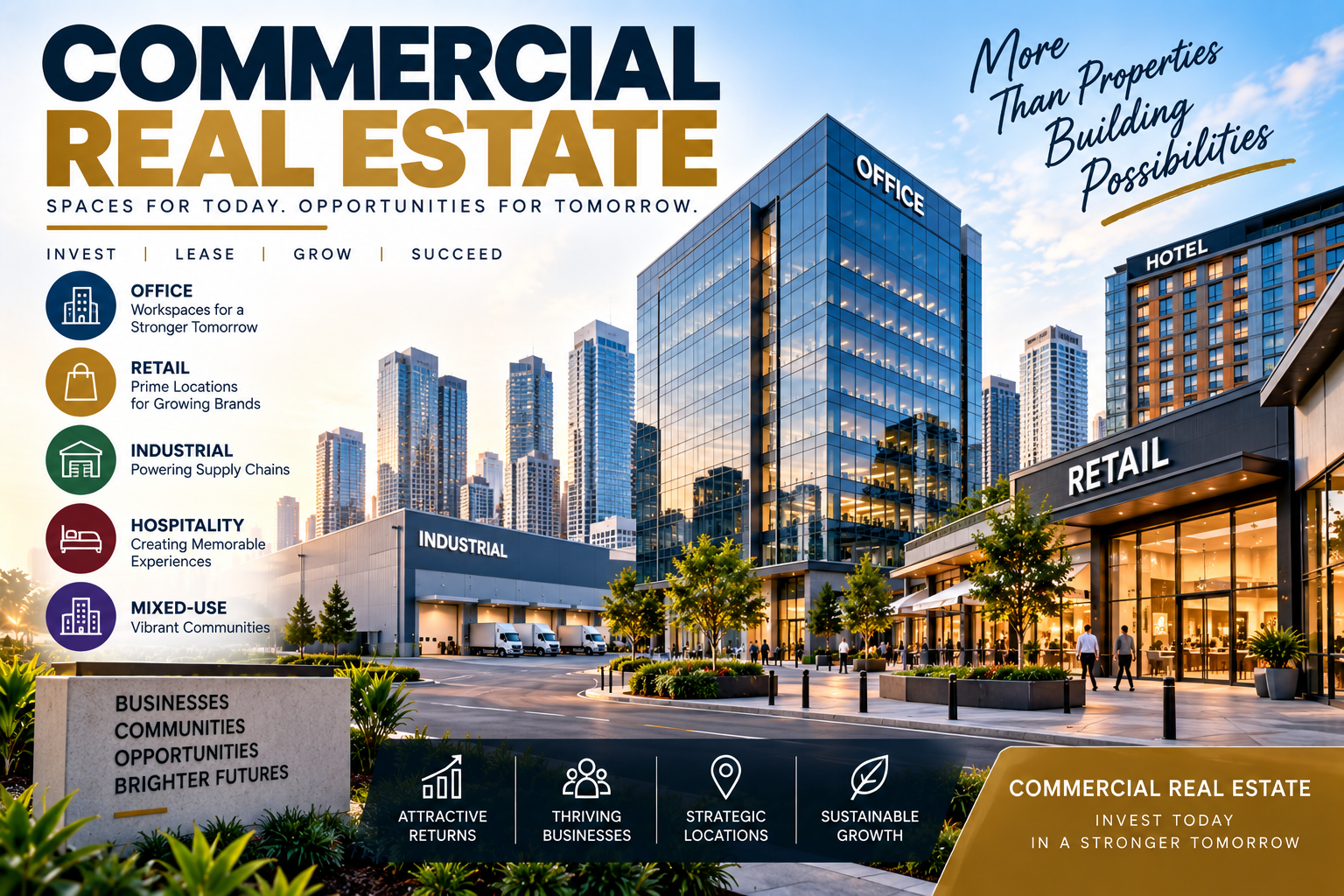
Commercial real estate is a vital part of the property industry, providing the spaces where businesses operate, customers shop, products are stored, and services are delivered. From office buildings and retail centers to warehouses, hotels, medical facilities, and industrial properties, commercial real estate covers a broad range of property types.
For investors, commercial real estate can offer opportunities for rental income and long-term growth. For business owners, choosing the right commercial property can influence operating costs, customer access, employee convenience, and future expansion.
However, commercial property decisions often involve significant financial commitments. Understanding the market, evaluating the location, analyzing rental income, reviewing lease agreements, and assessing potential risks are important before purchasing or leasing a commercial property.
What Is Commercial Real Estate?
Commercial real estate refers to properties primarily used for business, professional, industrial, or income-producing activities.
Unlike residential real estate, which is designed mainly for housing, commercial properties are generally occupied by businesses and organizations.
Common examples of commercial real estate include:
Office buildings
Retail stores
Shopping centers
Restaurants
Hotels
Warehouses
Distribution centers
Factories
Medical facilities
Mixed-use developments
The value of a commercial property can depend on its location, condition, rental income, occupancy, tenants, operating expenses, and future market potential.
Major Types of Commercial Real Estate
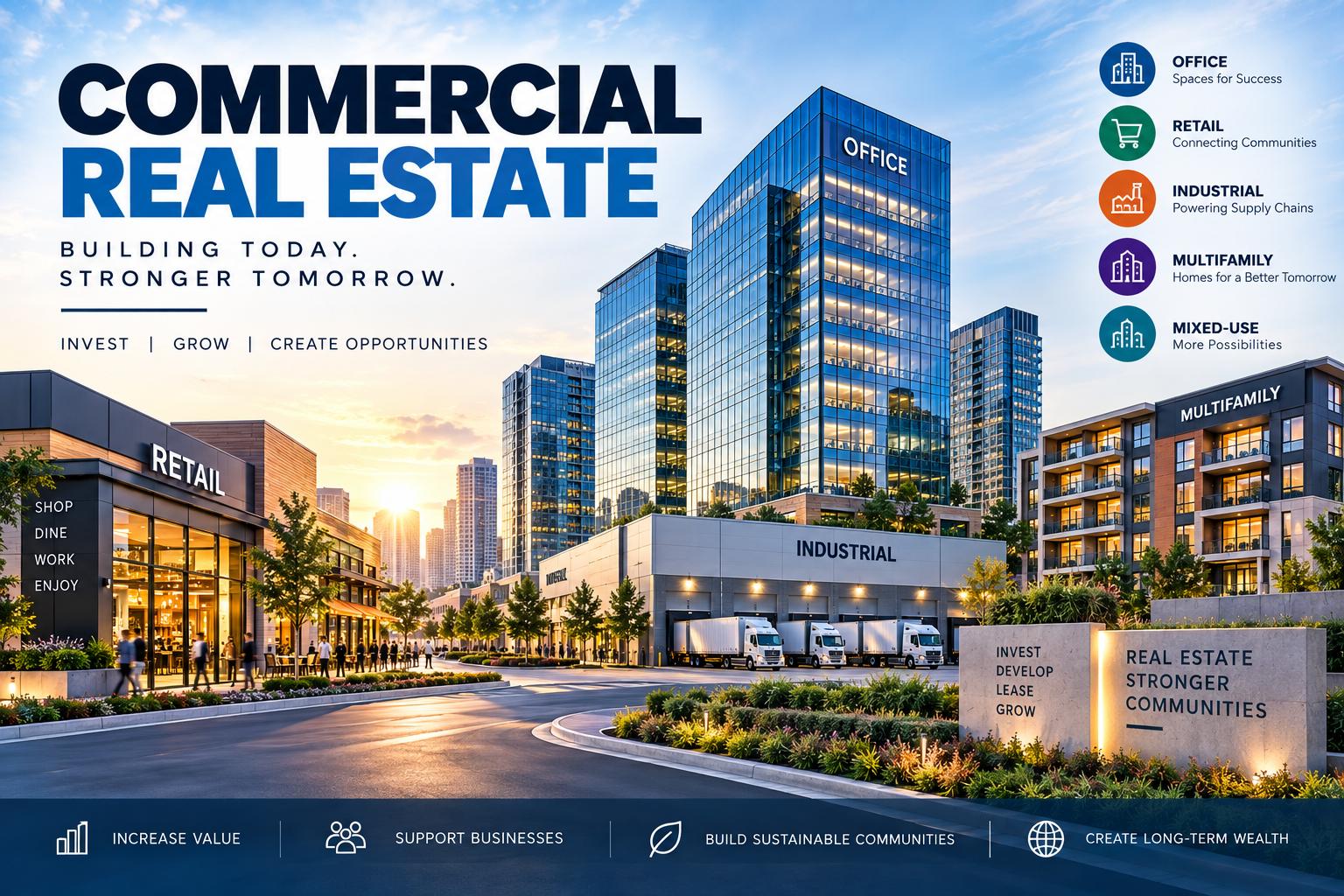
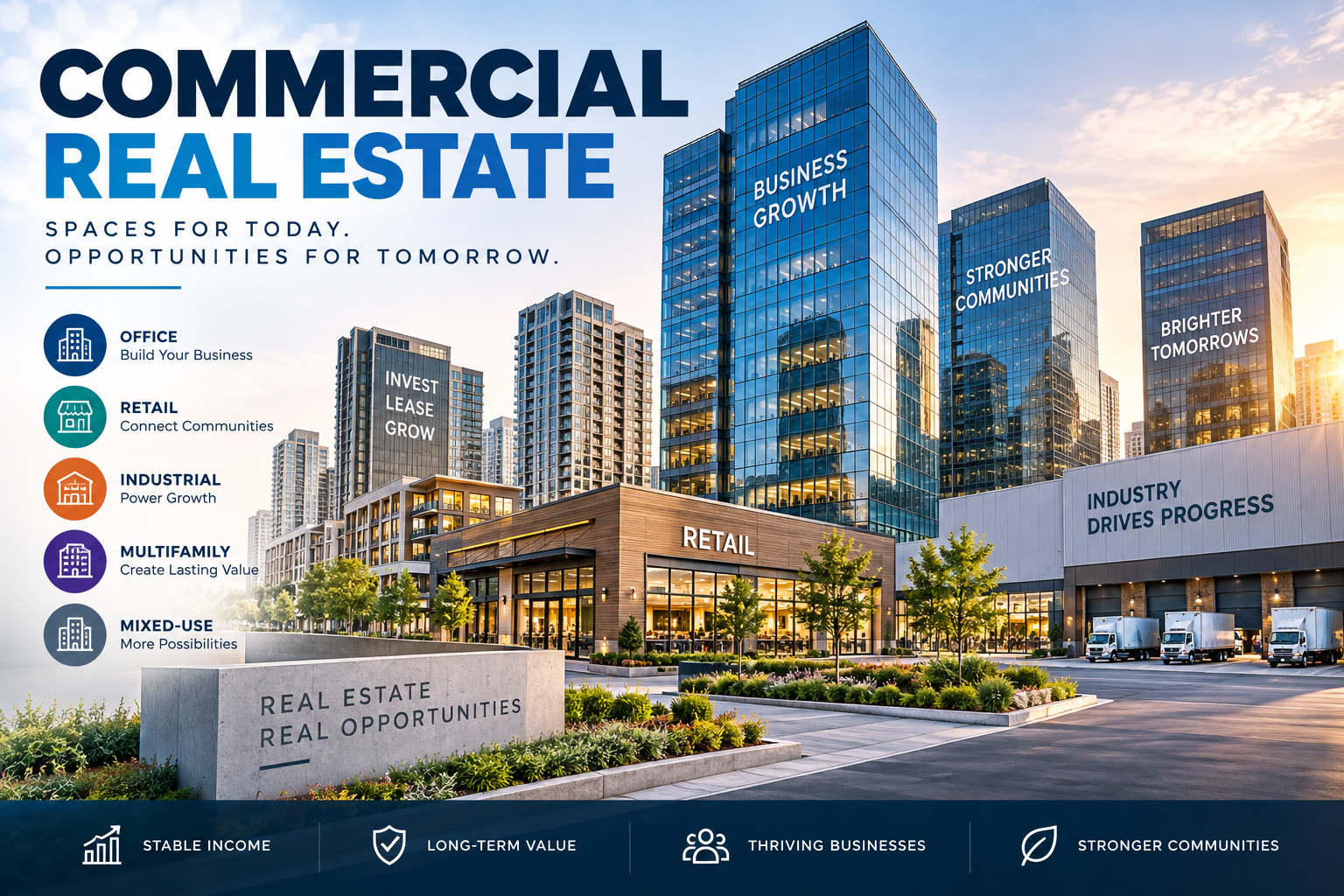
Commercial real estate is divided into several categories, and each type serves a different purpose.
Office Real Estate
Office properties provide workspace for companies, professionals, and organizations.
They can range from small office units to large corporate buildings. Location, accessibility, parking, public transportation, technology infrastructure, and nearby amenities can influence demand.
Modern businesses may also look for flexible layouts, meeting spaces, collaborative areas, and technology-enabled facilities.
Retail Real Estate
Retail commercial real estate includes properties where businesses sell products or services directly to consumers.
Shopping centers, supermarkets, restaurants, standalone stores, and neighborhood retail spaces are common examples.
For retail properties, visibility and accessibility can be particularly important. Customer traffic, parking, surrounding businesses, demographics, and local purchasing activity may affect the property's performance.
Industrial Real Estate
Industrial commercial real estate includes warehouses, manufacturing facilities, logistics centers, and distribution properties.
Transportation access is often a key consideration. Properties near highways, airports, ports, and rail networks may be attractive to businesses that need efficient supply-chain operations.
The rise of online shopping has also increased the importance of logistics and warehouse facilities in many markets.
Hospitality Real Estate
Hotels, resorts, and other accommodation properties are another segment of commercial real estate.
Hospitality property performance can be influenced by tourism, business travel, local events, seasonality, competition, and economic conditions.
Investors may evaluate factors such as occupancy rates, room revenue, operating expenses, and local tourism demand.
Mixed-Use Commercial Real Estate
Mixed-use developments combine different property uses in one project.
A development might include retail stores, restaurants, offices, residential units, and entertainment facilities.
Mixed-use projects can create convenient environments where people can live, work, shop, and access services in the same area.
Why Invest in Commercial Real Estate?
Commercial real estate can provide several potential benefits for investors.
Rental income is one of the primary attractions. A commercial property may generate income through leases with businesses operating in the building.
Some commercial leases can also be structured so that tenants contribute toward certain property expenses, depending on the agreement.
Commercial properties may also appreciate in value when rental rates increase, demand grows, or the surrounding area experiences economic and infrastructure development.
However, investors should not assume that commercial real estate will always produce a profit. Vacancies, tenant problems, maintenance expenses, market changes, and financing costs can affect returns.
The Importance of Location
Location plays a major role in commercial real estate.
Different property types require different location characteristics.
A retail store may need high visibility and strong customer traffic. An office building may benefit from convenient public transportation and proximity to business districts. A warehouse may require easy access to highways and distribution routes.
Investors should also investigate the surrounding neighborhood and planned infrastructure projects.
New roads, transportation systems, residential developments, business districts, and other projects can influence future commercial property demand.
Understanding Commercial Tenants
Tenants are a critical component of commercial real estate investment.
A property can have an attractive location and excellent facilities, but its financial performance may depend on whether tenants can reliably pay rent and remain in the property.
Investors may evaluate tenant financial strength, business stability, lease duration, rental payments, renewal options, and the overall tenant mix.
Properties with multiple tenants may have more diversified income, while properties dependent on one major tenant can face greater risk if that tenant leaves.
Commercial Real Estate Leases
Commercial leases can be more complicated than residential rental agreements.
A lease may establish:
Monthly or annual rent
Lease duration
Renewal options
Rent increases
Maintenance responsibilities
Property taxes
Insurance
Utilities
Operating expenses
Permitted property use
Tenant improvements
The lease structure determines how different costs and responsibilities are divided between the landlord and tenant.
Because commercial leases can have significant financial and legal consequences, they should be carefully reviewed before signing.
Financing Commercial Real Estate
Purchasing commercial real estate often requires substantial capital.
Investors may use commercial mortgages, private financing, partnerships, or other funding arrangements.
Lenders may examine the property's income, operating expenses, occupancy, location, physical condition, and the borrower's financial position.
Interest rates are another important consideration. Higher borrowing costs can increase expenses and affect the profitability of an investment.
Before purchasing commercial property, investors should calculate the total financing cost and consider how changes in interest rates or income could affect their investment.
Evaluating a Commercial Property
Thorough due diligence is essential before purchasing commercial real estate.
Investors should examine:
Purchase price
Rental income
Occupancy rate
Tenant agreements
Operating expenses
Property taxes
Insurance
Maintenance costs
Property condition
Local market demand
Financing costs
Zoning requirements
Future development
Potential resale value
Looking at these factors together provides a more complete picture of the property's financial potential.
Commercial Real Estate Cash Flow
Cash flow is an important measure when evaluating commercial real estate.
Investors generally compare the income generated by a property with its operating expenses and financing costs.
Rental income may come from one tenant or multiple businesses. Expenses can include property management, repairs, maintenance, insurance, taxes, utilities, and loan payments.
Vacancy should also be considered. Even a property with strong rental demand may experience periods without tenants.
A realistic cash-flow analysis should therefore include both expected income and potential unexpected expenses.
Property Management
Managing commercial real estate requires ongoing attention.
Property managers may handle rent collection, tenant communication, maintenance, inspections, vendor relationships, and other operational responsibilities.
Hiring a professional property manager can reduce the owner's workload, especially when managing several properties or a large commercial building.
However, management fees can reduce investment returns. Owners should evaluate whether professional management makes financial sense for their specific property.
Commercial Real Estate Development
Commercial real estate development involves creating new business properties or significantly improving existing ones.
Developers may build office complexes, retail centers, warehouses, hotels, medical facilities, or mixed-use developments.
Before starting a project, developers typically evaluate land costs, construction expenses, financing, zoning, permits, infrastructure, environmental requirements, market demand, and expected returns.
Development can create significant opportunities, but it also carries risks such as construction delays, cost increases, regulatory changes, and shifts in market demand.
Technology in Commercial Real Estate
Technology is changing how commercial real estate is marketed, analyzed, purchased, and managed.
Online platforms allow businesses and investors to search for properties and compare available spaces.
Virtual tours can make property exploration easier, while digital marketing can help landlords reach potential tenants.
Data analytics can provide insights into rental rates, occupancy, property values, and market trends.
Smart-building technology is also becoming more common. Automated security, energy management, lighting, climate controls, and connected systems can improve building efficiency and tenant experiences.
Sustainable Commercial Real Estate
Sustainability is becoming increasingly important in commercial property development.
Energy-efficient buildings may reduce operating expenses while providing more comfortable working environments.
Commercial properties can incorporate:
Solar energy
Energy-efficient lighting
Smart energy systems
Water-saving technology
Improved insulation
Sustainable construction materials
Efficient heating and cooling systems
Sustainable features may also make commercial properties more attractive to businesses that have environmental goals or want to reduce long-term operating expenses.
Risks of Commercial Real Estate Investment
Like any investment, commercial real estate carries risks.
Vacancy Risk
A vacant commercial property can lose rental income while expenses continue.
Tenant Risk
A tenant may experience financial difficulties or fail to meet lease obligations.
Market Risk
Changes in economic conditions, interest rates, consumer behavior, and business activity can affect demand and property values.
Financing Risk
Higher interest rates or unfavorable loan terms can increase borrowing costs.
Maintenance Risk
Large commercial buildings can require expensive repairs and ongoing maintenance.
Investors should evaluate these risks before purchasing a property and maintain sufficient financial reserves where appropriate.
How to Choose the Right Commercial Property
The right commercial property depends on the investor's objectives.
An investor seeking stable rental income may prioritize established locations and reliable tenants. Someone seeking growth may focus on developing neighborhoods or properties with redevelopment potential.
Research the local commercial real estate market and compare similar properties.
Review the property's financial records, leases, tenants, expenses, physical condition, legal documents, and future development plans.
A thorough evaluation can help investors identify both opportunities and potential problems before completing a transaction.
Future Trends in Commercial Real Estate
The commercial real estate industry continues to change as businesses and consumers adopt new technologies and working patterns.
E-commerce is influencing demand for warehouses and distribution facilities. Flexible work arrangements are changing how some businesses use office space.
Retail businesses are also combining physical stores with online sales, creating new requirements for commercial locations.
Sustainability, smart-building systems, and energy efficiency are expected to remain important considerations for developers and property owners.
Investors who understand these trends can better evaluate how changing market conditions may affect future commercial property demand.
Final Thoughts
Commercial real estate provides the physical foundation for many businesses and industries. Offices, retail centers, warehouses, hotels, industrial properties, and mixed-use developments all contribute to economic activity and community growth.
For investors, commercial real estate can offer potential rental income and long-term value, but successful investing requires careful analysis.
Before buying commercial property, consider its location, tenants, lease agreements, rental income, operating expenses, financing, physical condition, legal requirements, and future market potential.
Whether you are an investor searching for an income-producing property or a business owner looking for the right space, thorough research can help you make a more informed commercial real estate decision.
Frequently Asked Questions About Commercial Real Estate
What is commercial real estate?
Commercial real estate refers to properties primarily used for business, professional, industrial, or income-producing activities. Examples include offices, retail stores, warehouses, hotels, and industrial facilities.
What are the main types of commercial real estate?
The main types include office, retail, industrial, hospitality, and mixed-use properties. Each category has different tenants, operating requirements, and investment characteristics.
Is commercial real estate a good investment?
Commercial real estate can provide opportunities for rental income and long-term appreciation, but it also involves risks such as vacancies, tenant defaults, maintenance costs, financing expenses, and changing market conditions.
What factors affect commercial property value?
Location, rental income, occupancy, tenant quality, lease terms, property condition, accessibility, operating expenses, and local market demand can all influence commercial property value.
What should I check before buying commercial real estate?
Review the purchase price, rental income, occupancy, tenant leases, operating expenses, property taxes, insurance, physical condition, zoning, financing costs, and future development plans.
How do commercial real estate leases work?
Commercial leases define the financial and operational responsibilities of landlords and tenants. They can cover rent, lease duration, renewals, maintenance, taxes, insurance, utilities, and other expenses.
Can commercial real estate generate rental income?
Yes. Commercial properties can generate rental income from businesses leasing offices, stores, warehouses, and other spaces. Profitability depends on income after operating, maintenance, management, vacancy, and financing costs.
Why is location important for commercial real estate?
Location can influence customer traffic, accessibility, employee convenience, transportation, tenant demand, rental rates, and property value. The most important location factors depend on the property's intended use.
What are the risks of commercial real estate?
Major risks include vacancies, tenant defaults, economic downturns, changing market demand, higher financing costs, unexpected maintenance expenses, and changes in property values.
What is industrial commercial real estate?
Industrial commercial real estate includes warehouses, factories, manufacturing facilities, logistics centers, and distribution properties. Transportation access is often a major consideration.
What is mixed-use commercial real estate?
Mixed-use commercial real estate combines different uses in one development, such as retail, offices, residential units, restaurants, and entertainment spaces.
How does technology affect commercial real estate?
Technology has improved property marketing, virtual tours, data analysis, building management, tenant communication, and investment research. Smart-building systems are also becoming increasingly common.
Is commercial real estate suitable for new investors?
Commercial real estate can be suitable for investors who have sufficient capital and understand the financial and operational risks. Because commercial transactions can be complex, thorough research and professional guidance can be valuable.