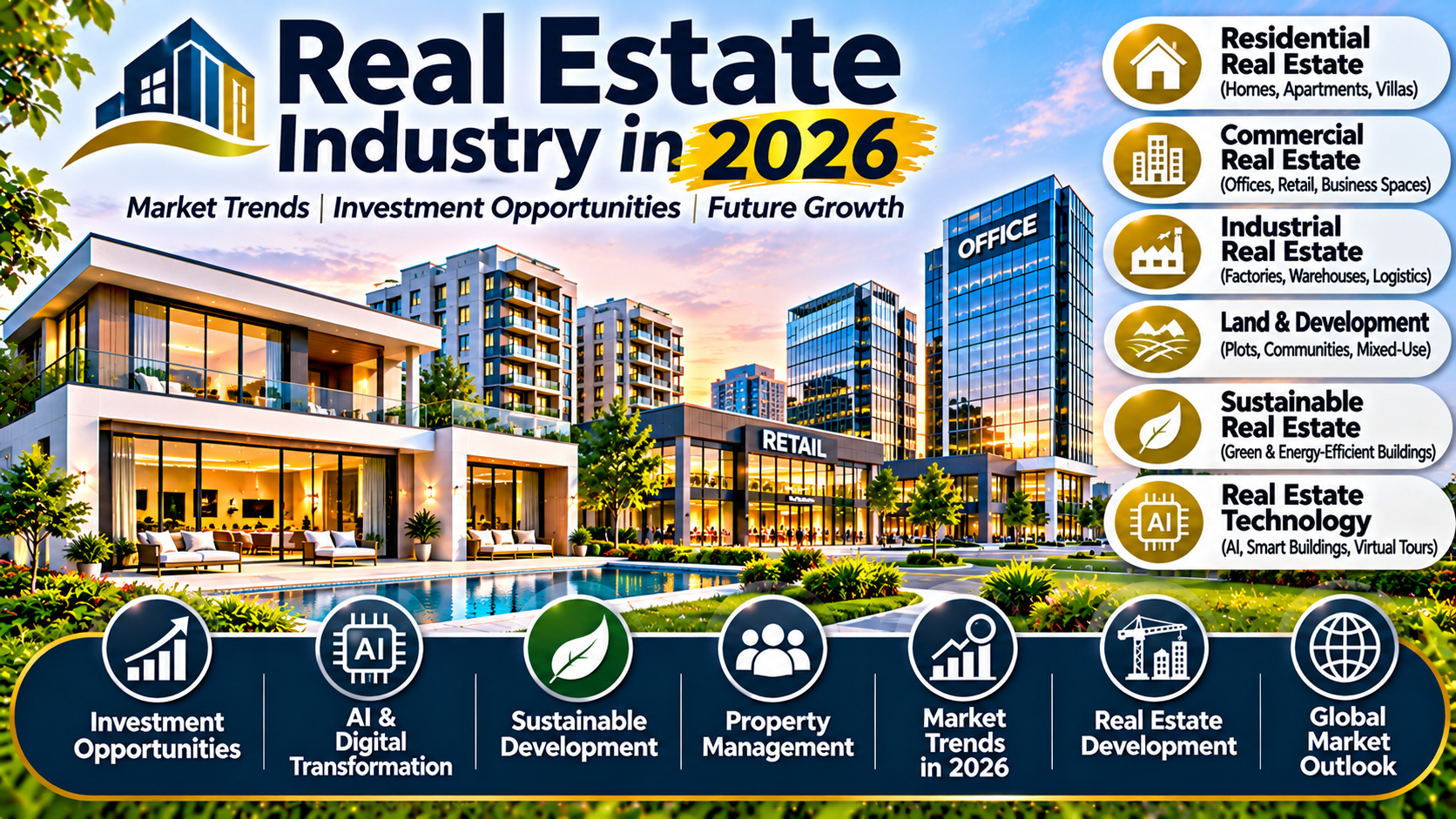
The real estate industry is a major part of the global economy, influencing housing, employment, infrastructure, construction, finance, and business development. From residential homes and apartment complexes to commercial buildings, industrial facilities, and large-scale development projects, real estate creates opportunities for individuals, businesses, and institutional investors.
In 2026, the industry is experiencing a period of transformation. Changing economic conditions, evolving housing preferences, digital technology, sustainable construction, and new investment strategies are reshaping property markets around the world.
Buyers are becoming more careful about affordability and financing, while investors are increasingly examining rental demand, property quality, location, and long-term income potential. Meanwhile, developers are exploring smart buildings, mixed-use communities, and energy-efficient construction.
Understanding these changes is essential for anyone interested in purchasing property, building an investment portfolio, launching a real estate business, or exploring development opportunities.
1. Understanding the Real Estate Industry
The real estate industry includes the ownership, purchase, sale, development, leasing, financing, and management of land and buildings.
It involves several interconnected businesses and professional services, including:
Residential and commercial property agencies
Real estate developers
Construction companies
Property management firms
Mortgage and financing providers
Property valuation specialists
Real estate investment companies
Architecture and engineering firms
Land development businesses
The industry supports economic activity by providing places for people to live, businesses to operate, and industries to manufacture and distribute products.
2. Major Segments of the Real Estate Market
The property industry contains several major segments, each serving different customers and investment purposes.
Residential Real Estate
Residential real estate includes properties designed for individuals and families.
Examples include:
Single-family houses
Apartments and condominiums
Townhouses
Luxury villas
Multi-family buildings
Residential plots
Student accommodation
Housing demand is influenced by population growth, employment, household income, mortgage availability, and construction activity.
In 2026, affordability, access to transportation, neighborhood facilities, and energy efficiency remain important considerations for many homebuyers.
Commercial Real Estate
Commercial real estate includes properties used for business and income-generating activities.
Common categories include:
Office buildings
Retail shopping centers
Business plazas
Hotels
Restaurants
Medical office buildings
Corporate facilities
Commercial properties can generate rental income through business leases. Their performance depends on tenant demand, property location, building quality, and operating expenses.
Industrial Real Estate
Industrial real estate provides space for production, manufacturing, storage, and distribution.
Examples include factories, industrial parks, warehouses, logistics centers, and cold-storage facilities.
The growth of e-commerce, manufacturing, and supply-chain operations has increased the importance of strategically located industrial properties.
Land and Development Properties
Land investment involves acquiring property for agricultural use, future construction, or long-term development.
Investors may purchase land for residential communities, commercial buildings, industrial projects, or infrastructure-related development.
Before purchasing land, buyers should verify ownership, zoning, access to utilities, development permissions, and surrounding infrastructure.
Special-Purpose Properties
Some real estate assets serve specialized industries and institutions.
These include hospitals, schools, universities, senior living communities, sports facilities, data centers, and research buildings.
Such properties often require specialized construction standards and professional management.
3. Global Real Estate Market Trends in 2026
The global real estate market is influenced by economic conditions, demographic changes, technology, and investor confidence.
Rather than moving in the same direction everywhere, property markets are developing differently depending on local supply, demand, financing conditions, and economic growth.
Several factors are particularly important.
Interest Rates and Financing
Interest rates influence mortgage payments, property affordability, construction financing, and investment decisions.
When borrowing becomes expensive, some buyers delay purchases and developers reconsider new projects.
Housing Supply and Affordability
Limited housing supply can increase competition among buyers and renters. In some markets, affordable housing development is becoming a major priority.
Urbanization and Population Growth
Expanding urban populations create demand for housing, offices, transportation, healthcare, education, and retail infrastructure.
Employment and Economic Conditions
Employment opportunities influence residential demand, while business growth can support demand for commercial properties and industrial facilities.
International Investment
Cross-border property investment depends on economic stability, local regulations, taxation, currency conditions, and investor confidence.
4. Real Estate Investment Opportunities
Real estate offers different investment opportunities depending on an investor's capital, financial objectives, and risk tolerance.
Residential Rental Properties
Residential rental investment involves purchasing homes or apartments and leasing them to tenants.
Potential benefits include recurring rental income and possible long-term property appreciation.
Investors should evaluate vacancy rates, maintenance expenses, insurance, taxes, tenant demand, and financing costs.
Commercial Property Investment
Commercial property investors purchase offices, shops, warehouses, and other business properties.
Rental income can depend on lease duration, tenant financial strength, property location, and market conditions.
Property Development
Property development involves acquiring land or existing buildings and creating new properties or improving existing ones.
Projects may include apartment complexes, shopping centers, business parks, and mixed-use developments.
Development can offer opportunities for profit but requires careful budgeting, permits, construction management, and market research.
Real Estate Investment Trusts
Real Estate Investment Trusts (REITs) provide access to property portfolios through investment structures that may be publicly traded or privately managed.
Depending on the REIT, investors can gain exposure to offices, apartments, shopping centers, industrial facilities, and healthcare properties.
REIT investments have market risks and should be evaluated according to their portfolio, financial structure, management, and distribution policies.
5. How to Evaluate a Property Before Investing
Property selection is one of the most important parts of a successful real estate strategy.
Investors should evaluate several factors before committing their money.
Evaluation factor | What to examine |
|---|---|
Location | Accessibility, infrastructure, and surrounding development |
Purchase price | Comparable properties and market valuation |
Rental demand | Tenant availability and expected rent |
Property condition | Structural quality and maintenance requirements |
Legal documentation | Ownership, title, and approvals |
Operating expenses | Taxes, insurance, repairs, and service charges |
Financing | Interest rates and repayment obligations |
Resale potential | Future demand and market liquidity |
Understanding Rental Yield
Rental yield measures the annual rental income generated by a property relative to its purchase price.
Formula:
Gross Rental Yield = (Annual Rental Income ÷ Purchase Price) × 100
For example:
Property purchase price: $150,000
Monthly rental income: $1,000
Annual rental income: $12,000
Gross rental yield:
($12,000 ÷ $150,000) × 100 = 8%
This example is illustrative. Actual returns may be lower after accounting for taxes, vacancies, insurance, maintenance, and other expenses.
6. Artificial Intelligence and Technology in Real Estate
Technology is transforming how real estate businesses operate and how customers search for properties.
Artificial Intelligence
AI can help real estate companies analyze property data, support customer communication, automate administrative tasks, and identify potential market patterns.
Applications include:
Property valuation assistance
Market research
Customer relationship management
Lead generation
Predictive maintenance
Property recommendations
Automated listing descriptions
AI-generated analysis should be reviewed using reliable market information and professional judgment.
Virtual Property Tours
Virtual tours allow buyers and tenants to explore properties remotely.
They are particularly useful for international investors, busy professionals, and people comparing properties in different cities.
Online Property Marketplaces
Digital property platforms allow users to search listings, compare asking prices, review property details, and contact agents.
These platforms are changing how real estate businesses advertise and connect with customers.
Smart Buildings
Smart building systems use connected devices and automation to improve building operations.
Examples include smart lighting, security systems, energy monitoring, automated temperature controls, and maintenance sensors.
7. Sustainable Real Estate Development
Sustainability is becoming an important part of modern property development.
Developers are increasingly considering energy consumption, water efficiency, construction materials, and environmental performance.
Important practices include:
Energy-efficient design: Better insulation, efficient lighting, and optimized heating and cooling systems.
Solar power: Renewable energy installations may help reduce dependence on conventional electricity.
Water conservation: Efficient plumbing, rainwater collection, and water recycling can reduce unnecessary consumption.
Sustainable materials: Recycled and responsibly sourced materials can reduce the environmental impact of construction.
Green certifications: Systems such as LEED provide frameworks for evaluating building sustainability.
Sustainable construction requires financial planning because initial development costs and long-term operating benefits can vary.
8. The Importance of Property Location
Location is one of the most influential factors in real estate valuation.
A property's location affects its accessibility, rental demand, resale potential, and attractiveness to buyers and businesses.
Important location factors include:
Access to major roads
Public transportation
Schools and universities
Hospitals and healthcare facilities
Shopping centers
Employment opportunities
Public infrastructure
Safety and neighborhood quality
Investors should also consider future development plans, zoning changes, and infrastructure projects that may affect the surrounding area.
9. Real Estate Marketing in 2026
Modern real estate marketing combines digital platforms, professional photography, search engine optimization, and customer engagement.
Search Engine Optimization
SEO helps real estate websites attract visitors who are searching for property listings, investment information, and local real estate services.
Useful SEO activities include:
Location-specific landing pages
Optimized property descriptions
Informative property articles
Local keyword research
Technical website optimization
Internal linking
Relevant backlinks
Image optimization
Social Media Marketing
Facebook, Instagram, TikTok, LinkedIn, and YouTube allow property businesses to showcase developments and connect with potential customers.
Popular content formats include property tours, neighborhood videos, investment education, construction updates, and market analysis.
Video Marketing
Video tours can provide a clearer understanding of property layouts, facilities, and surrounding areas.
Drone footage and professional photography can make property listings more informative.
Content Marketing
Publishing useful articles about buying property, financing, market trends, and legal documentation can help real estate companies build credibility.
10. Real Estate Opportunities in Pakistan
Pakistan's property market includes residential housing, commercial buildings, agricultural land, industrial facilities, and mixed-use developments.
Major property markets include Lahore, Karachi, Islamabad, Faisalabad, and other developing urban centers.
Potential areas of interest include:
Affordable housing
Residential apartment developments
Commercial plazas
Office spaces
Industrial estates
Warehouses and logistics facilities
Mixed-use communities
Agricultural land
Important Property Buying Checks
Before purchasing property in Pakistan, buyers should:
Verify the ownership and title documents.
Check the relevant land record and transfer procedure.
Confirm project approvals with the appropriate authority.
Verify the permitted use of the property.
Review taxes, utility charges, and outstanding dues.
Inspect the property and surrounding infrastructure.
Obtain written agreements and official payment receipts.
Consult a qualified legal professional when necessary.
Buyers should independently verify claims about project approvals, possession dates, and future development plans.
11. Major Challenges Facing the Real Estate Industry
Despite its opportunities, real estate involves financial, operational, and regulatory challenges.
Property Affordability
Increasing land prices and construction costs can make housing difficult to afford.
Financing Difficulties
Higher borrowing costs can affect property purchases, construction budgets, and investment returns.
Legal and Regulatory Risks
Ownership disputes, incomplete documentation, zoning restrictions, and delayed approvals can create significant problems.
Market Uncertainty
Property prices can fall due to economic conditions, oversupply, changing demand, or reduced investor confidence.
Construction Delays
Material shortages, contractor problems, financing issues, and regulatory delays can affect project completion.
Property Management
Vacancies, maintenance requirements, tenant disputes, and unexpected repairs can reduce rental income.
12. Leading Companies in the Real Estate Industry
The global real estate industry includes developers, property service companies, investment managers, and commercial real estate specialists.
Some recognized organizations include:
CBRE Group: Commercial property services, leasing, management, and investment advisory.
JLL: Real estate services, workplace solutions, and investment management.
Cushman & Wakefield: Commercial property advisory and real estate services.
Colliers: Commercial real estate services and investment management.
Savills: International property consultancy and advisory.
Prologis: Industrial and logistics real estate.
Related Companies: Real estate development and investment.
These organizations operate across different markets and property categories.
13. Future Trends Shaping Real Estate Beyond 2026
The future of real estate will be influenced by changing consumer needs, technology, infrastructure, and economic conditions.
Smart Residential Communities
Modern housing developments may increasingly include connected security, energy management, shared facilities, and digital services.
Flexible Commercial Spaces
Businesses may continue to explore flexible offices, shared workspaces, and buildings with adaptable layouts.
Digital Infrastructure
Data centers and other technology-related properties may attract more investment as demand for cloud services and AI infrastructure grows.
Sustainable Construction
Energy efficiency, renewable energy, water management, and responsible materials are likely to remain important development considerations.
Affordable Housing
Population growth and housing affordability challenges may encourage new residential development models and financing solutions.
Technology-Driven Property Management
AI and automation may help property owners improve tenant services, building maintenance, and operating efficiency.
14. Frequently Asked Questions
What is the real estate industry?
The real estate industry includes the purchase, sale, development, leasing, financing, and management of land and buildings.
What are the main types of real estate?
The main categories are residential, commercial, industrial, agricultural, land, and special-purpose real estate.
Is real estate a good investment in 2026?
Real estate may offer opportunities through rental income, development, and long-term ownership. However, returns depend on location, property price, financing, market demand, and operating expenses.
How can beginners start investing in real estate?
Beginners should learn about property valuation, financing, legal documentation, rental demand, and local market conditions. Starting with a realistic budget and thorough research can help reduce unnecessary risks.
What is the role of AI in real estate?
AI can assist with property research, valuation analysis, customer communication, marketing, and building management.
Why is location important in real estate?
Location affects accessibility, tenant demand, property value, rental potential, and future resale opportunities.
What are the risks of real estate investment?
Major risks include falling property prices, vacancies, legal disputes, financing costs, unexpected repairs, and changing market conditions.
What is sustainable real estate?
Sustainable real estate focuses on reducing the environmental impact of buildings through energy efficiency, water conservation, responsible materials, and improved construction practices.
Conclusion
The real estate industry in 2026 is evolving through technology, changing housing preferences, sustainable development, and new investment opportunities. Residential housing, commercial properties, industrial facilities, logistics centers, and specialized infrastructure each provide different opportunities for buyers and investors.
However, successful property decisions require more than identifying an attractive building or development project. Buyers and investors must understand local market conditions, evaluate financial performance, verify legal documentation, and consider long-term operating costs.
As the industry continues to change, businesses and investors that focus on market research, property quality, responsible development, and effective management will be better positioned to respond to future opportunities.