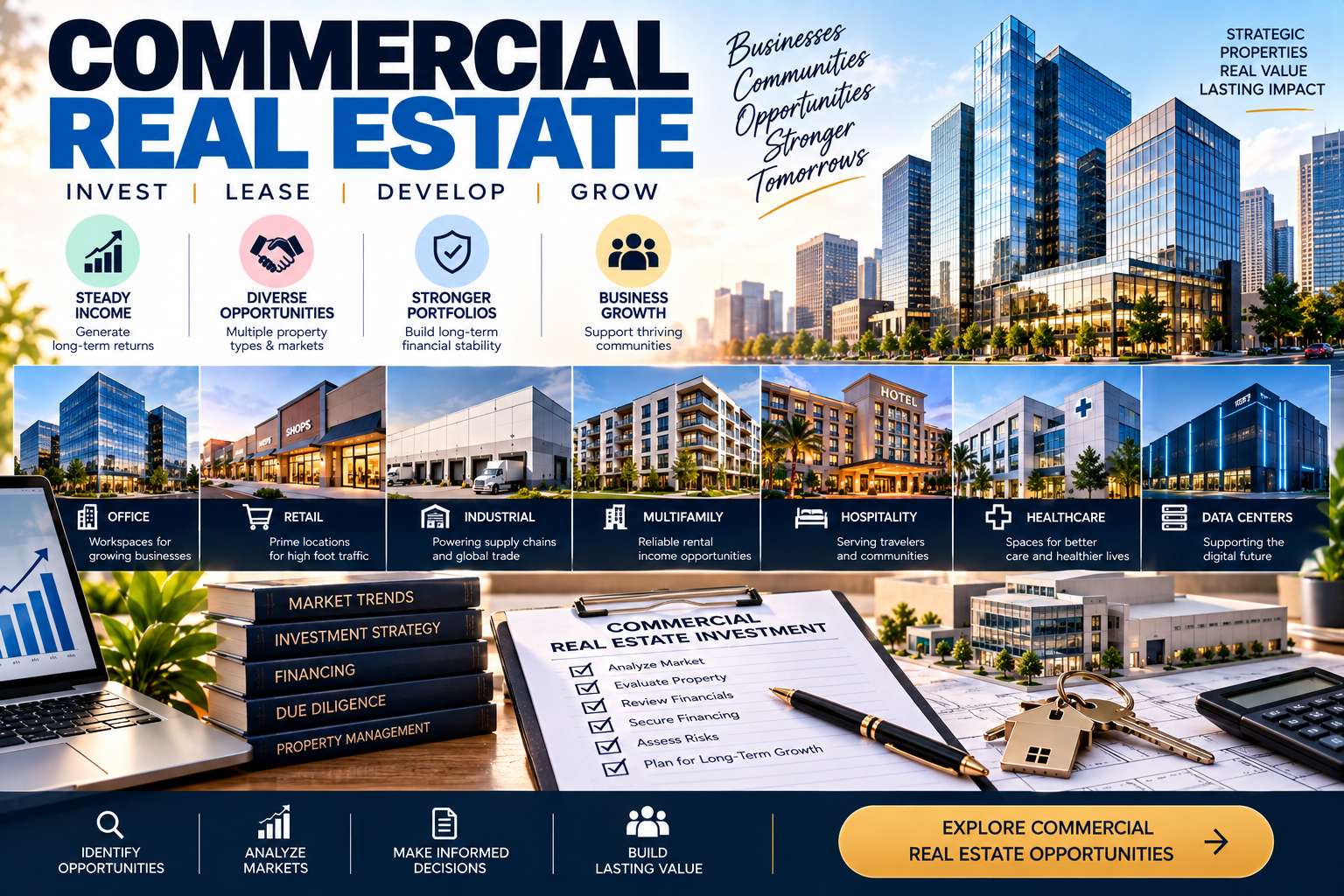

Residential real estate is one of the most important parts of the property market. It includes homes and other properties designed primarily for people to live in, ranging from single-family houses and apartments to condominiums, townhouses, and multifamily properties.
For buyers, residential real estate can represent a place to live, build stability, and potentially create long-term wealth. For sellers, it can be an important financial asset. For investors, residential properties can provide rental income and potential appreciation.
However, buying or investing in residential property requires more than simply choosing a house that looks attractive. Location, financing, property condition, taxes, insurance, maintenance, market conditions, and future needs can all influence the overall value of a property.
What Is Residential Real Estate?
Residential real estate refers to land and buildings primarily intended for residential use.
Common examples include:
Single-family homes
Condominiums
Apartments
Townhouses
Duplexes
Triplexes
Multifamily properties
Manufactured homes
Vacation and second homes
Residential property can be purchased for personal use, rented to tenants, renovated and resold, or held as a long-term investment.
Unlike commercial real estate, which is generally designed for business activities, residential real estate focuses primarily on housing and living spaces.
Why Residential Real Estate Matters
Housing is a fundamental need, which gives residential property a unique role in the economy.
Changes in employment, population, household formation, interest rates, construction costs, and local infrastructure can influence housing demand.
Residential real estate also has an important financial dimension. Homeowners may build equity as they repay a mortgage and, depending on market conditions, as property values change over time.
At the same time, homeownership involves significant expenses. Mortgage payments are only one part of the cost. Buyers may also need to account for property taxes, insurance, maintenance, utilities, association fees, and unexpected repairs.
Understanding both the opportunities and responsibilities is therefore essential.
Major Types of Residential Properties
Single-Family Homes
Single-family homes are designed for one household and typically offer private outdoor space and greater control over the property.
They are common in suburban and urban neighborhoods and can appeal to buyers who value privacy and space.
Condominiums
Condos are individually owned units within a larger building or community. Owners may share responsibility for common areas such as elevators, lobbies, parking areas, pools, and fitness facilities.
Condominium owners generally pay association fees to help maintain these shared facilities.
Townhouses
Townhouses usually share one or more walls with neighboring properties while providing multiple floors and a relatively private living environment.
They can offer a middle ground between traditional detached homes and apartments.
Multifamily Properties
Multifamily properties contain multiple residential units. Examples include duplexes, triplexes, four-unit buildings, and larger apartment properties.
These properties can be purchased for personal use or investment purposes.
Location Is One of the Most Important Factors
A residential property's physical structure is important, but location can have an equally significant influence on its desirability and value.
When evaluating a neighborhood, buyers should consider:
Access to employment centers
Public transportation
Roads and commuting times
Schools
Healthcare facilities
Shopping and restaurants
Parks and recreational areas
Crime and safety information
Future development
Local infrastructure
Neighborhood amenities
A beautiful property in an inconvenient location may not meet a buyer's long-term needs.
Buyers should therefore evaluate the surrounding community rather than focusing exclusively on the house itself.
Understanding Residential Property Affordability
Affordability is more than the property's purchase price.
A buyer should consider the complete cost of ownership, including:
Down payment
Mortgage payment
Property taxes
Homeowners insurance
Mortgage insurance, when applicable
Utilities
Maintenance
Repairs
Homeowners association fees
Closing costs
Creating a realistic housing budget before beginning the search can help prevent buyers from choosing a property that creates excessive financial pressure.
Mortgage Financing and Residential Real Estate
Many residential properties are purchased with mortgage financing.
A mortgage allows a buyer to borrow money to purchase a property and repay the loan over time. The property generally serves as collateral for the loan.
Mortgage options can differ according to:
Interest rate
Loan term
Down payment requirements
Credit requirements
Fees
Government program eligibility
Fixed or adjustable interest structure
Buyers should compare multiple financing options rather than focusing only on the advertised interest rate.
The annual percentage rate, fees, loan term, monthly payment, and total borrowing cost can all be important when comparing mortgage offers.
Getting Pre-Approved
Mortgage pre-approval can help buyers understand approximately how much they may be able to borrow.
It can also make the home-search process more focused because buyers have a clearer understanding of their financing range.
However, pre-approval should not automatically be treated as a recommended spending limit. Buyers still need to determine what monthly housing cost fits comfortably within their own budget.
How to Evaluate a Residential Property
A property should be evaluated from both a lifestyle and financial perspective.
Important factors include:
Property Condition
Look at the roof, foundation, plumbing, electrical systems, heating and cooling equipment, windows, doors, drainage, and overall structure.
Size and Layout
Consider whether the number and arrangement of bedrooms, bathrooms, living spaces, storage areas, and parking spaces meet current and future needs.
Age of the Property
Older properties can have character and advantages, but they may also require more maintenance or modernization.
Neighborhood
Research nearby services, transportation, schools, development projects, and other factors that could affect the property's long-term appeal.
Resale Potential
Even if a buyer plans to live in the property for many years, circumstances can change. A property with desirable characteristics may provide more flexibility when it is eventually sold.
The Importance of a Home Inspection
A professional home inspection can identify potential physical problems before a purchase is completed.
The Consumer Financial Protection Bureau recommends scheduling an independent inspection as soon as possible after choosing a home, giving buyers time to understand potential problems and address them before closing.
An inspection may identify issues involving:
Roofing
Foundation
Electrical systems
Plumbing
Heating and cooling
Water damage
Structural components
Insulation
Windows and doors
An inspection and appraisal serve different purposes. An inspection focuses primarily on the property's physical condition, while an appraisal provides an opinion of property value.
Understanding Property Appraisals
An appraisal estimates the value of a property using factors such as its characteristics and comparable properties in the surrounding market.
Lenders may use appraisals or other valuation methods when evaluating a mortgage.
If an appraisal comes in below the agreed purchase price, the buyer and seller may need to reconsider the transaction depending on the purchase contract and financing arrangements.
Understanding the difference between market price and estimated property value is therefore important.
Closing Costs and Other Expenses
The purchase price is not the only financial consideration when buying a home.
Closing costs can include expenses such as:
Appraisal fees
Title-related costs
Government taxes
Insurance-related expenses
Prepaid property taxes
Homeowners insurance
Certain lender fees
The exact costs vary according to the transaction, location, lender, and contract.
Buyers should request detailed information about these expenses before closing rather than assuming the purchase price represents the complete cost.
The Residential Real Estate Closing Process
Closing is the final stage of a typical financed home purchase.
During closing, the buyer signs legally binding documents related to the property purchase and mortgage. Once the transaction is completed and ownership is transferred, the buyer becomes responsible for the mortgage according to its terms.
Before closing, buyers should carefully review their final documents.
In the United States, the Consumer Financial Protection Bureau recommends reviewing the Closing Disclosure and comparing it with earlier loan information.
Buyers should also complete a final walkthrough to confirm that agreed repairs have been completed and that the property's condition is consistent with the purchase agreement.
Selling Residential Real Estate
Selling a home requires preparation, pricing, marketing, negotiation, and transaction management.
A seller should begin by understanding the local market.
Important considerations include:
Recent comparable sales
Current competing listings
Property condition
Location
Recent renovations
Buyer demand
Seasonal market conditions
Marketing strategy
Pricing too high can reduce interest, while pricing too low can affect the seller's potential proceeds.
A professional real estate agent can provide market information and help manage negotiations, showings, paperwork, and transaction deadlines.
Preparing a Home for Sale
Small improvements can improve a property's presentation.
Common preparation steps include:
Decluttering rooms
Deep cleaning
Improving curb appeal
Repairing visible damage
Improving lighting
Organizing storage spaces
Taking high-quality photographs
Addressing obvious maintenance issues
The goal is not necessarily to make every possible renovation. Instead, sellers should evaluate which improvements are likely to make the property more appealing without creating unnecessary expenses.
Residential Real Estate as an Investment
Residential property can also be used as an investment.
One common strategy is purchasing a property and renting it to tenants.
Potential sources of return can include:
Rental income
Property appreciation
Mortgage principal reduction
Tax treatment, depending on jurisdiction
Renovation-driven value improvements
However, investment property also involves risks and expenses.
Investors may face:
Vacancy
Property damage
Maintenance costs
Property taxes
Insurance
Financing costs
Management expenses
Changes in rental demand
Changes in property values
Investors should calculate expected income and expenses rather than assuming that rising property values or rental income will automatically produce a profit.
Rental Residential Properties
Rental property requires ongoing management.
Landlords may need to handle tenant screening, leases, maintenance requests, repairs, inspections, rent collection, and compliance with local laws.
Some owners manage properties themselves, while others hire professional property managers.
The right approach depends on the size of the portfolio, location, available time, and complexity of the property.
Technology Is Changing Residential Real Estate
Technology is transforming how people search for, purchase, sell, and manage homes.
Digital platforms allow buyers to view listings, compare properties, explore neighborhoods, calculate mortgage payments, and communicate with agents.
Other technologies include:
Virtual property tours
Online mortgage applications
Digital document signing
Automated property valuations
Smart-home systems
Property management software
AI-assisted property analysis
These technologies can make real estate transactions more convenient, although buyers and sellers should still verify important information independently.
Smart Homes and Sustainable Housing
Smart-home technology has become increasingly common in residential properties.
Examples include:
Smart thermostats
Security cameras
Smart locks
Automated lighting
Energy monitoring
Connected appliances
Energy efficiency is another important consideration.
Features such as improved insulation, efficient heating and cooling systems, solar technology, energy-efficient windows, and water-saving equipment can potentially reduce operating costs.
The value of these features depends on the property, local utility costs, climate, and buyer preferences.
Residential Real Estate Market Trends
Residential markets can vary dramatically between cities and neighborhoods.
Important factors to watch include:
Mortgage rates
Housing supply
New construction
Employment
Population growth
Household formation
Rental demand
Local income levels
Construction costs
Infrastructure development
National housing statistics can provide useful context, but local conditions often matter more when evaluating a specific property.
A neighborhood experiencing new transportation infrastructure, employment growth, or significant development may behave differently from a nearby area with declining demand.
Common Residential Real Estate Mistakes
Ignoring the Full Cost
Buyers sometimes focus only on the monthly mortgage payment while overlooking taxes, insurance, maintenance, and other expenses.
Skipping Inspection
A property may look attractive while hiding expensive problems. An independent inspection can provide important information before closing.
Focusing Only on the House
The surrounding neighborhood can significantly influence convenience, demand, and future resale considerations.
Making Decisions Too Quickly
Real estate transactions involve substantial financial commitments. Buyers should understand financing terms, contracts, property condition, and transaction costs before signing.
Underestimating Maintenance
Homeownership comes with ongoing responsibilities. Buyers should maintain a reserve for unexpected repairs.
A Practical Residential Real Estate Checklist
Before buying a property, consider the following:
Financial
Establish a realistic budget
Review credit and existing debt
Compare mortgage options
Estimate taxes and insurance
Budget for closing costs
Maintain an emergency reserve
Property
Research the location
Compare similar properties
Inspect the property
Review the appraisal or valuation
Check property history where available
Estimate future maintenance
Transaction
Review the purchase agreement
Understand contingencies
Confirm financing conditions
Review closing documents
Complete a final walkthrough
Keep copies of important records
The Future of Residential Real Estate
Residential real estate will continue to evolve as technology, demographics, infrastructure, economic conditions, and consumer preferences change.
Future homes may increasingly incorporate smart systems, energy-efficient technology, flexible layouts, and connected services.
At the same time, traditional factors such as location, affordability, property condition, transportation, and access to essential services will remain important.
For buyers, sellers, and investors, the most useful approach is to combine current market information with property-specific research.
Final Thoughts
Residential real estate represents far more than buying or selling a house. It connects housing, finance, communities, infrastructure, technology, and long-term financial planning.
Whether someone is purchasing a first home, selling an existing property, buying a rental, or researching the housing market, careful preparation can make the process easier to understand.
The strongest decisions generally begin with a realistic budget, detailed property research, professional due diligence, and a clear understanding of financing and transaction costs.
By evaluating both the property and the surrounding market, buyers, sellers, and investors can approach residential real estate with greater clarity and better preparation.
Frequently Asked Questions
What is residential real estate?
Residential real estate consists of properties primarily designed for people to live in, including houses, apartments, condos, townhouses, and multifamily properties.
Is residential real estate a good investment?
Residential property can potentially generate rental income and appreciation, but returns are not guaranteed. Investors should evaluate purchase price, financing, rental demand, expenses, taxes, maintenance, and market conditions.
What should I check before buying a house?
Buyers should consider location, affordability, property condition, financing, taxes, insurance, maintenance requirements, neighborhood characteristics, and future resale considerations.
Why is a home inspection important?
A home inspection can identify physical problems that may not be obvious during a normal viewing. It gives buyers additional information before completing the purchase.
What is the difference between an inspection and an appraisal?
An inspection primarily evaluates the physical condition of a property, while an appraisal provides an opinion about its value. They serve different purposes.
What are closing costs?
Closing costs are expenses associated with completing a real estate and mortgage transaction. They may include appraisal fees, title-related costs, taxes, insurance-related expenses, and prepaid items.
What happens during a real estate closing?
The buyer and other parties sign required documents, funds are transferred, and ownership is legally transferred according to the transaction. For financed U.S. purchases, buyers should carefully review their Closing Disclosure and other documents before signing.
Can residential property generate rental income?
Yes. Owners can rent residential properties to tenants, but rental income must be considered alongside vacancies, maintenance, taxes, insurance, financing, management, and other expenses.
What factors influence residential property value?
Location, property condition, size, features, comparable sales, supply and demand, local economic conditions, infrastructure, and neighborhood characteristics can all influence property value.
Is residential real estate only for homeowners?
No. Residential real estate can also involve landlords, tenants, investors, developers, property managers, lenders, agents, and other professionals.