
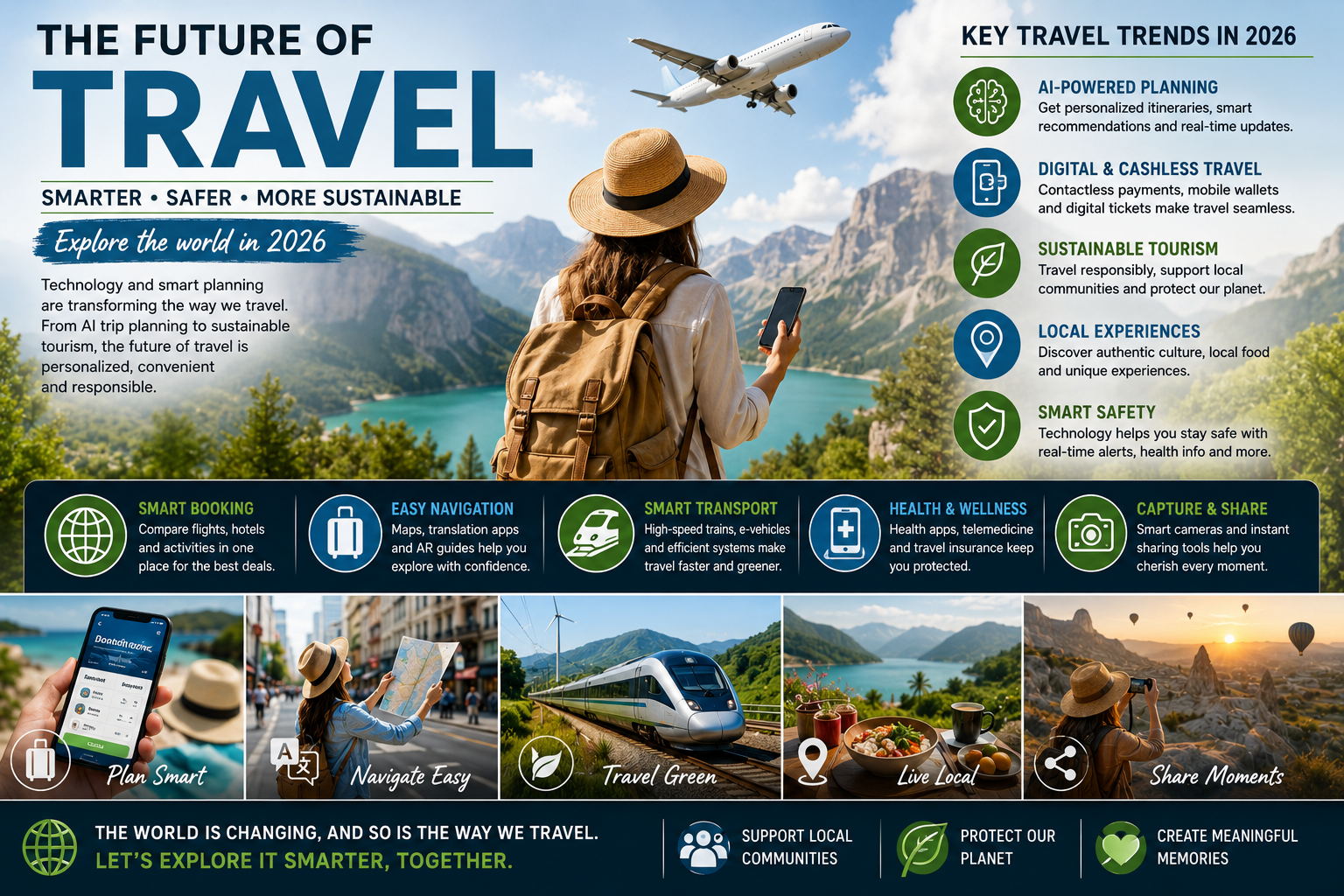
Travel has always been about discovering new places, experiencing different cultures, and creating memories. But the way people plan and experience trips is changing rapidly. Technology, artificial intelligence, digital payments, personalized recommendations, sustainable tourism, and flexible booking options are transforming modern travel.
In 2026, travelers have more tools than ever to research destinations, compare accommodations, plan itineraries, navigate unfamiliar cities, and communicate across language barriers. At the same time, travelers are becoming more conscious about sustainability, local experiences, safety, and the overall value of their trips.
The future of travel is not simply about visiting more destinations. It is about traveling smarter, more comfortably, and more responsibly.
Technology Is Transforming Travel
Technology has become an essential part of almost every stage of a journey.
Travelers can now use smartphones to:
Book flights and hotels
Check transportation schedules
Navigate unfamiliar destinations
Translate languages
Make digital payments
Store travel documents
Find restaurants and attractions
Receive real-time travel updates
Mobile technology has reduced many of the difficulties traditionally associated with international travel.
Instead of carrying printed maps and booking confirmations, travelers can keep most essential information in one digital device.
AI-Powered Travel Planning
Artificial intelligence is becoming one of the most interesting developments in travel.
AI tools can help travelers build personalized itineraries based on their interests, budget, available time, and preferred travel style.
For example, a traveler interested in history, local food, and photography could receive an itinerary designed around museums, historic neighborhoods, restaurants, and scenic locations.
AI can also help reorganize plans when circumstances change.
If a flight is delayed or bad weather affects an outdoor activity, an intelligent travel assistant could suggest alternative activities.
However, travelers should still verify important information such as opening hours, visa requirements, transportation schedules, and booking conditions before relying on automated recommendations.
Personalized Travel Experiences
Modern travelers increasingly want experiences that match their individual interests.
Some people prefer luxury resorts, while others want adventure, cultural experiences, nature, or budget-friendly travel.
Travel companies can use customer preferences to provide more personalized recommendations.
This could include:
Personalized hotel suggestions
Restaurant recommendations
Activity recommendations
Destination ideas
Customized itineraries
Travel alerts
Personalization can make travel planning faster while helping travelers discover experiences that fit their interests.
Sustainable Tourism
Sustainability is becoming an increasingly important part of travel.
Tourism can generate significant economic benefits for destinations, but large numbers of visitors can also put pressure on local communities, natural environments, water resources, and cultural sites.
Responsible travelers can reduce their impact by:
Supporting local businesses
Avoiding unnecessary waste
Respecting local customs
Using public transportation where practical
Choosing environmentally responsible accommodations
Avoiding damage to natural areas
Traveling during less crowded periods
Sustainable travel does not necessarily mean giving up comfort.
It means making thoughtful choices that help destinations remain attractive and livable for future generations.
The Rise of Local Experiences
Many travelers are moving away from simply visiting famous tourist attractions.
They increasingly want authentic experiences.
A traveler may prefer taking a local cooking class, visiting a traditional market, exploring a neighborhood, or learning about regional crafts instead of spending the entire trip at major tourist landmarks.
Local experiences can also benefit communities because tourism spending goes directly to smaller businesses and local service providers.
This creates a more meaningful relationship between travelers and destinations.
Digital Payments Make International Travel Easier
Digital payment technology has transformed the travel experience.
Travelers can increasingly use mobile wallets, contactless cards, and digital banking services while abroad.
This can reduce the need to carry large amounts of cash.
However, travelers should still prepare for situations where digital payments may not be available.
Keeping a small amount of local currency and having more than one payment method can provide useful backup.
Travelers should also inform their financial institutions about international travel when necessary and understand foreign transaction fees.
Smart Airports and Transportation
Airports are also becoming more technology-driven.
Digital boarding passes, automated check-in, biometric identification, baggage tracking, and real-time flight notifications can reduce waiting times and improve the passenger experience.
Artificial intelligence can also help airlines and airports manage operations, predict delays, optimize routes, and improve resource allocation.
For travelers, this can mean a smoother journey from check-in to boarding.
Travel Safety in the Digital Age
Technology can improve travel safety, but it also creates new risks.
Travelers increasingly depend on smartphones for navigation, banking, communication, and digital documents.
Losing access to a phone or account while abroad can therefore create serious inconvenience.
Travelers should consider:
Using strong passwords
Enabling two-factor authentication
Keeping backup copies of important documents
Avoiding suspicious public Wi-Fi networks
Using official booking platforms
Monitoring financial transactions
Keeping emergency contact information accessible
A digital backup of passports, visas, insurance information, and reservations can be particularly useful.
Choosing the Right Accommodation
Accommodation is no longer simply about finding a place to sleep.
Travelers can choose among hotels, resorts, apartments, hostels, guesthouses, eco-lodges, and other options.
When selecting accommodation, travelers should consider:
Location
Reviews
Safety
Transportation access
Cancellation policies
Included services
Total cost
Local taxes and additional fees
The cheapest room is not always the best value.
A slightly more expensive accommodation in a convenient location may reduce transportation costs and save significant time.
Travel on a Budget
Travel does not always have to be expensive.
Budget-conscious travelers can reduce costs through careful planning.
Some useful strategies include:
Comparing transportation options
Traveling during less busy periods
Booking accommodations outside premium tourist areas
Using public transportation
Eating at local restaurants
Choosing free or low-cost attractions
Avoiding unnecessary baggage fees
Comparing total booking costs rather than headline prices
Flexible dates can also provide more options.
However, travelers should avoid choosing an extremely cheap option without checking reviews, safety information, cancellation policies, and additional charges.
The Importance of Travel Insurance
Unexpected problems can turn a planned vacation into an expensive experience.
Depending on the destination and policy, travel insurance can potentially provide protection for situations such as trip cancellation, medical emergencies, lost baggage, or travel disruptions.
Travelers should carefully read policy terms before purchasing insurance.
Coverage differs significantly between policies and destinations.
International travelers should pay particular attention to medical coverage and exclusions.
Cultural Awareness
One of the most valuable aspects of international travel is learning about other cultures.
Travelers should research basic cultural expectations before visiting a destination.
This can include:
Appropriate clothing
Greetings
Dining etiquette
Photography rules
Religious customs
Public behavior
Tipping practices
Respecting local traditions makes travel more enjoyable and helps create positive relationships with local communities.
Even learning a few basic words in the local language can make interactions more pleasant.
Travel and Mental Well-Being
Travel can provide an opportunity to disconnect from daily routines.
Exploring new environments, spending time in nature, experiencing different cultures, and taking a break from work can help travelers feel refreshed.
However, overly packed itineraries can have the opposite effect.
Travelers do not need to visit every attraction.
Leaving free time in the itinerary can make a trip more enjoyable and reduce stress.
Sometimes the best travel memories come from unplanned moments.
The Future of Travel
The travel industry is likely to become increasingly personalized and technology-driven.
AI travel assistants may become more capable of creating dynamic itineraries.
Smart hotels could personalize rooms based on guest preferences.
Airports may increasingly use biometric and automated systems.
Digital payments could become even more widespread.
Virtual reality could also help travelers preview destinations before booking.
At the same time, sustainability is likely to become more important.
Travel companies and destinations will need to balance tourism growth with environmental protection and community interests.
The future traveler will therefore have more technology available—but responsible decision-making will remain essential.
Conclusion
Travel in 2026 is becoming smarter, more personalized, and increasingly connected.
Technology is making it easier to research destinations, plan itineraries, make payments, navigate unfamiliar places, and manage unexpected changes. Artificial intelligence is adding another layer by helping travelers receive personalized recommendations and potentially adapt their plans in real time.
But technology is only one part of a successful journey.
Responsible travel also requires cultural awareness, safety planning, financial preparation, flexibility, and respect for local communities.
The best trips are not necessarily the ones with the most activities or the most expensive accommodations.
They are the trips that combine good planning with curiosity, flexibility, and meaningful experiences.
As technology continues to reshape tourism, travelers have an opportunity to explore the world more efficiently while becoming more responsible visitors.
The future of travel is ultimately not just about getting somewhere faster.
It is about making every journey safer, smarter, more sustainable, and more memorable.
Frequently Asked Questions (FAQs)
1. What are the biggest travel trends in 2026?
Major travel trends include AI-powered trip planning, personalized experiences, sustainable tourism, digital payments, smart transportation, local experiences, and technology-driven travel services.
2. How can AI help with travel planning?
AI can help travelers research destinations, create itineraries, recommend activities, organize schedules, and suggest alternatives when plans change. Important information should still be verified before booking.
3. How can I travel on a budget?
Compare transportation and accommodation prices, travel during less crowded periods, use public transportation, choose local restaurants, and look for free or low-cost attractions.
4. Is travel insurance necessary?
Travel insurance can provide useful financial protection against certain unexpected events, including medical emergencies, cancellations, and baggage problems. The appropriate coverage depends on the destination and individual circumstances.
5. How can travelers practice sustainable tourism?
Travelers can support local businesses, reduce waste, use public transportation when practical, respect natural environments, and choose responsible accommodations and tourism activities.
6. What should I check before booking a hotel?
Check the hotel's location, reviews, cancellation policy, total price, transportation access, safety information, and any additional fees.
7. Are digital payments safe while traveling?
Digital payments can be convenient, but travelers should use secure devices, enable two-factor authentication, monitor transactions, and keep a backup payment method and some local currency.
8. Why are local experiences becoming popular?
Local experiences allow travelers to learn about a destination's culture, food, traditions, and communities beyond conventional tourist attractions.
9. How can I stay safe while traveling internationally?
Research the destination, protect important documents, use secure payment methods, keep emergency contacts available, follow local laws, and remain aware of your surroundings.
10. Should I plan every activity before traveling?
Not necessarily. Planning important bookings in advance is useful, but leaving free time can make trips less stressful and allow travelers to discover unexpected experiences.
11. What documents should I carry when traveling internationally?
Depending on the destination, travelers may need a passport, visa, tickets, accommodation details, travel insurance information, and other required documentation.
12. How can technology improve airport travel?
Digital check-in, mobile boarding passes, baggage tracking, automated systems, real-time notifications, and biometric technologies can make airport journeys more efficient.
13. What is responsible tourism?
Responsible tourism means traveling in ways that respect local communities, cultures, economies, and natural environments while minimizing unnecessary negative impacts.
14. Is it better to stay in the city center?
Not always. City-center accommodation can save transportation time, but staying outside major tourist areas may offer lower prices and a more local atmosphere.
15. How can travelers avoid unnecessary expenses?
Compare the total cost of bookings, check additional fees, avoid unnecessary upgrades, use affordable transportation, and plan major expenses before departure.
16. What is the best way to experience local culture?
Try local food, visit community markets, learn basic local phrases, participate in cultural activities, and respect local customs and traditions.
17. Can AI replace travel agents?
AI can automate many research and planning tasks, but human travel professionals can still provide valuable expertise, especially for complex itineraries, special requirements, and unexpected situations.
18. How can travelers protect their digital information?
Use strong passwords, enable two-factor authentication, keep devices updated, avoid suspicious links, and be careful when connecting to unsecured public networks.
19. Why is sustainable travel important?
Responsible tourism can help protect natural environments, support local economies, preserve cultural heritage, and ensure destinations remain viable for future generations.
20. What will travel look like in the future?
Future travel is likely to become increasingly personalized and technology-driven, with AI assistants, smart transportation, digital identity, automated services, and greater emphasis on sustainability and authentic experiences.
The future of travel will depend on balancing convenience with responsibility, making technology-driven travel more sustainable and culturally respectful as destinations and travelers adapt.