Bitcoin (BTC) has transformed the global financial landscape by introducing a new form of digital money that operates without depending on traditional banks or centralized financial institutions. Since its launch in 2009, Bitcoin has grown from an experimental digital currency into one of the most recognized and influential assets in the cryptocurrency market.
Often described as digital gold, Bitcoin has attracted individual investors, technology enthusiasts, financial institutions, businesses, and governments. Its decentralized structure, limited supply, transparent transaction system, and global accessibility have made it a major topic in discussions about the future of money.
Bitcoin is more than a digital coin. It represents a different approach to financial ownership, payments, and monetary systems. Its underlying blockchain technology allows people to transfer value through a distributed network without requiring a central authority to approve every transaction.
In this comprehensive guide, we explore how Bitcoin works, its technology, mining process, investment potential, security, major advantages, risks, and possible future developments.
1. What Is Bitcoin (BTC)?
Bitcoin is a decentralized digital currency that enables users to send and receive value over the internet. It operates through a peer-to-peer network, meaning transactions can take place directly between participants without requiring a traditional bank or payment processor.
Bitcoin was introduced in a white paper published in 2008 by an individual or group using the name Satoshi Nakamoto. The network officially launched in January 2009.
Unlike traditional currencies issued by central banks, Bitcoin is not controlled by a single government, company, or financial institution. Its transactions are recorded on a public blockchain maintained by a distributed network of computers.
The native currency of this network is called BTC.
Some of Bitcoin's defining characteristics include:
Decentralized operation.
A maximum supply of 21 million BTC.
Publicly verifiable transactions.
Peer-to-peer transfers.
Cryptographic security.
A global network accessible through compatible wallets.
No central authority responsible for issuing or managing the currency.
These features have helped establish Bitcoin as a major innovation in digital finance.
2. Who Created Bitcoin?
Bitcoin was introduced by the pseudonymous creator Satoshi Nakamoto.
In October 2008, Satoshi published a document titled "Bitcoin: A Peer-to-Peer Electronic Cash System." The paper described a digital payment system designed to operate without relying on traditional financial intermediaries.
The Bitcoin network went live on January 3, 2009, when its first block, known as the Genesis Block, was created.
Satoshi Nakamoto contributed to Bitcoin's early development before gradually disappearing from public communication.
The creator's real identity remains unconfirmed. Many theories have appeared over the years, but no publicly established evidence has conclusively identified Satoshi.
Bitcoin's development has continued through an open-source community of developers, researchers, miners, businesses, and users.
3. How Does Bitcoin Work?
Bitcoin uses blockchain technology to maintain a shared record of transactions.
When someone sends Bitcoin, the transaction is broadcast to the network. Nodes check whether the transaction follows the protocol's rules, including whether the sender has sufficient available funds and whether the digital signatures are valid.
Transactions are then collected into blocks. Miners compete to add new blocks through a process called Proof of Work.
Once a block is accepted by the network, it becomes part of the blockchain.
The process can be summarized as follows:
A user creates a Bitcoin transaction through a wallet.
The transaction is digitally signed using the appropriate private key.
The transaction is broadcast to the Bitcoin network.
Network nodes verify that it follows Bitcoin's rules.
Miners include eligible transactions in a candidate block.
Proof of Work is used to compete for the right to add the next block.
The accepted block becomes part of the blockchain.
Each new block builds on the previous block, creating a chronological record that is difficult to alter.
4. What Is Bitcoin Blockchain Technology?
A blockchain is a distributed digital ledger that records transactions in connected blocks.
Bitcoin's blockchain is maintained by thousands of independent participants around the world. Instead of depending on one central database, the network uses a shared system that allows participants to independently verify transactions and blocks.
Each block contains information such as:
A collection of Bitcoin transactions.
A reference to the previous block.
A timestamp.
Mining-related information.
A cryptographic proof that satisfies the network's difficulty requirements.
The connection between blocks helps protect the transaction history.
Changing an older block would require an attacker to redo the associated Proof of Work and overcome the network's cumulative computational power. This makes rewriting established Bitcoin history extremely difficult under normal network conditions.
The blockchain is publicly accessible, although wallet addresses do not automatically reveal the real-world identity of their owners.
5. Why Does Bitcoin Have a Limited Supply?
One of Bitcoin's most important features is its maximum supply of 21 million BTC.
Unlike many traditional currencies, Bitcoin's issuance follows rules written into its protocol. New BTC enters circulation through block rewards paid to miners.
The number of new bitcoins issued with each block decreases over time through scheduled events known as halvings.
Bitcoin's limited supply is one reason it is often compared with gold.
Supporters argue that a predictable issuance schedule makes Bitcoin an alternative monetary asset, particularly for people concerned about currency inflation and the expansion of traditional money supplies.
However, limited supply alone does not guarantee that Bitcoin's market price will increase. Demand, investor confidence, regulation, liquidity, and broader economic conditions also matter.
6. What Is Bitcoin Mining?
Bitcoin mining is the process through which specialized computers compete to add new blocks to the blockchain.
Bitcoin uses a Proof of Work consensus mechanism. Miners repeatedly perform computational calculations to find a valid block hash that meets the network's current difficulty requirement.
The successful miner can add a block and receive the applicable block reward and transaction fees.
Bitcoin mining performs several important functions:
Helps validate transactions.
Adds new blocks to the blockchain.
Supports the network's decentralized consensus.
Makes historical transaction changes computationally expensive.
Introduces new BTC into circulation according to protocol rules.
Mining requires specialized hardware, electricity, cooling systems, and technical management.
As the industry has developed, large-scale mining operations and mining pools have become significant participants in the Bitcoin ecosystem.
7. What Is Bitcoin Halving?
Bitcoin halving is a scheduled event that reduces the amount of new BTC awarded to miners for adding a block.
The reward is reduced by 50% approximately every 210,000 blocks, or roughly every four years.
The most recent halving occurred in April 2024, reducing the block subsidy from 6.25 BTC to 3.125 BTC.
Halving events are important because they slow the rate at which new bitcoins enter circulation.
Historically, halvings have attracted considerable attention from traders and long-term investors. However, they do not guarantee a price increase. Market performance depends on several factors, including demand, liquidity, economic conditions, and investor expectations.
8. Why Is Bitcoin Called Digital Gold?
Bitcoin is frequently called digital gold because some of its characteristics resemble those of gold.
Both assets have a limited or constrained supply, are globally recognized, and can be held outside traditional banking systems.
Bitcoin also offers characteristics that physical gold does not provide in the same way:
Digital Ownership: Bitcoin can be held and managed through compatible digital wallets.
Global Transferability: BTC can be transferred across borders through the internet.
Divisibility: One bitcoin can be divided into 100 million smaller units called satoshis.
Public Verification: Bitcoin transactions can be independently verified through blockchain infrastructure.
Predictable Issuance: Bitcoin's protocol defines how new BTC is issued.
However, Bitcoin and gold are not identical. Gold has a long history as a physical commodity, while Bitcoin is a relatively young digital asset with a different risk profile.
9. Bitcoin as an Investment Asset
Bitcoin has become an important asset in discussions about digital investment and portfolio diversification.
Some investors view BTC as a long-term store-of-value experiment, while others trade it based on short-term price movements.
There are several reasons investors may consider Bitcoin:
Its limited maximum supply.
Its global accessibility.
Its decentralized network.
Growing awareness of digital assets.
Interest from financial institutions.
Its established position in the cryptocurrency market.
Nevertheless, Bitcoin is highly volatile. Its price can rise or fall sharply, and past performance does not guarantee future results.
Investors should understand their financial objectives, risk tolerance, and time horizon before making decisions.
10. What Factors Influence Bitcoin's Price?
Bitcoin's market price is affected by several interconnected factors.
Supply and Demand
Bitcoin has a limited maximum supply. Its market price is influenced by how much BTC buyers want relative to how much sellers are willing to offer.
Institutional Investment
Interest from financial institutions, asset managers, and investment products can influence market demand and investor sentiment.
Government Regulation
Rules concerning exchanges, taxation, custody, investment products, and cryptocurrency payments can affect Bitcoin's adoption and market activity.
Global Economic Conditions
Inflation, interest rates, currency movements, and financial market liquidity can influence demand for risk assets such as Bitcoin.
Market Sentiment
News, social media discussions, major announcements, and investor expectations can cause rapid changes in trading activity.
Bitcoin Halving
Halving reduces the amount of new BTC issued through mining. Its effect on price depends on broader market conditions and demand.
Technology and Network Development
Improvements to Bitcoin infrastructure, wallet services, payment applications, and the Lightning Network can influence its usefulness and adoption.
11. Bitcoin Wallets: How to Store BTC
A Bitcoin wallet is a tool that allows users to manage the cryptographic keys needed to access and spend their BTC.
Bitcoin itself is recorded on the blockchain. A wallet manages the keys that prove ownership and authorize transactions.
There are several wallet categories.
Hot Wallets
Hot wallets are connected to the internet. They are commonly used for everyday transfers and convenient access to BTC.
Cold Wallets
Cold wallets keep private keys offline. Hardware wallets are a popular option for users who want additional protection against online threats.
Hardware Wallets
These are physical devices designed to store private keys securely and sign transactions without exposing those keys directly to an internet-connected computer.
Mobile and Desktop Wallets
Software wallets allow users to manage Bitcoin through smartphones or computers. Their security depends on the wallet provider, device protection, and user practices.
Regardless of the wallet type, protecting the recovery phrase is essential.
12. Bitcoin Security: How to Protect Your Investment
Bitcoin's cryptographic design provides important security features, but users can still lose funds through scams, theft, mistakes, or compromised devices.
The following practices can help reduce risks:
Use reputable wallet software or hardware.
Keep your recovery phrase private.
Never share private keys with anyone.
Enable additional account security where available.
Verify recipient addresses before sending BTC.
Avoid suspicious investment links and messages.
Keep devices and wallet software updated.
Be cautious of promises of guaranteed cryptocurrency profits.
Consider secure offline backups of recovery information.
Understand the risks before using third-party custody services.
Bitcoin transactions are generally irreversible. If BTC is sent to the wrong address, recovering it may be impossible.
13. What Is the Bitcoin Lightning Network?
The Lightning Network is a Layer 2 payment protocol designed to support faster and potentially lower-cost Bitcoin transactions.
It operates through payment channels established between participants. These channels allow multiple transactions to occur without recording every individual payment directly on the Bitcoin blockchain.
The main Bitcoin blockchain is then used for important settlement operations.
Potential benefits include:
Faster payment experiences.
Lower costs for many small transactions.
Support for micropayments.
Greater payment flexibility.
Additional options for merchants and payment services.
The Lightning Network is an important development in efforts to make Bitcoin more practical for everyday payments.
However, users should understand channel management, liquidity requirements, wallet compatibility, and the risks associated with the specific services they use.
14. Bitcoin vs. Ethereum: Understanding the Difference
Bitcoin and Ethereum are two of the most influential cryptocurrency networks, but they have different objectives.
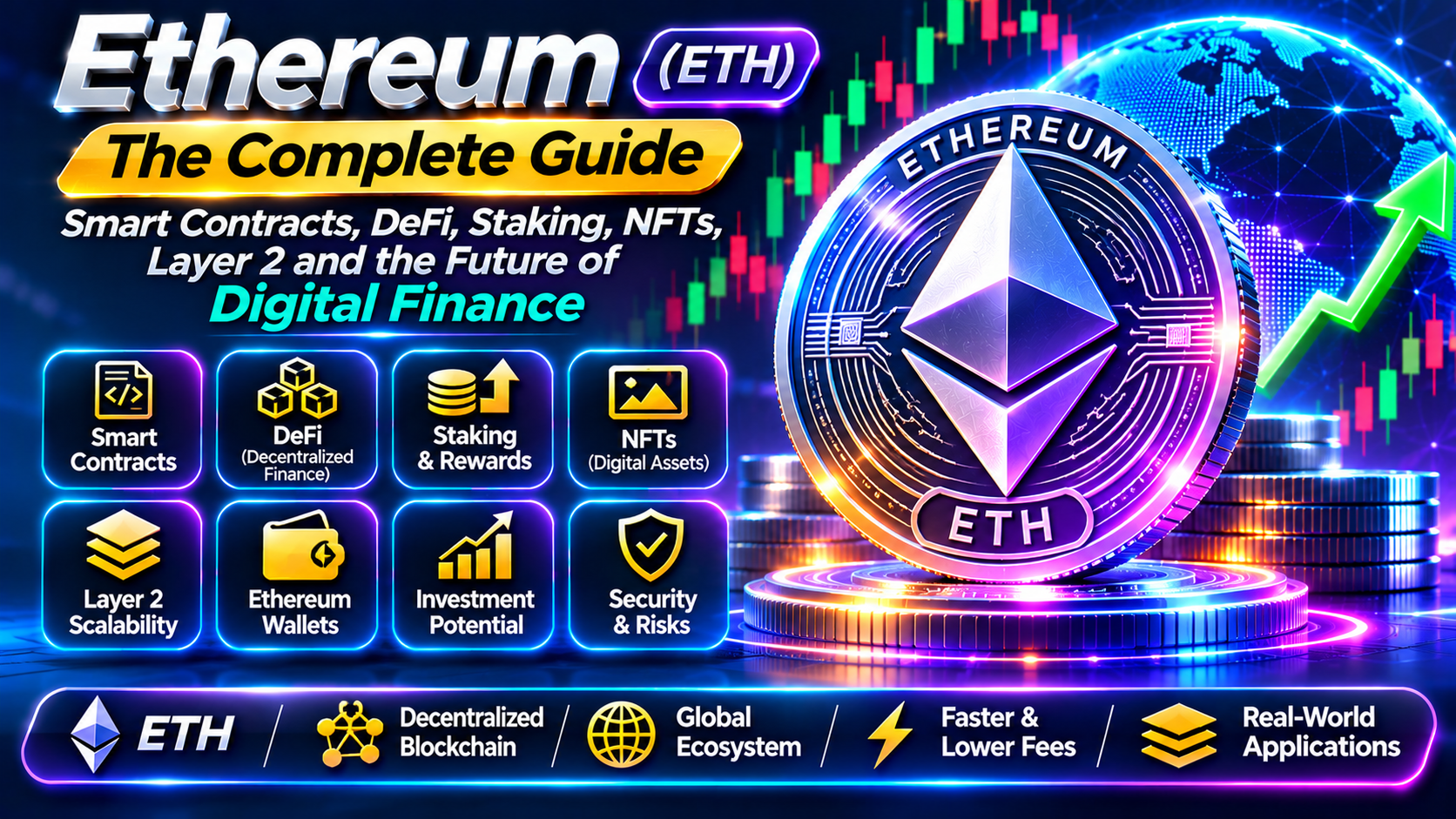
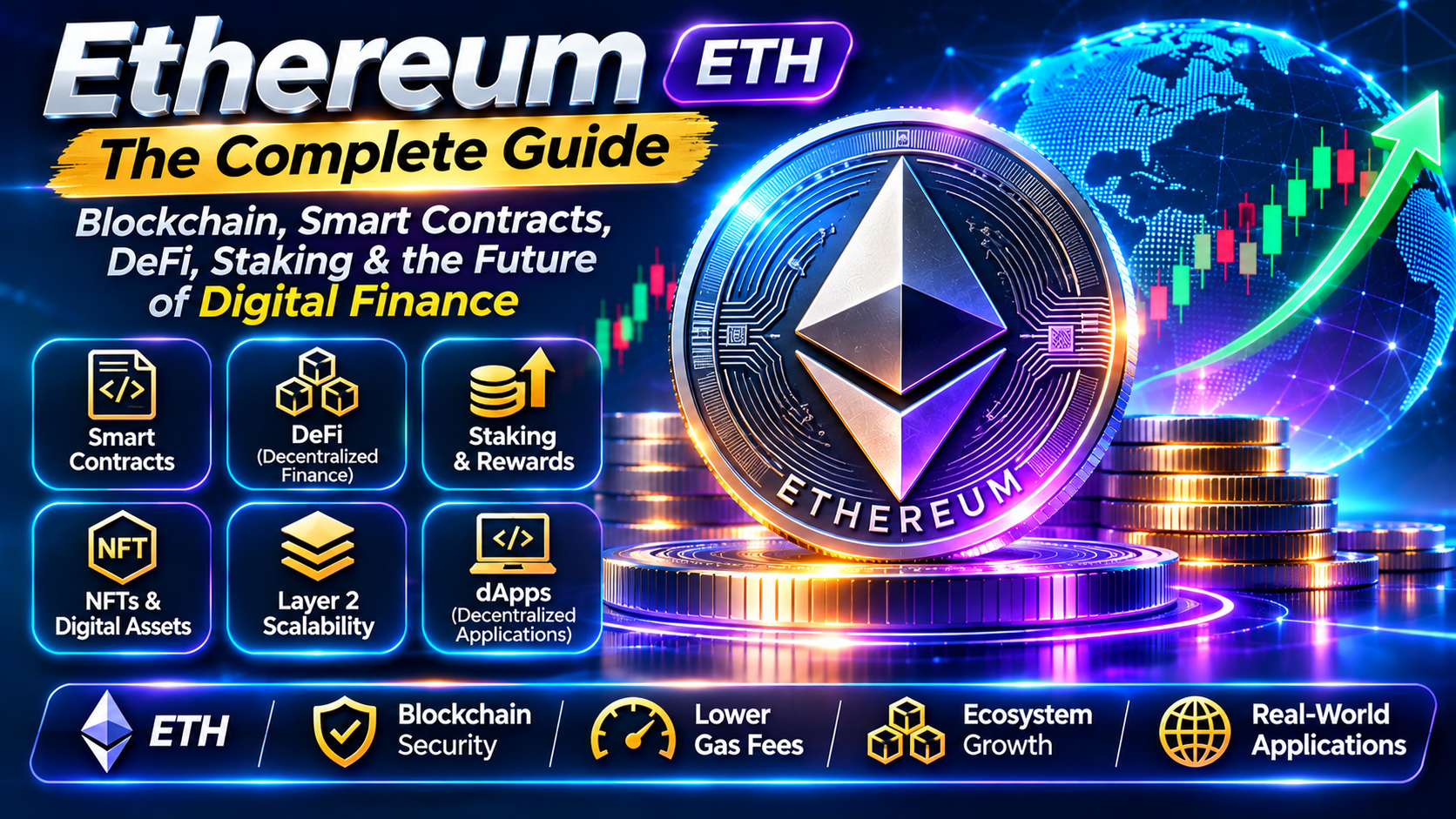
Feature | Bitcoin (BTC) | Ethereum (ETH) |
|---|---|---|
Main purpose | Decentralized digital money | Programmable blockchain platform |
Launch year | 2009 | 2015 |
Consensus mechanism | Proof of Work | Proof of Stake |
Supply design | Maximum 21 million BTC | No fixed maximum supply |
Native asset | BTC | ETH |
Major applications | Payments and digital store of value | Smart contracts, DeFi, NFTs and dApps |
Network security | Mining and Proof of Work | Validators and staking |
Bitcoin focuses on a relatively narrow monetary purpose, while Ethereum supports a wider range of programmable blockchain applications.
Neither asset is automatically better for every user or investment strategy.
15. Advantages of Bitcoin
Bitcoin offers several characteristics that distinguish it from traditional payment systems and other digital assets.
Decentralization
Bitcoin operates through a distributed network rather than depending on one central organization.
Limited Supply
Its maximum supply of 21 million BTC creates a predictable issuance structure.
Global Accessibility
Users with compatible wallets and internet access can interact with the network from many parts of the world.
Transparency
Transactions are recorded on a public blockchain and can be independently verified.
Divisibility
Bitcoin can be divided into satoshis, making it possible to transfer small fractions of a BTC.
Financial Innovation
Bitcoin has encouraged the development of new payment systems, custody services, investment products, and blockchain infrastructure.
16. Disadvantages and Risks of Bitcoin
Despite its advantages, Bitcoin has limitations that users should consider.
Price Volatility
BTC prices can experience significant movements over short periods.
Energy Consumption
Proof of Work mining requires substantial computing power and electricity. The environmental impact depends on factors such as energy sources, mining efficiency, and regional electricity markets.
Regulatory Uncertainty
Cryptocurrency laws vary across countries and can change over time.
Transaction Limitations
The Bitcoin base layer has limited transaction capacity compared with some conventional payment networks.
Security Responsibilities
Users who control their own wallets must protect their private keys and recovery phrases.
Scams and Fraud
Fraudulent exchanges, impersonation schemes, phishing attacks, and fake investment programs remain important risks.
No Guaranteed Returns
Bitcoin does not provide a guaranteed profit, and investors can lose a substantial portion or all of the money they invest.
17. How to Buy Bitcoin (BTC)
People generally purchase Bitcoin through cryptocurrency exchanges or other supported financial services.
The process commonly involves:
Research an exchange that operates legally in your jurisdiction.
Review its fees, security practices, and available services.
Create an account.
Complete identity verification if required.
Deposit funds through a supported payment method.
Search for Bitcoin (BTC).
Review the quoted price and transaction fees.
Place an order.
Consider whether to transfer BTC into a personal wallet.
The availability of exchanges, payment options, and legal requirements varies by location.
Always verify the official website and avoid buying cryptocurrency through unknown individuals or unverified social media accounts.
18. Bitcoin Adoption Around the World
Bitcoin has developed a global user base that includes individuals, businesses, technology companies, and financial institutions.
Different participants use Bitcoin for different reasons.
Some individuals view it as a long-term digital asset. Others explore it as a payment option or a way to transfer value internationally.
Businesses may accept BTC through specialized payment providers, while financial institutions may offer investment products or custody services.
Adoption varies significantly between countries because of local regulations, financial infrastructure, internet access, and public awareness.
Bitcoin's long-term success will depend partly on whether it can become more useful, accessible, secure, and practical for different types of users.
19. Bitcoin and the Future of Global Finance
Bitcoin has influenced discussions about how digital assets might fit into the global financial system.
Its decentralized structure challenges conventional assumptions about how money can be issued, transferred, and stored.
Several areas may influence Bitcoin's future development.
Digital Payments
Improvements in wallet technology and payment infrastructure could make Bitcoin easier to use for certain online and international transactions.
Institutional Participation
Financial institutions may continue exploring Bitcoin investment products, custody solutions, and related services.
Payment Infrastructure
The Lightning Network and other supporting technologies may improve Bitcoin's payment capabilities.
Financial Accessibility
Bitcoin's global availability may offer an alternative digital asset for people who have limited access to certain financial services, although access to reliable internet, secure wallets, and compliant exchanges remains important.
Integration With Financial Services
More businesses may explore cryptocurrency custody, payment processing, and investment services as regulations and infrastructure develop.
Bitcoin's future role is still uncertain. Technological improvements, public adoption, government policy, and market conditions will all influence its direction.
20. Important Bitcoin Trends to Watch
Anyone following Bitcoin should pay attention to developments beyond its daily market price.
Important areas include:
Bitcoin mining efficiency and energy sources.
Institutional participation in Bitcoin markets.
Cryptocurrency exchange security.
Regulatory developments.
Lightning Network adoption.
Bitcoin custody and wallet technology.
Changes in global investor demand.
Developments in payment infrastructure.
Long-term network security and mining economics.
Understanding these developments can provide a more complete picture of Bitcoin than focusing only on short-term price movements.
Frequently Asked Questions (FAQs)
1. What is Bitcoin (BTC)?
Bitcoin is a decentralized digital currency that operates on a peer-to-peer network. It allows users to transfer value without relying on a central bank or traditional payment intermediary.
2. Who invented Bitcoin?
Bitcoin was introduced by an individual or group using the pseudonym Satoshi Nakamoto. The creator's real identity has not been conclusively established.
3. When was Bitcoin launched?
Bitcoin's network launched in January 2009 with the creation of its Genesis Block.
4. How many Bitcoins will ever exist?
Bitcoin's protocol sets a maximum supply of 21 million BTC.
5. What is Bitcoin mining?
Bitcoin mining is the Proof of Work process through which miners compete to add new blocks to the blockchain and receive applicable rewards.
6. What is Bitcoin halving?
Bitcoin halving is an event that reduces the block subsidy paid to miners by 50% approximately every 210,000 blocks.
7. Is Bitcoin digital gold?
Bitcoin is often called digital gold because of its limited supply, global accessibility, and potential use as a store of value. However, it is more volatile and has a shorter history than physical gold.
8. Can Bitcoin be used for payments?
Yes. Bitcoin can be transferred between compatible wallets. The Lightning Network also supports additional payment capabilities.
9. Is Bitcoin a safe investment?
Bitcoin has a well-established blockchain network, but its market price is volatile. Investors can lose money and should carefully evaluate the risks.
10. What is a Bitcoin wallet?
A Bitcoin wallet manages the private keys needed to access and authorize transactions involving BTC.
11. Can Bitcoin transactions be reversed?
Bitcoin transactions are generally irreversible once confirmed. Users should carefully verify recipient addresses before sending funds.
12. What is the Lightning Network?
The Lightning Network is a Layer 2 protocol designed to support faster and potentially lower-cost Bitcoin payments through payment channels.
13. Is Bitcoin anonymous?
Bitcoin is pseudonymous rather than fully anonymous. Transactions are publicly visible on the blockchain, and addresses may sometimes be linked to real-world identities.
14. What is the difference between Bitcoin and Ethereum?
Bitcoin is primarily designed as decentralized digital money, while Ethereum is a programmable blockchain platform that supports smart contracts and decentralized applications.
15. What determines Bitcoin's market price?
Bitcoin's price is influenced by supply and demand, investor sentiment, institutional activity, regulation, liquidity, global economic conditions, and broader cryptocurrency market trends.
Conclusion
Bitcoin has introduced a major innovation in the way people think about digital money, financial ownership, and decentralized networks.
Its blockchain provides a public transaction record maintained through a distributed Proof of Work system. Its maximum supply of 21 million BTC gives it a distinctive monetary structure, while developments such as the Lightning Network continue to expand its potential payment applications.
However, Bitcoin also carries significant risks, including price volatility, security threats, regulatory uncertainty, and technical limitations.
Understanding Bitcoin requires looking beyond market headlines and daily price changes. Its technology, economic design, adoption, and evolving infrastructure all play important roles in its development.
As the global financial system continues to explore digital assets, Bitcoin remains one of the most important cryptocurrency networks to understand and follow.