Cryptocurrency has emerged as one of the most significant technological and financial developments of the modern digital era. Over the past decade, digital currencies have transformed discussions about money, online payments, financial independence, and investment opportunities. What initially started as an alternative payment system has developed into a global industry involving blockchain developers, financial institutions, technology companies, investors, and governments.
Today, cryptocurrencies such as Bitcoin, Ethereum, Solana, and XRP are recognized across international financial markets. Millions of people are exploring digital assets for investment, payments, trading, and participation in decentralized financial applications.
Unlike traditional currencies, which are generally issued and managed by central banks, many cryptocurrencies operate through decentralized networks. These networks use cryptographic technology and blockchain systems to verify transactions, maintain records, and support digital ownership.
As blockchain innovation continues to develop, cryptocurrency is becoming an increasingly important part of conversations about the future of global finance.
What Is Cryptocurrency?
Cryptocurrency is a digital asset that uses cryptographic techniques to secure transactions, verify ownership, and control the creation or transfer of digital units.
Most cryptocurrencies operate through blockchain technology, which provides a distributed system for recording transactions. Instead of depending entirely on a central financial institution, decentralized cryptocurrency networks use participating computers to validate transactions according to established network rules.
Bitcoin was introduced in 2009 under the pseudonym Satoshi Nakamoto. It introduced the concept of peer-to-peer digital money that could be transferred without requiring a traditional banking intermediary.
Since Bitcoin's introduction, thousands of cryptocurrency projects have entered the market. Some focus on digital payments, while others provide infrastructure for smart contracts, decentralized applications, gaming, financial services, and digital asset ownership.
Cryptocurrency is therefore much more than digital money. It represents a broader technological ecosystem that is influencing how digital transactions and financial applications operate.
Understanding Blockchain Technology
Blockchain is the fundamental technology behind many cryptocurrencies. It functions as a distributed digital ledger that records transactions in groups known as blocks.
Each block contains transaction information and a cryptographic reference connecting it to the previous block. This creates a chronological chain of records that is difficult to modify without detection.
Blockchain networks distribute copies of their ledgers among participating computers, commonly known as nodes. Depending on the network, transactions are validated through different consensus mechanisms.
The most important characteristics of blockchain technology include:
Decentralization: Many blockchain networks operate without a single organization controlling every transaction.
Transparency: Public blockchains allow participants to inspect transaction records.
Security: Cryptographic techniques help protect transaction information and network integrity.
Traceability: Blockchain records can help users follow the movement of digital assets.
Automation: Smart contracts can execute predefined instructions when specific conditions are satisfied.
Blockchain technology also has applications beyond cryptocurrency, including supply chain management, digital identity, financial settlement, and records management.
How Does Cryptocurrency Work?
Cryptocurrency transactions follow a digital process that allows users to transfer assets between blockchain addresses.
First, a user initiates a transaction through a cryptocurrency wallet. The wallet uses cryptographic keys to authorize the transaction and generate the required digital signature.
The transaction is then broadcast to the relevant blockchain network. Network participants verify whether the transaction follows the network's rules and whether the sender has sufficient funds.
Once accepted through the network's consensus process, the transaction is included in the blockchain.
The process generally involves five important stages:
A user creates a cryptocurrency transaction.
The wallet digitally signs the transaction.
The transaction is broadcast to the blockchain network.
Network validators or miners verify the transaction.
The confirmed transaction is recorded on the blockchain.
Transaction speed and fees depend on the blockchain network, its design, and current demand.
Major Types of Cryptocurrencies
The cryptocurrency industry includes several categories of digital assets. Each category serves different purposes within the digital economy.
1. Bitcoin (BTC)
Bitcoin is the first widely adopted decentralized cryptocurrency and remains the most recognized digital asset.
Its maximum supply is limited to 21 million coins. Bitcoin uses a proof-of-work consensus mechanism in which miners compete to validate transactions and add new blocks to the blockchain.
Many investors view Bitcoin as a long-term digital asset, while others use it for trading and transferring value.
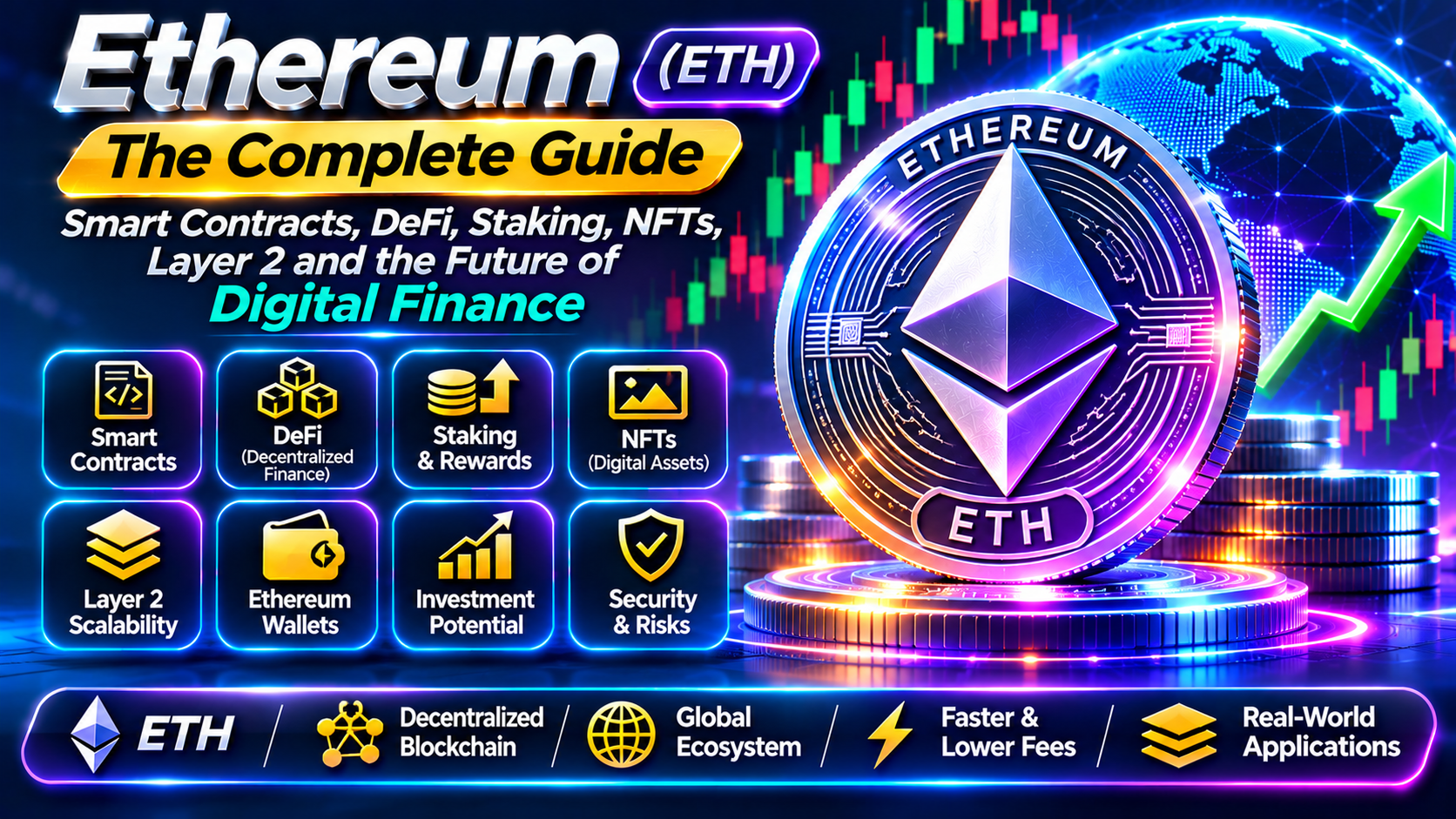
2. Ethereum (ETH)
Ethereum introduced programmable blockchain infrastructure through smart contracts.
Its network supports decentralized applications, decentralized finance, digital collectibles, and tokenization projects.
Ethereum uses proof-of-stake consensus, where validators participate in securing the network by staking ETH.
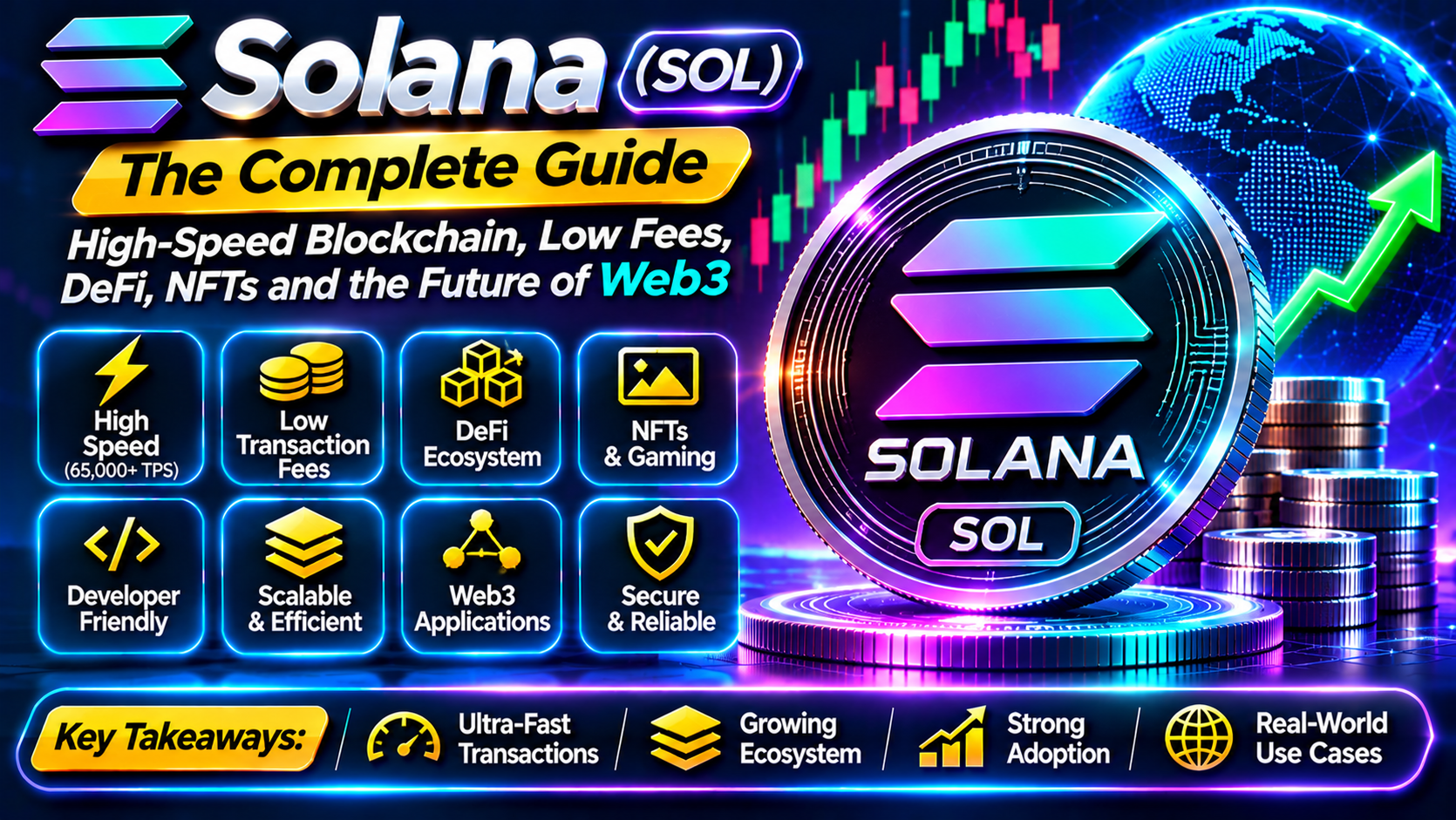
3. Solana (SOL)
Solana is a blockchain network designed to support high transaction capacity and decentralized applications.
Its ecosystem includes decentralized exchanges, gaming platforms, NFT marketplaces, and financial applications.
The network has attracted developers interested in building applications that require efficient transaction processing.
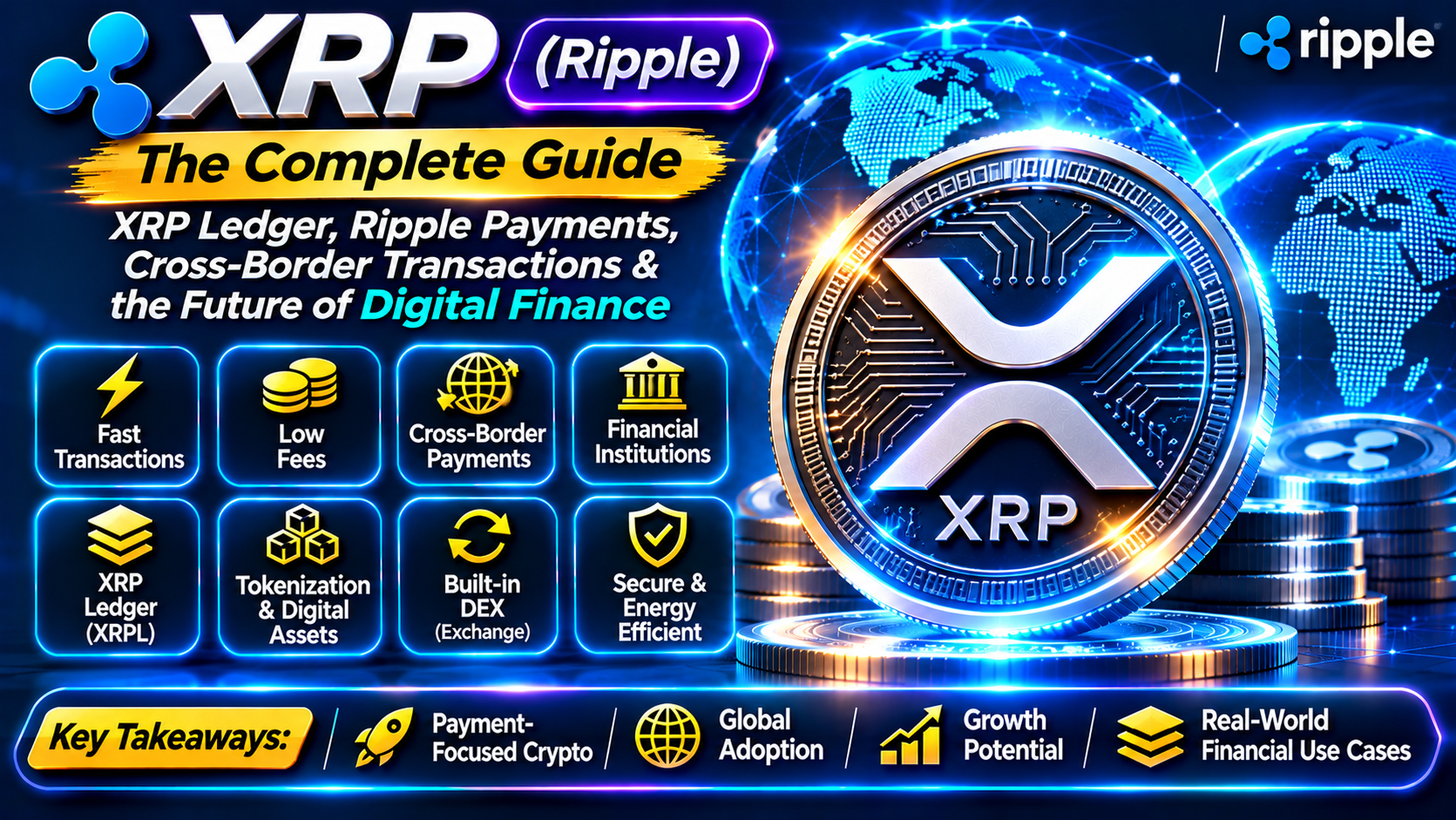
4. XRP
XRP is the digital asset associated with the XRP Ledger.
The network supports digital asset transfers and payment-related applications. Its design focuses on efficient settlement and transferring value between different participants.
5. Stablecoins
Stablecoins are digital assets designed to maintain a relatively stable value, often through a connection to traditional currencies such as the US dollar.
Examples include USDT and USDC.
Stablecoins are commonly used in cryptocurrency trading, digital transfers, and decentralized financial applications. However, their stability depends on the issuer, reserves, redemption arrangements, and applicable regulations.
Cryptocurrency Exchanges and Digital Trading
Cryptocurrency exchanges provide platforms where users can buy, sell, and exchange digital assets.
These platforms connect buyers and sellers through trading systems and order books. Some exchanges are centralized businesses, while others operate through decentralized protocols.
Centralized exchanges generally manage customer accounts and facilitate transactions through their own infrastructure.
Decentralized exchanges allow users to trade digital assets through blockchain-based smart contracts, often without depositing funds into a traditional exchange account.
Before choosing an exchange, users should consider:
Security and account protection.
Supported cryptocurrencies.
Trading fees and withdrawal charges.
Available deposit and withdrawal methods.
Regulatory status and operating jurisdiction.
Customer support and platform transparency.
Choosing a platform based only on low fees or promotional offers can create unnecessary risks.
Cryptocurrency Wallets and Digital Asset Security
A cryptocurrency wallet allows users to manage blockchain addresses and authorize transactions using private cryptographic keys.
There are several types of cryptocurrency wallets.
Hot Wallets: These wallets connect to the internet and are generally convenient for frequent transactions.
Cold Wallets: These wallets keep private keys offline, reducing exposure to certain online threats.
Hardware Wallets: These physical devices are designed to protect private keys and authorize transactions securely.
Software Wallets: These applications allow users to manage digital assets through computers or mobile devices.
One of the most important security principles in cryptocurrency is protecting private keys and recovery phrases. Anyone who gains access to these credentials may be able to control the associated digital assets.
Users should enable two-factor authentication where available, verify wallet addresses before sending funds, and avoid sharing recovery phrases with anyone.
Decentralized Finance (DeFi): A New Financial Ecosystem
Decentralized Finance, commonly known as DeFi, is an ecosystem of blockchain-based financial applications.
Traditional financial services often depend on banks, brokers, and other intermediaries. DeFi applications use smart contracts to automate certain financial operations.
Popular DeFi activities include:
Digital asset lending and borrowing.
Decentralized cryptocurrency trading.
Liquidity provision.
Yield-generating financial strategies.
Blockchain-based asset management.
DeFi has created new opportunities for developers and users interested in financial services built on open blockchain networks.
However, decentralized finance also introduces significant risks. Smart contract vulnerabilities, fraudulent applications, unstable token prices, and liquidity problems can result in financial losses.
Cryptocurrency Mining and Staking
Mining and staking are two important mechanisms used by different blockchain networks to maintain security and process transactions.
Cryptocurrency Mining
Mining is associated with proof-of-work blockchains such as Bitcoin.
Miners use specialized computing equipment to compete in solving cryptographic puzzles. Successful miners can add new blocks and receive rewards according to the network's rules.
Mining requires electricity, hardware investment, and technical knowledge. Its profitability depends on factors such as energy prices, equipment efficiency, mining difficulty, and cryptocurrency market prices.
Cryptocurrency Staking
Staking is commonly used by proof-of-stake networks.
Participants lock or delegate eligible cryptocurrency to support network validation. Depending on the protocol, validators may receive rewards for their participation.
Staking is different from mining because it does not require the same competitive computational process.
However, staking can involve lock-up periods, validator penalties, smart contract risks, and changing reward rates.
Benefits of Cryptocurrency
Cryptocurrency offers several potential advantages that have attracted attention from businesses and individual users.
Global Digital Transactions
Cryptocurrency networks can facilitate digital transfers across international borders without requiring the same banking infrastructure used by traditional payment systems.
Financial Accessibility
Digital asset networks may provide access to certain financial services for people who have limited access to traditional banking.
Transparency
Many public blockchains allow users to independently inspect transaction records and verify asset movements.
Financial Innovation
Blockchain infrastructure supports smart contracts, tokenization, decentralized applications, and new financial business models.
Digital Ownership
Cryptographic systems allow users to control digital assets through private keys and interact directly with blockchain networks.
Risks and Challenges of Cryptocurrency
Despite its technological potential, cryptocurrency carries substantial risks.
Market Volatility: Cryptocurrency prices can change dramatically within short periods, resulting in significant gains or losses.
Cybersecurity Threats: Exchanges, wallets, and decentralized applications may become targets of hackers.
Fraud and Scams: Fake investment platforms, fraudulent tokens, phishing attacks, and impersonation schemes remain major concerns.
Regulatory Uncertainty: Cryptocurrency laws differ between countries and can change as governments introduce new policies.
Technical Complexity: Users unfamiliar with blockchain networks may accidentally send assets to incorrect addresses or select incompatible networks.
Liquidity Risks: Some digital assets have limited trading activity, making it difficult to sell them at an expected price.
Understanding these challenges is essential before participating in cryptocurrency markets.
Cryptocurrency Regulations and Global Adoption
Governments and financial regulators worldwide are developing different approaches to cryptocurrency.
Some countries have introduced licensing systems and consumer protection requirements for cryptocurrency exchanges. Others have adopted more restrictive policies or placed limits on certain digital asset activities.
Regulation is important because cryptocurrency markets operate internationally while financial laws are generally implemented within individual jurisdictions.
Clear regulatory frameworks can help establish expectations for businesses, protect consumers, and reduce opportunities for fraudulent activities.
In Asia, cryptocurrency adoption has continued to develop, with institutional participation, stablecoins, and financial technology innovation attracting significant attention.
Businesses exploring cryptocurrency-related services must understand the laws applicable to their operating locations and target markets.
Cryptocurrency and the Future of Digital Payments
Digital payments are becoming an increasingly important part of modern commerce.
Cryptocurrency networks offer alternative ways to transfer digital value, while stablecoins provide an option designed to reduce the price volatility commonly associated with other cryptocurrencies.
Businesses are exploring blockchain-based payment systems for international settlements, digital transfers, and financial applications.
However, widespread adoption depends on several factors, including transaction costs, regulatory compliance, user experience, network scalability, and consumer protection.
Cryptocurrency is unlikely to replace every traditional payment method. Instead, blockchain-based services may become part of a broader financial ecosystem that includes banks, payment processors, and digital asset platforms.
Artificial Intelligence and Cryptocurrency
Artificial intelligence and blockchain technology are two major areas of digital innovation.
Their combination could support new applications involving automated transactions, decentralized computing, digital identity, and intelligent financial systems.
AI-powered tools may help analyze blockchain activity, identify suspicious transaction patterns, and support risk monitoring.
Blockchain technology may also provide infrastructure for recording certain digital interactions and managing access to decentralized services.
Nevertheless, combining these technologies introduces new security, privacy, and governance challenges. Developers must ensure that automated systems operate transparently and responsibly.
Tokenization and Real-World Assets
Tokenization is another emerging development in the cryptocurrency industry.
It involves representing ownership rights or interests in assets through digital tokens recorded on a blockchain.
Depending on applicable laws and the structure of the offering, tokenization may involve real estate, financial instruments, commodities, or other assets.
For example, a properly structured real estate tokenization project could represent fractional interests in a property.
Potential advantages include improved transferability, digital recordkeeping, and broader access to certain investment structures.
However, tokenization does not automatically guarantee legal ownership, liquidity, or investor protection. The underlying rights, custody arrangements, legal documentation, and regulatory requirements remain essential.
How to Research a Cryptocurrency Before Investing
Research is one of the most important steps before purchasing a digital asset.
Investors should understand what a cryptocurrency does, how its network operates, and whether the project has a meaningful purpose.
Important research areas include:
Project Purpose: Understand the problem the project aims to solve.
Development Team: Research the team's experience and public history.
Technology: Examine the blockchain architecture and technical documentation.
Tokenomics: Study token supply, distribution, unlock schedules, and utility.
Market Liquidity: Evaluate trading activity and exchange availability.
Security: Review independent audits and known security incidents.
Regulations: Understand the legal requirements in the relevant jurisdiction.
Investors should be especially careful with projects promising guaranteed profits or unusually high returns.
The Future of Cryptocurrency
The future of cryptocurrency will depend on the industry's ability to address existing challenges while developing useful real-world applications.
Several areas could influence its long-term development.
Improved Blockchain Scalability: Developers are working on technologies that could increase transaction capacity and improve network efficiency.
Institutional Participation: Financial institutions are exploring digital asset products, custody solutions, and blockchain-based settlement systems.
Stablecoin Development: Stablecoins may continue to play an important role in digital payments and cryptocurrency markets.
Real-World Asset Tokenization: Blockchain-based representations of traditional assets could introduce new methods of ownership and financial settlement.
Decentralized Applications: New applications may expand blockchain use in finance, gaming, identity management, and digital commerce.
Regulatory Development: Clearer rules could improve transparency and establish stronger consumer protection standards.
Although these developments offer potential opportunities, cryptocurrency adoption and market performance are not guaranteed. Technological progress does not necessarily translate into higher token prices.
Conclusion
Cryptocurrency has developed from an experimental digital payment concept into a broad technological and financial ecosystem. Bitcoin introduced decentralized digital money, Ethereum expanded blockchain functionality through smart contracts, and newer networks have introduced different approaches to scalability, payments, and decentralized applications.
Today, cryptocurrency is connected to several important areas of digital innovation, including decentralized finance, stablecoins, digital ownership, tokenization, and international payments.
However, the industry continues to face significant challenges involving market volatility, cybersecurity, fraud, liquidity, and regulatory uncertainty.
For individuals, investors, and businesses, understanding cryptocurrency requires looking beyond market prices and focusing on the technology, practical applications, and risks behind digital assets.
As blockchain innovation continues, cryptocurrency may influence the next generation of financial services and digital commerce. Its long-term success will depend on security, transparency, responsible innovation, and real-world usefulness.
Frequently Asked Questions (FAQs)
1. What is cryptocurrency?
Cryptocurrency is a digital asset that uses cryptography to secure transactions and generally operates through blockchain or other distributed ledger technology.
2. Who created cryptocurrency?
Bitcoin, the first widely adopted decentralized cryptocurrency, was introduced in 2009 by an individual or group using the name Satoshi Nakamoto.
3. What is blockchain technology?
Blockchain is a distributed digital ledger that records transactions in cryptographically linked blocks across a network of computers.
4. Is Bitcoin the same as cryptocurrency?
No. Bitcoin is one type of cryptocurrency. The broader cryptocurrency market includes thousands of other digital assets with different purposes and technologies.
5. What is the difference between Bitcoin and Ethereum?
Bitcoin primarily focuses on decentralized digital money, while Ethereum provides a programmable blockchain platform that supports smart contracts and decentralized applications.
6. How can someone buy cryptocurrency?
People generally purchase cryptocurrency through supported exchanges or other permitted platforms. Availability and legal requirements depend on the user's country.
7. What is a cryptocurrency wallet?
A cryptocurrency wallet is a tool that allows users to manage blockchain addresses and authorize transactions using cryptographic keys.
8. Is cryptocurrency safe?
Cryptocurrency carries risks, including market volatility, scams, hacking, and regulatory uncertainty. Secure wallet practices and independent research are essential.
9. What is decentralized finance?
Decentralized Finance, or DeFi, refers to blockchain-based financial applications that use smart contracts to provide services such as lending, borrowing, and trading.
10. What are stablecoins?
Stablecoins are digital assets designed to maintain a relatively stable value, often by referencing traditional currencies such as the US dollar.
11. What is cryptocurrency mining?
Mining is the process used by proof-of-work networks to validate transactions and add new blocks through computational work.
12. What is cryptocurrency staking?
Staking involves committing eligible digital assets to support a proof-of-stake blockchain network. Participants may receive rewards according to network rules.
13. Can cryptocurrency be used for international transactions?
Yes. Certain cryptocurrency networks support international digital transfers, although transaction fees, legal requirements, and network availability vary.
14. What is the biggest risk of cryptocurrency investment?
Major risks include extreme price volatility, cybersecurity threats, fraud, liquidity problems, and changing regulations.
15. What is the future of cryptocurrency?
Potential developments include improved blockchain infrastructure, institutional adoption, stablecoin payments, tokenization, and decentralized applications. However, future adoption remains uncertain.
Disclaimer: This article is intended for educational and informational purposes only. It does not constitute financial, investment, or legal advice.