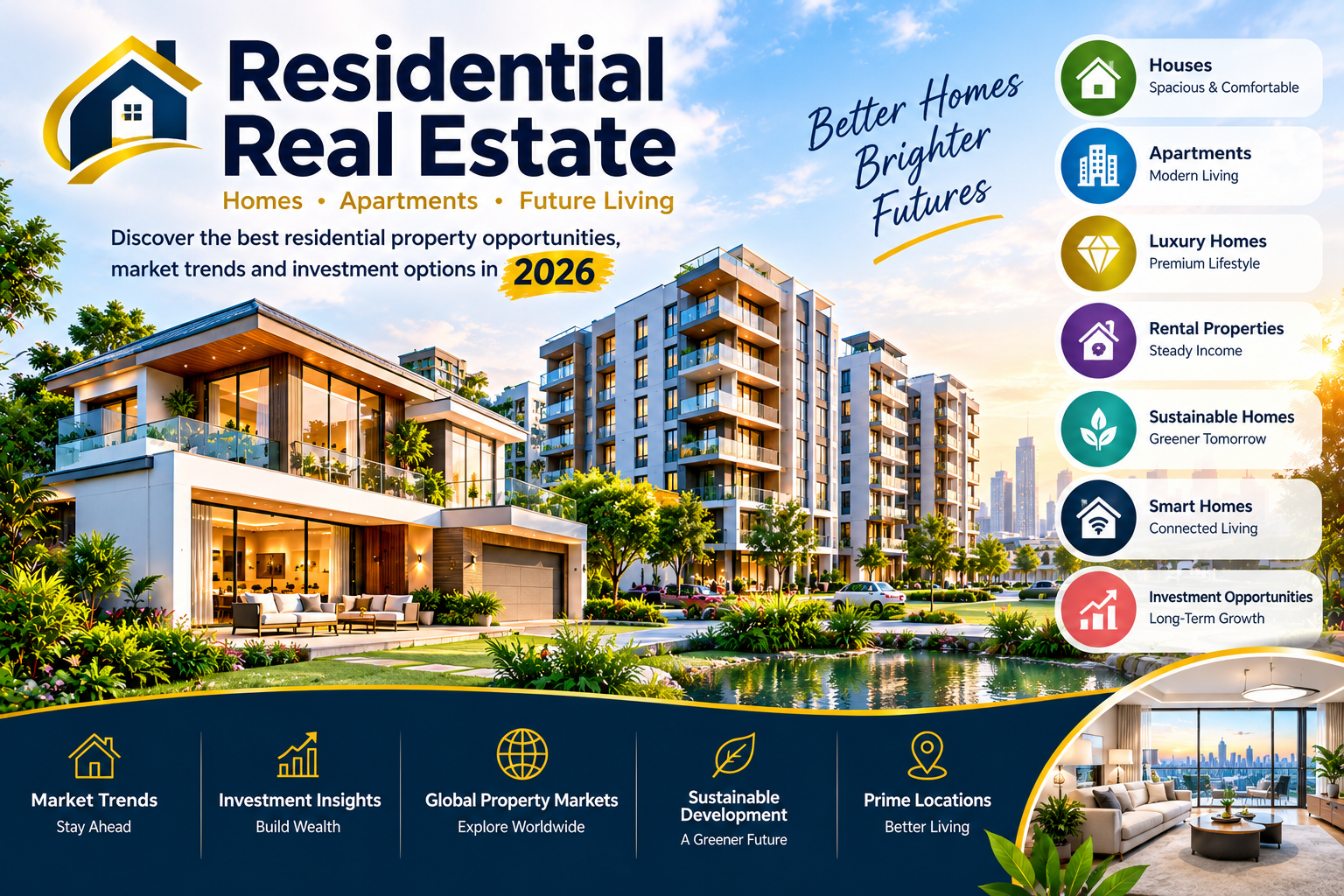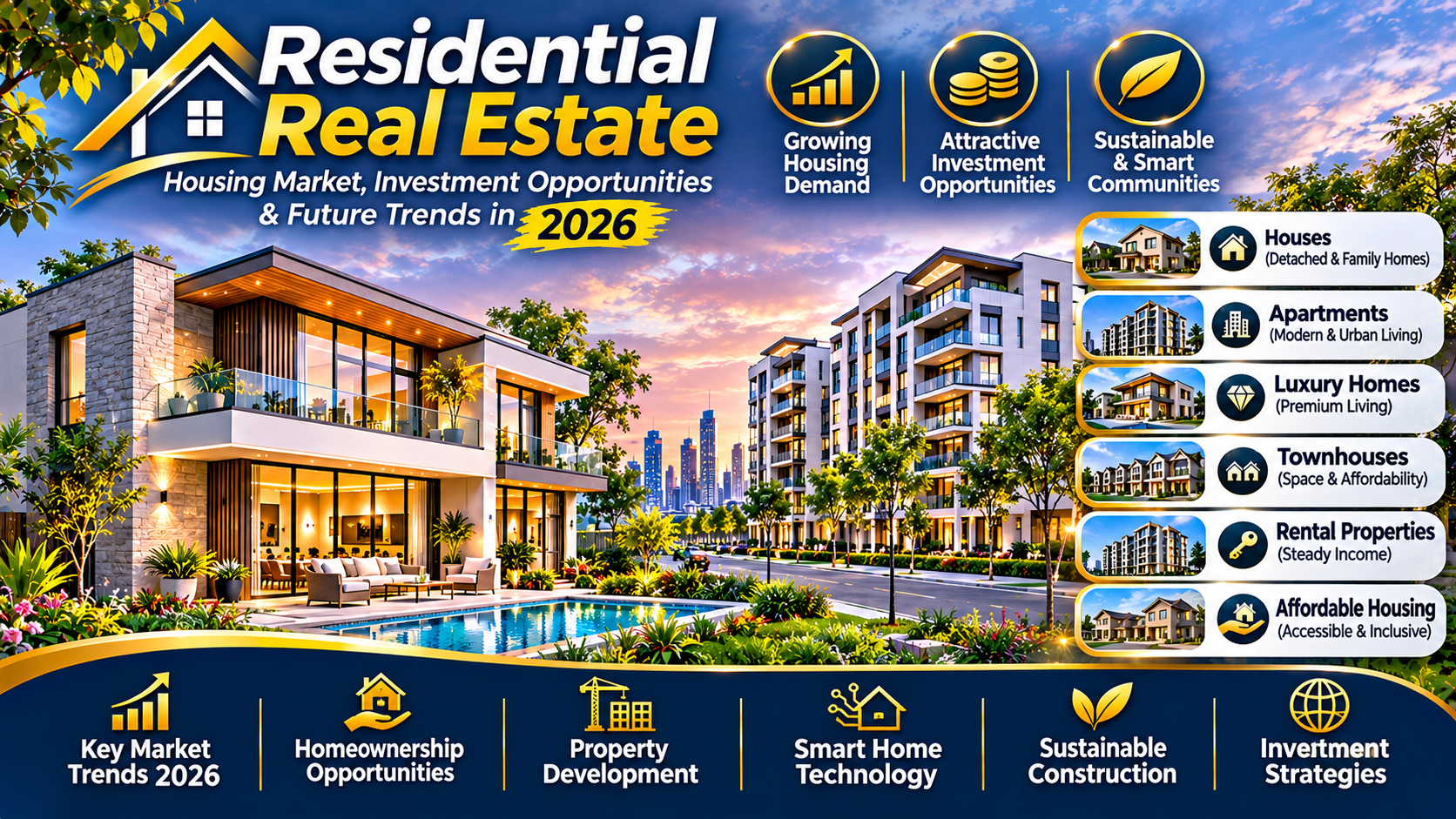
Residential real estate is a fundamental part of the global economy, providing homes for individuals, families, and communities while creating opportunities for property developers, landlords, investors, and construction businesses.
From modern city apartments and suburban houses to luxury villas and affordable housing communities, residential property reflects the changing needs of society. Population growth, urban expansion, household income, employment opportunities, and lifestyle preferences all influence where people choose to live and what types of homes they can afford.
In 2026, the residential property industry continues to adapt to changing economic conditions and consumer expectations. Buyers are paying closer attention to affordability, construction quality, energy efficiency, location, and financing options. Meanwhile, property developers are exploring modern designs, smart home technology, and more efficient construction methods.
Understanding these changes is important for anyone interested in purchasing a home, entering the rental market, developing residential projects, or evaluating property investment opportunities.
This guide explores the residential real estate industry, its major segments, housing market dynamics, property development strategies, investment considerations, and the trends shaping the future of homeownership.
What Is Residential Real Estate?
Residential real estate refers to land and buildings primarily designed for people to live in. It includes individually owned houses, apartments, condominiums, townhouses, rental properties, and larger residential communities.
Unlike commercial real estate, which focuses on business-related activities, residential property serves housing requirements.
The residential real estate ecosystem includes several important participants:
Homebuyers and homeowners
Residential property investors
Landlords and tenants
Property developers and builders
Real estate agents and brokers
Mortgage lenders and financial institutions
Architects and construction companies
Property management businesses
These participants contribute to the development, purchase, sale, rental, financing, and maintenance of residential properties.
Major Segments of the Residential Real Estate Industry
The residential property market includes different housing categories designed for different lifestyles, household sizes, and financial situations.
1. Detached and Single-Family Homes
Single-family homes are independent residential properties designed for individual households.
They typically include private entrances, bedrooms, bathrooms, kitchens, and living spaces. Depending on the property, they may also feature gardens, garages, driveways, and outdoor entertainment areas.
These homes appeal to families and buyers seeking privacy, space, and long-term ownership.
Important considerations include:
Neighborhood quality
Land size and property layout
Construction standards
Maintenance requirements
Access to schools and healthcare
Transportation and employment facilities
2. Apartments and Residential Towers
Apartments are individual housing units within larger residential buildings or complexes.
They are particularly common in densely populated cities where land availability and housing demand encourage vertical development.
Modern apartment projects may offer parking, elevators, security, fitness facilities, recreational spaces, and shared maintenance services.
Apartments can provide a practical housing option for professionals, smaller households, students, and first-time buyers.
3. Condominiums
Condominiums are individually owned residential units within shared developments.
Owners generally have rights over their individual units while common areas are managed through an association or another legally established arrangement.
Before purchasing a condominium, buyers should examine:
Ownership documents
Association fees
Maintenance arrangements
Building management
Shared facility expenses
Rules governing renovations and property use
4. Townhouses
Townhouses are residential properties that often share walls with neighboring homes and are arranged across multiple floors.
They can offer a balance between apartment living and detached homeownership.
Townhouse developments may include private entrances, small gardens, parking spaces, and shared community facilities.
5. Luxury Residential Properties
Luxury real estate includes premium villas, penthouses, waterfront homes, and exclusive residential developments.
These properties often feature distinctive architecture, spacious layouts, advanced security, landscaped outdoor areas, and high-end interiors.
Their market value can depend on location, exclusivity, construction quality, architectural design, and buyer demand.
6. Rental Housing
Rental housing includes properties owned by landlords and occupied by tenants through rental agreements.
This segment includes individual apartments, houses, multi-unit buildings, and professionally managed residential communities.
Rental housing is important for people who prefer flexibility or cannot currently afford homeownership.
For property owners, rental accommodation may provide recurring income, although vacancy, maintenance, taxation, and management costs must be considered.
7. Affordable Housing
Affordable housing focuses on providing homes that are financially accessible to households with limited or moderate incomes.
It is an important segment in cities where property prices and rental costs place pressure on household budgets.
Developers may explore smaller floor plans, efficient construction, alternative financing, and planned communities to make housing more accessible.
Understanding Residential Property Market Dynamics
Residential property markets are influenced by several interconnected economic and social factors.
Understanding these factors helps buyers, sellers, developers, and investors assess market conditions.
Housing Supply and Demand
The relationship between available housing and the number of potential buyers or tenants influences property prices and rental rates.
When demand exceeds available supply, competition for suitable housing may increase. Conversely, excessive construction or reduced household demand can create oversupply.
Developers should study local population growth, household formation, existing housing inventory, and planned construction before launching new projects.
Interest Rates and Mortgage Financing
Mortgage interest rates influence the affordability of home purchases.
Higher borrowing costs can increase monthly mortgage payments and reduce the purchasing power of buyers. Lower financing costs may make homeownership more accessible, depending on lending requirements and property prices.
Buyers should compare interest rates, loan terms, down payments, fees, and repayment obligations before selecting a mortgage.
Population Growth and Migration
Population growth and migration influence housing requirements.
Cities attracting workers, students, businesses, and new residents may experience increased demand for apartments, houses, and rental accommodation.
Residential developers often study population trends when selecting locations for new housing projects.
Employment and Household Income
Employment opportunities and income levels influence a household's ability to purchase or rent a home.
Locations with strong employment opportunities may attract new residents, supporting demand for different types of residential accommodation.
Construction Costs
Land, labor, building materials, permits, transportation, and financing all contribute to residential development costs.
Changes in these expenses can affect property prices, project timelines, and developer profitability.
Residential Real Estate Trends in 2026
The residential real estate industry is experiencing several important changes as buyers and developers adapt to new economic and lifestyle requirements.
1. Greater Focus on Housing Affordability
Affordability remains a major consideration in residential property decisions.
Many buyers are comparing smaller homes, apartments, rental accommodation, and locations outside expensive city centers.
Developers are exploring efficient floor plans and construction methods to control development costs.
2. Demand for Flexible Living Spaces
Modern households increasingly value functional living spaces that can accommodate work, education, relaxation, and family activities.
Homes with multifunctional rooms, practical storage, natural lighting, and flexible layouts can appeal to a wide range of buyers.
3. Smart Home Technology
Technology is becoming an important feature of residential developments.
Smart security systems, connected lighting, automated climate controls, and energy monitoring can improve convenience and help households manage their homes.
4. Energy-Efficient Construction
Energy-efficient homes are receiving greater attention because of operating expenses, environmental considerations, and changing building standards.
Developers may incorporate improved insulation, efficient windows, solar systems, and water-saving features.
5. Growth of Professionally Managed Rental Communities
Professionally managed rental housing provides tenants with organized maintenance, property services, and structured rental arrangements.
This model can appeal to residents seeking flexibility and landlords looking for more organized property operations.
6. Suburban and Secondary City Development
Housing demand is not limited to major metropolitan centers.
Some buyers explore smaller cities and suburban communities because of affordability, available space, transportation access, and changing work arrangements.
The suitability of these locations depends on employment opportunities, infrastructure, schools, healthcare, and local economic activity.
Residential Property Investment Strategies
Residential real estate offers different investment approaches. Each strategy has different financial requirements, responsibilities, and risk levels.
Long-Term Property Ownership
Some investors purchase residential property with the intention of holding it for several years.
The objective may include potential appreciation, future personal use, or rental income.
A long-term strategy requires careful consideration of location, purchase price, maintenance, financing, and market conditions.
Buy-to-Let Investment
Buy-to-let investment involves purchasing a residential property and renting it to tenants.
Potential rental income should be compared with operating costs and financing expenses.
Investors should calculate realistic rental income and account for vacancy, maintenance, insurance, management fees, and taxes.
Property Renovation
Some investors purchase properties that require improvements and renovate them before selling or renting.
Potential improvements may include:
Kitchen upgrades
Bathroom renovations
Flooring replacement
Electrical improvements
Painting and finishing
Energy-efficiency upgrades
Exterior improvements
Renovation projects require accurate cost estimates, qualified contractors, and a realistic understanding of the property's potential market value.
Multi-Family Residential Investment
Multi-family properties contain multiple independent residential units within one building or development.
These properties can generate income from several tenants, but they also require more complex management, maintenance, and financial planning.
Student Accommodation
Student housing serves people attending universities, colleges, and educational institutions.
Demand can depend on campus location, enrollment, accommodation availability, rental affordability, and academic schedules.
Senior Living Communities
Senior living developments are designed for older adults and may offer accessible housing, community services, and additional support.
This sector requires specialized planning, accessibility standards, and appropriate management arrangements.
How to Evaluate a Residential Property
Property evaluation is an important step before purchasing a home or making an investment.
A structured assessment can help buyers compare properties and identify potential risks.
Location Analysis
Examine the property's surroundings, transportation access, schools, hospitals, shopping facilities, and employment centers.
Property Condition
Inspect the building's structure, roof, plumbing, electrical systems, windows, flooring, and general construction quality.
Legal Verification
Confirm ownership records, seller authority, property registration, development approvals, and any outstanding liabilities.
Price Comparison
Compare similar properties in the same neighborhood and review recent transactions where reliable information is available.
Future Expenses
Calculate maintenance, insurance, taxes, service charges, renovations, and other expected ownership expenses.
Rental Potential
For investment properties, research local rental demand, comparable rents, vacancy, tenant requirements, and management costs.
Understanding Rental Yield and Property Returns
Rental yield is one of the financial measures used to assess residential investment properties.
It compares annual rental income with the property's purchase price.
Gross Rental Yield Formula:
Gross Rental Yield = (Annual Rental Income ÷ Property Purchase Price) × 100
For example:
Financial Detail | Illustrative Amount |
|---|---|
Property purchase price | $200,000 |
Monthly rent | $1,400 |
Annual rental income | $16,800 |
Gross rental yield | 8.4% |
This calculation is illustrative and does not represent a guaranteed return or a market average.
Gross rental yield does not account for maintenance, taxes, insurance, vacancy, management, or financing expenses.
Investors should calculate net operating income and evaluate the full cost of ownership before making a decision.
The Role of Location in Residential Property Value
Location can influence property desirability, rental demand, and long-term market performance.
Several characteristics are particularly important.
Transportation: Access to highways, public transport, and employment centers can improve convenience.
Education: Schools, colleges, and universities may influence housing demand among families and students.
Healthcare: Nearby hospitals, clinics, and pharmacies contribute to residential convenience.
Safety: Neighborhood conditions and security arrangements can influence buyer and tenant preferences.
Infrastructure: Reliable electricity, water, drainage, telecommunications, and road networks are essential for residential communities.
Community Facilities: Parks, shopping centers, recreational areas, and public services can improve neighborhood appeal.
Future Development: Infrastructure projects and approved developments may influence future demand, but proposed projects should not be treated as guaranteed increases in property value.
Residential Property Development: From Land to Homes
Residential development involves transforming land into housing that meets market and community requirements.
A typical development process includes several stages.
Market Research
Developers assess population trends, housing demand, affordability, competing projects, and local development regulations.
Land Acquisition
Suitable land is identified and evaluated for ownership, zoning, access, infrastructure, and development potential.
Planning and Design
Architects and engineers prepare layouts, building designs, utility plans, and development specifications.
Approvals and Permits
Developers obtain applicable planning permissions, construction approvals, and other regulatory clearances.
Construction
Construction teams coordinate labor, materials, contractors, project schedules, quality control, and safety requirements.
Marketing and Sales
Developers promote completed or planned residential properties through real estate agents, digital campaigns, property websites, and sales offices.
Property Handover and Management
Completed units are transferred to buyers according to the applicable agreements, while shared facilities may require ongoing management.
Successful residential development requires effective planning, financial control, construction quality, and an understanding of actual housing demand.
Technology Transforming Residential Real Estate
Digital technology is changing how homes are discovered, purchased, marketed, and managed.
Artificial Intelligence
AI tools can support property recommendations, market research, customer communication, listing management, and administrative processes.
However, AI-generated property valuations and market predictions should be independently verified.
Virtual Tours and Digital Marketing
Virtual tours allow buyers and tenants to explore homes remotely.
High-quality photography, interactive floor plans, and online property presentations help people compare housing options before arranging physical inspections.
Smart Home Systems
Smart home features can include connected security cameras, digital locks, automated lighting, climate controls, and energy monitoring.
These systems may improve household convenience and help residents manage energy consumption.
Digital Property Management
Property management platforms can help landlords organize rental payments, maintenance requests, tenant communication, and financial records.
Data-Driven Property Research
Property professionals increasingly use digital tools to organize listing information, compare locations, monitor market activity, and understand buyer preferences.
Reliable source data remains essential for accurate conclusions.
Sustainable Residential Real Estate
Sustainability is becoming an important part of modern residential development.
Energy-efficient construction and responsible resource management can help improve building performance and reduce unnecessary consumption.
Common sustainable housing features include:
Solar panels
Energy-efficient windows
Improved insulation
LED lighting
Water-saving fixtures
Rainwater collection where appropriate
Natural ventilation
Sustainable construction materials
Green spaces and landscaping
Efficient heating and cooling systems
Developers should evaluate the cost, maintenance, climate suitability, and potential benefits of these features before incorporating them into projects.
Residential Real Estate Opportunities in Pakistan
Pakistan's residential property sector includes houses, apartments, residential plots, gated communities, and large-scale housing developments.
Cities such as Lahore, Karachi, Islamabad, Faisalabad, and Rawalpindi have different housing markets and development requirements.
Urban Residential Housing
Growing urban populations create demand for houses and apartments near employment centers, education, healthcare, and transportation facilities.
Apartment Developments
Apartment projects provide housing options in areas where land availability and affordability influence construction patterns.
Buyers should verify building approvals, ownership documentation, utilities, parking arrangements, and maintenance systems.
Gated Communities
Planned residential communities may offer roads, security arrangements, parks, utilities, and shared facilities.
Before purchasing, buyers should check land ownership, project approvals, development status, possession arrangements, and applicable regulations.
Affordable Housing
Affordable housing remains an important opportunity for developers and policymakers.
Successful projects require careful land selection, construction cost control, appropriate financing, and an understanding of household affordability.
Overseas Pakistani Homebuyers
Overseas Pakistanis may purchase residential property for family accommodation, future relocation, or investment.
Remote buyers should use independent legal verification, check property documentation, confirm authorized representatives, and avoid transferring money without proper safeguards.
Common Challenges in the Residential Real Estate Industry
Although residential property can provide long-term value, the industry faces several challenges.
Rising Construction Costs
Building materials, labor, transportation, and financing expenses can affect project budgets and housing affordability.
Housing Supply Shortages
Some markets face a shortage of suitable housing, especially in locations with rapid population growth and limited development capacity.
Mortgage Affordability
High borrowing costs can reduce purchasing power and make homeownership difficult.
Legal and Documentation Issues
Ownership disputes, unauthorized construction, incomplete documentation, and missing approvals can create serious problems.
Property Maintenance
Unexpected repairs and building maintenance can increase ownership costs.
Market Volatility
Property values can change due to economic conditions, interest rates, employment, supply, and buyer confidence.
Climate and Environmental Risks
Flooding, storms, earthquakes, and extreme temperatures can affect residential buildings, insurance costs, and long-term maintenance.
The Future of Residential Real Estate Beyond 2026
The residential property industry will continue evolving as technology, demographics, construction methods, and household expectations change.
Several developments are likely to influence future housing markets.
Smart Residential Communities: Connected security, energy systems, and digital services may become increasingly common.
Affordable Housing Innovation: Efficient construction methods and improved development planning may help address housing affordability.
Energy-Efficient Homes: Developers may place greater emphasis on insulation, renewable energy, and resource conservation.
Flexible Living Arrangements: Co-living, professionally managed rentals, and adaptable residential layouts may appeal to changing household needs.
Technology-Enabled Transactions: Virtual tours, digital property records, and online services may improve access to property information.
Age-Friendly Housing: Accessible homes and specialized residential communities may receive greater attention as population demographics change.
Mixed-Use Neighborhoods: Residential communities connected with shopping, employment, transportation, and recreational facilities may attract interest where local planning supports them.
These developments will vary between markets and depend on local demand, regulation, financing, and investment.
Frequently Asked Questions
What is residential real estate?
Residential real estate includes houses, apartments, condominiums, townhouses, villas, rental properties, and other buildings designed primarily for people to live in.
What are the main types of residential property?
Major categories include detached houses, apartments, condominiums, townhouses, luxury homes, rental properties, multi-family buildings, and affordable housing.
Why is residential real estate important?
It provides housing for individuals and families while supporting construction, property management, financial services, urban development, and investment activity.
What factors affect residential property prices?
Location, housing supply, demand, interest rates, infrastructure, employment, household income, construction quality, and economic conditions can influence property prices.
Is residential property a good investment?
Residential property may offer rental income and potential appreciation, but returns depend on purchase price, local demand, financing, maintenance, taxes, and market conditions.
What is gross rental yield?
Gross rental yield is the annual rental income divided by the property's purchase price, expressed as a percentage. It does not include operating expenses.
How can buyers verify a residential property?
Buyers should confirm ownership documents, seller authority, development approvals, building condition, legal status, and applicable registration requirements.
How is technology changing residential real estate?
AI-assisted searches, virtual tours, smart home systems, digital marketing, and property management platforms are changing the way residential properties are bought, sold, and managed.
What is the future of residential real estate?
Important themes include affordable housing, smart homes, sustainable construction, flexible rental arrangements, digital property services, and changing urban development patterns.
Conclusion
Residential real estate plays a vital role in providing housing, supporting communities, and contributing to economic activity around the world.
From detached houses and modern apartments to luxury residences, rental communities, and affordable housing developments, the industry serves a wide range of household requirements.
In 2026, affordability, financing conditions, construction expenses, technology, sustainability, and changing lifestyles continue to influence how residential properties are developed and purchased.
For buyers, understanding location, property condition, legal documentation, and long-term ownership expenses is essential. For investors and developers, analyzing housing demand, rental potential, construction costs, and market conditions can support more informed decisions.
As the industry continues to evolve, residential real estate will remain an important part of global property markets and the wider economy.