
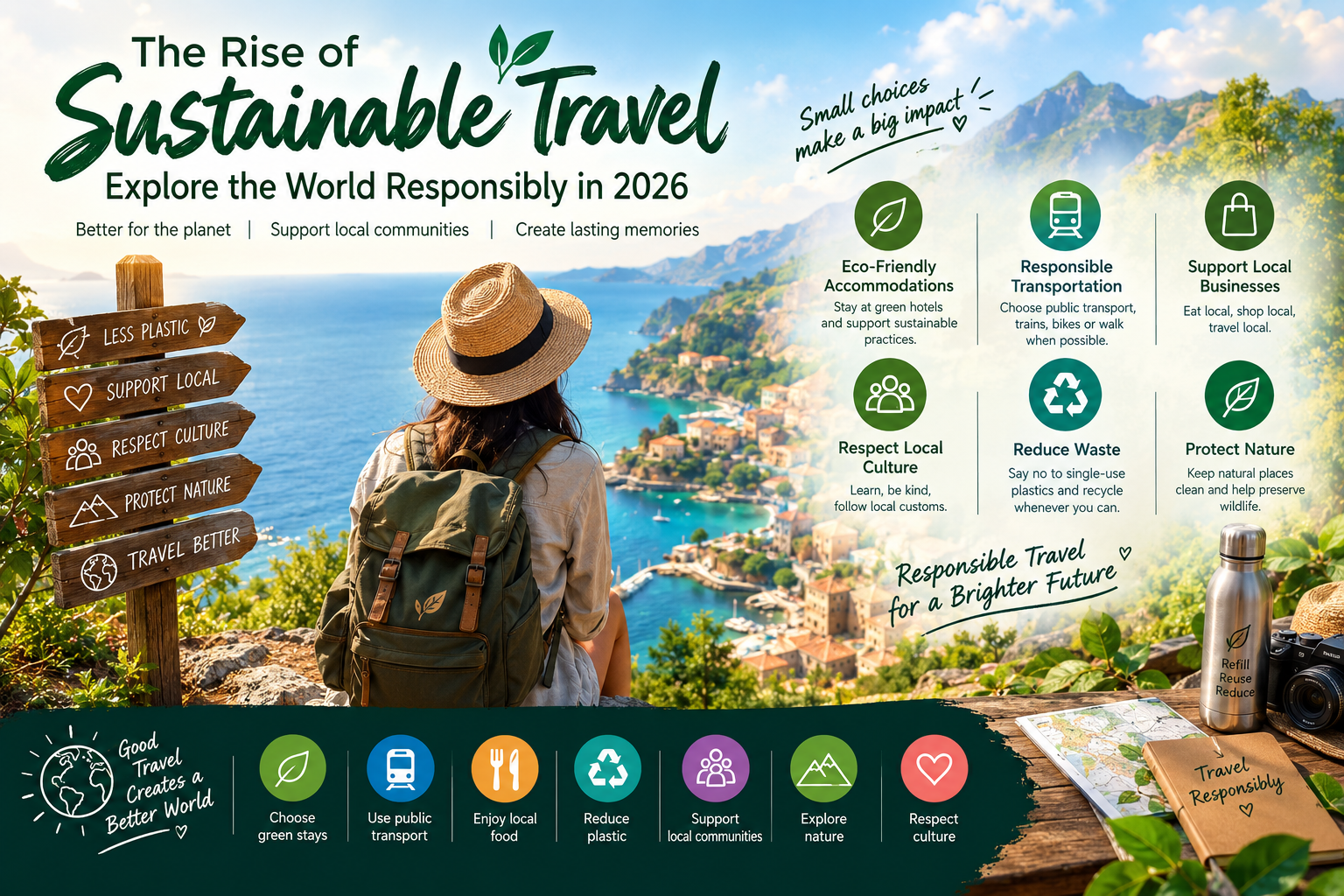
Travel is one of the best ways to discover new cultures, meet people, experience different landscapes, and create lasting memories. However, as global tourism continues to grow, travelers are becoming increasingly aware of the environmental and social impact of their journeys.
In 2026, sustainable travel is becoming more than a trend. It is influencing how travelers choose destinations, accommodations, transportation, activities, and even food.
Sustainable tourism does not mean giving up comfort or avoiding international travel. Instead, it means making smarter choices that protect natural environments, respect local communities, and ensure tourism remains beneficial for destinations in the long term.
What Is Sustainable Travel?
Sustainable travel means exploring destinations while minimizing negative environmental and social impacts.
It involves making choices that support:
Local communities
Small businesses
Natural environments
Cultural heritage
Responsible tourism operators
Efficient transportation
Waste reduction
A sustainable traveler considers not only where to go, but also how to travel and how their spending affects the destination.
Why Sustainable Tourism Matters
Tourism can provide important economic opportunities for communities. Hotels, restaurants, transportation companies, tour guides, shops, and local attractions can all benefit from visitors.
However, excessive tourism can also create challenges.
Popular destinations may experience:
Overcrowding
Increased waste
Higher water consumption
Traffic congestion
Environmental damage
Pressure on local housing
Damage to cultural sites
Sustainable tourism aims to find a balance between tourism growth and the long-term well-being of destinations.
Choose Responsible Transportation
Transportation can have a significant environmental impact.
Travelers can consider more efficient options when they are practical.
For shorter journeys, trains and public transportation can be useful alternatives to private vehicles or short flights.
Within a destination, travelers can consider:
Walking
Cycling
Public buses
Trains
Shared transportation
Electric transportation
Choosing efficient transportation can also provide a more authentic travel experience by allowing visitors to see destinations from a local perspective.
Choose Eco-Friendly Accommodation
Accommodation is another important part of sustainable travel.
Travelers can look for hotels and properties that demonstrate responsible practices, such as:
Energy-efficient lighting
Renewable energy
Water-saving systems
Waste-reduction programs
Recycling
Locally sourced food
Reduced single-use plastics
Travelers should look beyond marketing claims and check whether an accommodation actually provides information about its sustainability practices.
Support Local Businesses
One of the easiest ways to make travel more beneficial for local communities is to spend money locally.
Instead of relying entirely on international chains, travelers can consider:
Family-owned restaurants
Local cafés
Independent hotels
Local guides
Artisan shops
Community-based tours
This helps keep more tourism revenue within the destination.
Buying locally made products can also provide travelers with more meaningful souvenirs while supporting local craftspeople.
Respect Local Culture
Responsible travel is not only about the environment.
Cultural respect is equally important.
Before visiting a destination, travelers should learn about local customs, traditions, clothing expectations, religious practices, and social norms.
Simple actions can make a significant difference.
Visitors should ask permission before photographing people when appropriate and should follow rules at religious or cultural sites.
Respecting local traditions helps create better relationships between visitors and residents.
Avoid Overtourism
Some destinations receive millions of visitors each year.
When large numbers of tourists arrive at the same locations at the same time, infrastructure and natural resources can become overwhelmed.
Travelers can reduce pressure by visiting less crowded destinations or traveling during shoulder seasons.
Instead of visiting only the most famous attraction, travelers can explore nearby towns, local neighborhoods, parks, and lesser-known cultural sites.
This can also create a more peaceful and memorable experience.
Reduce Plastic Waste
Travelers can reduce unnecessary waste with simple habits.
Carrying a reusable water bottle, shopping bag, and travel container can reduce dependence on single-use plastic.
Visitors should also dispose of waste responsibly and avoid leaving trash in natural areas.
Small actions become more meaningful when millions of travelers adopt them.
Protect Natural Environments
Nature-based tourism is growing rapidly, but natural environments can be fragile.
Travelers should follow designated paths, avoid disturbing wildlife, and respect conservation rules.
When visiting beaches, forests, mountains, national parks, or marine environments, visitors should avoid removing natural objects or damaging plants and habitats.
Wildlife should also be observed from a safe and respectful distance.
Responsible tourism helps ensure that natural attractions remain available for future generations.
Sustainable Food Choices
Food is another part of the travel experience where responsible choices can make a difference.
Travelers can support local food producers by eating seasonal and locally sourced products where practical.
Visiting local markets and restaurants can also provide a better understanding of regional culture.
Trying local cuisine can be both an environmentally conscious and memorable part of a trip.
Technology and Sustainable Travel
Technology is helping travelers make more informed decisions.
Travel applications can provide information about:
Public transportation
Eco-friendly accommodations
Local activities
Walking routes
Digital tickets
Sustainable restaurants
AI-powered travel tools can also help travelers build itineraries that combine multiple destinations efficiently, potentially reducing unnecessary transportation.
Digital documents and mobile tickets can additionally reduce the need for printed materials.
Slow Travel Is Gaining Popularity
Slow travel focuses on spending more time in fewer destinations.
Instead of visiting five cities in one week, a traveler might spend several days or weeks exploring one region.
This approach can reduce transportation while allowing travelers to understand local culture more deeply.
Slow travel can also be less stressful.
Travelers have more time to explore local restaurants, markets, neighborhoods, museums, and natural areas without constantly moving between destinations.
Sustainable Travel on a Budget
Responsible travel does not necessarily have to be expensive.
In some cases, sustainable choices can actually reduce costs.
Walking and public transportation can be cheaper than private taxis.
Local restaurants can be less expensive than tourist-oriented establishments.
Longer stays can reduce the number of transportation journeys.
Traveling during less crowded periods can also provide better accommodation prices.
The key is to plan carefully and consider the overall cost rather than focusing on one aspect of the trip.
How Travelers Can Make Better Choices
Before booking a trip, travelers can ask several questions:
Does this business support the local community?
Can I use public transportation?
Does the accommodation have genuine sustainability practices?
Can I reduce unnecessary waste?
Am I respecting local culture?
Is there a less crowded alternative destination?
These questions can help turn ordinary tourism into more responsible travel.
The Future of Sustainable Tourism
The future of tourism is likely to become increasingly focused on sustainability.
Travel companies may invest more heavily in renewable energy, efficient transportation, waste reduction, and environmentally responsible accommodations.
Destinations may also introduce visitor-management systems to reduce overcrowding.
Technology could help distribute visitors more evenly and provide real-time information about crowded attractions.
At the same time, travelers will have more information available when choosing where and how to spend their money.
Conclusion
Sustainable travel is becoming an important part of the modern tourism industry.
It is not about avoiding travel. It is about traveling with greater awareness.
Choosing local businesses, respecting cultures, reducing waste, protecting nature, using efficient transportation, and supporting responsible accommodations can make tourism more beneficial for both travelers and destinations.
The best travel experiences do more than create memories. They also leave destinations healthy, communities supported, and natural environments protected.
In 2026, travelers have more tools than ever to make responsible choices. By combining technology with cultural awareness and environmental responsibility, people can explore the world while helping preserve it for future generations.
Frequently Asked Questions
1. What is sustainable travel?
Sustainable travel means exploring destinations while reducing negative environmental and social impacts and supporting local communities and economies.
2. Why is sustainable tourism important?
It helps protect natural environments, preserve cultural heritage, support local businesses, and reduce the negative effects of overcrowding and excessive tourism.
3. How can I travel more sustainably?
Use public transportation when practical, reduce plastic waste, support local businesses, choose responsible accommodations, respect local cultures, and protect natural environments.
4. Is sustainable travel expensive?
Not necessarily. Walking, public transportation, local restaurants, and longer stays can sometimes be more affordable than conventional tourist options.
5. What is slow travel?
Slow travel means spending more time in fewer destinations instead of rushing through many locations. It can provide deeper cultural experiences while reducing unnecessary transportation.
6. How can I support local communities while traveling?
Stay at locally owned accommodations, eat at independent restaurants, hire local guides, and purchase locally made products.
7. How can travelers reduce plastic waste?
Carry reusable water bottles and shopping bags, avoid unnecessary single-use products, and dispose of waste properly.
8. Is public transportation better for sustainable travel?
Public transportation can reduce the environmental impact per traveler compared with many private transportation options, particularly in well-connected destinations.
9. How can I protect nature while traveling?
Follow local conservation rules, stay on designated paths, avoid disturbing wildlife, do not litter, and leave natural areas as you found them.
10. What is responsible tourism?
Responsible tourism means making travel choices that respect the environment, local communities, cultures, and economies.
11. How does technology support sustainable tourism?
Travel apps and digital platforms can help travelers find public transportation, sustainable accommodations, local activities, walking routes, and other responsible travel options.
12. What is overtourism?
Overtourism occurs when a destination receives more visitors than its infrastructure, environment, or local community can comfortably support.