The world's billionaires represent some of the most influential figures in technology, finance, retail, manufacturing, and global business. Their fortunes come from owning major companies, developing innovative products, investing in financial markets, and building businesses that operate across international markets.
In 2026, the billionaire landscape continues to evolve as artificial intelligence, semiconductor technology, digital platforms, and global investments reshape business valuations. Stock prices and company performance can cause enormous changes in individual fortunes, making the rankings of the world's richest people highly dynamic.
Understanding who the world's billionaires are, how they accumulated their wealth, and which industries contribute to their fortunes offers a useful perspective on the global economy.
Who Are the World's Richest People in 2026?
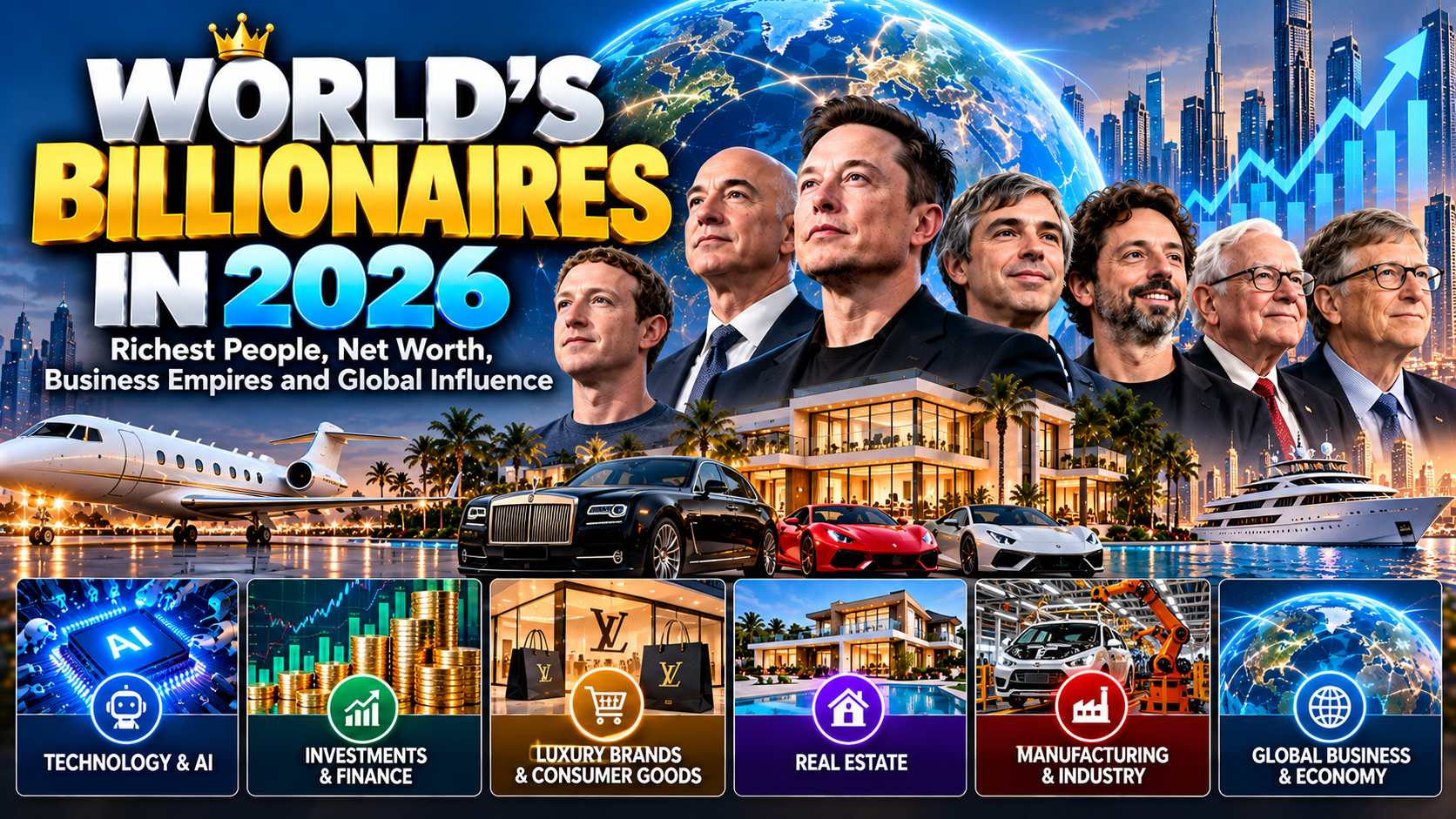
According to Forbes' real-time billionaire rankings reported on October 21, 2026, Elon Musk remained at the top, followed by Jeff Bezos and Google co-founders Larry Page and Sergey Brin. Michael Dell also ranked among the world's wealthiest individuals. Net worth estimates change with market prices and valuation updates. Source: Forbes Real-Time Billionaires.
Some of the leading names include:
Elon Musk: Associated with Tesla and SpaceX, Musk has built much of his wealth through technology, electric vehicles, and aerospace businesses.
Jeff Bezos: Amazon's founder accumulated substantial wealth through e-commerce, cloud computing, and other business interests.
Larry Page: Google's co-founder benefited from the growth of online search, digital advertising, and technology.
Sergey Brin: Google's other co-founder built his fortune through the company's global expansion and technological development.
Michael Dell: The founder of Dell Technologies accumulated wealth through computer hardware, enterprise technology, and infrastructure.
Mark Zuckerberg: Meta's co-founder built his fortune through social media, digital advertising, and technology platforms.
Jensen Huang: Nvidia's co-founder and CEO became one of the most prominent figures in computing hardware and AI chips.
Larry Ellison: Oracle's co-founder accumulated wealth through enterprise software, databases, and cloud technology.
Steve Ballmer: Microsoft's former CEO built substantial wealth through his long association with the software company.
Warren Buffett: The investor is widely known for his long-term investment approach through Berkshire Hathaway.
These individuals illustrate how different business models can create enormous fortunes. Their exact ranking and net worth can change from day to day.
How Do Billionaires Build Their Wealth?
Billionaire fortunes generally come from ownership of valuable assets rather than cash salaries alone.
1. Technology and Artificial Intelligence
Technology companies can reach enormous valuations when their products serve large markets. Software, cloud computing, online advertising, AI infrastructure, and semiconductor development are important examples.
Companies that successfully develop widely used technologies may grow revenue and market value over time. Founders who retain significant ownership stakes can benefit as their companies expand.
However, technology investments involve risks, including intense competition, high research costs, regulation, and changing consumer demand.
2. Entrepreneurship and Business Ownership
Many wealthy individuals built their fortunes by starting or expanding businesses.
A company may begin with a focused product or service and grow into an international organization through innovation, customer demand, and effective management.
Business ownership can create substantial wealth because an owner may benefit from the company's long-term growth rather than earning only a fixed salary.
3. Stock Market Investments
Some billionaires accumulated wealth through investments in publicly traded companies and other financial assets.
Investors may benefit when businesses increase their earnings and market valuations. Long-term investing and reinvesting returns can contribute to wealth accumulation, although returns are never guaranteed.
Market declines, poor business decisions, and excessive concentration can also produce substantial losses.
4. Real Estate and Physical Assets
Property developers and investors can build wealth through residential buildings, commercial property, land, hotels, and industrial facilities.
Real estate can generate rental income and potential appreciation, but it also requires capital and ongoing management. Property prices may fall, and selling assets can take time.
5. Inherited Wealth
Some billionaires inherit shares in family businesses, property portfolios, or financial assets.
Inherited wealth can provide an initial financial advantage, while subsequent investment and business decisions influence how that wealth develops across generations.
Not every billionaire follows the same path, and wealth rankings reflect a combination of entrepreneurship, investment performance, ownership, and inheritance.
Why Artificial Intelligence Matters to Billionaire Rankings
Artificial intelligence has become a major focus for technology companies and investors.
The development of AI systems requires computing hardware, advanced chips, cloud infrastructure, data centers, and software. Companies that provide these products and services may benefit from growing demand.
This helps explain why businesses connected to AI infrastructure and computing have become important to the fortunes of some technology entrepreneurs.
Nevertheless, high expectations do not always translate into lasting profits. Investors must distinguish between a company's current financial performance and predictions about its future growth.
Billionaires and the Global Economy
The world's wealthiest people can influence economic activity through the companies they own, the employees they hire, and the industries in which they invest.
Large businesses may support job creation, research, supply chains, and technological development. Wealthy individuals may also contribute to charitable organizations, educational programs, medical research, and other social initiatives.
At the same time, concentrated wealth raises questions about economic inequality, competition, taxation, and the influence of private wealth on public life.
The economic impact of billionaires varies depending on how their businesses operate, how investments are allocated, and the regulatory environments in which they work.
How Billionaire Net Worth Is Calculated
Net worth is generally calculated by subtracting liabilities from the estimated value of assets.
Assets can include:
Shares in publicly traded companies.
Ownership stakes in private businesses.
Real estate and land.
Investments and financial holdings.
Other valuable assets.
For public companies, share prices can change every trading day. This means a billionaire's estimated fortune may rise or fall even when they have not bought or sold any assets.
Private companies are harder to value because their shares are not continuously traded on public markets. Wealth rankings therefore rely on estimates and available financial information.
For the latest rankings, readers can consult the Forbes Real-Time Billionaires List or the Bloomberg Billionaires Index.
Can Ordinary People Learn From Billionaires?
Although becoming a billionaire is extremely rare, some principles associated with building wealth can be useful for individuals and small businesses.
Develop valuable skills: Knowledge and expertise can help people create better career opportunities or build businesses.
Solve real problems: Businesses are more likely to attract customers when they provide useful products or services.
Manage finances carefully: Controlling expenses, understanding cash flow, and avoiding unnecessary debt can improve financial stability.
Understand investment risk: Every investment involves uncertainty, and diversification can help reduce dependence on a single asset.
Think long term: Sustainable progress often requires patience, consistent effort, and realistic expectations.
These principles do not guarantee extraordinary wealth, but they can support more informed financial decisions.
Frequently Asked Questions
Who is the richest person in the world in 2026?
Forbes' real-time rankings placed Elon Musk at number one in its October 21, 2026, snapshot. His estimated net worth changes with business valuations and market movements.
How many billionaires are there in the world?
The total varies by source and date. Forbes' real-time list reported approximately 3,391 billionaires in its October 21, 2026, snapshot.
Which industries produce the most billionaires?
Technology, finance, manufacturing, retail, real estate, and consumer businesses are among the major sources of billionaire wealth.
Are billionaires' fortunes held in cash?
Generally, no. Much of their estimated wealth is tied to company shares, business ownership, real estate, and other assets.
Why do billionaire rankings change?
Rankings change because stock prices, private company valuations, property values, exchange rates, and other financial estimates fluctuate.
Where can readers find updated billionaire rankings?
Readers can check the Forbes Real-Time Billionaires List and the Bloomberg Billionaires Index.
Conclusion
The world's billionaires in 2026 reflect the changing relationship between entrepreneurship, technology, investment, and global business. From technology founders and AI industry leaders to established investors and retail entrepreneurs, their fortunes demonstrate the different ways business ownership can create substantial wealth.
However, billionaire net worth is not fixed, and rankings can change rapidly with market conditions. Understanding the assets behind these fortunes provides a clearer picture of how wealth is measured and how global industries influence financial rankings.
For readers interested in business and finance, the most valuable lessons involve innovation, responsible risk management, long-term planning, and understanding the economic forces that shape wealth creation.
Disclaimer: This article is for informational and educational purposes only and does not constitute financial or investment advice.