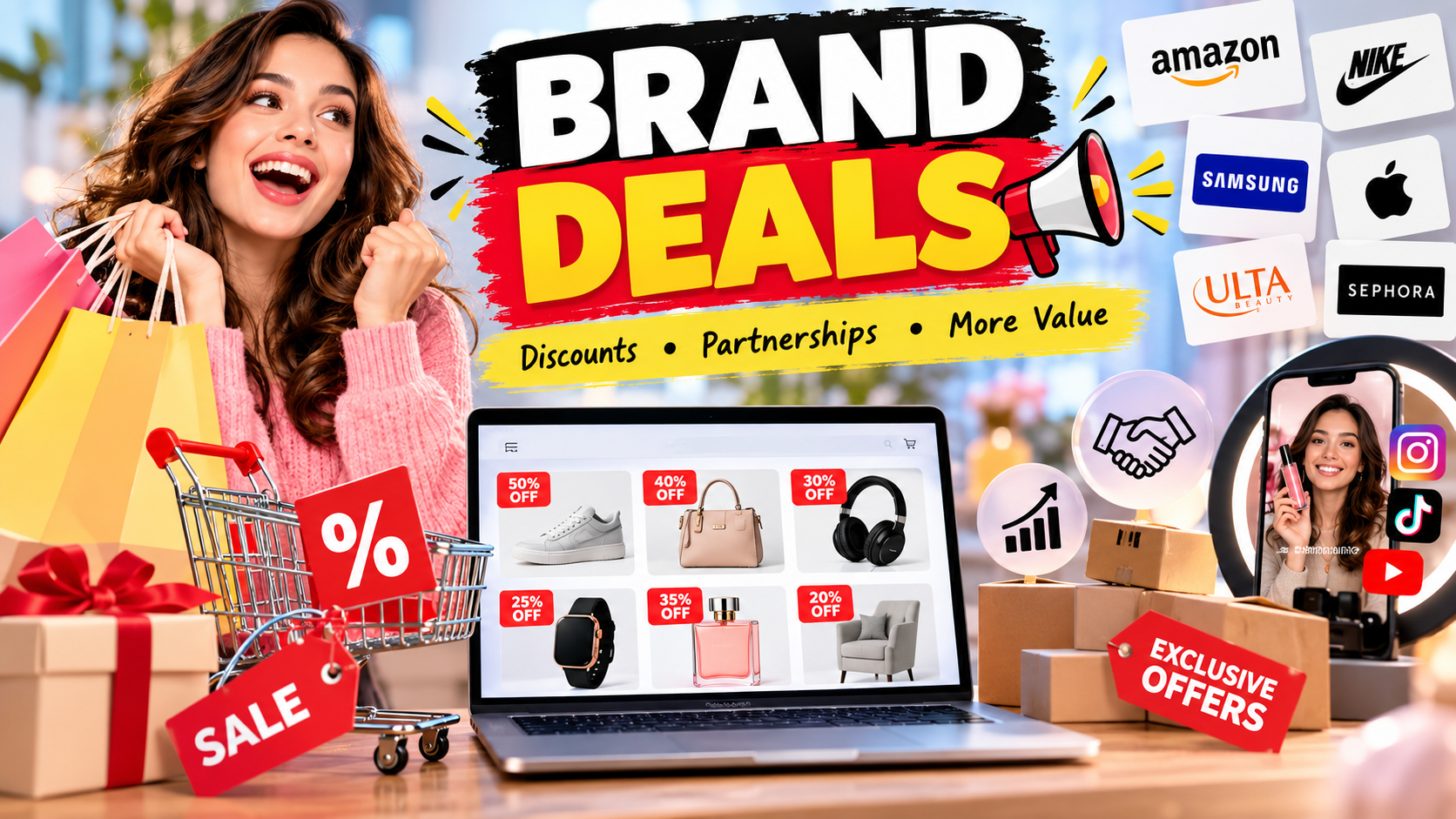
Brand deals have become an important part of modern shopping, digital marketing, and business growth. From exclusive discounts on popular products to paid partnerships between companies and content creators, brand deals offer opportunities for people and businesses to get more value from their money, products, and audiences.
Consumers look for brand deals to save money on clothing, electronics, beauty products, home essentials, and other purchases. Businesses use partnerships and promotional offers to reach new customers, increase sales, and build brand awareness. Meanwhile, influencers and content creators work with companies to earn income, receive products, and develop long-term professional relationships.
However, not every offer advertised as a great deal provides genuine value. Some promotions have complicated conditions, while others use misleading original prices or short deadlines to encourage customers to buy quickly. Understanding how brand deals work can help shoppers and businesses make better decisions.
This guide explains the different types of brand deals, how to find legitimate offers, how creators can secure partnerships, and how businesses can evaluate whether a deal is worth accepting.
What Are Brand Deals?
Brand deals are commercial offers, promotional arrangements, or partnerships involving a brand and another party. The exact meaning depends on the context in which the term is used.
In retail, a brand deal usually refers to a special price, coupon, discount, bundle, or limited-time promotion on a company's products or services.
In influencer marketing, a brand deal generally describes an agreement between a company and a content creator. The creator may promote a product through videos, social media posts, blog articles, product reviews, or other content in exchange for payment, free products, commissions, or another agreed benefit.
Businesses can also enter into brand deals with retailers, distributors, event organizers, publishers, and complementary companies to reach new audiences or increase sales.
For example, an online clothing retailer might offer a 25% discount during a seasonal sale. A beauty company might pay a creator to demonstrate its latest skincare product. A technology company could collaborate with a retailer to bundle a device with accessories at a promotional price.
Although these arrangements serve different purposes, they share a common objective: creating value for the parties involved.
A successful brand deal benefits the company offering it and the people participating in it. Customers receive a competitive offer, creators earn compensation or exposure, and brands gain sales, awareness, or customer engagement.
Types of Brand Deals
Understanding the different categories of brand deals makes it easier to identify opportunities that match your goals.
1. Retail Brand Deals
Retail brand deals involve discounts or special purchasing conditions offered by a brand or authorized retailer.
These promotions may include percentage discounts, reduced prices, bundle offers, seasonal sales, clearance events, and special offers for new customers.
For example, a footwear company might reduce the price of selected shoes during a seasonal clearance event. A home appliance retailer could offer a discount when customers purchase multiple eligible products together.
Retail deals can be especially useful for people who already plan to purchase a particular product. Instead of buying immediately at the regular price, shoppers can compare available promotions and wait for a suitable offer.
However, customers should compare the final price rather than focusing only on the advertised discount percentage.
2. Influencer Brand Deals
Influencer brand deals involve companies collaborating with people who have an audience on platforms such as Instagram, TikTok, YouTube, and other social networks.
The creator may produce sponsored videos, product demonstrations, tutorials, unboxing content, testimonials, or educational posts.
Compensation varies depending on the agreement. A creator might receive a fixed payment, free products, an affiliate commission, or a combination of these benefits.
For example, a skincare company could pay a beauty creator to demonstrate how to use a product. A software company might sponsor a YouTube tutorial showing how its application works.
Brands usually consider audience relevance, engagement, content quality, audience trust, and campaign objectives when selecting creators.
A large following can help, but it does not automatically guarantee a successful partnership. A smaller creator with an interested and engaged audience may be a better fit for a particular campaign.
3. Affiliate Brand Deals
Affiliate brand deals allow creators, publishers, bloggers, and other partners to earn commissions from qualifying purchases or other specified actions.
The partner receives a unique tracking link or promotional code. When someone completes an eligible transaction through that link or code, the partner may earn a commission under the program's terms.
For instance, a blogger publishing a guide to useful business software might include affiliate links to relevant products. If readers purchase through those links and the transactions qualify, the blogger can earn revenue.
Affiliate arrangements can benefit companies because compensation is often connected to measurable results.
However, commissions, cookie durations, attribution rules, excluded products, and payment conditions vary between programs. Participants should review these details before promoting an offer.
Affiliate relationships should also be disclosed clearly wherever required by applicable advertising rules.
4. Brand Collaboration Deals
Brand collaboration deals involve two or more companies working together on a product, campaign, service, or promotional activity.
For example, a sportswear company might collaborate with an athlete on a limited collection. A coffee brand could partner with a bakery for a joint promotion. A technology business might work with a software company to offer compatible products together.
These arrangements can help businesses reach customers who already trust the collaborating partner.
The strongest collaborations usually involve brands with complementary products, similar audience interests, and compatible reputations.
Before entering an agreement, both parties should establish their responsibilities, campaign goals, revenue arrangements, intellectual property rights, and promotional timelines.
5. Exclusive Brand Offers
Exclusive brand offers are promotions available only to a defined group of customers or through a specific channel.
Examples include member-only discounts, newsletter promotions, first-order coupons, loyalty rewards, and selected payment-method offers.
An offer may be exclusive to a brand's website, a particular retailer, an eligible customer group, or a limited promotional campaign.
These deals can provide additional value, but eligibility requirements matter. Customers should check whether the offer requires a minimum purchase, account registration, a particular payment method, or another condition.
6. Seasonal and Clearance Deals
Seasonal promotions are associated with particular shopping periods, holidays, product launches, and inventory changes.
Retailers may offer discounts during major sales events, end-of-season promotions, holiday shopping periods, or clearance campaigns.
Clearance deals can be particularly attractive when a retailer wants to sell discontinued products, older models, or remaining inventory.
Nevertheless, a lower price does not always make a product the best choice. Customers should consider quality, warranty coverage, return eligibility, delivery charges, and whether the product meets their actual needs.
Why Brand Deals Matter
Brand deals can create meaningful benefits for shoppers, businesses, and content creators.
Benefits for Consumers
For shoppers, brand deals can reduce the cost of products they already intend to buy.
A valid discount can make a planned purchase more affordable, while bundle offers may provide better value when all included items are useful.
Brand promotions can also make premium products more accessible to customers who would otherwise choose a less expensive alternative.
The most important consideration is whether the offer reduces the actual cost of a necessary or worthwhile purchase. Buying an unnecessary product simply because it is discounted does not necessarily create savings.
Benefits for Businesses
Companies use brand deals to attract new customers, increase product visibility, encourage repeat purchases, and support specific marketing campaigns.
A first-order discount may encourage someone to try a product. A bundle promotion can increase the value of an order. A collaboration can introduce a business to an audience it would struggle to reach independently.
Promotions can also help retailers manage inventory or introduce new products.
However, excessive discounting can reduce profit margins and train customers to wait for sales. Businesses should therefore measure the financial results of their promotions instead of judging success solely by the number of orders.
Benefits for Content Creators
Brand deals can help content creators turn their audiences and creative skills into business opportunities.
Paid sponsorships provide direct compensation for agreed promotional work. Affiliate programs can create performance-based income. Product collaborations may offer opportunities to develop original products or expand a creator's professional network.
Creators can also use successful partnerships to demonstrate their expertise when approaching future sponsors.
The key is to prioritize relevant partnerships and maintain audience trust. Promoting products that do not fit an audience's interests can damage credibility, even when the immediate compensation is attractive.
How to Find the Best Brand Deals Online
Finding a valuable brand deal requires more than searching for the biggest discount. A systematic approach helps you identify legitimate offers and compare their real benefits.
1. Visit Official Brand Websites
Start by checking the official website of the brand you want to buy from.
Many companies publish promotional information through sale pages, clearance sections, newsletters, or dedicated offer pages.
Buying directly from an official store can also make it easier to verify product details, applicable warranties, and return policies.
However, direct purchasing is not always the cheapest option. Authorized retailers may offer competitive prices or additional promotions, so comparing several legitimate sellers is worthwhile.
2. Subscribe to Brand Newsletters
Some companies send subscribers information about upcoming sales, product launches, member promotions, and special coupons.
A dedicated email folder can help you organize these messages without filling your main inbox with marketing emails.
Before subscribing, review the company's privacy information and promotional preferences. Avoid newsletters that request unnecessary personal information.
3. Compare Coupon and Deal Websites
Deal websites collect promotional information from multiple brands and retailers.
Depending on the platform, users may find coupon codes, cashback offers, discount links, seasonal promotions, and product comparisons.
Before relying on a deal website, check when the offer was last updated and whether its terms match the retailer's checkout conditions.
A code described as verified is not necessarily guaranteed to work for every customer. Some codes apply only to specific products, account types, locations, or minimum order amounts.
When a deal does not work, check the expiration date and restrictions before assuming that the retailer has a technical problem.
4. Compare the Final Price
A discount percentage can make an offer appear more attractive than it really is.
Suppose a product is advertised at $100 and a retailer offers a 20% discount. The price after the discount is $80 before taxes, delivery charges, or other applicable fees.
If another reputable seller offers the same product for $75 without a coupon, the second seller may provide better value.
Compare the exact product model, seller reputation, shipping costs, taxes, warranty conditions, and return policy.
This approach helps distinguish genuine savings from marketing language.
5. Check Cashback and Payment Offers
Some retailers and payment providers offer cashback, promotional financing, or discounts for eligible transactions.
These benefits may reduce the effective cost of a purchase, but their conditions vary.
For example, cashback might be paid only after a transaction is confirmed, while a card promotion could require a minimum purchase or exclude certain categories.
Check whether benefits can be combined with other promotions. Do not assume that every coupon, cashback offer, and payment discount can be used simultaneously.
6. Follow Brands on Social Media
Brands sometimes announce promotions, limited product releases, contests, or campaign updates through their social media accounts.
Following official accounts can help customers discover these offers.
Be careful with accounts that imitate legitimate brands. Verify account links through the company's official website and avoid sending payment information or verification codes to suspicious accounts.
7. Use Price Tracking Where Available
Price-tracking tools can help shoppers observe price changes over time.
This is useful when purchasing expensive electronics, appliances, software subscriptions, or other products whose prices fluctuate.
A historical price record can help you decide whether a sale represents a meaningful reduction or simply a return to a familiar price.
Not every product has reliable price-history data, so use available information as a guide rather than a guarantee of future pricing.
How to Evaluate Whether a Brand Deal Is Genuine
Not every promotion is trustworthy. Before making a purchase or accepting a partnership, review the offer carefully.
Verify the Seller
Check whether the seller is the brand itself, an authorized retailer, or a third-party marketplace seller.
Review business information, customer feedback, contact details, and the seller's policies.
Be cautious if a website uses a brand's logo but has no credible business information, offers unusually low prices on every item, or pressures customers to pay through unusual methods.
Review the Terms and Conditions
A genuine offer should have understandable conditions.
Look for eligibility requirements, expiration dates, minimum purchase amounts, excluded products, shipping charges, and refund rules.
For influencer agreements, examine the deliverables, payment schedule, usage rights, revision requirements, exclusivity clauses, and cancellation terms.
If a term is unclear, ask for clarification in writing before committing.
Be Careful With Unrealistic Discounts
Extremely low prices can be a warning sign, especially when they appear on unfamiliar websites.
Compare the advertised price with official stores and established retailers.
Remember that even legitimate clearance promotions can involve older models, limited sizes, damaged packaging, or restricted returns.
The goal is not to reject every unusually good offer. It is to verify that the product, seller, and conditions are credible.
Protect Your Personal and Payment Information
Shop through secure, reputable websites and use payment methods that provide appropriate protections.
Never share one-time passwords, banking credentials, or account recovery codes with someone claiming to verify a discount.
For brand partnerships, verify the identity of the person contacting you. Be cautious about offers that require you to pay unexplained upfront fees to receive a supposed sponsorship.
How Content Creators Can Get Brand Deals
Creators do not always need millions of followers to attract brand partnerships. A clear niche, consistent content, and a relevant audience can help establish a strong case for collaboration.
Step 1: Choose a Clear Niche
Brands need to understand what your content is about and whom it reaches.
Possible niches include beauty, fashion, technology, personal finance, fitness, parenting, travel, education, and business.
A focused content strategy makes it easier for companies to identify relevant sponsorship opportunities.
Step 2: Create Consistent, Useful Content
Before contacting brands, build a collection of content that demonstrates your style and audience interests.
Depending on your niche, this might include tutorials, comparisons, product demonstrations, educational videos, or practical reviews.
Prioritize useful content over repeatedly asking companies for sponsorships. A strong content portfolio gives potential partners a clearer understanding of what you can deliver.
Step 3: Prepare a Media Kit
A media kit is a short professional document that introduces you to potential sponsors.
It can include:
Your name or creator brand and niche.
Your audience demographics, where available.
Follower counts and recent reach.
Engagement and performance metrics.
Examples of relevant content.
Previous campaign results, if applicable.
Contact information and collaboration options.
Use accurate, recent metrics. Do not inflate audience size, purchase fake engagement, or present estimates as verified results.
Step 4: Research Suitable Brands
Make a list of companies whose products genuinely match your content.
Review their websites, social media accounts, target customers, and existing creator partnerships.
A smaller company with a highly relevant product may be a better prospect than a famous brand whose audience does not match yours.
Step 5: Contact Brands Professionally
Send a concise, personalized pitch that explains why the partnership makes sense.
Mention the specific product or campaign idea, the content you can produce, and the audience you can reach.
Avoid sending identical, vague messages to hundreds of companies. A tailored proposal demonstrates that you understand the brand and its customers.
Step 6: Agree on Deliverables and Payment
Before creating sponsored content, confirm the terms in writing.
Specify the number and type of deliverables, publishing dates, compensation, payment schedule, revision limits, and approval process.
Also discuss whether the deals brand can reuse your content in advertisements, whether you must avoid competitors, and how long any exclusivity or usage rights will last.
These details can materially affect the value of the agreement.
Step 7: Disclose Sponsored Relationships
Creators should clearly disclose paid partnerships, gifted products, and affiliate relationships as required by applicable laws and platform policies.
Disclosure should be easy for viewers to notice and understand.
Honest recommendations help protect audience trust and reduce the risk of misleading advertising.
How Much Are Brand Deals Worth?
There is no universal price for a brand deal.
Retail promotions depend on product prices, discount structures, inventory, and campaign objectives. Creator partnerships depend on the work involved, audience relevance, content format, rights granted, and expected results.
A small creator might negotiate a product-gifting arrangement, a modest paid campaign, or an affiliate commission. An experienced creator producing multiple videos with paid advertising rights may negotiate a substantially different fee.
Follower count alone is not a reliable pricing formula.
A creator should consider production time, research, editing, equipment, revisions, audience fit, and the commercial value of the requested content.
For example, a company requesting a short social media video for organic posting is asking for something different from a company requesting several edited videos, raw footage, and permission to run paid advertisements for six months.
These agreements should not automatically receive the same price.
Creators should also distinguish between guaranteed payment and potential earnings. An affiliate commission depends on qualifying transactions, whereas a fixed sponsorship fee is generally based on the agreed deliverables and payment terms.
How Businesses Can Create Profitable Brand Deals
Businesses should approach brand deals as measurable commercial decisions rather than simply opportunities to offer discounts.
Define the Objective
Decide whether the campaign is intended to attract new customers, increase order value, promote a product launch, improve brand awareness, or encourage repeat purchases.
The objective determines which type of deal is most appropriate.
A retailer trying to clear excess inventory may use a clearance promotion. A company launching a new product might partner with relevant creators. A subscription business may offer a limited introductory price to eligible customers.
Calculate the Financial Impact
Before approving a discount, calculate the expected revenue and costs.
For example, assume a product sells for $100 and has a variable cost of $60. Before marketing expenses, the business earns $40 in contribution per sale.
If the company offers a 20% discount, the selling price falls to $80. Assuming the variable cost remains $60, contribution falls to $20 before other expenses.
The promotion may still be worthwhile if it attracts incremental customers or creates valuable repeat purchases. However, it needs sufficient additional sales to justify the lower contribution per order.
Businesses should include payment processing, fulfillment, returns, commissions, and other relevant costs in their calculations.
Select the Right Partners
When evaluating creators or collaborating businesses, consider audience relevance, reputation, content quality, past performance, and operational reliability.
Ask for suitable performance evidence where available. A polished media kit is useful, but it should not replace reasonable verification.
For influencer campaigns, agree on measurable indicators such as qualified reach, engagement, clicks, conversions, or sales, depending on the objective.
Track Results
Use unique links, promotional codes, campaign tracking, and appropriate analytics to measure performance.
Compare the results with the original objective and the full campaign cost.
A campaign that generates many views may still produce few sales. Another campaign with a smaller audience might attract highly qualified customers.
Use the results to improve future offers rather than assuming that every successful-looking promotion should be repeated.
Common Brand Deal Mistakes to Avoid
Both shoppers and businesses can make costly mistakes when evaluating deals.
Focusing only on the discount percentage: A large discount does not guarantee the lowest final price.
Ignoring hidden costs: Shipping, taxes, subscription renewals, and other charges may reduce the value of an offer.
Failing to verify sellers: An attractive promotion is not worth the risk of purchasing counterfeit goods or paying a fraudulent seller.
Accepting unclear sponsorship terms: Creators should clarify payment, revisions, usage rights, and exclusivity before starting work.
Promoting irrelevant products: Creators may damage their credibility by accepting every available sponsorship.
Discounting without a business objective: Businesses can reduce margins without achieving meaningful growth if promotions are poorly designed.
Overlooking disclosure requirements: Sponsored content and affiliate relationships should be disclosed appropriately.
Creating artificial urgency: Countdown timers and claims that a deal is ending should reflect genuine conditions, not pressure customers into rushed decisions.
Avoiding these mistakes makes brand deals more transparent, sustainable, and beneficial.
The Future of Brand Deals
Brand deals are evolving as online shopping, social commerce, creator marketing, and personalized advertising continue to develop.
Consumers increasingly discover products through videos, recommendations, comparison content, and online communities. As a result, brands have more ways to reach potential customers beyond traditional advertising.
Creators can also work with companies through different commercial arrangements, including affiliate partnerships, paid campaigns, product collaborations, and long-term ambassador programs.
Technology may make campaign measurement, price comparisons, and personalized offers more efficient. However, consumers and businesses will still need to evaluate authenticity, transparency, and actual value.
The most sustainable opportunities are likely to come from clear agreements, relevant offers, reliable products, and honest communication.
For shoppers, this means comparing offers carefully rather than purchasing because a promotion looks exciting. For creators, it means choosing partnerships that fit their audiences. For businesses, it means designing deals that generate measurable value without undermining profitability or trust.
Conclusion
Brand deals cover a broad range of opportunities, from retail discounts and coupon offers to affiliate arrangements and paid creator partnerships. Although these deals operate differently, the underlying principle is the same: the agreement should provide meaningful value to the parties involved.
Consumers can benefit by checking official sources, comparing final prices, reviewing conditions, and avoiding suspicious offers. Content creators can improve their chances of securing partnerships by developing a clear niche, producing useful content, preparing a professional media kit, and negotiating transparent terms. Businesses can build more effective campaigns by setting measurable goals, calculating margins, choosing suitable partners, and evaluating results.
Ultimately, the best brand deal is not necessarily the one with the biggest advertised discount or the highest sponsorship payment. It is the one that meets a genuine need, offers fair terms, and delivers value that can be verified.
Frequently Asked Questions About Brand Deals
1. What are brand deals?
Brand deals are promotional offers or commercial agreements involving brands and customers, creators, retailers, or other businesses. They can include discounts, sponsorships, affiliate commissions, product collaborations, and exclusive promotions.
2. How do brand deals work?
The process depends on the arrangement. Retail deals provide eligible customers with discounts or special purchasing conditions. Creator deals involve an agreement to produce promotional content or recommend products in exchange for payment, products, commissions, or other benefits.
3. How can I find the best brand deals?
Check official brand websites, reputable deal platforms, newsletters, authorized retailers, and eligible cashback programs. Compare the final price, product specifications, seller reputation, and offer conditions before purchasing.
4. Are brand deals legitimate?
Many brand deals are legitimate, but not every advertised offer is trustworthy. Verify the seller, review the terms, compare prices, and avoid websites that request unusual payment methods or sensitive information.
5. How do influencers get brand deals?
Influencers can approach relevant companies, join creator marketplaces, apply to brand ambassador programs, or participate in affiliate programs. A clear niche, quality content, reliable audience metrics, and a professional pitch can improve their chances.
6. Can small creators get brand deals?
Yes. Smaller creators can attract partnerships when their audience is relevant, engaged, and interested in a brand's products. Companies may value niche expertise and audience trust more than follower count alone.
7. Do you need many followers to get brand deals?
No. There is no universal minimum follower requirement. Some companies work with emerging creators, while others require particular audience sizes or performance levels. Eligibility depends on the campaign and the brand.
8. Do brands pay influencers for collaborations?
Some brands pay a fixed fee, while others offer free products, affiliate commissions, or mixed compensation. The arrangement should be agreed upon before work begins, including deliverables and payment conditions.
9. What is the difference between a brand deal and an affiliate deal?
A brand deal is a broad term covering many types of commercial partnerships. An affiliate deal specifically involves earning compensation, often a commission, when tracked purchases or other qualifying actions occur.
10. Are free products considered brand deals?
Yes. A company may provide free products in exchange for agreed content or feedback. However, receiving a product does not automatically guarantee payment, and the creator should clarify expectations and disclosure obligations.
11. What should I include in a brand deal contract?
A creator agreement should specify deliverables, deadlines, compensation, payment dates, revision limits, content approval, usage rights, exclusivity, cancellation terms, and disclosure requirements. Both parties should understand the agreement before signing.
12. How can I tell whether a discount is genuine?
Compare the offer with prices from the official brand and reputable sellers. Check the product model, historical prices where available, delivery costs, return conditions, and coupon restrictions.
13. Can I combine multiple brand deals or discount codes?
Sometimes. Whether discounts, cashback, and promotional codes can be combined depends on the specific terms. Review the offer conditions and confirm the final price at checkout.
14. What is a brand ambassador deal?
A brand ambassador deal is an ongoing or recurring relationship in which a person represents or promotes a brand. Compensation may include fees, products, commissions, or other agreed benefits.
15. How do businesses measure brand deal success?
Businesses can measure success through relevant metrics such as incremental sales, conversions, customer acquisition cost, revenue, engagement, qualified traffic, and return on campaign investment. The correct metrics depend on the campaign's objective.
16. Are brand deals taxable?
Potentially. The tax treatment depends on the country, the type of compensation, the recipient's circumstances, and applicable tax rules. Creators and businesses should consult relevant local guidance or a qualified tax professional.
17. What are the risks of brand deals?
Potential risks include misleading promotions, counterfeit products, unclear contracts, delayed payments, undisclosed sponsorships, poor audience fit, and financial losses from excessive discounting. Verification and written agreements can reduce these risks.
18. Are brand deals available for online businesses?
Yes. Online businesses can use retail promotions, affiliate programs, creator sponsorships, cross-promotions, and strategic collaborations. The best option depends on the target audience, available budget, and business objectives.
19. How can I negotiate a better brand deal?
Research comparable offers, understand your costs or audience value, establish clear objectives, and negotiate specific terms. Creators should consider production requirements and usage rights, while shoppers should compare the total cost and available alternatives.
20. What makes a brand deal successful?
A successful brand deal has clear terms, a suitable audience or customer need, realistic expectations, transparent communication, and measurable benefits. It should create value without relying on misleading claims or hidden conditions.