
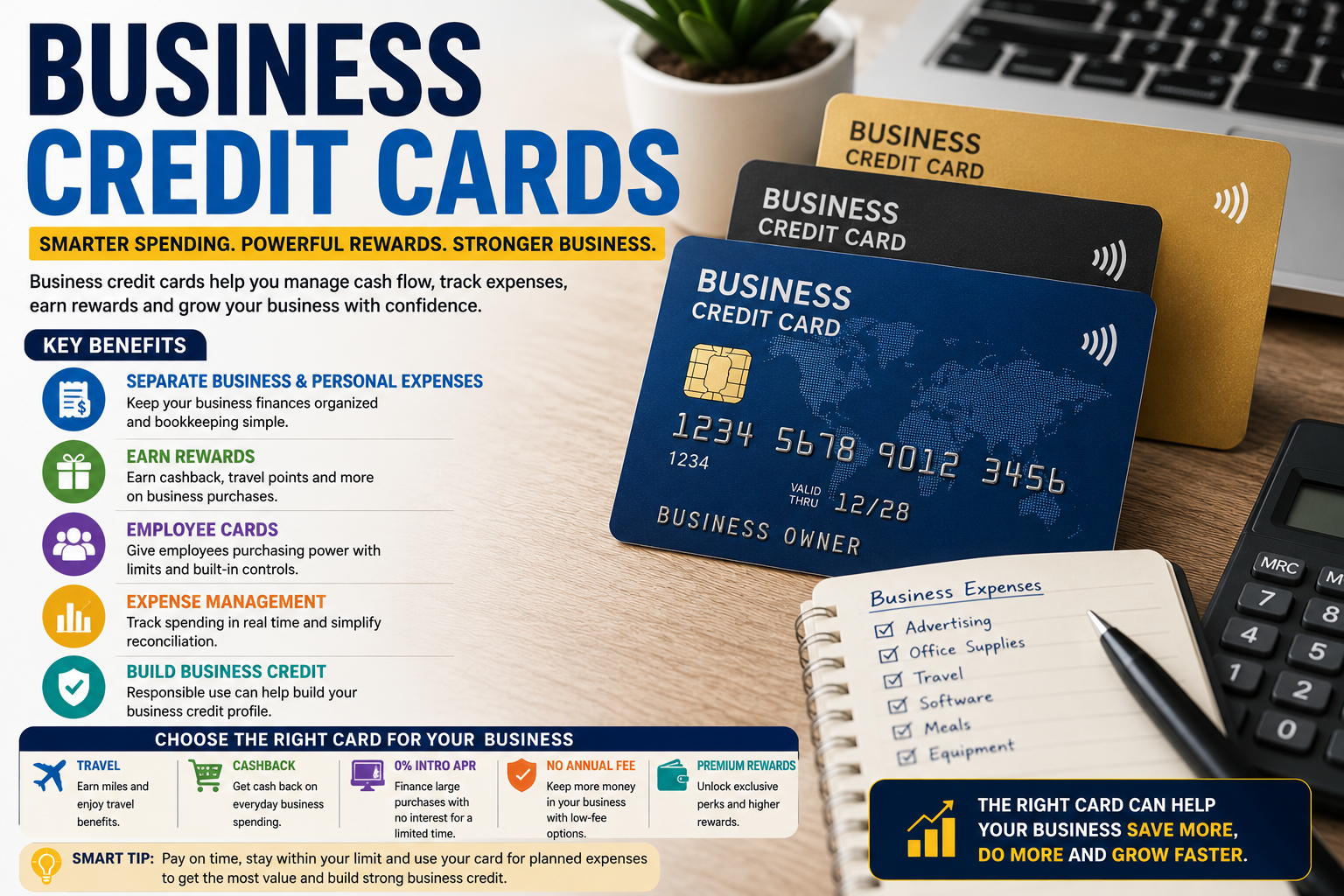
Business credit cards can be valuable financial tools for entrepreneurs, freelancers, startups, and established companies. They can help businesses manage everyday expenses, separate personal and business spending, track employee purchases, earn rewards, and maintain greater control over cash flow.
Unlike personal credit cards, business credit cards are designed around common business expenses such as advertising, software subscriptions, office supplies, travel, inventory, and other operating costs. Some cards also provide employee cards, expense-management tools, higher spending limits, and business-focused rewards.
However, choosing the right business credit card requires careful consideration. A card with attractive rewards may not be the best choice if it has a high annual fee or rewards categories that do not match your company's spending.
What Is a Business Credit Card?
A business credit card is a revolving line of credit intended for business-related purchases. It works similarly to a personal credit card: you make purchases up to your available credit limit and then repay the balance according to the card's terms.
Business cards are available to many types of business owners. Depending on the issuer, freelancers and sole proprietors may also qualify, even if they do not operate a large incorporated company.
One of the biggest advantages is the ability to keep business expenses separate from personal spending. This can make bookkeeping, expense tracking, and financial reporting easier.
Why Do Businesses Use Credit Cards?
Businesses have many different expenses throughout the month. A dedicated business credit card can make those transactions easier to organize.
For example, a company might use its card to pay for:
Digital advertising
Software subscriptions
Office supplies
Business travel
Shipping
Equipment
Professional services
Online services
Business meals
Inventory and supplies
Separating these purchases from personal transactions can make it easier to understand where business money is being spent.
Benefits of Business Credit Cards
1. Separate Business and Personal Expenses
One of the simplest benefits is separating company purchases from personal purchases.
Instead of having business transactions mixed with personal credit card activity, a dedicated business card creates a clearer record of business spending. This can simplify bookkeeping and make it easier to review expenses.
2. Earn Business Rewards
Many business credit cards offer rewards for eligible purchases.
Rewards may include:
Cashback
Travel points
Airline miles
Hotel rewards
Statement credits
Some cards offer higher rewards for categories such as advertising, shipping, travel, office supplies, or software.
The best rewards card depends on where your business spends the most money.
3. Employee Cards
Business owners may be able to provide cards to employees who need to make company purchases.
Employee cards can make purchasing more convenient while allowing the business owner to monitor spending. Some cards also allow spending controls or individual limits.
This can be particularly useful for businesses with sales teams, marketing departments, traveling employees, or managers who regularly purchase supplies.
4. Expense Tracking
Business credit cards can make it easier to monitor company spending.
Many card programs provide online dashboards, transaction histories, expense reports, and accounting integrations. These tools can reduce the amount of manual work required to organize business transactions.
5. Potentially Higher Credit Limits
Business credit cards may provide higher spending limits than some personal cards, depending on the issuer and the financial strength of the applicant.
Higher limits can be useful when a business regularly has large operating expenses.
However, a higher limit should never be treated as permission to overspend.
6. Building Business Credit
Some business credit card issuers report account activity to commercial credit bureaus. When they do, responsible use and timely payments may help establish or strengthen a business credit profile.
A stronger business credit profile may eventually help a company qualify for other forms of financing or potentially receive better terms from certain vendors and lenders.
Not every issuer reports business card activity in the same way, so check the card's reporting policy before applying.
Types of Business Credit Cards
Business credit cards come in several different categories.
Business Cashback Cards
Cashback cards return a percentage of eligible spending to the business.
These cards can be attractive for companies that want simple and predictable rewards rather than complicated points programs.
Business Travel Cards
Travel cards provide points or miles that can potentially be redeemed for flights, hotels, and other travel benefits.
They may be useful for businesses with employees who travel regularly for conferences, meetings, or client visits.
0% APR Business Cards
Some business credit cards offer an introductory 0% APR period on qualifying purchases.
This may provide additional time to pay for planned business expenses without purchase interest during the promotional period, subject to the card's terms.
However, the promotional period eventually ends, so businesses should have a repayment plan before using this type of offer.
No-Annual-Fee Business Cards
Some business cards do not charge an annual fee.
These can be attractive to startups and small businesses that want to keep operating costs low.
However, a card with an annual fee may still provide better overall value if its rewards and benefits significantly exceed the cost.
How to Choose the Right Business Credit Card
Choosing a business card should start with your company's spending patterns.
Analyze Your Business Expenses
Review several months of business expenses and identify your largest spending categories.
For example, if your company spends heavily on online advertising, a card with strong advertising rewards may provide more value than a general-purpose card.
If spending is spread across many categories, a flat-rate cashback card may be easier to manage.
Compare Annual Fees
Annual fees can vary significantly between business credit cards.
Calculate whether the rewards and benefits you expect to receive are greater than the annual cost.
Do not choose a premium card simply because it offers more features.
Check the APR
If your business regularly carries a balance, the interest rate becomes particularly important.
A card with attractive rewards may become expensive if the business carries a balance and pays significant interest.
If possible, businesses should plan purchases and repayments carefully to minimize unnecessary interest costs.
Consider Employee Cards
If employees need to make purchases, check whether the card offers additional employee cards and whether spending controls are available.
This can improve expense management while allowing employees to handle authorized business purchases.
Review Foreign Transaction Fees
Businesses that purchase products or services internationally or have employees traveling overseas should check foreign transaction fees.
A card with no foreign transaction fees may be more appropriate for companies with significant international spending.
How to Apply for a Business Credit Card
The application process varies between issuers, but applicants may be asked for both personal and business information.
Common information can include:
Business name
Business structure
Business address
Industry
Annual revenue
Estimated monthly spending
Number of employees
Years in business
Tax identification information
Personal identification and credit information
New businesses may still qualify for certain business cards, and some issuers allow sole proprietors to apply. Eligibility requirements vary by card.
Business Credit Cards and Personal Credit
One important issue for business owners is understanding how the card can affect personal credit.
Many business card applications involve a review of the owner's personal credit. Some issuers may also require a personal guarantee, meaning the owner can remain personally responsible for the business card debt under the card's agreement.
Business card reporting policies also vary. Some issuers report activity to commercial credit bureaus, while certain issuers may report information to consumer credit bureaus as well.
Because of this, business owners should read the terms carefully before applying.
Common Business Credit Card Fees
Before choosing a card, review the complete fee structure.
Common fees may include:
Annual fees
Interest charges
Late-payment fees
Foreign transaction fees
Balance-transfer fees
Cash-advance fees
Fees can significantly affect the overall value of a business credit card. A card with excellent rewards may not be worthwhile if your business regularly pays expensive fees.
How to Use a Business Credit Card Responsibly
A business credit card should support your company's financial management rather than encourage unnecessary spending.
Consider these habits:
Use the card primarily for legitimate business expenses.
Keep personal purchases separate.
Monitor transactions regularly.
Set spending limits for employee cards.
Pay bills on time.
Review fees and interest rates regularly.
Avoid spending simply to earn rewards.
Keep records of business purchases.
Review monthly statements carefully.
Have a repayment plan for larger purchases.
Business Credit Cards for Startups
Startups often have unique financial needs.
A new business may need to purchase software, advertising, equipment, inventory, or professional services before revenue becomes predictable.
A business credit card can provide short-term purchasing flexibility, but entrepreneurs should avoid relying on credit to cover expenses that the business cannot realistically repay.
Startups should pay particular attention to annual fees, introductory APR periods, credit requirements, and rewards categories.
Business Credit Cards vs. Personal Credit Cards
The biggest difference is their intended use.
Personal cards are designed primarily for individual expenses, while business cards are designed for business-related spending and often provide features such as employee cards, expense tracking, business rewards, and potentially higher limits.
Business cards can also have different consumer protections and liability arrangements than personal cards, so applicants should read the card agreement carefully.
Final Thoughts
Business credit cards can help entrepreneurs and companies manage expenses, separate business and personal spending, earn rewards, monitor employee purchases, and potentially build business credit.
However, the right card depends on the company's actual needs. A small business with significant advertising expenses may value category-based rewards, while a company with frequent travel may prefer travel rewards. Another business may simply want a no-annual-fee card with straightforward cashback.
Before applying, compare rewards, APR, annual fees, employee-card features, credit limits, foreign transaction fees, and reporting policies.
Most importantly, treat a business credit card as a financial management tool—not as extra income. Responsible spending and timely repayment can help a business get more value from its card while avoiding unnecessary costs.
Frequently Asked Questions
1. What is a business credit card?
A business credit card is a revolving credit account designed for business-related purchases and expenses.
2. Can a small business get a credit card?
Yes. Depending on the issuer, small businesses, freelancers, sole proprietors, and other business owners may qualify.
3. Can a business credit card help build business credit?
It can, if the card issuer reports activity to commercial credit bureaus. Check the issuer's reporting policy before applying.
4. Do business credit cards offer cashback?
Yes. Many business cards offer cashback on eligible purchases, sometimes with higher rewards for specific business spending categories.
5. Can employees get business credit cards?
Many business card programs allow employees to receive additional cards connected to the company's account.
6. Do business credit cards have annual fees?
Some have no annual fee, while others charge an annual fee in exchange for additional rewards and benefits.
7. Can I use a business credit card for advertising?
Yes, business advertising is a common expense category. Some cards may offer enhanced rewards for eligible advertising purchases.
8. Do business credit cards have higher limits?
They may offer higher credit limits than some personal cards, depending on the issuer, business finances, and applicant's credit profile.
9. Can a freelancer get a business credit card?
Some issuers allow freelancers and sole proprietors to apply for business credit cards, subject to their eligibility requirements.
10. What should I look for in a business credit card?
Compare rewards, annual fees, APR, spending categories, employee-card features, credit limits, foreign transaction fees, and business credit reporting.
11. Is a business credit card better than a personal credit card?
Neither is automatically better. A business card may be more appropriate for separating company expenses and accessing business-focused features, while a personal card may be better for individual spending.
12. Should a new business get a business credit card?
It can be useful if the business has legitimate expenses and a clear plan for managing repayments. New businesses should compare fees and requirements carefully before applying.