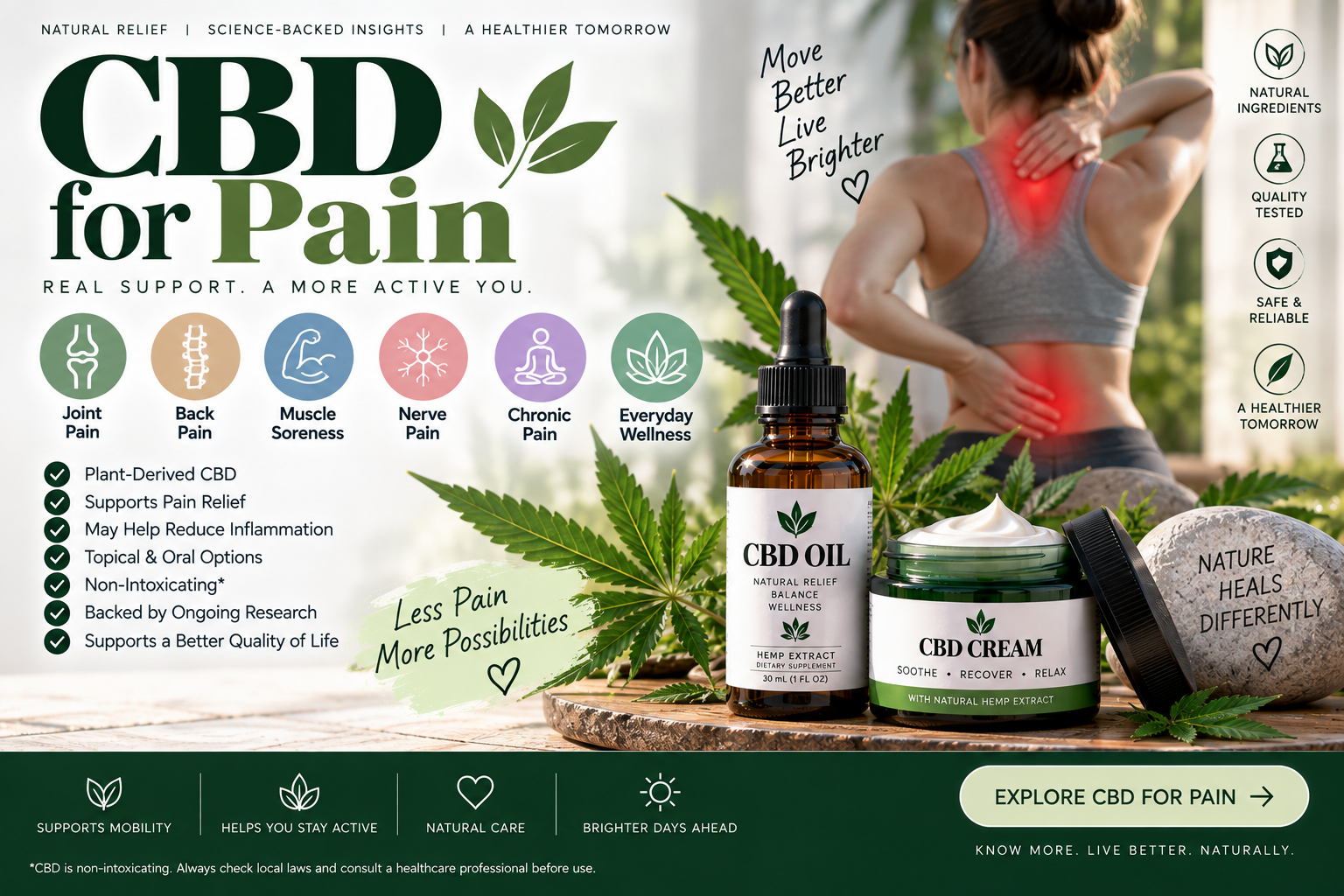
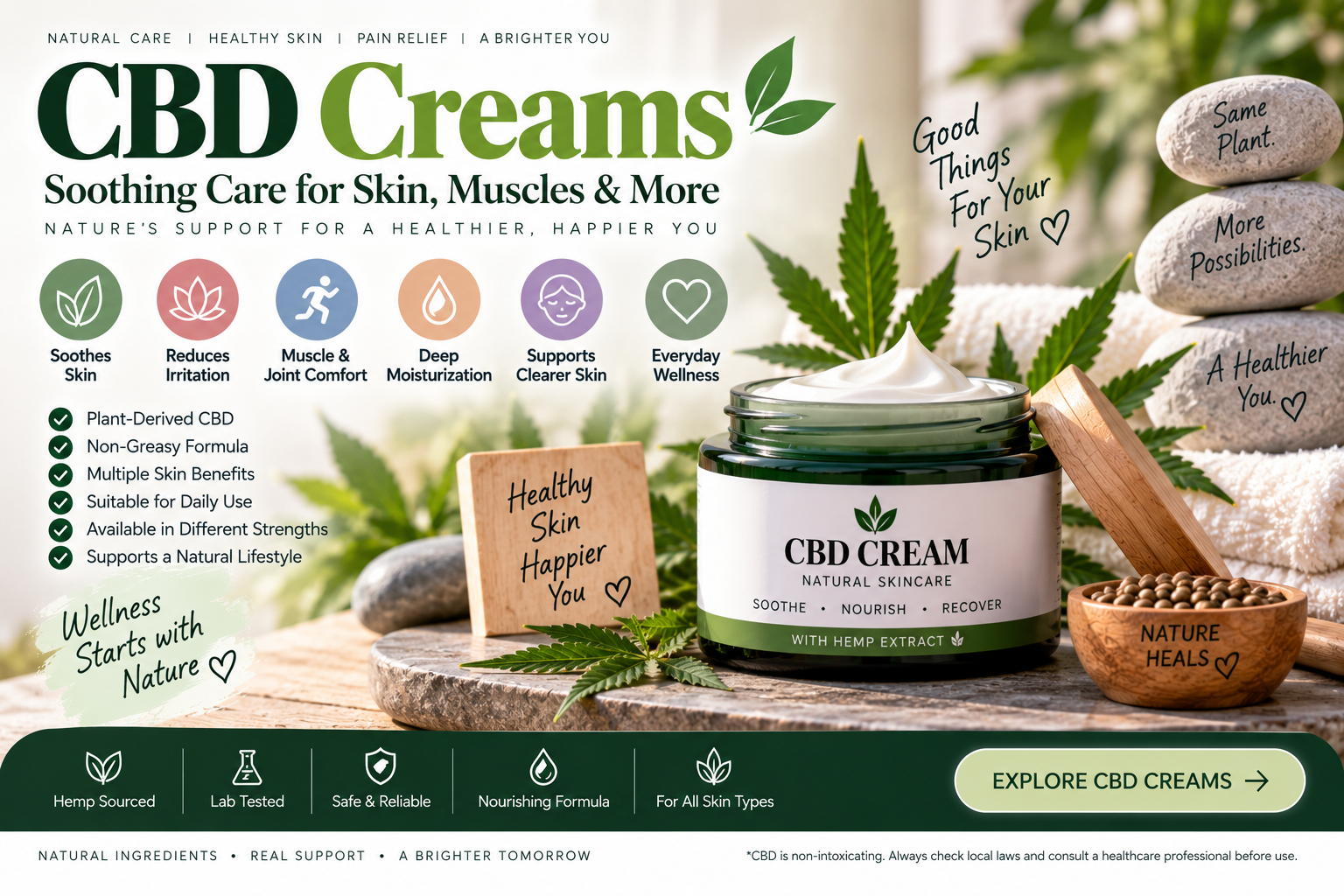
CBD creams have become increasingly popular in skincare and wellness products. These topical products contain cannabidiol (CBD), a compound derived from the cannabis plant, and are commonly applied directly to the skin. They are marketed for purposes ranging from moisturizing and soothing the skin to supporting comfort in specific areas.
However, the popularity of CBD creams has grown faster than the scientific evidence supporting many of their advertised benefits. Research suggests that CBD has interesting biological effects in laboratory and early clinical studies, but evidence for many specific uses of over-the-counter CBD creams remains limited.
This guide explains what CBD creams are, how they work, potential benefits, possible risks and side effects, product types, how to choose a product, and what current research says.
What Are CBD Creams?
CBD creams are topical products formulated with cannabidiol and other ingredients such as moisturizers, botanical extracts, oils, waxes, or emulsifiers.
Unlike CBD oils or gummies that are designed to be taken orally, CBD creams are applied to the skin. Some products are marketed as cosmetics for moisturizing or improving the appearance of skin, while others make claims related to pain, inflammation, muscle discomfort, or specific skin conditions.
CBD itself is a cannabinoid found in cannabis plants. Unlike THC, CBD does not produce the typical intoxicating "high" associated with THC.
A CBD cream may contain:
CBD isolate
Broad-spectrum CBD
Full-spectrum CBD
Hemp seed oil
Plant oils and botanical extracts
Moisturizers and emollients
Fragrances or essential oils
Other ingredients intended to improve texture or skin feel
The formulation matters because the effects and safety of a topical product depend on more than CBD alone.
How Do CBD Creams Work?
The skin contains components of the body's endocannabinoid system, including cannabinoid receptors and related signaling pathways. Researchers are studying how cannabinoids interact with these pathways and how they may influence processes involving inflammation, sensation, and skin function.
When CBD cream is applied to the skin, some of the CBD may remain primarily near the application site. However, the amount that penetrates the skin can vary substantially depending on the formulation, concentration, delivery system, skin condition, and other factors.
This is one reason researchers continue to study topical and transdermal CBD products. A systematic review of topical CBD trials found relatively few human studies and noted limitations such as small study numbers, high risk of bias, and differences between formulations.
Therefore, applying CBD cream to the skin should not automatically be considered equivalent to taking CBD orally.
Potential Benefits of CBD Creams
CBD creams are marketed for many different purposes. Some have preliminary scientific support, while others require substantially more research.
1. Skin Moisturizing
Some CBD-containing skincare products are formulated with moisturizing ingredients that may help support the skin barrier and reduce dryness.
Research reviews have identified potential moisturizing and skin-conditioning properties associated with CBD-containing formulations, but the overall clinical evidence remains limited.
Importantly, a product's moisturizing effect may come from ingredients such as oils, emollients, glycerin, or other moisturizing agents rather than CBD itself.
2. Skin Soothing
CBD is being investigated for possible effects on inflammatory pathways and skin signaling.
Laboratory and early clinical research has generated interest in CBD for conditions involving irritation, itching, or inflammation. However, current evidence is not strong enough to conclude that commercial CBD creams reliably treat inflammatory skin diseases.
3. Acne Research
CBD has attracted interest in dermatology because of potential effects on processes involved in oil production, inflammation, and skin-cell activity.
Some laboratory and early clinical research suggests possible benefits for acne-prone skin, but researchers emphasize that more high-quality clinical trials are needed before CBD can be considered an established acne treatment.
People with persistent or severe acne should not replace established dermatological treatments with CBD cream without professional guidance.
4. Itch and Skin Discomfort
CBD is also being investigated for its potential effects on itching and sensory pathways.
Early research suggests cannabinoids may influence neuroimmune mechanisms involved in itching and skin sensation. However, evidence from human studies remains limited.
5. Muscle and Joint Comfort
Many CBD creams and balms are marketed for localized muscle or joint discomfort.
Although cannabinoids have been investigated for pain, much of the evidence concerns oral or other cannabinoid preparations rather than ordinary CBD creams. NCCIH notes that research on cannabinoids for chronic pain has found some potential benefit, but the evidence varies by formulation and the differences may be small.
It is therefore not appropriate to assume that evidence for oral cannabis-based products automatically applies to topical CBD cream.
6. Skin Appearance
CBD is increasingly used in cosmetic formulations marketed for hydration, skin texture, and signs of aging.
Laboratory and early clinical research has identified possible antioxidant, moisturizing, and skin-conditioning properties. Nevertheless, clinical evidence for anti-aging effects remains limited.
A CBD cream should not be considered a proven replacement for established skincare ingredients such as sunscreen or dermatologist-recommended treatments.
CBD Creams and Skin Conditions
Researchers are studying topical CBD for several dermatological conditions, including:
Acne
Atopic dermatitis
Psoriasis
Seborrheic dermatitis
Itching
Skin inflammation
Skin dryness
Certain forms of skin discomfort
A 2025 review found that preclinical research is promising, but clinical evidence remains limited for conditions such as acne, dermatitis, and psoriasis.
Another recent review highlighted potential anti-inflammatory, antioxidant, moisturizing, and other biological effects while emphasizing challenges involving CBD stability, skin penetration, formulation, and regulatory standardization.
This distinction is important: promising research does not mean a CBD cream has been proven to treat a medical condition.
Types of CBD Used in Creams
CBD creams generally use one of three forms of CBD.
CBD Isolate
CBD isolate contains cannabidiol without the other naturally occurring cannabinoids from the cannabis plant.
It may appeal to people who want a product focused specifically on CBD, although product testing is still important.
Broad-Spectrum CBD
Broad-spectrum products contain CBD along with some other cannabis compounds but are generally formulated without detectable THC, although contamination or inaccurate labeling can occur.
Full-Spectrum CBD
Full-spectrum products contain CBD along with other naturally occurring cannabis compounds and may contain THC within applicable legal limits.
The exact composition depends on the manufacturer and jurisdiction.
CBD Cream vs. CBD Oil
CBD cream and CBD oil are not interchangeable.
CBD cream is designed for topical application and is generally used on specific areas of the skin.
CBD oil may refer to products intended for oral use or, depending on the product, topical use.
The route of administration affects how CBD is absorbed and how much reaches the bloodstream. FDA notes that important questions remain about how much CBD is absorbed from topical products and how exposure changes when consumers use multiple CBD products.
Always follow the product's intended route of use.
Are CBD Creams Safe?
Safety depends on the ingredients, formulation, amount used, frequency of application, skin condition, and individual sensitivity.
A small clinical study evaluating certain topical CBD formulations found no irritation or sensitization in healthy adults during patch testing. However, the researchers emphasized that their findings could not automatically be generalized to all commercial CBD products because formulations vary widely.
Potential concerns include:
Skin irritation
Redness
Itching
Allergic reactions to CBD or other ingredients
Fragrance sensitivity
Contaminated or inaccurately labeled products
Unknown systemic absorption
People with sensitive or damaged skin should be particularly cautious.
Can CBD Cream Cause Side Effects?
Topical CBD may cause local skin reactions, especially if the product contains fragrances, essential oils, preservatives, or other ingredients that irritate the skin.
Systemic effects are less clearly understood because absorption through the skin varies between products.
The FDA has emphasized that significant questions remain about CBD exposure from topical products and about long-term safety.
CBD itself has been associated with side effects such as drowsiness, gastrointestinal symptoms, mood changes, liver injury, and medication interactions when used systemically. It is not yet clear how these risks translate to every topical formulation.
How to Use CBD Cream
If you decide to try a CBD cream, follow the manufacturer's directions rather than assuming that more product will produce better results.
General precautions include:
Read the entire product label.
Check the amount of CBD per container and, when provided, per serving or application.
Apply a small amount initially.
Consider a small patch test before widespread use.
Avoid broken or severely irritated skin unless directed by a healthcare professional.
Keep the product away from the eyes and mucous membranes.
Wash your hands after application.
Stop using it if significant irritation or an allergic reaction develops.
Do not use a topical product in a way that differs from its labeled instructions.
How to Choose a CBD Cream
Because commercial CBD products can vary substantially, product quality deserves careful attention.
Check the CBD Amount
Look for a clear statement of the total CBD amount in the container.
A larger package does not necessarily mean a stronger product.
Look for Independent Testing
A certificate of analysis, commonly called a COA, can provide information about the product's tested cannabinoid content and potential contaminants.
Independent laboratory testing may help consumers identify discrepancies between the label and the actual contents.
Review the Ingredient List
CBD is only one component of a cream.
Look for ingredients that may be relevant to your skin type and avoid known allergens or irritants.
Avoid Unproven Medical Claims
Be cautious of products claiming to cure cancer, arthritis, eczema, psoriasis, severe pain, or other diseases.
The FDA has warned that many CBD products are marketed with unproven medical claims and may not have been evaluated for safety or effectiveness for those purposes.
Check THC Information
If avoiding THC is important to you, check whether the manufacturer provides independent testing confirming cannabinoid content.
Even products marketed as CBD may have labeling inaccuracies or contain other cannabinoids. NCCIH notes that some CBD products may contain amounts different from those stated on their labels.
Can CBD Cream Make You Fail a Drug Test?
The answer depends on the product.
A pure CBD product does not contain THC, but full-spectrum products can contain THC. In addition, inaccurate labeling or contamination can result in unexpected cannabinoid exposure.
People subject to workplace, athletic, military, or other drug-testing programs should carefully consider this possibility and review the product's laboratory testing.
If avoiding THC is essential, do not assume that a product's marketing statement alone guarantees the absence of THC.
CBD Cream During Pregnancy or Breastfeeding
The FDA strongly advises against using CBD during pregnancy or while breastfeeding. The agency states that there are important unanswered questions about CBD exposure during pregnancy and breastfeeding and potential effects on the developing fetus or breastfed infant.
This caution applies even though a cream is applied to the skin because the amount of CBD that may be absorbed systemically can vary.
People who are pregnant, trying to become pregnant, or breastfeeding should discuss CBD-containing products with a qualified healthcare professional.
CBD Cream and Medications
CBD can interact with medications, particularly when enough CBD enters systemic circulation.
The FDA has identified medication interactions as an important CBD safety concern.
Although topical products may result in different exposure than oral CBD, the exact amount absorbed can vary by formulation.
If you regularly take prescription or over-the-counter medications, discuss CBD use with a healthcare professional before using it regularly.
What About Hidden Ingredients?
Product quality is an important consideration.
In April 2026, the FDA warned consumers about a product marketed as KUKA FLEX CBD after laboratory testing found undeclared diclofenac, a nonsteroidal anti-inflammatory drug, in the product. This illustrates why consumers should not automatically assume that a product labeled "CBD" contains only the ingredients listed on its packaging.
Independent testing and reputable manufacturing practices can help reduce—but cannot completely eliminate—these concerns.
Are CBD Creams FDA Approved?
In the United States, the FDA has approved one prescription CBD product for specific rare seizure disorders. This approval does not mean that commercially available CBD creams have been approved to treat pain, acne, eczema, psoriasis, arthritis, or other conditions.
FDA regulations and product classifications can also differ between cosmetics, drugs, and other consumer products.
Consumers should therefore be cautious when a CBD cream is advertised as an FDA-approved treatment for a medical condition.
CBD Cream Research: What Do We Know?
Research into topical CBD is developing.
A systematic review of human topical CBD trials found only a small number of eligible studies among hundreds of screened publications. The researchers also noted high risk of bias and limitations in how studies were reported.
More recent reviews continue to describe potential dermatological applications while emphasizing the limited number of high-quality clinical studies.
This means CBD creams are an area of active research rather than an established treatment for most skin or pain conditions.
CBD Cream vs. Traditional Treatments
CBD cream should not automatically replace treatments that have stronger clinical evidence.
For example, people with eczema, psoriasis, acne, chronic pain, or persistent itching may need an accurate diagnosis and evidence-based treatment.
A CBD product might be considered a complementary personal-care product for some people, but replacing prescribed treatment without professional guidance could delay effective care.
When Should You See a Doctor?
Talk to a healthcare professional if you have:
Persistent or worsening skin irritation
Severe itching
A spreading rash
Signs of infection
Unexplained swelling
Persistent or severe pain
A new skin lesion
A skin condition that does not improve with normal care
A history of significant medication interactions or allergies
CBD cream should not be used to delay medical evaluation of unexplained symptoms.
Final Thoughts
CBD creams are increasingly popular in skincare and wellness, but their scientific evidence is still developing. Research suggests that CBD may have biological effects relevant to skin inflammation, sensation, hydration, and other processes, but clinical evidence for treating specific conditions remains limited.
Product quality is another important consideration. Consumers should look for transparent labeling, independent laboratory testing, clear ingredient lists, and realistic claims.
CBD cream may be an interesting area of skincare research, but it should not automatically be considered a proven treatment for pain or skin disease. Anyone with a medical condition, taking medications, pregnant or breastfeeding should discuss CBD use with a qualified healthcare professional.
Frequently Asked Questions
1. What is CBD cream?
CBD cream is a topical product containing cannabidiol (CBD), a compound derived from cannabis or hemp. It is designed to be applied directly to the skin.
2. Does CBD cream get you high?
CBD itself is not intoxicating in the way THC is. However, some products may contain THC, so checking the product's cannabinoid profile is important.
3. What is CBD cream used for?
CBD creams are commonly marketed for moisturizing, soothing the skin, localized comfort, and general skincare. Scientific evidence for many specific therapeutic uses remains limited.
4. Can CBD cream help with pain?
CBD creams are marketed for localized pain and discomfort, but evidence specifically supporting ordinary topical CBD creams for pain remains limited. Research on other cannabinoid preparations cannot automatically be applied to topical CBD products.
5. Can CBD cream help acne?
Early research suggests CBD may have properties relevant to acne, but there is not enough high-quality evidence to establish CBD cream as a standard acne treatment.
6. Can CBD cream help eczema?
CBD is being studied for inflammatory skin conditions including dermatitis and eczema. However, current clinical evidence is limited, so CBD cream should not replace established eczema treatment.
7. Does CBD cream have side effects?
Possible problems include skin irritation or allergic reactions to CBD or other ingredients. Systemic effects are less well understood because topical absorption varies between formulations.
8. Should I patch-test CBD cream?
Patch testing a small area can be a reasonable precaution, particularly if you have sensitive skin or allergies. Stop using the product if significant irritation develops.
9. Can CBD cream contain THC?
Yes. Full-spectrum products may contain THC, and product labeling may not always be completely accurate. Independent laboratory testing can provide additional information.
10. Is CBD cream legal?
CBD laws differ by country, state, and product type. Check the laws that apply where you live before purchasing or using CBD products.
11. Is CBD cream FDA approved?
The FDA has not approved ordinary CBD creams to treat medical conditions. In the United States, the FDA has approved one prescription CBD drug for certain rare seizure disorders.
12. Can I use CBD cream while pregnant?
The FDA strongly advises against CBD use during pregnancy and breastfeeding.
13. Can CBD cream interact with medications?
CBD can interact with medications, although the extent of systemic exposure from topical products varies. People taking medications should discuss CBD use with a healthcare professional.
14. How do I choose a good CBD cream?
Look for clear CBD labeling, a complete ingredient list, independent laboratory testing, batch information, and realistic product claims.
15. Is CBD cream better than CBD oil?
Neither is universally better. They are different formulations intended for different routes of use. CBD cream is designed for topical application, while CBD oil may be formulated for oral or topical use depending on the product.