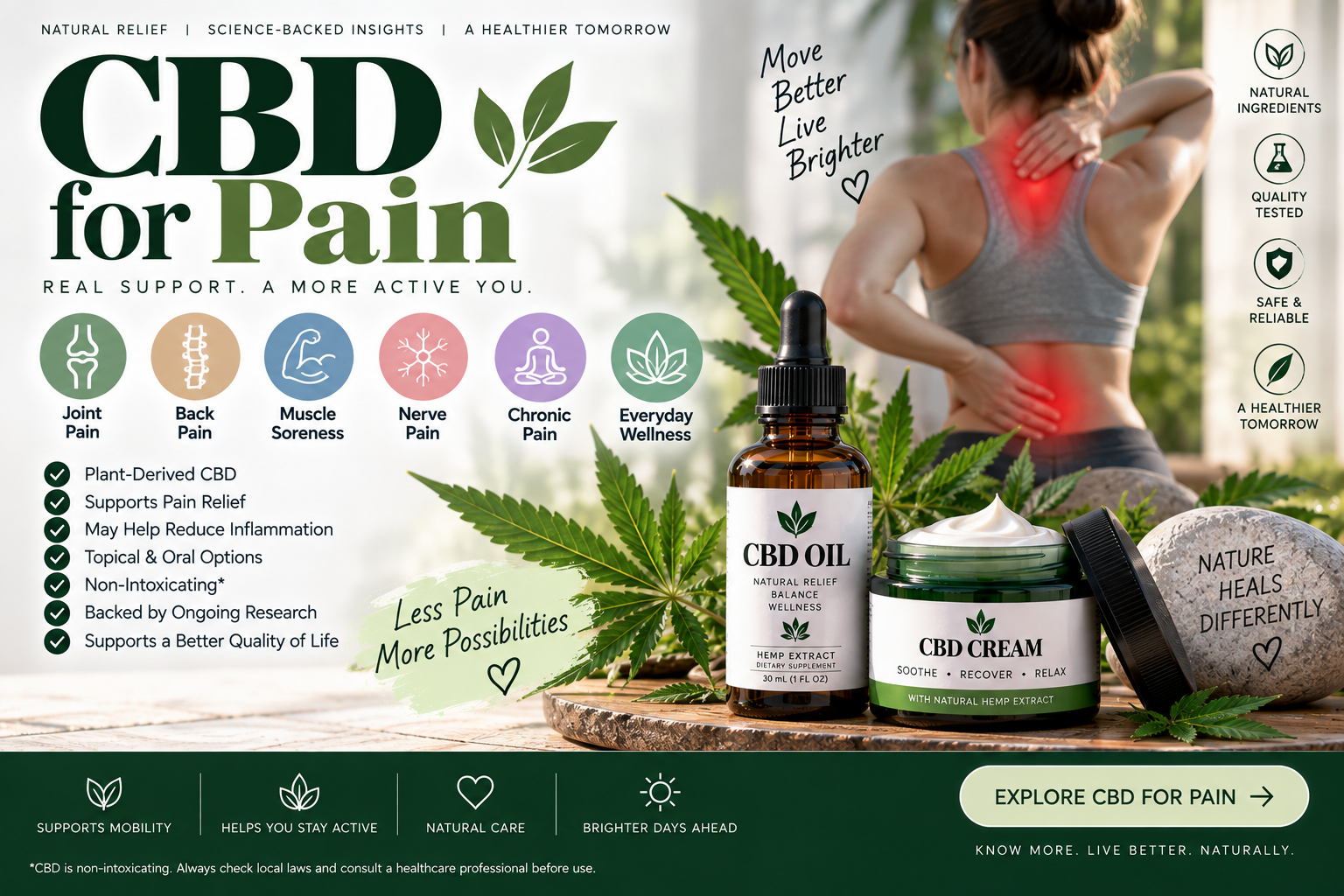
Pain can affect nearly every part of daily life, from sleep and movement to work, exercise, and overall well-being. Because of this, many people are exploring alternatives to traditional pain-management approaches, including cannabidiol (CBD).
CBD is a compound found in cannabis and hemp plants. Unlike tetrahydrocannabinol (THC), CBD is generally not intoxicating, meaning it does not produce the typical “high” associated with THC. However, non-intoxicating does not mean risk-free.
So, does CBD actually help with pain?
The answer is more complicated than many product advertisements suggest. Research has investigated cannabinoids for chronic and neuropathic pain, but evidence specifically supporting CBD by itself remains limited. A 2025 living systematic review from the Agency for Healthcare Research and Quality (AHRQ) found that purified oral CBD alone was not associated with reduced pain intensity or improved function compared with placebo in the randomized trials it evaluated.
This guide explains what researchers currently know about CBD for pain, potential benefits, different types of pain, possible side effects, dosage considerations, product quality, and important safety issues.
What Is CBD?
Cannabidiol, commonly called CBD, is one of the naturally occurring compounds found in cannabis plants.
CBD interacts with biological systems involved in pain, inflammation, mood, and other processes. Researchers are studying several possible mechanisms, including interactions with receptors and signaling pathways involved in pain perception.
CBD is different from THC. THC is the primary cannabis compound responsible for intoxication, while CBD generally does not produce the same psychoactive effect.
However, CBD products may contain varying amounts of THC, depending on how they are formulated and manufactured.
It is also important to distinguish between:
CBD isolate: Contains primarily CBD.
Broad-spectrum CBD: Contains CBD and other hemp compounds but is generally formulated without detectable THC.
Full-spectrum CBD: Contains multiple cannabis or hemp compounds and may contain THC within applicable legal limits.
CBD plus THC products: Contain both cannabinoids and may have different effects and risks from CBD alone.
These distinctions matter because research on cannabis-based products does not necessarily prove that CBD alone produces the same effects.
Can CBD Help With Pain?
Research into CBD and pain is ongoing, but current evidence does not establish CBD alone as a proven treatment for chronic pain.
A 2025 AHRQ living systematic review examined randomized controlled trials involving cannabinoids and chronic pain. It found that purified or synthetic oral CBD alone did not significantly reduce pain intensity compared with placebo. The review also found insufficient evidence to draw conclusions about topical CBD and several other cannabinoid formulations.
Earlier research has been somewhat more encouraging. A 2024 systematic review of studies specifically examining CBD for chronic pain found that several studies reported pain improvements, but the researchers emphasized that the evidence was limited by small numbers of studies and substantial differences in study designs and outcomes.
Another 2024 review of clinical and preclinical evidence concluded that CBD shows potential in pain research, while also emphasizing that clinical evidence remains limited and additional high-quality studies are needed.
The important takeaway is that promising research does not necessarily mean proven effectiveness.
CBD for Chronic Pain
Chronic pain is pain that persists for an extended period, often lasting for months or longer.
Researchers have investigated cannabinoids for several chronic pain conditions, including neuropathic pain, musculoskeletal pain, and other long-lasting pain conditions.
The evidence is mixed.
The 2025 AHRQ review found that certain cannabis-based products containing both THC and CBD produced small short-term improvements in pain, particularly in studies involving neuropathic pain. However, these products also increased the risk of side effects such as dizziness, sedation, and nausea.
Importantly, these findings should not be interpreted as evidence that CBD alone works in the same way.
For people considering CBD for chronic pain, the underlying cause of the pain should also be evaluated. Persistent pain can result from arthritis, nerve damage, injuries, autoimmune conditions, infections, or other medical problems that may require specific treatment.
CBD for Neuropathic Pain
Neuropathic pain develops when nerves or the nervous system are damaged or affected.
Examples can include:
Burning sensations
Tingling
Numbness
Electric-shock-like pain
Shooting pain
Increased sensitivity to touch
Cannabinoids have been studied particularly extensively in neuropathic pain.
NCCIH notes that research has examined cannabis and cannabinoid products for chronic pain, especially neuropathic pain. Some evidence suggests a small benefit from cannabis or cannabinoid medicines, but side effects are more common than with placebo.
Again, much of this research involves THC-containing cannabinoid products rather than CBD alone.
Therefore, someone experiencing nerve pain should not assume that a CBD-only product will provide the same results seen in studies involving THC/CBD combinations.
CBD for Arthritis and Joint Pain
Joint pain caused by conditions such as osteoarthritis is another area of interest.
Researchers have investigated whether CBD might influence pain-related signaling and inflammation associated with joint problems.
However, current evidence does not provide strong enough support to consider CBD a proven treatment for arthritis.
The 2025 AHRQ review included a randomized trial involving a topical hemp-seed oil product for knee osteoarthritis, but the review concluded that evidence for topical CBD and other less-studied formulations remained insufficient to draw firm conclusions.
People with persistent joint pain should therefore consider established approaches such as physical activity, physical therapy, weight management when appropriate, prescribed medications, and evaluation by a healthcare professional.
CBD should not automatically replace treatments with stronger evidence.
CBD for Muscle Pain
CBD creams, balms, oils, and other topical products are frequently marketed for muscle soreness and localized discomfort.
The idea is appealing because topical products can be applied directly to the area of concern.
However, evidence supporting topical CBD for pain remains limited. The 2025 AHRQ review specifically noted that evidence involving topical CBD was insufficient to draw reliable conclusions.
A topical product may also contain ingredients other than CBD, such as menthol or other botanical compounds. If someone experiences relief, it can therefore be difficult to determine which ingredient contributed to the effect.
CBD Oil for Pain
CBD oil is one of the most common forms of CBD available.
Depending on the product, CBD oil may be taken orally or placed under the tongue. Products vary substantially in concentration, ingredients, extraction methods, and THC content.
Consumers should not assume that a higher concentration automatically means greater pain relief.
There is currently no universally established CBD dose for treating pain because CBD products have not been established as a standard pain treatment, and studies have used different formulations and doses.
If someone is considering CBD while taking prescription or over-the-counter medication, discussing it with a healthcare professional is particularly important.
CBD Cream for Pain
CBD creams and balms are designed for topical use.
They are often marketed for:
Muscle soreness
Joint discomfort
Exercise-related discomfort
Localized aches
Stiffness
However, evidence for topical CBD specifically remains limited.
Another issue is product quality. Some products marketed for pain may contain ingredients or substances that are not clearly represented on their labels.
In April 2026, the FDA warned consumers not to use a product marketed as KUKA FLEX CBD after laboratory testing found that it contained undeclared diclofenac, a prescription-strength NSAID that was not listed on the label.
This example highlights why consumers should be cautious with products making strong medical claims.
How Does CBD Work for Pain?
Scientists are still studying exactly how CBD may affect pain.
Potential mechanisms being investigated include interactions with receptors and signaling pathways associated with:
Pain perception
Inflammation
Nerve signaling
Stress responses
Sensory processing
Laboratory research has identified several possible biological mechanisms, but results from laboratory or animal research do not automatically demonstrate meaningful pain relief in humans.
Clinical research is therefore particularly important.
At present, human evidence does not establish a clear, consistent dose-response relationship for CBD as a treatment for pain.
Is CBD Better Than Traditional Pain Medicine?
There is not enough evidence to make a blanket statement that CBD is better than conventional pain medicines.
Pain treatment depends heavily on the cause, severity, duration, medical history, and other medications a person takes.
Traditional approaches may include:
Physical therapy
Exercise and movement programs
Cognitive behavioral therapy for chronic pain
Acetaminophen or other appropriate medicines
Nonsteroidal anti-inflammatory drugs when appropriate
Prescription medicines
Injections or procedures for certain conditions
Treatment of the underlying disease
NCCIH notes that approaches such as cognitive behavioral therapy and mindfulness-based interventions can also help people manage chronic pain and improve functioning.
CBD should not be viewed automatically as a replacement for established medical care.
CBD for Pain: Possible Side Effects
CBD can cause side effects, and the risks may depend on the dose, formulation, other medications, and individual health factors.
Possible concerns include:
Drowsiness or sedation
Changes in alertness
Gastrointestinal symptoms
Changes in appetite
Drug interactions
Liver injury
The FDA states that CBD can cause liver injury and can affect how other medications work. Combining CBD with alcohol or other substances that slow brain activity may also increase sedation and drowsiness.
Because of these potential risks, CBD should not automatically be considered harmless simply because it comes from a plant.
CBD and Medication Interactions
CBD may interact with medications.
This is especially important for people who regularly take prescription medicines for chronic conditions.
CBD can potentially alter how certain drugs are metabolized or affect their effects in the body. The FDA has specifically warned about potential drug interactions.
Before trying CBD for pain, talk with a healthcare professional if you take:
Prescription medicines
Blood thinners
Sedating medications
Anti-seizure medicines
Medicines processed by the liver
Multiple medications at the same time
Do not stop prescribed medication simply because you want to try CBD.
How to Choose a CBD Product for Pain
If you decide to discuss CBD with a healthcare professional, product quality is an important consideration.
Look for products that provide:
Clear CBD concentration
The label should clearly state how much CBD is present per serving or container.
Independent laboratory testing
A certificate of analysis (COA) can provide information about cannabinoid content and potential contaminants.
THC information
Check whether the product contains THC and how much.
Complete ingredient information
Avoid products that do not clearly identify their ingredients.
Avoid exaggerated medical claims
Be cautious about products claiming to “cure” arthritis, eliminate chronic pain, replace prescription medication, or provide guaranteed results.
The FDA has warned that some CBD products are marketed with unproven medical claims and may be of unknown quality.
Is There a Recommended CBD Dose for Pain?
There is no universally established CBD dosage for pain.
Research studies have used different doses, formulations, routes of administration, and treatment durations. The appropriate amount can also depend on factors such as body chemistry, other medications, and the reason for using CBD.
Rather than selecting a dose based solely on an online product advertisement, discuss CBD use with a healthcare professional who understands your medical history and medications.
Who Should Avoid CBD?
Certain people should be particularly cautious.
The FDA strongly advises against using CBD during pregnancy or breastfeeding because important safety questions remain and potential risks have been identified.
People with liver disease, people taking multiple medications, and people who are sensitive to sedating substances should also seek professional advice before using CBD.
Children should not be given CBD products unless specifically directed by an appropriate healthcare professional. The FDA-approved CBD medication is used for particular seizure disorders under medical supervision and is different from ordinary retail CBD products.
CBD for Pain and Drug Testing
CBD itself is not the primary compound targeted by most standard THC drug tests.
However, some CBD products may contain THC, particularly full-spectrum products.
Because product labeling may not always perfectly reflect actual contents, people subject to workplace, athletic, legal, or other drug testing should understand that using CBD products may carry a risk of an unexpected THC-positive result.
The Future of CBD and Pain Research
Interest in CBD and pain continues to grow.
Researchers are studying different formulations, doses, delivery methods, and pain conditions. Future research may help determine whether particular groups of patients benefit more than others.
The 2025 AHRQ review included 29 randomized controlled trials involving 2,579 participants across cannabinoid interventions, but it emphasized that most studies were short-term and that evidence for CBD-only products and several other formulations remained insufficient.
This means the scientific picture is still developing.
Better-designed clinical trials with standardized CBD products, longer follow-up periods, and clearly defined pain conditions are needed.
Final Thoughts
CBD has attracted considerable attention as a potential option for pain management, but the evidence needs to be interpreted carefully.
Research suggests that some cannabis-based products can provide small short-term improvements in certain types of chronic pain, particularly neuropathic pain. However, the strongest recent evidence does not establish oral CBD alone as an effective treatment for pain, and evidence for topical CBD remains insufficient.
CBD also has potential risks, including liver injury, medication interactions, sedation, and problems related to product quality.
If you are considering CBD for pain, identify the underlying cause of the pain first and discuss your options with a qualified healthcare professional. CBD may be an area worth watching as research develops, but it should not automatically replace treatments that have stronger evidence.
Frequently Asked Questions About CBD for Pain
Does CBD actually relieve pain?
Research is mixed. Some studies of cannabis-based products have found small improvements in chronic pain, but the 2025 AHRQ review found that purified oral CBD alone did not significantly reduce pain compared with placebo.
Is CBD good for nerve pain?
Cannabinoids have been studied extensively for neuropathic pain, but much of the evidence involves products containing THC as well as CBD. Evidence specifically supporting CBD alone remains limited.
Does CBD cream help muscle pain?
Topical CBD products are widely marketed for muscle and joint discomfort, but high-quality evidence specifically supporting topical CBD for pain remains insufficient.
What is the best CBD for pain?
There is no scientifically established “best” CBD product for pain. Products differ in concentration, ingredients, THC content, and quality. Independent laboratory testing and transparent labeling are important considerations.
How much CBD should I take for pain?
There is no universally established CBD dose for pain. Clinical studies use different formulations and doses, so dosing should be discussed with a healthcare professional rather than based solely on product marketing.
Can CBD interact with pain medication?
Yes. CBD can affect how other medicines work and may increase or decrease their effects. The FDA recommends discussing CBD use with a healthcare professional.
Can CBD damage the liver?
CBD has been associated with liver injury, particularly at higher exposures. The FDA has identified liver injury as an important safety concern.
Is CBD safer than opioids?
It is not appropriate to make a general safety comparison based on current evidence. CBD and opioid medicines have different mechanisms, risks, and approved uses. More research is needed to determine the role of CBD in pain treatment.
Can I use CBD for pain every day?
Long-term safety and effectiveness of many retail CBD products remain uncertain. Before using CBD regularly, discuss the product and your other medications with a healthcare professional.
Is CBD approved by the FDA for pain?
No. The FDA has approved a prescription CBD drug for certain rare seizure disorders, but CBD products have not been approved by the FDA as treatments for pain.