Building a successful career is about more than finding a job and earning a salary. It involves developing valuable skills, identifying professional goals, gaining experience, and adapting to changes in the workplace.
The professional world is changing rapidly. Artificial intelligence, automation, remote work, digital transformation, and new business models are creating different career opportunities while changing the skills employers expect from candidates.
Whether someone is entering the workforce, changing industries, returning to employment, or seeking career advancement, making informed professional decisions has become increasingly important.
In 2026, successful career development requires a combination of technical knowledge, communication skills, adaptability, continuous learning, and practical experience.
This guide explores how careers are evolving, which industries offer promising opportunities, how to choose the right career path, and what individuals can do to achieve long-term professional growth.
What Is a Career?
A career is the long-term professional journey an individual builds through employment, education, training, experience, and personal development.
It may involve working for different organizations, changing industries, developing specialized expertise, or starting a business.
Unlike a single job, a career represents a broader professional direction that develops over time.
For example, someone interested in technology might begin as a junior software developer, progress to a senior engineering position, become a technical manager, and eventually lead an entire technology department.
A successful career generally involves:
Clear professional goals
Relevant education and qualifications
Practical work experience
Continuous skill development
Professional relationships
Adaptability to industry changes
Opportunities for advancement
Personal and professional satisfaction
A career does not always follow a straight path. People may change direction as their interests, circumstances, and opportunities evolve.
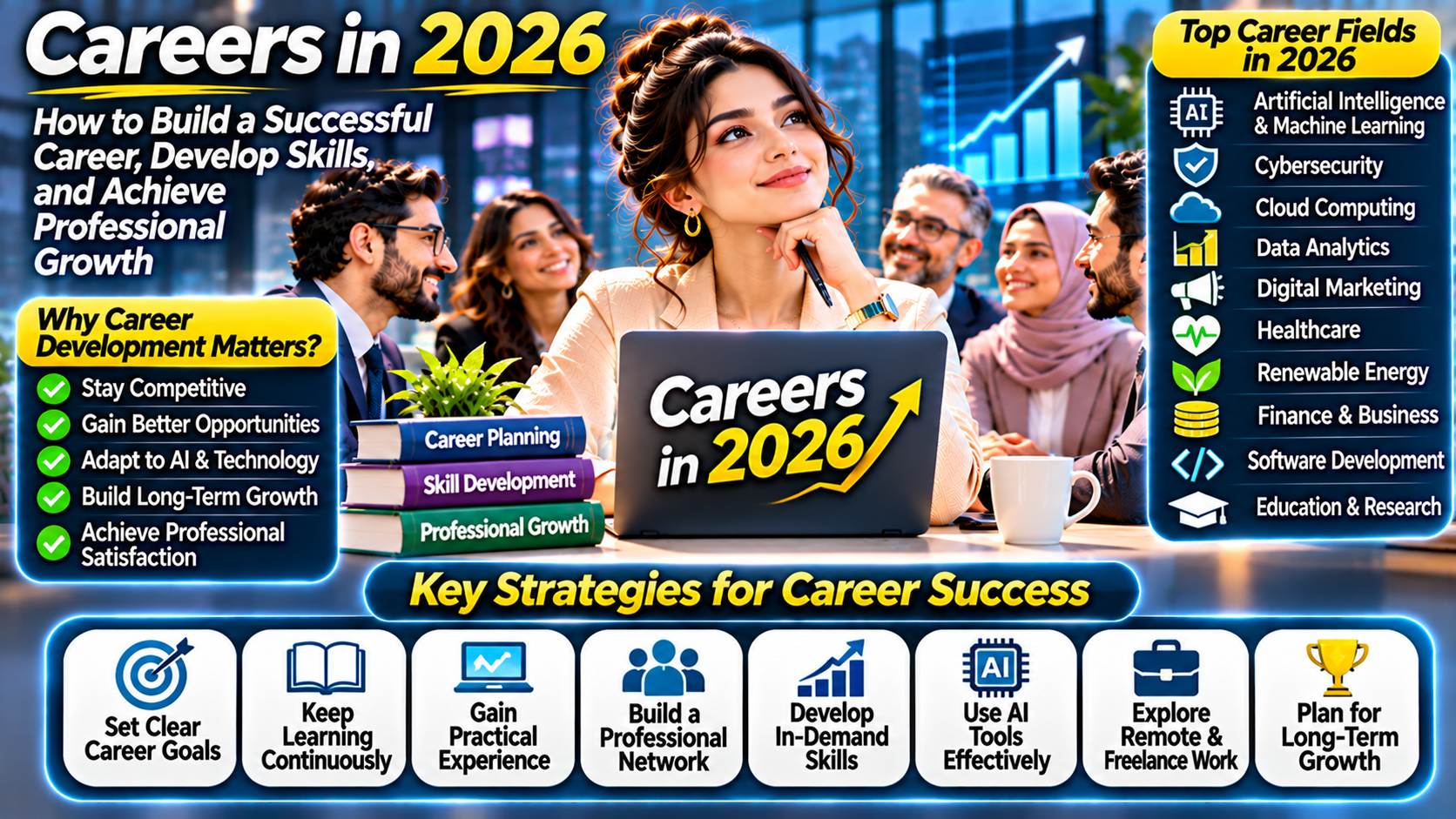
Why Career Development Matters in 2026
Career development helps individuals remain competitive, improve their professional capabilities, and prepare for changing employment requirements.
Several important developments make career planning particularly valuable in 2026.
1. Artificial Intelligence Is Changing Jobs
AI is transforming activities across marketing, finance, healthcare, education, customer service, software development, and business operations.
Some repetitive tasks are becoming automated, while new responsibilities are emerging around AI implementation, data analysis, governance, and human oversight.
Professionals who understand how to work effectively with AI tools may gain an advantage in many industries.
2. Demand for Digital Skills Is Growing
Businesses increasingly depend on digital systems and technology platforms.
Skills involving data analytics, cybersecurity, cloud computing, digital marketing, software development, and automation are relevant across many sectors.
3. Remote and Hybrid Work Are Expanding Career Options
Digital communication and collaboration tools allow organizations to recruit professionals from different locations.
Remote and hybrid arrangements can create opportunities for people who want greater flexibility or access to international employment markets.
However, availability depends on the employer, role, location, and applicable employment requirements.
4. Employers Value Adaptability
Technical expertise is important, but employers also value individuals who can learn new systems, solve problems, collaborate, and respond to changing business needs.
5. Continuous Learning Is Becoming Essential
Professional knowledge can become outdated as industries introduce new technologies and working methods.
Continuous learning helps individuals maintain relevant skills and prepare for future responsibilities.
Types of Career Paths
There are many ways to build a professional career. The right path depends on individual interests, abilities, qualifications, financial goals, and lifestyle preferences.
1. Corporate Careers
Corporate careers involve working within established organizations across departments such as finance, marketing, human resources, operations, technology, and management.
Common positions include:
Business Analyst
Marketing Manager
Financial Analyst
Human Resources Specialist
Operations Manager
Project Manager
Business Development Executive
Chief Executive Officer
Corporate environments may offer structured career progression, professional training, and opportunities to work with experienced teams.
2. Technology Careers
Technology careers focus on developing, maintaining, securing, and managing digital systems.
Popular roles include:
Software Developer
Data Analyst
AI Engineer
Cybersecurity Analyst
Cloud Engineer
UX/UI Designer
Machine Learning Engineer
IT Project Manager
Technology professionals often need a combination of technical knowledge, problem-solving abilities, and continuous learning.
3. Healthcare Careers
Healthcare provides opportunities for individuals interested in medicine, patient care, research, and health administration.
Examples include:
Doctor
Nurse
Pharmacist
Physiotherapist
Medical Laboratory Technologist
Healthcare Administrator
Public Health Specialist
Medical Researcher
Many healthcare roles require recognized qualifications, professional licensing, and practical training.
4. Business and Entrepreneurship
Entrepreneurial careers involve creating, managing, and developing businesses.
Potential career directions include:
Startup Founder
Business Consultant
E-commerce Entrepreneur
Marketing Agency Owner
Financial Consultant
Business Development Specialist
Management Consultant
Entrepreneurship can offer independence and growth opportunities, but it also involves financial, operational, and market risks.
5. Creative and Media Careers
Creative professionals work in industries involving design, communication, entertainment, media, and content production.
Popular roles include:
Graphic Designer
Content Writer
Video Editor
Social Media Manager
Digital Creator
Photographer
Brand Strategist
UX Designer
These careers often combine creativity with technical tools and audience understanding.
6. Education and Research Careers
Education and research careers focus on developing knowledge, teaching, training, and discovering new information.
Examples include:
Teacher
University Lecturer
Academic Researcher
Educational Consultant
Corporate Trainer
Instructional Designer
Research Analyst
Qualifications and professional requirements vary depending on the role and institution.
High-Demand Career Fields in 2026
Employment opportunities vary by country, industry, experience, and economic conditions. However, several fields are attracting attention because of technological developments and changing business needs.
Career Field | Example Job Roles | Important Skills |
|---|---|---|
Artificial Intelligence | AI Engineer, AI Specialist | Machine learning, programming, AI tools |
Cybersecurity | Security Analyst, Security Engineer | Risk assessment, network security |
Data Analytics | Data Analyst, Data Scientist | Statistics, SQL, visualization |
Cloud Computing | Cloud Engineer, Cloud Architect | Cloud platforms, infrastructure |
Digital Marketing | SEO Specialist, Marketing Manager | SEO, analytics, content strategy |
Healthcare | Healthcare Specialist, Nurse | Clinical knowledge, communication |
Renewable Energy | Energy Analyst, Sustainability Specialist | Environmental science, engineering |
Software Development | Software Engineer, Developer | Programming, software design |
Finance | Financial Analyst, Risk Analyst | Financial modeling, data analysis |
Project Management | Project Manager, Program Manager | Planning, leadership, coordination |
These fields should be evaluated according to local hiring conditions, qualification requirements, and individual interests rather than assumed to guarantee employment.
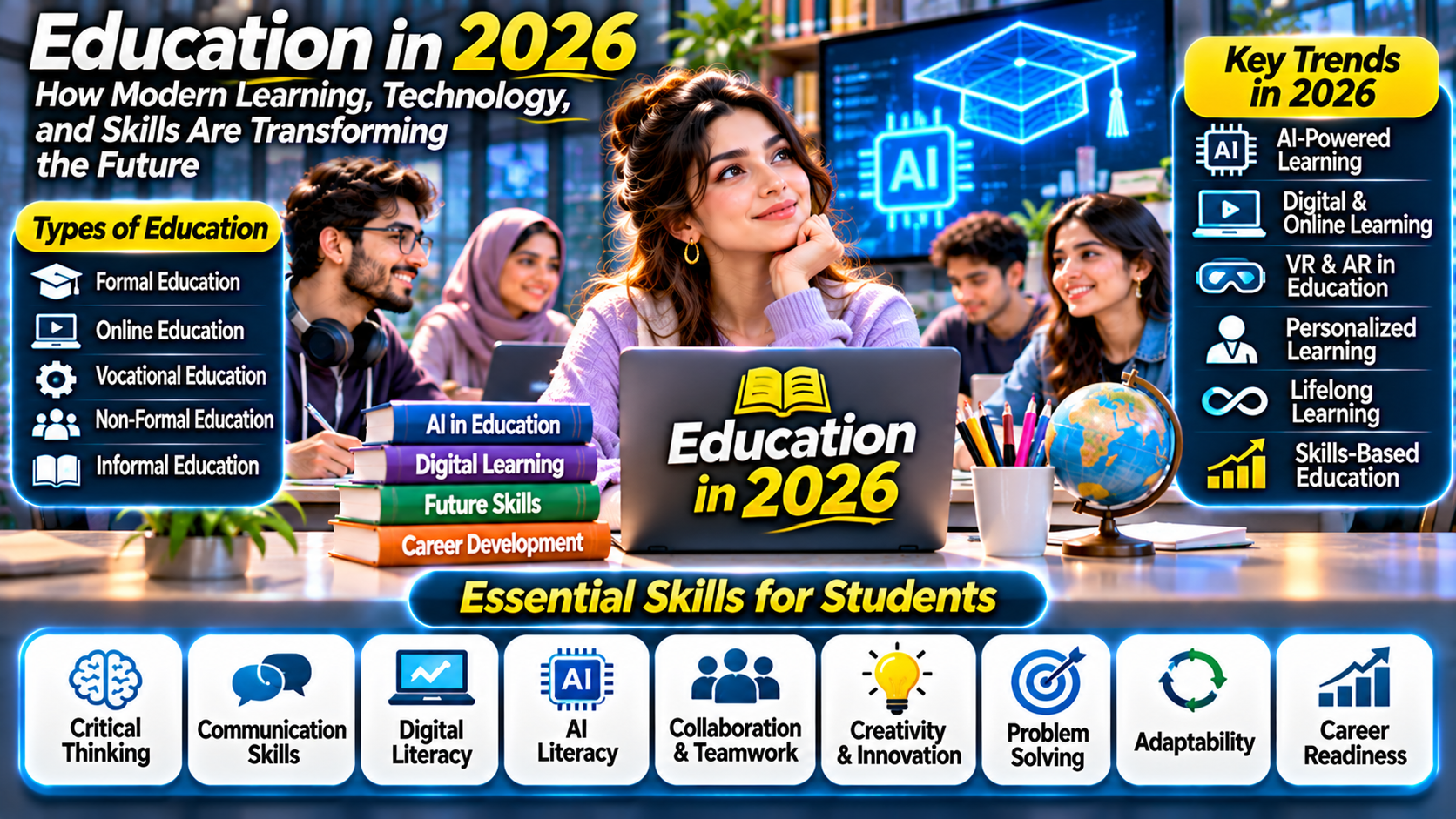
Essential Skills for Career Success in 2026
Employers increasingly look for professionals who combine specialized expertise with transferable skills.
Developing the right capabilities can improve employability and support career progression.
1. Communication Skills
Effective communication helps professionals share ideas, explain complex information, collaborate with colleagues, and build relationships.
Important communication abilities include:
Professional writing
Verbal communication
Presentation skills
Active listening
Negotiation
Cross-cultural communication
2. Digital Literacy
Digital literacy involves understanding how to use technology effectively and responsibly.
Professionals should become comfortable with relevant software, digital collaboration tools, information systems, and online security practices.
3. Problem-Solving
Organizations value individuals who can identify problems, evaluate possible solutions, and make practical recommendations.
Strong problem-solving requires critical thinking, research, creativity, and decision-making.
4. Artificial Intelligence Awareness
Understanding AI tools and their business applications can be valuable across many professions.
Professionals should learn how to use AI responsibly, verify generated information, protect confidential data, and recognize the limitations of automated systems.
5. Leadership and Teamwork
Leadership is not limited to senior executives.
Employees at different career stages can demonstrate leadership by taking responsibility, supporting colleagues, organizing projects, and contributing to shared goals.
6. Adaptability
Adaptable professionals are willing to learn, accept feedback, and adjust to changing responsibilities.
This ability becomes particularly important when organizations introduce new technologies or business processes.
7. Time Management
Managing priorities and meeting deadlines are important professional skills.
Effective time management helps individuals balance responsibilities, reduce unnecessary delays, and maintain consistent performance.
How to Choose the Right Career Path
Choosing a career is an important decision, but it does not need to be permanent.
A structured approach can help individuals identify opportunities that match their interests and long-term goals.
Step 1: Understand Your Interests
Start by identifying the activities, subjects, and industries that interest you.
Consider whether you enjoy technology, business, healthcare, communication, education, design, or research.
Step 2: Identify Your Strengths
Evaluate your existing abilities and personal strengths.
These may include analytical thinking, creativity, communication, technical skills, organization, or problem-solving.
Step 3: Research Career Opportunities
Explore job descriptions, salary information, educational requirements, industry trends, and employment conditions.
Compare different roles before committing to a particular career direction.
Step 4: Evaluate Education and Training Requirements
Some careers require university degrees, licenses, or specialized qualifications.
Others may offer entry opportunities through professional certificates, practical experience, apprenticeships, or portfolios.
Step 5: Consider Long-Term Opportunities
Think about whether a career offers opportunities to develop expertise, advance into senior positions, or move into related industries.
Step 6: Test Your Interest Through Experience
Internships, volunteer projects, short courses, freelance assignments, and practical projects can help you understand whether a career matches your expectations.
10 Practical Strategies to Build a Successful Career
Choosing a career is only the beginning. Long-term success requires consistent effort, planning, and professional development.
1. Set Clear Career Goals
Define what you want to achieve over the short, medium, and long term.
For example:
Short-term: Develop a specific professional skill.
Medium-term: Secure a position with greater responsibility.
Long-term: Become a senior specialist, manager, or business owner.
Clear goals provide direction and make progress easier to evaluate.
2. Invest in Continuous Learning
Professional development should continue throughout your career.
Take relevant courses, attend workshops, read industry publications, and explore recognized certifications.
Choose learning opportunities that support your actual career objectives.
3. Gain Practical Experience
Employers often look for evidence that candidates can apply their knowledge.
Build experience through internships, freelance projects, volunteering, research, or personal projects.
Practical experience can help demonstrate your capabilities even when you have limited formal employment history.
4. Build a Strong Professional Network
Professional relationships can provide access to industry knowledge, mentorship, collaboration, and employment opportunities.
Attend relevant events, connect with professionals, and participate in industry discussions.
Platforms such as LinkedIn can help you develop and maintain professional connections.
5. Create a Professional Resume
A resume should clearly communicate your qualifications, skills, work experience, and achievements.
Use relevant keywords from job descriptions and highlight measurable results wherever possible.
Avoid unnecessary information and keep the document organized.
6. Develop Your Personal Brand
Your professional reputation influences how employers, clients, and colleagues perceive your capabilities.
Share useful insights, demonstrate your expertise, maintain professional communication, and keep your online profiles accurate.
7. Seek Mentorship
A mentor can provide guidance based on professional experience.
Mentorship may help individuals understand career options, develop new skills, overcome challenges, and prepare for future responsibilities.
8. Improve Interview Skills
Job interviews allow employers to evaluate communication, experience, problem-solving, and suitability for a role.
Prepare by researching the organization, understanding the job description, and practicing clear examples of your achievements.
9. Stay Adaptable
Career paths can change as industries evolve.
Be open to learning new tools, accepting different responsibilities, and exploring related professional opportunities.
10. Review Your Progress Regularly
Evaluate your career goals periodically.
Identify completed achievements, remaining skill gaps, and new opportunities that may better support your professional direction.
The Role of AI in the Future of Careers
Artificial intelligence is changing how people work, learn, and develop professionally.
AI systems can automate certain repetitive activities, support research, analyze information, and improve productivity.
However, the impact differs between occupations and organizations.
AI Skills Can Improve Productivity
Professionals who understand relevant AI tools may be able to complete certain tasks more efficiently.
For example, marketers can use AI for research and campaign planning, while analysts can use it to support data exploration.
New Career Opportunities Are Emerging
Growing interest in AI is creating demand for roles involving:
AI development
Machine learning
AI governance
Data engineering
AI product management
Automation consulting
AI cybersecurity
Human Skills Remain Important
Technology does not eliminate the need for human judgment.
Creativity, empathy, ethical reasoning, communication, leadership, and complex decision-making remain important capabilities.
Continuous Reskilling Is Essential
Professionals should regularly evaluate how technological developments affect their roles and identify relevant learning opportunities.
The goal is to become capable of working alongside new technology rather than relying entirely on outdated methods.
Career Development in the Digital and Remote Work Era
Digital platforms have expanded how people find jobs, develop skills, and work with organizations.
Remote employment, freelancing, and online learning have created additional career pathways.
Remote Employment
Remote jobs allow eligible employees to perform their responsibilities outside traditional office environments.
Common remote-friendly fields include software development, digital marketing, customer support, writing, design, and data analysis.
Freelancing
Freelancing allows professionals to offer services to clients on a project or contract basis.
Popular freelance services include:
Graphic design
Website development
Content writing
SEO services
Video editing
Virtual assistance
Digital marketing
Business consulting
Freelancers must also manage client communication, pricing, contracts, deadlines, and financial planning.
Online Education
Online courses and professional learning platforms provide access to training across many industries.
They can help individuals develop new skills without necessarily enrolling in a full-time academic program.
However, learners should evaluate course quality, instructor credibility, and employer recognition before investing in a qualification.
Common Career Mistakes to Avoid
Even capable professionals can slow their progress by making avoidable career decisions.
1. Choosing a Career Only for Money
Salary is important, but career decisions should also consider interests, skills, working conditions, and long-term opportunities.
2. Ignoring Skill Development
Failing to update professional knowledge can make it harder to adapt to industry changes.
3. Avoiding Professional Networking
Building relationships can provide valuable knowledge and opportunities that may not appear through traditional job searches.
4. Staying in an Unsuitable Role Without a Plan
Remaining in a position that does not support your goals may limit professional development.
Consider possible improvements, internal opportunities, or a planned career transition.
5. Neglecting Your Professional Reputation
Unprofessional communication, unreliable work, and inaccurate online information can affect career opportunities.
6. Depending Only on Qualifications
Academic credentials are valuable, but practical experience, communication, and problem-solving are also important.
7. Ignoring Work-Life Balance
Long-term career success should not depend on continuously sacrificing personal well-being.
Healthy boundaries and sustainable working habits can support better professional performance.
How to Create a Personal Career Development Plan
A career development plan provides a structured way to move toward professional objectives.
Use the following framework to create your own plan.
Planning Area | Questions to Consider |
|---|---|
Career Goal | What position or professional achievement do I want? |
Current Skills | What can I already do effectively? |
Skill Gaps | Which capabilities do I need to develop? |
Education | What training or qualifications are required? |
Experience | Which projects or roles can help me gain experience? |
Networking | Which professionals or communities should I connect with? |
Timeline | When do I want to achieve each milestone? |
Progress Measurement | How will I evaluate my development? |
Review your plan regularly and update it when your goals or professional circumstances change.
The Future of Careers in 2026 and Beyond
The future of work will be influenced by technological innovation, demographic changes, global competition, and evolving employee expectations.
Several trends are likely to shape professional opportunities.
1. AI-Integrated Workplaces
AI will become increasingly integrated into business workflows, creating opportunities for professionals who can manage, evaluate, and apply intelligent systems.
2. Growth of Cybersecurity Careers
As organizations become more digitally connected, protecting information and infrastructure will remain an important business priority.
3. Expansion of Data-Driven Roles
Organizations need professionals who can understand data, identify patterns, and support informed decisions.
4. Flexible Employment Models
Remote, hybrid, contract, and freelance work may continue to provide alternative ways to participate in the workforce.
5. Greater Demand for Specialized Skills
Employers may place greater emphasis on practical expertise, industry knowledge, and the ability to solve specific business problems.
6. Continuous Professional Learning
Workers will increasingly need to update their knowledge as technology and business requirements change.
7. Changing Leadership Requirements
Future managers will need to combine technical awareness with communication, emotional intelligence, adaptability, and strategic thinking.
Frequently Asked Questions (FAQs)
1. What are the best careers to pursue in 2026?
Career opportunities depend on location, qualifications, and market conditions. Fields receiving significant attention include artificial intelligence, cybersecurity, healthcare, data analytics, software development, renewable energy, finance, and digital marketing.
2. How can I choose the right career?
Identify your interests and strengths, research employment opportunities, understand qualification requirements, and gain practical experience before making long-term decisions.
3. Which skills are important for career success?
Communication, problem-solving, adaptability, digital literacy, technical expertise, teamwork, time management, and continuous learning are valuable across many professions.
4. How can I develop my career without experience?
You can begin with internships, entry-level roles, volunteering, practical projects, online courses, professional certifications, and freelance assignments.
5. Is a university degree necessary for career success?
Not every profession requires a university degree. Some careers depend on formal qualifications or licensing, while others place greater emphasis on practical skills, experience, and recognized certifications.
6. How is AI changing careers?
AI is automating certain tasks, improving productivity, changing job responsibilities, and creating demand for new skills involving AI development, data, automation, governance, and human oversight.
7. What is the importance of professional networking?
Professional networking helps individuals exchange knowledge, find mentors, develop industry relationships, and discover potential employment and collaboration opportunities.
8. How can I improve my chances of getting hired?
Build relevant skills, gain practical experience, create a strong resume, prepare for interviews, develop a professional online presence, and apply for positions that match your qualifications.
9. What is career development?
Career development is the ongoing process of improving skills, gaining experience, setting professional goals, and preparing for future employment opportunities and responsibilities.
10. How often should I review my career goals?
Review your goals regularly, such as every six months or annually, and whenever your professional circumstances, interests, or industry conditions change.
Conclusion
Building a successful career in 2026 requires planning, continuous learning, practical experience, and the ability to adapt to changing professional environments.
Technology is creating new opportunities while transforming traditional jobs. Professionals who combine relevant technical knowledge with communication, problem-solving, creativity, and adaptability will be better prepared to navigate these changes.
Whether you are starting your first job, developing your existing career, changing industries, or building a business, the most important step is to take responsibility for your professional growth.
Set meaningful goals, invest in valuable skills, build strong professional relationships, and remain open to new opportunities.
A successful career is not defined by one job title or achievement. It is built through continuous progress, informed decisions, and the ability to create value over time.