Cannabidiol, commonly known as CBD, is a naturally occurring compound found in the cannabis plant. It has attracted growing interest in wellness discussions, scientific research, and the healthcare industry because of its potential therapeutic applications.
Unlike tetrahydrocannabinol (THC), the compound primarily responsible for the intoxicating effects of cannabis, CBD is not typically associated with a cannabis-related high. However, CBD products can vary significantly in composition, quality, and THC content.
In 2026, consumers may encounter CBD in oils, capsules, creams, lotions, and other products. Although some uses have been studied scientifically, the evidence supporting CBD varies by condition, and many products marketed for general wellness have not been proven effective.
This article explains what CBD is, how it works, its potential benefits, possible side effects, product types, safety considerations, and the importance of understanding local laws before using CBD.
What Is CBD?
CBD stands for cannabidiol, one of many chemical compounds called cannabinoids found in the cannabis plant.
Cannabinoids interact with biological systems involved in processes such as pain signaling, mood, sleep, and immune responses. CBD differs from THC in its effects and does not typically produce the same intoxicating experience.
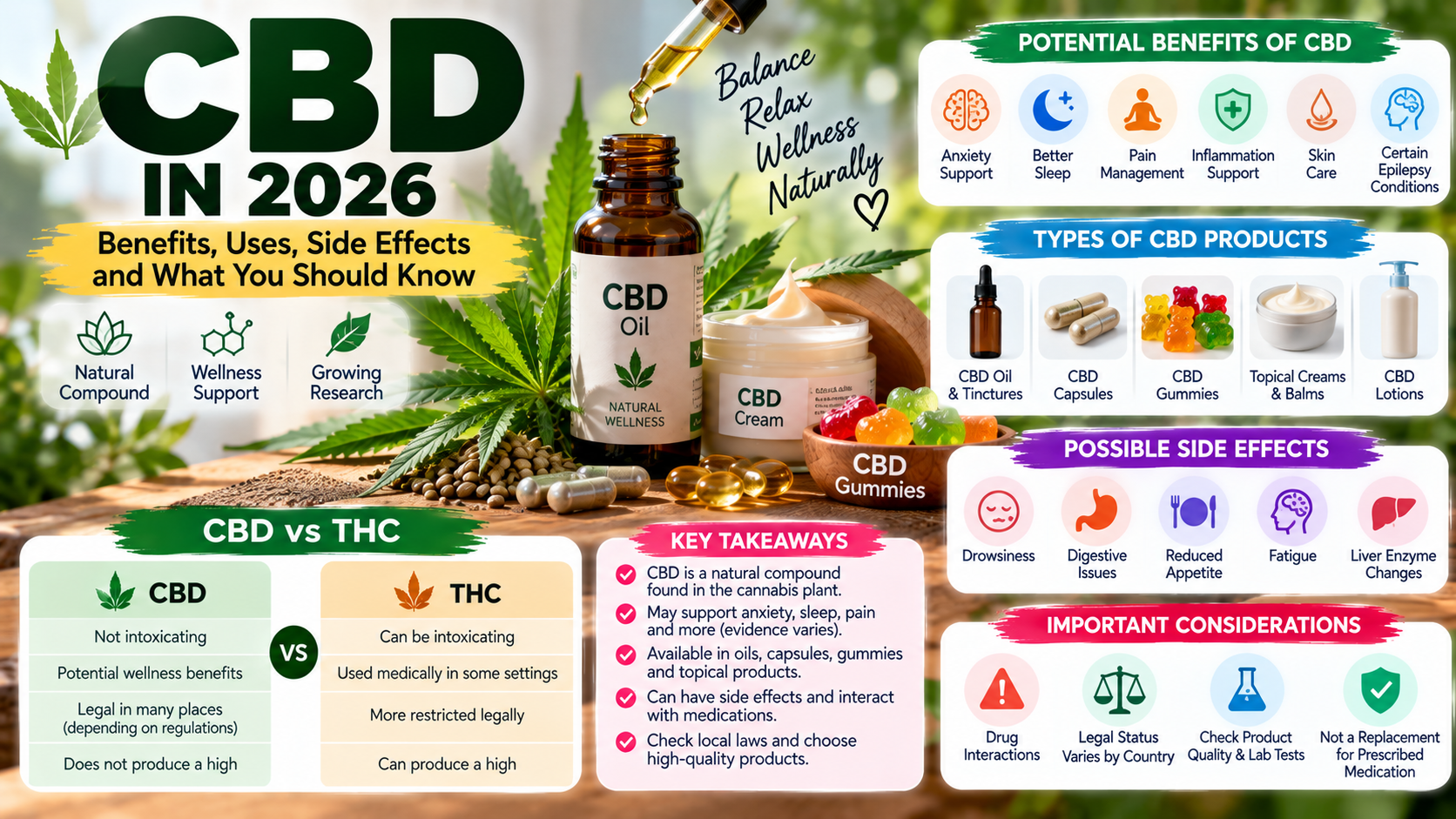
CBD is available in several forms, including:
CBD oil: A liquid product taken orally or used according to its specific label.
CBD capsules: Premeasured products designed for oral use.
CBD creams and balms: Products applied to the skin.
CBD gummies: Edible products containing CBD.
CBD lotions: Topical products marketed for skin application.
Prescription cannabidiol medicine: Regulated medication used for specific medical conditions in eligible patients.
These products are not interchangeable. Their ingredients, absorption, safety, and evidence of effectiveness can differ considerably.
How Does CBD Work?
The human body has an endocannabinoid system involved in regulating several physiological processes. This system includes receptors, signaling molecules, and enzymes that help maintain internal balance.
CBD interacts with biological targets in complex ways, and researchers are still investigating many of its mechanisms.
Unlike THC, CBD does not produce its main effects by strongly activating the brain's CB1 cannabinoid receptors. Its actions may involve several other receptor systems and signaling pathways.
Researchers are studying how these interactions may influence seizure activity, pain processing, inflammation, and other processes. However, proposed mechanisms do not automatically prove that a CBD product will provide a meaningful health benefit.
The effects of CBD can also depend on the formulation, amount used, individual biology, other medications, and the condition being treated.
Potential Benefits of CBD
CBD is often promoted for several health and wellness purposes. The scientific evidence, however, is stronger for some specific medical uses than for general wellness claims.
1. CBD and Certain Types of Epilepsy
One of the best-established medical uses of purified cannabidiol is the treatment of certain seizure disorders.
A prescription cannabidiol medicine is approved in some countries for specific forms of epilepsy, including seizures associated with Lennox-Gastaut syndrome, Dravet syndrome, and tuberous sclerosis complex.
Treatment must be supervised by a qualified healthcare professional. Prescription cannabidiol is not equivalent to an over-the-counter CBD oil, and consumers should not substitute an unregulated product for prescribed treatment.
2. CBD and Anxiety
CBD is being studied for its potential effects on anxiety-related symptoms. Some early research suggests possible benefits in particular settings, but evidence remains limited and findings cannot be generalized to every anxiety disorder.
CBD should not be considered a proven replacement for established anxiety treatments, such as evidence-based psychotherapy or prescribed medication.
People experiencing persistent anxiety should discuss appropriate treatment options with a qualified healthcare professional.
3. CBD and Pain Management
Some CBD products are marketed for muscle discomfort, joint pain, and other forms of pain. Researchers are investigating how cannabinoids may influence pain-related pathways.
However, evidence that CBD alone reliably relieves common chronic pain conditions remains insufficient. Results from studies of cannabis-based products containing multiple compounds should not automatically be applied to CBD-only products.
People with persistent or severe pain should seek medical assessment to identify the cause and discuss evidence-based treatments.
4. CBD and Sleep
CBD is frequently marketed as a sleep-support product. Research into its effects on sleep is ongoing, and findings remain mixed.
Sleep difficulties may be associated with stress, anxiety, medication effects, medical conditions, or irregular sleep habits. CBD has not been established as a universal treatment for insomnia.
Maintaining a regular sleep schedule, limiting late-night caffeine, and addressing underlying medical concerns are useful starting points for many people experiencing sleep problems.
5. CBD and Inflammation
Laboratory and animal studies suggest that CBD may influence some biological pathways associated with inflammation. However, these findings do not establish that commercially available CBD products treat inflammatory diseases in humans.
More high-quality clinical research is needed to determine which formulations, if any, provide meaningful benefits for specific inflammatory conditions.
People with inflammatory or autoimmune diseases should not stop prescribed treatment in favor of CBD products.
6. CBD and Skin Care
CBD is included in some skin-care products, including creams, balms, and lotions. These products are marketed for dryness, irritation, and general skin comfort.
Evidence supporting CBD as a treatment for acne, eczema, or other skin conditions remains limited. Benefits from a finished product may also come from other ingredients, such as moisturizers, rather than CBD itself.
Before using a new topical product, review its ingredient list and test a small area of skin if appropriate. Stop using it if irritation occurs.
Types of CBD Products
Different CBD formulations serve different purposes and have different safety considerations.
CBD Oil and Tinctures
CBD oils are liquid formulations that may be sold in bottles with droppers. Concentrations and ingredients vary between products.
Read the label carefully to understand the amount of CBD per serving and whether the product contains THC or other cannabinoids.
CBD Capsules
Capsules provide a measured amount of CBD and may be convenient for people who prefer not to use liquid products.
Because capsules are swallowed, their absorption can be affected by digestion, food, and individual differences.
CBD Gummies
CBD gummies are edible products that may contain added sugars, flavorings, and other ingredients.
Their effects can take time to develop, and taking additional servings too soon may increase the risk of unwanted effects.
Topical CBD Products
Creams, lotions, and balms are applied to the skin. Their absorption and effects depend on the formulation.
Do not assume that a topical product has the same effects or risks as an oral CBD product.
Prescription CBD Medication
Prescription cannabidiol is a regulated pharmaceutical product used for specific medical indications in eligible patients.
It has defined dosing instructions, clinical monitoring requirements, and safety warnings. It should only be used according to a qualified prescriber's directions.
Possible Side Effects of CBD
CBD is not free from side effects. Its safety depends on factors such as the amount used, formulation, other medications, and individual health circumstances.
Possible side effects include:
Drowsiness or fatigue.
Diarrhea.
Reduced appetite.
Nausea or other digestive symptoms.
Changes in alertness.
Changes in liver enzyme levels.
Some people may experience side effects even when using products marketed as natural or wellness-focused.
CBD can also interact with medicines, potentially changing how the body processes them. Prescription cannabidiol has been associated with liver-related risks, and medical monitoring may be necessary.
Avoid driving or operating machinery if CBD makes you sleepy or less alert. Seek medical advice if you experience concerning symptoms.
CBD Drug Interactions
CBD can affect enzymes involved in processing certain medicines. This may increase or decrease medication levels in the body and potentially change their effects or risks.
Extra caution is important for people taking:
Antiseizure medicines.
Blood thinners.
Sedatives or medicines that cause drowsiness.
Certain antidepressants and other prescription medicines.
Medicines that require monitoring for liver-related side effects.
This is not a complete list of possible interactions.
Before using CBD, tell your doctor or pharmacist about all medications and supplements you take. Do not stop or adjust prescribed medication without professional guidance.
How to Choose a CBD Product
CBD product quality can vary widely. If CBD is legal where you live and you are considering a product, careful evaluation can help you identify potential risks.
1. Review the Ingredients
Check the product label for the amount of CBD, other cannabinoids, THC content, carrier oils, flavorings, and additional ingredients.
Do not assume that a product labeled “hemp” is automatically THC-free or suitable for medical use.
2. Look for Independent Laboratory Testing
A certificate of analysis from a credible independent laboratory can provide information about cannabinoid content and certain contaminants.
Check whether the report corresponds to the exact product and batch you intend to use. Laboratory testing reduces uncertainty but does not prove that a product is effective or appropriate for everyone.
3. Avoid Unsupported Medical Claims
Be cautious of products claiming to cure cancer, eliminate chronic disease, replace prescription medication, or deliver guaranteed results.
Reliable health information distinguishes between early research, established evidence, and unproven marketing claims.
4. Understand the CBD Concentration
Labels may show the total amount of CBD in a bottle as well as the amount per serving. These measurements are different.
Do not compare products using bottle size alone. If a healthcare professional has advised you to consider a CBD product, review the formulation and instructions with them.
5. Check Legal and Regulatory Requirements
CBD laws vary considerably between countries and may distinguish between hemp-derived products, THC-containing products, prescription medicines, and other cannabis products.
Check the rules that apply to your location before buying, possessing, importing, or using CBD.
Is CBD Legal in 2026?
CBD legality depends on the country, product composition, THC concentration, intended use, and applicable regulations.
Some countries allow particular hemp-derived CBD products under defined conditions. Others restrict cannabis-derived products or permit cannabidiol only in specific medicinal forms.
A product being sold online does not necessarily mean it is legal to import or possess.
CBD in Pakistan
People in Pakistan should verify the current legal and regulatory status of CBD products before purchasing or importing them. Cannabis-related rules may distinguish between product types and permitted uses, and online sellers may not provide reliable information about compliance.
Do not assume that CBD products sold in another country are automatically lawful in Pakistan. Consult relevant Pakistani authorities or a qualified local legal professional if the rules are unclear.
CBD vs. THC: What Is the Difference?
CBD and THC are both cannabinoids, but they have different effects and regulatory considerations.
Feature | CBD | THC |
|---|---|---|
Full name | Cannabidiol | Tetrahydrocannabinol |
Intoxicating effects | Not typically intoxicating | Can produce a high |
Medical research | Studied for specific conditions and other potential uses | Studied and used medically in certain regulated settings |
Product availability | Depends on local laws and formulation | Depends on local laws and formulation |
Side effects | May include fatigue, digestive problems, and drug interactions | May include impaired coordination, altered perception, and anxiety |
Drug testing | Some products may contain THC and create a testing risk | More directly associated with THC-positive drug tests |
CBD products may contain small amounts of THC, depending on their formulation and manufacturing standards. A label stating “CBD” does not guarantee that a product is free from THC.
Common Myths About CBD
Myth 1: CBD Has No Side Effects
CBD can cause side effects and interact with medications. Natural origin does not guarantee safety.
Myth 2: Every CBD Product Is the Same
CBD products differ in concentration, formulation, purity, and additional ingredients. Quality and reliability can vary considerably.
Myth 3: CBD Is Proven to Treat Every Condition
Evidence supports particular prescription uses, while many popular wellness claims remain unproven or inadequately studied.
Myth 4: CBD Products Never Contain THC
Some products contain THC or may be inaccurately labeled. Independent laboratory reports can help consumers evaluate product composition.
Myth 5: CBD Can Replace Prescription Medication
CBD should not replace prescribed treatment without medical guidance. Changing or stopping treatment can worsen certain health conditions.
The Future of CBD Research in 2026
Research into cannabidiol continues to examine its potential uses, safety, and mechanisms of action.
More Clinical Research
Researchers are investigating CBD in different medical conditions. Larger, well-designed clinical trials are needed to establish effectiveness and identify suitable treatment groups.
Improved Product Quality
Testing methods and manufacturing standards may help improve the consistency of CBD products where appropriate regulation is in place.
Greater Regulatory Oversight
Regulators in different jurisdictions continue to address product safety, labeling, health claims, and the distinction between consumer products and medicines.
Better Understanding of Drug Interactions
Further research may clarify how CBD interacts with different medicines and which patients require closer monitoring.
More Evidence-Based Consumer Information
Clearer labeling and reliable scientific information can help consumers distinguish between established medical uses and unproven wellness claims.
Conclusion
CBD, or cannabidiol, is a compound found in the cannabis plant that is being studied for several potential medical and wellness applications. The strongest established medical use is prescription cannabidiol for specific seizure disorders in eligible patients.
Research into anxiety, pain, sleep, inflammation, and skin care continues, but evidence varies, and many commercial claims are not well supported.
CBD can cause side effects, interact with medications, and carry additional risks depending on product composition. Product quality and legal status also vary by location.
Before using CBD, review the evidence, check local laws, and consult a qualified healthcare professional—especially if you take medication or have an existing medical condition. Making informed decisions is essential when evaluating any product marketed for health and wellness.
Frequently Asked Questions
1. What does CBD stand for?
CBD stands for cannabidiol, a naturally occurring compound found in the cannabis plant.
2. Does CBD make you feel high?
CBD is not typically intoxicating and does not produce the same high associated with THC. However, some CBD products may contain THC or other cannabinoids.
3. What is CBD commonly used for?
CBD is marketed for anxiety, pain, sleep, and skin care, but evidence varies by use. Prescription cannabidiol is approved in some countries for specific seizure disorders.
4. Is CBD safe to use every day?
Daily use is not automatically safe for everyone. CBD can cause side effects and interact with medications. Ask a qualified healthcare professional about your individual circumstances.
5. Can CBD help with anxiety?
Some early research suggests potential effects, but the evidence is not strong enough to consider CBD a proven treatment for all anxiety disorders.
6. Does CBD have side effects?
Possible side effects include fatigue, digestive symptoms, appetite changes, and drug interactions. Prescription cannabidiol may also require liver monitoring.
7. Can CBD interact with medications?
Yes. CBD can affect how the body processes certain medicines. Consult a doctor or pharmacist before combining CBD with prescription or over-the-counter medicines.
8. Is CBD legal in Pakistan?
The legal status depends on the product and applicable regulations. Verify current requirements with relevant Pakistani authorities before buying, importing, possessing, or using CBD.
9. Can CBD products contain THC?
Yes. Some products contain THC, even when CBD is the main advertised ingredient. Review reliable laboratory reports and product information.
10. Is CBD approved to treat medical conditions?
In some countries, prescription cannabidiol is approved for specific seizure disorders. Approval does not extend automatically to all CBD oils, supplements, or products sold for general wellness.