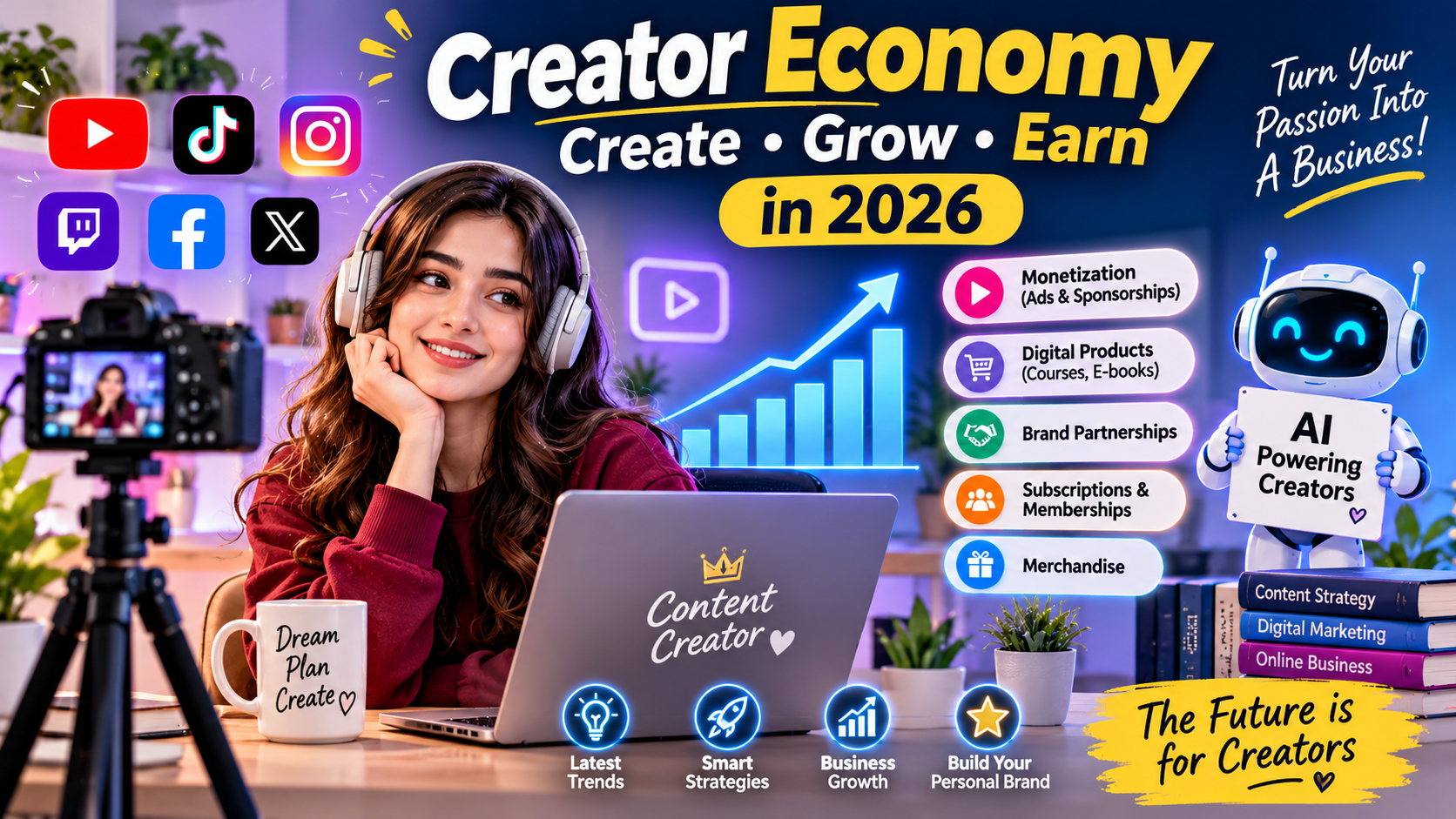
The creator economy has become an important part of the modern digital landscape, creating new opportunities for individuals and businesses to produce content, build audiences, and generate income online. From YouTubers and TikTok creators to bloggers, podcasters, educators, and digital artists, millions of people use online platforms to share their expertise, entertain audiences, and develop personal brands.
Social media platforms, video-sharing websites, newsletters, online communities, and digital marketplaces have made it easier for creators to reach audiences around the world. Instead of relying exclusively on traditional media companies, creators can build direct relationships with followers and monetize their work through advertising, sponsorships, subscriptions, affiliate marketing, and digital products.
In 2026, the creator economy continues to evolve through artificial intelligence, short-form video, livestreaming, social commerce, and subscription-based communities. These developments are changing how content is produced, distributed, discovered, and monetized.
Understanding the creator economy is valuable for aspiring creators, established influencers, marketers, entrepreneurs, and businesses looking to connect with digital audiences.
What Is the Creator Economy?
The creator economy refers to the ecosystem of individuals, businesses, platforms, and tools that enable people to create content, develop audiences, and earn money from their creative work.
Creators can operate independently or collaborate with brands, agencies, production companies, and digital platforms. Their content may include videos, articles, podcasts, illustrations, music, educational resources, livestreams, newsletters, and social media posts.
The creator economy includes several participants:
Content creators: Individuals who produce original content for online audiences.
Social media platforms: Services that distribute content and connect creators with viewers.
Brands and advertisers: Businesses that pay creators to promote products or services.
Creator tools: Software for video editing, design, analytics, publishing, and automation.
Monetization platforms: Services that support subscriptions, memberships, digital products, and payments.
Creator agencies: Organizations that help creators manage partnerships, campaigns, and business operations.
The ecosystem allows individuals to turn creative skills, knowledge, and audience relationships into potential business opportunities.
How the Creator Economy Works
The creator economy operates through a cycle of content production, audience development, monetization, and reinvestment.
1. Content Creation
Creators develop material based on their expertise, interests, personality, or chosen niche. Examples include educational videos, product reviews, entertainment, business insights, tutorials, and lifestyle content.
Successful content generally provides value through information, entertainment, inspiration, or practical solutions.
2. Audience Building
Creators distribute their content through platforms such as YouTube, Instagram, TikTok, blogs, podcasts, and email newsletters.
Consistent publishing, a clear niche, engaging storytelling, and interaction with viewers can help build an audience over time.
3. Audience Engagement
Comments, shares, livestreams, community posts, and direct interactions help creators understand their audiences and develop stronger relationships.
Engagement can be more valuable than follower count alone because an interested audience is more likely to watch content, recommend a creator, or purchase relevant products.
4. Monetization
Once creators establish an audience or develop a marketable skill, they can explore different revenue streams.
These may include advertising revenue, sponsored content, affiliate commissions, subscriptions, digital products, consulting, and merchandise.
Not every creator qualifies for every monetization method. Eligibility depends on platform policies, audience location, business arrangements, and applicable laws.
5. Business Growth
Creators can reinvest revenue into better equipment, editing software, production support, marketing, and new content formats.
Over time, some creators develop teams, launch businesses, build media brands, or create products that operate independently of individual social media accounts.
Major Types of Content Creators
The creator economy includes a wide variety of content formats and professional opportunities.
1. Video Creators
Video creators publish long-form videos, short clips, tutorials, reviews, entertainment, documentaries, and educational content.
YouTube, TikTok, and Instagram Reels are popular distribution channels, although their audiences, formats, and monetization systems differ.
Video creators may earn through platform monetization, sponsorships, affiliate links, memberships, and their own products.
2. Influencers
Influencers build audiences around particular interests, lifestyles, or areas of expertise. Common niches include fashion, beauty, travel, fitness, technology, food, and personal finance.
Brands may collaborate with influencers to introduce products, demonstrate features, create campaigns, or reach specific customer groups.
A smaller creator with a highly engaged, relevant audience can sometimes deliver more value to a brand than a much larger creator with limited audience alignment.
3. Bloggers and Newsletter Writers
Bloggers and newsletter creators publish written content such as industry analysis, tutorials, product comparisons, opinion pieces, and educational articles.
They may monetize through advertising, sponsorships, affiliate marketing, paid subscriptions, consulting, or digital downloads.
Search engine optimization, email marketing, and consistent publishing can help these creators attract and retain readers.
4. Podcasters
Podcasters create audio or video programs covering interviews, education, entertainment, news, business, and specialized interests.
Revenue opportunities include sponsorships, advertising, paid memberships, premium episodes, and listener-supported subscriptions.
A clear topic, strong audio quality, and a consistent publishing schedule can help build a loyal audience.
5. Educators and Knowledge Creators
Knowledge creators share expertise through courses, tutorials, webinars, workshops, and online communities.
They may teach programming, marketing, design, languages, business skills, academic subjects, or professional development.
Their business models often combine free educational content with paid learning resources, memberships, or consulting services.
6. Digital Artists and Designers
Digital artists create illustrations, graphics, animations, templates, photographs, and other visual assets.
They can sell licenses, provide freelance services, offer digital downloads, collaborate with brands, or build an audience around their creative work.
7. Gaming and Livestreaming Creators
Gaming creators produce gameplay videos, livestreams, commentary, tutorials, and gaming-related entertainment.
They may earn through advertising, subscriptions, donations, sponsorships, merchandise, and other platform-supported features.
Building a distinctive personality and community can help gaming creators establish a sustainable presence.
How Creators Make Money in 2026
Creator income varies widely. Earnings depend on audience size, engagement, niche, location, platform rules, content quality, and monetization strategy.
A diversified business model can help creators reduce dependence on a single platform or income source.
1. Advertising Revenue
Some platforms share advertising revenue with eligible creators.
For example, qualified YouTube creators may earn from ads displayed on eligible videos. Revenue depends on factors such as views, audience geography, content category, advertiser demand, and monetization eligibility.
A high number of views does not guarantee a fixed income because advertising rates and monetized viewing patterns vary.
2. Brand Sponsorships
Companies may pay creators to feature products, explain services, publish sponsored videos, or participate in marketing campaigns.
Sponsorship pricing depends on the creator's audience, niche, engagement, production requirements, campaign scope, and usage rights.
Creators should clearly disclose paid partnerships and avoid making unsupported product claims.
3. Affiliate Marketing
Affiliate marketing allows creators to earn commissions when audiences purchase products or complete qualifying actions through tracked links.
Common affiliate categories include software, electronics, education, fashion, beauty, and online services.
Effective affiliate content helps audiences understand a product's features, benefits, limitations, and suitability rather than simply promoting links.
4. Digital Products
Creators can sell products such as:
E-books and guides.
Online courses.
Design templates.
Digital planners.
Stock photography.
Music and sound effects.
Website themes and software tools.
Downloadable educational materials.
Digital products can provide additional revenue without requiring a new sponsored campaign for every sale. However, creators still need to invest in product development, customer support, marketing, and updates.
5. Memberships and Subscriptions
Some creators offer paid communities, exclusive content, premium newsletters, private discussions, or member-only educational resources.
Recurring subscriptions can create more predictable revenue, provided creators consistently deliver value and maintain audience trust.
6. Merchandise
Creators with recognizable brands or dedicated communities may sell clothing, accessories, books, artwork, and other physical products.
Merchandise businesses require attention to product quality, manufacturing, inventory, shipping, returns, and customer service.
7. Freelance Services and Consulting
Creators can use their content to demonstrate expertise and attract clients.
For example, a digital marketing creator might offer SEO services, while a design creator may sell branding packages or consultation sessions.
This approach can generate revenue before a creator develops a large audience.
The Role of Artificial Intelligence in the Creator Economy
Artificial intelligence is changing the way creators research, plan, produce, and distribute content.
AI tools can help with brainstorming, outlines, transcription, subtitles, translation, image editing, video production, analytics, and content repurposing.
AI-Assisted Content Production
Creators can use AI to develop initial ideas, organize scripts, generate storyboards, and accelerate repetitive production tasks.
However, effective content still requires editorial judgment, originality, fact-checking, and an understanding of the intended audience.
Personalized Content
AI systems can help creators analyze audience interests and adapt content formats, recommendations, or educational materials to different groups.
Personalization should respect privacy and avoid misleading or intrusive practices.
Automated Workflows
Automation can support tasks such as scheduling posts, organizing content calendars, preparing captions, and tracking performance.
This allows creators to spend more time on storytelling, community engagement, and creative development.
AI-Generated Media
AI tools can produce images, animations, voiceovers, and video elements. These capabilities can reduce production barriers, but creators should understand platform rules, licensing conditions, and disclosure requirements.
AI-generated content should not impersonate people, misuse copyrighted material, or mislead audiences about real events.
The Importance of Human Creativity
As AI tools become more accessible, distinctive ideas, personal experience, trust, and original perspectives can help creators stand out.
Using AI as an assistant rather than relying entirely on generic automated output can support quality and audience loyalty.
How Social Media Platforms Support the Creator Economy
Different platforms provide different opportunities for creators.
YouTube
YouTube supports long-form videos, Shorts, livestreams, memberships, and other creator features.
Depending on eligibility and location, creators may access advertising revenue sharing, fan funding, shopping features, and sponsorship opportunities.
Creators should review current YouTube Partner Program requirements before planning around platform monetization.
TikTok
TikTok helps creators distribute short-form videos and reach audiences through its recommendation system.
Monetization opportunities vary by country and eligibility. Potential options include available creator programs, brand partnerships, affiliate commerce, livestream features, and external business opportunities.
Instagram supports Reels, Stories, photos, livestreams, and creator-brand collaborations.
Creators can use the platform to build a recognizable personal brand, showcase products, develop communities, and direct interested audiences to websites or other channels.
Facebook supports video, Reels, groups, and other community features. Eligible creators may access monetization options depending on current program availability and platform policies.
Blogs and Email Newsletters
Independent websites and email newsletters give creators more control over publishing, search visibility, and direct communication with readers.
They can support advertising, sponsorships, affiliate marketing, memberships, and product sales without relying exclusively on social media discovery.
Podcasts
Podcast platforms allow creators to distribute audio and video programs, build recurring audiences, and explore advertising, sponsorships, and subscription-based models.
Creators should select platforms based on their target audience, content format, distribution needs, and monetization goals.
How to Build a Successful Creator Business
Building a creator business requires planning, experimentation, and consistency. Viral success is possible, but it is not a reliable business strategy.
Step 1: Choose a Specific Niche
Select a topic that combines your interests, skills, audience demand, and monetization potential.
Examples include technology education, children's storytelling, digital marketing, personal productivity, gaming, beauty tutorials, or business insights.
A focused niche helps audiences understand what to expect and why they should follow you.
Step 2: Define Your Target Audience
Identify who your content is intended to serve.
Consider their interests, age group where relevant, common questions, challenges, preferred platforms, and reasons for consuming your content.
A clear audience profile can improve topic selection and content quality.
Step 3: Select the Right Platform
Choose a platform that matches your content format and audience habits.
Video creators may prioritize YouTube or short-form video platforms, while writers may focus on a website or newsletter.
Creators can expand to additional channels once they establish a manageable workflow.
Step 4: Develop a Content Strategy
Create a realistic publishing schedule and plan content around audience needs.
A balanced strategy may include educational content, entertainment, tutorials, product comparisons, personal insights, and responses to audience questions.
Focus on quality and consistency rather than publishing large quantities of repetitive material.
Step 5: Improve Content Quality
Use clear storytelling, strong openings, readable visuals, understandable audio, and useful information.
For videos, the first few seconds should establish a reason to continue watching. For articles, clear headings and direct answers help readers find relevant information.
Step 6: Study Performance Metrics
Monitor relevant measurements such as watch time, audience retention, click-through rate, returning viewers, email engagement, conversions, and revenue.
Metrics should be interpreted according to the platform and content format. High views alone do not necessarily indicate a sustainable business.
Step 7: Build Direct Audience Relationships
Where appropriate, develop a website, newsletter, or community that allows you to maintain contact with your audience outside a single social platform.
This can reduce dependence on algorithmic distribution and provide additional opportunities for long-term engagement.
Step 8: Diversify Revenue
Consider combining sponsorships, advertising, affiliate marketing, digital products, memberships, and services.
Choose monetization methods that fit your audience and do not compromise the credibility of your content.
Step 9: Protect Your Business
Use secure accounts, maintain records of revenue and expenses, review contracts, and understand tax and disclosure obligations.
Creators working with brands should establish clear terms for payment, deliverables, deadlines, content approval, and usage rights.
Challenges Facing the Creator Economy
Although the creator economy offers many opportunities, it also involves financial, operational, and personal challenges.
Unpredictable Income
Views, advertising rates, sponsorships, and product sales can fluctuate. Creators should avoid assuming that one successful month will guarantee future income.
Platform Dependence
Changes to algorithms, monetization rules, account policies, or audience behavior can affect a creator's reach and revenue.
Building a website, email list, or diversified distribution strategy can reduce some of this risk.
High Competition
The low cost of publishing online has increased competition across many content categories.
Creators need clear positioning, distinctive ideas, and consistent value to build recognition.
Copyright and Intellectual Property
Using music, images, videos, or other creative works without appropriate rights can lead to takedowns, disputes, or monetization restrictions.
Creators should use original material, obtain appropriate licenses, and follow platform rules.
Burnout and Workload
Regular content production, audience interaction, editing, marketing, and business administration can become demanding.
Realistic schedules, reusable workflows, and clear boundaries can support long-term sustainability.
Audience Trust
Misleading claims, undisclosed sponsorships, low-quality promotions, and repetitive content can damage credibility.
Transparent communication and responsible partnerships help creators maintain audience trust.
Privacy and Safety
Public visibility can expose creators to harassment, impersonation, scams, and unwanted disclosure of personal information.
Security measures, privacy boundaries, and careful management of public contact details are important parts of running a creator business.
The Creator Economy and Business Marketing
Businesses increasingly work with creators to reach audiences through content that feels relevant to specific communities.
Creator partnerships can support brand awareness, product education, customer engagement, and sales.
Influencer Marketing
Brands collaborate with creators whose audiences align with their products or services.
Campaigns can include sponsored videos, product demonstrations, reviews, livestreams, and educational posts.
User-Generated Content
Businesses may commission creators to produce content that demonstrates products in realistic settings. Depending on the agreement, brands may use this content in their own advertising or social media channels.
Contracts should clearly define content ownership, usage rights, duration, and paid advertising permissions.
Affiliate Campaigns
Affiliate partnerships can connect creator compensation to measurable purchases or actions.
Brands should provide clear commission terms and tracking methods, while creators should disclose material relationships.
Long-Term Partnerships
Ongoing collaborations can help businesses build consistent messaging and allow creators to develop a deeper understanding of products and audiences.
The strongest partnerships align brand objectives with audience interests and maintain transparent communication.
The Future of the Creator Economy in 2026 and Beyond
The creator economy is evolving as new technologies, business models, and audience expectations emerge.
Growth of Short-Form and Long-Form Video
Short videos can help creators attract new viewers, while longer videos may provide opportunities for detailed storytelling, tutorials, and deeper audience relationships.
Many creators use both formats as part of a broader content strategy.
Direct-to-Audience Businesses
Creators are increasingly exploring newsletters, memberships, courses, digital products, and independent websites.
These models can create stronger direct relationships with audiences and reduce reliance on platform advertising alone.
AI-Enhanced Production
AI-assisted editing, translation, research, and production may help creators operate more efficiently.
Originality, accuracy, transparency, and appropriate use of intellectual property will remain important.
Social Commerce
Some platforms enable creators to connect content with product discovery and purchasing experiences.
Social commerce may offer additional opportunities for product recommendations and sales, depending on regional availability and platform policies.
Specialized Creator Communities
Creators focused on specific professional, educational, hobby, or cultural interests can build valuable communities around shared needs.
Smaller audiences may support sustainable businesses when engagement, trust, and purchasing intent are strong.
Better Measurement and Analytics
Improved analytics can help creators understand audience behavior, evaluate monetization, and make more informed business decisions.
Creators will increasingly need to distinguish meaningful performance indicators from vanity metrics.
Professionalization of Creator Businesses
As creator-led businesses mature, contracts, financial management, content rights, team operations, and business strategy become increasingly important.
Creators who treat their work as a business may be better prepared to manage growth and uncertainty.
Conclusion
The creator economy has transformed digital content into a potential source of income, entrepreneurship, and professional opportunity. Creators can build audiences through videos, articles, podcasts, livestreams, newsletters, and other digital formats while earning through advertising, sponsorships, affiliate marketing, subscriptions, products, and services.
Artificial intelligence and new publishing tools are making content production more accessible, but long-term success still depends on originality, audience understanding, consistent quality, and trust.
For aspiring creators, the most effective approach is to choose a clear niche, publish useful content, study performance, and develop sustainable revenue streams. For businesses, creator partnerships can provide new ways to communicate with customers and build brand awareness.
As the industry evolves, creators who combine creativity with sound business practices, responsible technology use, and strong audience relationships will be better positioned to adapt to the changing digital landscape.
Frequently Asked Questions About the Creator Economy
1. What is the creator economy in simple words?
The creator economy is the ecosystem that allows individuals to create digital content, build audiences, and earn money through advertising, sponsorships, subscriptions, affiliate marketing, products, and services.
2. How do content creators make money?
Creators may earn through platform advertising, sponsored content, affiliate commissions, memberships, digital products, merchandise, consulting, and freelance services.
3. Can beginners earn money from the creator economy?
Yes. Beginners can start by creating useful content and developing a focused audience. Income is not guaranteed, and monetization may require time, consistent effort, and compliance with platform eligibility rules.
4. Which platforms are best for content creators?
YouTube, TikTok, Instagram, Facebook, blogs, newsletters, and podcast platforms can all support creators. The best option depends on the content format, target audience, location, and business goals.
5. How does AI affect the creator economy?
AI can assist with research, brainstorming, editing, transcription, translation, analytics, and content production. Creators still need to verify information, maintain originality, and follow relevant platform and copyright rules.
6. What is the difference between an influencer and a content creator?
A content creator produces digital material, while an influencer is generally recognized for having an audience that may influence opinions or purchasing decisions. The roles often overlap.
7. What are the biggest challenges for creators?
Common challenges include unpredictable income, competition, changing platform policies, copyright issues, workload, burnout, and maintaining audience trust.
8. What is creator monetization?
Creator monetization refers to generating income from content, audiences, creative skills, and related products or services.
9. How can businesses benefit from the creator economy?
Businesses can collaborate with creators to improve brand awareness, demonstrate products, reach targeted audiences, produce marketing content, and support sales.
10. What is the future of the creator economy?
Important developments include AI-assisted production, direct-to-audience businesses, short-form video, social commerce, specialized communities, improved analytics, and more professional creator-led companies.