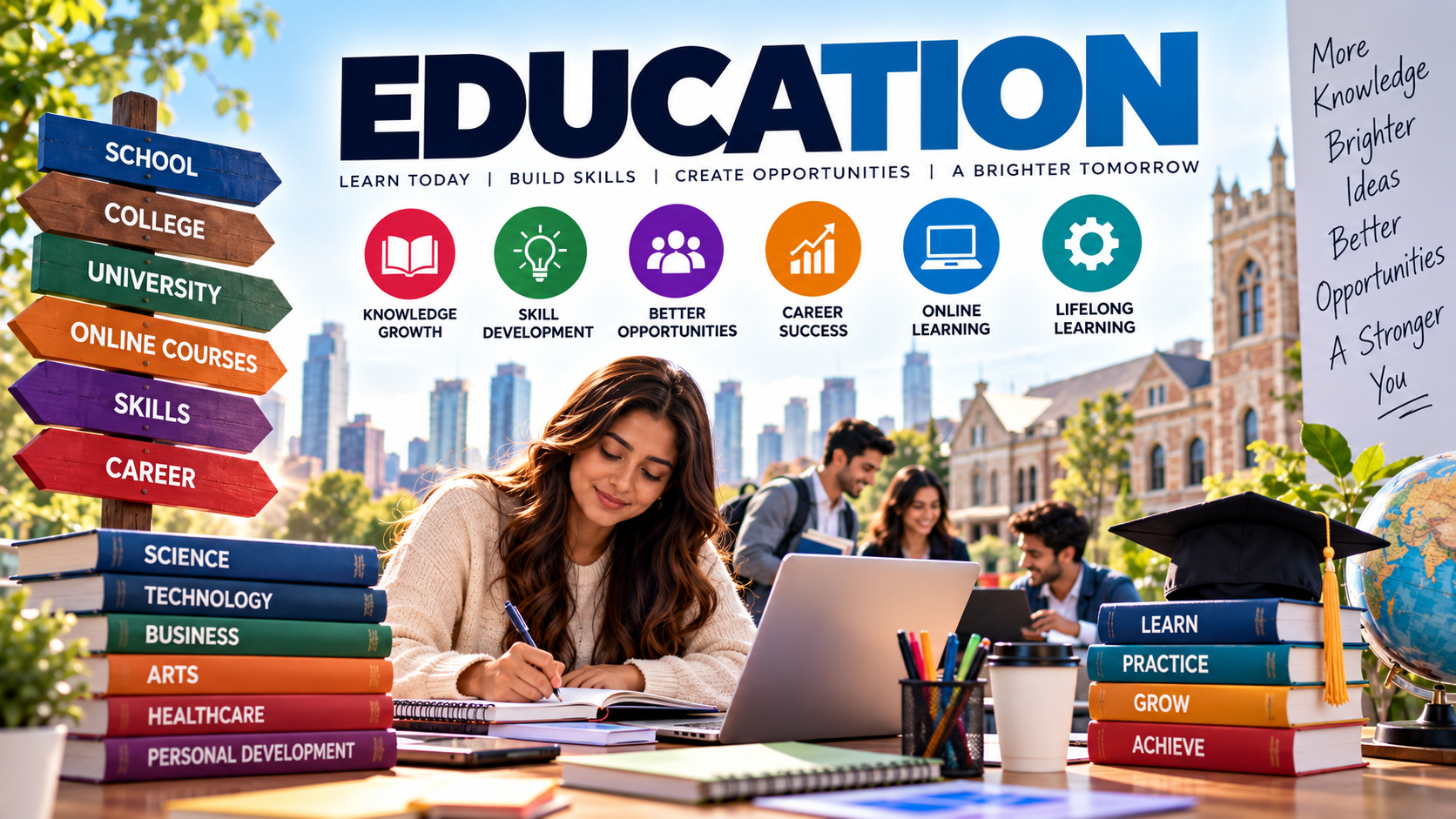
Education is one of the most important foundations of personal development, professional success, and social progress. It helps people gain knowledge, develop practical skills, improve their understanding of the world, and make informed decisions. From early childhood learning to university education and professional training, education plays a significant role in shaping individuals and preparing them for future opportunities.
In today's rapidly changing world, education extends beyond traditional classrooms and textbooks. Digital learning platforms, online courses, vocational training, and technology-supported teaching have created new ways for people to acquire knowledge. Students can explore different subjects, professionals can update their skills, and individuals can continue learning throughout their lives.
Understanding the value of education helps students, parents, educators, employers, and policymakers make better decisions about learning opportunities. Whether the goal is personal growth, career advancement, innovation, or community development, education remains an essential investment in the future.
What Is Education?
Education is the process of acquiring knowledge, skills, values, and understanding through teaching, study, observation, training, and practical experience.
It can take place in formal institutions, such as schools, colleges, and universities, as well as through informal experiences, online resources, professional environments, and independent study.
Education is not limited to memorizing facts. Effective learning also develops critical thinking, communication, creativity, problem-solving, and the ability to apply knowledge to real-world situations.
For example, a student studying business may learn financial concepts in a classroom and then apply that knowledge through a practical project. Similarly, a professional may complete an online course to learn a new software tool and use it to improve workplace productivity.
Education therefore combines knowledge with the ability to use that knowledge effectively.
Why Is Education Important?
Education influences individual opportunities and contributes to the development of stronger communities and economies.
1. Develops Knowledge and Understanding
Education helps people understand scientific concepts, historical events, social issues, technology, and the world around them. A strong educational foundation encourages curiosity and supports lifelong learning.
2. Improves Career Opportunities
Many occupations require specific qualifications, technical skills, or professional certifications. Education can help individuals meet these requirements and prepare for employment, promotions, or career changes.
Although qualifications do not guarantee a job, they can improve access to opportunities when combined with practical skills and experience.
3. Builds Critical Thinking Skills
Education encourages learners to evaluate evidence, ask questions, compare perspectives, and solve problems logically.
These abilities are valuable in academic settings, workplaces, financial decisions, and everyday life.
4. Encourages Personal Development
Learning can improve confidence, communication, independence, and the ability to make informed choices. It can also expose individuals to new ideas and help them understand different perspectives.
5. Supports Economic Growth
A skilled and educated workforce can contribute to productivity, innovation, entrepreneurship, and the development of new industries.
Access to quality education can also help people participate more effectively in the economy and pursue a wider range of professional opportunities.
6. Promotes Social Awareness
Education can improve understanding of health, civic responsibilities, environmental challenges, and social issues. It helps individuals evaluate information and participate more thoughtfully in their communities.
Different Types of Education
Education can be organized in several forms, each serving different learning needs and goals.
1. Formal Education
Formal education takes place within structured institutions such as schools, colleges, and universities. It generally follows an established curriculum and may lead to recognized qualifications.
Examples include primary education, secondary education, undergraduate degrees, and postgraduate programs.
Formal education provides structured learning, assessments, and opportunities to interact with teachers and other students.
2. Informal Education
Informal education occurs through everyday experiences, reading, conversations, observation, hobbies, and independent exploration.
For example, someone can develop financial knowledge by reading books, learn a language through regular conversation, or improve cooking skills through practice.
Informal learning can complement formal education and continue throughout life.
3. Non-Formal Education
Non-formal education includes organized learning activities outside traditional academic systems. These may include workshops, community classes, short courses, professional training, and adult learning programs.
Such opportunities can help individuals develop specific skills without necessarily enrolling in a full academic qualification.
4. Technical and Vocational Education
Technical and vocational education focuses on practical skills for specific occupations. Programs may cover areas such as electrical work, healthcare support, information technology, hospitality, construction, and mechanical services.
Vocational training can provide a direct route into employment for learners who prefer practical, career-focused education.
5. Online Education
Online education uses digital platforms to deliver lessons, assignments, assessments, and learning resources.
Students may attend live classes, watch recorded lectures, complete interactive exercises, or participate in virtual discussions.
Online learning can make education more accessible to people who face geographic, scheduling, or transportation barriers. However, access to reliable internet, suitable devices, and effective teaching remains important.
The Role of Education in Career Development
Education can help individuals identify professional interests, build relevant skills, and prepare for employment in different industries.
Employers often consider a combination of qualifications, experience, communication skills, and demonstrated ability when evaluating candidates.
Building Technical Skills
Different careers require different types of expertise. Engineers may need technical and mathematical knowledge, accountants need financial and analytical skills, and digital marketers need an understanding of online platforms, customer behavior, and performance measurement.
Education provides opportunities to develop these capabilities through theoretical study and practical assignments.
Improving Employability
Students can improve their employment prospects by combining education with internships, projects, volunteer experience, and professional networking.
A degree alone may not demonstrate every skill required for a job. Practical experience helps learners understand workplace expectations and apply what they have studied.
Supporting Career Changes
Adults may return to education to enter a new industry, qualify for a different role, or improve their professional prospects.
Short courses, certifications, vocational training, and flexible online programs can help people develop relevant skills while managing other responsibilities.
Encouraging Entrepreneurship
Education can help aspiring entrepreneurs understand business planning, accounting, marketing, customer research, and financial management.
Although business success also depends on experience and market conditions, relevant knowledge can help entrepreneurs evaluate opportunities and make more informed decisions.
How Technology Is Transforming Education
Technology is changing how teachers deliver lessons, how students access information, and how educational institutions organize learning.
Digital tools can make educational resources available beyond traditional classrooms and provide additional ways to explain complex subjects.
Digital Learning Platforms
Online platforms allow learners to access courses, recorded lessons, quizzes, and educational materials from different locations.
These platforms can support independent study and help learners revisit difficult concepts at their own pace.
Artificial Intelligence in Education
Artificial intelligence can support education through personalized practice, language assistance, automated feedback, and tutoring-style explanations.
AI tools may help students understand difficult topics, organize study plans, or generate practice questions. However, they can also produce inaccurate information, so learners should verify important claims using reliable educational sources.
Students should use AI to support understanding rather than replace their own thinking, research, or required independent work.
Interactive Learning Tools
Simulations, virtual laboratories, educational games, and multimedia resources can make some topics easier to understand.
For example, a science student may use a simulation to explore an experiment before performing it in a physical laboratory.
Digital Collaboration
Video meetings, shared documents, discussion forums, and collaborative learning platforms allow students and teachers to communicate across locations.
These tools can support group projects and discussions, although effective collaboration still requires clear instructions and meaningful participation.
Benefits of Online Education
Online education has become an important option for students, professionals, and lifelong learners.
Flexible Learning Schedules
Many online courses allow learners to study at convenient times. This can be helpful for working professionals, parents, and individuals with other responsibilities.
Access to Wider Resources
Online learning can connect students with instructors, courses, and educational materials that may not be available locally.
Opportunities for Skill Development
Learners can explore topics such as programming, business management, graphic design, data analysis, language learning, and digital marketing through online programs.
Potential Cost Savings
Some online courses cost less than traditional programs, and learners may save money on transportation or accommodation. However, course fees, internet access, devices, and other expenses should be considered.
Independent Learning
Online education often requires learners to manage their own time, organize assignments, and maintain motivation.
These habits can support professional development, but students who need frequent personal guidance may benefit from programs with structured teacher support.
Challenges in Modern Education
Despite its benefits, education systems face several challenges that affect learning quality and access.
Unequal Access to Educational Resources
Some learners lack reliable internet, suitable devices, qualified teachers, safe learning environments, or affordable educational materials.
Addressing these barriers requires investment in infrastructure, teacher support, accessible learning resources, and inclusive educational policies.
Financial Barriers
Tuition fees, transportation, accommodation, books, and technology can make education difficult to afford.
Scholarships, financial assistance, public education, and affordable training programs can help reduce these barriers.
Outdated Learning Methods
Education that focuses only on memorization may not adequately prepare students for modern workplaces and complex real-world problems.
Teaching methods that combine foundational knowledge with practical assignments, discussion, and problem-solving can help learners apply what they know.
Student Stress and Pressure
Academic expectations, examinations, competition, and uncertainty about the future can create stress.
Supportive teachers, realistic workloads, counseling resources, and healthy study routines can help students manage these pressures.
Maintaining Learning Quality Online
Not every online course provides reliable information or effective instruction. Learners should consider the instructor's expertise, course content, assessment methods, and recognition of any qualification before enrolling.
Effective Study Strategies for Students
Good study habits can help students understand information, retain knowledge, and prepare more effectively for examinations.
Set Clear Learning Goals
Break large subjects into manageable objectives. Instead of planning to study an entire textbook in one day, identify specific chapters, concepts, or exercises to complete.
Create a Study Schedule
A realistic timetable helps students balance lessons, assignments, revision, and rest. Consistency is usually more useful than occasional sessions of intensive study.
Use Active Recall
Active recall involves trying to remember information without immediately looking at the answer. Students can practice by answering questions, using flashcards, or explaining a concept from memory.
Practice Spaced Revision
Reviewing information over several days or weeks can improve long-term retention. Revisit difficult topics at increasing intervals instead of studying them only once.
Solve Practice Questions
Practice questions help students identify knowledge gaps and apply concepts under exam-like conditions.
Review incorrect answers carefully to understand why a mistake occurred and how to avoid it.
Reduce Distractions
Choose a study environment that supports concentration. Keep unnecessary notifications away, organize materials before starting, and take short breaks when needed.
Ask for Help When Necessary
Teachers, classmates, tutors, and reliable learning resources can help clarify difficult concepts. Seeking help early can prevent confusion from building over time.
The Importance of Teachers in Education
Teachers play a central role in helping students develop knowledge, skills, confidence, and curiosity.
An effective teacher does more than deliver information. Teachers explain complex concepts, identify learning difficulties, provide feedback, encourage discussion, and help students develop independent thinking.
Different students may learn at different speeds or require different forms of support. Teachers who use varied explanations, practical examples, and appropriate assessments can help more learners engage with the material.
Professional development is also important for educators. Training, collaboration, and access to suitable teaching resources can help teachers improve their methods and respond to changing educational needs.
Technology can support teaching, but meaningful human guidance remains important for motivation, feedback, classroom relationships, and student development.
Education and Lifelong Learning
Learning does not end when someone graduates from school or university. New technologies, changing industries, and personal interests create opportunities to develop knowledge throughout life.
Lifelong learning may include professional certifications, online courses, workshops, reading, practical projects, or learning from experienced colleagues.
For working professionals, continuous learning can help maintain relevant skills and prepare for new responsibilities.
For individuals outside formal employment, learning can support personal interests, community participation, financial awareness, and everyday problem-solving.
A useful lifelong learning approach involves identifying a specific goal, selecting reliable resources, practicing regularly, and reviewing progress.
How to Choose the Right Educational Program
Choosing a course, degree, or training program requires careful research.
Consider the following factors before enrolling:
Learning objectives: Confirm that the program teaches the knowledge or skills you want to develop.
Recognition and accreditation: Check whether the institution or qualification is recognized by relevant educational authorities or professional bodies, especially for regulated careers.
Course content: Review the curriculum, practical assignments, assessments, and teaching methods.
Cost and affordability: Consider tuition, examination fees, equipment, transportation, and other expenses.
Schedule and flexibility: Choose a program that fits your responsibilities and preferred learning style.
Career relevance: Review job descriptions and speak with professionals to understand whether the qualification is valued in your target field.
Student support: Consider access to instructors, academic advising, technical assistance, and learning resources.
A well-chosen educational program should align with your goals and provide credible learning opportunities rather than simply promising impressive results.
The Future of Education
The future of education will likely combine traditional teaching with digital resources, flexible learning pathways, and more personalized support.
Artificial intelligence may help educators provide additional practice, identify learning gaps, and develop teaching materials. Digital credentials and short professional courses may also create more flexible ways for people to demonstrate specific skills.
At the same time, educational institutions will need to address concerns about privacy, academic integrity, unequal access to technology, and the accuracy of AI-generated information.
The importance of teachers, foundational knowledge, critical thinking, and human interaction will remain significant. Technology is most useful when it supports effective teaching rather than becoming a substitute for meaningful learning.
Future education systems will need to help learners develop both subject knowledge and transferable abilities, including communication, collaboration, creativity, and problem-solving.
Conclusion
Education is a powerful foundation for personal growth, professional development, and social progress. It helps individuals build knowledge, develop practical skills, evaluate information, and prepare for opportunities in an increasingly complex world.
From formal schooling and university degrees to vocational training and online courses, different educational pathways can serve different needs. The most effective approach depends on individual goals, available resources, and the skills required for a chosen field.
By improving access to quality education, supporting teachers, using technology responsibly, and encouraging lifelong learning, individuals and communities can create better opportunities for the future.
Whether you are a student, a working professional, an educator, or someone exploring a new subject, continuing to learn can help you make informed decisions and build a more rewarding future.
Frequently Asked Questions About Education
Why is education important?
Education develops knowledge, practical skills, critical thinking, and communication abilities. It can improve access to employment, support personal growth, and contribute to economic and social development.
What are the main types of education?
Major types include formal education, informal education, non-formal education, technical and vocational education, and online education.
How does education help with career development?
Education can provide relevant qualifications, technical skills, professional knowledge, and opportunities to develop abilities needed for employment or career advancement.
What are the benefits of online education?
Online education can offer flexible schedules, access to wider learning resources, opportunities for skill development, and potential savings in travel and accommodation costs.
How is artificial intelligence changing education?
AI can support personalized practice, tutoring-style explanations, feedback, and learning assistance. Its outputs should be checked for accuracy, and its use should follow educational rules and academic integrity requirements.
How can students improve their study habits?
Students can set clear goals, create realistic schedules, use active recall, review information regularly, practice questions, reduce distractions, and ask for help when necessary.
What is lifelong learning?
Lifelong learning is the ongoing process of developing knowledge and skills throughout life through courses, reading, practical experience, professional training, and independent study.
How can I choose the right educational course?
Compare the curriculum, recognition, cost, flexibility, instructor expertise, student support, and relevance to your learning or career goals before enrolling.