SEO Title: Money and Politics in 2026: Billionaires, Elections and Power
Meta Description: Explore how billionaire donations, corporate lobbying, AI companies, cryptocurrency firms, and campaign finance are shaping politics and elections in 2026.
URL Slug: money-politics-billionaires-ai-corporate-donations-2026
Focus Keyword: Money and politics in 2026
Secondary Keywords: billionaire political donations, campaign finance 2026, corporate lobbying, political influence, dark money in elections, AI political spending, cryptocurrency lobbying, election funding
Category: Money & Politics
Tags: Money and Politics, Campaign Finance, Billionaires, Political Donations, AI Industry, Cryptocurrency, Corporate Lobbying, Election Spending, Political Transparency
Introduction
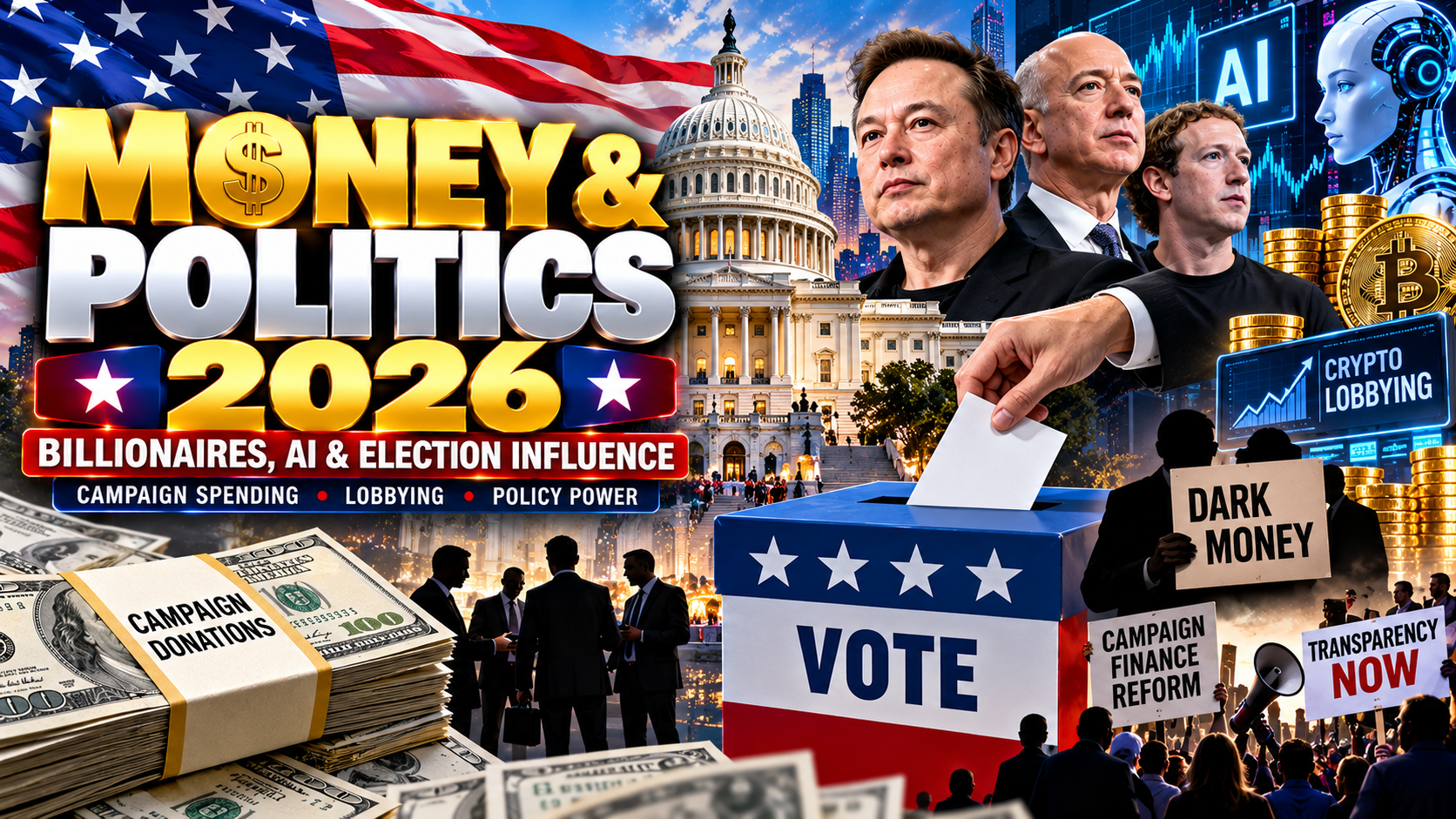
Money has always played an important role in politics, but the scale and sources of political funding are changing. In 2026, billionaires, technology companies, cryptocurrency businesses, financial institutions, and other powerful industries are investing substantial resources in political campaigns and policy debates.
Campaigns need money to communicate with voters, organise events, employ staff, conduct research, and distribute advertisements. Businesses and advocacy organisations also seek to influence legislation that may affect their industries. These activities can be legitimate forms of political participation, but they can raise concerns when a small number of wealthy donors gain far greater access to decision-makers than ordinary citizens.
The United States provides a particularly prominent example. During the 2026 midterm election cycle, political spending by wealthy individuals, corporations, and outside groups has reached record levels. Artificial intelligence and cryptocurrency companies have become increasingly important participants in the campaign finance landscape.
The central question is not simply how much money enters politics. It is whether political funding allows different groups to participate fairly, whether voters can identify who is paying for political messages, and whether elected officials remain accountable to the public.
What Does Money and Politics Mean?
Money and politics refers to the financial relationships between political candidates, political parties, donors, corporations, advocacy groups, and government institutions.
Political funding can take several forms, including:
Donations to political candidates and parties.
Spending by independent political committees.
Advertising campaigns designed to influence voters.
Lobbying efforts directed at legislators and regulators.
Financial support for political advocacy and public campaigns.
Donations and spending by individuals, businesses, unions, and other organisations where permitted by law.
These activities operate under different rules depending on the country and type of expenditure. A donation made directly to a candidate, for example, may be subject to limits that do not apply in the same way to certain independent political spending.
Understanding these distinctions is essential when examining the relationship between wealth and political influence.
Why Money Matters in Elections
Political campaigns operate in competitive environments where candidates must reach voters, explain their positions, respond to criticism, and build public recognition.
Campaign funding can support several important activities.
Advertising and voter communication
Television commercials, online videos, search advertising, social media promotions, and printed materials can help candidates communicate their messages.
Campaigns with larger budgets may be able to reach more people and repeat their messages more frequently. However, advertising expenditure alone does not guarantee electoral success. Voters also consider candidates' policies, credibility, leadership, and performance.
Campaign staff and organisation
Funding helps campaigns employ organisers, researchers, communications specialists, legal advisers, and other professionals. It can also support voter registration drives, canvassing, and event organisation.
Research and data analysis
Political organisations use polling, demographic research, and data analysis to understand voter concerns and decide how to communicate with different communities.
Building political visibility
Candidates with strong fundraising networks may attract more media attention and receive greater consideration from party leaders and potential supporters.
Money therefore influences a campaign's capacity to compete, although its impact depends on the political environment and the candidates involved.
The 2026 Election Spending Surge
The 2026 US midterm elections have highlighted the growing scale of political expenditure.
In an analysis published on October 13, 2026, the Brennan Center for Justice reported that independent spending by super PACs and other outside groups had reached approximately $2 billion through the end of September. The organisation described the figure as a record for a midterm election cycle, even after adjusting for inflation. <Cite refs={["turn301026news1"]}/>
A separate analysis by the Economic Times, published October 23, 2026, reported that the 15 largest donors had contributed more than $1.5 billion since November 2024, based on an analysis of Federal Election Commission data by AFP. <Cite refs={["turn301026news2"]}/>
These figures cover different categories and time periods, so they should not be added together. They nevertheless illustrate the scale of the financial resources involved in modern American elections.
The trend has intensified debate about whether the political system gives wealthy donors and well-funded organisations disproportionate opportunities to influence public policy.
How Billionaires Influence Political Campaigns
Billionaires can participate in politics through personal donations, support for political committees, public advocacy, and other activities permitted by law.
Their financial resources allow them to support causes or candidates at a scale that most individual voters cannot match. Some donors concentrate on a particular party, while others support candidates from different parties who share their policy preferences.
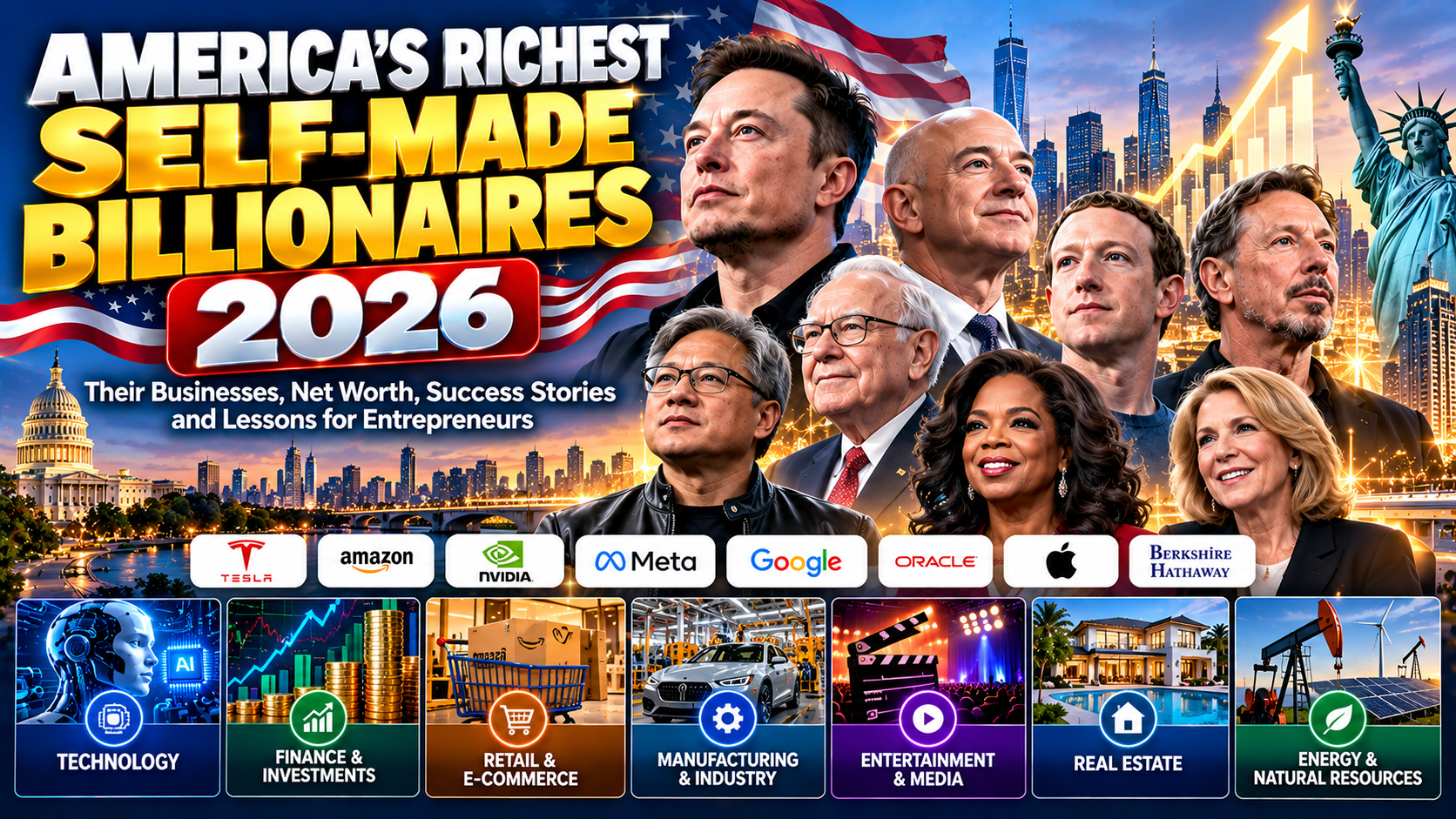
Elon Musk has been one of the most prominent political spenders in the 2026 US election cycle. Recent reporting has placed his contributions and related political spending among the largest associated with an individual donor. <Cite refs={["turn301026news1","turn301026news2"]}/>
However, political spending does not automatically translate into control over elected officials or guarantee that a preferred candidate will win.
The potential concern is structural: if policymakers regularly receive substantial support from a small group of wealthy individuals, those donors may gain more opportunities to communicate their priorities than citizens with fewer financial resources.
This can create questions about political equality, public accountability, and the role of money in democratic representation.
AI Companies Enter the Political Arena
Artificial intelligence has become a major policy issue in 2026. Governments are debating how to regulate AI systems, protect consumer information, manage copyright disputes, address employment disruption, and support the infrastructure needed to operate advanced models.
These decisions can have significant commercial consequences for AI developers, technology investors, data-centre operators, and businesses that rely on computing infrastructure.
As a result, companies and investors connected to the AI industry have become increasingly active in political spending and lobbying.
Political funding can support candidates who favour particular approaches to technology regulation. It can also fund advertising campaigns that frame policy debates around economic growth, innovation, national competitiveness, consumer protection, or other public concerns.
The difficulty for voters is determining when a political message represents a broad public argument and when it primarily advances the interests of a particular industry.
Transparency around the source of political funding can help voters make that distinction.
Cryptocurrency Companies and Political Power
Cryptocurrency businesses have also become significant participants in US political funding.
The industry has an interest in several policy areas, including digital asset regulation, stablecoin legislation, taxation, consumer protection, financial oversight, and the treatment of cryptocurrency exchanges.
Companies may support candidates who favour regulatory clarity or oppose policies they consider restrictive. Critics, meanwhile, argue that large political contributions can give the industry excessive influence over the rules governing its own activities.
Cryptocurrency-related political committees have helped demonstrate how an industry can coordinate financial support around shared policy objectives.
This strategy can be effective at placing issues on the political agenda, but it also raises questions about conflicts of interest and the independence of regulatory institutions.
A balanced assessment should distinguish legitimate advocacy for clearer laws from attempts to weaken protections or secure preferential treatment.
What Is Dark Money in Politics?
Dark money refers to political spending for which the original sources of funding are not fully disclosed to the public.
In the United States, some nonprofit organisations can participate in political advocacy without publicly identifying every donor. Money may also pass through multiple organisations, making it more difficult for voters to determine who ultimately financed a political advertisement.
Dark money is controversial because it can reduce transparency. Voters may see an advertisement supporting a candidate or opposing a policy without knowing which companies, individuals, or interest groups funded it.
The Brennan Center's 2026 reporting has highlighted the use of intermediary organisations and disclosure timing to obscure funding sources. It has also raised concerns about the limited visibility of some forms of online political spending. <Cite refs={["turn716657search1","turn301026news1"]}/>
Not every anonymous donation is necessarily unlawful, and disclosure rules differ by jurisdiction. However, limited transparency can make it harder for the public to assess potential conflicts of interest.
Reforms commonly proposed to address dark money include stronger donor disclosure requirements, clearer identification of online political advertisements, and more effective enforcement of campaign finance laws.
How Corporate Lobbying Shapes Public Policy
Campaign donations are only one part of the relationship between money and politics. Lobbying is another important channel through which businesses and organisations communicate their interests to government officials.
Lobbying can involve providing technical research, explaining how proposed regulations may affect an industry, presenting policy recommendations, and advocating for changes to legislation.
These activities can help policymakers understand complicated issues. For example, financial regulators may need detailed information from banks, technology companies, consumer groups, and economists when designing new rules.
Concerns arise when some groups have far more resources and access than others. Large corporations can employ specialist legal teams, economists, public relations professionals, and experienced lobbyists, while smaller organisations may struggle to present their views.
This imbalance can affect which policy proposals receive attention and which groups participate most effectively in government consultations.
Transparency, conflict-of-interest rules, public consultation, and independent oversight can help ensure that lobbying informs policymaking without replacing the public interest.
How Money and Politics Affect Ordinary Citizens
The relationship between political funding and government decisions can affect everyday life in several ways.
Taxes and public spending
Political donors may support tax policies that affect businesses, investors, property owners, or workers. Decisions about public spending can also influence healthcare, education, transportation, and social services.
Technology and employment
AI and automation policies can influence innovation, employment, data privacy, competition, and the responsibilities of technology companies.
Consumer protection
Rules governing financial services, digital assets, advertising, and consumer data can affect the products people use and the protections available when something goes wrong.
Housing and infrastructure
Property developers, construction companies, environmental organisations, and community groups may all advocate for different approaches to housing, planning, and infrastructure.
Public trust
When voters believe that wealthy donors receive special treatment, confidence in political institutions may decline. Transparent funding and credible enforcement can help address these concerns, although they cannot resolve every disagreement about government policy.
The broader issue is whether public decisions reflect evidence, democratic accountability, and the needs of society rather than the financial power of a small group.
Does More Political Spending Guarantee Election Victory?
No. Money can improve a campaign's ability to reach voters, but it cannot guarantee success.
A well-funded candidate may benefit from extensive advertising, professional campaign staff, and greater public visibility. However, voters may reject that candidate because of their policies, personal conduct, party affiliation, or response to local concerns.
Heavy advertising can also create voter fatigue or public backlash, particularly when campaigns appear dominated by outside interests.
Political spending is therefore best understood as a resource that can influence campaign conditions, not as a direct measure of public support.
Other factors—including candidate quality, economic conditions, public opinion, turnout, and the political environment—remain important in determining electoral outcomes.
Can Campaign Finance Reforms Reduce the Influence of Wealth?
Several reforms have been proposed to make political funding more transparent and broaden participation.
1. Stronger donor disclosure
Clearer disclosure rules can help voters identify who finances political advertisements and major political spending.
2. Better oversight of online advertising
Political communication increasingly takes place through social media, online video, and influencer content. Disclosure requirements can help voters understand when political messages are sponsored.
3. Public campaign financing
Public financing programs can provide eligible candidates with government support, sometimes matched to small donations. The aim is to help candidates compete without depending as heavily on large private donors.
4. Stronger enforcement
Campaign finance rules are more effective when regulators have sufficient authority, resources, and independence to investigate potential violations.
5. Conflict-of-interest protections
Ethics rules, financial disclosures, and restrictions on certain activities can help reduce the risk that public office is used for private benefit.
No single reform can eliminate every concern. Different countries also have different constitutional arrangements, electoral systems, and legal traditions. Effective policy requires rules that are enforceable, transparent, and consistent with applicable rights.
Money and Politics Beyond the United States
Although the 2026 US elections provide a prominent example, the relationship between wealth and political power exists around the world.
In the United Kingdom, political donations, party funding, lobbying, and campaign expenditure remain important topics of public debate. Transparency International UK published a report in March 2026 calling for stronger action to reduce the risks associated with large political donations and unequal access to policymakers. <Cite refs={["turn716657search6"]}/>
Other countries use different approaches to campaign finance. Some restrict private donations or election expenditure, while others rely more heavily on private funding and disclosure rules.
Political systems also differ in how they regulate corporate donations, foreign contributions, lobbying, media ownership, and public funding.
Comparing these approaches can help policymakers understand which safeguards improve transparency and public confidence. However, rules cannot simply be transferred from one country to another without considering its legal and political structure.
What to Watch Next in Money and Politics
Several developments will remain important as the 2026 election cycle continues.
Election spending disclosures: New filings can reveal how much political committees and outside groups spend and which donors support them.
AI and cryptocurrency legislation: Policy decisions may affect the commercial interests of companies funding political campaigns.
Online political advertising: Greater use of digital platforms and paid influencers may intensify debates about disclosure.
Campaign finance enforcement: Regulatory capacity and the handling of alleged violations will remain important to public accountability.
Public reaction to large donations: Voter attitudes may influence candidates' fundraising strategies and support for reform proposals.
These developments will help show whether rising political spending changes policy outcomes, voter behaviour, or the public's confidence in government.
Frequently Asked Questions
What is money in politics?
Money in politics refers to the financial resources used to support political candidates, parties, advocacy campaigns, lobbying, and other activities intended to influence elections or public policy.
Why do billionaires donate to political campaigns?
Billionaires may support candidates or causes because of their policy preferences, personal beliefs, business interests, or views about economic and social issues. Motivations vary by individual and cannot be assumed from a donation alone.
What is dark money?
Dark money is political spending for which the original funding sources are not fully disclosed to the public. It can make it harder to identify who is trying to influence an election or policy debate.
How do corporations influence politics?
Corporations can participate through lawful donations where permitted, lobbying, public advocacy, industry associations, and other political activities. The rules depend on the country and type of activity.
Does money determine who wins an election?
No. Funding can improve a candidate's visibility and campaign capacity, but election results also depend on voters' preferences, candidate quality, political conditions, and turnout.
What is a super PAC?
In the United States, a super PAC is a political committee that can raise unlimited funds from permitted sources for independent political expenditures. It cannot legally contribute directly to candidates or coordinate its spending with their campaigns.
How can governments make political funding more transparent?
Possible measures include clearer donor disclosures, better reporting of online political advertisements, effective enforcement, public campaign financing, and stronger conflict-of-interest safeguards.
Conclusion
Money and politics remain closely connected in 2026, as billionaires, corporations, AI companies, cryptocurrency businesses, and advocacy organisations invest resources in elections and policy debates.
Political funding can help candidates communicate with voters and allow organisations to participate in public debate. However, large financial disparities can also create concerns about unequal access, hidden funding sources, conflicts of interest, and public accountability.
The record spending reported during the 2026 US midterm cycle has intensified these questions. The challenge for democratic institutions is to preserve legitimate political participation while ensuring that voters can identify who is financing political messages and that elected officials remain accountable to the public.
Greater transparency, credible enforcement, and fair opportunities for civic participation can help strengthen confidence in the political process. Ultimately, the goal is not to remove money from every aspect of politics, but to ensure that financial power does not overwhelm democratic representation.
Editorial note: This article discusses political finance and public policy. Spending figures are attributed to the cited reports and refer to their specified dates and categories. Campaign finance laws differ by jurisdiction, and allegations of improper influence should not be treated as proof of illegal conduct.