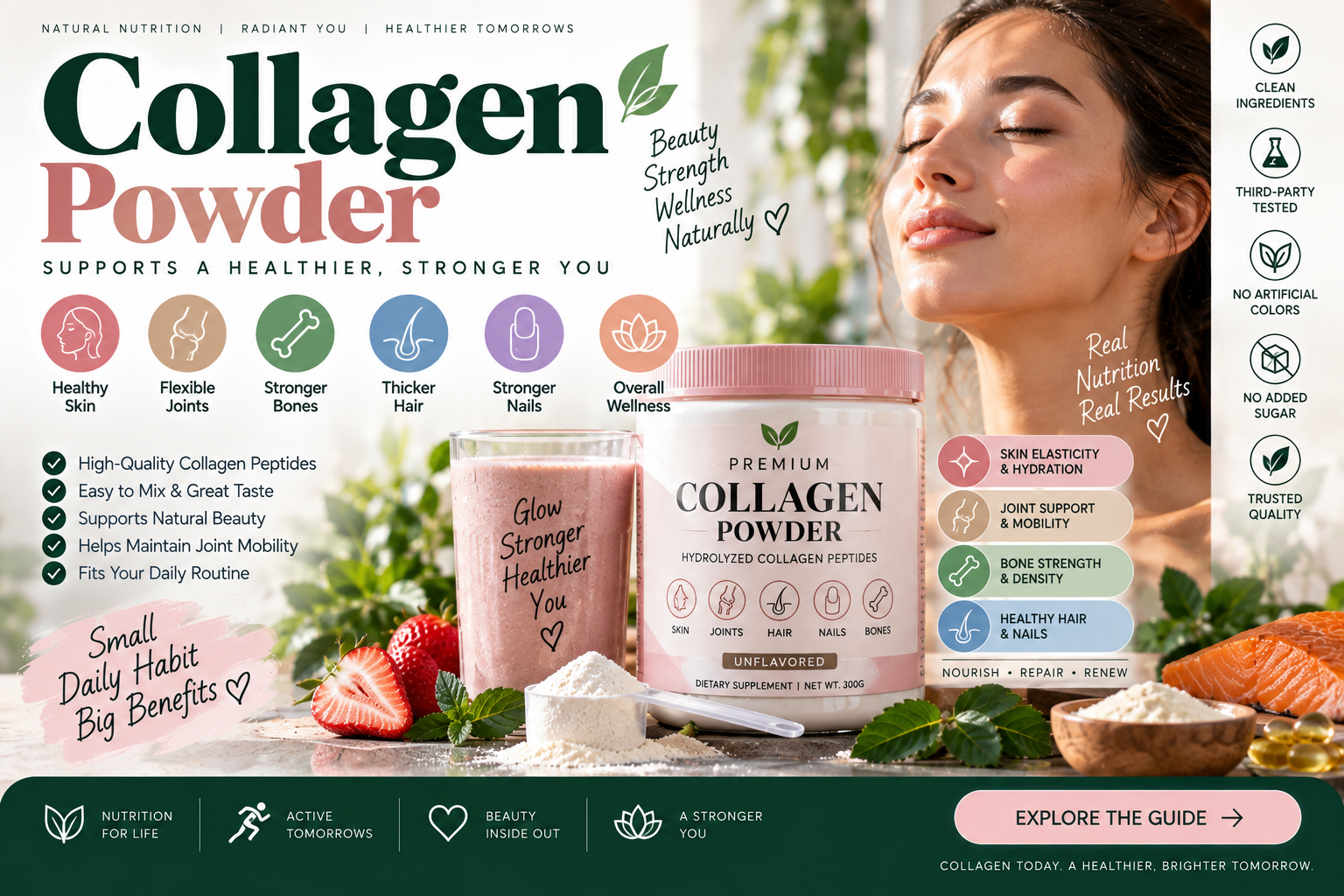
Collagen powder has become a popular dietary supplement among people interested in skin health, healthy aging, joint support, fitness, and overall nutrition. It is commonly made from animal sources such as bovine, marine, or porcine collagen and is often processed into hydrolyzed collagen peptides that can easily be mixed into water, coffee, smoothies, or other foods.
Collagen is an important structural protein naturally found throughout the body. It contributes to the structure and strength of skin, bones, cartilage, tendons, ligaments, and other connective tissues.
But how effective is collagen powder? Research suggests there may be benefits, particularly for some measures of skin hydration and elasticity and for symptoms associated with knee osteoarthritis. At the same time, research quality varies, and collagen supplements should not be viewed as a replacement for a balanced diet, medical treatment, or healthy lifestyle.
What Is Collagen Powder?
Collagen powder is a powdered dietary supplement containing collagen or hydrolyzed collagen peptides.
Regular collagen is a large protein molecule. Hydrolyzed collagen, also called collagen peptides, has been broken down into smaller peptides and amino acids, making it convenient to consume and digest.
Most collagen supplements are produced from animal-derived sources, including:
Bovine collagen from cows
Porcine collagen from pigs
Marine collagen from fish
Chicken-derived collagen
The source matters because it can affect the collagen type, ingredient profile, dietary suitability, and potential allergen considerations.
Collagen powders are usually marketed for skin, hair, nails, joints, bones, and general connective-tissue support. However, the evidence does not support every marketing claim equally.
Why Is Collagen Important?
Collagen is one of the major structural proteins in the human body.
It helps provide structure and strength to tissues including:
Skin
Cartilage
Tendons
Ligaments
Bones
Blood vessels
Connective tissue
The body naturally produces collagen using amino acids along with nutrients involved in collagen synthesis. Collagen production changes with age and can also be affected by factors such as environmental exposure and lifestyle.
Because collagen is naturally present in the body, researchers have investigated whether consuming collagen peptides can influence tissues such as skin and joints.
Potential Benefits of Collagen Powder
1. May Support Skin Hydration
Skin hydration is one of the most researched potential benefits of oral collagen supplements.
A 2025 systematic review and meta-analysis involving 10 randomized controlled trials and 646 participants found statistically significant improvements in skin hydration and elasticity among people taking collagen supplements. The studies used doses ranging from 1 to 10 grams per day, with approximately 4 grams per day being common. However, the researchers also noted limitations, including moderate heterogeneity and concerns about generalizability.
An earlier meta-analysis of 26 randomized controlled trials also reported improvements in skin hydration and elasticity with hydrolyzed collagen supplementation, while noting that additional high-quality research was needed.
This means collagen powder may help certain measures of skin hydration for some people, but results are not guaranteed.
2. May Support Skin Elasticity
Elasticity refers to the skin's ability to stretch and return toward its original shape.
Some clinical studies have found improvements in skin elasticity after oral collagen supplementation. A 2026 umbrella review that included 16 systematic reviews covering 113 randomized controlled trials and 7,983 participants reported favorable findings across several skin and musculoskeletal outcomes.
However, not all evidence is equally convincing.
A 2025 systematic review and meta-analysis of 23 randomized controlled trials involving 1,474 participants found that collagen appeared beneficial when all studies were analyzed together. But when researchers separated studies by funding source and quality, the benefits were no longer statistically significant in higher-quality or non-industry-funded groups.
This is an important reason to treat collagen's anti-aging claims cautiously rather than assuming that every collagen powder will produce visible results.
3. May Help Support Joint Health
Collagen supplements have also been studied for joint health, particularly knee osteoarthritis.
An updated systematic review and meta-analysis of 11 randomized controlled trials involving 870 participants found that oral collagen supplementation was associated with improvements in knee osteoarthritis pain and function.
The findings are promising, but collagen should not be considered a cure for arthritis.
The National Center for Complementary and Integrative Health also emphasizes that evidence for dietary supplements used for osteoarthritis varies and that some supplements can cause side effects or interact with medications.
Anyone experiencing persistent joint pain should discuss the underlying cause and treatment options with a healthcare professional.
4. May Support Connective Tissue
Collagen is an important component of connective tissues such as tendons and ligaments.
Because of this, collagen supplementation has been studied in sports and musculoskeletal settings. Research is still developing, and the potential effects can depend on the population, exercise program, collagen source, dose, and duration.
Collagen powder should therefore be considered a possible nutritional supplement rather than a guaranteed method for improving athletic performance or preventing injuries.
5. Provides Protein
Collagen powder contains protein and amino acids.
However, collagen is different from many complete dietary proteins. It has a distinctive amino-acid profile and is not generally considered a replacement for high-quality complete protein sources when the goal is to meet overall protein requirements.
People interested in muscle growth should prioritize an adequate total protein intake from foods and appropriate protein supplements rather than relying exclusively on collagen.
Types of Collagen
There are many types of collagen in the human body, but several are particularly well known.
Type I Collagen
Type I is abundant in:
Skin
Bones
Tendons
Ligaments
Connective tissue
Many collagen supplements contain predominantly Type I collagen.
Type II Collagen
Type II is particularly associated with cartilage.
It has therefore received attention in research involving joint health and osteoarthritis.
Type III Collagen
Type III is found alongside Type I collagen in tissues including skin and blood vessels.
Some supplements contain combinations of Type I and Type III collagen.
Marine vs. Bovine Collagen
Two common options are marine and bovine collagen.
Marine Collagen
Marine collagen is generally sourced from fish.
It is often marketed for skin-related purposes and may be attractive to people who prefer fish-derived ingredients. However, people with fish allergies should carefully check product labels.
Bovine Collagen
Bovine collagen comes primarily from cows and commonly contains Type I and Type III collagen.
It is widely used in collagen powders and peptide supplements.
Neither source should automatically be considered superior for everyone. The appropriate choice depends on dietary restrictions, allergies, product quality, ingredient transparency, and personal preferences.
Hydrolyzed Collagen vs. Collagen Peptides
You may see terms such as "hydrolyzed collagen," "collagen peptides," or "collagen hydrolysate" on supplement labels.
These terms generally refer to collagen that has been broken down into smaller peptides.
Hydrolyzed collagen is commonly used in powders because it can be mixed into beverages and foods more easily.
The important thing is to look at the actual ingredient list and serving information rather than choosing a product solely because the label uses terms such as "advanced," "premium," or "beauty collagen."
How to Use Collagen Powder
Collagen powder is usually easy to incorporate into a daily routine.
Depending on the product, it can be mixed into:
Water
Coffee
Tea
Smoothies
Milk
Yogurt
Oatmeal
Soups
Other foods and beverages
Follow the manufacturer's serving instructions rather than assuming that a larger amount will provide greater benefits.
There is no universally established dose that guarantees a particular cosmetic or health outcome. Research has used different collagen sources, doses, and durations.
For example, a 2025 meta-analysis of skin outcomes reported studies using approximately 1–10 grams per day, with 4 grams being a commonly used dose.
When Should You Take Collagen Powder?
There is no universally established "best time" to take collagen powder.
Some people take it in the morning with coffee or breakfast, while others add it to a smoothie or take it later in the day.
Consistency may be more practical than focusing on a specific hour.
If a healthcare professional has recommended collagen for a particular reason, follow their instructions and the product label.
Collagen Powder and Vitamin C
Vitamin C plays an important role in normal collagen formation.
Vitamin C can be obtained from foods such as:
Oranges
Kiwi
Strawberries
Bell peppers
Broccoli
Tomatoes
Citrus fruits
Some collagen powders contain added vitamin C, while others do not.
You do not necessarily need a collagen product containing vitamin C if your diet already provides sufficient vitamin C.
A varied diet containing fruits and vegetables can provide many nutrients involved in normal tissue maintenance.
Does Collagen Powder Help Hair and Nails?
Hair and nail benefits are commonly advertised by collagen supplement companies, but the evidence is less established than some of the research on skin hydration, elasticity, and joint symptoms.
Collagen provides amino acids, but hair and nail health also depends on overall nutrition and other factors.
If someone experiences sudden hair loss, brittle nails, or significant changes in appearance, it is better to investigate possible nutritional, hormonal, medical, or environmental causes rather than assuming collagen deficiency is responsible.
Can Collagen Powder Help With Weight Loss?
Collagen powder should not be considered a weight-loss supplement.
Although protein can contribute to fullness and can be part of a balanced diet, collagen itself does not automatically cause fat loss.
Sustainable weight management generally depends on overall dietary intake, physical activity, sleep, and long-term habits.
If collagen powder replaces a higher-calorie snack, it may change overall calorie intake, but that is different from collagen having a specific fat-burning effect.
Collagen Powder and Muscle Growth
Collagen is a protein, but it has a different amino-acid profile from many complete proteins.
If your goal is building muscle, resistance training and adequate overall protein intake are more important than simply adding collagen powder.
Collagen may have a role in connective-tissue support, but it should not replace protein-rich foods or complete protein supplements when those are needed to meet overall protein requirements.
Is Collagen Powder Safe?
Collagen supplements are generally tolerated by many people, but "natural" does not automatically mean risk-free.
The U.S. Food and Drug Administration does not approve dietary supplements for safety and effectiveness before they reach the market in the same way it approves drugs. Manufacturers are responsible for ensuring that their products comply with applicable requirements.
Possible issues can include:
Digestive discomfort
Bloating
Unpleasant taste or aftertaste
Allergic reactions
Sensitivity to the source ingredient
Interactions related to other ingredients in combination products
People with food allergies should carefully check the source of collagen.
For example, the FDA has previously published an allergy alert involving a collagen protein supplement containing undeclared milk.
Possible Side Effects
Some people may experience mild digestive symptoms after taking collagen powder.
Potential side effects can include:
Bloating
Nausea
Stomach discomfort
Diarrhea
Unpleasant taste
The specific formulation may matter. A collagen powder containing sweeteners, flavorings, vitamins, minerals, or other ingredients can cause effects unrelated to collagen itself.
Stop using a supplement and seek appropriate medical advice if you experience a significant allergic or other concerning reaction.
How to Choose a Collagen Powder
With so many products available, choosing a collagen powder can be confusing.
Check the Collagen Source
Look for clear information about whether the product is:
Bovine
Marine
Porcine
Chicken-derived
A combination of sources
This is particularly important for allergies and dietary preferences.
Check the Serving Size
Look at the amount of collagen peptides per serving instead of focusing only on the size of the scoop.
Read the Full Ingredient List
Some products contain additional ingredients such as:
Vitamin C
Biotin
Hyaluronic acid
Flavorings
Sweeteners
Minerals
Herbal ingredients
More ingredients do not automatically mean a better product.
Look for Transparent Labeling
A reputable supplement should clearly identify its ingredients and serving information.
The FDA requires dietary supplement labels to provide information such as serving size and the amount of dietary ingredients.
Consider Independent Quality Testing
Independent testing can provide additional information about product identity and quality.
However, certification does not guarantee that a product will produce a particular health or cosmetic result.
Collagen Powder vs. Collagen-Rich Foods
Collagen supplements are not the only way to obtain collagen-related nutrients.
Traditional foods such as bone broth and foods containing connective tissue provide collagen or collagen-derived compounds, although the amount can vary considerably.
A balanced diet also supplies amino acids and nutrients required for normal protein synthesis and tissue maintenance.
For many people, the best nutritional strategy is not to focus on one supplement but to maintain a varied diet containing adequate protein, fruits, vegetables, whole grains, healthy fats, and other nutrient-rich foods.
What Research Says About Collagen and Anti-Aging
Anti-aging is one of the biggest marketing categories for collagen supplements.
The scientific picture is more complicated than many advertisements suggest.
Some randomized trials and meta-analyses have reported improvements in skin hydration, elasticity, and wrinkles.
However, the 2025 meta-analysis in the American Journal of Medicine found that the apparent benefits disappeared in analyses restricted to higher-quality studies and studies without pharmaceutical-company funding.
On the other hand, a 2026 umbrella review that examined a much broader collection of systematic reviews reported favorable outcomes for several skin and musculoskeletal measures.
These differences show why consumers should avoid treating collagen as a guaranteed anti-aging treatment. Research is promising in some areas, but the size and reliability of benefits remain uncertain.
Who Should Be Careful With Collagen Supplements?
Before using collagen powder, consider discussing it with a healthcare professional if you:
Have food allergies
Have a chronic medical condition
Take prescription medications
Are pregnant or breastfeeding
Have significant digestive problems
Take multiple dietary supplements
Are preparing for surgery
The FDA recommends discussing dietary supplements with a healthcare professional because supplements can have side effects, interact with medications, and sometimes create risks when combined with other products.
Frequently Asked Questions
What is collagen powder?
Collagen powder is a dietary supplement made from collagen or hydrolyzed collagen peptides. It is commonly derived from bovine, marine, porcine, or chicken sources.
What are the main benefits of collagen powder?
Research has investigated collagen supplementation for skin hydration, skin elasticity, joint symptoms, and musculoskeletal health. Evidence varies by outcome and study quality.
Does collagen powder improve skin?
Some studies have reported improvements in skin hydration and elasticity. However, research findings are mixed, and higher-quality studies have produced less certain results.
Does collagen powder help joints?
Research suggests collagen supplementation may improve pain and function in people with knee osteoarthritis, although more research is needed to determine how consistently it works for different people.
How much collagen powder should I take?
There is no single universally established dose for every purpose. Clinical studies have used different amounts. One 2025 skin meta-analysis found doses ranging from 1–10 grams per day, with about 4 grams per day being common.
Can I take collagen powder every day?
Many collagen products are intended for regular use, but the appropriate amount depends on the product and individual circumstances. Follow the product label and seek professional advice when appropriate.
Does collagen powder contain protein?
Yes. Collagen powder provides collagen-derived protein and amino acids, but its amino-acid profile differs from complete dietary proteins.
Is marine collagen better than bovine collagen?
There is not enough evidence to say that one source is universally better for everyone. The appropriate choice depends on the product, dietary requirements, allergies, and individual preferences.
Can collagen powder make you gain weight?
Collagen powder contains calories and protein, so it contributes to total energy intake. However, it does not inherently cause weight gain when used appropriately within an individual's overall diet.
Does collagen powder work immediately?
Collagen supplements are not expected to produce instant changes. Research studies typically evaluate outcomes after weeks or months of regular supplementation, depending on the outcome being studied.
Final Thoughts
Collagen powder is a convenient way to consume collagen peptides and has become particularly popular for skin and joint health.
Current research provides some evidence for improvements in skin hydration and elasticity and suggests potential benefits for knee osteoarthritis symptoms. However, the evidence is not completely consistent, and study quality, funding, collagen source, dosage, and study duration can influence results.
For anyone considering collagen powder, the most sensible approach is to look beyond marketing claims. Check the collagen source, serving size, ingredient list, allergen information, and product quality.
Most importantly, collagen supplements should complement—not replace—a balanced diet, adequate protein, regular physical activity, good sleep, and appropriate medical care.
Collagen may be a useful addition to a healthy routine for some people, but it is not a magic solution for wrinkles, joint problems, hair loss, or weight management.