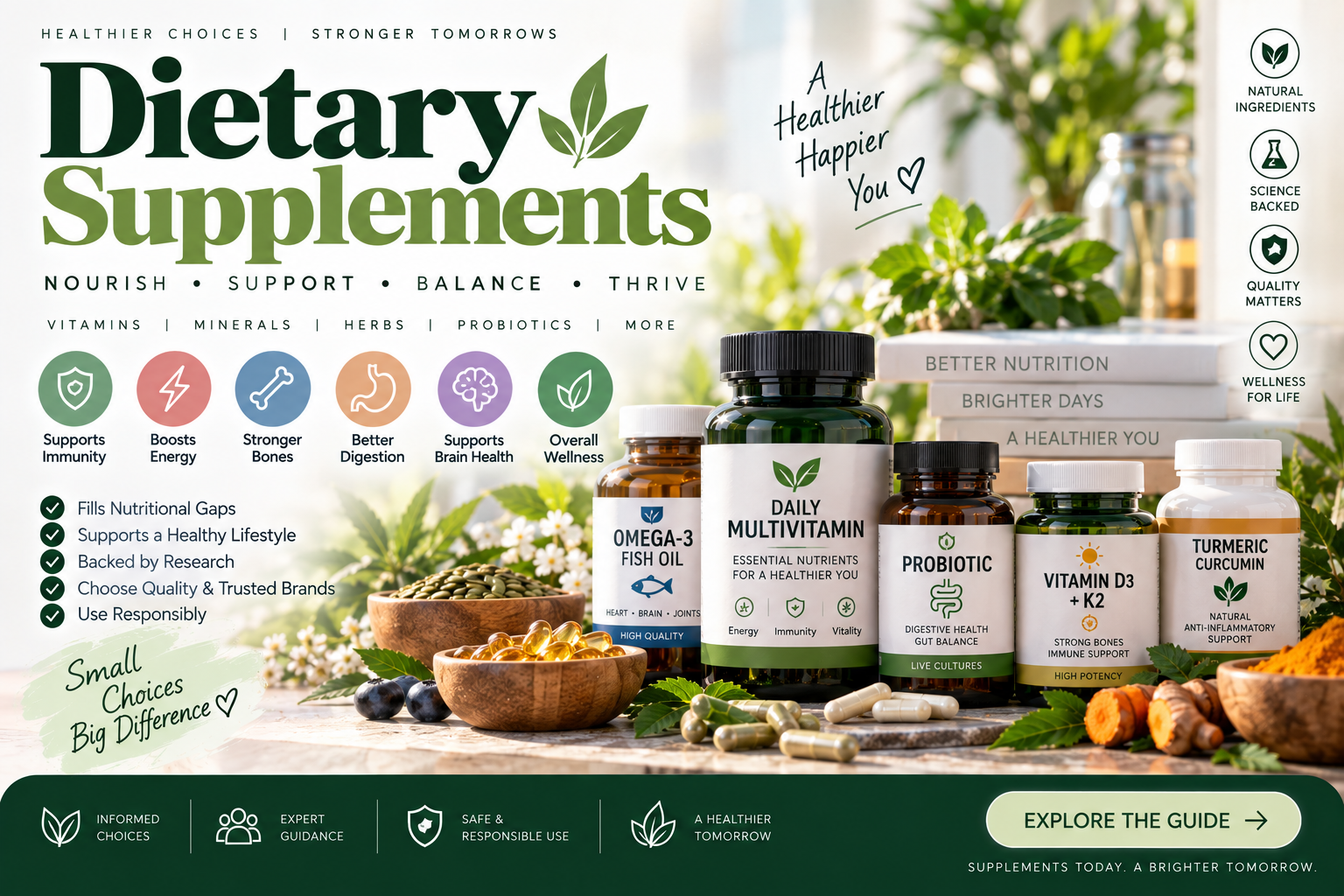
Dietary supplements have become a common part of many people's health and wellness routines. From multivitamins and minerals to probiotics, herbal products, amino acids, and specialty formulas, supplements are available in a wide range of forms and are often marketed for energy, immunity, digestion, sleep, exercise, bone health, and general wellness.
But supplements are not automatically safe simply because they are labeled “natural.” Some can provide useful nutrients, while others may have limited evidence behind their claims or may interact with medications.
Understanding what dietary supplements are, how they are regulated, what they may help with, and what risks to consider can help consumers make more informed decisions.
According to the U.S. National Institutes of Health (NIH) Office of Dietary Supplements, dietary supplements can contain vitamins, minerals, herbs and botanicals, amino acids, enzymes, probiotics, and other dietary ingredients. They are available in forms including tablets, capsules, gummies, liquids, and powders.
What Are Dietary Supplements?
Dietary supplements are products intended to supplement the diet. They may contain one or more dietary ingredients, including:
Vitamins
Minerals
Herbs and botanicals
Amino acids
Enzymes
Probiotics
Other dietary substances
Common examples include vitamin D, vitamin B12, calcium, iron, magnesium, fish oil, probiotics, and herbal supplements.
Supplements are different from medicines. In the United States, the Food and Drug Administration (FDA) regulates dietary supplements under a different framework from prescription and over-the-counter drugs. The FDA does not approve dietary supplements for safety and effectiveness before they are marketed in the same way it approves drugs.
This makes it especially important for consumers to evaluate supplement products carefully.
Why Do People Take Supplements?
People use supplements for many different reasons.
Some take supplements because their diet does not provide enough of a particular nutrient. Others use them because of a diagnosed deficiency, dietary restrictions, life stage, athletic goals, or recommendations from a healthcare professional.
Common reasons include:
Filling Nutritional Gaps
A balanced diet should generally provide most essential nutrients, but certain people may have difficulty meeting their nutritional needs through food alone.
For example, people following restrictive diets may have difficulty getting certain vitamins or minerals.
Supporting Bone Health
Calcium and vitamin D are important nutrients for maintaining healthy bones. Supplementation may be appropriate for some people depending on their diet, age, health status, and healthcare provider's recommendations.
Supporting Specific Nutrient Needs
Some people may require supplements because of increased nutritional requirements or difficulty absorbing certain nutrients.
However, taking a supplement without knowing whether it is needed can sometimes result in excessive intake.
Supporting General Wellness
Multivitamins and other products are commonly marketed for general health. However, the evidence varies considerably depending on the specific nutrient or ingredient.
The NIH Office of Dietary Supplements provides evidence-based fact sheets on individual vitamins, minerals, herbs, and other supplement ingredients.
Common Types of Dietary Supplements
There are many categories of supplements available.
Vitamins
Vitamins are essential nutrients involved in numerous biological processes.
Popular vitamin supplements include:
Vitamin A
Vitamin B12
Vitamin C
Vitamin D
Vitamin E
Vitamin K
Folate
Whether supplementation is useful depends on an individual's nutritional intake and health needs.
Minerals
Minerals are also essential nutrients.
Common mineral supplements include:
Calcium
Iron
Magnesium
Zinc
Potassium
Selenium
Taking excessive amounts of some minerals can cause health problems, so more is not necessarily better.
Herbal Supplements
Herbal supplements contain ingredients derived from plants.
Examples include products containing:
Ginger
Garlic
Echinacea
Turmeric
Ginseng
St. John's wort
Evidence varies significantly between herbal ingredients. Some have been studied extensively, while others require more research.
Probiotics
Probiotics contain live microorganisms that are intended to provide health benefits when consumed in adequate amounts.
Different probiotic strains can have different effects, so the term “probiotic” does not automatically mean every product has the same benefits.
Amino Acids
Amino acids are components of proteins and participate in numerous processes in the body.
Some amino acid supplements are marketed toward athletes, fitness enthusiasts, or people seeking particular nutritional benefits.
Omega-3 and Fish Oil
Fish oil supplements commonly provide omega-3 fatty acids such as EPA and DHA.
Omega-3 supplements have been studied for cardiovascular health and other conditions, but the effects can vary depending on the person, dose, formulation, and health outcome being studied.
Do Dietary Supplements Really Work?
The answer depends heavily on the supplement.
Some supplements can be useful when they correct or prevent a nutrient deficiency. Others have evidence supporting particular uses, while some have limited or inconsistent evidence.
The NIH notes that the amount of scientific evidence varies widely between supplement ingredients. Human studies, particularly well-designed clinical trials, provide more direct evidence about whether a supplement produces a specific health effect.
Consumers should therefore be cautious about products making broad promises such as:
“Boosts everything”
“Works instantly”
“Cures disease”
“Detoxes the body”
“Guaranteed weight loss”
“Replaces medication”
A supplement's marketing claims are not necessarily proof of effectiveness.
Supplements and Nutritional Deficiencies
One of the clearest reasons someone may need a supplement is a confirmed or likely nutrient deficiency.
For example, healthcare professionals may recommend supplementation when laboratory testing, dietary assessment, symptoms, or medical conditions indicate that a person is not getting enough of a particular nutrient.
However, supplementation should be appropriate to the individual's needs.
Taking large amounts of a nutrient without a demonstrated need may not provide additional benefits and could create risks.
This is particularly important for fat-soluble vitamins, such as vitamins A, D, E, and K, because the body can store them.
Are Supplements Safe?
Dietary supplements can be safe when appropriately selected and used, but they can also cause side effects or interact with medicines.
The FDA warns that some supplements can have strong biological effects and may interfere with medications, laboratory tests, medical conditions, or surgery.
Potential problems can occur when people:
Take very high doses
Combine several supplements
Mix supplements with prescription medicines
Take supplements instead of necessary medical treatment
Use products with hidden or undeclared ingredients
Continue using a supplement despite side effects
The word “natural” should not be treated as a guarantee of safety.
Can Supplements Interact With Medications?
Yes.
Supplement-drug interactions are an important consideration.
For example, the NIH notes that vitamin K can interfere with the effect of the blood thinner warfarin, while St. John's wort can affect the metabolism of numerous medicines.
Other supplements may also affect bleeding, blood pressure, blood sugar, sedation, or how medications are processed by the body.
If you take prescription medication, ask your doctor or pharmacist before adding a new supplement.
This is especially important if you take several medications at the same time.
Supplements Before Surgery
Some supplements can affect bleeding or interact with anesthesia and other medications used during surgery.
For this reason, tell your healthcare team about all supplements you take before a planned procedure.
Do not assume that a vitamin, herbal product, or “natural” supplement is irrelevant to surgery.
The NIH specifically notes that some supplements can increase bleeding risk or affect the response to anesthesia.
How to Read a Supplement Label
Understanding the label is one of the most useful ways to evaluate a supplement.
Look for the Supplement Facts panel.
It should provide information such as:
Serving size
Amount per serving
Dietary ingredients
Percent Daily Value when established
Other ingredients
Directions for use
The FDA requires dietary supplement labels to contain specific information, including the identity of the product, serving information, dietary ingredients, and other ingredients.
Be particularly careful with proprietary blends. A blend may list several ingredients without clearly showing the individual amount of every ingredient.
How to Choose a Quality Supplement
Choosing a supplement should involve more than looking at an attractive label.
Consider the following:
Check the Ingredients
Make sure you know exactly what is in the product.
Avoid products that provide vague ingredient descriptions or make unrealistic promises.
Check the Serving Size
A product may appear inexpensive until you discover that one bottle contains relatively few servings.
Look for Quality Testing
Independent quality testing can provide additional information about whether a product contains the ingredients and quantities stated on its label.
However, certification does not automatically mean that a supplement is effective for a particular health condition.
Research the Ingredient
Look for information from reliable sources such as the NIH Office of Dietary Supplements, healthcare professionals, medical organizations, and peer-reviewed research.
Be Cautious With Extreme Claims
Statements promising rapid cures, dramatic transformations, or guaranteed results should raise concerns.
The FDA advises consumers to be wary of health-product hype and claims that sound too good to be true.
Supplements for Weight Loss
Weight-loss supplements are among the most heavily marketed supplement categories.
Products may contain ingredients marketed as:
Fat burners
Appetite suppressants
Metabolism boosters
Thermogenic compounds
“Detox” ingredients
However, evidence and safety vary widely.
Some weight-loss products have also been associated with undeclared pharmaceutical ingredients or other safety concerns.
A supplement should not be considered a substitute for sustainable nutrition, physical activity, sleep, and appropriate medical care.
Supplements for Energy
Energy supplements may contain ingredients such as caffeine, B vitamins, herbal extracts, or other compounds.
If someone has persistent fatigue, however, simply taking an energy supplement may not address the underlying cause.
Fatigue can be associated with sleep problems, nutritional deficiencies, stress, medication effects, or medical conditions.
If fatigue is persistent or unexplained, medical evaluation may be more appropriate than repeatedly adding supplements.
Supplements for Immune Health
Vitamin C, vitamin D, zinc, and various herbal ingredients are frequently marketed for immune support.
Some nutrients are essential for normal immune function, but taking more than the body needs does not necessarily provide additional protection.
The appropriate approach depends on nutritional status, health conditions, diet, and the specific supplement.
Supplements and a Healthy Diet
Supplements are designed to supplement the diet, not replace it.
A varied diet can provide:
Vitamins
Minerals
Protein
Fiber
Healthy fats
Carbohydrates
Phytochemicals
Other beneficial food components
The FDA specifically advises consumers not to use dietary supplements as a replacement for the variety of foods that are important for a healthy diet.
For many people, improving dietary quality may be more important than adding multiple supplements.
Can You Take Multiple Supplements Together?
Taking several supplements at once can increase the possibility of excessive nutrient intake or interactions.
For example, a multivitamin may already contain vitamin D, zinc, vitamin C, or other nutrients. Adding separate products containing the same ingredients could substantially increase total intake.
Before combining supplements, check their labels and discuss the combination with a healthcare professional when appropriate.
Keeping a written list of all supplements and medications can make this conversation easier.
Who Should Be Especially Careful?
Certain groups should seek professional guidance before taking supplements.
These may include:
Pregnant or breastfeeding people
Children
Older adults taking multiple medications
People with liver or kidney disease
People preparing for surgery
People taking prescription medicines
People with chronic medical conditions
People who have experienced supplement side effects previously
The appropriate supplement and dose can vary considerably from person to person.
Dietary Supplements and FDA Regulation
Understanding regulation is important because dietary supplements are not regulated in exactly the same way as medicines.
The FDA does not approve dietary supplements for safety and effectiveness before they are marketed in the same way it approves drugs. Manufacturers and distributors are responsible for ensuring that their products meet applicable safety and labeling requirements, while the FDA can take action against adulterated or misbranded products.
This does not mean that supplements are unregulated. It means the regulatory system is different from the system used for prescription and over-the-counter medicines.
Supplements vs. Medications
Supplements and medicines have different roles.
A medication may be specifically developed and tested to diagnose, prevent, treat, or manage a disease.
A dietary supplement is intended to supplement the diet.
A product marketed as a supplement cannot simply be assumed to have the same evidence of effectiveness as an approved medicine.
This distinction is especially important when a supplement is marketed for a specific medical condition.
When Should You Talk to a Healthcare Professional?
Consider talking with a doctor, pharmacist, or registered dietitian before starting a supplement if:
You take prescription medication
You have a medical condition
You are pregnant or breastfeeding
You are preparing for surgery
You want to give a supplement to a child
You plan to take multiple supplements
You are considering high doses
You have unexplained symptoms
You want to use a supplement instead of prescribed treatment
The FDA and NIH both recommend discussing supplement use with healthcare professionals when appropriate.
Final Thoughts
Dietary supplements can play a useful role in certain situations, particularly when they help meet nutritional needs or address a documented deficiency.
However, supplements are not universally beneficial, and their safety and effectiveness depend on the specific ingredient, dose, product quality, health condition, and other medications a person may be taking.
A smart approach is to research the ingredient, read the Supplement Facts label, avoid exaggerated claims, consider independent quality testing, and speak with a healthcare professional when there are medical conditions or medication interactions to consider.
Most importantly, supplements should complement—not replace—a balanced diet, healthy lifestyle, and appropriate medical care.
Frequently Asked Questions About Dietary Supplements
What are dietary supplements?
Dietary supplements are products intended to supplement the diet. They can contain vitamins, minerals, herbs, botanicals, amino acids, enzymes, probiotics, and other dietary ingredients.
Are dietary supplements safe?
Many supplements can be used safely when appropriate, but some can cause side effects or interact with medications. Safety depends on the specific ingredient, dose, product, and individual.
Do supplements replace a healthy diet?
No. Supplements are intended to supplement the diet rather than replace a varied and nutritious diet.
Are supplements FDA approved?
The FDA does not approve dietary supplements for safety and effectiveness before they are marketed in the same way it approves drugs. The regulatory framework for supplements is different.
Can supplements interact with medications?
Yes. Some supplements can change how medications work or increase the risk of side effects. People taking medication should discuss new supplements with a healthcare professional.
Should I take a multivitamin every day?
Whether a multivitamin is appropriate depends on your diet, nutritional needs, age, health status, and other factors. It is not automatically necessary for everyone.
Are natural supplements safer than medicines?
Not necessarily. “Natural” does not guarantee that a product is safe. Some natural ingredients can have strong effects and can interact with medications.
How can I choose a good supplement?
Check the Supplement Facts label, research the ingredients, avoid exaggerated claims, and consider products with credible independent quality testing. Discuss supplements with a healthcare professional when appropriate.
Can I take several supplements together?
You can potentially take multiple supplements, but combining them can increase the risk of excessive intake and interactions. Check for overlapping ingredients and seek professional advice when needed.
What should I do if a supplement causes side effects?
Stop using the product and seek medical advice, particularly if the reaction is severe or unexpected. The FDA also encourages reporting adverse events associated with dietary supplements.