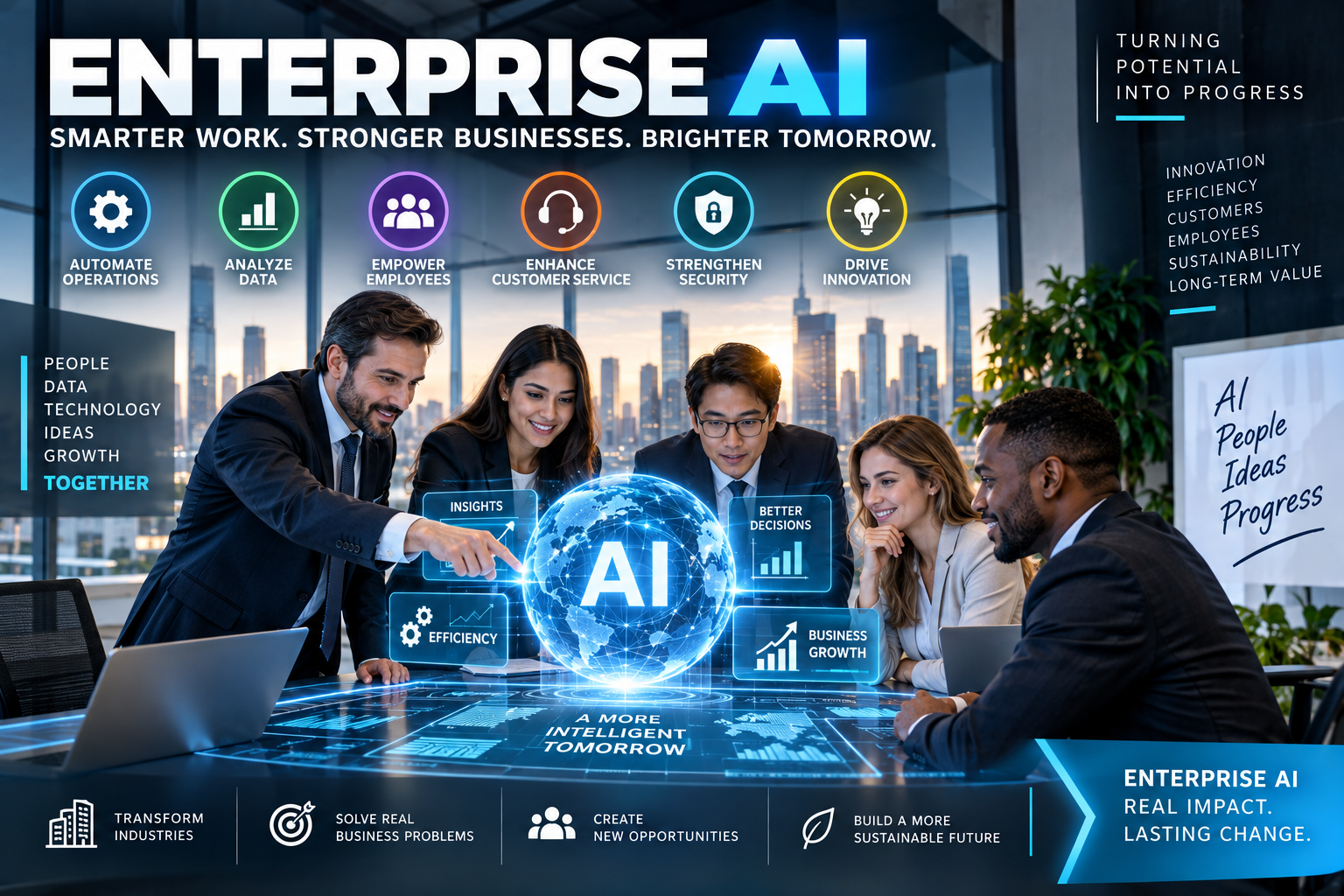
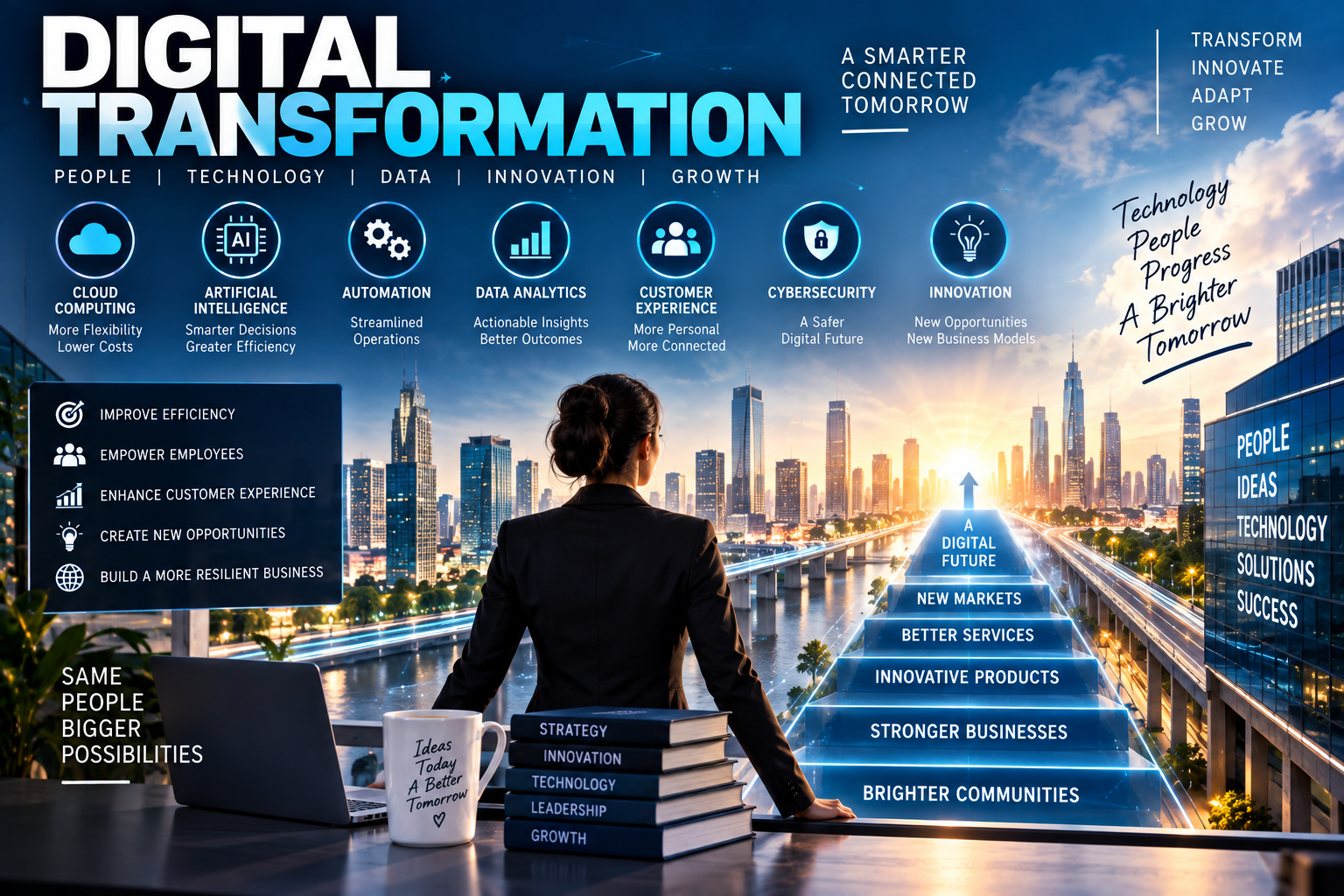
Digital transformation has become one of the defining forces shaping the modern economy. Businesses across industries are adopting cloud computing, artificial intelligence, automation, data analytics, digital platforms, and connected technologies to change how they operate and serve customers.
What began as a gradual shift from paper-based processes to digital systems has developed into something much broader. Today, digital transformation can influence almost every part of an organization—from product development and marketing to customer service, finance, supply chains, and strategic decision-making.
For companies, the goal is not simply to purchase new technology. True digital transformation involves using technology to create more efficient operations, improve customer experiences, develop new products, and build businesses capable of adapting to rapid change.
What Is Digital Transformation?
Digital transformation is the process of using digital technologies to fundamentally improve business operations, customer experiences, organizational processes, and business models.
It can involve relatively simple improvements, such as moving documents to digital systems, as well as major changes, such as creating an entirely digital business model.
The most successful transformation programs combine technology with changes in strategy, organizational culture, employee skills, and customer engagement.
Digital transformation is therefore not a single project with a fixed completion date. It is an ongoing process of adapting a business to a changing technological environment.
Why Digital Transformation Matters
Technology has changed customer expectations. People increasingly expect businesses to provide fast, convenient, personalized, and accessible services.
Customers can compare products online, communicate with companies through digital channels, make instant payments, and receive services from almost anywhere.
Businesses that fail to meet these expectations may lose customers to more digitally capable competitors.
Digital transformation can help organizations respond by improving efficiency, reducing unnecessary processes, and creating new ways to interact with customers.
It can also provide businesses with better access to information, allowing leaders to make decisions based on real-time or near-real-time data rather than relying entirely on historical reports.
Cloud Computing as a Foundation
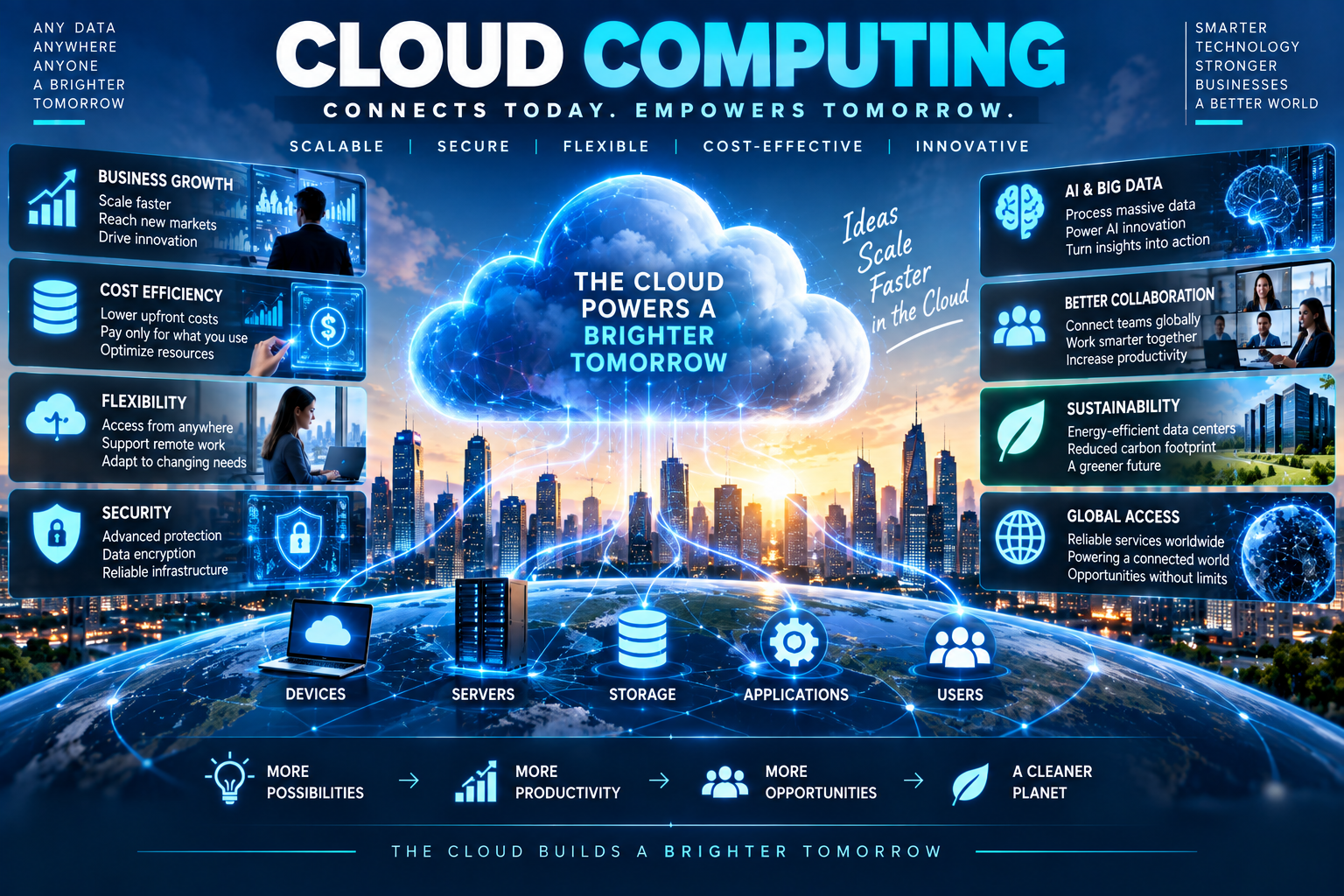
Cloud computing has become one of the most important foundations of digital transformation.
Instead of maintaining all technology infrastructure internally, companies can use cloud-based computing, storage, software, and other services through internet-connected platforms.
Cloud technology can provide businesses with greater flexibility. Companies can scale computing resources according to demand, support remote employees, and deploy new applications more quickly.
Cloud systems can also help organizations reduce the need for large investments in physical infrastructure.
However, moving to the cloud requires careful planning. Businesses need to consider cybersecurity, data protection, identity management, regulatory requirements, and system integration.
Artificial Intelligence and Automation
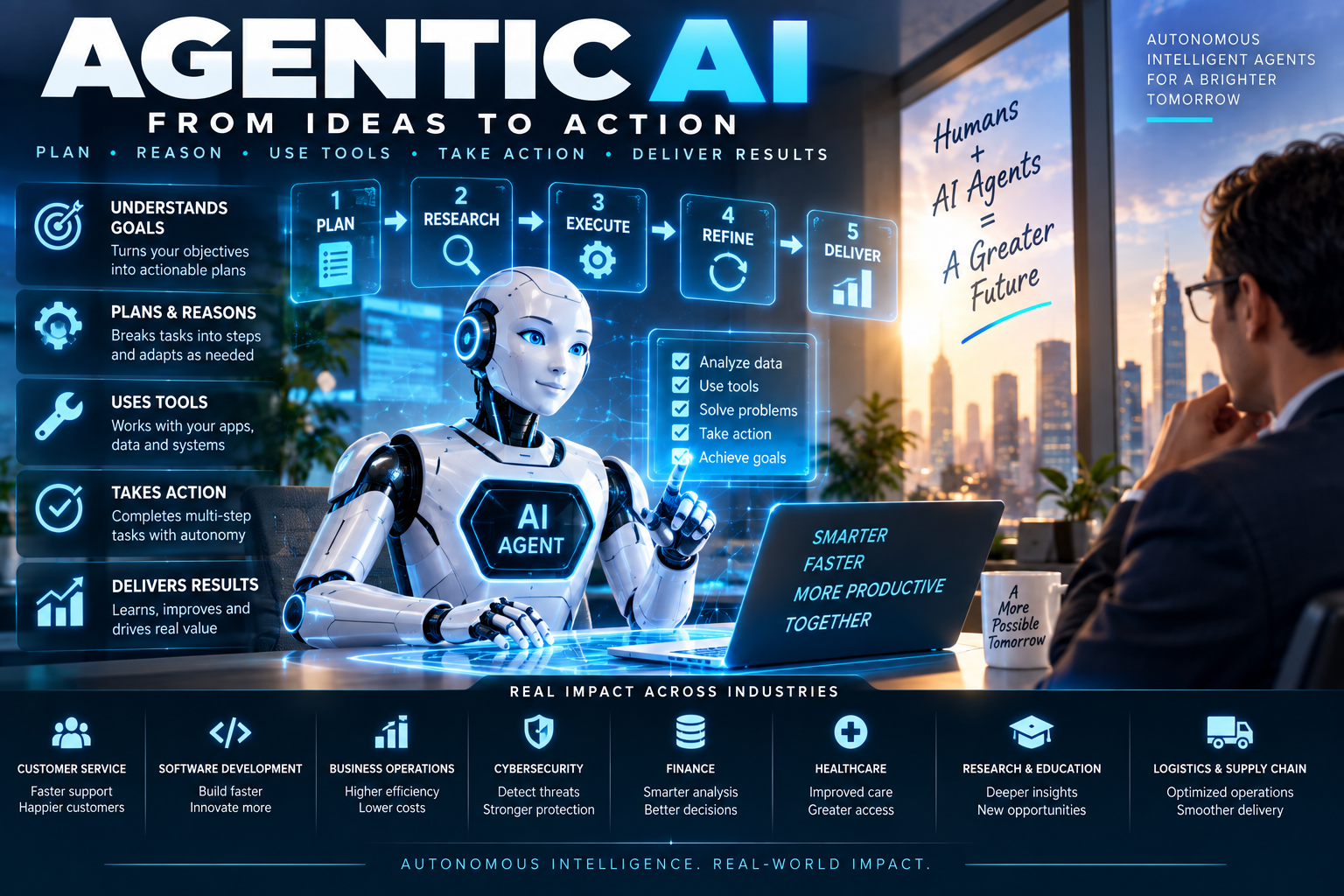
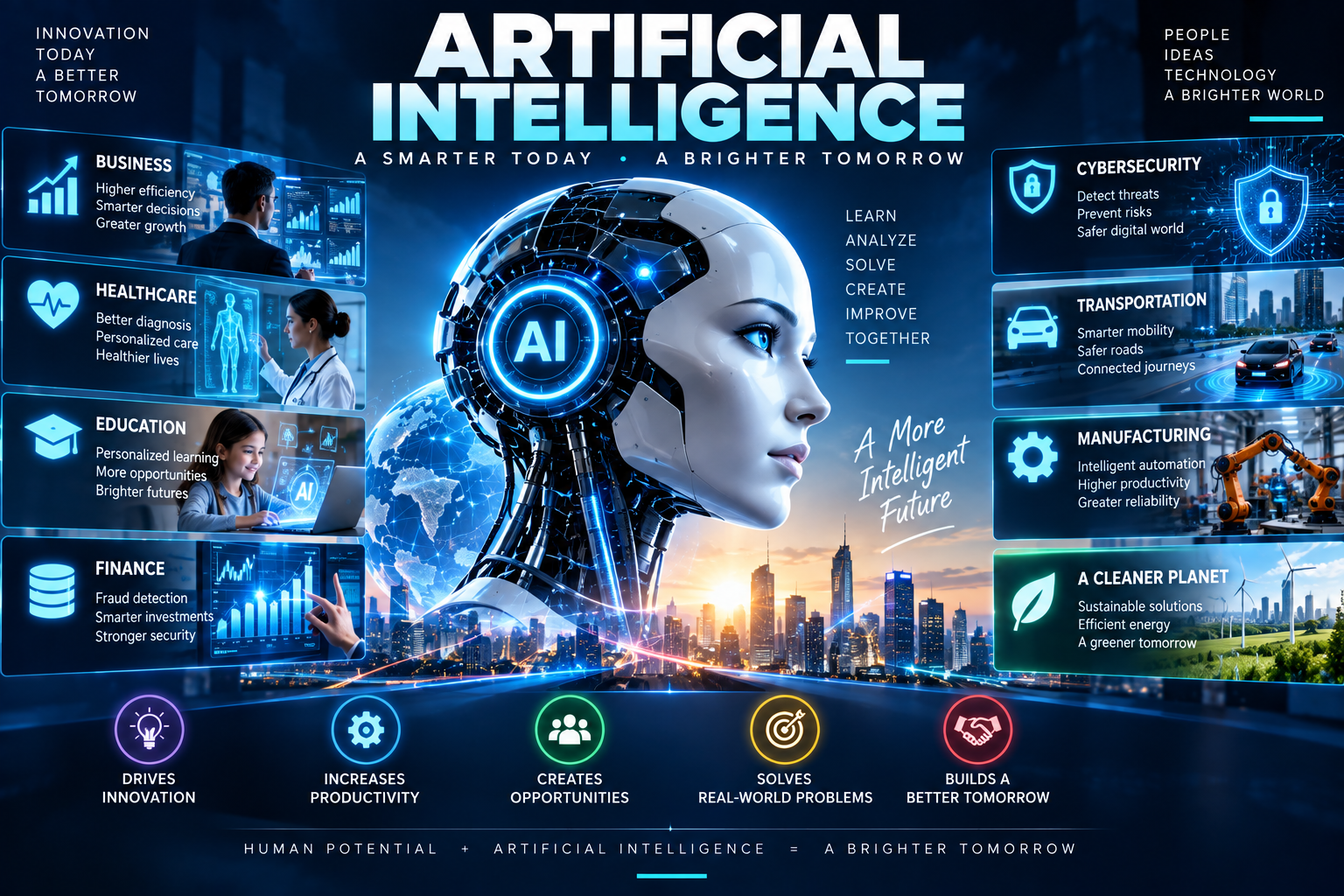
Artificial intelligence is accelerating digital transformation across many industries.
Businesses can use AI to analyze information, automate repetitive tasks, support customer service, generate content, detect patterns, forecast demand, and assist employees with decision-making.
Automation can similarly reduce the amount of manual work required for routine processes.
For example, businesses can automate invoice processing, customer notifications, inventory updates, appointment scheduling, and other repetitive activities.
The value of AI and automation is not simply that they can replace individual tasks. They can allow employees to spend more time on activities that require creativity, judgment, communication, and strategic thinking.
Data as a Strategic Asset
Digital transformation produces and depends on data.
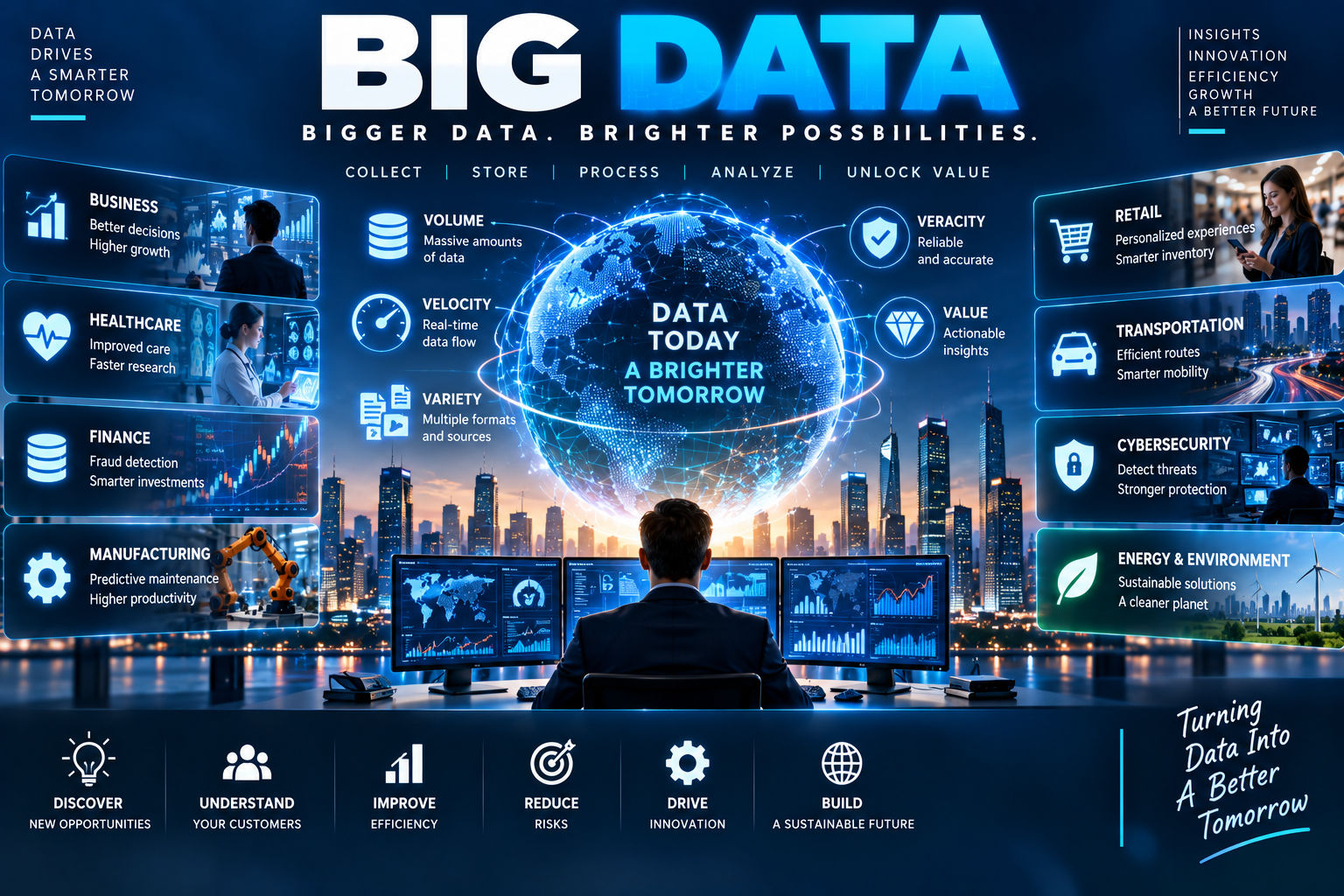
Every digital transaction, customer interaction, website visit, application, and operational process can generate information. When properly managed, this information can become an important strategic asset.
Data analytics can help businesses understand customer behavior, identify operational inefficiencies, forecast demand, evaluate marketing performance, and identify emerging opportunities.
However, collecting more data does not automatically create more value.
Organizations need reliable data, appropriate governance, strong security, and skilled employees who can interpret information correctly.
The ability to turn raw data into useful insights is becoming an increasingly important competitive advantage.
Improving Customer Experience
One of the most visible benefits of digital transformation is improved customer experience.
Digital tools can make it easier for customers to search for products, place orders, communicate with businesses, access support, and manage their accounts.
Personalization is another important development. Businesses can use customer data to provide more relevant recommendations, communications, and services.
Digital transformation can also make customer service more responsive. Chatbots, automated systems, and AI-powered assistants can handle routine questions while human employees focus on more complex problems.
The objective should not be to remove human interaction completely. Instead, technology should make interactions more convenient while allowing employees to provide greater value where human judgment matters most.
Digital Transformation Across Industries
Digital transformation is affecting virtually every major industry.
Financial Services
Banks and financial institutions have moved many traditional services online. Customers can increasingly open accounts, transfer money, make payments, manage investments, and access support through digital channels.
Artificial intelligence and analytics are also being used for fraud detection, risk assessment, and customer service.
Healthcare
Healthcare organizations are adopting digital records, telemedicine, connected devices, data analytics, and AI-supported tools.
These technologies can improve access to services and help healthcare professionals manage information more efficiently.
Retail
Retailers are combining physical stores with e-commerce, mobile applications, digital payments, personalized recommendations, and automated inventory systems.
The distinction between online and offline shopping is becoming less important as consumers move between both environments.
Manufacturing
Manufacturers are using connected machinery, sensors, robotics, automation, and analytics to monitor production and improve efficiency.
Real-time information can help identify equipment problems and reduce unnecessary downtime.
Education
Schools, universities, and training providers are increasingly using digital learning platforms, online classrooms, interactive resources, and AI-powered educational tools.
These technologies can make education more accessible while giving students additional ways to learn.
The Role of Employees
Digital transformation cannot succeed without people.
New technology often changes the skills employees need. Workers may need training in data analysis, AI tools, cybersecurity, cloud applications, automation, and digital collaboration.
Organizations should therefore treat employee development as a central part of transformation rather than an afterthought.
Employees are also often the people who understand existing processes best. Their involvement can help businesses identify inefficiencies and design practical digital solutions.
A transformation strategy imposed without employee participation may face resistance, even when the technology itself is valuable.
Changing Organizational Culture
Technology alone does not create transformation.
A company can purchase advanced software and still operate inefficiently if its organizational culture remains resistant to change.
Successful digital organizations tend to encourage experimentation, collaboration, continuous learning, and evidence-based decision-making.
Leadership is particularly important. Executives need to communicate why transformation is necessary and demonstrate commitment through investment and organizational changes.
Companies should also recognize that not every digital project will succeed. Experimentation involves learning, and organizations need to be capable of adjusting strategies when results do not meet expectations.
Cybersecurity and Digital Transformation
As businesses become more digital, cybersecurity becomes increasingly important.
Every new application, connected device, cloud service, and digital process can introduce additional security considerations.
Organizations need to protect customer information, financial records, intellectual property, employee data, and other sensitive information.
Security should therefore be integrated into digital transformation from the beginning rather than added after systems are deployed.
Strong identity management, multi-factor authentication, encryption, access controls, monitoring, employee awareness, secure software development, and incident-response planning can help organizations manage digital risks.
Digital growth without appropriate security can create vulnerabilities that undermine the benefits of transformation.
Challenges of Digital Transformation
Despite its potential benefits, digital transformation is not always easy.
One major challenge is legacy technology. Many established companies still depend on older systems that may be difficult or expensive to replace.
Integration can also be complicated. New digital platforms need to communicate with existing applications and databases.
Cost is another consideration. Transformation requires investment in technology, employees, training, cybersecurity, and implementation.
There can also be cultural resistance. Employees may worry that automation will change their jobs or that new systems will make their work more complicated.
Data quality is another challenge. Poor or inconsistent information can undermine analytics and AI initiatives.
Successful organizations recognize these challenges and address them through careful planning rather than expecting technology to solve every problem automatically.
Building a Digital Transformation Strategy
A successful transformation begins with a clear business objective.
Organizations should first identify the problems they want technology to solve. This could include reducing operating costs, improving customer satisfaction, increasing productivity, developing new products, or entering new markets.
Businesses can then prioritize initiatives based on their potential value and feasibility.
Starting with smaller projects can sometimes be useful because successful pilot programs can demonstrate value and build organizational confidence.
Companies should also establish measurable goals. Instead of simply saying that a process should become “more digital,” leaders should define specific outcomes such as faster processing times, fewer errors, improved customer retention, or reduced operating costs.
Digital Transformation and Small Businesses
Digital transformation is not limited to large corporations.
Small businesses can use digital tools to compete more effectively without making enormous investments.
Cloud-based accounting, digital marketing, e-commerce platforms, online payment systems, customer relationship management software, automation tools, and analytics can help smaller companies operate efficiently.
Social media and digital communication can also allow small businesses to reach customers beyond their immediate geographic markets.
The key is to choose technology that solves a genuine business problem rather than adopting technology simply because it is popular.
The Future of Digital Transformation
Digital transformation will continue to evolve as emerging technologies become more accessible.
Artificial intelligence is likely to play an increasingly central role. Businesses may use AI not only for individual tasks but also as an integrated layer across operations, customer service, analytics, software development, and decision-making.
Automation will also expand as organizations look for ways to improve productivity.
Connected devices and the Internet of Things could generate more real-time information from factories, vehicles, buildings, healthcare systems, and supply chains.
Meanwhile, cybersecurity and data governance will become increasingly important as organizations manage larger and more complex digital environments.
The businesses best positioned for the future will likely be those that can continuously adapt rather than those that simply complete a single digital transformation project.
Digital Transformation and Competitive Advantage
In competitive markets, technology can become a major differentiator.
Companies that understand their customers better, respond faster, operate more efficiently, and continuously improve their products can gain an advantage over slower competitors.
However, technology itself is rarely a permanent advantage. Once a digital capability becomes widely available, competitors can adopt similar tools.
The lasting advantage often comes from how effectively an organization combines technology with its people, processes, data, and strategy.
A company that builds a culture of continuous improvement may therefore have a stronger long-term position than one that simply makes a large technology investment.
Conclusion
Digital transformation is fundamentally changing how businesses operate, compete, and create value.
Cloud computing, artificial intelligence, automation, data analytics, digital platforms, and connected technologies are giving organizations new opportunities to improve productivity and customer experiences.
But successful transformation requires more than technology. Businesses must also invest in employees, cybersecurity, organizational culture, data quality, and strategic planning.
The most effective transformation strategies begin with business needs and use technology as a tool to achieve measurable outcomes.
As the digital economy continues to develop, transformation will become less of a special initiative and more of an ongoing business capability.
The organizations that embrace continuous learning, responsible innovation, and customer-focused technology will be better positioned to adapt to the next generation of digital change.
Digital transformation is ultimately not about replacing traditional business with technology. It is about using technology intelligently to build businesses that are faster, smarter, more resilient, and better prepared for the future.