Enterprise technology has become the backbone of modern business. From global corporations and financial institutions to healthcare organizations, manufacturers, retailers, and professional services firms, organizations increasingly depend on technology to operate efficiently, serve customers, manage information, and compete in rapidly changing markets.
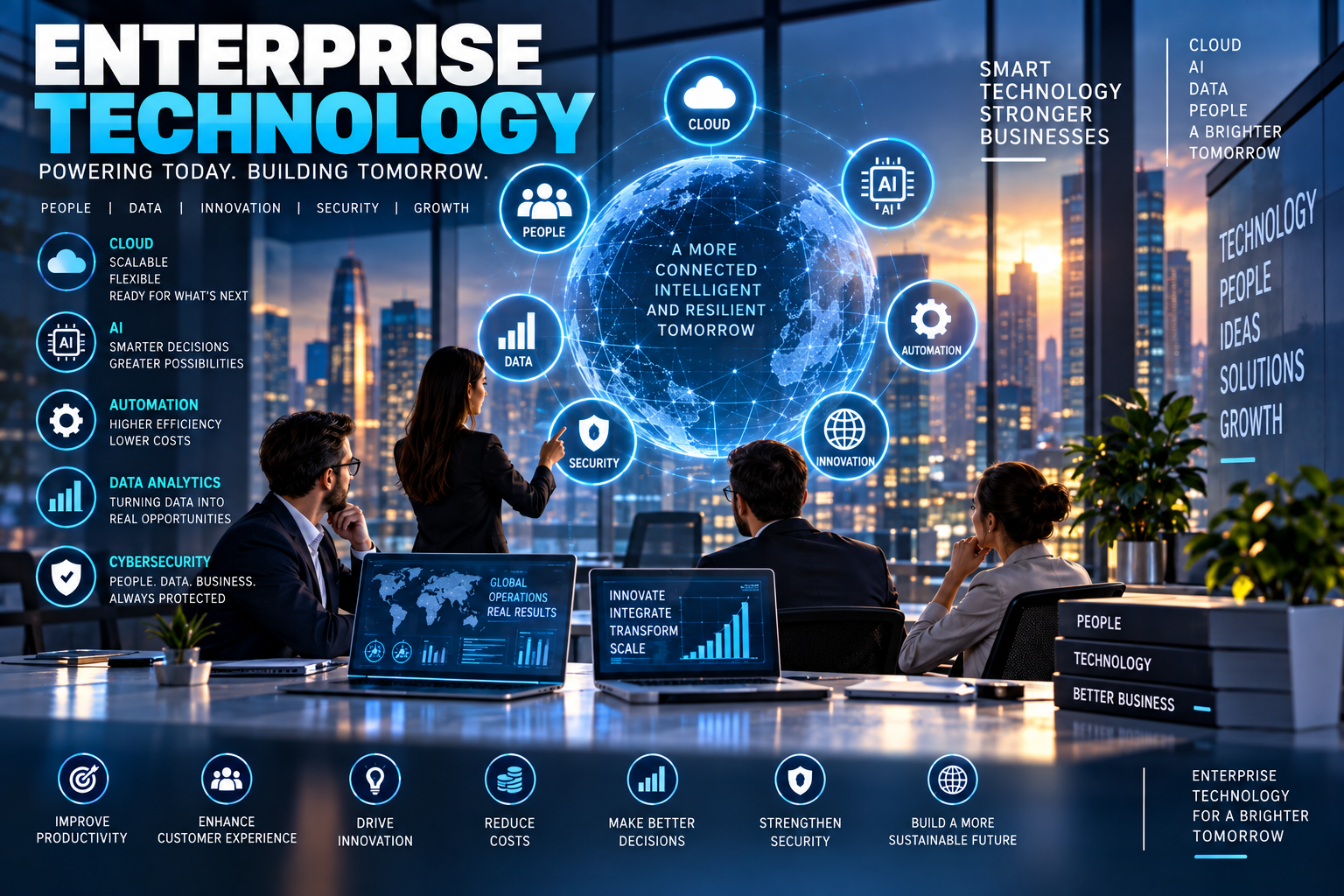
Enterprise technology goes far beyond computers and software. It includes cloud infrastructure, artificial intelligence, cybersecurity, data platforms, enterprise applications, automation, networking, analytics, collaboration tools, and digital systems that connect different parts of an organization.
As businesses become more dependent on digital operations, enterprise technology is moving from a support function to a central component of corporate strategy.
Companies that invest effectively in technology can improve productivity, respond faster to customers, make better decisions, and create entirely new business models. However, technology investments also introduce challenges involving cost, cybersecurity, data management, employee adoption, and integration with existing systems.
What Is Enterprise Technology?
Enterprise technology refers to the hardware, software, platforms, networks, and digital services used by organizations to manage and operate their businesses at scale.
Unlike consumer technology, which is generally designed for individual users, enterprise technology is built around organizational requirements such as security, scalability, reliability, compliance, collaboration, and centralized management.
Enterprise systems may support functions including finance, human resources, customer relationship management, supply chains, manufacturing, sales, marketing, communications, and business intelligence.
The goal is to create a connected technology environment in which information can move efficiently across an organization and employees have the tools they need to perform their roles.
Why Enterprise Technology Matters
Modern companies operate in increasingly competitive markets. Customers expect faster services, personalized experiences, digital communication, and seamless transactions.
At the same time, businesses are under pressure to control costs and improve productivity.
Enterprise technology can help organizations address these demands by automating repetitive processes, connecting teams, analyzing large amounts of data, and providing executives with better visibility into operations.
Technology can also help companies become more flexible. Instead of relying entirely on physical infrastructure and manual processes, organizations can use cloud platforms and digital applications to adapt their operations more quickly.
The most effective technology strategies are therefore closely connected to business objectives.
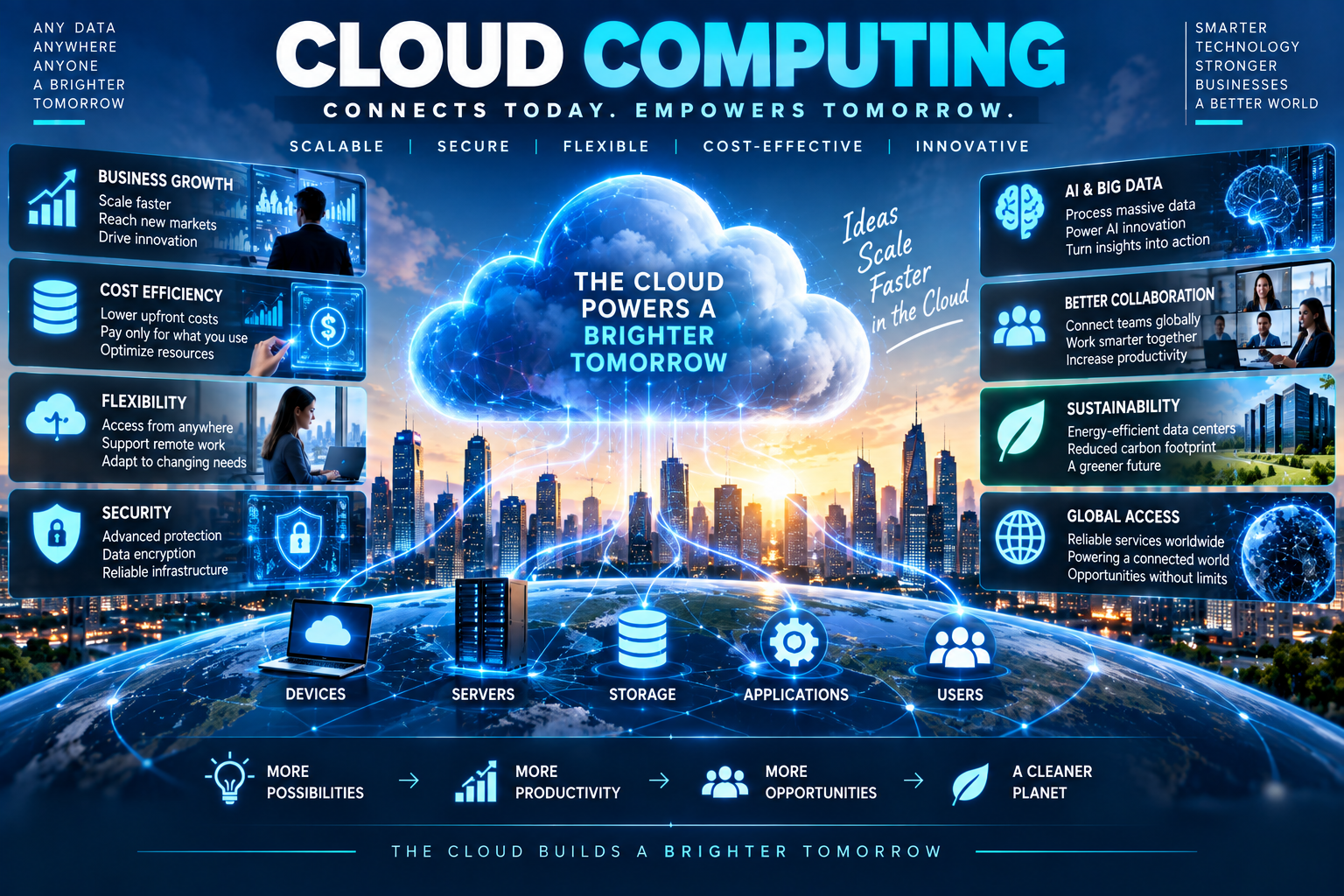
Cloud Computing as Enterprise Infrastructure
Cloud computing has transformed enterprise technology.
Businesses can now access computing power, storage, databases, software, and other infrastructure through cloud platforms rather than maintaining every system internally.
This can provide greater flexibility and scalability. A company can increase computing capacity when demand rises and reduce it when demand falls.
Cloud technology can also support distributed workforces by allowing employees to access applications and information from different locations.
However, cloud adoption requires careful management. Businesses need to consider security, data governance, identity management, regulatory requirements, system integration, and vendor dependence.
Moving everything to the cloud is not automatically the right strategy. Organizations need to determine which workloads and applications are best suited to different environments.
Artificial Intelligence in the Enterprise
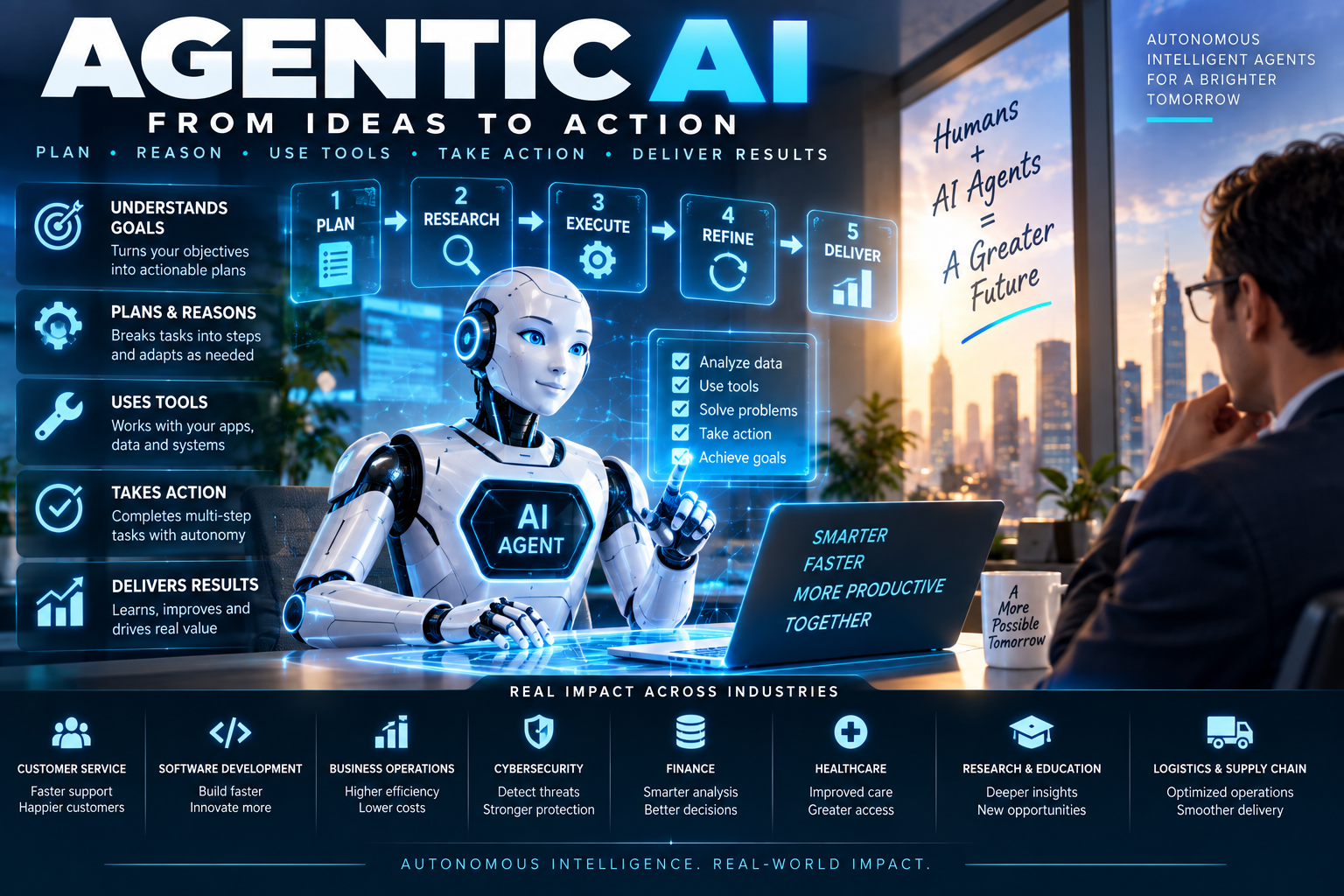
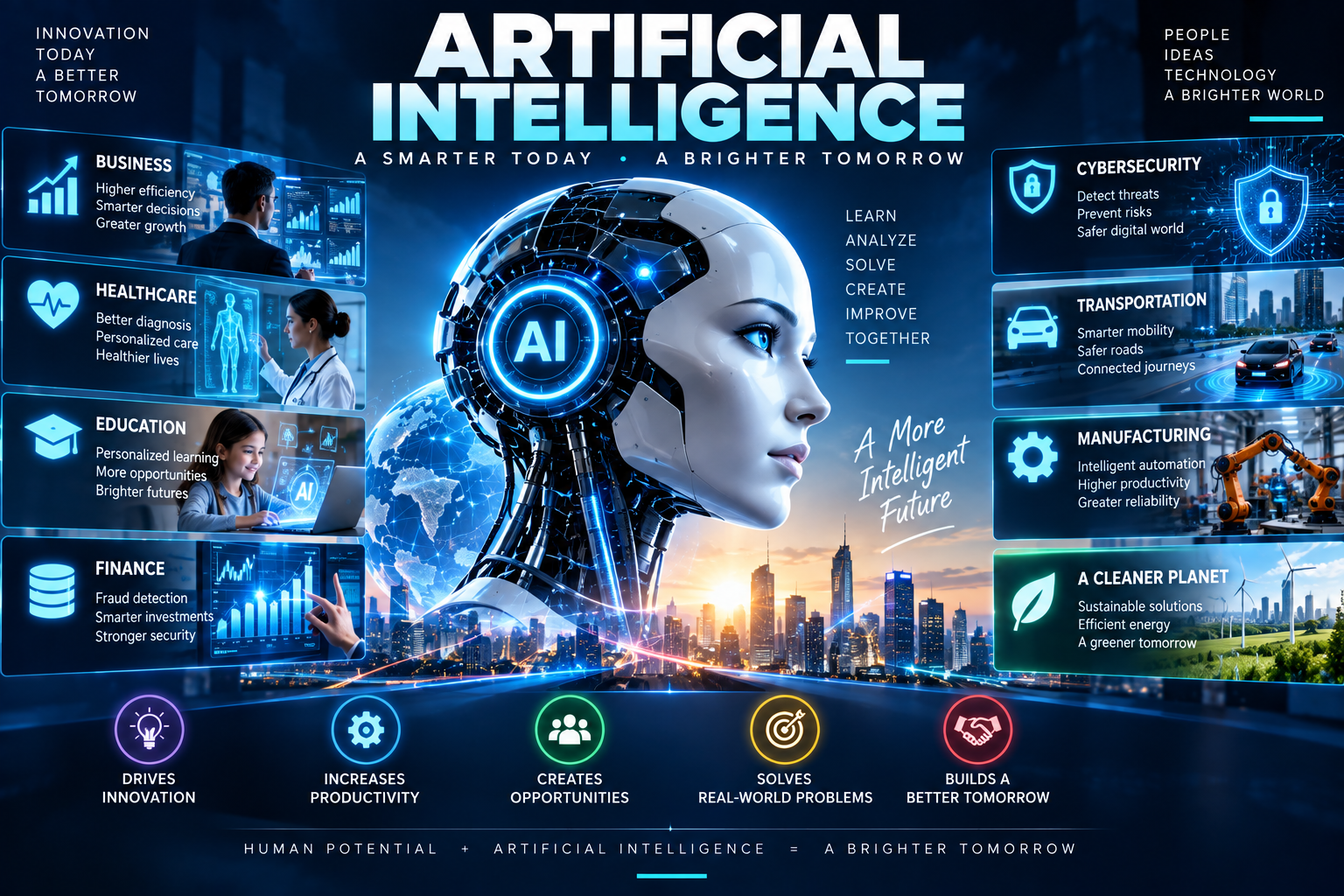
Artificial intelligence is becoming one of the most important areas of enterprise technology.
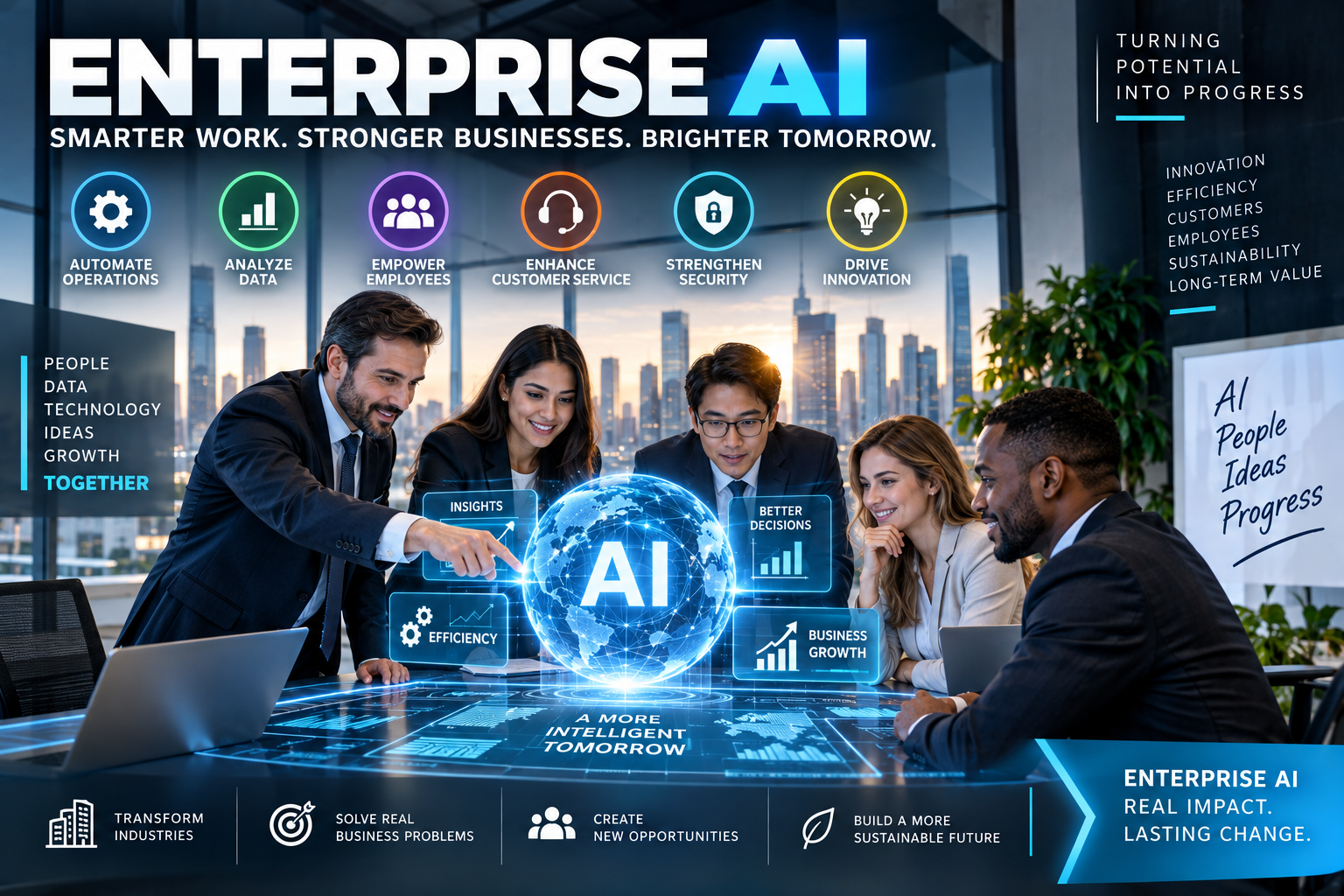
Companies are using AI to analyze data, automate tasks, improve customer service, generate content, support software development, detect fraud, forecast demand, and assist employees.
Generative AI has expanded these possibilities by allowing employees to interact with technology through natural language. Workers can use AI systems to summarize information, draft documents, analyze data, brainstorm ideas, and assist with research.
The long-term impact may extend beyond individual productivity tools.
Businesses are beginning to explore how AI can become integrated into entire workflows, allowing systems to coordinate information and automate complex processes.
However, enterprise AI also requires governance. Organizations need policies covering data privacy, security, accuracy, intellectual property, human oversight, and responsible use.
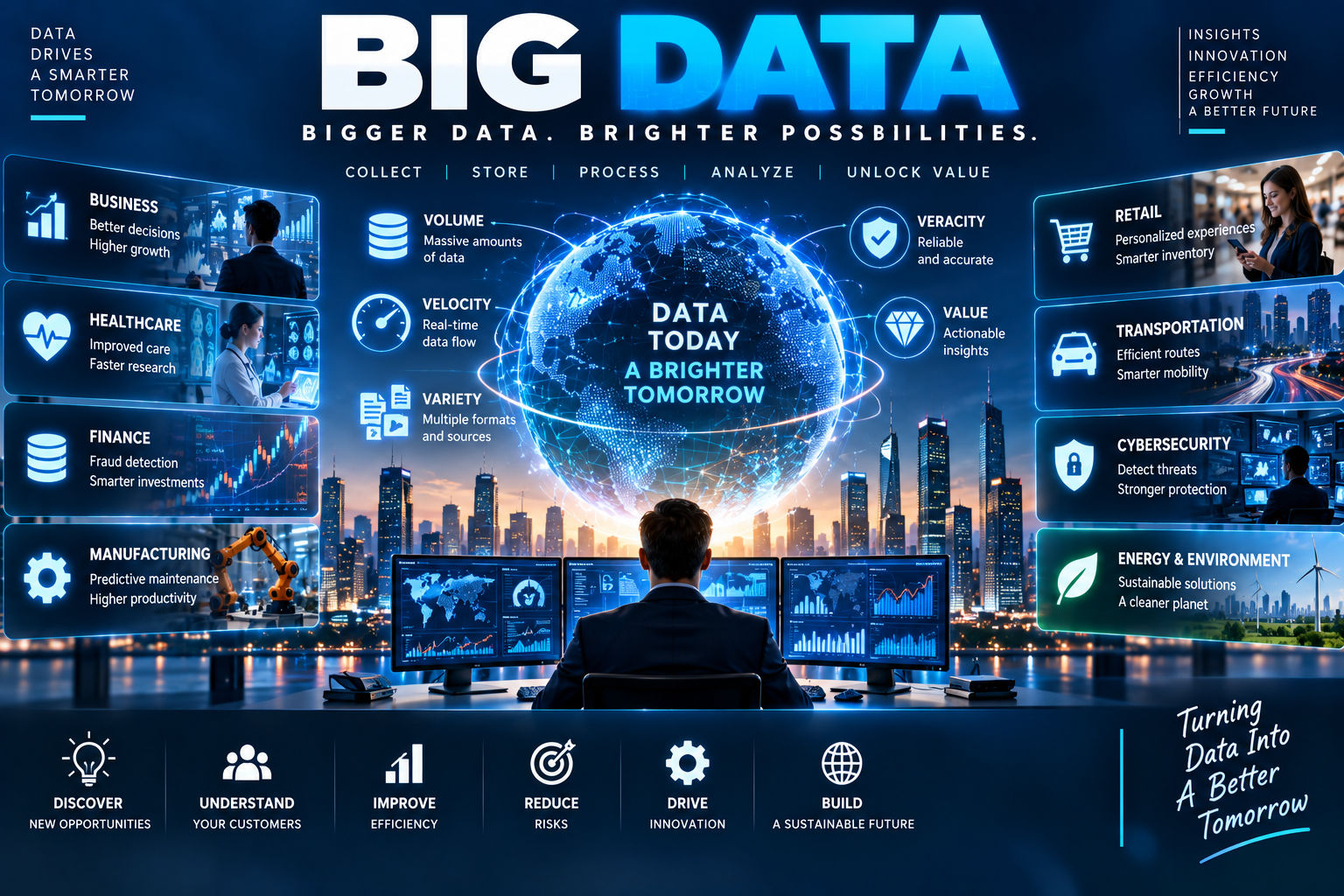
Enterprise Data and Analytics
Data is another critical component of enterprise technology.
Large organizations generate information through sales, customer interactions, financial transactions, websites, applications, connected devices, and internal operations.
Enterprise data platforms can bring information from different sources together, allowing businesses to develop a more complete view of their operations.
Analytics tools can then help leaders identify trends, measure performance, forecast demand, and make informed decisions.
However, data quality is essential.
If information is incomplete, outdated, inconsistent, or poorly structured, sophisticated analytics systems may produce unreliable results.
Companies therefore need strong data governance, clear ownership, appropriate access controls, and processes for maintaining data quality.
Enterprise Cybersecurity
As technology becomes more deeply integrated into business operations, cybersecurity becomes increasingly important.
Enterprise systems can contain highly sensitive information, including customer records, financial data, intellectual property, employee information, and strategic plans.
A successful cyberattack can disrupt operations and damage customer trust.
Modern enterprise security strategies increasingly involve identity protection, multi-factor authentication, encryption, network monitoring, endpoint security, vulnerability management, secure cloud configurations, and employee awareness.
Organizations also need to prepare for incidents rather than assuming that attacks can always be prevented.
Incident-response plans, secure backups, recovery procedures, and regular security exercises can help businesses respond more effectively when problems occur.
Enterprise Automation
Automation allows businesses to reduce the amount of manual work required for repetitive activities.
Finance departments can automate invoice processing and reporting. Human resources teams can automate administrative workflows. Customer service departments can use automated systems to handle routine requests.
Manufacturing companies can use robotics and connected systems to automate production processes.
The value of automation is not simply reducing labor requirements. It can also improve consistency, reduce errors, speed up processes, and allow employees to focus on higher-value activities.
Successful automation strategies typically begin by identifying inefficient processes and determining whether technology can improve them.
Enterprise Software
Enterprise software connects major business functions.
Customer relationship management systems help organizations manage interactions with customers and prospects. Enterprise resource planning systems can connect finance, procurement, inventory, operations, and other functions.
Human resource platforms can manage employee information, recruitment, payroll, benefits, and performance processes.
Collaboration platforms allow teams to communicate and work together across locations.
The challenge is ensuring that these systems can work together.
When applications operate in isolation, employees may need to enter the same information multiple times or rely on spreadsheets to transfer data between departments.
Integration can create a more connected technology environment.
The Problem of Legacy Technology
One of the biggest challenges facing established enterprises is legacy technology.
Many large organizations rely on systems that were developed years or even decades ago. These systems may still perform critical functions, but they can be difficult to maintain, integrate, or replace.
Replacing legacy infrastructure can be expensive and risky, particularly when the system supports essential business operations.
Organizations therefore need to balance modernization with stability.
Some businesses gradually replace older applications. Others use integration technologies to connect legacy systems with newer platforms.
The right approach depends on the organization's requirements, budget, risk tolerance, and long-term strategy.
The Role of Employees
Enterprise technology is only valuable when people can use it effectively.
Organizations introducing new systems need to consider employee training, usability, communication, and change management.
Employees may resist new technology if they do not understand why it is being introduced or believe it will make their jobs more difficult.
Leadership should therefore communicate the purpose of technology investments and involve employees in the transformation process.
Training should also be practical. Employees need to understand not only how a system works but how it can help them perform their jobs more effectively.
Technology and the Customer Experience
Enterprise technology increasingly influences how customers interact with businesses.
Customers may communicate through websites, mobile applications, social media, email, chat, and other digital channels.
Behind these experiences are enterprise systems that manage customer information, transactions, inventory, marketing, payments, and support.
When these systems are properly integrated, businesses can provide more consistent experiences.
For example, a customer contacting support should ideally not have to repeat information that the company already has.
AI and analytics can further improve personalization by helping businesses understand customer preferences and anticipate potential needs.
Enterprise Technology and Remote Work
The growth of distributed work has changed enterprise technology requirements.
Employees increasingly need secure access to company systems regardless of their physical location.
Cloud applications, virtual collaboration platforms, secure remote access, identity management, and endpoint security have therefore become important components of modern enterprise infrastructure.
Organizations must balance accessibility with security.
Employees need convenient access to the tools required for their jobs, while companies must ensure that sensitive information remains protected.
This has encouraged many organizations to rethink traditional network-based security models and adopt identity-centered approaches.
Building a Technology Strategy
A successful enterprise technology strategy begins with business objectives.
Organizations should ask what they want technology to accomplish.
The answer might be faster customer service, lower operating costs, improved productivity, better data analysis, stronger cybersecurity, new digital products, or expansion into new markets.
Technology leaders can then evaluate which investments are most likely to produce measurable value.
Prioritization is important because organizations have limited budgets and resources.
Instead of attempting to modernize everything simultaneously, businesses can focus on initiatives with the greatest strategic impact.
Clear performance indicators can also help leaders determine whether technology investments are producing the expected results.
Enterprise Technology and Sustainability
Technology can also support corporate sustainability goals.
Digital systems can help organizations monitor energy consumption, optimize transportation routes, reduce waste, and improve resource management.
Cloud computing and virtualization can potentially improve infrastructure efficiency when workloads are managed appropriately.
Connected sensors can provide real-time information about buildings, factories, vehicles, and equipment, allowing companies to identify opportunities to reduce resource consumption.
However, technology itself consumes energy and resources. Businesses therefore need to consider the environmental impact of their digital infrastructure as part of broader sustainability strategies.
The Future of Enterprise Technology
The future of enterprise technology will be shaped by increasingly intelligent, connected, and automated systems.
Artificial intelligence is likely to become more deeply embedded in business applications. Instead of using AI only as a separate tool, organizations may integrate intelligent capabilities directly into finance, sales, customer service, human resources, operations, and software development.
Cloud and edge computing will continue to evolve as businesses process increasing amounts of information.
Connected devices will generate more real-time operational data, while cybersecurity will become even more important as digital ecosystems become more complex.
Enterprise technology may also become increasingly composable, allowing companies to connect different applications and services rather than relying on one massive technology platform.
The Competitive Advantage of Technology
Technology can provide businesses with a significant competitive advantage, but simply spending more on technology does not guarantee success.
The real advantage comes from how effectively an organization uses technology.
A company with strong data but poor decision-making may gain little value from analytics. An organization with advanced AI but weak processes may struggle to generate meaningful results. A business with sophisticated digital systems but inadequate cybersecurity may create significant risk.
Technology creates value when it is aligned with strategy, people, processes, and customer needs.
Conclusion
Enterprise technology has evolved from a back-office support function into a fundamental part of modern business strategy.
Cloud computing, artificial intelligence, data analytics, cybersecurity, automation, enterprise software, and digital collaboration are changing how organizations operate and compete.
The challenge for business leaders is not simply deciding which technologies to adopt. It is determining how those technologies can solve real problems and create sustainable value.
Organizations that successfully combine technology with skilled employees, strong processes, reliable data, effective security, and clear strategic goals will be better positioned to adapt to future changes.
The future enterprise will not simply be a company that uses technology. It will be a company built around technology, data, people, and the ability to continuously adapt.
Frequently Asked Questions About Enterprise Technology
1. What is enterprise technology?
Enterprise technology refers to the hardware, software, cloud platforms, networks, data systems, and digital tools organizations use to operate and manage their businesses.
2. Why is enterprise technology important?
Enterprise technology helps businesses improve productivity, automate processes, manage data, strengthen security, improve customer experiences, and make faster and better-informed decisions.
3. What are examples of enterprise technology?
Examples include cloud computing, enterprise resource planning systems, customer relationship management platforms, artificial intelligence, cybersecurity tools, data analytics, automation, collaboration software, and enterprise networking.
4. How is AI used in enterprise technology?
AI can be used for customer service, data analysis, fraud detection, forecasting, content generation, software development, process automation, and employee productivity.
5. What is cloud computing in an enterprise?
Cloud computing allows businesses to access computing resources, storage, applications, databases, and other technology services through cloud infrastructure rather than relying entirely on on-premises systems.
6. What challenges do enterprises face with technology?
Common challenges include legacy systems, cybersecurity threats, high implementation costs, data quality problems, system integration, employee resistance, skills shortages, and managing multiple technology vendors.
7. Why is cybersecurity important for enterprise technology?
Enterprise systems often contain sensitive business and customer information. Strong cybersecurity helps protect these systems from unauthorized access, data theft, malware, ransomware, and operational disruption.
8. What is enterprise automation?
Enterprise automation uses software, AI, robotics, and digital workflows to perform repetitive business processes with less manual intervention.
9. How can enterprise technology improve customer experience?
Integrated enterprise systems can provide faster support, personalized services, seamless digital transactions, better communication, and more consistent customer interactions.
10. What is the future of enterprise technology?
The future will likely involve greater integration of AI, cloud computing, automation, real-time data, connected devices, cybersecurity, and intelligent business applications.
11. Is enterprise technology only for large companies?
No. Small and medium-sized businesses can also use cloud services, automation, analytics, cybersecurity, and business software to improve efficiency and compete in digital markets.
12. What makes an enterprise technology strategy successful?
A successful strategy connects technology investments to clear business objectives, while also considering employees, data, cybersecurity, costs, customer needs, and long-term scalability.