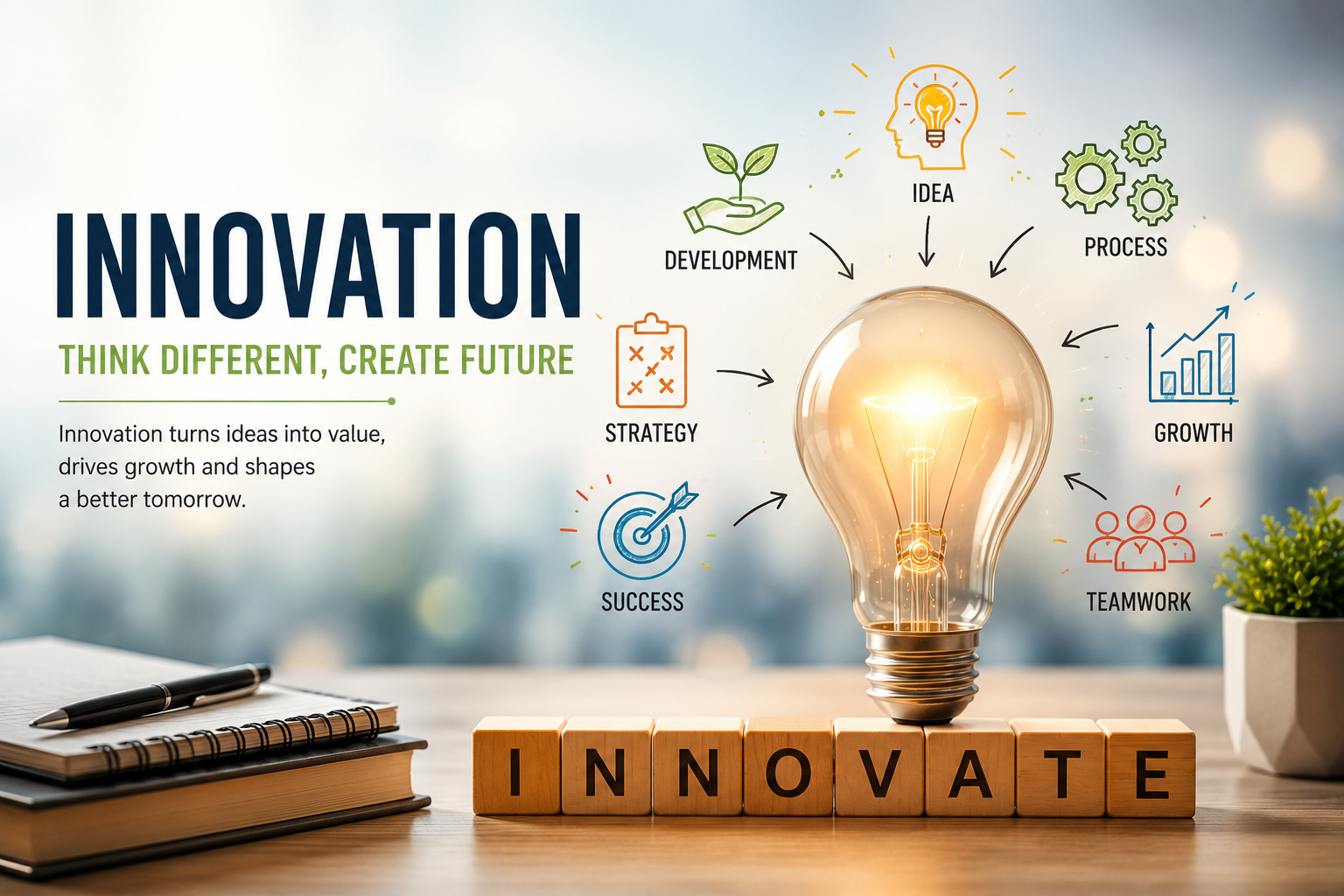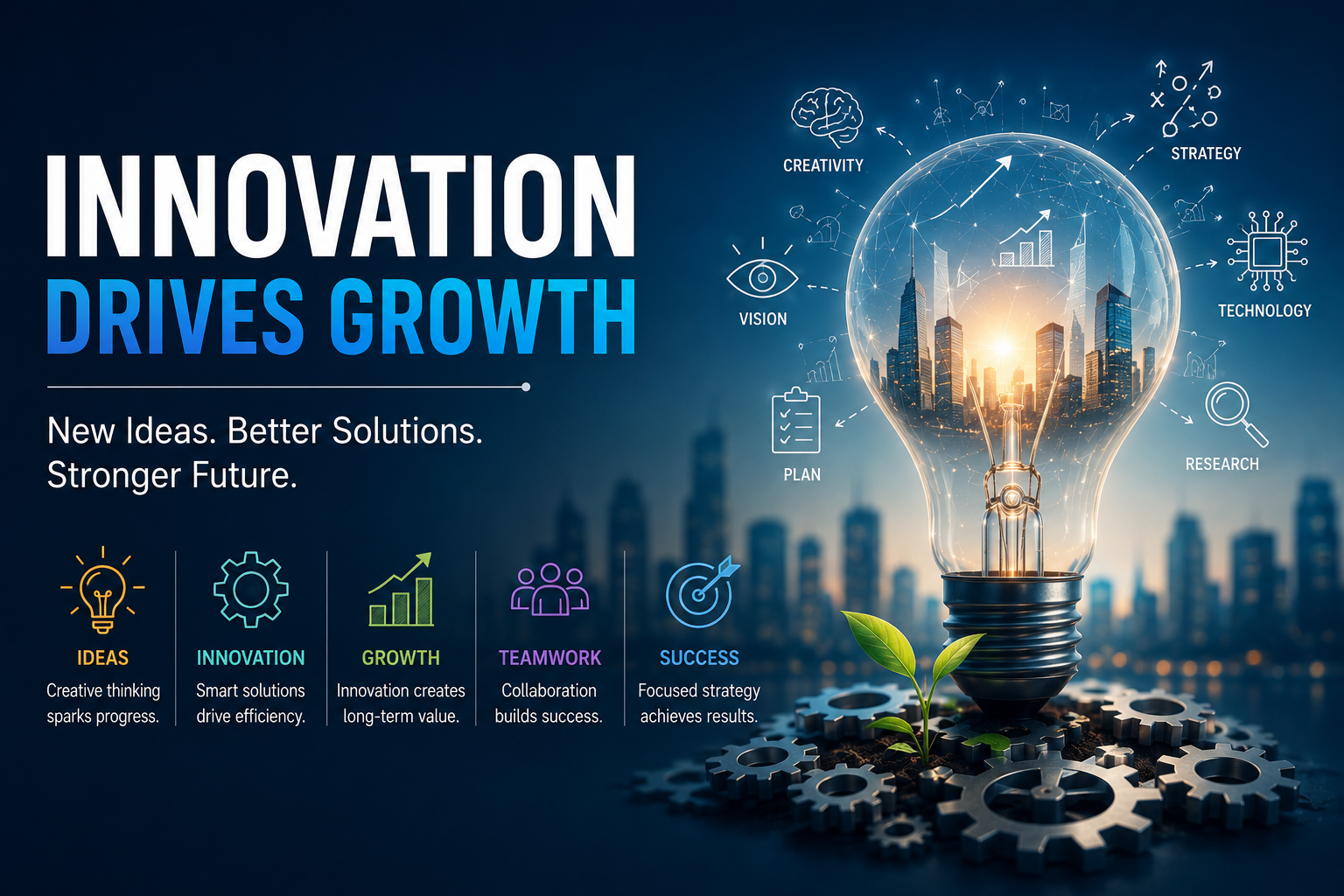

Innovation has become one of the most important drivers of business growth in the modern world. Companies across different industries are using new technologies, creative ideas, and improved strategies to serve customers more effectively and remain competitive. From small businesses to large global organizations, innovation is changing the way companies operate, communicate, market their products, and make decisions.
In the past, businesses could often depend on traditional methods for many years. Today, customer expectations, technology, and market conditions change rapidly. Businesses that fail to adapt can quickly lose their competitive position. Innovation allows organizations to respond to these changes while creating new opportunities for growth and long-term success.
What Is Business Innovation?
Business innovation refers to the process of introducing new or improved ideas, products, services, processes, or business models. Innovation does not always mean inventing something completely new. Sometimes, a small improvement in an existing process can create significant value for a company and its customers.
For example, a restaurant can introduce an online ordering system to make purchasing easier. A retailer can use digital payment solutions to improve the customer experience. A manufacturing company can adopt automation to increase efficiency. These improvements may appear simple, but they can have a meaningful impact on business performance.
Innovation can therefore take many forms. It can involve technology, customer service, marketing, operations, products, workplace practices, or management strategies.
The Role of Technology in Business Innovation
Technology is one of the strongest forces behind modern business innovation. Digital tools allow businesses to automate repetitive tasks, collect information, communicate with customers, and analyze business performance more efficiently.
Artificial intelligence, cloud computing, data analytics, automation, and digital platforms are helping organizations improve their operations. Businesses can use these technologies to understand customer behavior, identify market trends, reduce operational costs, and make faster decisions.
For example, data analytics can help a company understand which products are most popular among customers. Artificial intelligence can assist businesses with customer support and content creation. Cloud-based software allows employees to access important information from different locations.
The growing use of technology also means businesses need to continuously learn and adapt. Investing in technology alone is not enough. Companies must understand how these tools can solve real business problems and create value.
Innovation Improves Customer Experience
Customers are at the center of every successful business. Modern consumers expect convenience, speed, quality, and personalized experiences. Innovation can help companies meet these expectations.
Online shopping, mobile applications, digital payments, personalized recommendations, and automated customer support have changed the way people interact with businesses. Customers can now compare products, read reviews, place orders, and communicate with companies within minutes.
Businesses that listen to customer feedback can identify areas where improvements are needed. They can then develop innovative solutions that make the customer journey easier.
For example, an online store might introduce a faster checkout process after discovering that customers are leaving their shopping carts because the purchasing process is complicated. This type of innovation focuses directly on solving a customer problem.
Innovation and Competitive Advantage
Competition exists in almost every industry. Businesses need to find ways to differentiate themselves from competitors, and innovation can provide an important advantage.
A company that develops a unique product or provides a better service can attract customers who are looking for something different. Even when competitors offer similar products, an innovative customer experience can help a business stand out.
Competitive advantage does not necessarily come from expensive technology. Creativity, better service, efficient processes, and strong branding can also contribute to differentiation.
Small businesses can therefore benefit from innovation just as much as large corporations. A small company may not have the same financial resources as a multinational organization, but it can often respond to customer needs quickly and experiment with new ideas.
Innovation Supports Business Efficiency
Another major benefit of innovation is improved efficiency. Businesses constantly look for ways to reduce unnecessary costs, save time, and improve productivity.
Automation can handle repetitive activities, allowing employees to focus on more valuable responsibilities. Digital record-keeping can reduce paperwork, while project management software can help teams organize their work.
Improving efficiency can also reduce errors. When businesses use well-designed digital systems, information can be processed more consistently than through manual methods.
However, businesses should not adopt technology simply because it is popular. Every innovation should have a clear purpose. Companies should consider whether a new system will genuinely improve productivity, customer satisfaction, or profitability.
The Importance of Leadership in Innovation
Successful innovation requires strong leadership. Business leaders play an important role in creating an environment where employees feel comfortable sharing ideas and experimenting with new approaches.
Employees often understand operational problems better than anyone because they work with business processes every day. Leaders who listen to employees can discover valuable ideas for improving products, services, and internal operations.
A culture of innovation also requires businesses to accept that not every idea will succeed. Experimentation naturally involves some risk. Companies should learn from unsuccessful attempts rather than treating every failure as a reason to stop innovating.
Effective leaders encourage responsible experimentation while keeping business objectives in focus.
Innovation and Digital Marketing
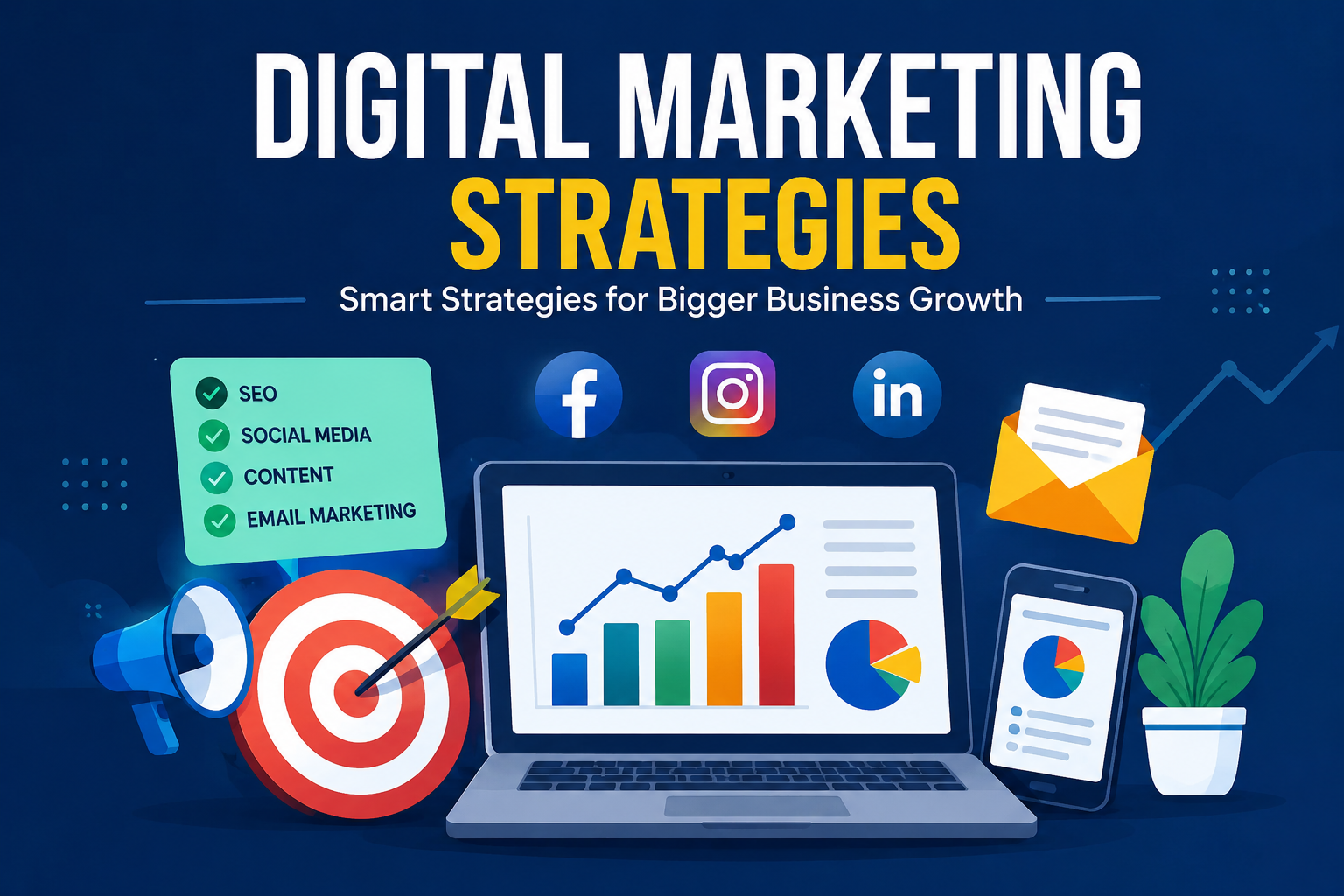
Marketing has changed significantly because of digital innovation. Businesses now have access to social media, search engines, email marketing, online advertising, video platforms, and other digital channels.
These tools allow companies to reach specific audiences and measure the performance of marketing campaigns. Instead of relying entirely on traditional advertising, businesses can use data to understand which content attracts attention and which campaigns generate results.
Content marketing is another important part of modern digital strategy. Businesses can publish useful articles, guides, videos, and educational resources to build trust with their audiences.
A strong digital presence can help even small businesses compete for attention in crowded markets.
Challenges of Business Innovation
Although innovation provides many opportunities, it also comes with challenges. One common challenge is resistance to change. Employees may be comfortable with existing processes and may initially hesitate to adopt new systems.
Cost can also be a concern. New technology, employee training, research, and development can require investment. Businesses therefore need to evaluate the potential benefits before committing significant resources.
Cybersecurity and data privacy are additional considerations. As companies become more digital, protecting customer and business information becomes increasingly important.
Another challenge is choosing the right innovation. Not every new technology is suitable for every organization. Businesses should focus on solutions that align with their goals, customers, and available resources.
How Small Businesses Can Innovate
Innovation is not limited to large corporations. Small businesses can adopt practical approaches that require relatively modest resources.
They can improve their websites, introduce online ordering, offer digital payment methods, use social media marketing, improve customer service, or create new product variations.
Small businesses can also gather feedback directly from customers. Asking customers what they like, what they dislike, and what they would like to see improved can provide valuable information.
Another effective approach is to observe competitors without simply copying them. Businesses can identify gaps in the market and develop their own solutions.
The key is to start with a real problem and find a practical solution.
The Future of Business Innovation
The future of business will likely involve even greater integration of technology, data, and human creativity. Artificial intelligence and automation are expected to continue influencing how organizations work, while digital platforms will provide businesses with new ways to reach customers.
At the same time, human skills such as creativity, communication, leadership, critical thinking, and problem-solving will remain important. Technology can provide powerful tools, but businesses still need people who can make thoughtful decisions and understand customer needs.
Organizations that combine technological capabilities with human creativity will be better positioned to adapt to changing markets.
Conclusion
Innovation is no longer simply an option for businesses that want to grow. It has become an important part of remaining relevant in a rapidly changing marketplace. From technology and customer service to marketing and workplace processes, innovation can improve almost every area of an organization.
Successful businesses do not necessarily innovate by making huge changes all at once. Instead, they continuously identify problems, listen to customers, improve their processes, and explore better ways of working.
The most important lesson is that innovation should have a clear purpose. Businesses should not adopt new ideas simply because they are fashionable. They should focus on innovations that create genuine value for customers, employees, and the organization.
As technology continues to evolve, companies that remain adaptable, creative, and willing to learn will have stronger opportunities to achieve sustainable growth. Innovation can therefore become not just a strategy for short-term success, but a foundation for long-term business devolpment