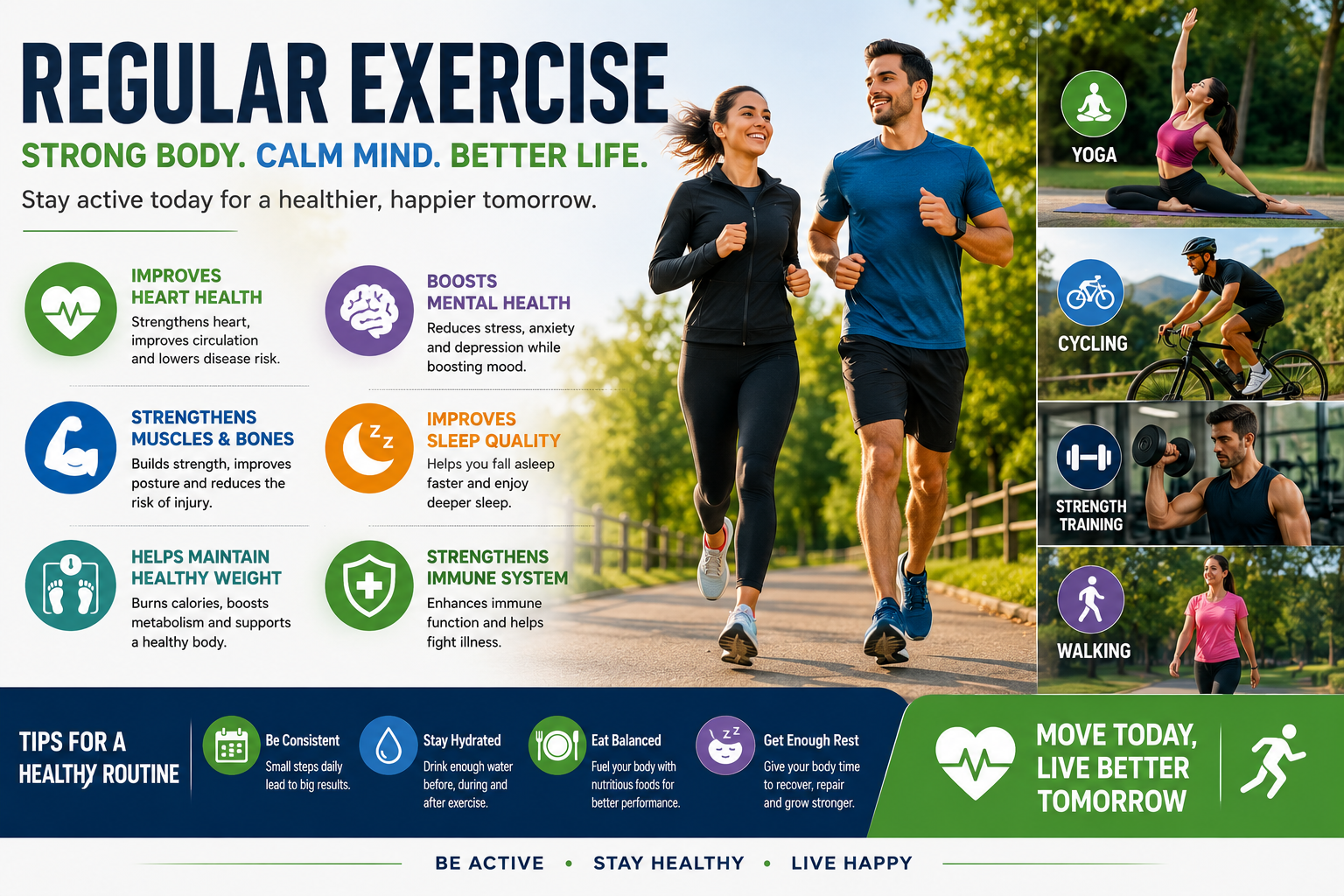
Regular exercise is one of the most effective ways to improve overall health and well-being. Whether it's a brisk walk, strength training, cycling, or yoga, staying physically active supports nearly every system in the body. In today's fast-paced world, where many people spend long hours sitting at desks or using digital devices, regular movement has become more important than ever.
In 2026, health experts continue to recommend exercise not only for weight management but also for disease prevention, improved mental health, better sleep, and increased energy levels. The good news is that you don't need to spend hours in the gym to experience these benefits. Even moderate physical activity performed consistently can make a significant difference.
This article explores the many benefits of regular exercise, the best types of workouts, and practical tips to help you build a sustainable fitness routine.
Why Exercise Matters
Exercise keeps your body functioning efficiently by strengthening muscles, improving circulation, supporting heart health, and maintaining healthy body weight. It also improves brain function and emotional well-being.
People who exercise regularly are generally less likely to develop chronic conditions such as heart disease, obesity, type 2 diabetes, and high blood pressure.
More importantly, regular physical activity helps people maintain independence and mobility as they age.
Improves Heart Health
The heart is a muscle, and like every other muscle, it becomes stronger with regular exercise.
Activities such as walking, jogging, swimming, and cycling improve cardiovascular fitness by increasing circulation and helping the heart pump blood more efficiently.
Regular exercise can also:
Lower blood pressure
Improve cholesterol levels
Reduce the risk of heart disease
Improve blood circulation
Maintaining a healthy heart contributes to a longer and more active life.
Helps Maintain a Healthy Weight
Exercise burns calories and supports a healthy metabolism, making it easier to maintain or achieve a healthy weight.
Combining physical activity with a balanced diet offers the best long-term results.
Strength training is particularly beneficial because it builds lean muscle, which increases calorie burning even while resting.
Strengthens Muscles and Bones
As people age, muscle mass and bone density naturally decline.
Regular resistance training helps:
Build muscle strength
Improve posture
Increase flexibility
Strengthen bones
Reduce the risk of osteoporosis
Strong muscles also support healthy joints and improve balance.
Supports Mental Health
Exercise benefits not only the body but also the mind.
Physical activity stimulates the release of endorphins, often called "feel-good hormones."
Regular exercise may help reduce:
Stress
Anxiety
Depression
Mental fatigue
Many people report feeling happier, calmer, and more confident after exercising consistently.
Improves Sleep Quality
People who exercise regularly often enjoy better sleep.
Exercise helps regulate the body's internal clock and promotes deeper, more restful sleep.
Good sleep supports:
Brain function
Memory
Immune health
Hormone balance
Avoid intense exercise immediately before bedtime if it affects your ability to fall asleep.
Boosts Energy Levels
Although exercise requires energy, it also improves energy production by strengthening the heart, lungs, and muscles.
People who maintain active lifestyles often experience:
Less fatigue
Better stamina
Improved productivity
Increased concentration
Regular movement helps the body use oxygen more efficiently throughout the day.
Supports Immune Function
Moderate physical activity contributes to a healthy immune system.
Exercise improves blood circulation, allowing immune cells to move more effectively throughout the body.
Combined with good nutrition and adequate sleep, regular activity helps support overall immune health.
Types of Exercise
A balanced fitness routine should include different forms of physical activity.
Cardiovascular Exercise
Examples include:
Walking
Running
Cycling
Swimming
Dancing
These activities improve heart and lung function.
Strength Training
Examples include:
Weightlifting
Resistance bands
Bodyweight exercises
Push-ups
Squats
Strength training builds muscle and supports bone health.
Flexibility Exercises
Stretching and yoga improve flexibility, posture, and mobility while reducing injury risk.
Balance Exercises
Balance training is especially important for older adults and may include yoga, tai chi, or simple standing exercises.
Building a Sustainable Exercise Routine
Many people quit exercising because they start with unrealistic goals.
Instead:
Begin slowly.
Choose activities you enjoy.
Set achievable goals.
Exercise consistently.
Track your progress.
Stay hydrated.
Allow time for recovery.
Consistency is more important than perfection.
Common Mistakes to Avoid
Avoid these common fitness mistakes:
Skipping warm-ups
Ignoring rest days
Poor exercise technique
Inconsistent workouts
Unrealistic expectations
Neglecting proper nutrition
Overtraining
A balanced approach helps prevent injuries and encourages long-term success.
Technology and Fitness
Technology has transformed personal fitness.
Many people now use:
Smartwatches
Fitness trackers
Workout apps
Online fitness classes
AI-powered training programs
These tools help monitor activity, heart rate, sleep, and overall progress while providing motivation.
Benefits of Regular Exercise
Exercise offers numerous health benefits, including:
Better heart health
Stronger muscles
Healthy weight management
Improved mental health
Better sleep
Increased energy
Enhanced flexibility
Stronger immune system
Reduced disease risk
Improved quality of life
The Future of Fitness
In 2026, personalized fitness is becoming increasingly popular.
Artificial intelligence, wearable technology, and virtual coaching help individuals create customized exercise plans based on their health goals, fitness levels, and daily routines.
Despite technological advances, the basic principle remains unchanged: moving your body regularly is one of the best investments you can make in your health.
Conclusion
Regular exercise is essential for maintaining both physical and mental well-being. From improving heart health and strengthening muscles to reducing stress and enhancing sleep, the benefits of staying active extend to nearly every aspect of life.
You don't need expensive equipment or long workouts to make progress. Simple daily activities like walking, stretching, cycling, or strength training can produce lasting health benefits when practiced consistently.
By making exercise a regular part of your lifestyle, you can build a healthier, stronger, and more energetic future.
FAQs
How much exercise should adults get each week?
Most health experts recommend at least 150 minutes of moderate-intensity exercise or 75 minutes of vigorous exercise per week, along with strength training twice weekly.
What is the best exercise for beginners?
Walking is one of the safest and most effective exercises for beginners. It improves cardiovascular health and requires no special equipment.
Can exercise improve mental health?
Yes. Regular physical activity helps reduce stress, anxiety, and depression while improving mood, confidence, and overall emotional well-being.
Is strength training necessary?
Strength training helps maintain muscle mass, improve bone health, boost metabolism, and reduce the risk of injury.
Can I stay healthy without going to the gym?
Absolutely. Walking, jogging, cycling, home workouts, yoga, and bodyweight exercises can all provide excellent health benefits without requiring a gym membership.