The fashion retail industry has changed significantly as consumers increasingly combine online shopping with traditional in-store experiences. Retailers must offer more than products to remain competitive. They need strong brands, convenient shopping experiences, quality merchandise, and customer-focused services.
One company that has built a long-standing reputation in this industry is Nordstrom.
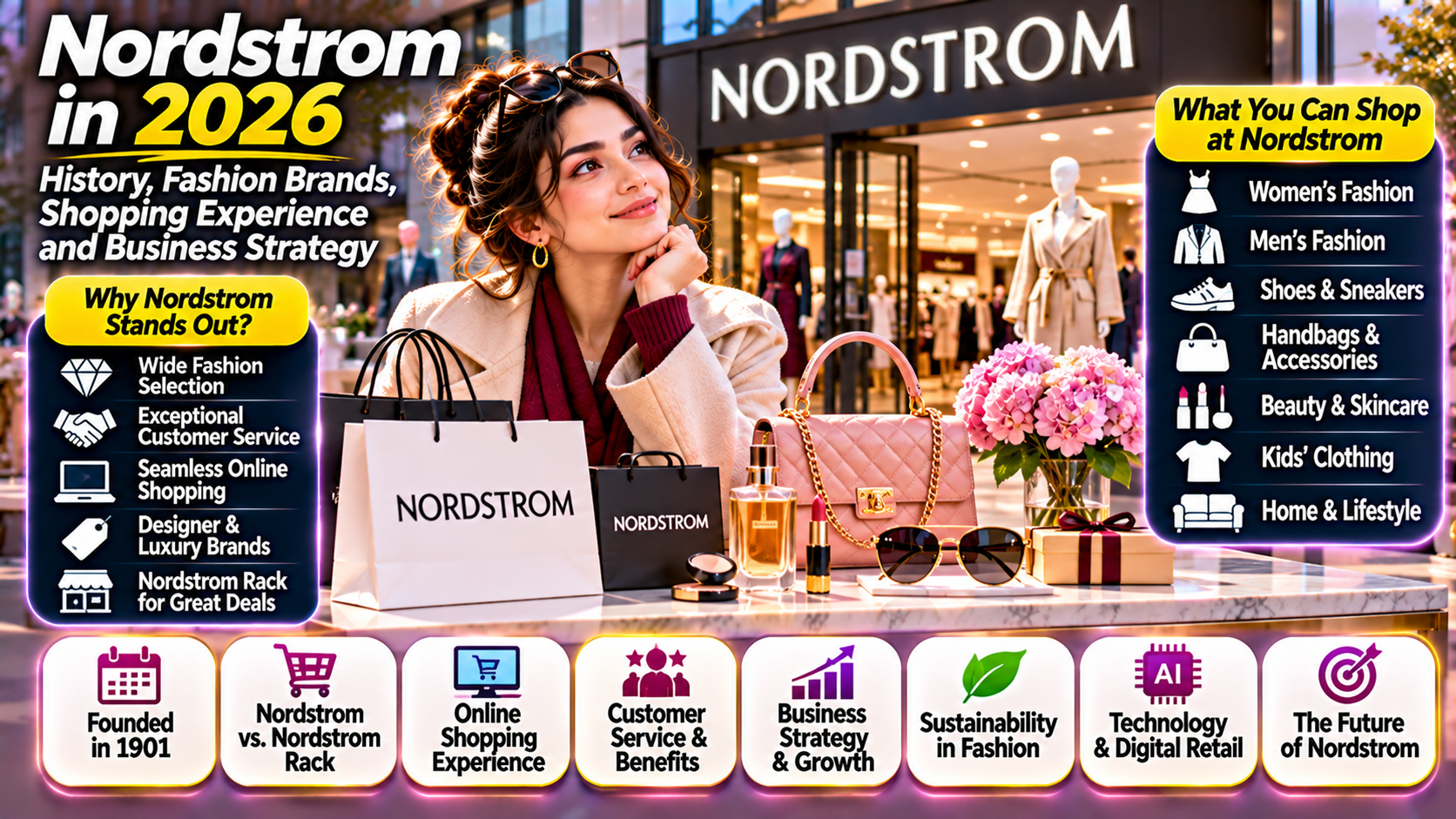
Founded in Seattle in 1901, Nordstrom developed from a small shoe store into a major American fashion retailer offering clothing, footwear, beauty products, accessories, and designer merchandise. The company is widely associated with premium shopping experiences, product selection, and customer service.
Today, Nordstrom operates through its full-line retail business, Nordstrom Rack, and digital shopping platforms. Its business model combines physical stores with online services to reach customers through different shopping channels.
In 2026, Nordstrom continues to operate under private ownership following its acquisition by members of the Nordstrom family and Mexican retailer El Puerto de Liverpool in May 2025.
This guide explores Nordstrom's history, products, shopping experience, retail strategy, customer service, business model, and position in the modern fashion industry.
What Is Nordstrom?
<Entity value="Nordstrom" category="company" disambig="American fashion and department store retailer"/> is an American fashion retailer headquartered in Seattle, Washington.
The company sells a wide selection of fashion and lifestyle products, including:
Women's clothing
Men's clothing
Children's apparel
Shoes and sneakers
Handbags and accessories
Beauty and skincare products
Designer fashion
Jewelry and watches
Home and lifestyle products
Nordstrom serves customers through its retail stores, websites, mobile applications, and related shopping services.
Its retail business includes two major shopping formats:
Nordstrom: The full-line department store offering a broad selection of fashion, beauty, footwear, accessories, and designer merchandise.
Nordstrom Rack: An off-price retail format offering discounted merchandise and value-oriented shopping options.
The company's approach combines product selection, convenience, and customer service to create a connected retail experience.
The History of Nordstrom: From a Shoe Store to a Major Fashion Retailer
Nordstrom's history began with a small footwear business in Seattle.
1901: The First Store Opens
John W. Nordstrom and shoemaker Carl F. Wallin opened their first store, Wallin & Nordstrom, in Seattle in 1901.
The business initially focused on footwear and gradually developed a reputation for product selection and customer service.
1929: The Nordstrom Family Takes Control
Carl Wallin sold his share of the business to the Nordstrom family in 1929.
John Nordstrom's sons subsequently took over the business and continued its expansion.
1963: Expansion Beyond Shoes
Nordstrom expanded into apparel after acquiring Best Apparel.
This development helped the company move beyond footwear and establish a broader fashion retail offering.
1971: The Company Goes Public
The business was renamed Nordstrom Inc. in 1971 and became publicly traded.
This period marked an important stage in its development as a larger retail organization.
1973: Nordstrom Rack Begins
Nordstrom opened its first Nordstrom Rack in the basement of its downtown Seattle store.
The concept initially operated as a clearance center for merchandise from its full-line stores before developing into a major off-price retail format.
1998: Online Shopping Expands
Nordstrom.com launched in 1998, marking an important step toward digital retail.
The company later expanded its online shopping services and integrated digital platforms with its physical retail operations.
2025: Nordstrom Returns to Private Ownership
In May 2025, members of the Nordstrom family and El Puerto de Liverpool completed the acquisition of Nordstrom for $24.25 per share.
Following the transaction, the company returned to private ownership and its common stock was delisted from the New York Stock Exchange.
The transaction marked a significant new chapter in the company's history. <Cite refs={["turn136899search2","turn136899search0"]}/>
What Products Does Nordstrom Sell?
Nordstrom offers products across several fashion and lifestyle categories.
1. Women's Fashion
The women's fashion category includes clothing for everyday wear, professional environments, special occasions, and formal events.
Common product categories include:
Dresses
Tops and blouses
Jeans and trousers
Jackets and coats
Skirts
Activewear
Sweaters
Designer clothing
Customers can explore different styles, price points, and brands.
2. Men's Fashion
Nordstrom's men's department offers clothing and accessories for different lifestyles and occasions.
Popular categories include:
Formal suits
Dress shirts
Casual shirts
Jeans
Jackets
Sneakers
Dress shoes
Accessories
The selection supports customers looking for professional clothing, casual outfits, and contemporary fashion.
3. Shoes and Footwear
Footwear has been an important part of Nordstrom's history since its founding.
The company offers different footwear categories, including:
Sneakers
Boots
Formal shoes
Sandals
Flats
Heels
Athletic footwear
Casual shoes
4. Beauty and Skincare
Nordstrom also offers beauty products from various cosmetics, fragrance, and skincare brands.
Customers can explore makeup, facial skincare, haircare, fragrances, and beauty accessories.
5. Handbags and Accessories
Accessories help customers complete their outfits and express their personal style.
Nordstrom's selection includes handbags, wallets, belts, sunglasses, jewelry, watches, scarves, and other fashion accessories.
6. Children's Clothing
The retailer also offers clothing, footwear, and accessories for children and babies.
These products cover everyday outfits, special occasions, and seasonal clothing needs.
Nordstrom vs. Nordstrom Rack: What Is the Difference?
Nordstrom and Nordstrom Rack are related retail formats, but they serve somewhat different shopping preferences.
Feature | Nordstrom | Nordstrom Rack |
|---|---|---|
Retail Format | Full-line department store | Off-price retailer |
Main Focus | Broad fashion and designer selection | Value-oriented merchandise |
Shopping Experience | Premium department store environment | Discount-focused shopping |
Product Categories | Clothing, beauty, shoes, accessories | Clothing, shoes, accessories, and more |
Pricing Approach | Regular retail pricing and promotions | Generally lower-priced merchandise |
Target Shopper | Customers seeking broad selection and service | Customers looking for discounted fashion |
Nordstrom Rack provides an alternative for customers who prioritize value, while Nordstrom's full-line stores offer a broader department-store shopping experience.
Product availability, pricing, and promotional offers vary by location and time.
What Makes Nordstrom Different from Other Fashion Retailers?
The fashion retail market includes department stores, luxury boutiques, online marketplaces, and specialist retailers.
Nordstrom has developed several characteristics that help distinguish its retail approach.
1. Customer-Focused Service
Nordstrom has historically emphasized customer service as an important part of its business identity.
The company's history and public-facing brand information describe service, product selection, quality, and value as central principles. <Cite refs={["turn136899search0","turn136899search1"]}/>
2. Wide Product Selection
Customers can explore products across different fashion categories rather than visiting several specialized retailers.
3. Designer and Contemporary Brands
Nordstrom offers merchandise across a range of price points and styles, including designer and contemporary fashion.
4. Physical and Digital Shopping
Customers can interact with the brand through stores, websites, and mobile applications.
5. Nordstrom Rack
The off-price retail format gives the company another way to serve shoppers looking for value-oriented merchandise.
6. Fashion and Lifestyle Experience
Beyond clothing, Nordstrom incorporates beauty, footwear, accessories, and selected lifestyle services into its retail experience.
How Nordstrom's Online Shopping Experience Works
Digital retail has become an important part of the modern fashion industry.
Nordstrom provides online shopping through its official website and mobile applications.
The general online shopping process includes the following steps.
Step 1: Visit the Official Website
Customers can visit the official website:
Step 2: Explore Product Categories
Browse categories such as women's fashion, men's clothing, shoes, beauty, accessories, and designer products.
Step 3: Use Search and Filters
Customers can narrow product results using available filters such as:
Brand
Size
Color
Price
Category
Style
Customer ratings
Available filters depend on the product category.
Step 4: Review Product Details
Before purchasing, examine product descriptions, sizing information, materials, photographs, and customer reviews where available.
Step 5: Add Products to Your Shopping Bag
Select the appropriate size and other available product options before adding the item to your shopping bag.
Step 6: Review Delivery and Payment Options
Check the available shipping methods, delivery estimates, payment options, and applicable taxes or fees.
Step 7: Complete Your Order
Review your information before confirming the purchase.
International shoppers should verify whether delivery is available to their country and review any applicable customs duties, import taxes, and return restrictions.
Nordstrom's Customer Service Strategy
Customer service is an important element of Nordstrom's retail identity.
The company aims to create convenient and helpful shopping experiences across its physical and digital channels.
Several aspects contribute to this approach.
Product Assistance
Customers may receive assistance with finding products, selecting sizes, and exploring suitable options.
Digital Support
Online customers can access available customer support resources through Nordstrom's digital channels.
Personal Shopping Services
Selected services and store experiences may provide personalized shopping assistance.
Alterations and Tailoring
Nordstrom has a long-standing connection with tailoring and clothing alterations. Availability and terms depend on the location and service.
Returns and Exchanges
Customers should review the current return policy before purchasing, particularly for sale items, beauty products, and orders placed through different channels.
Nordstrom's Business Model: How the Retailer Creates Value
Nordstrom operates within the competitive fashion and department-store retail industry.
Its business model combines merchandise sales, physical retail locations, digital shopping, and different retail formats.
1. Merchandise Sales
The company generates business through the sale of clothing, shoes, beauty products, accessories, and other merchandise.
2. Full-Line Retail Stores
Physical department stores allow customers to explore products, receive assistance, and interact directly with merchandise.
3. Off-Price Retail
Nordstrom Rack serves value-conscious shoppers through a separate retail format.
4. E-Commerce
Digital platforms allow customers to browse and purchase products online.
5. Private and In-House Brands
Nordstrom also develops products through its own Nordstrom Made brands, adding another element to its merchandise strategy. <Cite refs={["turn136899search1"]}/>
6. Connected Retail Operations
Combining stores and digital services helps the company serve customers through different shopping preferences and channels.
How Nordstrom Competes in the Fashion Retail Industry
The fashion retail industry is highly competitive.
Nordstrom competes with department stores, luxury retailers, online fashion platforms, specialty brands, and discount retailers.
Its competitive approach involves several important areas.
Product Differentiation
Offering merchandise from different fashion categories and brands helps attract a broad range of shoppers.
Customer Experience
Customer assistance and convenient shopping services can help differentiate the company from competitors that focus primarily on price.
Digital Innovation
Online platforms and connected retail services help Nordstrom compete in an increasingly digital marketplace.
Value-Oriented Shopping
Nordstrom Rack provides an alternative for shoppers looking for discounted merchandise.
Brand Relationships
Working with established fashion and beauty brands helps Nordstrom maintain product variety and appeal to different customer groups.
Challenges Facing Nordstrom and the Fashion Retail Industry
Even established retailers face challenges as customer expectations and market conditions change.
1. Competition from E-Commerce
Online marketplaces and digital-first fashion brands provide customers with more shopping choices.
Retailers must continuously improve digital convenience and product discovery.
2. Changing Consumer Preferences
Consumers may shift between luxury purchases, affordable fashion, resale products, and value-oriented shopping.
Retailers must respond to these changing preferences.
3. Inventory Management
Fashion retailers must manage seasonal demand, changing trends, product availability, and unsold inventory.
Poor inventory decisions can affect profitability and customer satisfaction.
4. Operating Costs
Retail businesses face costs related to stores, employees, logistics, technology, marketing, and merchandise.
Managing these expenses is important for sustainable operations.
5. Supply Chain Challenges
Global sourcing and manufacturing can expose fashion retailers to transportation delays, supplier disruptions, material costs, and other operational risks.
6. Sustainability Expectations
Consumers and stakeholders increasingly expect retailers to provide clearer information about sourcing, materials, labor practices, and environmental impact.
Nordstrom's Role in the Future of Fashion Retail
The future of department-store retail will depend on how effectively companies combine physical shopping experiences with digital convenience.
Several developments may influence Nordstrom and the wider fashion industry.
1. AI-Powered Product Recommendations
AI systems can help retailers suggest products based on customer preferences, shopping activity, and relevant product information.
2. Personalized Shopping
Digital tools and customer service may support more personalized shopping experiences.
3. Connected Retail
Customers increasingly expect a consistent experience when moving between online platforms, mobile applications, and physical stores.
4. Improved Inventory Technology
Data analytics and forecasting tools can help retailers understand demand and manage stock more effectively.
5. Sustainable Retail Practices
Retailers may face increasing pressure to improve product transparency, reduce waste, and strengthen responsible sourcing practices.
6. Digital Fashion Discovery
Social media, creator partnerships, online reviews, and visual search tools may continue influencing how consumers discover fashion products.
Is Nordstrom Worth Exploring as a Fashion Retailer?
Whether Nordstrom is suitable for a particular shopper depends on personal preferences, product requirements, location, and budget.
It may be worth exploring if you are interested in:
A wide selection of fashion products.
Designer and contemporary clothing.
Beauty and skincare products.
Shoes and accessories.
Full-line department-store shopping.
Discounted merchandise through Nordstrom Rack.
Online and in-store shopping options.
Before purchasing, compare product prices, read customer reviews, check sizing details, and review delivery and return conditions.
International customers should also confirm shipping availability and the total landed cost before placing an order.
Frequently Asked Questions (FAQs)
1. What is Nordstrom famous for?
Nordstrom is known for its fashion department stores, clothing, footwear, beauty products, designer merchandise, and customer service.
2. When was Nordstrom founded?
Nordstrom was founded in 1901 in Seattle, Washington, by John W. Nordstrom and Carl F. Wallin as a shoe store. <Cite refs={["turn136899search0","turn136899search1"]}/>
3. What is the difference between Nordstrom and Nordstrom Rack?
Nordstrom is a full-line department store, while Nordstrom Rack is an off-price retail format focused on value-oriented merchandise.
4. Is Nordstrom a luxury brand?
Nordstrom is a department-store retailer rather than a single luxury fashion label. It carries products from luxury, designer, contemporary, and more accessible brands.
5. Can customers shop at Nordstrom online?
Yes. Customers can browse and purchase products through Nordstrom's official website and digital shopping platforms.
6. Who owns Nordstrom in 2026?
Nordstrom is privately owned by members of the Nordstrom family and El Puerto de Liverpool following the completion of their acquisition on May 20, 2025. <Cite refs={["turn136899search2","turn136899search1"]}/>
7. Does Nordstrom sell designer clothing?
Yes. Nordstrom offers designer and contemporary fashion across clothing, footwear, handbags, accessories, and other categories. Selection varies.
8. What is Nordstrom Rack?
Nordstrom Rack is Nordstrom's off-price retail business, which began in 1973 as a clearance center in Seattle.
9. Does Nordstrom offer international shipping?
Shipping availability depends on the destination and current service arrangements. International shoppers should check the official website for eligible countries, delivery costs, duties, and restrictions.
10. Why is Nordstrom important in the fashion retail industry?
Nordstrom is an established department-store retailer with a long history in footwear and fashion. Its combination of full-line stores, off-price retail, digital shopping, and customer service makes it a notable example of an evolving retail business.
Conclusion
Nordstrom has developed from a small Seattle shoe store into an established fashion retailer with a broad merchandise selection and multiple shopping channels.
Its history demonstrates how a traditional retail business can expand into apparel, designer fashion, beauty, footwear, and digital commerce while maintaining a focus on customer experience.
In 2026, Nordstrom operates in a retail environment shaped by online shopping, changing consumer preferences, technology, and competition. Its return to private ownership in 2025 also marks an important stage in its corporate history.
For shoppers, Nordstrom offers a range of fashion and lifestyle products through its full-line stores and Nordstrom Rack. For business professionals, it provides an interesting example of retail expansion, brand positioning, customer service, and omnichannel strategy.
The company's future will depend on how effectively it adapts to new shopping habits while maintaining the qualities that have shaped its reputation.