
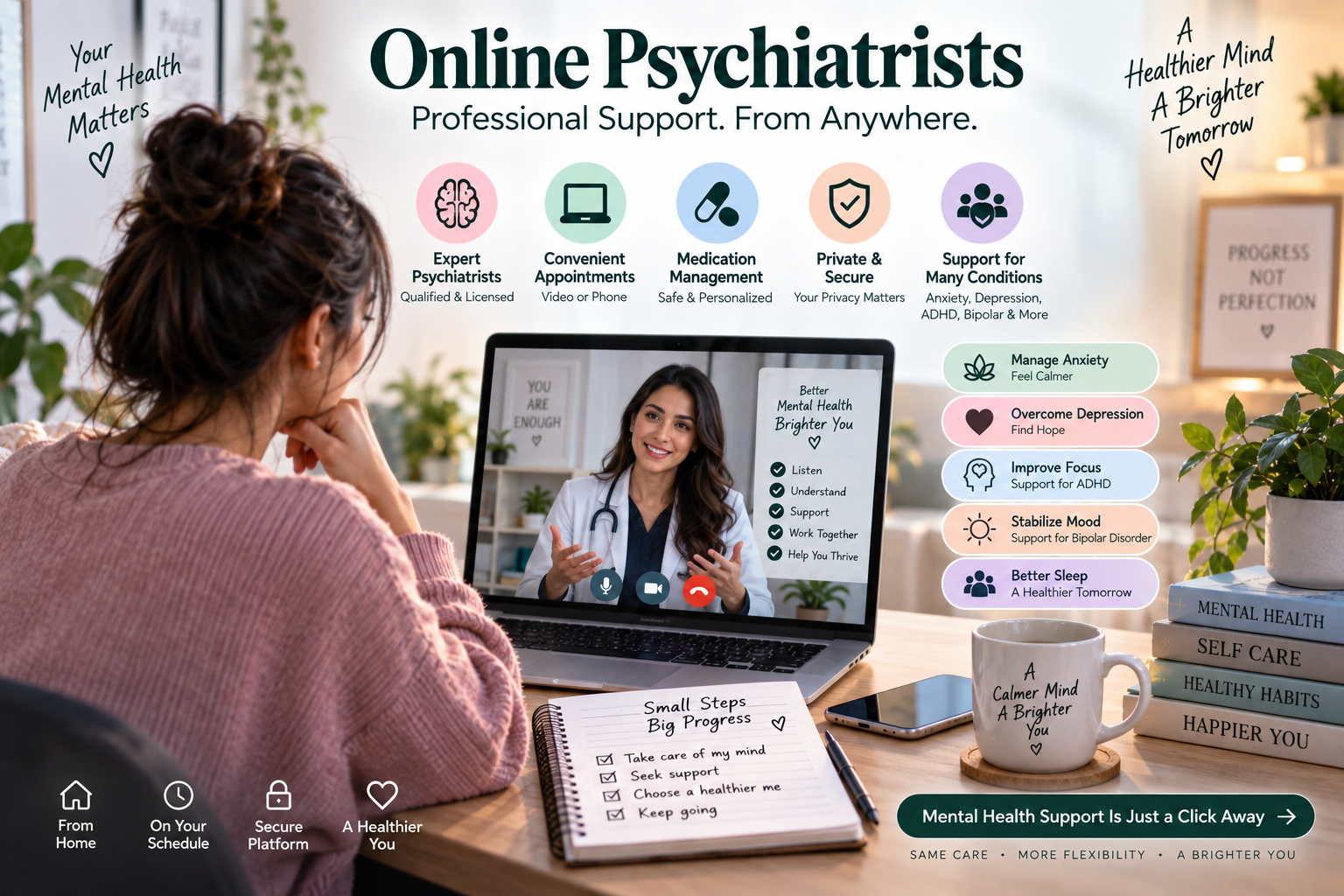
Mental health care has changed significantly with the growth of telehealth. Today, people can connect with qualified psychiatrists through video appointments, telephone consultations, and other secure digital technologies without necessarily visiting a traditional clinic.
Online psychiatry, also known as telepsychiatry, allows psychiatric services to be delivered remotely. Depending on the provider and the patient's needs, appointments may involve mental health assessments, diagnosis, treatment planning, medication management, follow-up appointments, or referrals for additional care.
The American Psychiatric Association recognizes telepsychiatry as a legitimate component of mental health care when it benefits the patient, protects privacy and confidentiality, and follows applicable professional and legal requirements.
However, choosing an online psychiatrist requires careful consideration. Patients should verify professional credentials, licensing, treatment experience, privacy practices, fees, appointment options, and whether virtual care is appropriate for their particular circumstances.
What Is an Online Psychiatrist?
An online psychiatrist is a qualified medical doctor who provides psychiatric care through telehealth technology.
Psychiatrists are medical professionals who can evaluate mental health conditions and, where legally permitted and clinically appropriate, prescribe and manage medications. This distinguishes psychiatry from many forms of psychological counseling or psychotherapy.
Online psychiatric appointments may be conducted through secure video platforms or other approved communication methods.
Depending on the psychiatrist and healthcare system, online appointments may cover concerns such as:
Anxiety disorders
Depression
Sleep difficulties
Bipolar disorder
Obsessive-compulsive disorder
Trauma-related conditions
Attention-related conditions
Mood disorders
Other psychiatric concerns
The exact services available depend on the psychiatrist's qualifications, location, regulations, and clinical practice.
What Is Telepsychiatry?
Telepsychiatry is the use of telemedicine to provide psychiatric services remotely. The American Psychiatric Association describes telepsychiatry as a form of telemedicine that can use technologies such as video conferencing and other communication tools.
Telepsychiatry can make mental health services more accessible to people who may have difficulty reaching a psychiatric clinic.
The American Psychiatric Association reports that telepsychiatry has an evidence base supporting its use and can improve access to mental health services.
How Online Psychiatry Works
The process varies between providers, but an online psychiatric appointment commonly follows several steps.
1. Find a Qualified Psychiatrist
Patients can search through healthcare organizations, professional directories, hospitals, private practices, or telehealth platforms.
The psychiatrist's qualifications and licensing should be verified before treatment begins.
2. Complete an Initial Assessment
During the first appointment, the psychiatrist may ask about symptoms, medical history, medications, sleep, lifestyle, family history, previous treatment, and other relevant information.
The purpose is to understand the person's overall situation rather than simply focus on one symptom.
3. Discuss Treatment Options
After evaluating the available information, the psychiatrist may discuss potential treatment approaches.
Treatment can involve medication, psychotherapy referrals, lifestyle recommendations, monitoring, or a combination of approaches.
4. Schedule Follow-Up Care
Mental health treatment often requires ongoing evaluation.
Follow-up appointments allow the psychiatrist to assess changes in symptoms, discuss treatment response, review potential medication effects, and make adjustments when clinically appropriate.
Benefits of Online Psychiatrists
Online psychiatric care can provide several potential advantages.
Convenient Access
Patients can attend appointments remotely, potentially reducing travel time and logistical difficulties.
This can be particularly useful for people who live far from psychiatric clinics or have demanding work, education, or family schedules.
Greater Accessibility
Telepsychiatry can expand access to specialists, particularly in areas where fewer psychiatric professionals are available.
The American Psychiatric Association identifies improved access as one of the potential benefits of telepsychiatry.
Flexible Appointment Options
Some providers offer appointments outside traditional clinic hours, although availability varies.
Patients should confirm the provider's schedule before booking.
Continuity of Care
Virtual appointments can sometimes make it easier to maintain treatment when traveling or when attending an office appointment is difficult.
Telepsychiatry can also supplement in-person care when clinically appropriate.
Online Psychiatrist vs. Online Therapist
The terms psychiatrist and therapist are sometimes used interchangeably in casual conversation, but they describe different professional roles.
A psychiatrist is a medical doctor specializing in mental health. Depending on local laws and clinical circumstances, psychiatrists can diagnose psychiatric conditions and prescribe medication.
A therapist may be a psychologist, counselor, social worker, or another qualified mental health professional trained to provide psychotherapy.
Some people benefit from both psychiatric and psychological care. For example, a psychiatrist may manage medication while a psychologist or therapist provides structured psychotherapy.
The appropriate combination depends on individual needs.
What Can an Online Psychiatrist Treat?
Online psychiatrists may provide care for a variety of mental health conditions.
Potential areas of treatment include:
Anxiety
Psychiatrists can assess persistent anxiety symptoms and determine whether psychiatric treatment may be appropriate.
Depression
Depression can affect mood, motivation, sleep, appetite, concentration, and daily functioning. A psychiatrist can evaluate symptoms and discuss appropriate treatment options.
Bipolar Disorder
Bipolar disorder can involve episodes of depression and periods of elevated or unusually energized mood. Psychiatric monitoring can be important when treating this condition.
Obsessive-Compulsive Disorder
OCD involves recurring unwanted thoughts, images, or urges and repetitive behaviors or mental acts. A psychiatrist may provide assessment and treatment recommendations.
Sleep-Related Concerns
Sleep problems can occur alongside mental health conditions. A psychiatrist may evaluate whether psychological, psychiatric, medication-related, or other factors could be contributing.
Not every condition is appropriate for online treatment in every circumstance. A professional assessment is important.
How to Choose an Online Psychiatrist
Finding an appropriate psychiatrist involves more than searching for the cheapest appointment.
Check Credentials and Licensing
One of the most important steps is verifying that the psychiatrist is appropriately licensed to practice where the patient is located.
The American Psychological Association similarly advises people seeking online mental health care to verify professional licensing and the jurisdiction in which the provider is licensed.
Local regulations can differ, particularly for telehealth and prescription medication.
Consider Experience
Look for a psychiatrist whose clinical experience is relevant to the concerns you want to discuss.
For example, someone seeking treatment for anxiety may want to find a psychiatrist with experience treating anxiety disorders.
Check Treatment Options
Ask whether the psychiatrist provides:
Initial psychiatric assessments
Follow-up appointments
Medication management
Psychotherapy referrals
Coordination with other healthcare professionals
Emergency or after-hours guidance
The available services vary between providers.
Consider Communication Style
A successful therapeutic relationship requires communication and trust.
The American Psychological Association recommends considering personal comfort and rapport when selecting a mental health professional.
Patients should feel comfortable asking questions about diagnosis, treatment options, medication, side effects, and follow-up care.
Compare Fees
Online psychiatry costs can vary substantially.
Before booking, ask about:
Initial consultation fees
Follow-up costs
Medication management fees
Insurance coverage
Cancellation policies
Additional charges
Do not assume that a lower price means better value or that a higher price guarantees better care.
Privacy and Online Psychiatry
Privacy is particularly important in mental healthcare because psychiatric appointments can involve highly personal information.
Before using a telepsychiatry platform, review its privacy and security information.
The APA recommends considering privacy, security, identity verification, informed consent, and applicable legal requirements when providing or receiving telepsychology services.
Patients should also choose a private environment for appointments and take reasonable steps to protect their own information.
Online Psychiatric Medication Management
Some online psychiatrists provide medication evaluation and management when clinically appropriate and legally permitted.
Medication should never be treated as a one-size-fits-all solution.
A psychiatrist may consider a person's symptoms, medical history, current medications, allergies, previous treatment response, potential interactions, and other factors before recommending medication.
Patients should follow professional instructions and should not start, stop, or change prescription medication without discussing it with the prescribing clinician.
The American Psychiatric Association emphasizes that virtual psychiatric care should maintain appropriate standards for examination, treatment relationships, monitoring, and patient safety.
Online Psychiatry and Prescription Rules
Prescription regulations differ between countries and jurisdictions.
A psychiatrist may be legally required to hold a license in the jurisdiction where the patient is physically located during the appointment.
Rules can be especially important for controlled medications and certain psychiatric treatments.
Patients should therefore ask the provider whether they are legally authorized to provide psychiatric care and prescribe medication where the patient is located.
Online Psychiatry for International Patients
International telepsychiatry can involve additional considerations.
A psychiatrist licensed in one country may not automatically be permitted to provide medical care to someone physically located in another country.
Before scheduling an appointment, patients should confirm:
Where the psychiatrist is licensed
Where the patient is physically located
Whether remote treatment is legally permitted
Whether prescriptions can legally be issued
How emergency care would be handled
Whether follow-up services are available
These issues can be especially important when someone travels between countries.
Preparing for an Online Psychiatric Appointment
Preparing a few notes before an appointment can make the conversation more productive.
Consider writing down:
Main symptoms
When symptoms started
Changes in sleep
Changes in appetite
Current medications
Previous psychiatric treatment
Relevant medical conditions
Important family medical history
Questions about treatment
Any major recent life changes
Patients should also make sure their internet connection, microphone, camera, and device are working before the appointment.
When Online Psychiatry May Not Be Appropriate
Online psychiatry is not suitable for every situation.
A person experiencing an immediate psychiatric emergency may require urgent in-person assessment or emergency services rather than a routine online appointment.
Examples of situations requiring urgent attention can include an immediate risk of suicide or serious self-harm, severe confusion, loss of contact with reality, or other circumstances in which a person's immediate safety is at risk.
Online providers should have appropriate procedures for emergencies. The APA's telepsychology guidance specifically identifies emergency procedures as an important consideration in remote care.
If there is an immediate danger, contact local emergency services or go to the nearest emergency department rather than waiting for a routine telepsychiatry appointment.
Online Psychiatry and Therapy Can Work Together
Psychiatric care and psychotherapy are not necessarily alternatives.
Some people may receive medication management from a psychiatrist while working with a psychologist or therapist on behavioral and emotional concerns.
For example, a psychiatrist may oversee medication while a therapist provides cognitive behavioral therapy or another evidence-based psychotherapy approach.
Combining services may be appropriate for some individuals, but treatment should be individualized.
Questions to Ask an Online Psychiatrist
Before beginning treatment, patients may want to ask:
Are you licensed to practice where I am located?
What psychiatric conditions do you commonly treat?
Do you provide medication management?
What happens during the first appointment?
How often will follow-up appointments be needed?
What are the consultation fees?
How are prescriptions handled?
How is my health information protected?
What should I do during an emergency?
Can you coordinate care with my other healthcare providers?
These questions can help patients understand how the service works before committing to treatment.
The Future of Online Psychiatry
Technology is likely to remain an important part of mental healthcare.
Telepsychiatry can help expand access to psychiatric professionals, particularly when distance, transportation, scheduling, or local availability creates barriers.
At the same time, technology should support—not replace—the professional standards expected from healthcare providers.
The American Psychiatric Association states that telepsychiatry should protect patient autonomy, confidentiality, privacy, and safety while following applicable laws and ethical standards.
Conclusion
Online psychiatrists provide an increasingly accessible way to receive psychiatric care through telehealth. Video and other remote technologies can allow patients to consult qualified medical professionals without always traveling to a traditional psychiatric clinic.
However, convenience should not be the only consideration when choosing an online psychiatrist.
Patients should verify licensing and qualifications, consider relevant clinical experience, understand fees and treatment options, review privacy practices, and confirm that the provider can legally offer care where the patient is located.
Online psychiatry may be useful for assessment, ongoing psychiatric care, and medication management when clinically appropriate. It can also work alongside psychotherapy and other forms of healthcare.
Most importantly, people experiencing serious or immediate mental health emergencies should seek urgent local medical or emergency support rather than relying on a routine online appointment.
Frequently Asked Questions
1. What is an online psychiatrist?
An online psychiatrist is a qualified medical doctor who provides psychiatric care through telehealth technology such as secure video or audio appointments.
2. Can an online psychiatrist prescribe medication?
In some circumstances, yes. Whether medication can be prescribed depends on the psychiatrist's qualifications, location, applicable laws, the patient's location, and the clinical situation.
3. Is online psychiatry effective?
Telepsychiatry is an established form of mental healthcare, and professional organizations recognize it as a legitimate way to provide psychiatric services when used appropriately.
4. How much does an online psychiatrist cost?
Costs vary by psychiatrist, platform, country, insurance coverage, appointment length, and treatment type. Patients should confirm the current fee before booking.
5. What is the difference between an online psychiatrist and an online therapist?
A psychiatrist is a medical doctor who can provide psychiatric assessment and, where legally permitted, prescribe medication. A therapist provides psychotherapy and may have a background in psychology, counseling, social work, or another mental health profession.
6. Can online psychiatrists treat anxiety?
Yes, qualified psychiatrists may evaluate and treat anxiety disorders through telehealth when online care is clinically appropriate.
7. Can an online psychiatrist treat depression?
An online psychiatrist can assess symptoms of depression and discuss appropriate treatment options. The appropriate level of care depends on symptom severity and individual circumstances.
8. Are online psychiatric appointments private?
Reputable telehealth services should use appropriate privacy and security measures. Patients should review the provider's privacy policies and attend appointments from a private location.
9. How do I find a qualified online psychiatrist?
Check professional qualifications, licensing, clinical experience, treatment areas, fees, appointment options, and privacy policies. Licensing requirements vary by jurisdiction.
10. Can I get psychiatric medication online?
Medication may be prescribed through telepsychiatry when the psychiatrist determines it is clinically appropriate and when local laws permit remote prescribing.
11. Can I use an online psychiatrist from another country?
Not necessarily. A psychiatrist may not be legally authorized to provide medical care to someone located in another country. Always verify licensing and telehealth regulations before booking.
12. What happens during the first online psychiatry appointment?
The psychiatrist may ask about symptoms, medical history, medications, sleep, previous treatment, family history, and current circumstances before discussing assessment and treatment options.
13. Should I choose online or in-person psychiatry?
The appropriate format depends on individual needs, clinical circumstances, availability, privacy, and the psychiatrist's assessment. Some people may use both virtual and in-person care.
14. Can online psychiatry be used during an emergency?
Routine online psychiatry should not replace emergency medical care. If someone is at immediate risk of serious harm, urgent local emergency or crisis services should be contacted.
15. What should I look for in an online psychiatrist?
Look for appropriate licensing, relevant clinical experience, clear communication, transparent fees, suitable treatment options, secure technology, and a provider with whom you feel comfortable working.