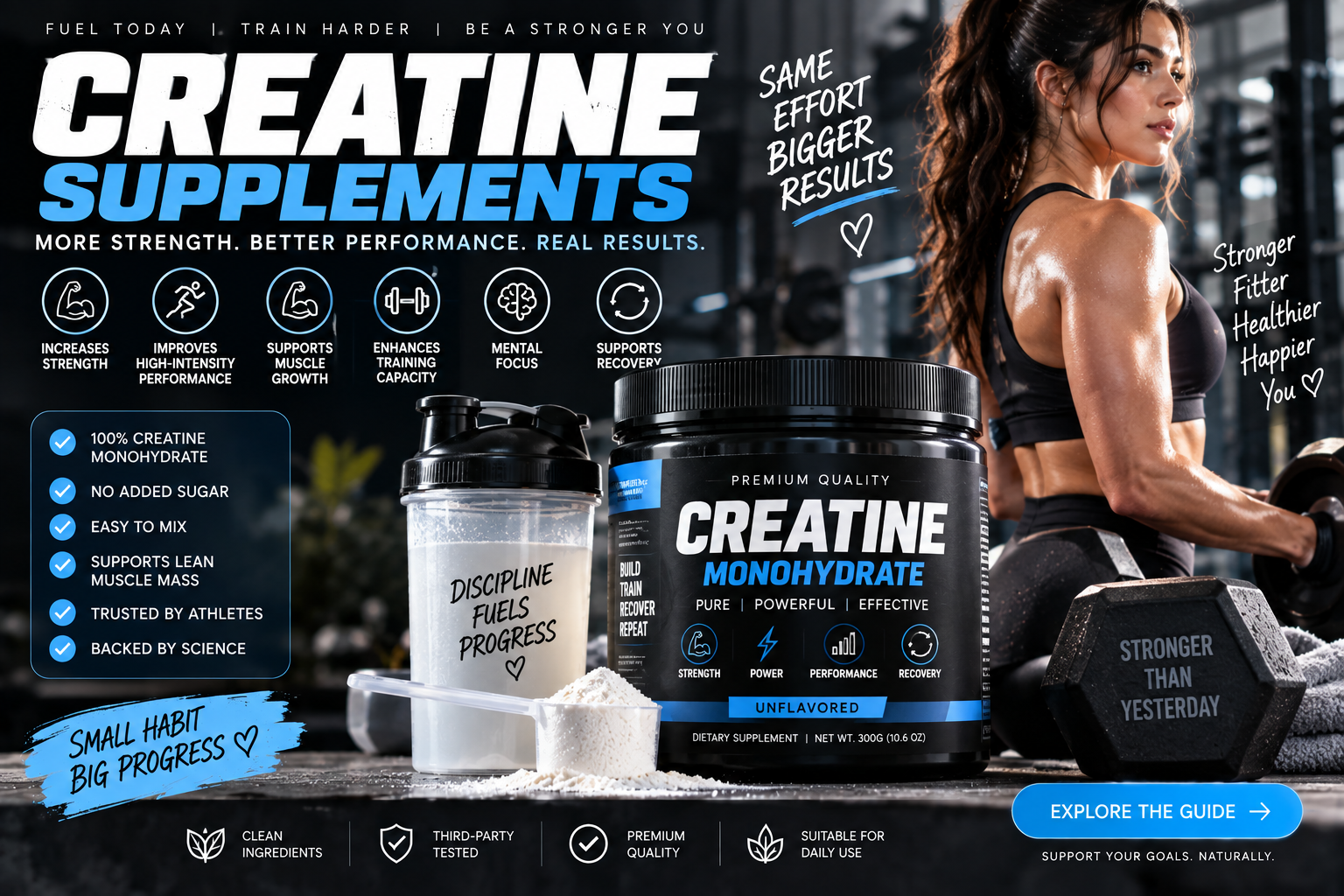
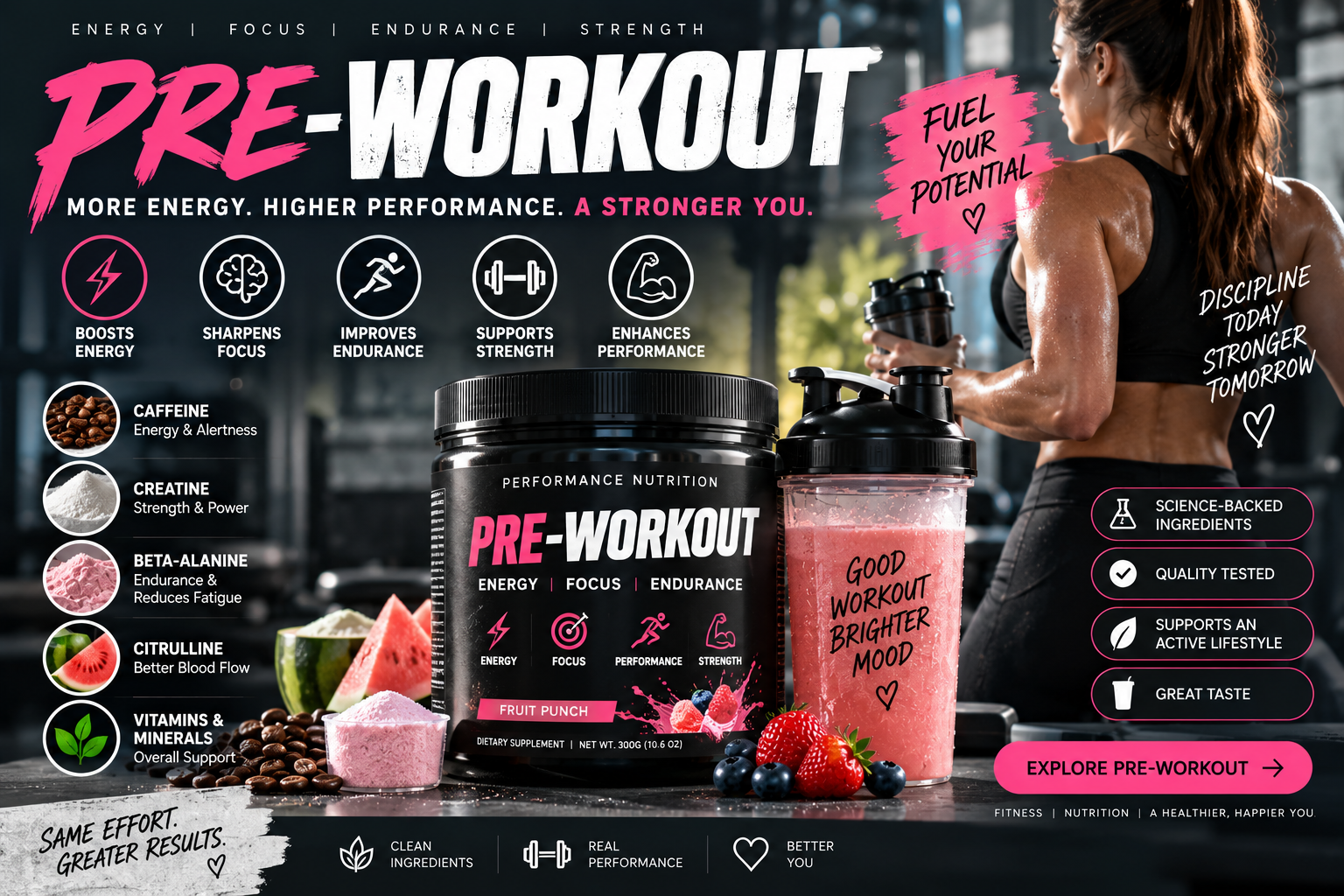
Pre-workout supplements have become popular among people who want more energy, focus, endurance, or training intensity before exercise. These products are usually powders or drinks containing a combination of ingredients such as caffeine, beta-alanine, creatine, amino acids, and other compounds marketed to support exercise performance.
But not every pre-workout formula works the same way, and some ingredients have stronger scientific evidence than others. Understanding what is actually inside a pre-workout can help you decide whether it fits your exercise routine.
What Is Pre-Workout?
Pre-workout is a type of dietary supplement designed to be consumed before exercise. Products are commonly sold as powders that are mixed with water, although capsules, ready-to-drink beverages, and other forms are also available.
Pre-workout formulas can contain several ingredients in different amounts. Common ingredients include caffeine, beta-alanine, creatine, citrulline, amino acids, carbohydrates, vitamins, and minerals. The specific combination varies considerably between products.
The purpose of a pre-workout supplement is generally to support one or more aspects of exercise, such as:
Energy and alertness
Reduced perception of fatigue
Exercise endurance
Training intensity
Strength and power
Muscle performance
Focus during workouts
However, pre-workout supplements are not necessary for everyone. A balanced diet, adequate hydration, sufficient sleep, and a well-designed exercise program remain fundamental to physical performance.
How Does Pre-Workout Work?
There is no single mechanism because pre-workout products contain different combinations of ingredients.
For example, caffeine stimulates the central nervous system and can increase alertness while reducing the perception of fatigue and exertion. Research summarized by the NIH indicates that caffeine may improve some aspects of endurance, strength, and power, although responses vary among individuals.
Other ingredients work differently. Beta-alanine increases muscle carnosine levels, while creatine helps supply energy for short, intense muscular activity. Citrulline is included in many products because of its potential effects on blood flow, although evidence for performance benefits from supplemental citrulline is less consistent.
Because formulas vary, the word "pre-workout" does not describe one standardized supplement.
Potential Benefits of Pre-Workout
1. Increased Energy
Caffeine is one of the most common pre-workout ingredients. It can increase alertness and reduce feelings of fatigue.
Research summarized by the NIH suggests that caffeine can improve performance in some endurance and intermittent high-intensity activities. However, its effects differ from person to person.
For someone exercising early in the morning or after a long day, caffeine may make a workout feel easier to start.
2. Improved Exercise Performance
Certain pre-workout ingredients have evidence supporting specific types of exercise.
Caffeine may improve endurance and some forms of high-intensity performance. Creatine is particularly well studied for repeated short bursts of intense activity and can improve strength and power over time when combined with resistance training.
This does not mean every pre-workout product improves performance. The actual ingredients, doses, exercise type, and individual response matter.
3. Better Training Focus
Caffeine may increase alertness and mental stimulation. This can be useful when someone feels tired before a workout.
However, more stimulation is not necessarily better. Excessive caffeine can cause restlessness, sleep problems, nausea, rapid heartbeat, and other unwanted effects.
4. Support for High-Intensity Exercise
Creatine is one of the better-studied performance supplements. It helps muscles generate energy during short, high-intensity efforts.
According to the NIH, creatine supplementation can increase strength and power and support repeated maximal-effort activity. Creatine monohydrate is the most extensively studied form.
Importantly, creatine does not necessarily need to be taken immediately before a workout to be useful. Its benefits are associated with maintaining adequate muscle creatine stores over time.
5. Possible Support for High-Intensity Efforts
Beta-alanine is another common pre-workout ingredient. It helps increase muscle carnosine levels, which can help buffer changes associated with high-intensity exercise.
Research is mixed, but some studies suggest beta-alanine may provide modest benefits for certain high-intensity activities lasting roughly one to several minutes.
A common side effect is temporary tingling or prickling of the skin, known as paresthesia.
Common Pre-Workout Ingredients
Caffeine
Caffeine is probably the most recognizable pre-workout ingredient.
The NIH reports that studies commonly use approximately 2–6 mg of caffeine per kilogram of body weight before exercise. More is not necessarily better, and increasing the dose can increase the risk of side effects.
For most adults, the FDA says that around 400 mg of caffeine per day is an amount not generally associated with negative effects, although individual sensitivity varies. Total daily intake includes caffeine from coffee, tea, energy drinks, medications, and supplements—not just pre-workout.
Creatine
Creatine supports the energy systems used during short, intense exercise.
Creatine monohydrate is the most extensively studied form. Research has found benefits for strength, power, and repeated high-intensity activity.
Some people experience weight gain after starting creatine because of increased water retention.
Beta-Alanine
Beta-alanine increases muscle carnosine concentrations.
It may help certain high-intensity activities, but results are not universal. One of the most recognizable effects is temporary tingling, particularly when larger single doses are consumed. Dividing doses can reduce this sensation.
Citrulline
Citrulline is included in many pre-workout formulas because it is involved in pathways related to nitric oxide and blood flow.
However, the NIH notes that research on citrulline supplements for exercise performance is limited and has produced inconsistent results.
BCAAs
Branched-chain amino acids include leucine, isoleucine, and valine.
Although BCAAs are frequently marketed for muscle growth and recovery, the NIH reports that there is limited evidence that BCAA supplements improve exercise performance, build muscle, or improve recovery in healthy individuals. Adequate protein intake already provides BCAAs.
When Should You Take Pre-Workout?
Timing depends on the ingredients.
Caffeine is generally absorbed relatively quickly. The NIH notes that caffeine can reach peak blood concentrations within about 45 minutes, and studies commonly use caffeine approximately 15–60 minutes before exercise.
This is why many caffeinated pre-workout products recommend taking them somewhere around 30–60 minutes before training.
However, there is no universal timing rule for every pre-workout.
If a product contains creatine, for example, its benefits are related more to consistent supplementation and maintaining muscle stores than to taking it immediately before a particular workout.
Can You Take Pre-Workout Every Day?
Whether daily use is appropriate depends largely on the formula and the individual.
A caffeine-heavy pre-workout may contribute a significant amount of your daily caffeine intake. Regularly taking caffeine late in the day can also interfere with sleep.
The FDA notes that individual sensitivity to caffeine varies based on factors such as body weight, medications, medical conditions, and personal sensitivity.
Using a pre-workout every day is therefore not automatically better than using it selectively.
Some people may prefer to reserve caffeinated products for demanding workouts or times when additional stimulation is useful.
Pre-Workout Side Effects
Pre-workout supplements can cause side effects, particularly when they contain substantial amounts of stimulants.
Potential effects include:
Restlessness
Anxiety or jitteriness
Insomnia
Nausea
Vomiting
Headache
Rapid heartbeat
Digestive discomfort
Temporary skin tingling
Increased sensitivity to stimulation
Caffeine is associated with insomnia, restlessness, nausea, vomiting, tachycardia, and arrhythmias when consumed in excessive amounts.
Beta-alanine can cause temporary tingling or prickling sensations, while creatine can cause water-related weight gain and occasionally gastrointestinal discomfort.
Is Pre-Workout Safe?
Pre-workout supplements can be used safely by many healthy adults when used appropriately, but safety depends on the ingredients and amounts.
One of the biggest concerns is excessive stimulant intake. People may unknowingly combine a pre-workout with coffee, energy drinks, tea, caffeine-containing medications, or other supplements.
The FDA states that approximately 400 mg of caffeine per day is generally not associated with negative effects for most adults, but individual tolerance varies.
People with medical conditions, those taking medications, pregnant individuals, and anyone particularly sensitive to caffeine should discuss stimulant-containing supplements with an appropriate healthcare professional before using them.
Pure or highly concentrated caffeine products are particularly dangerous and should not be confused with ordinary pre-workout products. The FDA and NIH warn about the risks associated with highly concentrated caffeine.
How to Choose a Pre-Workout
Instead of choosing a product based only on marketing claims, look carefully at its ingredient label.
Check the Caffeine Amount
Look for the actual caffeine amount per serving.
Avoid accidentally combining multiple caffeine sources throughout the day.
Look at the Full Ingredient List
Some products contain long proprietary blends that make it difficult to determine how much of each ingredient is actually present.
A transparent label that lists individual ingredients and quantities makes it easier to evaluate what you are consuming.
Consider Your Workout
A person doing a relaxed 30-minute workout may have very different needs from someone completing long endurance sessions or intense resistance training.
Choose a formula based on your actual activity rather than assuming a stronger stimulant effect means a better workout.
Watch Added Ingredients
Some pre-workout products contain large amounts of sugar, artificial sweeteners, or other compounds that may not be necessary for your goals.
Check the calories, carbohydrates, caffeine, and serving size.
Look for Quality Testing
Dietary supplements are not regulated in exactly the same way as prescription medicines. Independent testing or certification can provide additional information about product quality, although it does not guarantee that a supplement will produce a particular performance benefit.
Pre-Workout vs. Coffee
Coffee and pre-workout are not identical, but caffeine is a major reason both can feel stimulating.
Coffee provides caffeine along with other naturally occurring compounds, while pre-workout products may combine caffeine with ingredients such as creatine, beta-alanine, or other compounds.
For someone who simply wants caffeine before exercise, coffee may be sufficient. Someone looking for specific supplemental ingredients may prefer a formulated pre-workout.
The choice depends on personal preferences, exercise goals, caffeine tolerance, and the product's ingredients.
Can Pre-Workout Help With Weight Loss?
Pre-workout should not be considered a weight-loss product.
Caffeine can temporarily increase alertness and may affect energy expenditure, but sustainable weight management depends primarily on overall dietary intake, physical activity, sleep, and long-term habits.
Using a high-stimulant supplement does not replace a balanced diet or consistent exercise program.
Pre-Workout and Hydration
Hydration is important before, during, and after exercise.
A pre-workout drink should not replace adequate water intake, particularly during longer or intense workouts.
Some products contain ingredients that may make the drink taste more appealing, but the most important factor is still maintaining appropriate fluid intake based on the exercise environment and individual needs.
Should Beginners Use Pre-Workout?
Beginners do not necessarily need pre-workout supplements.
Before adding supplements, it is generally more useful to establish the basics:
Follow a consistent exercise routine.
Eat an adequate and balanced diet.
Get sufficient sleep.
Drink enough fluids.
Learn proper exercise technique.
Gradually increase training intensity.
Once these fundamentals are established, a person can decide whether a supplement addresses a specific need.
Frequently Asked Questions
Is pre-workout good for you?
Pre-workout can be useful for some healthy adults, particularly when its ingredients have evidence supporting a specific exercise goal. However, not every formula provides meaningful benefits, and excessive stimulant intake can cause side effects.
How long before a workout should I take pre-workout?
For caffeinated products, approximately 15–60 minutes before exercise is commonly used in research. The ideal timing depends on the product and the individual's response.
Does pre-workout build muscle?
Pre-workout itself does not directly build muscle. Muscle growth depends on resistance training, adequate protein and energy intake, recovery, and other factors. Certain ingredients, such as creatine, can support training performance and adaptations over time.
Does pre-workout have caffeine?
Many pre-workouts contain caffeine, but not all do. Always check the label because caffeine amounts can vary substantially between products.
Can I take pre-workout every day?
Some people use pre-workout regularly, but daily use is not automatically necessary. Caffeine-containing products should be considered as part of your total daily caffeine intake.
Why does pre-workout make me tingle?
Tingling is commonly associated with beta-alanine. It is called paresthesia and is generally temporary. Dividing beta-alanine doses can reduce the sensation.
Can I drink coffee instead of pre-workout?
Yes. If your primary goal is caffeine before exercise, coffee can provide caffeine without requiring a multi-ingredient pre-workout formula.
Is pre-workout safe for everyone?
No supplement is automatically appropriate for everyone. People with medical conditions, medication use, caffeine sensitivity, or other health considerations should seek professional advice before using stimulant-containing supplements.
Final Thoughts
Pre-workout supplements can be useful tools, but they are not essential for achieving fitness goals. Their effects depend on the ingredients, amounts, exercise type, timing, and individual response.
Caffeine has relatively strong evidence for improving certain aspects of exercise performance, while creatine is well supported for repeated high-intensity activity and strength-related training. Evidence for ingredients such as beta-alanine and citrulline varies depending on the activity and formulation.
The best approach is to look beyond marketing claims. Read the label, consider your total caffeine intake, choose transparent formulations, and prioritize nutrition, hydration, sleep, and consistent training.
For many people, those fundamentals will have a greater impact on long-term fitness than simply adding another supplement to their routine.