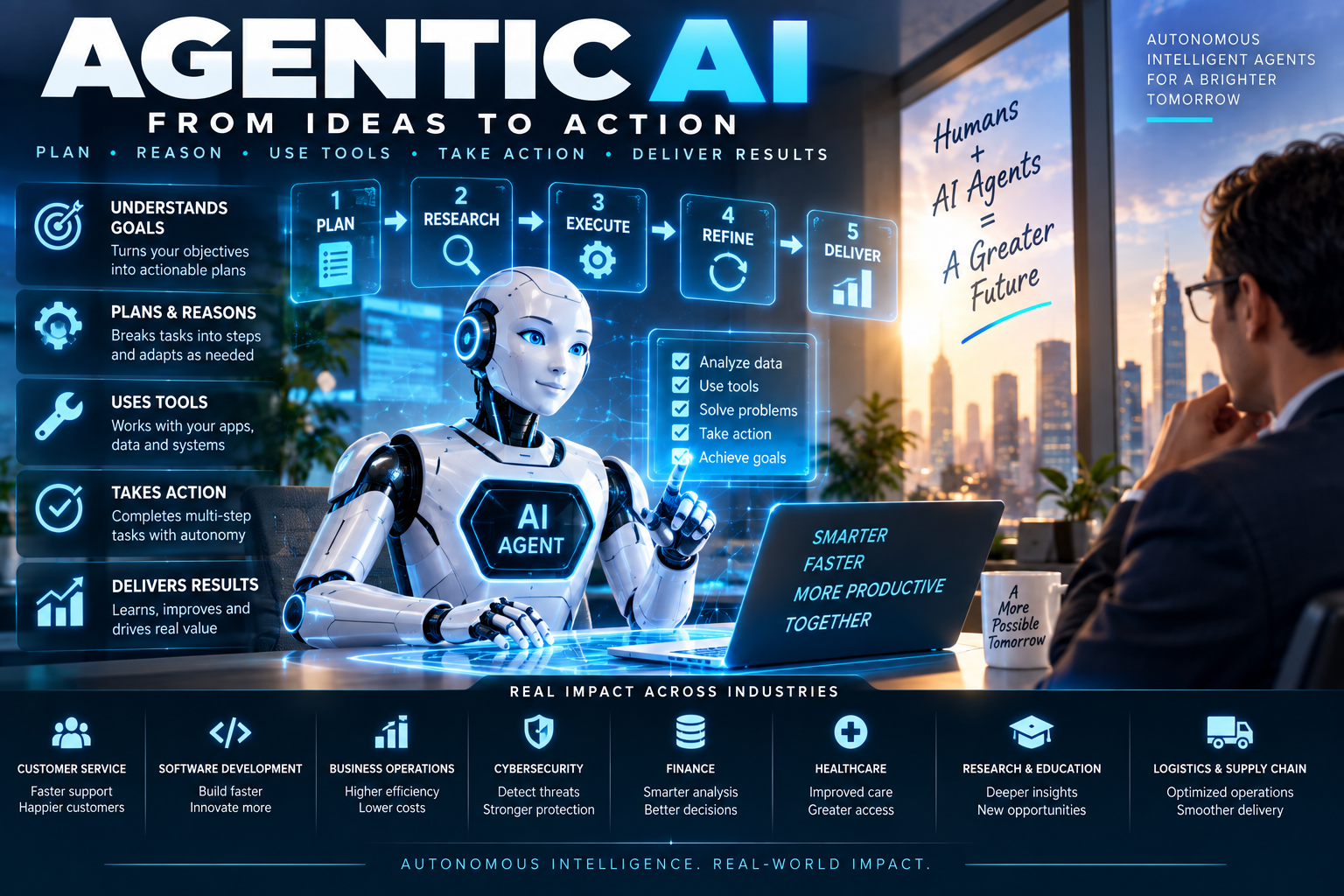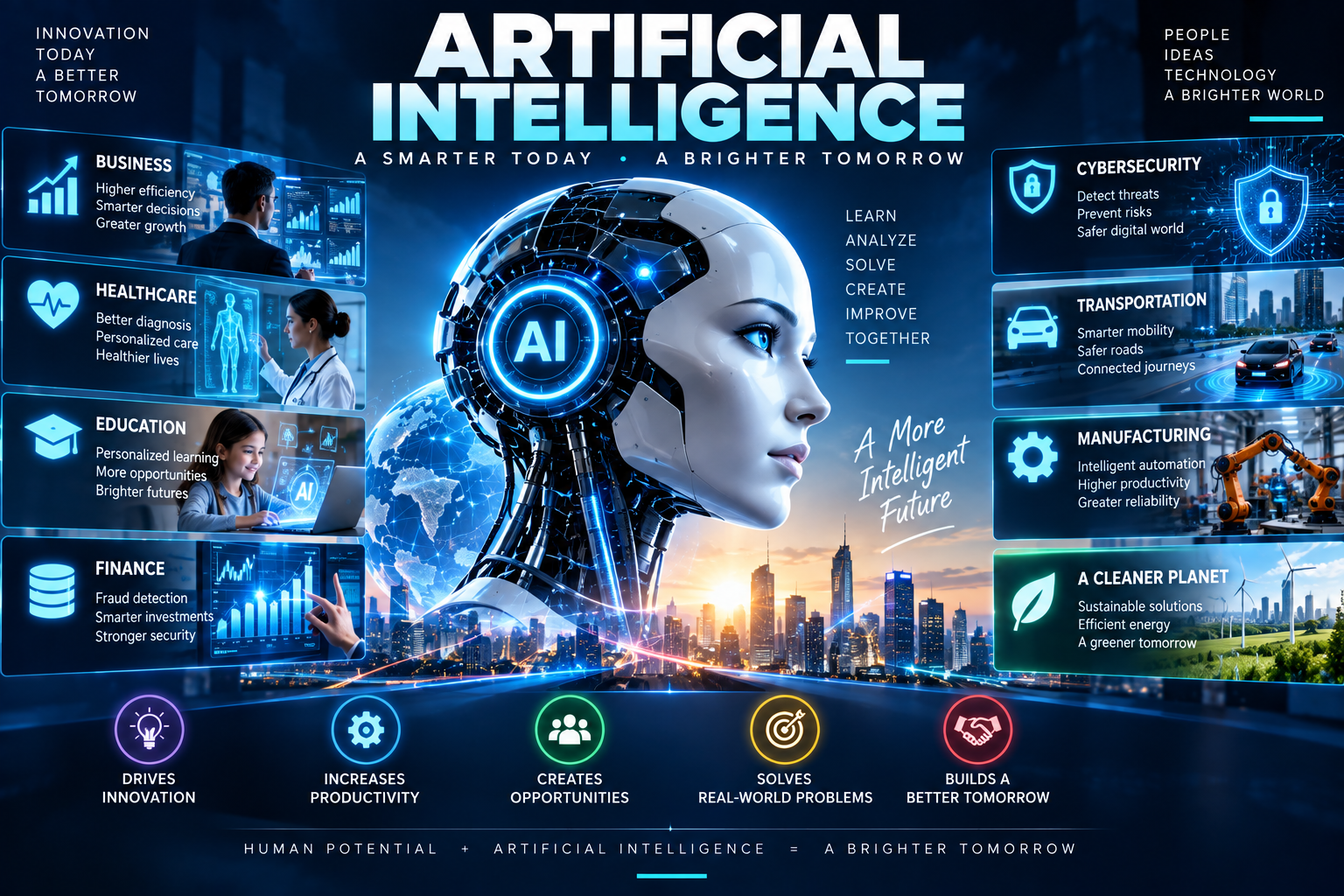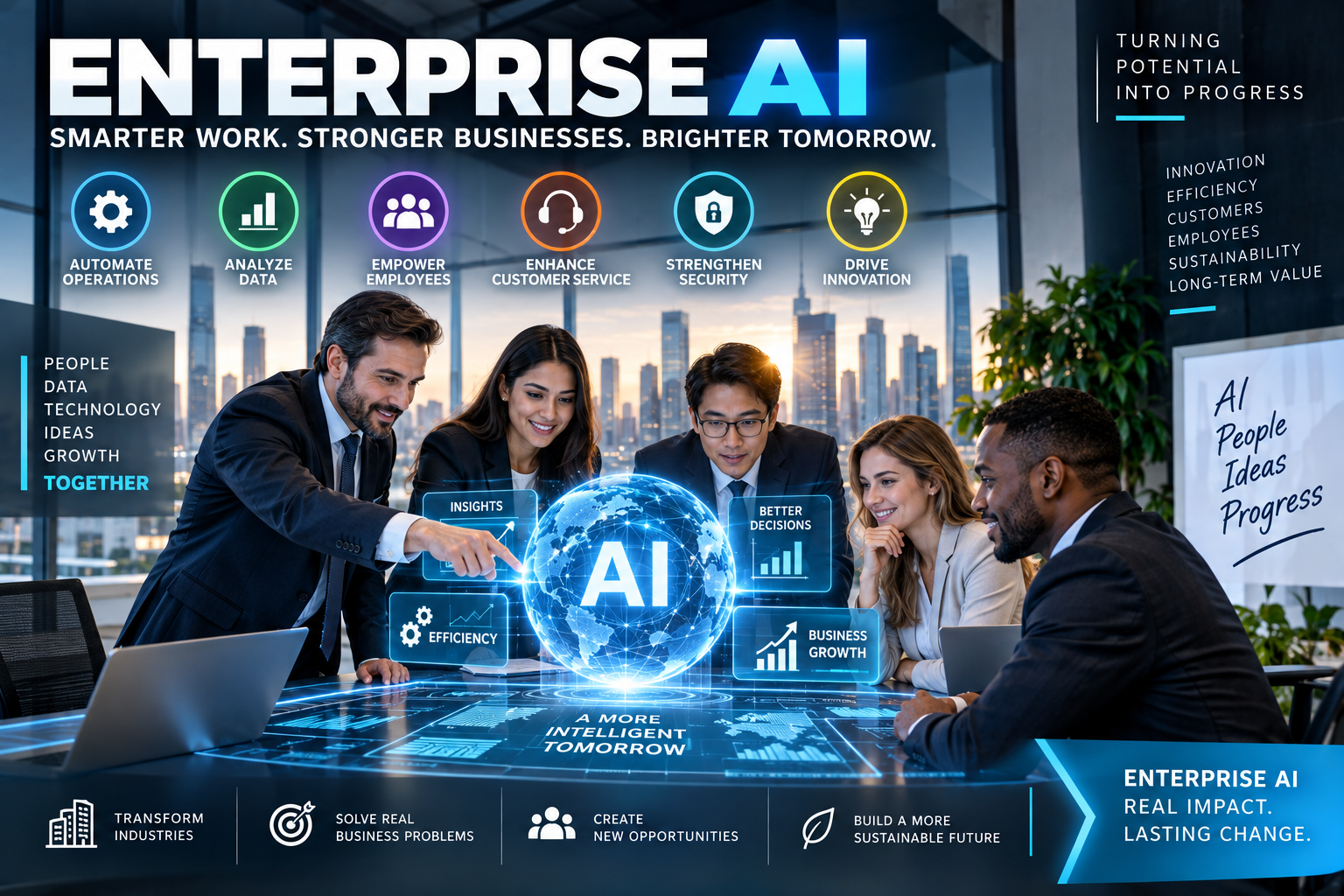
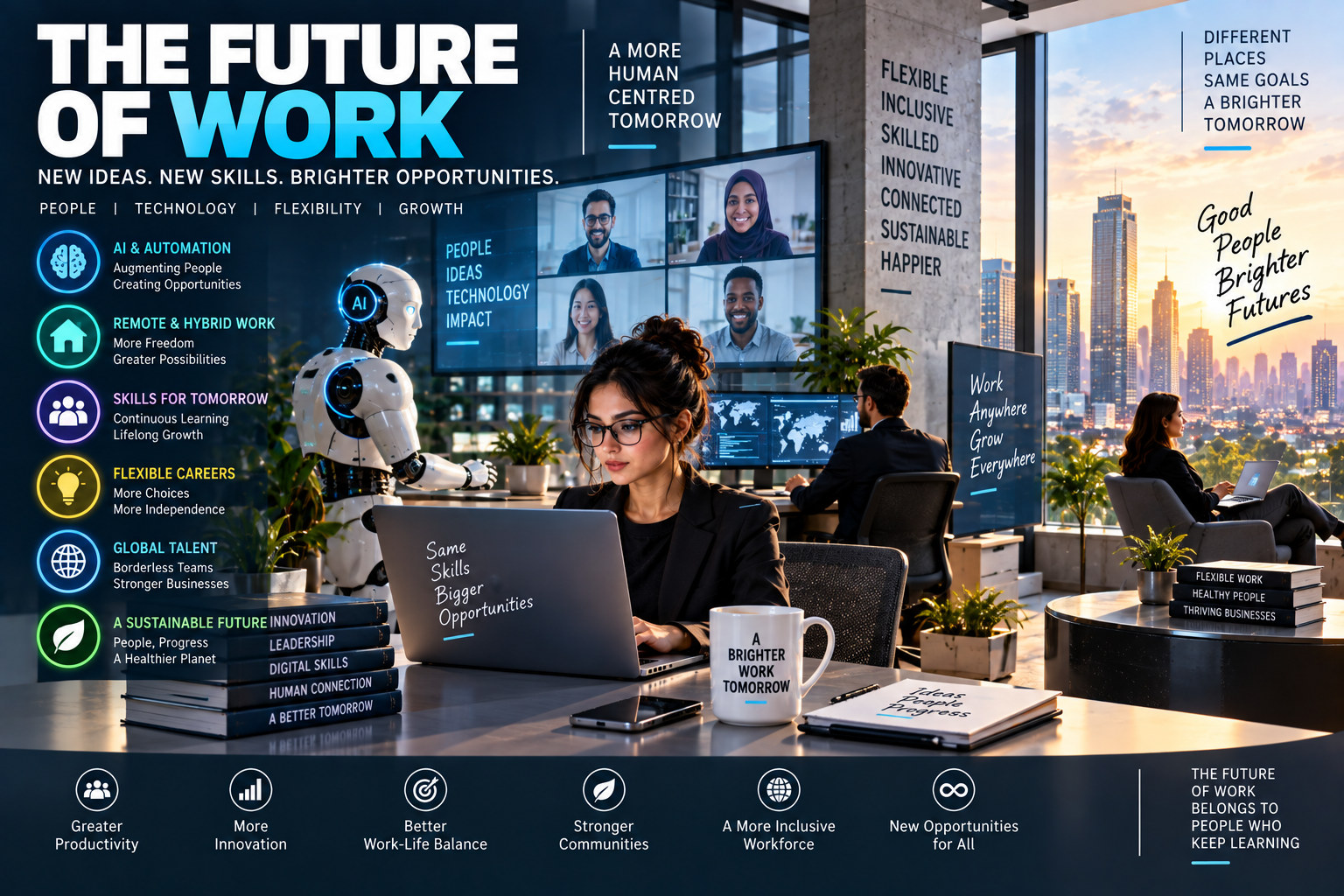
The world of work is undergoing a major transformation. Advances in artificial intelligence, automation, cloud computing, digital collaboration, and changing employee expectations are reshaping how businesses operate and how people build careers.
For generations, work was closely associated with physical offices, fixed schedules, and clearly defined job roles. Today, technology allows employees to collaborate across countries, work from different locations, access powerful digital tools, and perform tasks that once required large teams.
The future of work will not simply be about replacing traditional jobs with technology. It will involve a deeper transformation in how people and organizations create value.
Companies will need to rethink workplace structures, employee skills, leadership, productivity, and corporate culture. Workers, meanwhile, will need to develop the ability to learn continuously and adapt as technology changes the nature of their professions.
What Is the Future of Work?
The future of work describes the changing relationship between people, technology, organizations, and employment.
It includes developments such as artificial intelligence, automation, remote and hybrid work, digital collaboration, flexible employment models, skills-based hiring, and new approaches to employee productivity.
Some changes are technological, while others are social and economic. Employees increasingly value flexibility, meaningful work, career development, and work-life balance. Businesses are simultaneously looking for greater productivity, innovation, and access to skilled talent.
The future workplace will therefore be shaped by both technological capabilities and changing expectations.
Artificial Intelligence and the Workplace
Artificial intelligence is likely to be one of the most influential forces shaping the future of work.
AI can already assist with research, writing, coding, data analysis, customer service, design, forecasting, and administrative tasks. As these systems become more capable, businesses may integrate AI into a growing number of workflows.
The impact will vary significantly between industries and occupations.
Some jobs may see individual tasks automated, while other roles may be redesigned around collaboration between employees and AI systems. In many cases, the worker may remain responsible for judgment, communication, creativity, and decision-making while AI handles repetitive or information-intensive activities.
This suggests that the future of work may be less about humans versus machines and more about humans working with machines.
Automation and Productivity
Automation has existed for decades, particularly in manufacturing and industrial environments. Digital technology is now expanding automation into areas that were traditionally considered knowledge work.
Software can automatically process invoices, organize information, schedule appointments, generate reports, respond to routine customer questions, and perform other repetitive tasks.
The potential productivity benefits are significant.
When routine activities are automated, employees can spend more time on complex problems, strategic planning, relationship-building, and creative work.
However, organizations need to manage automation carefully. Simply automating an inefficient process does not necessarily create a better outcome. Businesses should first understand how a process works and then determine where technology can provide genuine value.
The Rise of Hybrid and Remote Work
Remote work has changed expectations about where work needs to happen.
Many organizations now use hybrid models in which employees divide their time between home and office environments. Others operate with fully distributed teams.
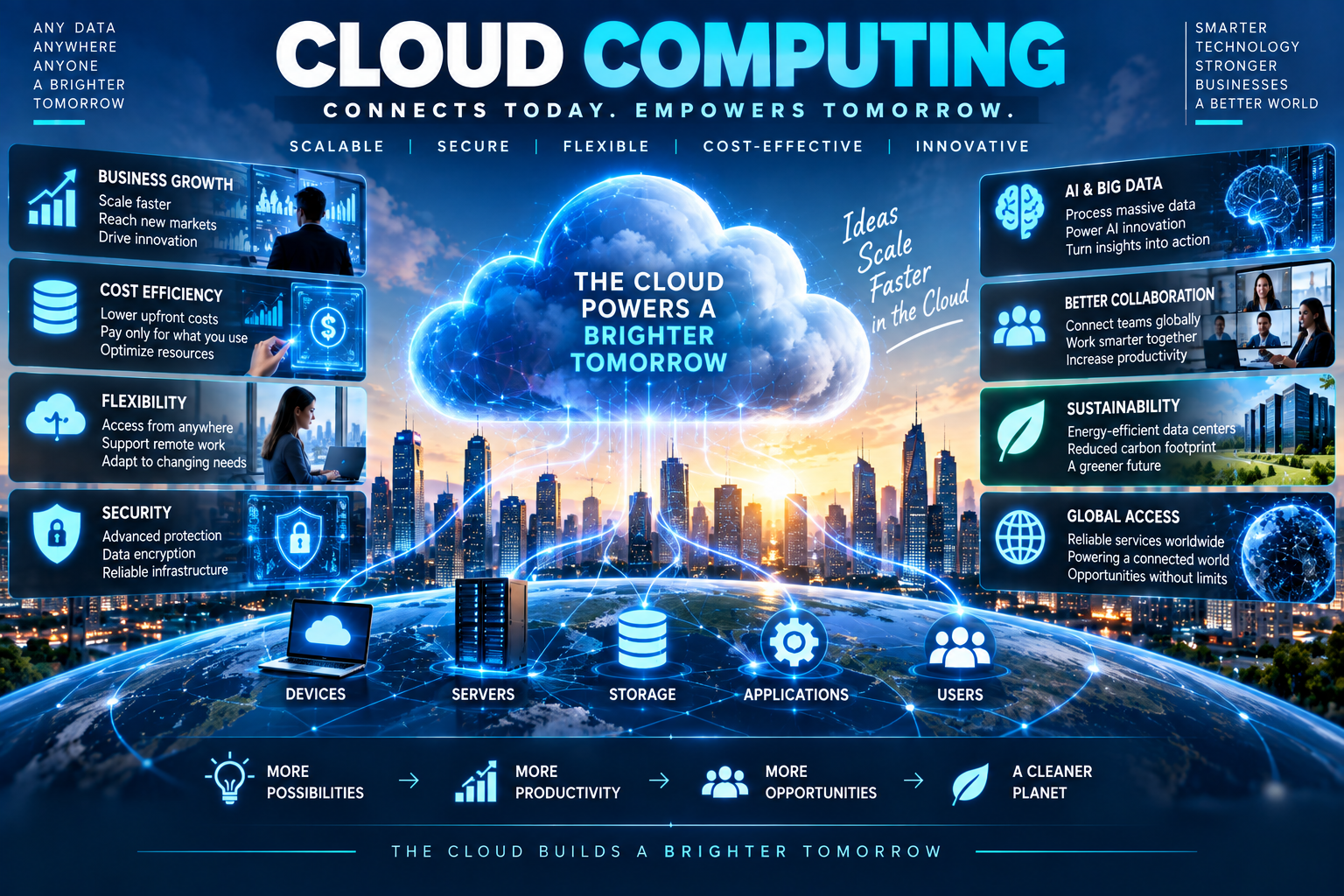
Cloud computing and digital collaboration platforms make it possible for employees to access documents, communicate with colleagues, attend meetings, manage projects, and use business applications from almost anywhere.
Remote and hybrid work can give companies access to a broader talent pool while giving employees greater flexibility.
However, distributed work also presents challenges. Organizations need effective communication, cybersecurity, collaboration systems, performance management, and clear expectations.
The future workplace is therefore unlikely to be defined by one universal model. Different industries and organizations will adopt different combinations of remote, hybrid, and office-based work.
Skills Will Matter More Than Job Titles
As technology changes job responsibilities, traditional qualifications and job titles may become less important than skills.
Employees may increasingly be evaluated based on what they can actually do rather than simply the degrees they hold or the titles they previously had.
Skills such as data literacy, communication, problem-solving, creativity, digital fluency, leadership, and AI literacy are likely to become increasingly valuable.
Technical skills will remain important, but so-called human skills may become equally significant.
As AI handles more routine analytical and administrative activities, the ability to understand people, make judgments, communicate effectively, and solve unfamiliar problems can become a major source of professional value.
Continuous Learning
The traditional idea of completing education and then entering a stable career is becoming less realistic.
Technology can change industries quickly, meaning skills that are highly valuable today may become less important tomorrow.
Continuous learning will therefore become a central part of professional life.
Employees may need to regularly develop new technical capabilities, understand emerging technologies, and adapt to changing business models.
Companies also have an important role to play. Organizations that invest in training and professional development can help employees adapt while retaining valuable institutional knowledge.
The future of work will likely favor people who view learning as an ongoing process rather than a stage that ends with formal education.
The New Role of Managers
Technology is also changing management.
In traditional workplaces, managers often supervised employees in person and measured activity through visible work.
Remote and hybrid environments require a different approach.
Managers increasingly need to focus on outcomes rather than physical presence. Clear goals, effective communication, trust, and accountability become more important when employees are working from different locations.
AI and analytics may also provide managers with more information about business performance. However, organizations need to be careful about excessive employee monitoring.
Technology should support productivity and communication without creating a workplace culture based on constant surveillance.
Good leadership will increasingly depend on balancing digital tools with human understanding.
Employee Experience and Well-Being
The future of work is not only about productivity. Employee experience is becoming an important part of organizational strategy.
Workers increasingly expect flexibility, opportunities for development, supportive management, and a healthy workplace culture.
Companies that ignore employee experience may find it more difficult to attract and retain talented people.
Digital tools can improve the employee experience by simplifying administrative tasks, making information easier to access, and enabling flexible collaboration.
At the same time, technology can create new problems. Constant notifications, excessive meetings, and expectations of immediate responses can increase stress and reduce productivity.
Organizations will need to design digital workplaces that help employees work effectively without creating unnecessary digital overload.
The Gig Economy and Flexible Careers
Employment models are also becoming more diverse.
Freelancing, consulting, contract work, creator businesses, and other independent career models allow people to earn income outside traditional full-time employment.
Digital platforms make it easier for businesses to connect with specialized talent around the world.
For workers, flexible employment can provide greater independence and opportunities to work across multiple projects.
However, independent work can also involve challenges such as income instability, limited benefits, and less predictable career progression.
The future labor market is likely to include a combination of traditional employment and flexible work arrangements rather than one replacing the other.
Global Talent and Borderless Teams
Technology has reduced the importance of geographic distance for many types of work.
Companies can recruit employees and contractors from different countries, allowing them to access specialized skills that may not be available locally.
Digital collaboration tools make it possible for teams to communicate across time zones and work together on shared projects.
This creates opportunities for both employers and employees.
Businesses can access broader talent pools, while workers can find opportunities with organizations far beyond their local markets.
However, international teams require thoughtful management of time zones, communication styles, employment regulations, data security, and cultural differences.
Cybersecurity in the Future Workplace
As more work moves into digital environments, cybersecurity will become increasingly important.
Employees may access sensitive company information from laptops, smartphones, home networks, and cloud applications.
Businesses therefore need strong identity management, multi-factor authentication, secure devices, access controls, employee training, and effective data protection.
The future workplace will require employees to understand basic cybersecurity principles regardless of their job title.
Security will become part of everyday digital work rather than a responsibility limited to specialized IT teams.
The Changing Office
The physical office is unlikely to disappear completely.
Instead, its purpose may change.
When employees can perform routine tasks from home, offices may increasingly focus on collaboration, innovation, relationship-building, training, and social interaction.
Companies may redesign offices around meeting spaces, creative environments, shared work areas, and facilities that support teamwork.
This could create a workplace where employees choose the environment that best suits the task they are performing.
Focused individual work may happen remotely, while brainstorming, workshops, and important team discussions may benefit from face-to-face interaction.
AI and Human Creativity
One of the biggest questions surrounding the future of work is whether AI will reduce the value of human creativity.
AI systems can generate text, images, software code, music, and other forms of content. However, human creativity involves more than producing outputs.
People define goals, understand cultural context, develop personal perspectives, make ethical judgments, and decide what is meaningful.
As AI becomes better at producing content, human creativity may shift toward directing, evaluating, refining, and applying ideas.
The ability to ask better questions and make better decisions may become more valuable than simply producing information.
New Business Models
Changes in work are also creating new business opportunities.
Companies can operate with smaller teams supported by automation and AI. Entrepreneurs can launch digital businesses with relatively limited infrastructure. Specialists can sell their skills globally through online platforms.
This could lead to a more distributed economy in which economic value is increasingly created by small teams and independent professionals.
At the same time, large organizations will continue to play an important role, particularly in industries that require significant capital, infrastructure, regulation, or physical operations.
The future business landscape may therefore combine large enterprises with increasingly capable small teams and independent workers.
Challenges of the Future of Work
The transformation of work will not happen without difficulties.
Automation may change certain occupations faster than workers can adapt. Some employees may require substantial retraining to remain competitive.
There are also concerns about income inequality, access to technology, job security, privacy, workplace surveillance, and the unequal distribution of the benefits created by automation.
Education systems and businesses will need to help workers prepare for changing labor markets.
Governments may also face pressure to reconsider policies related to employment, social protection, taxation, education, and worker rights.
Managing these challenges will be important to ensuring that technological progress creates broad economic opportunity.
How Businesses Can Prepare
Organizations preparing for the future of work should focus on several priorities.
First, businesses should identify how AI and automation can improve productivity without compromising quality or employee trust.
Second, companies should invest in workforce development. Employees need opportunities to learn new technologies and develop skills that complement automation.
Third, organizations should build flexible workplace strategies rather than assuming that one working model will suit everyone.
Fourth, cybersecurity and data protection should be integrated into digital workplace strategies.
Finally, leadership teams should communicate clearly about how technology will affect employees and involve workers in the transformation process.
The Future of Leadership
Leadership will become increasingly important as organizations navigate technological change.
Future leaders will need to understand technology without necessarily being engineers. They will need to know how AI, data, automation, and digital systems affect business strategy and employees.
At the same time, strong leadership will continue to depend on distinctly human qualities such as empathy, judgment, communication, integrity, and vision.
The organizations that succeed may be those that combine technological ambition with human-centered leadership.
Conclusion
The future of work is not a single destination. It is an ongoing transformation shaped by technology, economics, employee expectations, and changing business models.
Artificial intelligence and automation will change many tasks. Remote and hybrid work will continue to influence workplace structures. Skills and continuous learning will become increasingly important, while businesses will need to rethink leadership, cybersecurity, employee experience, and productivity.
The most successful workers may not necessarily be those who know the most today. They may be those who can learn, adapt, collaborate with technology, and continue creating value as the world changes.
For businesses, the challenge is equally clear: technology should not be viewed simply as a way to reduce costs. It can be used to empower employees, create better customer experiences, develop new opportunities, and build organizations that are more flexible and resilient.
The future of work will ultimately be shaped by a partnership between people and technology—and the organizations that understand how to make that partnership work will be best prepared for the economy of tomorrow.