Why Businesses Are Moving From AI Tools to AI Workflows
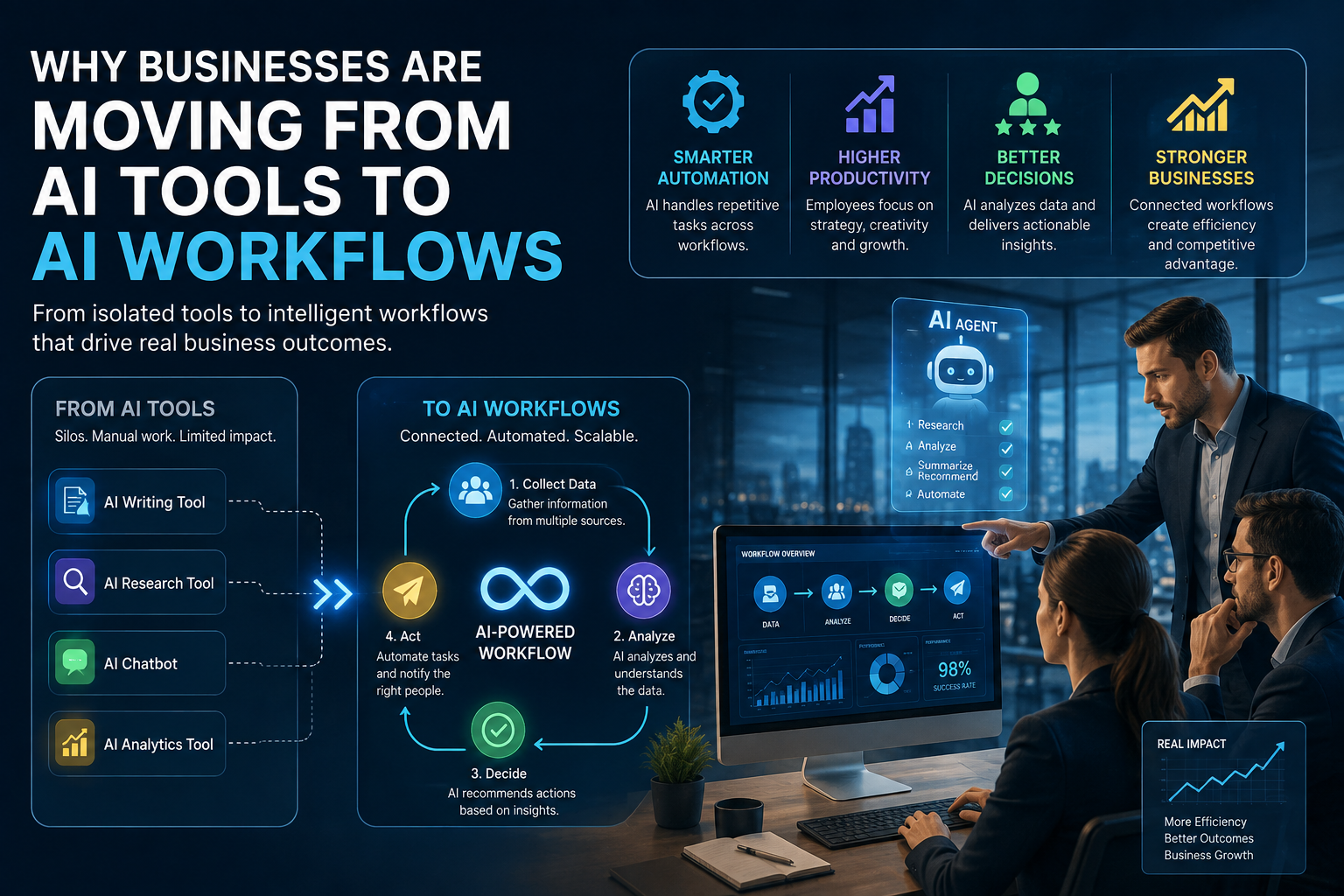
Artificial intelligence is changing the way modern companies operate. While businesses initially adopted AI through individual tools for writing, research, customer support, and data analysis, the next stage is broader: connecting AI capabilities directly to business workflows.
This shift from isolated AI tools to AI-powered workflows could become one of the most important developments in business technology. Instead of asking employees to use AI manually for individual tasks, organizations can integrate intelligent systems into processes that run continuously across departments.
From Individual Tools to Connected Workflows
Traditional AI adoption often begins with employees using separate applications. A marketing professional may use AI to create content, while a sales team uses another platform to analyze leads. A customer service department may rely on an AI chatbot, while management uses an analytics platform.
The problem is that these systems can operate independently.
AI workflows aim to connect multiple steps into a coordinated process. An AI system could receive customer information, analyze it, identify an opportunity, generate a recommendation, and send the result to the appropriate employee or business platform.
This approach can reduce repetitive work and allow employees to focus on higher-value responsibilities.
AI Agents Are Accelerating the Transition
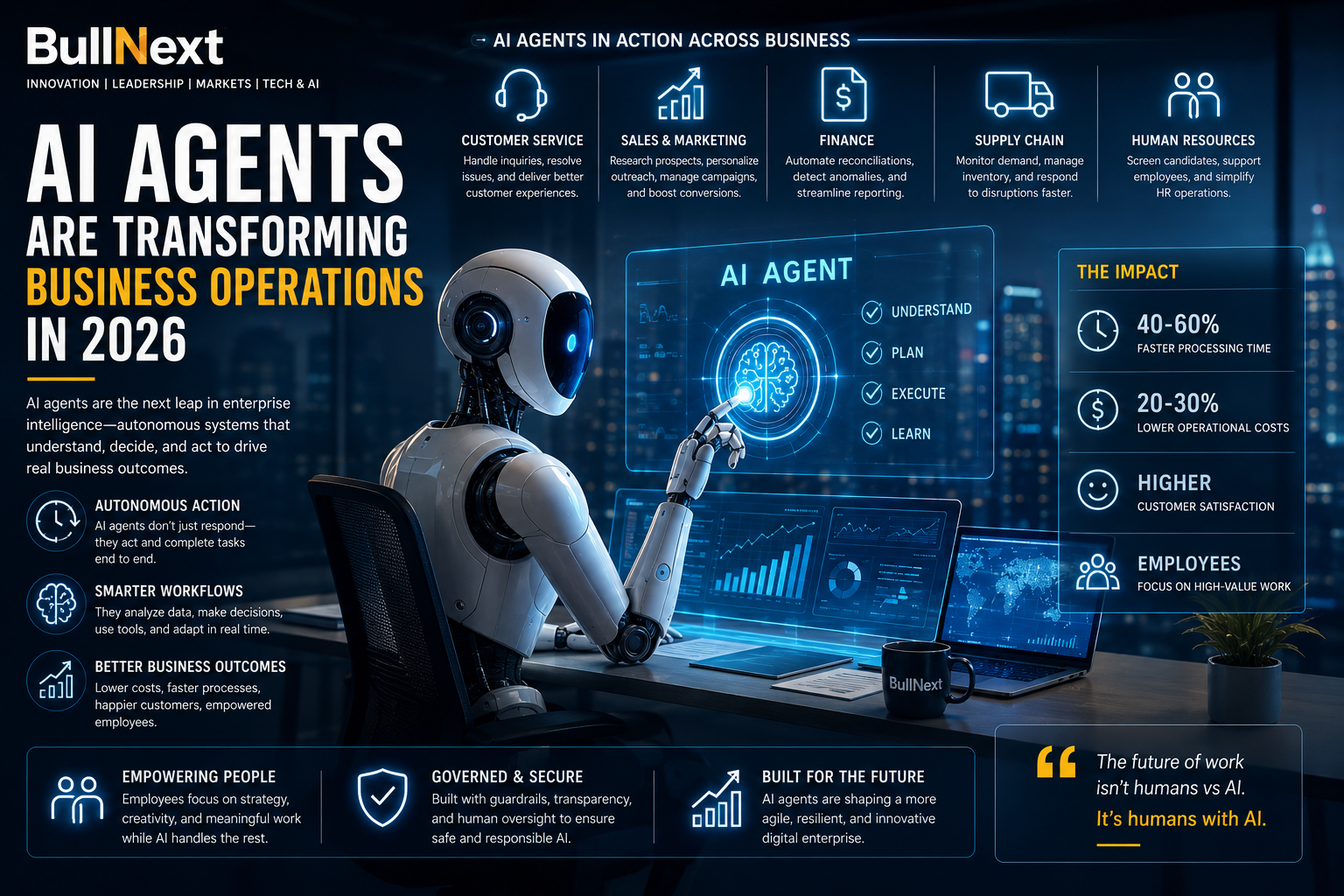
AI agents are helping businesses move beyond simple question-and-answer applications. Modern agent-based systems can be designed to perform multiple steps within a workflow, depending on the tools, permissions, and business rules available to them.
For example, a sales workflow could use AI to research a potential customer, summarize relevant information, identify decision-makers, prepare a personalized outreach message, and organize the information for a salesperson.
Human oversight remains important, particularly for sensitive or high-impact decisions. However, AI can handle much of the repetitive preparation that previously consumed employee time.
Productivity Is Becoming More Intelligent
The biggest advantage of AI workflows is not simply automation. It is the ability to make automation more adaptable.
Traditional software generally follows predefined instructions. AI systems can interpret information, recognize patterns, summarize unstructured data, and respond to changing inputs.
This creates opportunities across industries.
Retail businesses can use AI to analyze customer behavior and improve inventory decisions. Financial companies can automate research and risk analysis. Healthcare organizations can streamline administrative processes. Technology companies can use AI to support software development and customer operations.
The potential productivity gains come from connecting intelligence with everyday business processes.
Businesses Need Better Data
AI workflows depend on reliable information.
If customer records are incomplete, business documents are poorly organized, or data is spread across disconnected systems, AI may struggle to produce useful results.
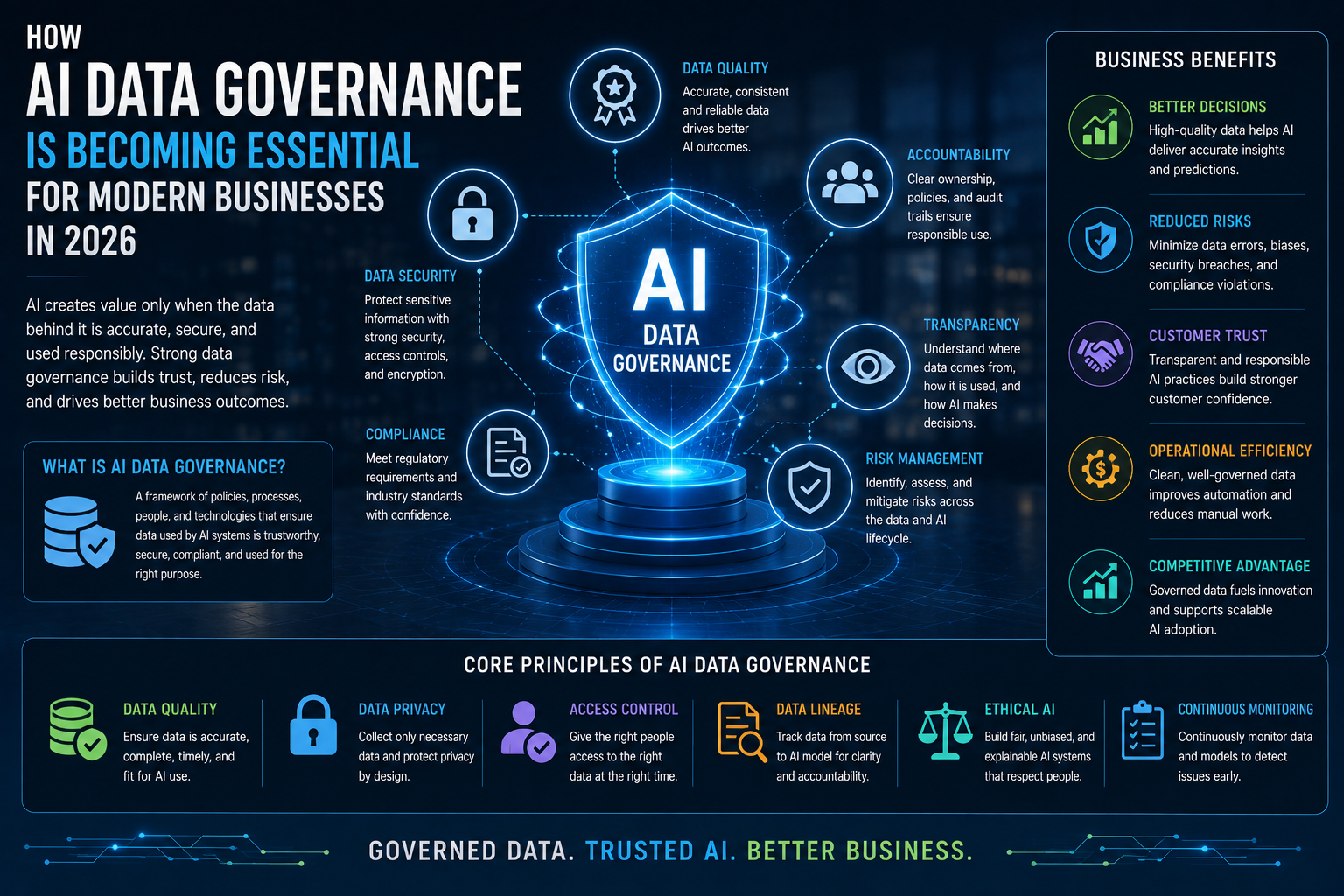
Companies therefore need to improve their data infrastructure alongside AI adoption. Clear data policies, accurate records, appropriate access controls, and strong security practices can make AI systems considerably more effective.
Data quality is likely to become an increasingly important competitive advantage as organizations deploy more intelligent workflows.
Human Expertise Still Matters
The rise of AI workflows does not eliminate the importance of employees. Instead, it changes how people interact with technology.
Employees can increasingly focus on strategy, creativity, negotiation, leadership, and complex problem-solving while AI handles repetitive information-processing tasks.
The most successful companies may therefore be those that combine AI capabilities with strong human expertise.
Managers will also need to understand when AI should be trusted, when outputs require verification, and which decisions should remain under human control.
A New Approach to Business Transformation
AI adoption is moving from experimentation toward operational integration. Businesses are no longer asking only, “Which AI tool should we use?” They are increasingly asking, “Which parts of our workflow can become more intelligent?”
That is a more strategic question.
Companies that identify the right processes, establish reliable data foundations, and introduce appropriate human oversight can use AI to build faster and more adaptable operations.
The future of business AI will likely involve fewer isolated tools and more connected systems working across entire organizations. As AI agents, automation platforms, and intelligent software continue to develop, workflows themselves may become one of the most important areas of innovation.
For modern businesses, the competitive advantage may not come from simply having access to AI. It may come from knowing how to integrate AI into the way work