Debt can become overwhelming when credit card balances, personal loans, medical bills, and other expenses consume a large portion of monthly income. For Americans struggling to keep up with payments, debt relief companies may offer assistance through debt settlement, creditor negotiations, or other debt-management services.
The best debt relief companies in 2026 are those that clearly explain their services, disclose fees, and help consumers understand the potential benefits and risks before enrolling. However, debt relief is not a guaranteed way to eliminate debt. Some programs can damage credit scores, increase collection activity, and cost more than consumers expect.
This guide compares several companies worth researching, explains how debt relief works, and highlights safer ways to evaluate your options.
What Are Debt Relief Companies?
Debt relief companies help consumers explore ways to manage, negotiate, or reduce certain outstanding debts. Their services vary, and it is important to understand which service a company actually provides.
Common debt relief options include:
Debt settlement: Negotiating with creditors to accept less than the full balance owed.
Debt management plans: Working with a credit counseling organization to arrange a structured repayment plan, sometimes with reduced interest rates.
Debt consolidation: Using a new loan to repay multiple debts and replace them with one payment.
Credit counseling: Reviewing income, expenses, and debts to develop a repayment strategy.
These services are not interchangeable. Debt settlement can carry substantial risks, while consolidation may help borrowers who qualify for a more affordable loan. A nonprofit credit counselor may also help consumers develop a plan without enrolling in a for-profit settlement program.
The Consumer Financial Protection Bureau recommends comparing alternatives before signing an agreement with a debt relief company. <Cite refs={["turn803397search8","turn803397search0"]}/>
Best Debt Relief Companies to Compare in 2026
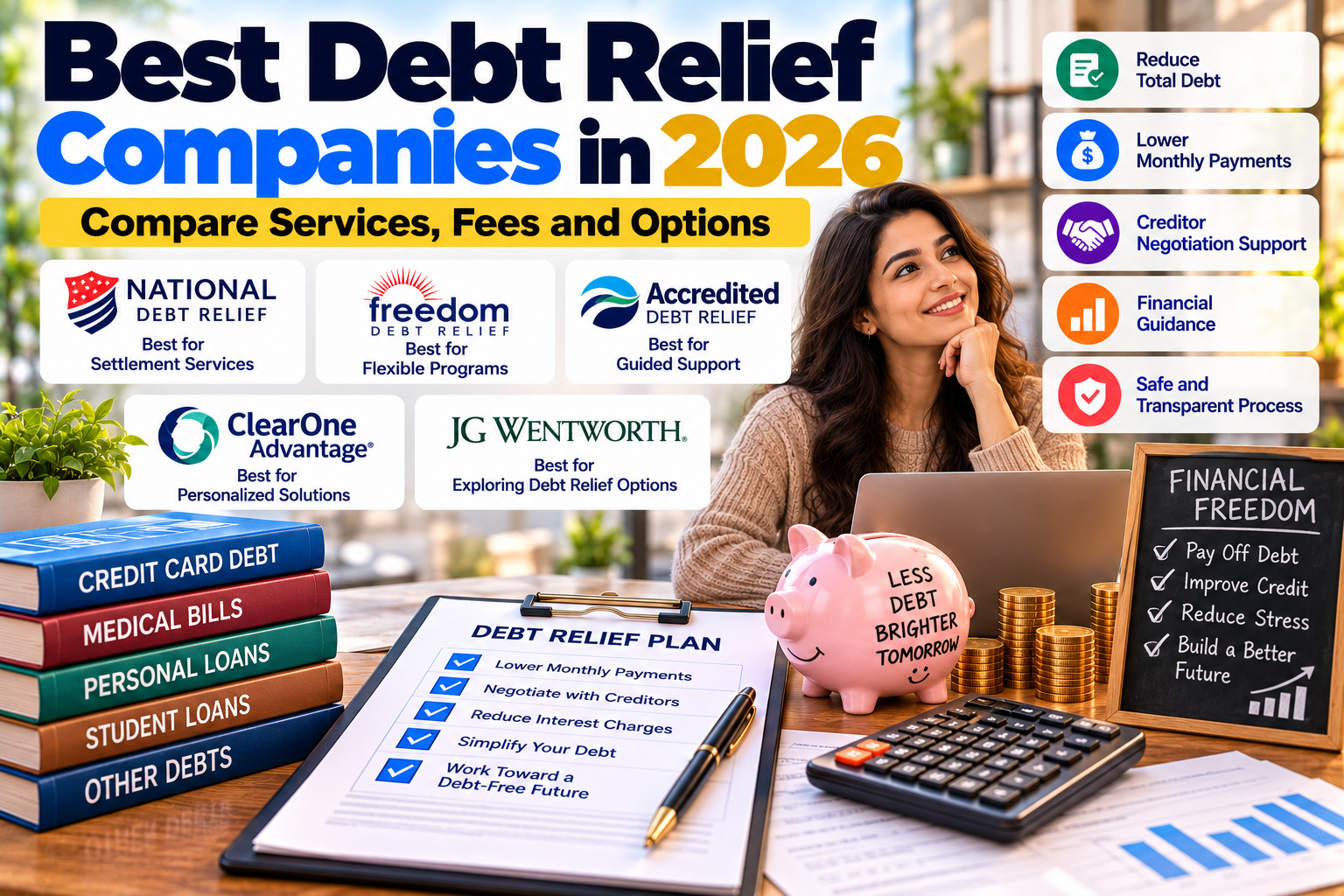
The following companies offer debt settlement or related services in the U.S. They are comparison candidates rather than a guarantee of the best outcome for every borrower. Eligibility, fees, services, and state availability can change.
1. National Debt Relief — Best for Comparing Settlement Services
National Debt Relief is an established provider of debt settlement services. It works with eligible consumers who want assistance negotiating certain unsecured debts.
Services to investigate:
Negotiation of eligible unsecured debts.
Initial consultations to discuss financial circumstances.
Program estimates and repayment timelines.
Information about fees and settlement procedures.
What to consider: Debt settlement usually requires consumers to save money toward negotiated settlements. Creditors are not required to accept offers, and unpaid balances may accumulate interest and fees.
Best for: Consumers experiencing genuine financial hardship who want to compare professional debt settlement with other options.
Website: National Debt Relief
2. Freedom Debt Relief — Best for Comparing Settlement Support
Freedom Debt Relief offers debt settlement services and resources for consumers exploring ways to address eligible unsecured debt.
Services to investigate:
Negotiation with participating creditors.
Online tools for managing program information.
Consultation about potential settlement options.
Details about program fees and eligibility.
What to consider: Settlement can negatively affect credit, particularly if accounts become delinquent while funds are accumulated. Review the company's current terms, cancellation policy, and any program guarantees carefully.
Best for: Consumers who want to compare an established settlement provider with other companies before making a decision.
Website: Freedom Debt Relief
3. Accredited Debt Relief — Best for Exploring Guided Settlement Programs
Accredited Debt Relief provides debt relief services to eligible consumers seeking help with certain unsecured debts.
Services to investigate:
Debt assessment and program consultation.
Assistance negotiating eligible balances.
Explanations of settlement costs and program requirements.
Information about the time needed to complete a program.
What to consider: Ask for a written estimate of total costs and clarify which debts qualify. Do not assume that the company can settle every account or guarantee a specific reduction.
Best for: Consumers who prefer guided assistance while comparing debt settlement options.
Website: Accredited Debt Relief
4. ClearOne Advantage — Best for Comparing Personalized Debt Solutions
ClearOne Advantage is another provider to investigate when researching debt settlement and personalized debt relief services.
Services to investigate:
Initial debt and financial assessments.
Potential settlement options for eligible accounts.
Program cost disclosures.
Expected repayment contributions and timelines.
What to consider: Ask how fees are calculated, when they become payable, and what happens if creditors reject proposed settlements or you leave the program early.
Best for: Consumers who want another settlement quote for comparison.
Website: ClearOne Advantage
5. JG Wentworth — Best for Exploring Debt Relief Options
JG Wentworth is a financial services company that consumers may encounter when researching debt relief and related financial solutions.
Services to investigate:
Current debt relief program availability.
Eligibility and minimum debt requirements.
Program costs and expected timelines.
Options available in your state.
What to consider: Confirm which service is being offered. Debt settlement, debt consolidation, and structured settlement purchasing are different financial activities and should not be confused.
Best for: Consumers who want to compare available debt relief services and verify the exact terms of a proposed program.
Website: JG Wentworth
Important: Company names and descriptions are starting points for research, not endorsements. Verify current program details directly with each provider and independently review complaints, regulatory records, and contractual terms.
Debt Relief Company Comparison
Company | Main area to investigate | Important question |
|---|---|---|
National Debt Relief | Debt settlement | What is the total estimated program cost? |
Freedom Debt Relief | Debt settlement | What fees, conditions, and guarantees apply? |
Accredited Debt Relief | Guided settlement services | Which debts qualify, and what are the risks? |
ClearOne Advantage | Personalized settlement options | How are fees calculated and charged? |
JG Wentworth | Available debt relief services | Which specific service is being offered? |
The best option depends on your debt type, financial situation, location, and ability to make payments. Compare written offers rather than relying on advertising claims or a company's headline savings figure.
How Do Debt Relief Companies Work?
The process depends on the service selected. A typical debt settlement program may follow these steps:
Step 1: Review your finances.
The company examines eligible debts, income, expenses, and financial hardship to determine whether its program may be suitable.
Step 2: Review the agreement and fees.
Before enrolling, request written details about fees, estimated timelines, account arrangements, cancellation rights, and possible effects on credit.
Step 3: Build funds for potential settlements.
Some settlement programs ask participants to set aside money in a dedicated account to fund negotiated settlements. During this period, creditors may continue collection efforts.
Step 4: Review settlement offers.
A creditor may accept, reject, or counter an offer. You should understand the amount required to settle each debt and the fees charged by the company.
Step 5: Complete the agreed payments.
Once a settlement is accepted, the agreed amount must be paid according to its terms. Keep copies of written agreements and payment records.
Settlement is not guaranteed, and the process can take years. If a creditor refuses to negotiate, the balance may continue to grow. <Cite refs={["turn803397search0","turn803397search8"]}/>
How Much Do Debt Relief Companies Charge?
Fees vary by company, state, program, and service. Some settlement providers charge fees calculated as a percentage of enrolled debt or settled debt, depending on their agreement and applicable rules.
Before enrolling, ask for a written explanation of:
The fee percentage and the amount used to calculate it.
When fees become payable.
Any account maintenance or administration charges.
The total estimated cost of the program.
What happens if some debts cannot be settled.
Whether you can cancel and what costs remain.
In covered telemarketed debt relief programs, federal rules generally prohibit charging fees before the company has successfully renegotiated, settled, reduced, or otherwise changed the terms of a debt under the applicable requirements. Be especially cautious of anyone demanding an upfront fee for promised settlement results. <Cite refs={["turn803397search7","turn803397search0"]}/>
What Are the Risks of Debt Relief?
Debt settlement may help some consumers resolve eligible debts, but it can create serious financial consequences.
Credit score damage
Programs may encourage consumers to stop paying creditors while saving money for settlements. Missed payments and delinquent accounts can damage credit scores and remain on credit reports for years.
Additional interest and fees
Creditors may continue adding interest, late fees, and other charges while negotiations are pending. The amount owed could increase instead of decrease.
Collection activity and lawsuits
Creditors are not obligated to settle. They may continue contacting you or pursue legal action where permitted.
No guarantee of savings
Even if one creditor accepts an offer, another may refuse. Fees and accumulated charges can also reduce the benefit of a settlement.
Potential tax consequences
Some canceled debt may be considered taxable income, although exceptions apply. Consult a qualified tax professional about your circumstances.
The Federal Trade Commission warns consumers about companies that promise guaranteed results, claim to erase debt quickly, or fail to explain the consequences of their programs. <Cite refs={["turn803397search0","turn803397search1"]}/>
Debt Relief vs. Debt Consolidation
Debt relief and debt consolidation are often confused, but they work differently.
Feature | Debt settlement | Debt consolidation |
|---|---|---|
Main purpose | Negotiate a reduced payoff | Combine debts into a new loan |
Amount owed | May reduce the principal accepted by a creditor | Generally does not reduce the principal |
Credit impact | Can be significantly negative | Depends on the loan and payment behavior |
Interest and fees | May continue accumulating during negotiations | Depends on the new loan's APR and fees |
Main requirement | Ability to fund negotiated settlements | Qualification for a suitable loan |
Debt consolidation may be worth considering if you have stable income and qualify for a loan with a lower total borrowing cost. Debt settlement is generally a riskier option that should be considered carefully when other repayment strategies are not workable.
Alternatives to Debt Relief Companies
Before paying a company to negotiate your debts, consider these alternatives.
Nonprofit credit counseling
A reputable nonprofit credit counseling agency can review your finances, help create a budget, and discuss debt management plans. Ask about counseling costs and any fees associated with a plan.
Direct negotiation with creditors
Contact your creditors before accounts become more seriously delinquent. Explain your financial situation and ask whether they offer hardship programs, lower interest rates, or manageable payment arrangements.
Debt consolidation loans
If you qualify, a personal loan may combine eligible debts into one payment. Compare APRs, origination fees, repayment periods, and total repayment costs.
Budgeting and a structured repayment plan
Depending on your circumstances, a debt avalanche strategy—paying extra toward the highest-interest debt first—or a debt snowball strategy—paying off the smallest balance first—may help you make progress without hiring a settlement company.
Legal advice or bankruptcy assessment
If debts are unmanageable and lawsuits or wage garnishment are concerns, consult a qualified attorney or legal aid service to understand your rights and available options.
How to Avoid Debt Relief Scams
Use these safeguards before sharing financial information or signing a contract:
Avoid companies demanding upfront fees for debt settlement.
Be skeptical of guaranteed debt forgiveness or promises to eliminate all debt.
Never rely solely on claims of a special government debt relief program.
Read the agreement, fee schedule, and cancellation terms.
Check the provider with your state attorney general, consumer protection agency, and relevant accreditation organizations.
Ask what happens if creditors refuse to settle.
Do not ignore court papers or collection notices.
Get every settlement agreement in writing before making payment.
If you suspect a scam, you can report it to the Federal Trade Commission at ReportFraud.ftc.gov. <Cite refs={["turn803397search1","turn803397search0"]}/>
Frequently Asked Questions
What is the best debt relief company in 2026?
There is no universally best provider. Compare National Debt Relief, Freedom Debt Relief, Accredited Debt Relief, ClearOne Advantage, and other eligible providers based on fees, services, state availability, and written program terms.
Are debt relief companies legitimate?
Some providers offer legitimate services, but the industry also attracts scams. Verify the company, understand the contract, and avoid guaranteed results or demands for upfront settlement fees.
Can a debt relief company eliminate all my debt?
No company can guarantee that every creditor will agree to settle. Eligibility also depends on the type of debt and the program's requirements.
Will debt relief hurt my credit score?
Debt settlement can hurt credit, particularly when accounts become delinquent. The effect varies by credit history and what happens during the program.
Is nonprofit credit counseling better than debt settlement?
It may be a lower-risk starting point for consumers who can still repay their debts but need help organizing payments. A counselor can explain debt management options, although fees and program suitability should still be reviewed.
How long does debt settlement take?
The timeline varies with the amount owed, available savings, creditor decisions, and the program. Some programs take multiple years, and completion is not guaranteed.
Final Thoughts
The best debt relief companies in 2026 should offer transparent terms, explain realistic outcomes, and help consumers understand the risks before making a commitment. National Debt Relief, Freedom Debt Relief, Accredited Debt Relief, ClearOne Advantage, and JG Wentworth are options to research, but no provider is right for every financial situation.
Before enrolling, compare total fees, check independent records, and investigate nonprofit credit counseling or direct creditor negotiations. The most useful solution is one that fits your budget, protects your financial interests as much as possible, and provides a realistic path toward managing your debt.
Disclaimer: This article is for educational purposes only and is not financial, legal, or tax advice. Debt relief outcomes vary, and no settlement result is guaranteed. Verify current company terms and consider professional guidance before making financial decisions.