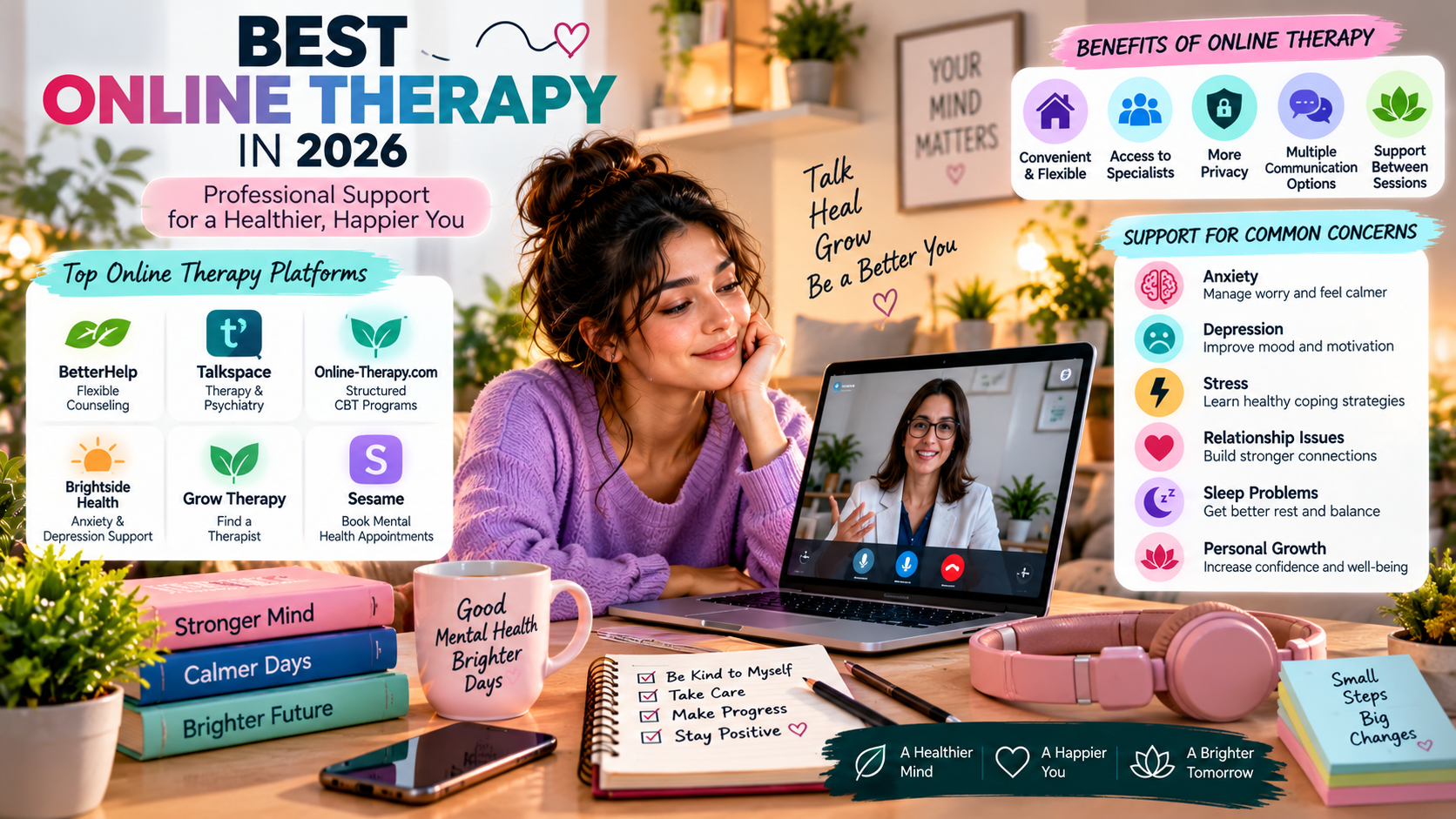
Finding the right mental health support can make a meaningful difference in everyday life. Online therapy has made it easier for people to connect with therapists through video calls, phone sessions, and secure messaging without always needing to travel to a clinic.
In 2026, several online therapy platforms offer different services, including individual counseling, couples therapy, structured mental health programs, and psychiatric care. However, not every platform is suitable for every person. Costs, therapist qualifications, availability, privacy policies, and treatment options can vary considerably.
Whether you are looking for support with stress, anxiety, depression, relationship difficulties, or personal challenges, understanding your options can help you make a more informed decision.
This guide explores some of the best-known online therapy platforms, their key features, the benefits and limitations of virtual counseling, and the factors to consider before choosing a service.
What Is Online Therapy?
Online therapy, also known as virtual therapy or teletherapy, is a form of mental health care delivered through digital communication tools. It allows people to speak with qualified mental health professionals remotely.
Depending on the service, online therapy may include:
Live video sessions with a therapist.
Phone-based counseling.
Secure text or audio messaging.
Structured exercises and mental wellness resources.
Online couples or family counseling.
Psychiatric consultations and medication management through eligible providers.
Online therapy can be convenient for people with busy schedules, limited transportation, or difficulty accessing local services. However, availability depends on the provider, the client's location, and local licensing requirements.
Best Online Therapy Platforms in 2026
Several established services offer online mental health support. The following platforms have different strengths, so the best option depends on your personal needs rather than a single overall ranking.
1. BetterHelp — Flexible Online Counseling
BetterHelp is a widely recognized online therapy platform that connects users with mental health professionals through a digital service.
Key features:
Online individual therapy.
Video, phone, and messaging options, depending on the plan.
Therapist matching based on reported needs and preferences.
Educational resources and additional wellness activities.
Best for: People looking for flexible remote counseling and a variety of ways to communicate with a therapist.
Things to consider: Subscription costs, available session frequency, therapist credentials, and cancellation terms should be reviewed before signing up. Availability varies by country.
Website: https://www.betterhelp.com/
2. Talkspace — Therapy and Additional Mental Health Services
Talkspace provides online therapy and, in eligible locations, psychiatric services. It offers different plans and communication options.
Key features:
Online individual therapy.
Messaging and live sessions, depending on the plan.
Couples therapy options.
Psychiatric services in eligible locations.
Insurance coverage for some users and plans.
Best for: People who want different communication options or are looking for therapy and potentially additional psychiatric support.
Things to consider: Insurance acceptance, pricing, and available services depend on location and plan. Medication management requires an appropriate clinical assessment and an eligible prescriber.
Website: https://www.talkspace.com/
3. Online-Therapy.com — Structured Therapy Programs
Online-Therapy.com offers structured online mental health resources, including cognitive behavioral therapy (CBT)-based exercises and access to therapists through eligible plans.
CBT is a psychological treatment approach that helps people identify and work with patterns of thinking and behavior that may contribute to emotional difficulties.
Key features:
Structured self-guided exercises.
CBT-focused resources.
Online therapist support, depending on the plan.
Worksheets and activities for practicing skills between sessions.
Best for: People interested in structured exercises alongside professional support.
Things to consider: Self-guided programs may not be sufficient for everyone. Check which services are included in the current plan and whether the approach suits your needs.
Website: https://www.online-therapy.com/
4. Brightside Health — Support for Anxiety and Depression
Brightside Health focuses on mental health treatment, particularly services for anxiety and depression, in the locations it serves.
Key features:
Online mental health assessments.
Therapy services.
Psychiatric care and medication management where available.
Treatment options based on clinical needs and eligibility.
Best for: People seeking a service that may offer both therapy and psychiatric care.
Things to consider: Service availability, treatment eligibility, insurance coverage, and medication options vary. A qualified clinician should determine which treatment is appropriate.
Website: https://www.brightside.com/
5. Grow Therapy — Finding a Therapist
Grow Therapy helps people find mental health professionals, with options that may include in-person and virtual appointments.
Key features:
Therapist search and matching.
Online appointments with participating providers.
Information about therapist specialties.
Insurance options for eligible users.
Best for: People who want to compare therapists and investigate whether their insurance may cover sessions.
Things to consider: Provider availability, prices, and insurance participation depend on location and the individual therapist. Confirm the details directly before booking.
Website: https://growtherapy.com/
6. Sesame — Booking Online Health Appointments
Sesame is a healthcare marketplace where users can search for and book appointments with participating healthcare professionals. Depending on the provider and location, mental health-related services may be available.
Key features:
Online appointment search.
Upfront pricing for many listed services.
Access to participating healthcare professionals.
Options that may suit people paying directly for appointments.
Best for: People who want to compare available appointments and prices.
Things to consider: Not every listing is a therapy service. Confirm the professional's qualifications, appointment format, total cost, and whether follow-up care is available.
Website: https://sesamecare.com/
Important: These services are not equally available worldwide. Some primarily serve people in the United States or other specific markets. Before registering, check whether the platform accepts clients in your country and whether its therapists are authorized to provide care where you live.
Online Therapy Comparison Table
Platform | Main strength | Potentially suitable for |
|---|---|---|
BetterHelp | Flexible remote counseling | People seeking online therapy options |
Talkspace | Therapy and additional clinical services | People comparing therapy formats and psychiatric care |
Structured CBT-based resources | People who prefer guided exercises | |
Brightside Health | Anxiety and depression treatment options | People seeking coordinated mental health care |
Grow Therapy | Finding and comparing therapists | People checking therapist options and insurance |
Sesame | Appointment search and price comparison | People looking for available healthcare appointments |
Features, prices, insurance arrangements, and eligibility can change. Confirm current details directly with each provider before making a decision.
How Much Does Online Therapy Cost?
Online therapy costs vary according to the provider, therapist, session length, location, and type of treatment.
Common payment arrangements include:
Subscription Plans
Some services charge a recurring fee for a package of messaging, live sessions, or additional resources. Review exactly what the subscription includes and how often you can meet with your therapist.
Pay-Per-Session
Some therapists charge for each appointment. This arrangement can be useful for people who prefer to book sessions as needed instead of committing to a subscription.
Insurance Coverage
Certain platforms and independent therapists accept insurance in eligible markets. Coverage depends on the policy, provider, treatment, and any applicable referral or authorization requirements.
Lower-Cost Counseling
Depending on the country, affordable options may include community mental health organizations, university training clinics, nonprofit services, and sliding-scale therapists.
Before paying, check for additional charges, cancellation fees, renewal terms, refund policies, and whether follow-up appointments are included.
Benefits of Online Therapy
Online therapy can make mental health support more accessible for many people.
1. Convenience
People can often attend sessions from home or another private location. This can reduce travel time and make appointments easier to fit around work, education, or family responsibilities.
2. Access to Different Specialists
Depending on the service and local regulations, online appointments may provide access to professionals who specialize in anxiety, depression, relationships, grief, trauma, or other concerns.
3. Flexible Communication
Some services offer video calls, phone appointments, or messaging. Different formats may suit different communication preferences, although not every format is appropriate for every clinical need.
4. Greater Privacy at Home
Speaking with a therapist remotely may feel more comfortable for some people. However, privacy depends on the technology being used and the environment in which the session takes place.
Choose a quiet location, use a secure device, and review the provider's privacy policy.
5. Support Between Appointments
Some services offer worksheets, journaling prompts, or communication with a therapist between sessions. These resources may help people practice skills and reflect on progress between appointments.
Limitations of Online Therapy
Online therapy also has limitations that are important to understand.
Technical Problems
Weak internet connections, audio issues, or device problems can interrupt sessions. A backup communication plan may help prevent unnecessary disruption.
Limited Access to In-Person Care
Some situations require physical examinations, specialized assessments, or more intensive care that cannot be provided entirely online.
Privacy Concerns
Digital services may collect personal information, appointment details, and sensitive health information. Read the privacy policy carefully and understand how data is stored, shared, and protected.
Licensing Restrictions
Therapists may only be permitted to treat clients in certain locations. A provider available in one country may not be authorized to treat someone living elsewhere.
Not Suitable for Every Crisis
Routine online therapy platforms are not substitutes for emergency services. People facing immediate danger or a severe mental health crisis need urgent, appropriate local support.
How to Choose the Best Online Therapist
Choosing the right therapist is an important part of getting useful support. Consider the following factors before booking.
Check Professional Qualifications
Look for a qualified mental health professional whose credentials can be verified with the relevant licensing or registration authority.
Professional titles and requirements differ between countries. Make sure the provider is authorized to practice in your location.
Consider Your Main Concern
Different therapists have different areas of experience. You may want to find someone familiar with anxiety, depression, relationship difficulties, grief, trauma, stress, or another specific concern.
Ask whether the therapist's approach is suitable for your needs.
Compare Communication Options
Think about whether you prefer video sessions, phone calls, or messaging. Live sessions may be particularly useful when you want direct conversation, while messaging may suit some between-session needs.
Review the Total Cost
Compare session fees, subscriptions, appointment frequency, insurance coverage, and cancellation terms. The least expensive service is not automatically the best value if it does not provide the care you need.
Ask About Privacy
Confirm how sessions are protected, who can access your information, and whether the provider uses third-party services. Avoid discussing sensitive matters where other people can overhear.
Look for a Comfortable Therapeutic Relationship
A helpful therapist should listen respectfully, explain their approach, discuss treatment goals, and allow you to ask questions.
It may take time to find the right fit. If you feel consistently uncomfortable or believe the approach is not helping, you can discuss your concerns or explore another qualified provider.
Is Online Therapy Effective?
Online therapy can be effective for many people, particularly when treatment is appropriate for their needs and delivered by a qualified professional.
Research supports online psychological interventions for certain mental health concerns, including some forms of anxiety and depression. Outcomes vary according to the individual, the condition, the treatment method, and the quality of care.
Online therapy is not automatically better or worse than in-person therapy. Some people appreciate the convenience of remote appointments, while others benefit more from face-to-face care.
The most appropriate format is one that provides suitable clinical support, allows the person to participate comfortably, and meets their treatment needs.
Online Therapy vs. In-Person Therapy
Feature | Online therapy | In-person therapy |
|---|---|---|
Location | Remote sessions | Visits to a clinic or office |
Travel | Usually not required | May require travel |
Appointment format | Video, phone, or messaging, depending on the provider | Face-to-face |
Privacy | Requires a private digital environment | Depends on the clinic and setting |
Provider access | Limited by licensing and service availability | Depends on local access and provider availability |
Clinical suitability | Appropriate for many concerns | May be preferable for some assessments or treatment needs |
Both approaches can be useful. A qualified professional can help determine which format is appropriate for an individual's circumstances.
Tips for Getting the Most Out of Online Therapy
A few simple steps can help you prepare for your appointments.
Choose a private space: Find a location where you can speak comfortably without being interrupted.
Check your technology: Test your internet connection, camera, microphone, and headphones before the session.
Think about your goals: Write down the concerns you want to discuss and what you hope to achieve.
Be honest with your therapist: Share relevant information at a pace that feels manageable.
Practice recommended strategies: If your therapist suggests exercises, consider how to incorporate them into your routine.
Review your progress: Discuss what is helping, what feels difficult, and whether your treatment goals need adjustment.
Ask questions: You should understand the therapist's approach, treatment plan, fees, and confidentiality limits.
You do not need to prepare a perfect explanation of your feelings before starting therapy. A qualified therapist can help you explore your concerns step by step.
Online Therapy in Pakistan
People living in Pakistan may have different options from those available to clients in the United States. International platforms may restrict registration based on location, and professional licensing rules can differ.
Before booking online counseling in Pakistan, consider these steps:
Look for a qualified psychologist, psychiatrist, or counselor whose credentials can be verified.
Confirm that the professional is legally permitted to provide services to you.
Check whether appointments are available in English, Urdu, or your preferred language.
Ask about fees, payment methods, session length, and cancellation policies.
Confirm how personal information and session records are protected.
Check whether the provider can offer referrals or additional support if your needs change.
Local hospitals, established clinics, professional directories, and reputable mental health organizations can be useful starting points. Do not assume that an international service is available in Pakistan simply because its website can be accessed there.
The Future of Online Therapy in 2026
Digital mental health care continues to develop as providers explore new ways to make treatment more accessible.
Improved Telehealth Services
Video platforms and appointment systems may continue to improve, helping users schedule and attend sessions more conveniently.
More Personalized Treatment
Therapists may increasingly use individual goals, preferences, and progress reviews to tailor treatment. Clinical decisions should continue to be guided by qualified professionals and appropriate evidence.
Responsible Use of Artificial Intelligence
AI tools are being explored for mental health education, guided exercises, and navigation to services. However, AI systems can make mistakes and should not replace qualified therapists or emergency care.
Greater Attention to Privacy
As digital services expand, users and providers will need to consider secure communication, responsible data handling, and clear privacy practices.
Wider Mental Health Awareness
Online education and remote counseling may help more people learn about mental health and explore appropriate support. Access will still depend on affordability, professional availability, reliable internet, and local regulations.
Conclusion
The best online therapy service is the one that matches your needs, budget, location, and preferences while providing appropriate care from qualified professionals.
BetterHelp and Talkspace offer flexible online counseling options, Online-Therapy.com provides structured CBT-based resources, Brightside Health focuses on treatment options for anxiety and depression, Grow Therapy helps users find therapists, and Sesame allows people to search for healthcare appointments.
Before choosing a provider, compare costs, check professional credentials, review privacy policies, and confirm that the service is available in your location. Online therapy can be a useful way to access mental health support, but it is important to choose a service that suits your individual circumstances.
Taking the first step toward professional support can be an important part of caring for your mental well-being.
Frequently Asked Questions
1. What is the best online therapy service in 2026?
There is no single best service for everyone. BetterHelp, Talkspace, Online-Therapy.com, Brightside Health, Grow Therapy, and Sesame offer different features. The right choice depends on your needs, location, budget, and eligibility.
2. Is online therapy as effective as in-person therapy?
Online therapy can be effective for many mental health concerns. However, results vary, and some people or conditions may require in-person or more intensive care.
3. How much does online therapy cost?
Costs vary by country, provider, therapist, and appointment format. Some services use subscriptions, while others charge per session. Check current prices directly with the provider.
4. Can I get online therapy for anxiety and depression?
Yes. Qualified mental health professionals may offer online treatment for anxiety and depression. A professional assessment can help determine the most appropriate treatment.
5. Is online therapy available in Pakistan?
Some local professionals offer remote counseling, but international platform availability varies. Confirm that the therapist is qualified and authorized to serve clients in Pakistan before booking.
6. Is online therapy private?
Providers may use secure communication systems, but no digital service should be assumed to guarantee complete confidentiality. Review the privacy policy and attend sessions in a private environment.
7. Can online therapists prescribe medication?
Some qualified psychiatric providers can prescribe medication where permitted by local law. Psychologists and other therapists may not have prescribing authority. Confirm the provider's qualifications and local regulations.
8. What should I look for when choosing an online therapist?
Check qualifications, professional registration, relevant experience, communication options, privacy practices, cost, and whether the therapist's approach suits your needs.
9. Can I change my online therapist?
Many services allow clients to request another therapist, but the process varies. Check the platform's policies and discuss any concerns with the provider.
10. Is online therapy suitable during a mental health emergency?
Routine online therapy is not a substitute for emergency care. If someone is in immediate danger or cannot stay safe, contact local emergency services or go to the nearest emergency department.