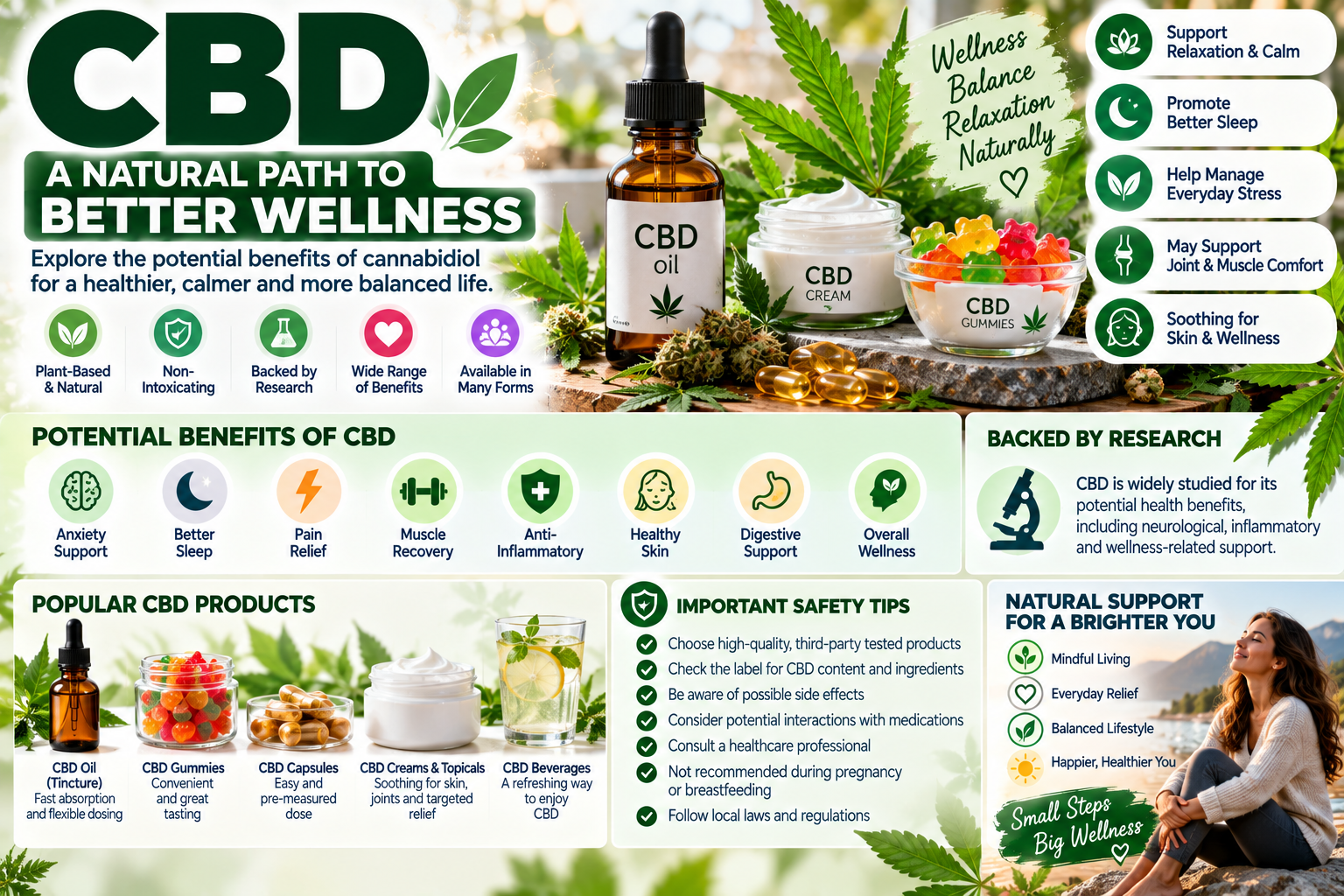
CBD creams have become a popular category within the growing cannabidiol and wellness market. These topical products are commonly marketed for localized comfort, post-workout routines, dry skin, relaxation, and everyday skincare.
Unlike CBD oils, gummies, and capsules, CBD creams are designed to be applied directly to the skin. They may contain cannabidiol alongside ingredients such as botanical extracts, essential oils, shea butter, aloe vera, menthol, or other moisturizing ingredients.
However, the growing popularity of CBD creams does not mean that every health claim associated with them has been scientifically established. Research into topical cannabinoids is still developing, and product formulations vary considerably.
The U.S. Food and Drug Administration (FDA) has highlighted broader safety concerns surrounding CBD products, including uncertain product quality, potential interactions, and unproven medical claims. The FDA has also specifically noted that more research is needed to understand how much CBD is absorbed through products applied to the skin.
This guide explains what CBD creams are, how they differ from other CBD products, potential uses, ingredients, safety considerations, product quality, and important trends shaping the category in 2026.
What Are CBD Creams?
CBD creams are topical products formulated with cannabidiol, commonly known as CBD.
They are applied directly to the skin rather than swallowed.
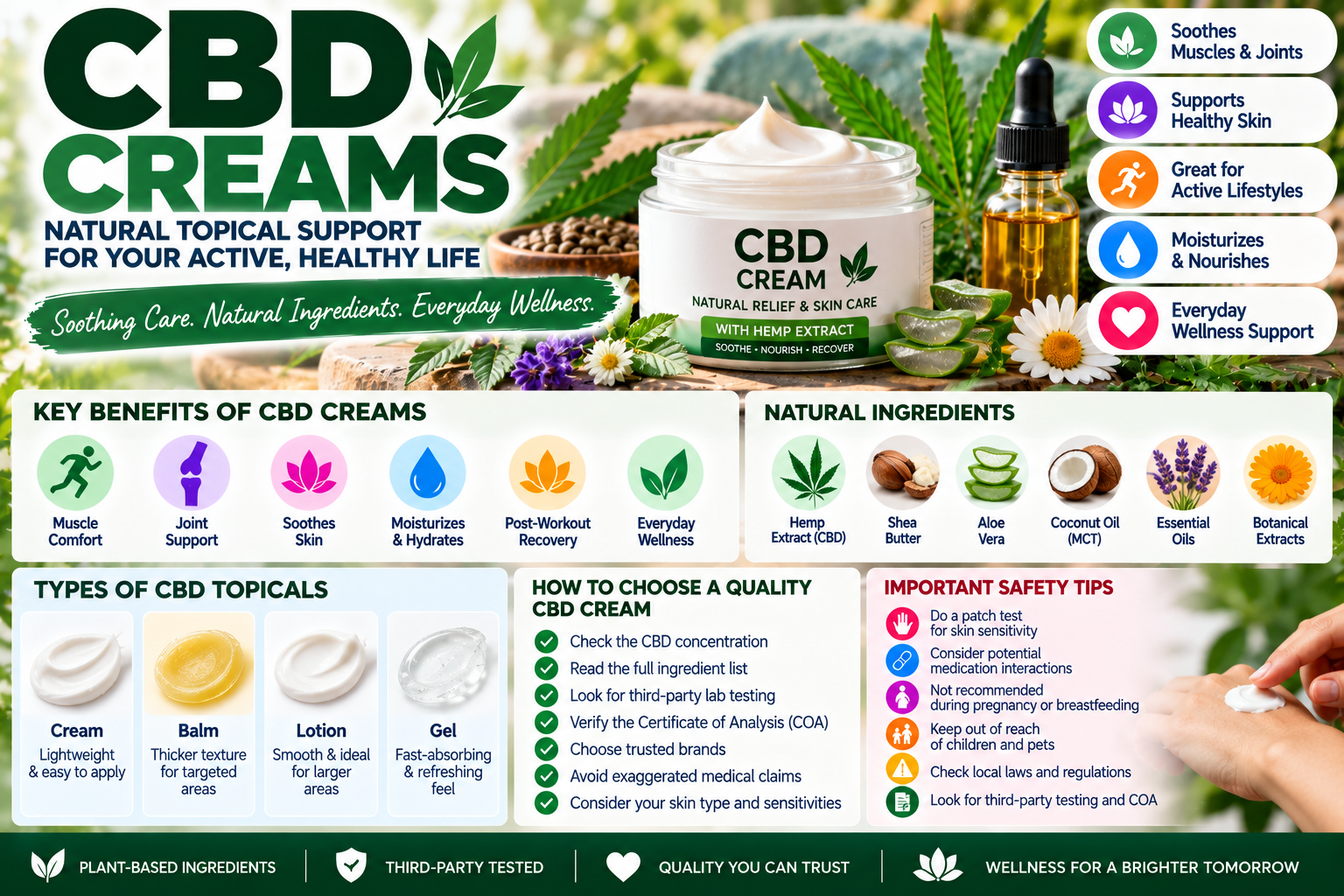
Depending on the formulation, a CBD cream may contain:
CBD extract
Water
Plant oils
Shea butter
Coconut or MCT-derived ingredients
Aloe vera
Botanical extracts
Essential oils
Fragrance
Menthol or cooling ingredients
Other cosmetic ingredients
The amount of CBD can vary significantly between products.
Some products are marketed primarily as skincare, while others are promoted for localized muscle and joint comfort.
How Do CBD Creams Work?
CBD creams are intended for topical application.
The skin acts as a protective barrier, and the amount of a substance that penetrates the skin depends on factors such as the formulation, concentration, skin condition, application area, and other ingredients.
Importantly, topical CBD should not automatically be assumed to produce the same effects as oral CBD.
The FDA has specifically identified the amount of CBD absorbed through CBD-infused skin creams as an area where more research is needed.
This means consumers should be cautious about assuming that applying CBD cream to the skin produces the same systemic effects as taking CBD orally.
CBD Cream vs. CBD Oil
CBD cream and CBD oil are different delivery formats.
CBD Cream
CBD cream is applied to the skin and is generally marketed for localized use.
CBD Oil
CBD oil is commonly formulated for oral or sublingual use, depending on the product.
Because the route of administration differs, the body's exposure to CBD can also differ.
Consumers should not assume that a particular amount of CBD in a cream is equivalent to the same amount of CBD taken orally.
CBD Cream vs. CBD Balm
CBD creams and balms are both topical products, but their textures are usually different.
Creams often contain more water and have a lighter texture.
Balms are generally thicker and more oil-based.
CBD lotions may be lighter still and can be designed for larger areas of skin.
The choice often depends on the intended use and personal skincare preferences.
Potential Uses of CBD Creams
CBD creams are marketed for a variety of purposes.
It is important to distinguish between potential uses, consumer experiences, and scientifically established medical benefits.
Localized Comfort
Many CBD creams are marketed for localized muscle and joint comfort.
Cannabinoids have been investigated in pain research, but much of the evidence involves cannabis or cannabinoid formulations that are not equivalent to ordinary over-the-counter CBD cream. NCCIH notes that evidence for cannabinoids and chronic pain varies according to the formulation and condition studied.
Therefore, research involving oral or other cannabinoid products should not automatically be interpreted as proof that every CBD cream relieves pain.
Post-Workout Routines
CBD creams are increasingly marketed toward people who exercise, participate in sports, or maintain active lifestyles.
Consumers may use a topical as part of a massage or recovery routine.
However, claims that CBD cream accelerates muscle recovery or treats sports injuries should be evaluated carefully because evidence for specific topical CBD benefits remains limited.
Skin Moisturization
Many CBD creams contain moisturizing ingredients such as:
Shea butter
Aloe vera
Plant oils
Glycerin
Coconut-derived ingredients
Ceramides
These ingredients can contribute to the product's moisturizing properties.
It is important to remember that any moisturizing benefit may come from the overall formulation rather than CBD itself.
Everyday Skincare
CBD has also entered the cosmetic skincare market.
Products may be marketed for dry skin, soothing routines, body care, or general skin wellness.
However, consumers should distinguish between a CBD-containing cosmetic product and a product making therapeutic claims about treating a medical skin condition.
CBD Creams for Muscle Comfort
One of the most common marketing categories for CBD creams is muscle comfort.
A topical product may be applied to areas such as:
Shoulders
Arms
Legs
Back
Hands
Feet
Some products also include ingredients such as menthol, camphor, eucalyptus, or essential oils that create cooling or warming sensations.
Those sensations should not necessarily be attributed to CBD.
Consumers should examine the entire ingredient list to understand what the product contains.
CBD Creams for Joint Comfort
CBD creams are frequently marketed toward people experiencing occasional joint discomfort.
Research into cannabinoids and pain continues, but evidence for topical CBD specifically remains less established than many advertisements suggest.
NCCIH notes that some cannabinoid preparations may provide modest benefits for certain types of chronic pain, but research on different cannabinoid formulations is limited and results cannot automatically be generalized to topical CBD creams.
A persistent or severe joint problem should not be treated solely with an over-the-counter CBD cream.
CBD Creams for Skin
The skincare market has become one of the most visible areas for CBD products.
CBD creams may be formulated with additional ingredients intended to support the skin barrier or improve texture.
For consumers interested in skincare, the complete formulation is more important than the CBD label alone.
Look for ingredients appropriate for your skin type and avoid products that contain ingredients known to cause irritation for you personally.
CBD Cream Ingredients
A CBD cream may contain dozens of ingredients.
Common categories include:
CBD
The main cannabinoid ingredient.
Carrier Oils
Examples include coconut-derived oils, jojoba oil, hemp seed oil, and other plant oils.
Moisturizers
Shea butter, glycerin and similar ingredients can help provide a moisturizing feel.
Botanical Ingredients
Some formulations include aloe vera, calendula, chamomile, arnica, or other botanical extracts.
Cooling Ingredients
Menthol and similar ingredients may create a cooling sensation.
Fragrance
Some CBD creams contain fragrance or essential oils.
People with sensitive skin may prefer fragrance-free formulations.
Is CBD Cream Safe?
CBD creams should not automatically be considered risk-free simply because they are applied to the skin.
The FDA says there are limited data about the safety of many CBD products and has identified concerns including product quality, unproven claims, potential drug interactions, and other safety issues.
For topical products specifically, another important consideration is skin irritation or sensitivity.
A new product can potentially cause:
Redness
Itching
Burning
Dryness
Irritation
Allergic reactions
If a product causes significant irritation, it should be discontinued.
Can CBD Cream Enter the Bloodstream?
The answer depends on the formulation.
Topical application does not necessarily mean that no CBD enters the body.
The amount absorbed through skin can vary according to the formulation and other factors.
The FDA has stated that it is still investigating how much CBD may be absorbed from CBD-infused skin creams and how cumulative exposure from multiple CBD products might affect safety.
Therefore, consumers should not assume that topical CBD is completely isolated from the rest of the body.
CBD Cream and Medication Interactions
CBD is known to have the potential to interact with medications when CBD is absorbed systemically.
The FDA has warned that CBD can affect how other medicines work.
The extent of this risk from a particular topical cream can depend on how much CBD is absorbed through the skin.
People taking prescription medications should therefore discuss regular CBD use with a doctor or pharmacist, particularly when using CBD products frequently or over large areas.
CBD Cream During Pregnancy
Pregnancy is an important situation where caution is especially appropriate.
The FDA advises against using CBD during pregnancy and breastfeeding because important questions remain about safety and exposure.
CBD creams should not automatically be assumed to be safe simply because they are topical.
Pregnant or breastfeeding individuals should speak with a healthcare professional before using CBD-containing products.
CBD Cream for Children
CBD creams should not be casually used on children.
Safety information for many commercial CBD products is limited, and children can be more vulnerable to unintended exposure.
Keep CBD creams safely out of children's reach.
If a CBD-containing product is being considered for a child for a medical reason, professional guidance is appropriate.
CBD Cream and Pets
CBD creams should also be kept away from pets.
Products may contain additional ingredients that are unsuitable for animals, and accidental ingestion can create risks.
A CBD cream intended for humans should not automatically be considered appropriate for dogs or cats.
How to Choose a CBD Cream
Consumers have many choices when shopping for CBD creams.
A few simple checks can make the process safer.
Check the CBD Amount
Look for the total CBD amount in the container.
Some products provide CBD per container, while others also provide an amount per application.
Read the Complete Ingredient List
Don't focus only on the word "CBD."
Look at:
Moisturizers
Essential oils
Fragrance
Cooling ingredients
Preservatives
Botanical extracts
Potential allergens
Look for Third-Party Testing
Independent laboratory testing can provide useful information about:
CBD concentration
THC content
Cannabinoid profile
Heavy metals
Pesticides
Microbial contamination
Other contaminants
Testing cannot prove that a product treats a particular condition, but it can provide greater transparency about what's inside the product.
Check the Certificate of Analysis
A Certificate of Analysis, or COA, is a laboratory report associated with a product or batch.
Consumers should check whether the COA identifies the same product and batch they are purchasing.
CBD Creams and THC
CBD creams can be made with different cannabinoid profiles.
CBD Isolate
Designed to contain CBD without other cannabinoids.
Broad-Spectrum CBD
Contains CBD and other cannabis compounds but is generally formulated without THC.
Full-Spectrum CBD
Contains multiple naturally occurring cannabis compounds and may contain trace THC.
People who must avoid THC should pay close attention to the product's laboratory results.
Can CBD Cream Cause a Drug-Test Problem?
The risk depends on the product and how much THC it contains.
A CBD cream containing THC could potentially contribute to THC exposure.
Full-spectrum products are particularly important to check because they can contain naturally occurring THC.
People subject to employment, athletic, military, or other drug testing should carefully consider the possibility of THC exposure.
CBD Creams and Skin Sensitivity
A CBD cream may contain many ingredients besides CBD.
Someone with sensitive skin may react to:
Fragrance
Essential oils
Preservatives
Botanical extracts
Menthol
Other active ingredients
A small-area patch test can help identify obvious irritation before applying a new cosmetic product more broadly.
A patch test does not guarantee that an allergic reaction will not occur.
CBD Creams for Dry Skin
CBD itself should not automatically be considered a moisturizer.
A cream's moisturizing properties depend largely on its overall formulation.
Ingredients such as:
Ceramides
Glycerin
Shea butter
Squalane
Plant oils
may contribute more directly to hydration and barrier support.
Consumers interested in CBD skincare should therefore evaluate the entire ingredient list rather than focusing exclusively on the CBD content.
CBD Creams vs. Traditional Topical Products
CBD creams compete with many established topical products.
Depending on the purpose, consumers may encounter:
Moisturizing creams
Menthol creams
Cooling gels
Warming balms
Arnica products
Massage creams
Barrier creams
Standard topical pain-relief products
CBD is one ingredient among many.
A consumer's choice should depend on the intended purpose, ingredient safety, evidence, personal tolerance, and professional advice when appropriate.
Warning Signs of a Low-Quality CBD Cream
Be cautious if a product:
Makes extreme medical claims
Claims to cure serious diseases
Does not disclose CBD concentration
Has no ingredient list
Provides no testing information
Uses misleading scientific terminology
Does not identify the manufacturer
Has unclear labeling
Makes guaranteed treatment claims
The FDA has warned that some CBD products are marketed with unproven medical claims and may be produced using questionable manufacturing practices.
CBD Creams and the 2026 Wellness Market
The CBD skincare and topical market is becoming more sophisticated.
Consumers are increasingly interested in:
Transparent ingredient lists
Third-party laboratory testing
THC information
Fragrance-free formulas
Plant-based ingredients
Sustainable packaging
Clearly stated CBD concentrations
Responsible marketing
This shift reflects a broader movement toward ingredient-conscious skincare and wellness products.
2026 Trends in CBD Creams
1. More Transparent Testing
Laboratory testing and Certificates of Analysis are becoming increasingly important to consumers who want greater confidence in cannabinoid content and product quality.
2. CBD Plus Skincare Ingredients
Modern formulations increasingly combine CBD with established cosmetic ingredients such as moisturizers, botanical extracts, and skin-barrier ingredients.
3. Specialized Topicals
Products are increasingly designed around specific consumer routines, including body care, massage, post-workout use, and everyday skincare.
4. Greater Regulatory Attention
Regulators continue to examine CBD products, labeling, safety, contamination, and therapeutic claims.
In 2026, the FDA also warned consumers about KUKA FLEX CBD after laboratory testing found undeclared diclofenac, a nonsteroidal anti-inflammatory drug, in the product.
This example highlights why transparent manufacturing and independent testing matter.
5. Consumer Education
As CBD becomes more mainstream, consumers are increasingly learning to distinguish CBD isolate, broad-spectrum CBD, full-spectrum CBD, THC, hemp seed oil, and CBD extract.
CBD Cream Buying Checklist
Before purchasing a CBD cream, consider the following:
CBD amount: Is the concentration clearly stated?
Ingredients: Does the complete ingredient list appear on the label?
THC: Is THC content disclosed?
Testing: Is independent laboratory testing available?
COA: Can the batch report be verified?
Skin type: Does the formulation suit your skin?
Fragrance: Does it contain essential oils or added fragrance?
Claims: Does the company avoid exaggerated medical promises?
Manufacturer: Is the company clearly identified?
Legal status: Is the product permitted where you live?
Frequently Asked Questions
What are CBD creams?
CBD creams are topical products containing cannabidiol that are applied directly to the skin.
What are CBD creams used for?
They are commonly marketed for localized comfort, massage, post-workout routines, dry skin, and general skincare. Evidence for specific medical benefits varies and remains limited for many topical CBD claims.
Do CBD creams make you high?
CBD itself is not generally intoxicating like THC. However, some products may contain THC.
Can CBD cream relieve pain?
CBD creams are marketed for pain and discomfort, but evidence specifically supporting over-the-counter topical CBD creams is still developing. Research on other cannabinoid formulations cannot automatically be applied to every CBD cream.
Can CBD cream moisturize the skin?
A CBD cream may moisturize the skin, but this depends largely on the complete formulation. Ingredients such as shea butter, glycerin, oils, and other moisturizers may contribute significantly to the product's moisturizing effect.
Are CBD creams safe?
Safety depends on the formulation and individual circumstances. CBD products have known and potential safety concerns, while topical creams can also cause skin irritation or allergic reactions.
Can CBD cream interact with medications?
CBD can interact with medications when absorbed systemically. Because absorption from topical products varies, people taking prescription medicines should discuss regular CBD use with a healthcare professional.
Can I use CBD cream during pregnancy?
The FDA advises against CBD use during pregnancy and breastfeeding.
How do I choose a good CBD cream?
Look for clear CBD concentration, complete ingredient information, independent laboratory testing, THC information, a verifiable Certificate of Analysis, and responsible marketing claims.
Conclusion
CBD creams have become an increasingly visible part of the modern skincare and wellness market. They offer a topical way for consumers to incorporate cannabidiol into personal-care routines without necessarily using an edible CBD product.
However, consumers should keep expectations realistic. Research into cannabinoids is expanding, but evidence supporting specific benefits from ordinary CBD creams remains limited compared with the strength of some marketing claims.
Product quality is another major consideration. Consumers should look beyond attractive packaging and check the CBD concentration, ingredients, THC content, independent laboratory testing, and Certificate of Analysis.
The FDA continues to identify unanswered questions about CBD safety and topical absorption, while regulators have also warned about products containing hidden pharmaceutical ingredients.
For 2026 and beyond, the CBD cream market is likely to move toward greater transparency, better testing, more sophisticated skincare formulations, and more responsible consumer education.
This article is for general educational purposes and is not a substitute for professional medical advice, diagnosis, or treatment.