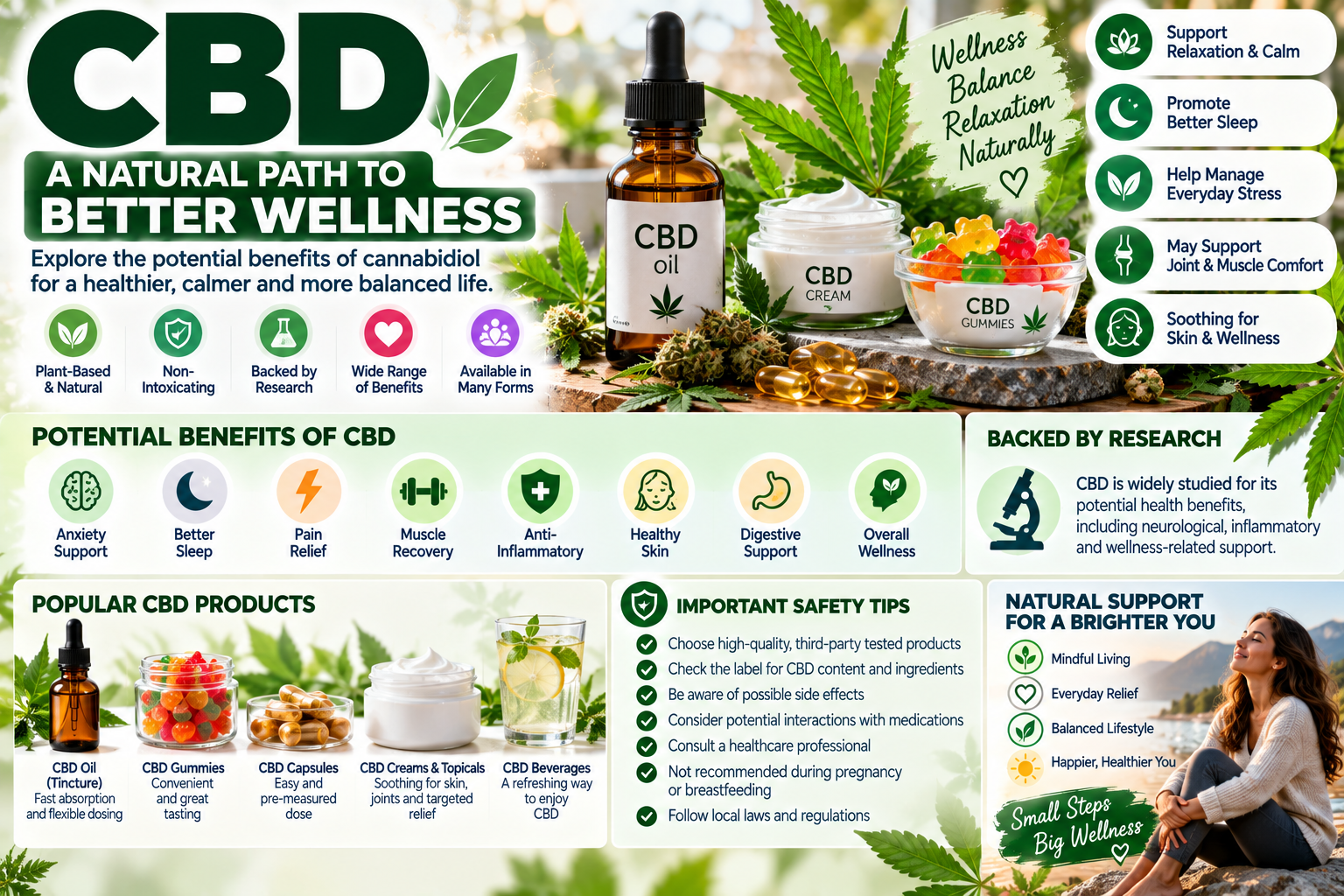
CBD oil has become one of the most widely discussed cannabidiol products in the wellness market. It is available in oils, tinctures, capsules, gummies, creams, and other formulations, and is often promoted for relaxation, sleep, stress, pain, and general wellness.
However, CBD oil is not a cure-all, and the scientific evidence behind many popular claims remains limited or mixed. The U.S. Food and Drug Administration (FDA) has identified important safety concerns involving CBD, including possible liver injury and interactions with medications. The FDA has approved one prescription CBD medicine for certain rare seizure disorders, but that approval does not apply to ordinary over-the-counter CBD oils.
This guide explains what CBD oil is, how it differs from THC, potential uses, product types, safety considerations, quality testing, legal issues, and important CBD trends in 2026.
What Is CBD Oil?
CBD oil is a product containing cannabidiol, commonly known as CBD, a naturally occurring compound found in the cannabis plant.
Unlike delta-9 THC, CBD is not generally considered intoxicating. This distinction is one reason CBD products have attracted significant consumer interest.
CBD oil is typically made by extracting CBD from hemp or cannabis plant material and combining the extract with a carrier oil. Common carrier oils include coconut-derived MCT oil, hemp seed oil and olive oil.
The concentration and composition of CBD oils can vary substantially between products.
Some products contain almost exclusively CBD, while others may contain additional cannabinoids, terpenes or small amounts of THC.
CBD Oil vs. THC Oil
CBD and THC are two of the best-known cannabinoids.
CBD
CBD is generally associated with non-intoxicating effects. Pure CBD does not produce the characteristic high associated with THC.
THC
THC is the primary intoxicating cannabinoid in cannabis. Products containing meaningful amounts of THC can affect perception, coordination, mood and cognition.
Why the Difference Matters
Consumers sometimes assume that every CBD oil is completely THC-free. That is not necessarily true.
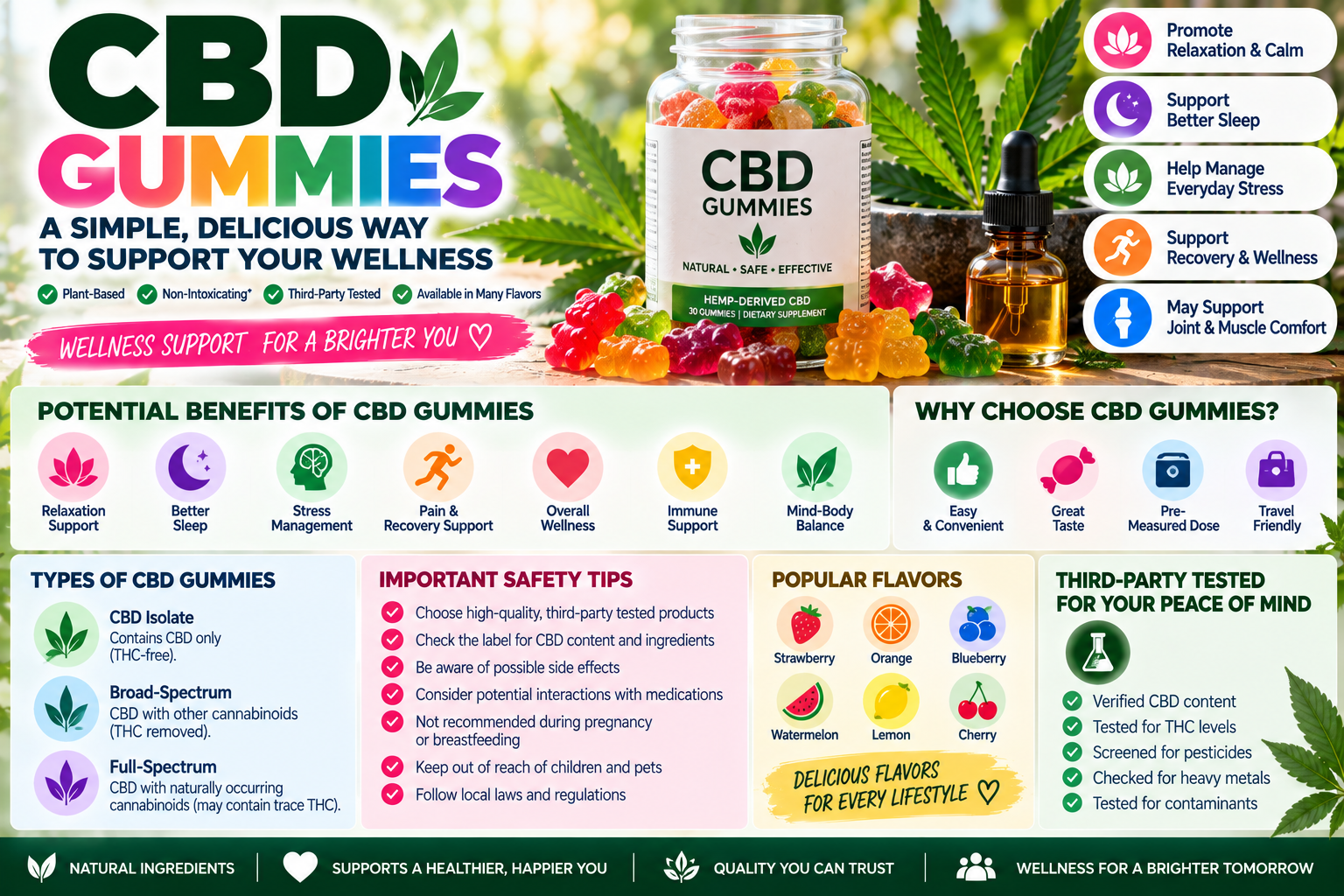
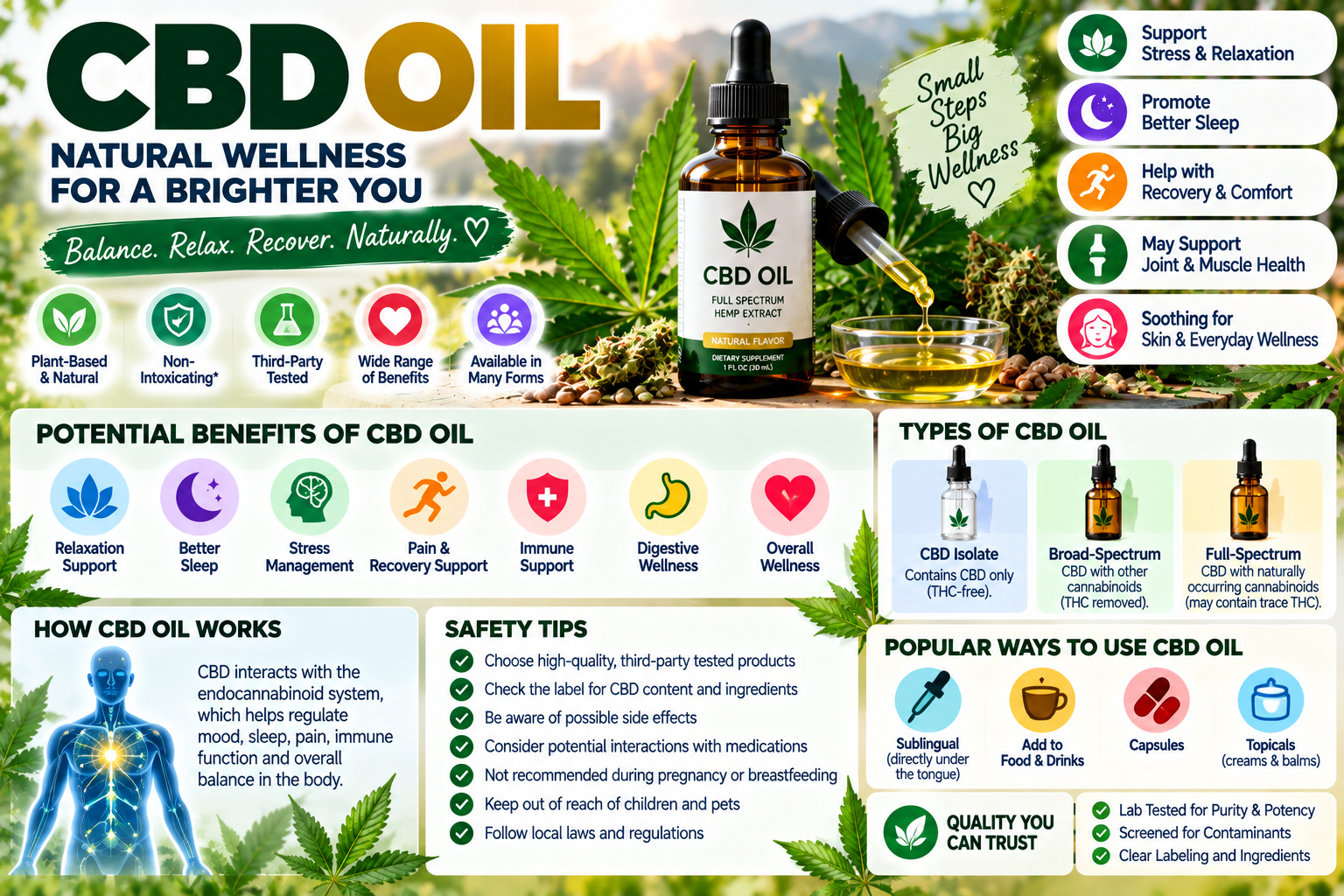
Full-spectrum products may contain naturally occurring cannabinoids, including trace amounts of THC. Broad-spectrum products generally remove THC, while CBD isolate is designed to contain CBD without other cannabinoids.
Because labeling accuracy can vary, consumers should look for independent laboratory testing rather than relying solely on marketing language. NCCIH notes that some nonprescription CBD products may contain different amounts of cannabinoids than their labels indicate and may contain contaminants.
Types of CBD Oil
CBD oils are commonly divided into three categories.
1. CBD Isolate
CBD isolate is intended to contain purified CBD without other cannabinoids.
It may appeal to consumers specifically looking for a CBD-only product.
2. Broad-Spectrum CBD
Broad-spectrum CBD products contain CBD and potentially other cannabis compounds but are generally formulated without detectable THC.
However, consumers should still review independent laboratory results.
3. Full-Spectrum CBD
Full-spectrum CBD contains CBD alongside other naturally occurring cannabis compounds.
Depending on the product and jurisdiction, full-spectrum extracts can contain small amounts of THC.
How Does CBD Oil Work?
CBD interacts with biological systems involved in regulating processes such as mood, pain perception, sleep and immune function.
CBD does not simply switch one biological pathway on or off. Its effects involve complex interactions with multiple receptors and signaling systems.
The endocannabinoid system is one area researchers study when examining how cannabinoids affect the body.
Research into cannabinoids continues to expand, but many questions about CBD's long-term effects and effectiveness for specific conditions remain unanswered.
Potential Benefits of CBD Oil
CBD is marketed for many different wellness purposes. However, marketing claims should not be confused with established medical evidence.
Relaxation and Stress
Some consumers use CBD products as part of a relaxation routine.
Research into CBD and anxiety-related conditions is ongoing, but evidence is not strong enough to conclude that commercially available CBD oil is an established treatment for anxiety disorders.
Sleep
CBD products are frequently marketed for sleep.
However, evidence supporting cannabinoids for sleep disorders remains insufficient. NCCIH notes that available research has not provided enough evidence to support cannabinoid therapies, including CBD, for treating sleep disorders.
Sleep problems can have many causes, including stress, medications, medical conditions, caffeine use and irregular schedules. CBD should not be considered a substitute for evaluation of persistent sleep problems.
Pain
Cannabinoid research has investigated chronic pain, particularly neuropathic pain.
NCCIH reports that some research suggests modest benefits from cannabis or cannabinoid products for certain chronic pain conditions, but side effects can occur and evidence varies depending on the product and condition studied.
This does not mean that every CBD oil is proven to relieve pain.
Epilepsy
The strongest established medical application for purified CBD is certain rare seizure disorders.
The FDA has approved Epidiolex, a purified CBD prescription medicine, for seizures associated with Lennox-Gastaut syndrome, Dravet syndrome and tuberous sclerosis complex.
This is an important distinction: evidence supporting an FDA-approved prescription medicine does not automatically establish the effectiveness or safety of commercially marketed CBD oils.
CBD Oil for Anxiety
CBD is widely promoted online as a natural solution for anxiety.
Although researchers have investigated CBD in relation to anxiety, the available evidence is not sufficient to treat ordinary over-the-counter CBD oil as a proven treatment for anxiety disorders.
People experiencing persistent anxiety, panic attacks or significant changes in mood should consider speaking with a qualified healthcare professional rather than relying exclusively on CBD products.
CBD Oil for Sleep
CBD oil is often marketed as a nighttime wellness product.
Some users report feeling more relaxed after taking CBD, but individual experiences are not the same as clinical evidence.
Current evidence is insufficient to establish CBD as an effective treatment for sleep disorders.
A consistent sleep schedule, appropriate sleep environment and evaluation of underlying causes remain important for people experiencing ongoing sleep problems.
CBD Oil for Pain
CBD oil has become particularly popular in wellness markets focused on pain and recovery.
Research into cannabinoids and chronic pain suggests that some cannabinoid preparations may provide modest improvements for certain conditions. However, research results differ according to the cannabinoid formulation, dose, medical condition and study design.
Consumers should be cautious about products making strong claims such as "cures arthritis," "eliminates chronic pain" or "replaces medication."
Is CBD Oil Safe?
CBD should not automatically be considered harmless simply because it is plant-derived or marketed as natural.
The FDA has identified several important safety concerns.
These include:
Potential liver injury
Drug interactions
Drowsiness or sedation
Changes in appetite
Gastrointestinal symptoms such as diarrhea
Changes in alertness or mood
Product contamination
Incorrect labeling
Potential exposure to THC
CBD can also affect how certain medications work.
CBD Oil and Medication Interactions
One of the most important considerations before using CBD oil is whether it can interact with medications.
CBD may influence how certain medicines are metabolized, potentially increasing or decreasing their effects.
This means people who regularly take prescription or over-the-counter medications should discuss CBD use with a healthcare professional or pharmacist.
This is particularly important when taking medicines that have a narrow therapeutic range or those affecting the liver or central nervous system.
CBD and Alcohol
Combining CBD with alcohol may increase sedation and drowsiness.
The FDA specifically warns that using CBD with alcohol or other substances that slow brain activity may increase the risk of sedation and related injuries.
Consumers should therefore avoid assuming that CBD and alcohol are automatically a safe combination.
CBD Oil and the Liver
Liver safety is an important topic in CBD research.
The FDA identified liver injury as a potential risk during evaluation of the prescription CBD medicine Epidiolex. Liver-related abnormalities were identified through blood testing in clinical studies.
This does not mean that every CBD user will experience liver injury. However, it demonstrates why CBD should not automatically be treated as risk-free, especially when used at higher amounts or alongside other medications that can affect the liver.
CBD Oil During Pregnancy and Breastfeeding
People who are pregnant or breastfeeding should be particularly cautious.
The FDA advises against using cannabis, including CBD products, during pregnancy and breastfeeding because important safety questions remain unanswered.
CBD products should not be assumed to be safe simply because they are sold as wellness products.
CBD Oil for Children
CBD products should not be casually given to children.
The FDA has specifically raised concerns about CBD safety, product quality and unapproved medical claims.
The one major exception is physician-supervised use of an FDA-approved CBD prescription medicine for specific seizure disorders.
Parents and caregivers should consult a qualified healthcare professional before considering cannabinoid products for a child.
How to Choose CBD Oil
If a consumer is considering a CBD oil, product quality is an important consideration.
Check the CBD Amount
Look at both the total CBD content and the amount per serving.
A bottle containing 1,000 mg CBD is very different from a bottle containing 300 mg CBD.
Check the Ingredients
Review the complete ingredient list.
Look for:
Carrier oil
CBD extract
Flavoring ingredients
Added botanical ingredients
Sweeteners
Preservatives
Other cannabinoids
Look for Independent Laboratory Testing
A Certificate of Analysis, commonly called a COA, can provide information about a product's cannabinoid content and certain contaminants.
Third-party testing does not prove that CBD is medically effective, but it can provide useful information about whether the product matches its label and meets specified quality standards.
Avoid Unsupported Medical Claims
Be cautious when a CBD company claims that its oil can cure serious diseases or replace conventional medical treatment.
The FDA has warned that some CBD products are marketed with unproven medical claims.
Why CBD Product Quality Matters
One of the biggest challenges in the CBD market is consistency.
NCCIH notes that nonprescription CBD products can contain more or less CBD than stated on their labels and may contain contaminants such as THC.
In 2026, the FDA also warned consumers about KUKA FLEX CBD after laboratory testing found undeclared diclofenac, an NSAID, in the product. This example demonstrates why consumers should be cautious about products marketed as "natural" without adequate quality controls.
CBD Oil vs. CBD Gummies
Both CBD oils and gummies deliver CBD, but the consumer experience can be different.
CBD Oil
CBD oil can be measured in drops and may provide more flexibility in how much product is used.
It is commonly placed under the tongue or swallowed, depending on the product instructions.
CBD Gummies
Gummies are pre-portioned edible products.
They are convenient and easy to carry but can take longer to produce noticeable effects because they pass through the digestive system.
Which Is Better?
There is no universally best CBD format.
The more important questions are product quality, accurate labeling, appropriate use and individual safety considerations.
CBD Oil vs. CBD Capsules
Capsules provide a pre-measured amount of CBD and can be convenient for people who dislike the taste of oils.
CBD oil may offer more flexibility in measuring an amount, depending on the product's dropper and concentration.
Neither format should automatically be considered more effective.
How Long Does CBD Oil Take to Work?
The timing can vary depending on the formulation, route of administration, individual metabolism, food intake and other factors.
Products swallowed as food or drink generally pass through the digestive system before absorption.
Because individual responses vary, consumers should avoid repeatedly taking additional amounts simply because effects are not immediately noticeable.
Following the product label and discussing CBD use with a healthcare professional is a safer approach.
Can CBD Oil Cause a Positive Drug Test?
Some CBD products may contain THC.
Full-spectrum CBD products can contain trace amounts of THC, and inaccurate labeling may increase uncertainty.
Therefore, people subject to workplace, athletic or other drug testing should consider the possibility that using certain CBD products could expose them to THC.
A product advertised as CBD does not necessarily guarantee a zero-THC result unless appropriate testing and product standards support that claim.
Is CBD Oil Legal?
CBD laws vary significantly between countries and jurisdictions.
Rules can depend on:
CBD concentration
THC content
Source of the CBD
Product category
Medical versus recreational use
Import and export regulations
The FDA states that CBD cannot legally be marketed as a dietary supplement or added to food under the U.S. federal framework.
WHO has previously concluded that pure CBD does not appear to have abuse or dependence potential, but national governments determine how CBD products are regulated within their jurisdictions.
Anyone traveling internationally with CBD should check the laws of both the departure and destination countries before carrying the product.
CBD Oil and the Wellness Industry
CBD has become part of a broader wellness market that includes:
CBD oils
CBD gummies
CBD capsules
CBD creams
CBD balms
CBD beverages
CBD skincare
Hemp-derived products
Functional wellness products
The market increasingly emphasizes transparency, laboratory testing, ingredient information and responsible marketing.
At the same time, consumers are becoming more aware of the difference between wellness marketing and scientifically established medical benefits.
CBD Oil Trends in 2026
Several trends are shaping the CBD industry in 2026.
Greater Focus on Testing
Consumers are increasingly looking for third-party laboratory reports, cannabinoid profiles and contaminant testing.
More Product Transparency
Clear labeling is becoming increasingly important as consumers compare CBD concentration, ingredients, THC content and testing information.
Specialized Formulations
The industry continues to experiment with oils, capsules, gummies, topicals and products containing combinations of cannabinoids and botanical ingredients.
More Scientific Research
Researchers continue to investigate cannabinoids and the endocannabinoid system, including potential therapeutic applications and safety questions.
Responsible Marketing
As regulators continue to scrutinize unproven health claims, responsible CBD companies have greater incentive to distinguish wellness messaging from medical claims.
CBD Oil: What Consumers Should Remember
CBD oil may be an interesting area of cannabinoid research, but consumers should approach it with realistic expectations.
The strongest established medical evidence for CBD involves specific prescription use for rare seizure disorders. Evidence for many popular wellness claims remains limited or uncertain.
The most important considerations include:
Understand whether the product contains CBD isolate, broad-spectrum or full-spectrum CBD.
Check the CBD concentration and ingredients.
Look for independent laboratory testing.
Consider the possibility of THC exposure.
Be aware of medication interactions.
Do not assume "natural" means risk-free.
Avoid CBD during pregnancy and breastfeeding unless specifically advised otherwise by a qualified healthcare professional.
Keep CBD products away from children.
Check local laws before buying or traveling with CBD.
Speak with a healthcare professional before using CBD for a medical condition.
Frequently Asked Questions About CBD Oil
What is CBD oil?
CBD oil is a product containing cannabidiol, a compound found in the cannabis plant, usually combined with a carrier oil.
Does CBD oil make you high?
Pure CBD is not considered intoxicating like THC. However, some commercial CBD products may contain THC.
What is CBD oil used for?
CBD oil is marketed for many purposes, including relaxation, sleep, stress and pain. Scientific evidence varies considerably by condition, and many popular claims remain unproven.
Is CBD oil safe?
CBD can have side effects and may interact with medications. The FDA has also identified potential liver injury and product-quality concerns.
Is CBD oil approved by the FDA?
The FDA has approved a purified CBD prescription medicine for certain rare seizure disorders. It has not approved ordinary CBD oils as treatments for general medical conditions.
Can CBD oil interact with medication?
Yes. CBD can affect how some medicines work, which is why people taking medication should consult a healthcare professional before using CBD.
Can you take CBD oil while pregnant?
The FDA advises against using CBD and other cannabis products during pregnancy and breastfeeding because safety questions remain unresolved.
Is CBD oil legal everywhere?
No. CBD laws vary by country and jurisdiction, particularly regarding THC levels, product type and intended use.
Conclusion
CBD oil has moved from a niche cannabis-derived product into a major part of the modern wellness conversation. Its popularity has encouraged research into cannabidiol, the endocannabinoid system and potential therapeutic applications.
However, consumers should separate scientific evidence from advertising claims. CBD has established medical use in a specific prescription medicine for certain rare seizure disorders, while evidence for many common wellness claims remains limited or uncertain.
Safety is equally important. CBD can interact with medications, may affect the liver and may be inaccurately labeled or contaminated in some commercial products.
For consumers considering CBD oil in 2026, the smartest approach is informed rather than impulsive: understand the product, check independent testing, review the ingredients, consider potential interactions and verify the laws that apply where the product is being purchased or used.
This article is for general educational purposes and is not a substitute for individualized medical advice, diagnosis or treatment.