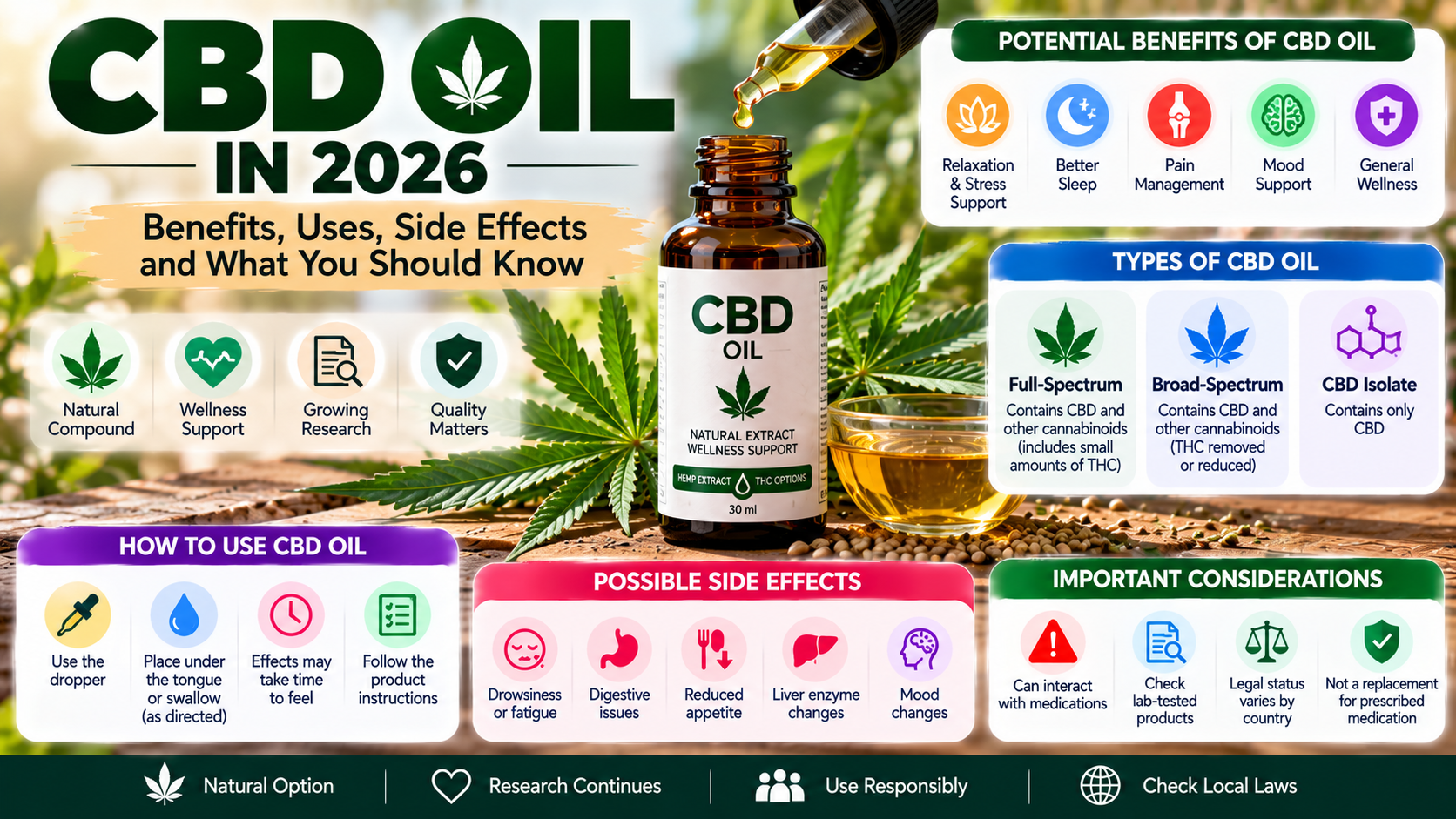
CBD oil has become a widely discussed wellness product, attracting interest from people looking for information about relaxation, sleep, pain management, and other possible health applications. However, understanding what CBD oil is, what scientific research actually supports, and what risks it may carry is essential before considering its use.
In this guide, we explain CBD oil in simple terms, explore its potential benefits, compare different product types, and outline important safety considerations for 2026.
What Is CBD Oil?
CBD oil is a product containing cannabidiol (CBD), a naturally occurring compound found in the cannabis plant. Manufacturers commonly extract CBD from hemp or other cannabis plants and combine it with a carrier oil, such as hemp seed oil, olive oil, or medium-chain triglyceride (MCT) oil.
Unlike tetrahydrocannabinol (THC), the compound primarily responsible for the intoxicating effects associated with cannabis, CBD is not considered intoxicating in its pure form. However, some CBD products contain THC or other compounds that may affect the user.
CBD oil is sold in different concentrations and formulations. Product quality, ingredient composition, and legal status can vary considerably between manufacturers and countries.
How Does CBD Oil Work?
CBD interacts with several biological systems in the body, including pathways involved in pain signaling, inflammation, mood, and other physiological processes. Researchers are still investigating exactly how these interactions translate into health effects.
One system of interest is the endocannabinoid system, which helps regulate functions such as sleep, appetite, mood, and pain perception. Although cannabinoids can influence this system, CBD does not work in exactly the same way as THC.
It is important to distinguish laboratory findings and early research from proven clinical benefits. A biological effect observed in a laboratory does not automatically mean a product will safely or effectively treat a health condition in humans.
Potential Benefits of CBD Oil
CBD oil is marketed for several wellness purposes, but the evidence varies by condition. Most over-the-counter products have not been established as effective treatments for the broad range of conditions mentioned in advertising.
1. Certain Seizure Disorders
One of the strongest established medical uses of CBD is the treatment of specific rare seizure disorders. In the United States, the Food and Drug Administration (FDA) has approved a prescription cannabidiol medicine called Epidiolex for certain seizure conditions.
This approval applies to a specific regulated medicine used under medical supervision. It does not mean that all commercially available CBD oils can treat epilepsy or replace prescribed medication.
2. Pain and Inflammation
CBD is frequently marketed for muscle discomfort, joint pain, and inflammation. Some early research has investigated cannabinoids and pain-related pathways, but evidence for CBD oil alone remains limited for many common pain conditions.
People experiencing persistent or severe pain should seek medical assessment rather than relying on an unproven product. CBD oil should not replace prescribed pain treatment without advice from a qualified healthcare professional.
3. Stress and Anxiety
Some people use CBD products in the hope of feeling calmer. Researchers are studying possible effects on anxiety-related processes, but the evidence is not sufficient to conclude that ordinary retail CBD oil reliably treats anxiety disorders.
Persistent anxiety, panic attacks, or significant stress may require professional support. CBD can also cause unwanted effects and interact with medicines used for mental health conditions.
4. Sleep Support
CBD oil is sometimes promoted as a natural sleep aid. However, sleep problems can have many causes, including stress, medication effects, irregular schedules, and underlying health conditions.
Current evidence does not establish that over-the-counter CBD oil is a reliable treatment for insomnia. Anyone experiencing ongoing sleep difficulties should discuss possible causes and evidence-based treatment options with a healthcare professional.
5. General Wellness
CBD oil is also marketed for relaxation and everyday wellness. These marketing claims should be approached carefully because there is limited evidence that taking CBD routinely provides broad health benefits in otherwise healthy people.
CBD should not be viewed as a substitute for balanced nutrition, regular physical activity, adequate sleep, or appropriate medical care.
Types of CBD Oil
CBD oils are commonly described according to the other cannabis compounds they contain.
Type | Description | Important consideration |
|---|---|---|
Full-spectrum CBD oil | Contains CBD and other plant compounds; may include THC | Check THC content and applicable laws |
Broad-spectrum CBD oil | Intended to contain CBD and other plant compounds with THC removed | Verify the composition through independent testing |
CBD isolate oil | Contains isolated CBD combined with a carrier oil | Purity and concentration still require verification |
The names alone do not guarantee a particular formulation. Actual ingredients can vary by manufacturer, so consumers should examine product labels and laboratory reports.
CBD Oil vs. CBD Gummies
CBD oil and CBD gummies are two common forms of CBD products. They differ in how they are taken, their ingredients, and how easily their amounts can be measured.
Feature | CBD oil | CBD gummies |
|---|---|---|
Form | Liquid extract mixed with carrier oil | Chewable edible |
How it is taken | Often placed under the tongue or swallowed, according to the label | Chewed and swallowed |
Ingredients | CBD, carrier oil, and possibly other compounds | CBD, sweeteners, flavorings, and other ingredients |
Amount measurement | Depends on concentration and dropper markings | Usually listed per gummy |
Onset and duration | Vary with formulation and route | Oral products may take longer to have an effect |
Main concern | Concentration and measurement accuracy | Ingredient content and delayed effects |
Neither form is automatically safer or more effective. Both can cause side effects and interact with medicines.
Possible Side Effects of CBD Oil
CBD is not risk-free. Reported side effects include:
Drowsiness, tiredness, or changes in alertness.
Diarrhea or other digestive discomfort.
Reduced appetite.
Changes in mood or irritability.
Abnormal liver blood tests or potential liver injury.
Interactions that can change how other medicines work.
The likelihood and severity of these effects may depend on the amount taken, the product's composition, other medicines, and individual health factors.
CBD may increase sedation when combined with alcohol or medicines that cause drowsiness. Do not drive or operate machinery if you feel impaired.
Seek medical advice if you experience concerning symptoms after using a CBD product. Severe symptoms require urgent medical attention.
Who Should Avoid CBD Oil or Seek Medical Advice First?
Certain people should not use CBD products without professional guidance.
Pregnant or Breastfeeding People
There is insufficient evidence to establish that CBD is safe during pregnancy or breastfeeding. Avoid using CBD products during these periods unless a qualified healthcare professional provides specific guidance.
People Taking Prescription Medicines
CBD can interact with various medicines, potentially increasing side effects or reducing treatment effectiveness. Discuss CBD use with a doctor or pharmacist before combining it with prescription medicines, over-the-counter drugs, or herbal supplements.
People With Liver Problems
CBD has been associated with liver injury, and some risks may be difficult to detect without medical testing. People with liver conditions should seek medical advice before considering CBD.
Children and Teenagers
CBD should not be used casually in children or teenagers. A prescription CBD medicine may be appropriate for specific conditions under specialist supervision, but retail products are not interchangeable with prescribed treatments.
How to Choose a CBD Oil Product
If CBD products are legal where you live and a healthcare professional considers their use appropriate, checking product quality is important.
1. Read the Full Ingredient Label
Look for the total amount of CBD in the bottle, the concentration per serving, the carrier oil, and any additional ingredients. Do not assume that a larger bottle contains a stronger concentration.
2. Look for Independent Laboratory Testing
Prefer products with a recent certificate of analysis (COA) from an independent laboratory. The report should identify cannabinoid content and, where tested, contaminants such as pesticides, heavy metals, residual solvents, and microbial contamination.
Check that the report matches the exact product and batch being sold.
3. Verify THC Content
Some products marketed as CBD oil contain THC. This may matter for impairment, drug testing, employment rules, and legal compliance.
A label claiming “THC-free” should be supported by reliable testing rather than accepted without verification.
4. Avoid Unsupported Medical Claims
Be cautious of sellers who claim CBD oil cures cancer, reverses serious diseases, replaces prescription medicines, or guarantees immediate results. Such statements are not reliable evidence of effectiveness.
5. Check the Manufacturer's Transparency
Look for clear contact information, traceable batch numbers, accurate ingredient lists, and accessible laboratory reports. Avoid products with unclear sourcing or exaggerated health promises.
CBD Oil Dosage: What Should You Know?
There is no single over-the-counter CBD oil dose that is appropriate for everyone or proven effective for every advertised use.
The amount of CBD in a product can differ significantly, and the safety of a particular amount depends on factors such as the reason for use, other medications, liver health, and the formulation.
Do not copy dosing advice from social media or assume that a product described as “natural” is safe at any amount. Prescription CBD medicines have specific dosing instructions and monitoring requirements. They should only be used according to a qualified prescriber's directions.
Is CBD Oil Legal in 2026?
CBD laws vary by country and may distinguish between hemp-derived products, THC-containing products, prescription medicines, and unregulated consumer products.
Before purchasing, importing, possessing, or using CBD oil, check the current rules in your jurisdiction. Do not assume that a product sold online is legal to import or use locally.
In Pakistan and other countries where cannabis-related products may be subject to specific controls, verify the applicable requirements with relevant official authorities before buying or using CBD oil. Legal status can change, and the rules for one country should not be applied automatically to another.
CBD Oil Myths vs. Facts
Common claim | What the evidence says |
|---|---|
CBD oil always causes a high | Pure CBD is not considered intoxicating, but products may contain THC |
CBD oil cures anxiety | Evidence is insufficient to establish that retail CBD oil reliably treats anxiety disorders |
Natural products have no side effects | CBD can cause side effects and drug interactions |
All CBD oils contain the amount shown on the label | Product contents can differ from label claims |
CBD oil can replace prescription medicines | It should not replace prescribed treatment without medical supervision |
Every CBD product is legal | Laws differ by country and product composition |
Frequently Asked Questions About CBD Oil
What is CBD oil used for?
CBD oil is marketed for wellness, sleep, anxiety, and pain-related concerns. However, evidence varies by condition, and only specific prescription CBD medicines have established approved uses for certain rare seizure disorders in jurisdictions such as the United States.
Does CBD oil make you feel high?
Pure CBD is not considered intoxicating in the way THC is. However, some products contain THC or other substances that can cause intoxicating effects. Check the product's ingredients and laboratory report.
How long does CBD oil take to work?
The timing varies with the formulation, amount, route of use, and individual factors. Products swallowed may take longer to have an effect than some products used under the tongue. There is no universal timeline or guarantee of benefit.
Can CBD oil help with sleep?
CBD is marketed for sleep, but research has not established that over-the-counter CBD oil reliably treats insomnia. Persistent sleep problems deserve an assessment of their underlying causes.
Can CBD oil cause side effects?
Yes. Potential side effects include drowsiness, digestive symptoms, reduced appetite, mood changes, liver injury, and interactions with medicines.
Is CBD oil safe for daily use?
Daily use is not automatically safe. Long-term safety data remain limited, and risks depend on the dose, formulation, medications, and individual health. Seek medical advice before regular use.
Is CBD oil the same as hemp seed oil?
No. Hemp seed oil is made from hemp seeds and is generally used as a food or skincare ingredient. CBD oil contains cannabidiol extracted from cannabis plant material. The terms should not be treated as interchangeable.
Can CBD oil cure serious diseases?
CBD oil should not be promoted as a cure for cancer or other serious diseases. People should not delay diagnosis or replace evidence-based treatment with unproven CBD products.
Final Thoughts
CBD oil continues to attract interest because of its possible applications in health and wellness. However, scientific evidence remains limited for many common claims, and product quality and legal status can vary substantially.
Anyone considering CBD oil should research the product carefully, check independent laboratory testing, review local laws, and speak with a qualified healthcare professional—particularly if they take medication or have an existing health condition