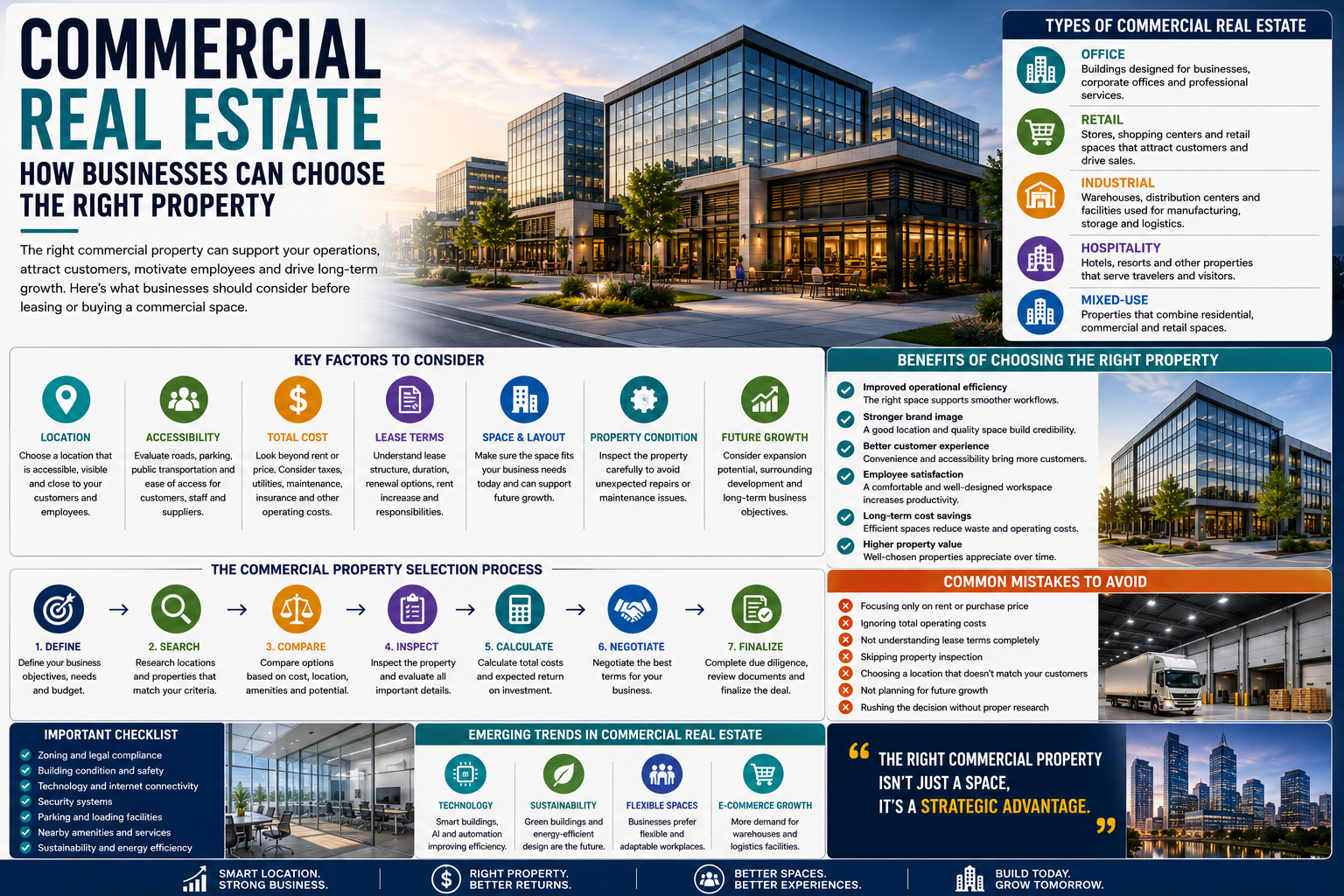
Choosing the right commercial property is an important decision for any business. Whether a company needs an office, retail location, warehouse, showroom, industrial facility, or mixed-use space, the property can have a direct effect on daily operations, customer access, employee experience, and long-term costs.
A commercial property should therefore be viewed as more than a physical space.
It is part of a company's broader business strategy.
The right location can make it easier to reach customers, attract employees, receive deliveries, and expand operations. The wrong property can create unnecessary expenses and operational challenges.
For this reason, businesses should evaluate commercial real estate carefully before signing a lease or purchasing a property.
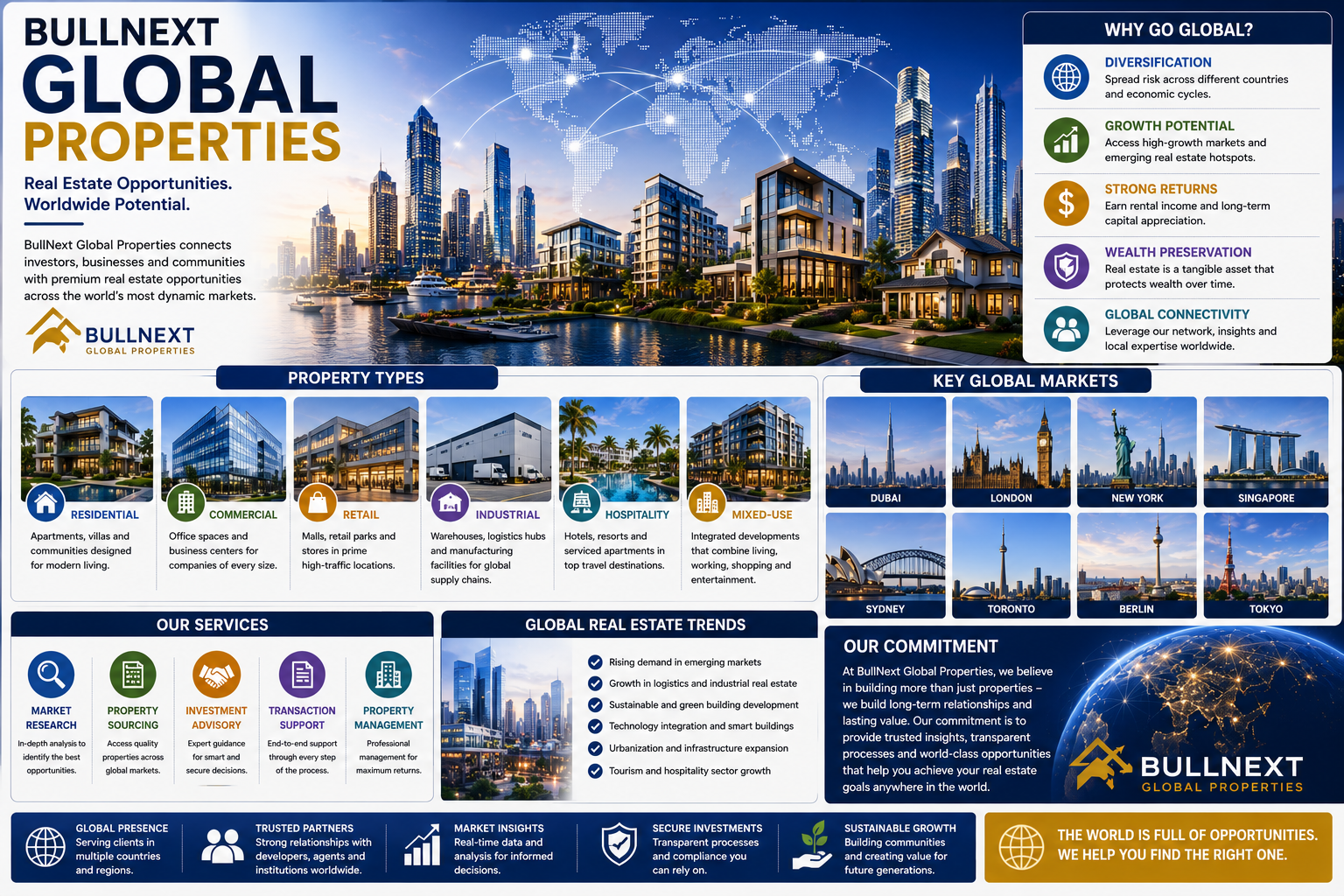
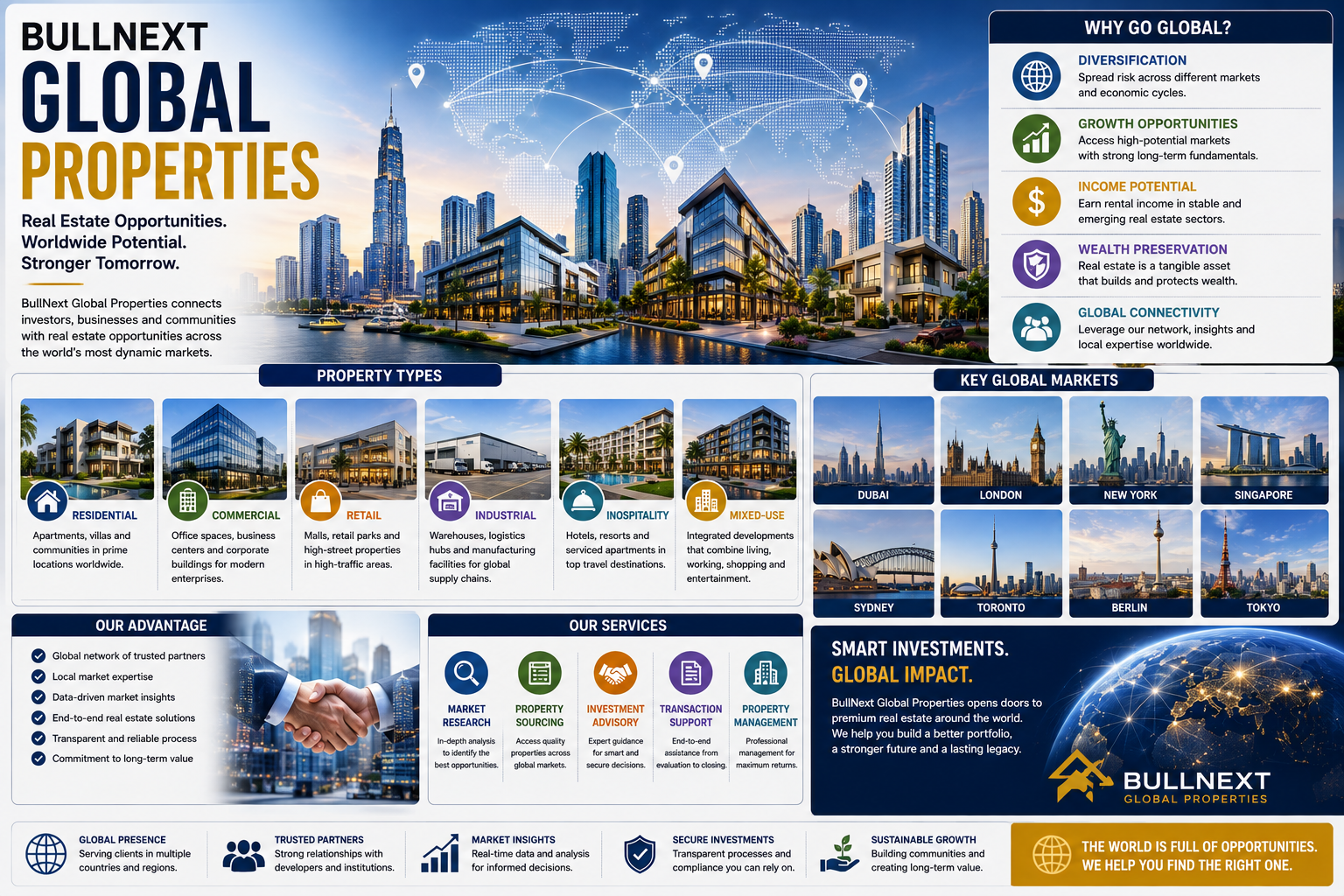
What Is Commercial Real Estate?
Commercial real estate refers to properties primarily used for business and income-producing purposes.
Common examples include:
Office buildings
Retail stores
Shopping centers
Warehouses
Manufacturing facilities
Hotels
Restaurants
Medical facilities
Showrooms
Mixed-use properties
Each property type serves a different purpose.
A warehouse needs efficient loading and transportation access.
A retail store may depend on visibility and customer traffic.
An office may prioritize employee convenience, technology infrastructure, and collaborative space.
Understanding the specific requirements of the business is the first step toward finding the right property.
Start With the Business Objective
Before looking at available properties, businesses should define what they need the space to accomplish.
Important questions include:
What will the property be used for?
How many employees will use it?
Will customers visit regularly?
How much storage is required?
Are deliveries necessary?
Will the business expand in the future?
What budget is available?
Clear answers make the property search more focused.
Location Can Influence Business Success
Location is one of the most important factors in commercial real estate.
A business should evaluate a location based on its particular customer and operational requirements.
For some businesses, a central urban location may be ideal.
For others, a property near highways, transportation hubs, or industrial areas may be more valuable.
Location considerations can include:
Accessibility
Visibility
Parking
Public transportation
Nearby businesses
Population
Customer demographics
Traffic patterns
Delivery routes
Local infrastructure
The best location is not necessarily the most expensive one.
It is the location that best supports the business model.
Understand the Target Customer
Customer behavior should influence property selection.
A retail business may need a location where customers can easily see and access the store.
A professional services company may benefit from a convenient business district.
A warehouse may have very little need for customer visibility but require excellent transportation connections.
Businesses should understand how customers reach them before choosing a property.
Evaluate Accessibility
Accessibility matters for customers, employees, suppliers, and delivery providers.
A property may look attractive but become less useful if people have difficulty reaching it.
Consider:
Road access
Parking
Public transportation
Entry points
Loading areas
Traffic congestion
Accessibility requirements
Convenience can influence both customer satisfaction and employee experience.
Consider the Surrounding Area
The neighborhood around a commercial property can influence business performance.
Nearby businesses may create opportunities or competition.
For example, restaurants can benefit from office workers and retail activity.
A professional office may benefit from being near complementary businesses.
A warehouse may benefit from an established logistics area.
Understanding the surrounding business ecosystem can reveal opportunities that aren't obvious from the property itself.
Calculate the Total Cost
Businesses should never evaluate commercial property based only on rent or purchase price.
Other expenses can include:
Utilities
Maintenance
Insurance
Property taxes
Service charges
Repairs
Renovation
Security
Parking
Property management
A lower monthly rent does not always mean lower overall costs.
The total occupancy cost provides a better basis for comparison.
Leasing vs. Buying
Businesses may have the option to lease or purchase commercial property.
Leasing can provide flexibility and may require less upfront capital.
Buying can provide greater control over the property and may support long-term ownership goals.
The appropriate choice depends on:
Business finances
Growth plans
Capital availability
Location requirements
Long-term strategy
Property market conditions
There is no universal answer.
The decision should be based on the individual business.
Understand the Lease
Commercial leases can be complex.
Before signing, businesses should understand provisions involving:
Rent
Lease duration
Renewal options
Rent increases
Maintenance
Repairs
Taxes
Insurance
Improvements
Subleasing
Termination
Different lease structures can assign different responsibilities to landlords and tenants.
Professional legal advice can be useful when reviewing significant agreements.
Think About Future Growth
A property that works today may become unsuitable as the business grows.
Businesses should consider potential future needs.
For example:
Will the company hire more employees?
Will inventory increase?
Will additional equipment be required?
Could customer demand grow?
Is expansion space available?
Planning ahead can prevent businesses from having to relocate too quickly.
Workplace Design
For office-based businesses, the design of the workplace can influence productivity and employee experience.
Modern commercial spaces may include:
Meeting rooms
Private offices
Collaborative areas
Quiet workspaces
Break areas
Technology infrastructure
Flexible workstations
The design should reflect how employees actually work.
A company with frequent teamwork may need more collaborative space.
A business requiring concentration may need quiet areas.
Retail Property Considerations
Retail businesses face different requirements.
Important factors may include:
Foot traffic
Visibility
Parking
Storefront design
Nearby retailers
Customer demographics
Delivery access
Competition
A strong retail location can help attract customers, but businesses should still evaluate whether the expected sales justify occupancy costs.
Warehouse and Industrial Property
Warehouse and industrial businesses often prioritize operational efficiency.
Important considerations can include:
Loading docks
Ceiling height
Storage capacity
Truck access
Road connections
Power supply
Security
Zoning
Distance from suppliers and customers
A property that reduces transportation time can potentially improve operational efficiency.
Technology Infrastructure
Modern businesses depend heavily on technology.
Before choosing a property, businesses should evaluate:
Internet availability
Network infrastructure
Power capacity
Security systems
Communication facilities
Backup systems
For technology-intensive companies, poor connectivity can create significant operational problems.
Sustainability and Energy Efficiency
Energy costs can influence the long-term affordability of a commercial property.
Businesses may consider:
Energy-efficient lighting
Insulation
Heating and cooling systems
Solar technology
Water efficiency
Smart building controls
Efficient buildings can potentially reduce operating expenses while supporting sustainability objectives.
Smart Commercial Buildings
Technology is increasingly being integrated into commercial properties.
Smart-building systems can monitor:
Energy usage
Building access
Lighting
Temperature
Security
Maintenance
These systems can help property owners and tenants understand how spaces are being used and identify opportunities for greater efficiency.
Artificial Intelligence in Commercial Real Estate
AI is becoming another tool for commercial property analysis.
Businesses and property professionals can use AI to support:
Market research
Data analysis
Property comparisons
Customer communication
Administrative tasks
Forecasting
AI can make certain processes faster, but important property decisions should still be based on verified information and professional expertise.
Property Condition
The physical condition of a commercial property can significantly affect operating costs.
Before committing to a property, businesses should examine:
Roof
Electrical systems
Plumbing
Heating and cooling
Structure
Windows
Flooring
Safety systems
Professional inspections can help identify problems that may not be visible during a standard property tour.
Renovation and Fit-Out Costs
A property may require modifications before a business can use it.
These costs can include:
Interior construction
Electrical upgrades
Lighting
Flooring
Signage
Furniture
Technology
Accessibility improvements
Businesses should estimate these expenses before deciding whether a property is affordable.
Parking and Transportation
Parking can be critical for certain businesses.
Retail stores, restaurants, medical facilities, and offices may need sufficient parking for customers and employees.
Industrial properties may require space for commercial vehicles and deliveries.
Transportation requirements should therefore be considered during the initial property search.
Zoning and Regulations
Not every commercial property can be used for every purpose.
Local zoning rules and building regulations may determine whether a business can operate in a particular location.
Businesses should verify:
Permitted use
Building requirements
Signage rules
Parking requirements
Environmental regulations
Operating restrictions
Legal and professional advice can help clarify requirements.
Security Considerations
Security is another important consideration.
Businesses may need:
Controlled access
Surveillance
Security personnel
Lighting
Alarm systems
Secure storage
The appropriate security measures depend on the property and type of business.
Employee Experience
Commercial property decisions can affect employee satisfaction.
Employees may value:
Convenient transportation
Comfortable workspaces
Natural light
Break areas
Nearby services
Flexible layouts
A workplace that supports employees can contribute to a stronger working environment.
Negotiating Commercial Property Terms
Businesses shouldn't assume that the initial terms are always final.
Depending on the market and agreement, negotiations may involve:
Rent
Lease duration
Renewal options
Improvements
Maintenance responsibilities
Parking
Rent-free periods
Professional representation can be helpful during complex negotiations.
Due Diligence Before Signing
Before committing to a commercial property, businesses should conduct appropriate due diligence.
This can include reviewing:
Lease documents
Property records
Zoning
Building condition
Operating expenses
Insurance requirements
Taxes
Existing restrictions
Thorough research can reduce unexpected problems later.
Common Mistakes Businesses Make
Choosing Based Only on Appearance
A beautiful property may not meet operational requirements.
Ignoring Total Costs
Rent is only one part of occupancy expenses.
Failing to Plan for Growth
Businesses can outgrow unsuitable spaces quickly.
Skipping Property Inspections
Hidden maintenance problems can become expensive.
Ignoring Accessibility
Poor access can affect customers, employees, and suppliers.
Overlooking Lease Details
Small clauses can have significant financial consequences.
A Practical Property Selection Process
Businesses can use a simple framework:
Define → Search → Compare → Inspect → Calculate → Negotiate → Verify → Commit
Define
Identify the business requirements.
Search
Find properties that meet those requirements.
Compare
Evaluate location, size, cost, condition, and accessibility.
Inspect
Examine the property carefully.
Calculate
Estimate the total financial commitment.
Negotiate
Discuss appropriate lease or purchase terms.
Verify
Complete legal and financial due diligence.
Commit
Choose the property that best fits the long-term business strategy.
The Future of Commercial Real Estate
Commercial property will continue to evolve as businesses adopt new technologies and employees develop new expectations.
Flexible workplaces may become more common.
Smart buildings may improve energy management.
AI may support property analysis.
Sustainable construction may become increasingly important.
E-commerce and changing supply chains may continue influencing industrial and logistics properties.
Despite these developments, the fundamentals will remain important.
Businesses still need locations that support customers, employees, operations, and long-term goals.
Final Thoughts
Choosing commercial real estate is a strategic business decision.
The right property can improve accessibility, support employees, strengthen customer experiences, and create operational advantages.
The wrong property can increase costs and limit growth.
Businesses should therefore look beyond rent or purchase price.
They should consider location, accessibility, customers, employees, property condition, technology, regulations, operating costs, lease terms, and future growth.
Technology can make property research easier, but careful analysis remains essential.
The best commercial property isn't necessarily the largest, newest, or most expensive.
It is the property that supports the business today while providing the flexibility to grow tomorrow.