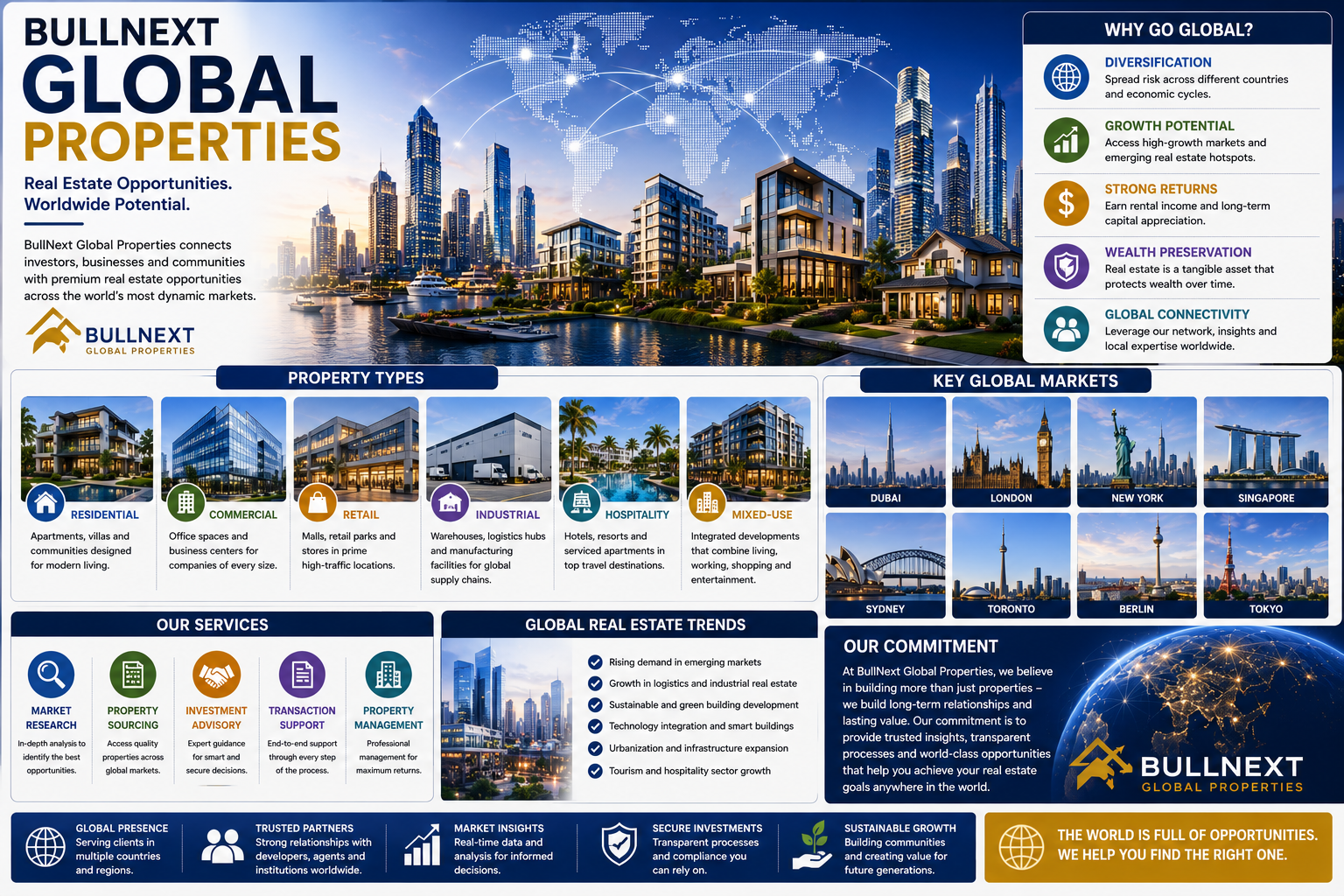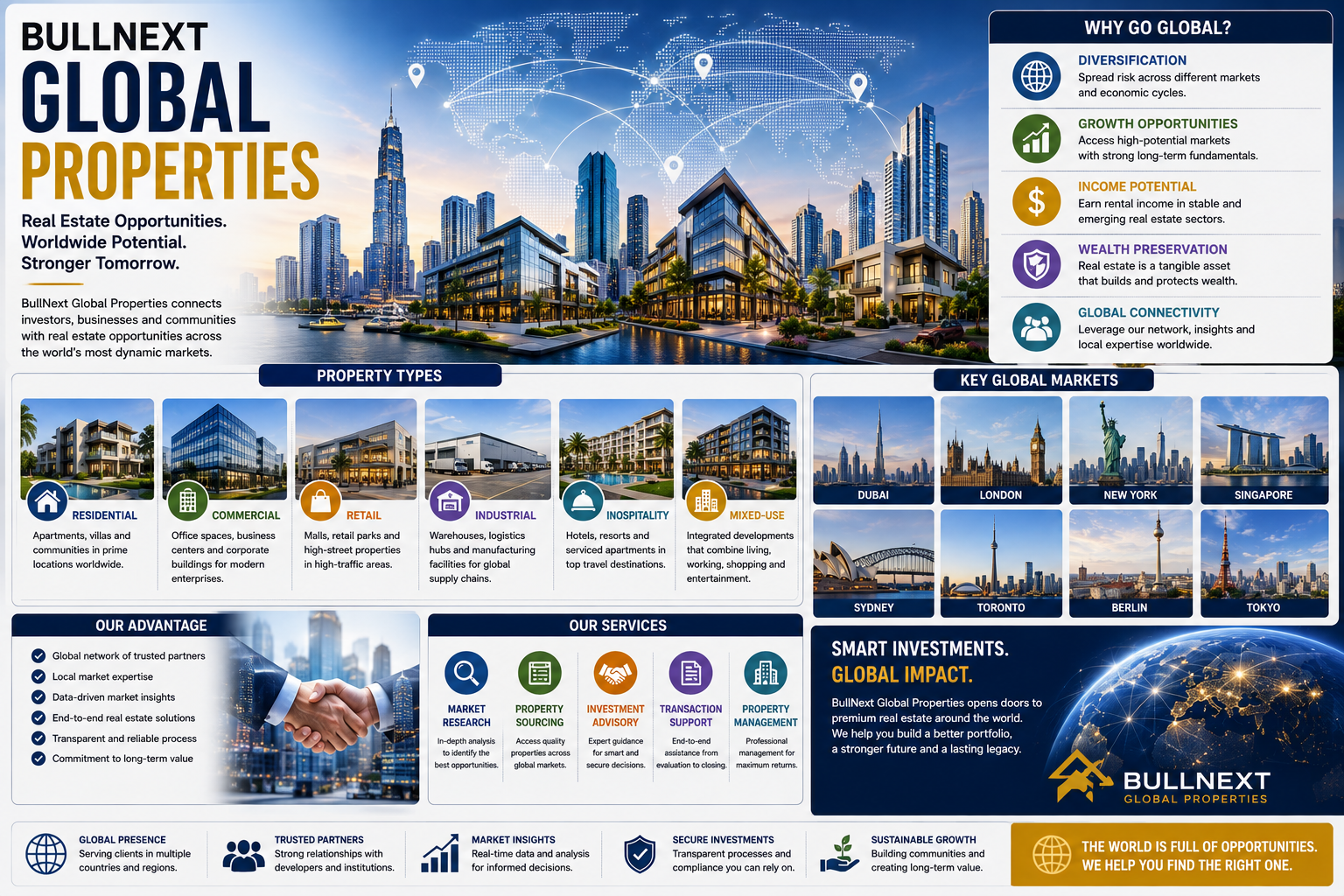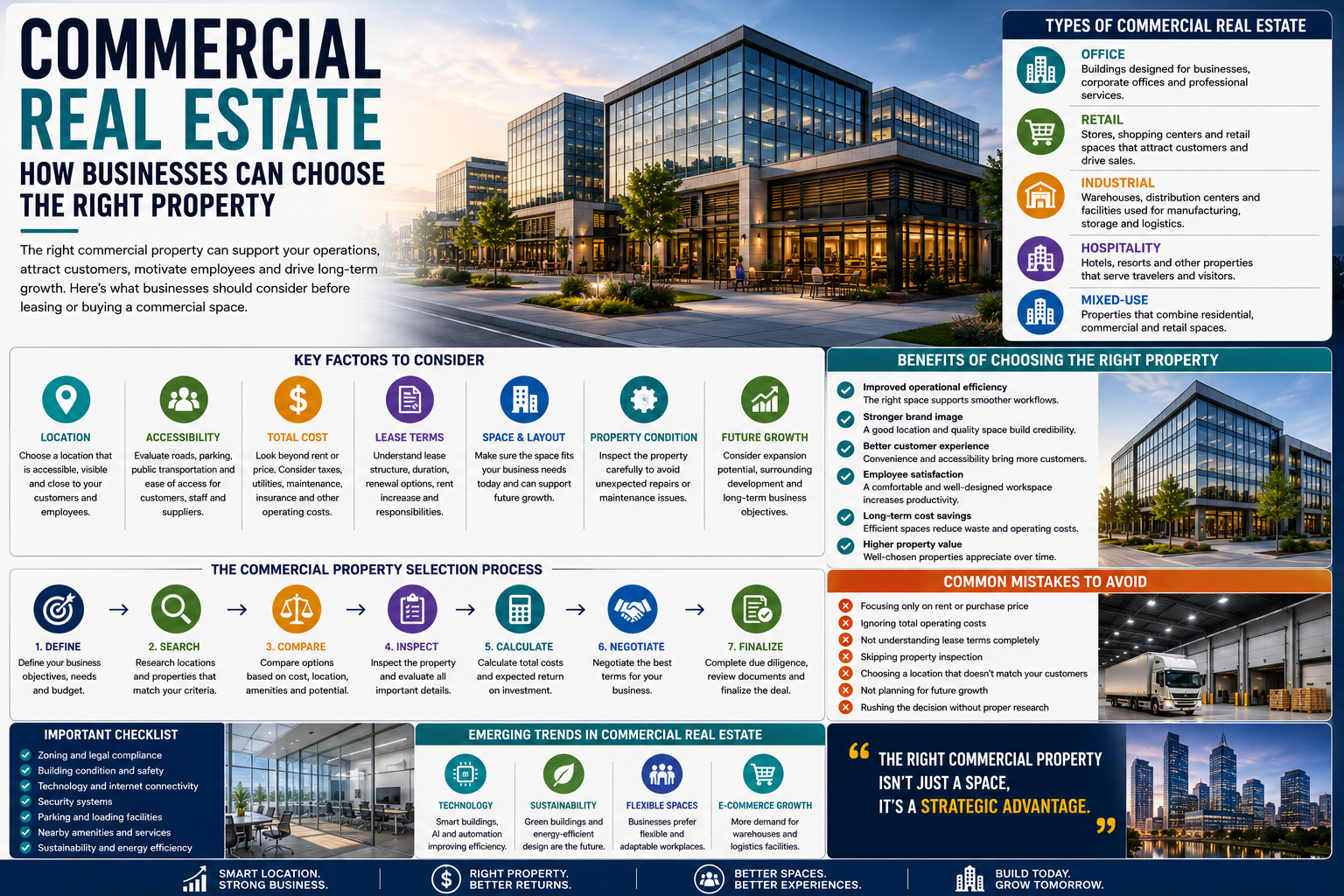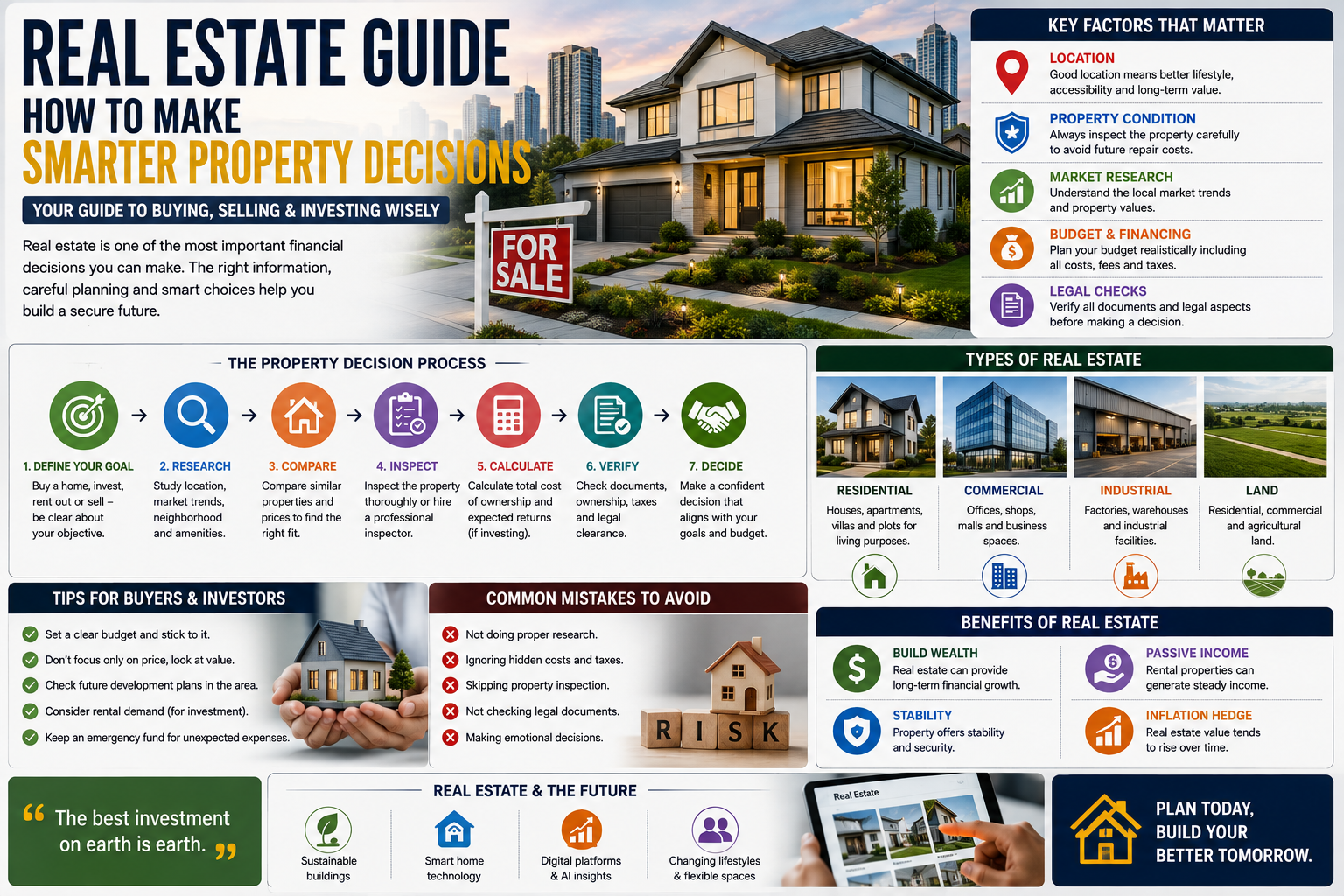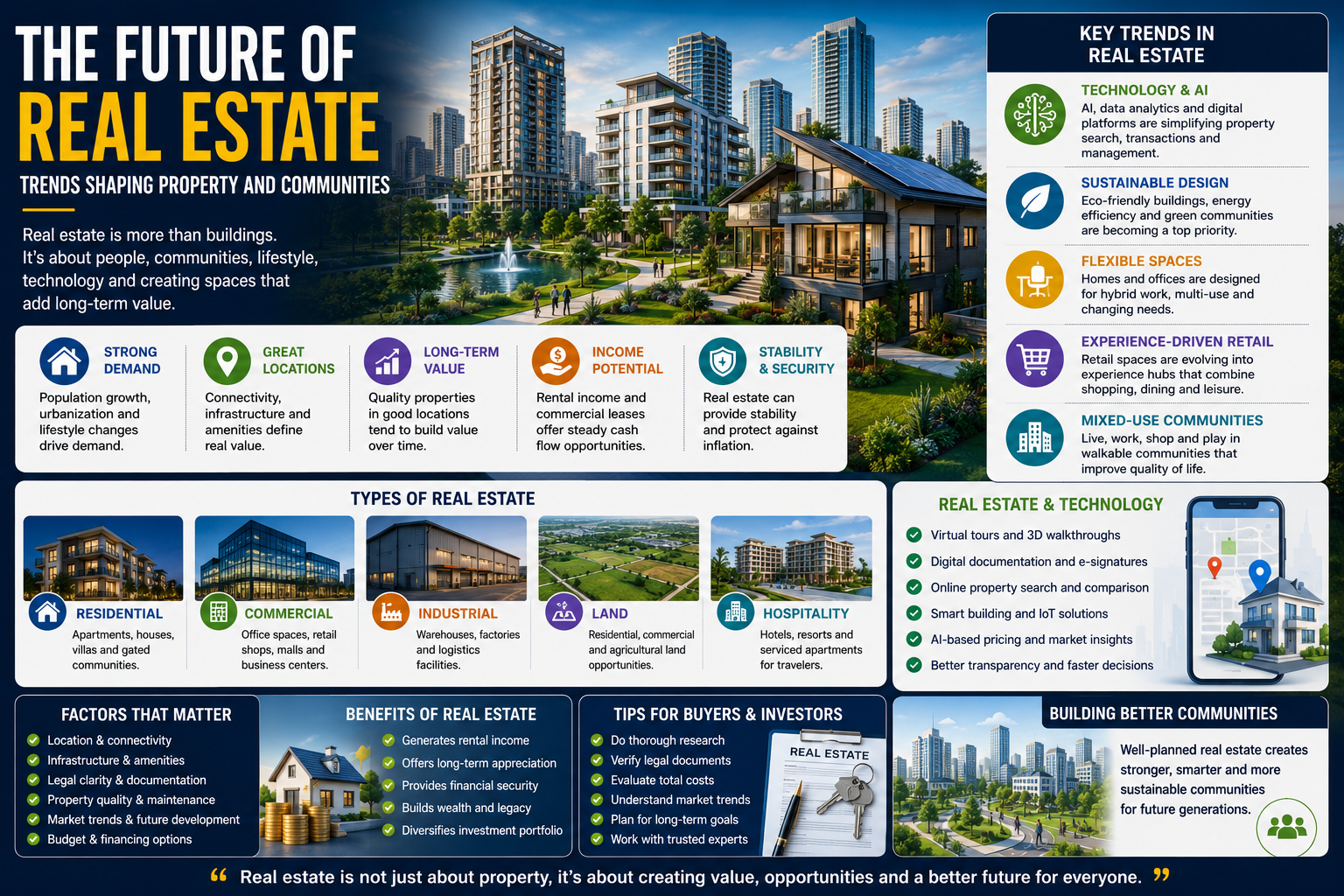
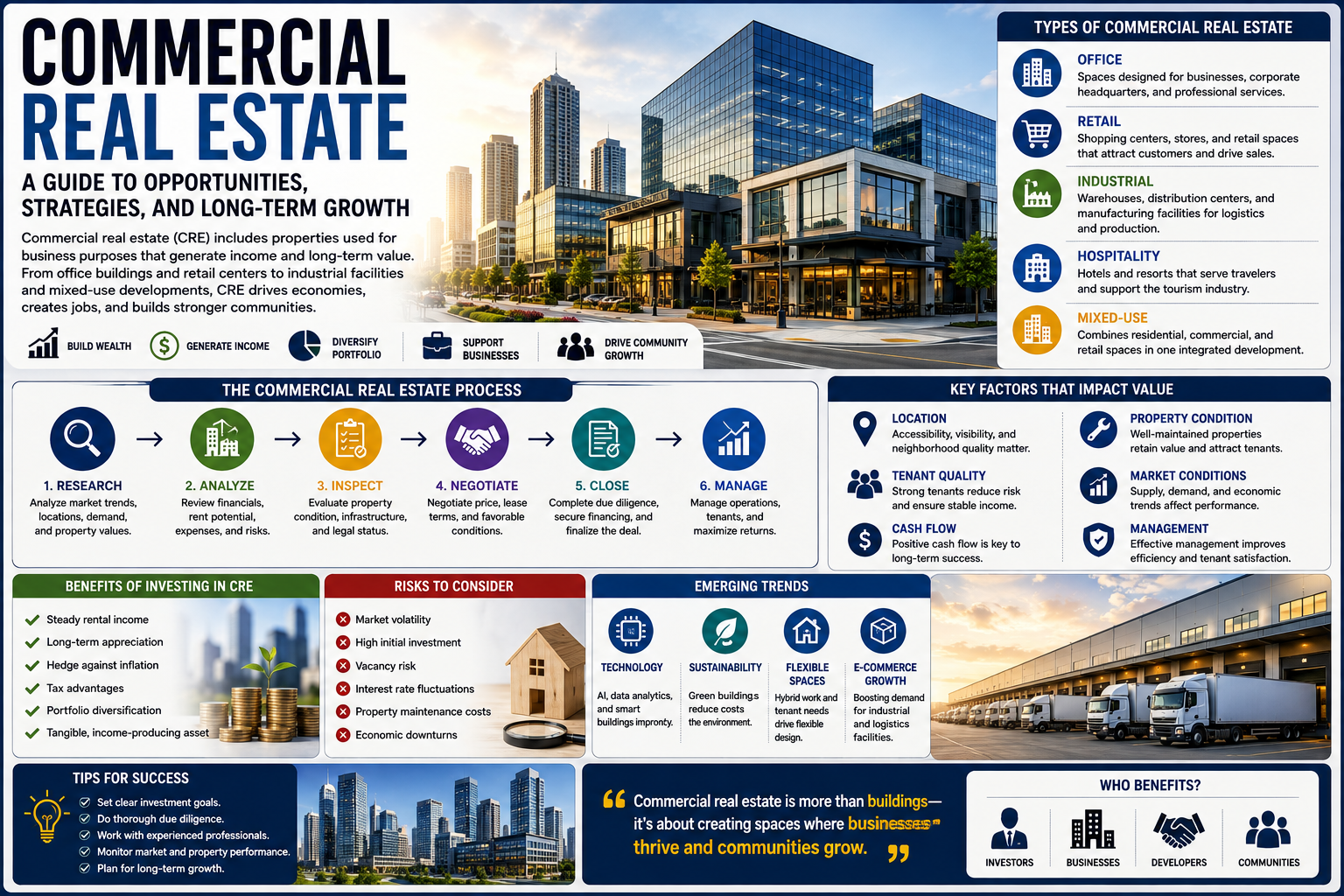
Commercial real estate plays an important role in how businesses operate and how communities develop. Offices, retail centers, warehouses, industrial facilities, hotels, and mixed-use properties provide the physical spaces that support economic activity.
Unlike residential property, commercial real estate is often closely connected to business performance. A property's location, accessibility, design, tenant demand, operating costs, and surrounding infrastructure can all influence its usefulness and financial potential.
For investors, business owners, developers, and property professionals, understanding the fundamentals of commercial real estate can support better long-term decisions.
What Is Commercial Real Estate?
Commercial real estate generally refers to property used for business, investment, or income-producing purposes.
Common categories include:
Office buildings
Retail properties
Industrial facilities
Warehouses
Hotels
Multifamily properties
Mixed-use developments
Land intended for commercial development
Each category has different characteristics, tenants, operating requirements, and risks.
An office building may depend heavily on business demand, while a warehouse may be influenced by logistics and transportation infrastructure.
Why Commercial Real Estate Matters
Commercial property provides the infrastructure businesses need to operate.
Retail stores need locations where customers can access products.
Warehouses need efficient transportation connections.
Offices need environments that support employees and clients.
Hotels need access to travelers and destinations.
Industrial facilities need suitable infrastructure and logistics.
Because of these connections, commercial real estate is closely tied to broader economic activity.
Location Is Critical
Location is one of the most important factors in commercial property.
Businesses generally want locations that support their objectives.
Depending on the property type, important considerations can include:
Customer accessibility
Transportation
Parking
Visibility
Population density
Employment
Nearby businesses
Infrastructure
Delivery access
A retail property may benefit from high visibility and customer traffic, while an industrial facility may prioritize highways, ports, or distribution networks.
Understanding Property Types
Different commercial properties serve different purposes.
Office Real Estate
Office buildings provide space for companies and professional services.
Modern office demand can be influenced by workplace design, employee preferences, technology, and business strategy.
Retail Real Estate
Retail properties include shopping centers, standalone stores, and other consumer-focused spaces.
Location, visibility, accessibility, and customer traffic can be particularly important.
Industrial Real Estate
Industrial property includes warehouses, distribution centers, manufacturing facilities, and other specialized buildings.
These properties can benefit from strong transportation and logistics infrastructure.
Hospitality Real Estate
Hotels and other hospitality properties depend heavily on tourism, business travel, location, management, and customer experience.
Commercial Real Estate Investment
Investors may consider commercial real estate for several reasons.
Potential objectives include:
Rental income
Long-term appreciation
Portfolio diversification
Business ownership
Development opportunities
However, commercial property investments can involve significant costs and risks.
Investors should evaluate the property, tenants, financing, operating expenses, market conditions, and long-term strategy.
Understanding Rental Income
Commercial properties can generate income through leases.
However, rental income isn't the same as profit.
Property owners may need to pay for:
Maintenance
Insurance
Taxes
Management
Repairs
Utilities
Financing
Vacancies
Improvements
The lease structure also matters.
Different agreements may assign different expenses to landlords and tenants.
Understanding the complete lease terms is therefore essential.
The Importance of Tenants
Tenants are central to commercial real estate.
A property's financial performance can depend heavily on the quality, stability, and reliability of its tenants.
Investors may consider:
Tenant financial strength
Lease duration
Renewal options
Rental terms
Industry stability
Tenant concentration
A property relying heavily on a single tenant can have different risks from one with many tenants.
Lease Structure
Commercial leases can be more complex than residential rental agreements.
Lease structures may determine who is responsible for:
Property taxes
Insurance
Maintenance
Utilities
Repairs
Common-area expenses
Investors and business owners should understand these responsibilities before signing an agreement.
Professional legal advice can be valuable when reviewing complex commercial leases.
Vacancy Risk
Vacancy can have a significant effect on commercial property.
When a space becomes empty, the owner may lose rental income while continuing to pay operating expenses.
Finding a new tenant can also require:
Marketing
Brokerage fees
Renovation
Incentives
Legal costs
Investors should therefore consider realistic vacancy assumptions when evaluating a property.
Financing Commercial Property
Commercial real estate purchases often involve financing.
Before borrowing, investors should evaluate:
Interest rates
Loan duration
Down payment
Monthly obligations
Fees
Refinancing risk
Total financing cost
Financing can increase purchasing power, but it can also increase financial risk.
A strong investment should remain manageable under realistic conditions.
Property Operating Expenses
Commercial properties require ongoing management.
Expenses may include:
Maintenance
Security
Cleaning
Landscaping
Utilities
Insurance
Taxes
Repairs
Property management
These costs should be included when calculating potential returns.
Ignoring operating expenses can make a property appear more profitable than it actually is.
Commercial Property Valuation
Determining the value of commercial property can be more complex than simply comparing asking prices.
Professionals may consider:
Rental income
Operating expenses
Location
Occupancy
Lease terms
Comparable properties
Building condition
Market demand
Different valuation methods may be appropriate for different property types.
Professional appraisals can provide useful independent analysis.
The Role of Due Diligence
Due diligence is essential before purchasing commercial property.
It may involve reviewing:
Ownership documents
Lease agreements
Financial records
Property condition
Environmental information
Zoning
Building permits
Taxes
Insurance
Existing liabilities
A property can look attractive financially while having legal, physical, or operational issues that aren't immediately visible.
Commercial Property Management
Managing commercial real estate can be complex.
Property managers may handle:
Tenant communication
Rent collection
Maintenance
Repairs
Vendor relationships
Inspections
Compliance
Financial reporting
Professional management can be particularly useful for larger or multi-tenant properties.
Technology in Commercial Real Estate
Technology is changing the industry.
Digital tools can help professionals manage:
Property listings
Tenant communication
Maintenance
Lease information
Financial reporting
Market research
Cloud-based systems can make information easier to access and organize.
Artificial Intelligence and Commercial Property
AI can support commercial real estate in several areas.
Potential applications include:
Market analysis
Property research
Data processing
Tenant communication
Forecasting
Administrative automation
Property management
AI can help professionals analyze information more efficiently, but important financial and legal decisions still require appropriate human expertise.
Smart Commercial Buildings
Smart-building systems can help property owners monitor and manage building operations.
These may include:
Energy systems
Lighting
Security
Access control
Heating and cooling
Maintenance monitoring
Smart technologies can potentially improve efficiency and tenant experience.
Sustainability in Commercial Real Estate
Sustainability is becoming increasingly relevant to commercial property.
Energy-efficient buildings can potentially reduce operating expenses while improving environmental performance.
Strategies may include:
Efficient lighting
Better insulation
Energy management
Renewable energy
Water conservation
Sustainable materials
Waste reduction
Sustainable design can also contribute to a property's long-term appeal.
Flexible Office Space
Workplace expectations have changed.
Some organizations need traditional offices, while others use hybrid arrangements or flexible workspaces.
Commercial landlords may therefore need to consider:
Flexible layouts
Collaboration areas
Technology infrastructure
Meeting spaces
Shorter lease options
Shared work environments
Properties that can adapt to changing tenant needs may have an advantage.
Retail Transformation
Retail real estate is also evolving.
Consumers can purchase products online, which means physical stores increasingly need to offer compelling experiences.
Retail properties may combine shopping with:
Dining
Entertainment
Services
Events
Community activities
The purpose of physical retail can therefore extend beyond simple transactions.
Industrial and Logistics Property
E-commerce and modern supply chains have increased the importance of logistics infrastructure.
Warehouses and distribution centers may benefit from:
Highway access
Transportation networks
Proximity to customers
Modern facilities
Efficient loading systems
Location and infrastructure are especially important in this segment.
Mixed-Use Developments
Mixed-use developments combine multiple property types within one area.
They may include:
Residential units
Offices
Retail
Restaurants
Entertainment
Public spaces
These developments can create communities where people can live, work, and access services within the same broader environment.
Commercial Real Estate and Local Communities
Commercial property can influence local communities.
New developments may create:
Jobs
Services
Retail opportunities
Transportation improvements
Business activity
Public spaces
However, development also needs to consider infrastructure, traffic, environmental impact, and community needs.
Responsible development balances economic opportunity with long-term livability.
Choosing a Commercial Property
Investors and business owners should establish their objectives before selecting a property.
Important questions include:
What type of business will use the property?
Who are the customers?
Is the location accessible?
What are the operating costs?
What are the lease conditions?
What financing is available?
What risks exist?
Clear answers can make property selection more systematic.
Common Commercial Real Estate Mistakes
Focusing Only on Purchase Price
A low purchase price doesn't necessarily mean good value.
Ignoring Operating Costs
Ongoing expenses can significantly affect returns.
Underestimating Vacancy
Empty commercial space can create substantial financial pressure.
Skipping Due Diligence
Legal or physical problems can become expensive later.
Taking Excessive Debt
High leverage can increase financial risk.
Ignoring Tenant Quality
The stability of tenants can influence income reliability.
Building a Long-Term Strategy
Commercial real estate is often a long-term business.
Investors should regularly review:
Occupancy
Rental income
Operating expenses
Lease expirations
Property condition
Financing
Market demand
Regular analysis can help identify problems and opportunities early.
The Future of Commercial Real Estate
Commercial real estate will continue to evolve as technology, business models, consumer behavior, and workplace expectations change.
AI and data analytics may improve property analysis.
Smart-building systems may improve efficiency.
Flexible spaces may help properties respond to changing tenant needs.
Sustainability may become increasingly important.
Logistics infrastructure may continue to influence industrial property demand.
Despite these changes, fundamental principles will remain important.
Location, tenant demand, property quality, financial discipline, and effective management will continue to shape commercial real estate.
A Practical Commercial Real Estate Framework
A useful process is:
Define → Research → Analyze → Inspect → Verify → Finance → Manage → Review
Define
Determine your investment or business objective.
Research
Study the market, location, tenants, and competition.
Analyze
Calculate income, expenses, financing, and potential risks.
Inspect
Evaluate the physical condition of the property.
Verify
Review legal, financial, and regulatory information.
Finance
Choose an appropriate financing structure.
Manage
Maintain the property and relationships with tenants.
Review
Evaluate performance and adapt the strategy over time.
Final Thoughts
Commercial real estate provides the physical foundation for countless businesses and communities.
From offices and retail centers to warehouses and mixed-use developments, commercial properties support economic activity while creating opportunities for owners, investors, tenants, and developers.
But successful commercial real estate requires careful analysis.
Investors need to understand location, tenant demand, leases, operating expenses, financing, property condition, and market conditions.
Businesses need to choose spaces that support their customers, employees, operations, and long-term goals.
Technology can make property management and analysis more efficient, while sustainability and flexible design can help buildings adapt to changing expectations.
The strongest commercial real estate decisions are not based on short-term excitement.
They are based on research, realistic financial analysis, responsible management, and long-term thinking.
Commercial property is ultimately about more than buildings.
It is about creating spaces where businesses can operate, communities can grow, and long-term value can be built.