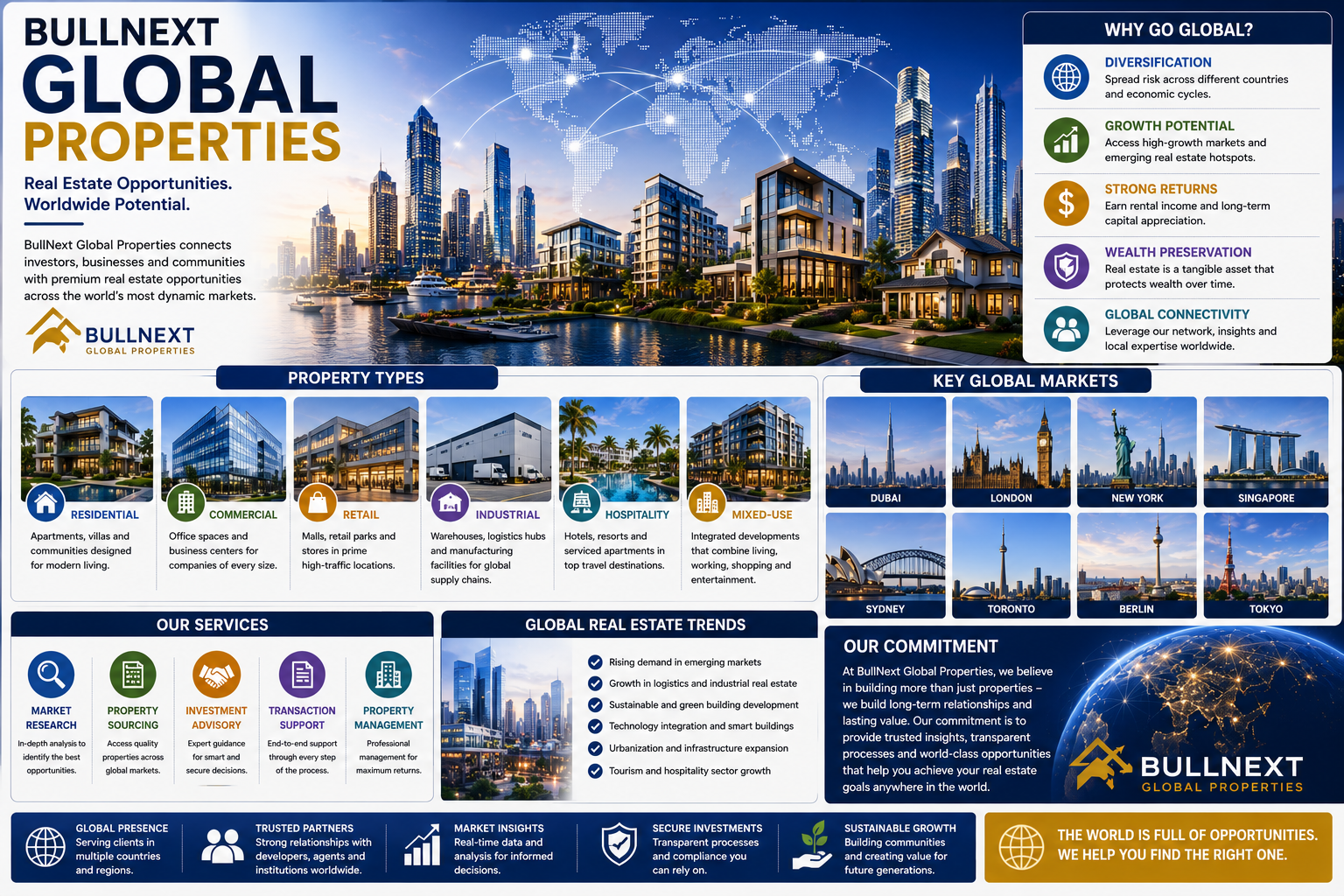
Real estate is no longer limited to local neighborhoods and domestic markets. As businesses, investors, and communities become increasingly connected, property opportunities can be found across cities, countries, and regions around the world.
From residential developments and commercial centers to logistics facilities, hospitality projects, and mixed-use communities, global real estate reflects the changing needs of modern society.
For anyone interested in property, understanding international real estate requires more than looking at prices. Location, infrastructure, demographics, economic activity, regulations, technology, sustainability, and long-term demand all play an important role.
BullNext Global Properties provides a natural platform for exploring these themes and understanding how property markets connect with broader economic and business trends.
Understanding Global Real Estate
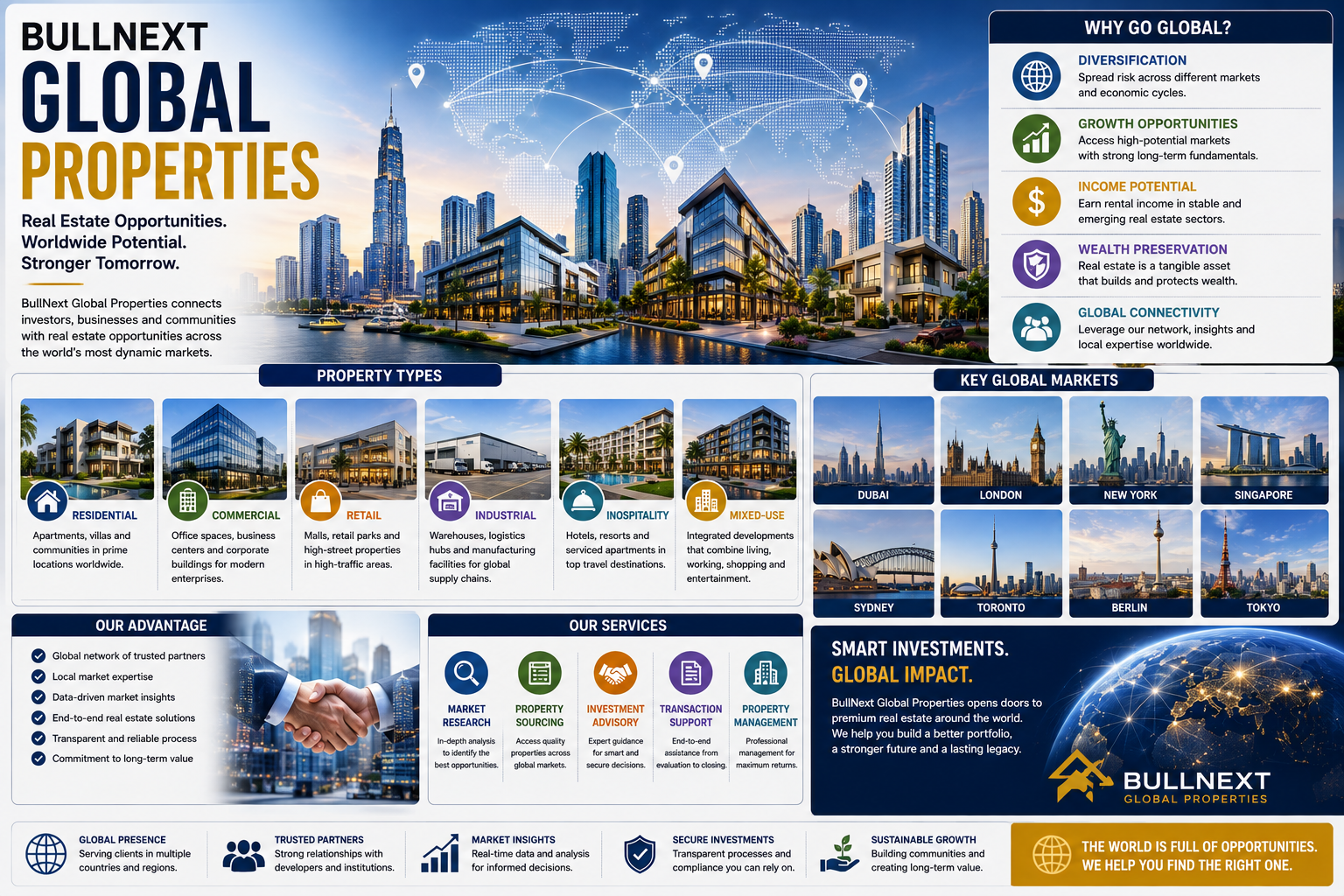
Global real estate refers to property markets and opportunities across different countries and regions.
These markets can include:
Residential properties
Commercial buildings
Office developments
Retail centers
Industrial facilities
Warehouses
Hotels and hospitality properties
Mixed-use developments
Land and development projects
Every market has its own characteristics.
A major financial center may have strong demand for office and luxury residential properties, while a growing logistics hub may create opportunities for warehouses and industrial facilities.
Understanding these differences is essential when evaluating global property markets.
Why Location Matters
Location remains one of the most important factors in real estate.
A property's potential can be influenced by its proximity to:
Transportation
Employment centers
Schools
Healthcare
Retail
Entertainment
Business districts
Airports
Ports
Major highways
A well-connected location can make a property more attractive to residents, businesses, tenants, and investors.
However, the best location depends on the purpose of the property.
A warehouse has different location requirements from a luxury apartment or a retail store.
The Importance of Infrastructure
Infrastructure can shape the development of entire property markets.
Roads, railways, airports, public transportation, ports, utilities, and digital connectivity can influence where businesses and residents choose to locate.
New infrastructure can also encourage development in areas that previously had limited accessibility.
For this reason, understanding infrastructure plans can provide useful insight into the future of a property market.
Global Cities and Real Estate
Major cities remain important centers of economic activity.
They attract businesses, professionals, students, tourists, and investment.
Global cities can offer opportunities across sectors such as:
Finance
Technology
Healthcare
Education
Manufacturing
Tourism
Professional services
But a city's size alone does not determine its real estate potential.
Affordability, supply, demand, infrastructure, employment, regulations, and quality of life all matter.
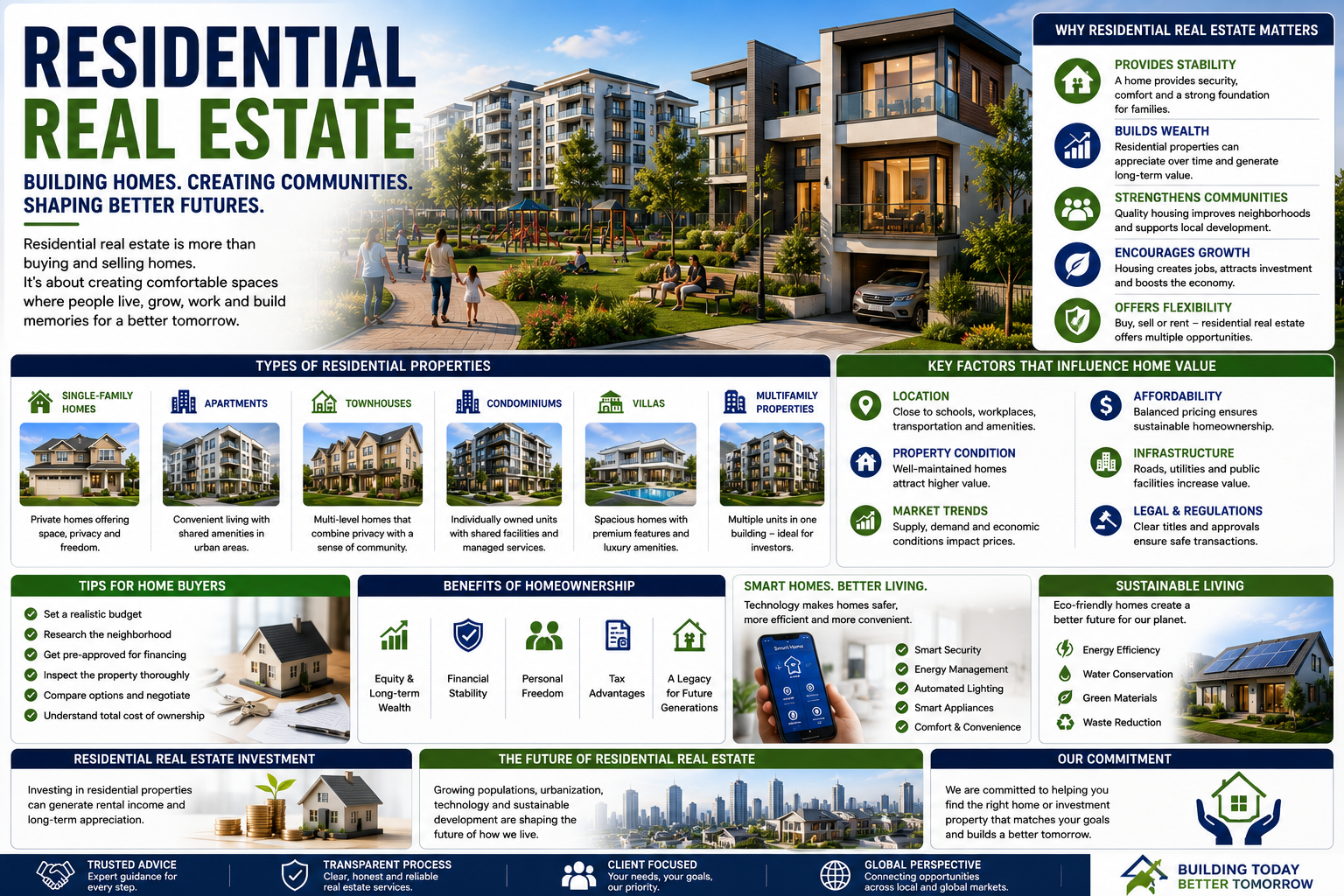
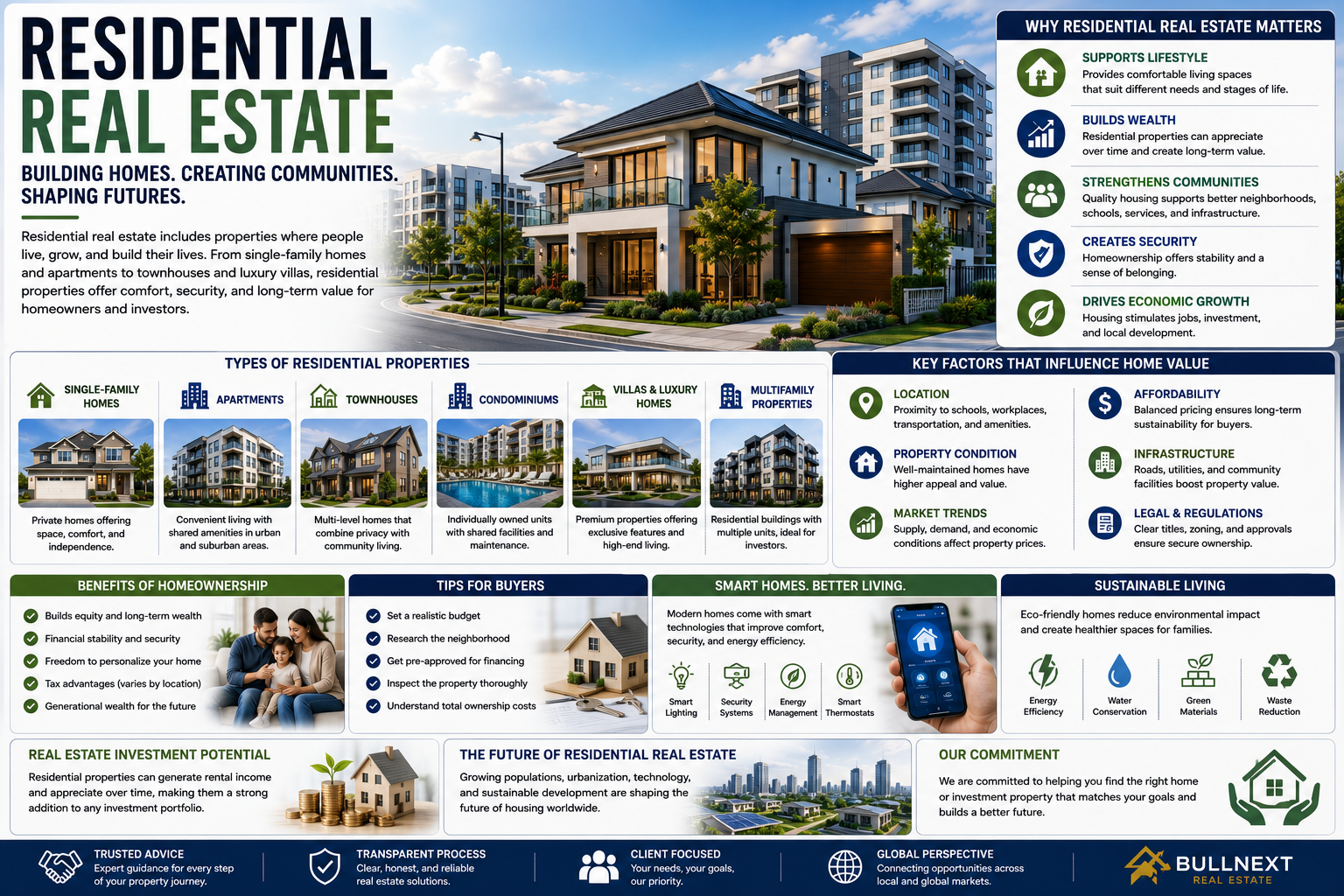
Residential Property
Residential real estate includes houses, apartments, condominiums, and other homes.
Demand can be influenced by population growth, household formation, employment, affordability, and lifestyle preferences.
Modern buyers may increasingly consider factors such as:
Flexible living space
Home offices
Connectivity
Energy efficiency
Transportation
Community amenities
Developers who understand changing lifestyles can design properties that better match future demand.
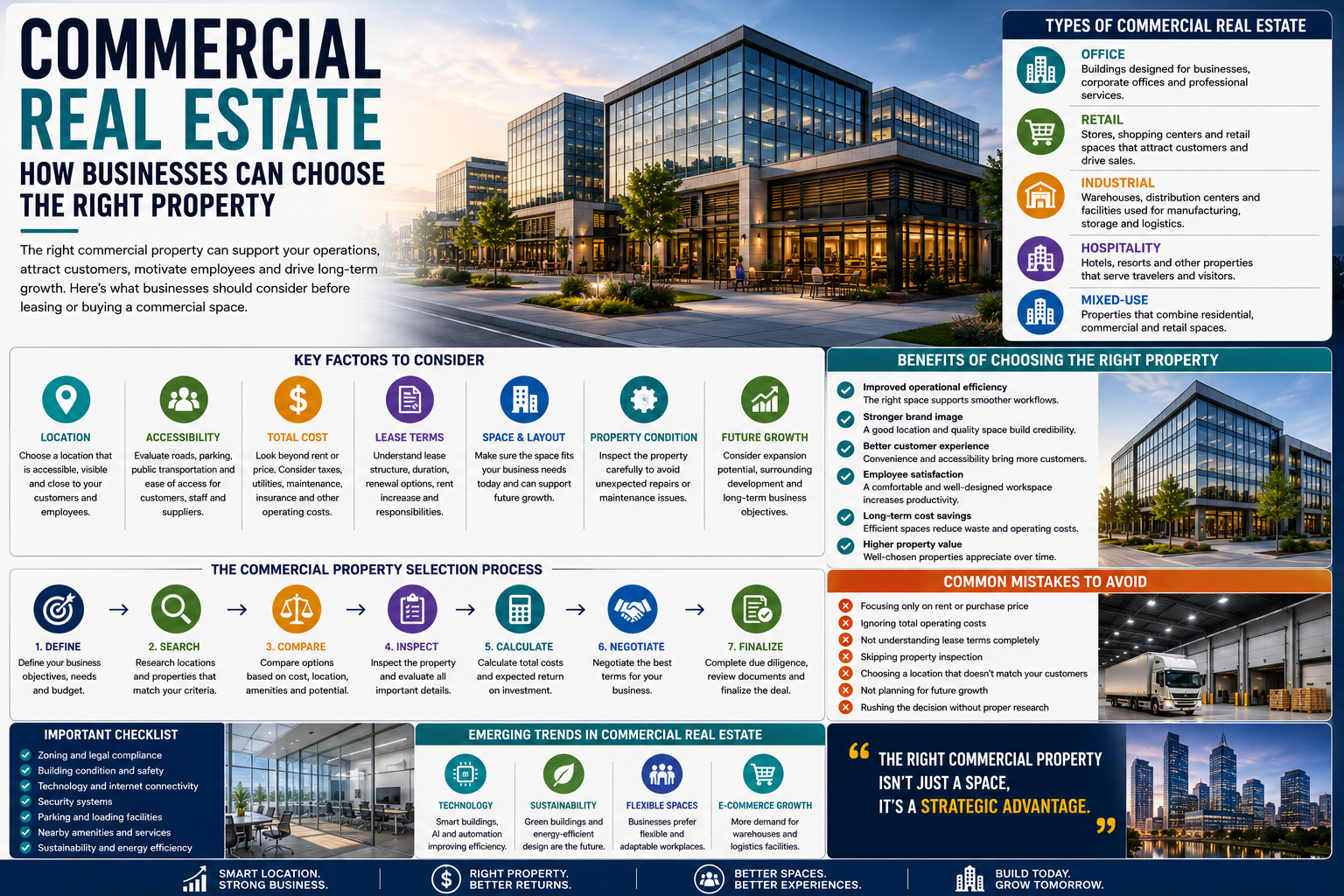
Commercial Real Estate
Commercial properties support businesses and economic activity.
They include offices, retail spaces, hospitality properties, and other business-oriented developments.
Commercial property decisions often depend on:
Tenant demand
Customer access
Employee accessibility
Transportation
Operating costs
Local business activity
The needs of a technology company can be very different from those of a retailer or logistics company.
Industrial and Logistics Property
The global movement of goods has increased the importance of logistics infrastructure.
Warehouses, distribution centers, and industrial facilities are often located near important transportation networks.
Factors such as highway access, ports, airports, rail connections, and proximity to major population centers can influence the attractiveness of industrial property.
As supply chains evolve, logistics real estate can remain an important part of the global property landscape.
Mixed-Use Development
Mixed-use developments combine multiple functions within the same community.
They may include:
Residential units
Offices
Retail
Restaurants
Entertainment
Public spaces
These developments can create environments where people can live, work, shop, and socialize within the same broader area.
Mixed-use communities can also help make neighborhoods more active and convenient.
Technology and Global Property
Technology has changed the way people discover, evaluate, purchase, and manage real estate.
Digital platforms allow buyers and investors to research properties from almost anywhere.
Technology can support:
Online property searches
Virtual tours
Digital documentation
Property management
Customer communication
Market analysis
Financial reporting
These tools can make international property research more accessible.
Artificial Intelligence in Real Estate
Artificial intelligence is becoming an increasingly useful tool for property professionals.
AI can assist with:
Data analysis
Market research
Property comparisons
Customer communication
Administrative work
Forecasting
Content creation
However, AI should complement rather than replace professional judgment.
Real estate decisions involve local laws, physical property conditions, economic factors, and human behavior that require careful interpretation.
Smart Buildings
Modern buildings are becoming more connected.
Smart-building technologies can monitor and manage:
Energy use
Lighting
Heating and cooling
Security
Building access
Maintenance
These systems can potentially improve efficiency and help property owners understand how buildings are being used.
For tenants, smart technology can also improve convenience and the overall building experience.
Sustainability and Property
Sustainability is increasingly important in real estate development.
Energy-efficient buildings can potentially reduce operating expenses and resource consumption.
Developers may consider:
Efficient lighting
Insulation
Renewable energy
Water conservation
Sustainable materials
Waste reduction
Smart energy management
Sustainable design can benefit both the environment and the long-term operation of a property.
Demographic Changes
Population and demographic trends can influence real estate demand.
Changes in:
Population size
Household structures
Age
Migration
Employment
Lifestyle
can affect what types of properties people need.
For example, a growing population of young professionals may increase demand for smaller homes near employment centers, while an aging population may create greater demand for accessible housing and healthcare-oriented communities.
Understanding demographic trends can help property professionals plan for the future.
Global Property and Investment
Real estate can serve different purposes within an investment strategy.
Some investors seek rental income.
Others focus on long-term value appreciation.
Some businesses acquire property for operational purposes.
Others may invest through real estate funds or development projects.
Every approach has different risks and financial requirements.
Investors should consider their objectives, available capital, time horizon, and tolerance for risk before making major property decisions.
Currency Considerations
International property ownership can introduce currency risk.
When property is purchased in another currency, exchange-rate movements can influence the value of the investment when converted into the investor's home currency.
This is an important consideration for cross-border property decisions.
Financial and tax professionals can help investors understand the implications of international transactions.
Understanding Local Regulations
Property laws vary significantly between countries.
International buyers may need to understand:
Ownership rules
Foreign investment requirements
Taxes
Zoning
Rental regulations
Development restrictions
Financing requirements
Reporting obligations
Local legal and tax advice can be especially valuable when entering an unfamiliar market.
Property Management Across Borders
Managing property internationally can create additional challenges.
Owners may need local professionals to handle:
Tenant communication
Maintenance
Repairs
Rent collection
Inspections
Vendor relationships
Technology can make remote communication easier, but physical property still requires local attention.
Strong property management can help protect both the condition and financial performance of an asset.
The Importance of Due Diligence
Research is essential before making an international property decision.
Due diligence may include reviewing:
Ownership records
Property condition
Local regulations
Taxes and fees
Lease agreements
Financing
Market demand
Development plans
Potential exit options
The more unfamiliar the market, the more important thorough research becomes.
Global Real Estate Risks
International property can create opportunities, but it also carries risks.
Potential challenges include:
Economic changes
Currency fluctuations
Regulatory changes
Political uncertainty
Financing costs
Vacancy
Property management
Construction problems
Liquidity limitations
A strong strategy should consider both potential opportunities and potential downside.
Local Knowledge Matters
Global research can identify interesting markets, but local expertise can provide information that isn't obvious from international reports.
Local professionals may understand:
Neighborhood conditions
Rental demand
Local regulations
Property documentation
Construction standards
Market pricing
Cultural expectations
The combination of global awareness and local knowledge can lead to better property decisions.
Real Estate and Business Expansion
Global property is also important for companies expanding internationally.
A business entering a new market may need:
Office space
Retail locations
Warehouses
Manufacturing facilities
Distribution centers
Hospitality properties
Property decisions should be connected to broader business goals.
The right location can support customers, employees, suppliers, and operational efficiency.
The Future of Global Properties
The global property industry will continue to evolve.
Technology will make property research and management more digital.
AI will support analysis and automation.
Smart buildings will become more sophisticated.
Sustainability will influence development and operating decisions.
Changing work patterns will continue to affect residential and office demand.
Global trade and logistics will influence industrial property.
At the same time, fundamental real estate principles will remain important.
Location, demand, infrastructure, affordability, quality, regulation, and long-term value will continue to shape property markets.
A Practical Global Property Framework
Anyone researching international property can follow a simple process:
Research → Compare → Verify → Calculate → Consult → Decide
Research
Study the market, economy, demographics, infrastructure, and property sector.
Compare
Compare cities, neighborhoods, property types, and costs.
Verify
Check legal documents, ownership, regulations, and property condition.
Calculate
Estimate purchase costs, taxes, financing, management, and ongoing expenses.
Consult
Work with appropriate local legal, financial, tax, and property professionals.
Decide
Select opportunities that match your objectives and risk tolerance.
Final Thoughts
Global real estate reflects the changing world.
As people move between cities, businesses expand across borders, infrastructure improves, and technology transforms how buildings operate, property markets continue to evolve.
For investors, businesses, developers, and property professionals, understanding these changes can create a stronger foundation for long-term decision-making.
The most effective approach isn't simply to search for the most expensive city or the fastest-growing market.
It is to understand why a location is attracting people and businesses, what supports its growth, what risks exist, and whether the underlying demand can remain sustainable.
BullNext Global Properties can serve as a dedicated space for exploring these ideas within BullNext's Real Estate coverage. The category is currently listed on BullNext, alongside Commercial Real Estate and Residential Real Estate.
Global property is ultimately about more than buildings.
It is about people, businesses, communities, infrastructure, and the places where future opportunities are created.