Real estate has always been closely connected to economic growth, urban development, business activity, and wealth creation. As markets become increasingly connected, property opportunities are no longer limited to a person's local city or country.
Investors, businesses, developers, and property professionals can now research markets across different regions and compare opportunities based on location, demand, infrastructure, economic activity, and long-term potential.
This global perspective has created a broader way of thinking about property.
Global real estate is not simply about buying buildings in different countries. It is about understanding how people live, where businesses are expanding, how cities are developing, and which locations may create sustainable opportunities over time.
What Are Global Properties?
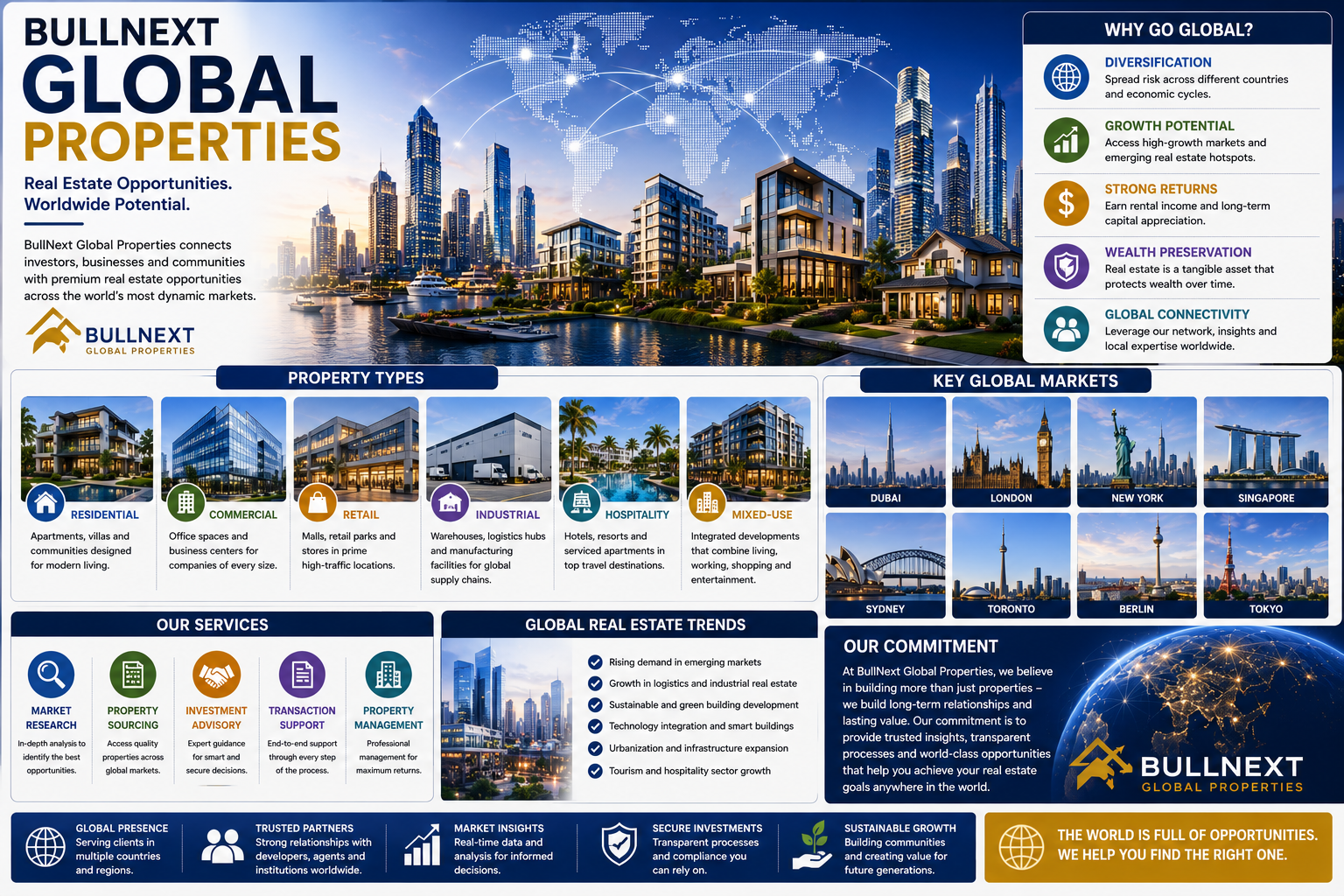
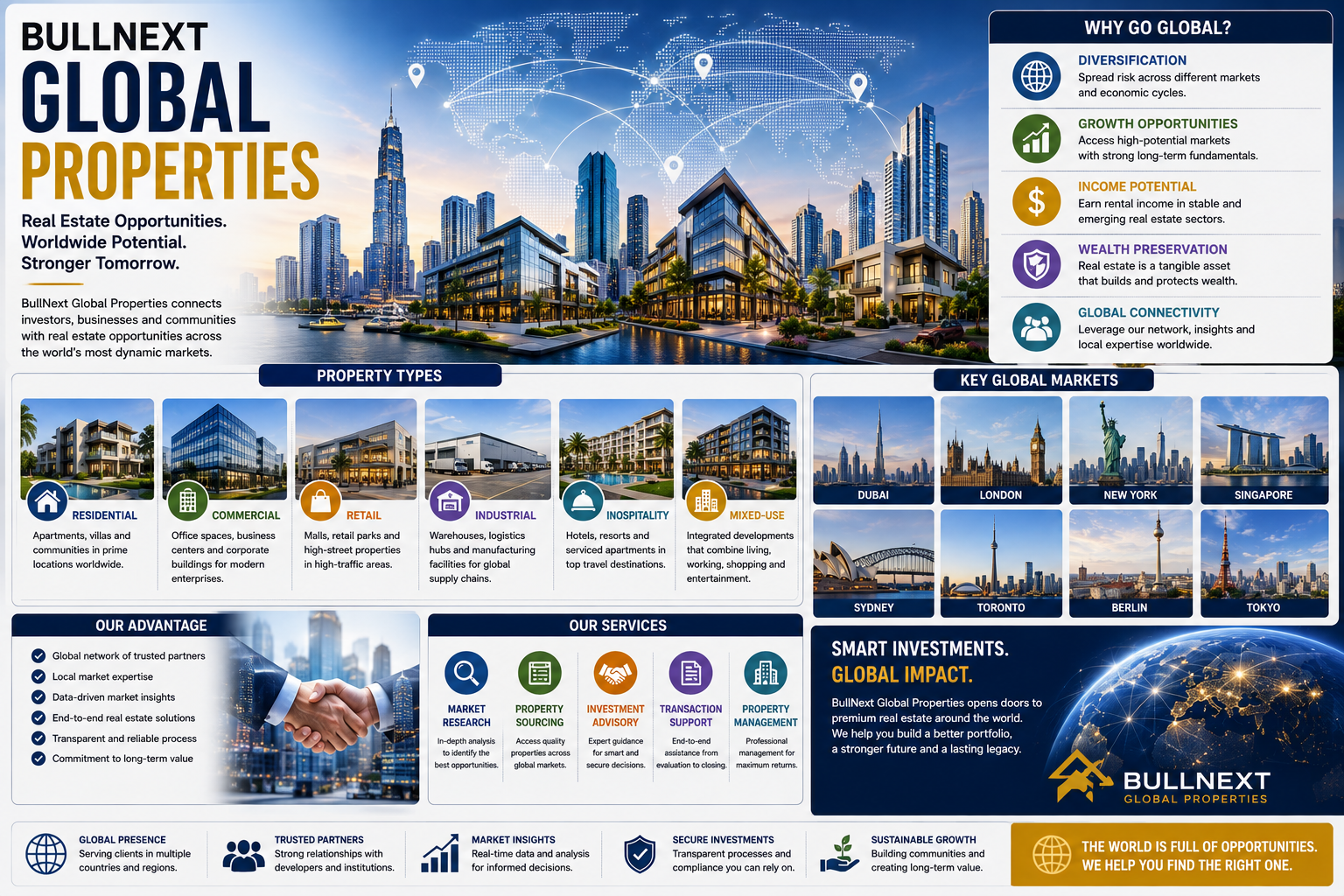
Global properties are real estate assets located across different countries and regions.
They can include:
Residential properties
Commercial buildings
Office developments
Retail centers
Industrial facilities
Warehouses
Hotels
Mixed-use developments
Land
Real estate development projects
Each market has its own economic conditions, regulations, property laws, currency, financing environment, and investment characteristics.
This makes global property research both more complex and potentially more diverse than focusing on a single market.
Why Global Real Estate Matters
Real estate markets do not all move in the same direction at the same time.
One city may experience strong population growth while another faces slower demand.
One region may have expanding technology industries, while another may be developing as a logistics or manufacturing center.
These differences create opportunities for businesses and investors who understand local conditions.
A global approach allows people to compare markets instead of assuming that one location represents the entire property industry.
Location Remains Fundamental
Even in a globalized property market, location remains one of the most important factors.
A property's potential can be influenced by:
Population growth
Employment
Infrastructure
Transportation
Business activity
Education
Healthcare
Tourism
Government investment
Local development
A property in a rapidly developing area may have different characteristics from a similar property in an established market.
Understanding the local environment is therefore essential.
Major Global Property Categories
Different types of properties respond to different economic forces.
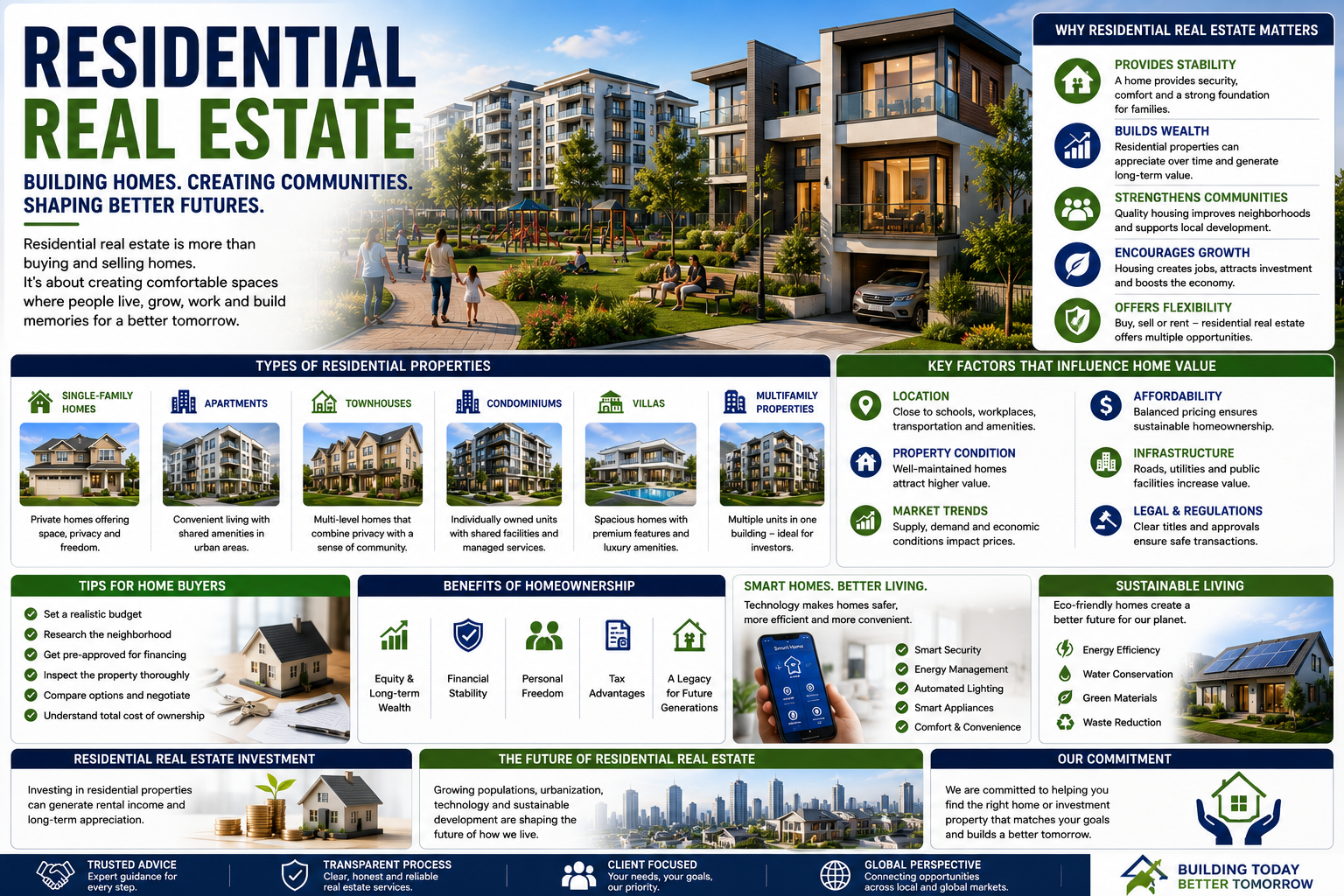
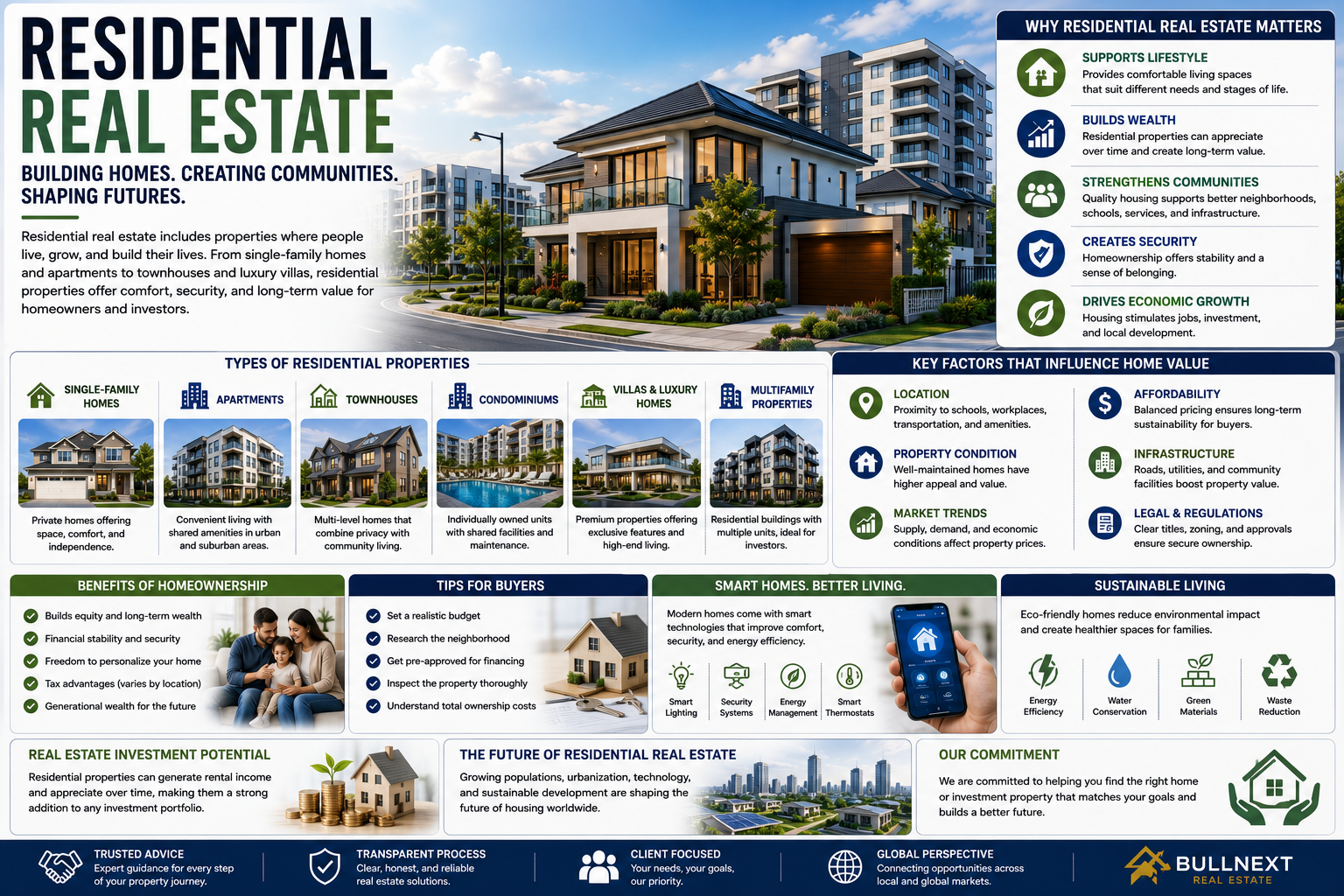
Residential Real Estate
Residential properties include houses, apartments, condominiums, and other homes.
Demand can be influenced by population growth, household formation, employment, affordability, and lifestyle preferences.
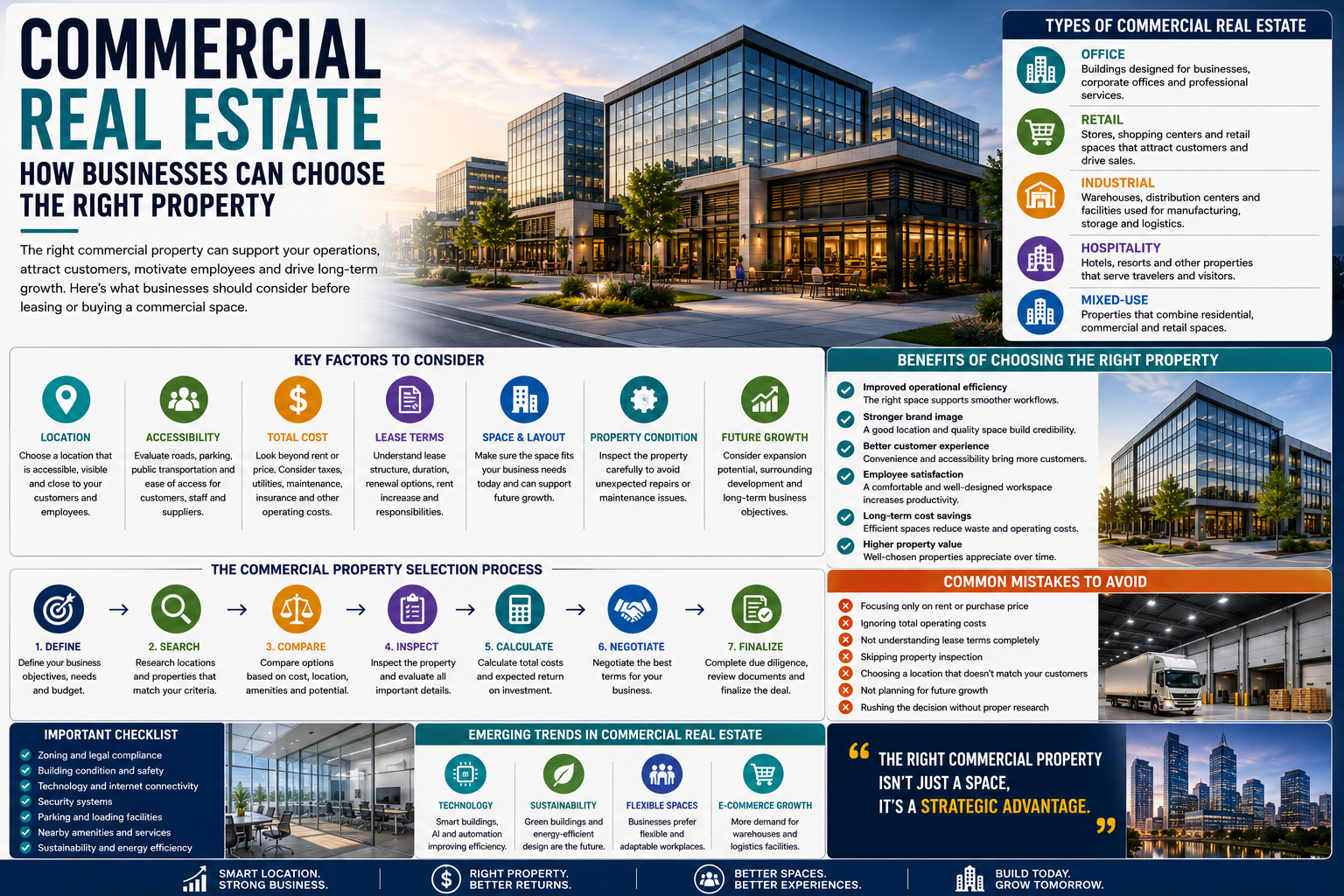
Commercial Real Estate
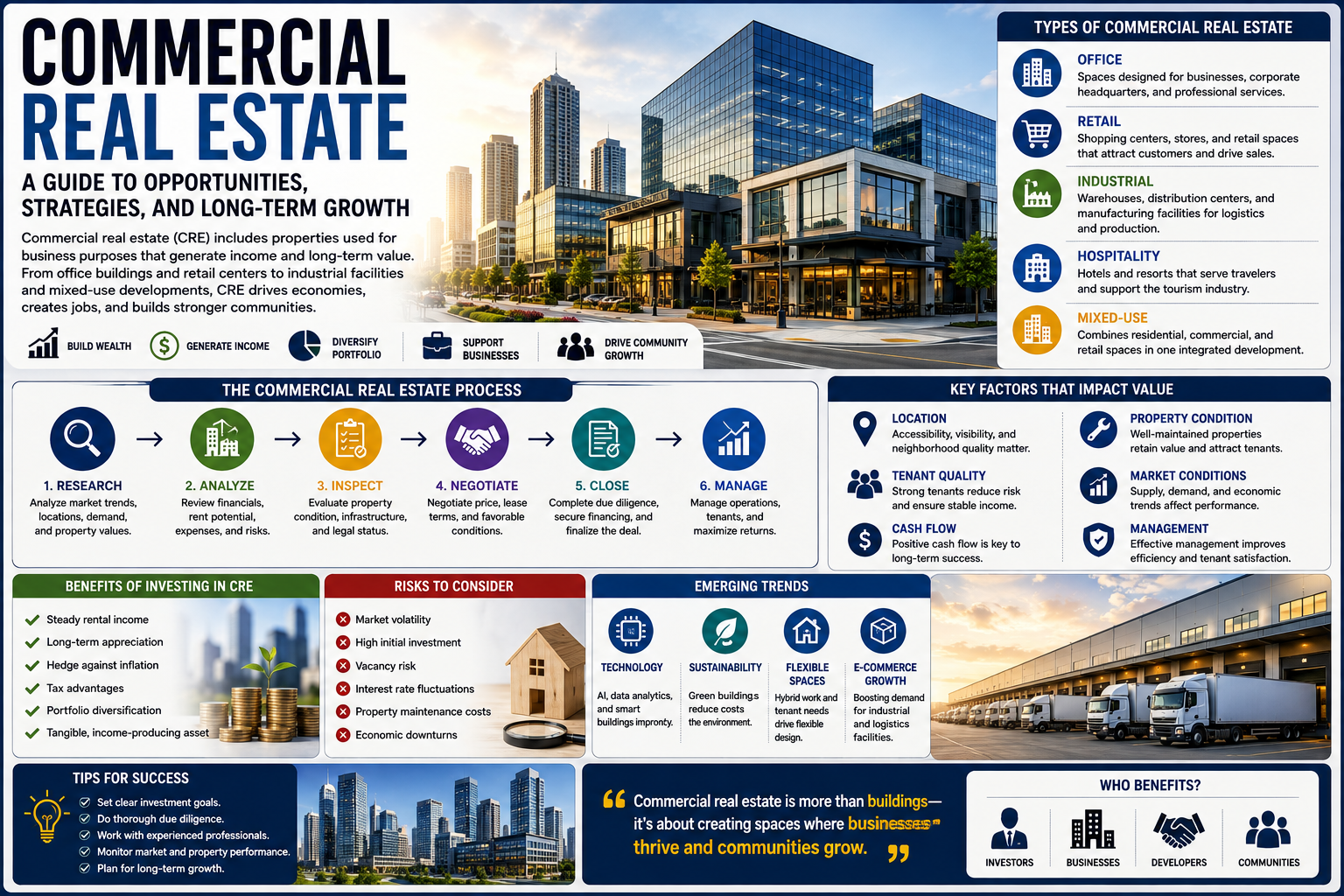
Commercial properties include offices, retail spaces, hotels, and other business-oriented buildings.
Their performance can depend heavily on economic activity and tenant demand.
Industrial Real Estate
Industrial properties include warehouses, manufacturing facilities, and logistics centers.
Their importance has grown alongside global supply chains, e-commerce, manufacturing, and distribution networks.
Mixed-Use Developments
Mixed-use projects combine residential, commercial, retail, entertainment, and other functions.
They can create communities where people can live, work, shop, and access services within the same broader development.
Global Cities and Property Demand
Large cities often attract property investment because they bring together people, businesses, infrastructure, and services.
Major metropolitan areas can become centers for:
Finance
Technology
Manufacturing
Education
Healthcare
Tourism
International trade
However, size alone doesn't guarantee strong property opportunities.
Investors and businesses should examine affordability, infrastructure, regulation, supply, demand, and long-term economic prospects.
Infrastructure and Property
Infrastructure can have a major influence on real estate.
New roads, airports, rail systems, public transportation, ports, and utilities can improve connectivity and encourage development.
Improved infrastructure can make previously less-accessible areas more attractive to businesses and residents.
For global property research, infrastructure plans can therefore be an important factor.
Technology Is Transforming Global Properties
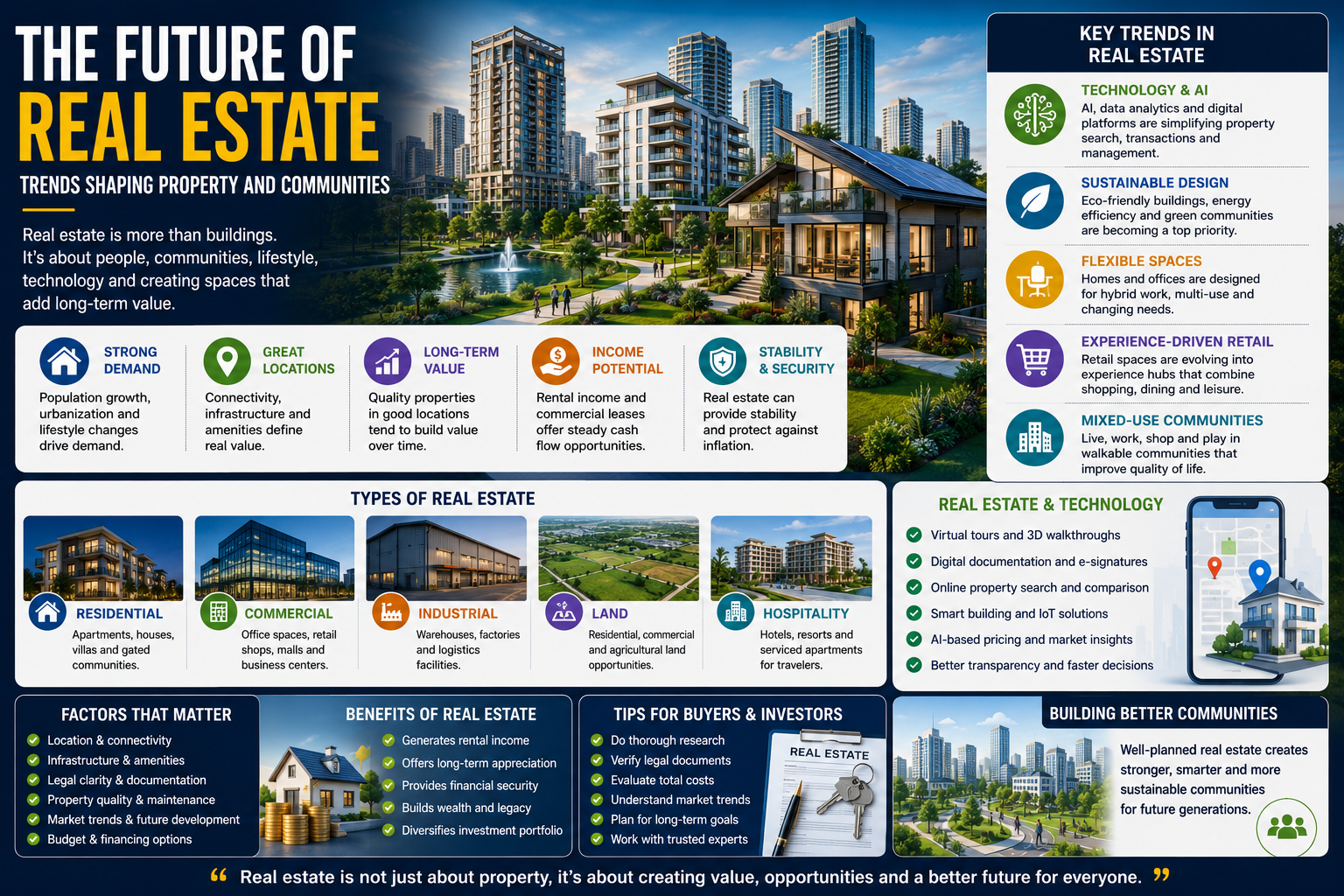
Technology has changed how property is discovered, evaluated, purchased, managed, and marketed.
Digital platforms allow users to explore properties from different locations without immediately traveling to the market.
Property professionals can use digital tools for:
Market research
Property management
Customer communication
Data analysis
Virtual tours
Financial reporting
This has made international property research more accessible.
Artificial Intelligence and Real Estate
Artificial intelligence is becoming increasingly relevant to property businesses.
AI can assist with:
Market analysis
Property comparisons
Customer service
Data processing
Property descriptions
Forecasting
Administrative automation
However, AI should be viewed as a supporting tool rather than a replacement for local expertise.
Property markets involve legal, cultural, economic, and physical factors that require human understanding.
Data-Driven Property Decisions
Global property markets generate large amounts of information.
Investors and businesses may analyze:
Property prices
Rental rates
Vacancy
Population trends
Employment
Construction
Infrastructure
Interest rates
Economic activity
Data can make comparisons easier, but numbers need context.
A property statistic that looks attractive in one market may have a completely different meaning in another.
Currency Considerations
International property ownership introduces currency considerations.
When an investor purchases property in another country, changes in exchange rates can affect the value of the investment when measured in the investor's home currency.
Currency risk should therefore be considered alongside property-related risks.
International investors may need professional financial advice when evaluating cross-border transactions.
Understanding Local Regulations
One of the biggest differences between domestic and international real estate is regulation.
Property ownership rules can vary significantly between countries.
Investors may need to understand:
Ownership requirements
Taxes
Zoning
Development rules
Foreign investment restrictions
Rental regulations
Financing requirements
Reporting obligations
Professional legal and tax advice can be particularly important when purchasing property internationally.
Global Property and Diversification
Real estate can sometimes be used as part of a diversified investment strategy.
Owning assets across different markets may reduce dependence on the performance of a single local economy.
However, international diversification does not eliminate risk.
Different countries can experience political, economic, currency, regulatory, and property-market challenges.
Diversification should therefore be based on careful research rather than simply buying properties in as many locations as possible.
Sustainability in Global Real Estate
Sustainability is becoming increasingly important in property development.
Developers and property owners may focus on:
Energy efficiency
Water conservation
Sustainable materials
Renewable energy
Waste reduction
Green building systems
Sustainable properties can potentially reduce operating costs while responding to changing expectations from tenants, buyers, and communities.
Smart Buildings
Technology is also changing how buildings operate.
Smart properties can use connected systems to monitor:
Energy consumption
Security
Lighting
Heating and cooling
Building access
Maintenance
These systems can improve operational efficiency and provide property owners with better information about how buildings are being used.
Global Commercial Property
Businesses operating internationally need suitable physical spaces.
Commercial real estate can support:
Corporate offices
Retail operations
Manufacturing
Logistics
Distribution
Hospitality
Research and development
Companies entering new markets often need to evaluate property alongside broader questions about customers, employees, transportation, regulations, and operating costs.
Global Logistics and Industrial Property
The movement of goods across borders has created significant demand for logistics infrastructure.
Warehouses and distribution centers can be strategically located near:
Ports
Airports
Highways
Rail networks
Large population centers
Location is especially important because transportation costs and delivery times can influence business efficiency.
Real Estate and Tourism
Tourism can influence property markets in destinations that attract large numbers of visitors.
Hotels, resorts, vacation properties, restaurants, retail spaces, and entertainment developments can all be connected to tourism activity.
However, tourism-dependent properties may also be more sensitive to changes in travel behavior and economic conditions.
Global Property Risks
International real estate can create opportunities, but it also involves risks.
Potential challenges include:
Market volatility
Currency fluctuations
Regulatory changes
Political uncertainty
Financing costs
Property management
Vacancy
Local economic changes
Unexpected maintenance
Liquidity limitations
Understanding these risks is essential before making a major property decision.
The Importance of Local Expertise
Global research can identify potential markets, but local knowledge remains extremely valuable.
Local professionals can understand:
Neighborhood conditions
Regulations
Property documentation
Rental demand
Construction standards
Local pricing
Cultural expectations
A global investment strategy works best when broad research is combined with local expertise.
Global Property Management
Managing a property from another country can be challenging.
Owners may need local professionals to handle:
Tenant communication
Maintenance
Repairs
Rent collection
Inspections
Vendor management
Legal compliance
Technology can improve communication, but local management can remain essential for physical property issues.
Due Diligence Is Essential
Before purchasing international property, investors should conduct thorough due diligence.
This can include reviewing:
Ownership
Who legally owns the property?
Property condition
Are there structural or maintenance issues?
Legal status
Are there restrictions or disputes?
Financial obligations
What taxes, fees, and costs apply?
Market demand
Is there genuine demand for the property?
Exit strategy
How easily could the property eventually be sold?
Careful research can help reduce avoidable risks.
The Future of Global Properties
The global real estate industry will continue to evolve as technology, demographics, economic development, and consumer preferences change.
Artificial intelligence may improve property analysis.
Digital platforms may make international markets easier to explore.
Smart buildings may improve efficiency.
Sustainable development may become increasingly important.
Changing work patterns may influence office and residential demand.
E-commerce and global supply chains may continue shaping industrial property.
These developments create opportunities, but successful property decisions will still depend on fundamental principles.
Location. Demand. Cost. Regulation. Quality. Infrastructure. Long-term value.
A Practical Global Property Framework
A simple framework for evaluating international property opportunities is:
Research → Compare → Verify → Calculate → Consult → Decide
Research
Understand the market, economy, population, infrastructure, and property sector.
Compare
Evaluate different cities, neighborhoods, and property types.
Verify
Check ownership, legal requirements, property condition, and documentation.
Calculate
Estimate purchase costs, taxes, financing, management, income, and potential risks.
Consult
Work with qualified local legal, financial, tax, and property professionals.
Decide
Choose opportunities that fit your objectives and risk tolerance.
Final Thoughts
Global real estate offers a broader perspective on property ownership, development, investment, and business expansion.
The world's property markets are connected by economic growth, technology, migration, infrastructure, tourism, trade, and changing lifestyles.
But international opportunities require more than simply identifying an attractive building.
Successful global property decisions depend on understanding local markets, regulations, costs, infrastructure, demand, currency considerations, and long-term objectives.
Technology can make global property research easier, but local expertise remains essential.
The most successful approach is to combine global awareness with local knowledge.
BullNext's broader Real Estate coverage can sit naturally alongside this global perspective, giving readers a way to explore property trends as part of wider business and investment themes.
Global real estate is ultimately about more than owning property in different countries.
It is about understanding where people are moving, where businesses are growing, how cities are changing, and where the next generation of communities may emerge.