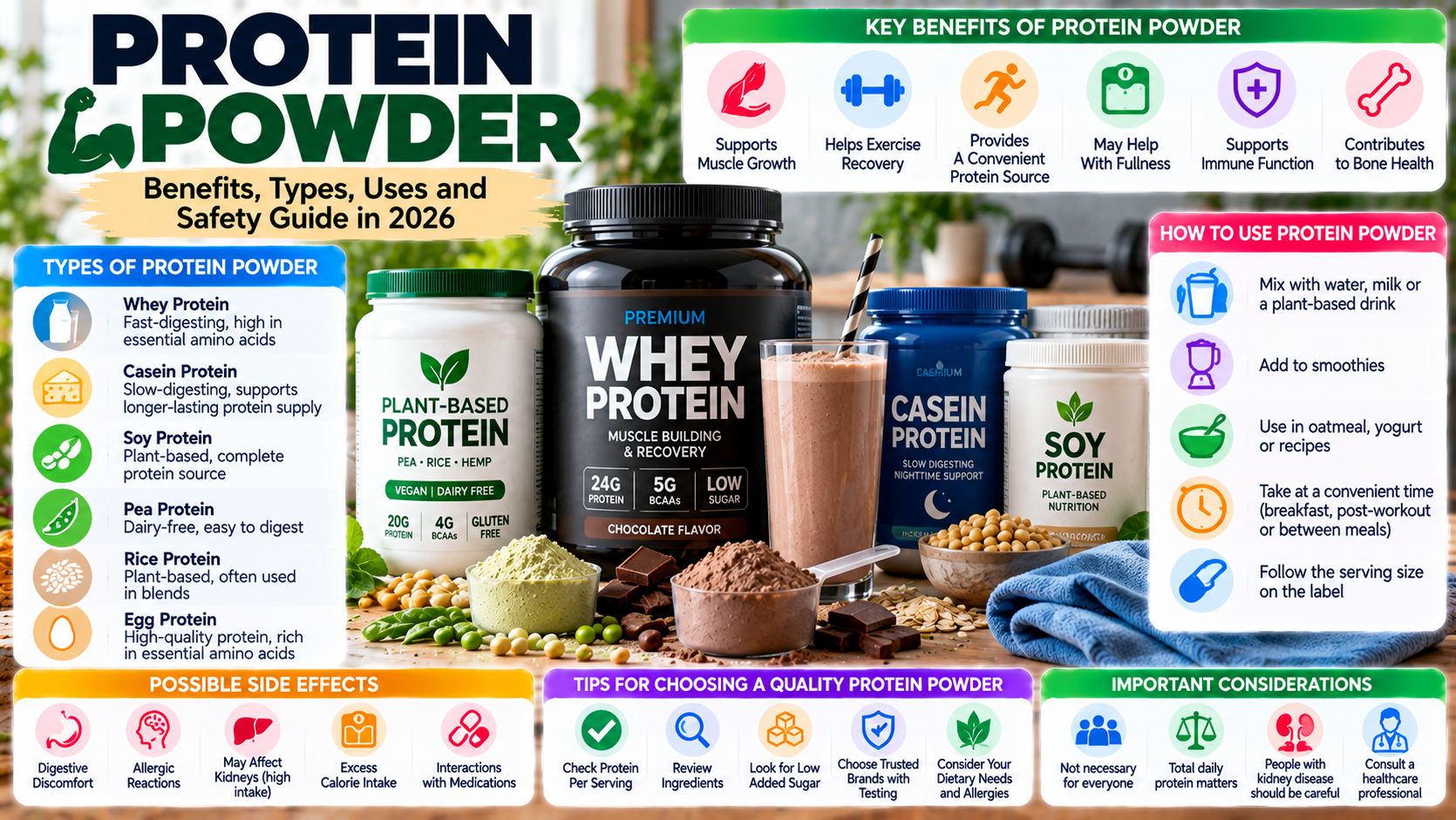
Protein powder has become a popular dietary supplement among athletes, gym beginners, fitness enthusiasts, and people looking to increase their daily protein intake. It is commonly used to support muscle growth, exercise recovery, and general nutrition.
With so many products available, choosing the right protein powder can be confusing. Whey protein, casein, soy protein, pea protein, and other options each have different ingredients, nutritional profiles, and potential benefits.
But is protein powder necessary for everyone? How much protein do you need, and what should you look for when buying a product?
This guide explains the different types of protein powder, their potential benefits, how to use them, possible side effects, and important safety considerations in 2026.
What Is Protein Powder?
Protein powder is a dietary supplement made by extracting or concentrating protein from animal or plant sources. It is usually mixed with water, milk, or another beverage to create a protein shake.
Some products contain mostly protein, while others include carbohydrates, fats, vitamins, minerals, flavorings, sweeteners, and other ingredients.
Protein is an essential nutrient that helps the body build and repair tissues. It also contributes to muscle maintenance, enzyme production, immune function, and many other biological processes.
Protein powder provides a convenient way to increase protein intake when food alone does not meet a person's needs. However, most people can obtain sufficient protein through a balanced diet without using supplements. <Cite refs={["turn882539search2","turn882539search3"]}/>
Different Types of Protein Powder
Protein powders come from several sources. The most suitable option depends on dietary preferences, allergies, digestion, fitness goals, and overall nutritional needs.
1. Whey Protein
Whey protein is derived from milk and is one of the most widely used protein supplements.
It contains all nine essential amino acids, which the body needs to obtain from food. Whey is commonly used by people who participate in resistance training because it provides protein in a convenient form.
Potential advantages include:
Convenient protein intake after exercise.
Support for muscle repair and maintenance when combined with appropriate training.
A relatively high concentration of essential amino acids.
Availability in different flavors and formulations.
Whey protein may not be suitable for people with milk protein allergies. Some whey products also contain lactose, which can cause digestive symptoms in people with lactose intolerance.
2. Whey Protein Concentrate
Whey protein concentrate contains protein along with varying amounts of lactose, fat, and other milk components.
It is often less processed than whey isolate and may be a practical option for people who tolerate dairy products.
The exact protein concentration depends on the product. Check the nutrition label rather than assuming every concentrate has the same composition.
3. Whey Protein Isolate
Whey protein isolate undergoes additional processing to remove much of the lactose and fat.
It often provides a higher percentage of protein by weight than whey concentrate. Some people with lactose intolerance may tolerate whey isolate better, but it is not guaranteed to be lactose-free or safe for someone with a milk protein allergy.
Always check the manufacturer's ingredient and allergen information.
4. Casein Protein
Casein is another protein derived from milk. It is digested more slowly than whey under typical conditions.
Some people use casein between meals or before sleeping as part of their daily protein intake. However, taking it at a particular time is not essential for everyone, and overall daily protein intake remains important.
Casein is not suitable for people with milk protein allergies.
5. Soy Protein
Soy protein is made from soybeans and is a popular plant-based option.
Soy protein contains all nine essential amino acids, making it a complete protein source. It can be useful for people who follow vegetarian or vegan diets or prefer to avoid dairy.
People with soy allergies should avoid products containing soy protein.
6. Pea Protein
Pea protein is generally made from yellow peas and is used in many plant-based protein powders.
It can be a convenient alternative for people who do not consume dairy or soy. Some products combine pea protein with rice or other plant proteins to provide a broader amino acid profile.
Check the label for additional ingredients and potential allergens.
7. Rice Protein
Rice protein is made from rice and is commonly used in vegan protein blends.
It can contribute to daily protein intake, although its amino acid profile differs from that of some other protein sources. Combining different plant proteins can help provide a wider range of essential amino acids.
8. Egg Protein
Egg protein powder is usually made from egg whites and provides all nine essential amino acids.
It may suit people who want an alternative to dairy-based powders. However, it is not appropriate for people with egg allergies.
Protein Powder Comparison
Type | Protein source | Best suited for | Important consideration |
|---|---|---|---|
Whey concentrate | Milk | People who tolerate dairy | May contain more lactose and fat |
Whey isolate | Milk | People seeking a concentrated protein source | May still contain milk allergens |
Casein | Milk | People who prefer slower-digesting protein | Not suitable for milk allergies |
Soy protein | Soybeans | Plant-based diets | Avoid with soy allergy |
Pea protein | Peas | Dairy-free protein intake | Check the complete amino acid profile |
Rice protein | Rice | Plant-based diets | Often used in blended formulas |
Egg protein | Eggs | People seeking an alternative to dairy | Avoid with egg allergy |
Potential Benefits of Protein Powder
Protein powder can be useful when it fills a genuine nutritional gap. Its benefits depend on a person's diet, exercise routine, health status, and total daily protein intake.
1. Supports Muscle Growth
Muscles need protein to repair and build tissue, particularly after resistance exercise.
When combined with progressive strength training and adequate nutrition, protein supplementation can help people meet the protein requirements associated with muscle growth.
However, protein powder alone does not build muscle. Training consistency, sufficient calories, recovery, and an appropriate exercise program are also important.
2. Helps Meet Daily Protein Requirements
Some people find it difficult to consume enough protein through regular meals. This may happen because of limited food choices, a demanding schedule, reduced appetite, or particular dietary preferences.
A protein shake can provide a convenient additional source of protein without requiring a full meal.
Whole foods should still form the foundation of a balanced eating pattern because they can provide fiber, vitamins, minerals, and other nutrients that protein powders may lack.
3. Supports Exercise Recovery
Exercise places demands on muscles and other tissues. Protein provides amino acids needed for repair and adaptation.
A protein-containing meal or shake after training can be convenient, but there is no need for everyone to consume a shake immediately after exercise. The overall amount of protein consumed throughout the day is more important than following a strict timing rule. <Cite refs={["turn882539search1","turn882539search4"]}/>
4. May Help With Fullness
Protein can contribute to feelings of fullness. Depending on the rest of the diet, a protein shake may help someone manage hunger between meals.
However, protein powder is not automatically a weight-loss product. Some shakes contain substantial amounts of added sugar and calories, which may affect overall energy intake.
For weight management, the complete diet and long-term eating habits matter more than any single supplement.
5. Provides a Convenient Option for Plant-Based Diets
People following vegan or vegetarian diets may use soy, pea, rice, or blended plant protein powders to supplement their intake.
These products can be particularly useful when meals contain limited protein sources. Nevertheless, beans, lentils, chickpeas, tofu, nuts, seeds, and other plant foods can also contribute significant amounts of protein.
How Much Protein Do You Need Daily?
Protein requirements vary according to body weight, age, activity level, health status, and fitness goals.
For generally healthy adults, a commonly used baseline recommendation is approximately 0.8 grams of protein per kilogram of body weight per day. People who exercise regularly or have specific nutritional needs may require different amounts. <Cite refs={["turn882539search2","turn882539search3"]}/>
For example, a healthy adult weighing 70 kilograms would need approximately 56 grams of protein per day at the 0.8 g/kg baseline.
The following table illustrates how that baseline changes with body weight.
Body weight | Approximate daily baseline |
|---|---|
50 kg | 40 g |
60 kg | 48 g |
70 kg | 56 g |
80 kg | 64 g |
90 kg | 72 g |
These figures are general reference points, not personalized targets for athletes, pregnancy, illness, or muscle-building programs. A registered dietitian can help estimate individual requirements.
Important: Your total daily protein intake includes protein from all foods and drinks, not just supplements.
How to Use Protein Powder
Protein powder can be incorporated into a diet in several simple ways.
1. Mix It With Water
Mixing protein powder with water is a straightforward option. It usually provides fewer calories than mixing the same powder with milk, although the final nutritional value depends on the product.
Follow the serving instructions and use the amount that fits your dietary needs.
2. Add It to Milk or a Suitable Alternative
Mixing protein powder with milk or a fortified plant-based beverage can add protein and other nutrients.
Check the label for allergens, added sugars, and total calories. Choose a beverage that suits your dietary requirements.
3. Blend It Into a Smoothie
Protein powder can be blended with fruit, oats, yogurt, or other ingredients to make a more substantial snack or meal component.
A smoothie can provide additional nutrients, but portion sizes and added ingredients affect its overall nutritional value.
4. Add It to Certain Foods
Some protein powders can be mixed into oatmeal, yogurt, or recipes. Heat and preparation methods may affect texture, so follow the product instructions and use recipes designed for the particular powder.
5. Choose a Convenient Time
Protein powder can be consumed at breakfast, between meals, or after exercise, depending on personal preference.
There is no universal requirement to take it at a specific time. Focus on meeting appropriate daily protein needs and maintaining a balanced diet.
Possible Side Effects of Protein Powder
Protein powder is generally tolerated by many healthy adults when used appropriately, but side effects and product-quality concerns are possible.
Digestive Discomfort
Some products may cause bloating, gas, diarrhea, or stomach discomfort. Possible reasons include lactose, sweeteners, added fibers, or other ingredients.
People who experience symptoms may benefit from reviewing the ingredient list and discussing alternatives with a healthcare professional.
Allergic Reactions
Whey and casein are milk proteins, soy protein comes from soybeans, and egg protein comes from eggs. These ingredients can trigger reactions in people with the corresponding allergies.
Always read allergen warnings and check for cross-contact information.
Excessive Calorie Intake
Some protein powders contain added sugars, oils, flavorings, and other ingredients that increase calories.
If a shake is added to an already sufficient diet without considering its energy content, it may contribute to unwanted weight gain.
Excessive Protein Intake
More protein is not always better. Very high intakes may be unnecessary, and people with chronic kidney disease or certain other health conditions may need individualized protein restrictions.
Anyone with kidney disease should consult their healthcare professional before increasing protein intake or using protein supplements.
Contaminants and Inaccurate Labels
Protein powders can vary in quality. Some products may contain contaminants or have ingredient amounts that differ from their labels. Independent testing can help provide additional quality information. <Cite refs={["turn882539search0","turn882539search3"]}/>
How to Choose the Best Protein Powder
The best protein powder is one that meets your nutritional needs, fits your diet, and comes from a reputable manufacturer.
1. Check the Protein Per Serving
Compare the amount of protein per serving rather than relying on package size or marketing claims.
The protein content of a scoop varies across products. Make sure the serving size on the label matches the amount you intend to use.
2. Review Added Sugar and Calories
Some flavored products contain considerable added sugar or other calorie-dense ingredients.
If you are monitoring sugar or energy intake, compare nutrition labels and select a product that fits your goals.
3. Check Allergens and Ingredients
Look for milk, soy, egg, gluten-containing ingredients, or other allergens relevant to your needs.
Also review sweeteners, flavorings, thickeners, and added vitamins or minerals. A shorter ingredient list may be easier to evaluate, although a long list is not automatically unsafe.
4. Look for Independent Testing
Choose products that provide credible independent testing or certification where available.
Programs such as NSF Certified for Sport or Informed Sport can help verify certain quality criteria and screen for selected substances relevant to athletes. Certification does not guarantee that a product is appropriate for everyone or that it will produce a particular result.
5. Avoid Unrealistic Claims
Be cautious of products promising rapid muscle growth, dramatic fat loss, or guaranteed results without exercise or dietary changes.
Protein powder is a source of nutrients, not a shortcut to a particular body shape.
6. Compare Cost Per Serving
Compare the price with the amount of protein actually provided. A larger container is not necessarily better value if the serving contains less protein or includes ingredients you do not need.
Protein Powder vs. Protein-Rich Foods
Both supplements and whole foods can contribute to daily protein intake, but they offer different nutritional benefits.
Feature | Protein powder | Protein-rich foods |
|---|---|---|
Convenience | Easy to prepare and transport | May require preparation |
Protein concentration | Often concentrated | Varies by food |
Fiber | Usually limited unless added | Available in foods such as beans and lentils |
Other nutrients | Depends on the formula | Can provide a range of vitamins and minerals |
Ingredient control | Requires label review | Easier to select individual ingredients |
Cost | Varies by brand and protein content | Varies by food, season, and location |
Protein-rich foods include eggs, dairy products, fish, meat, beans, lentils, chickpeas, tofu, nuts, and seeds.
A balanced diet can provide protein alongside other nutrients. Protein powder is best viewed as a convenient supplement rather than a replacement for nutritious meals.
Who Should Be Careful With Protein Powder?
Some people should seek professional advice before using protein supplements.
People With Kidney Disease
Kidney disease can affect how much protein a person should consume. Follow a clinician's or renal dietitian's recommendations rather than adopting a high-protein diet independently.
People With Milk or Other Food Allergies
Choose a product that avoids the allergen and review cross-contact warnings. Whey isolate should not be assumed safe for someone with a milk protein allergy.
Children and Teenagers
Young people have different nutritional needs from adults. Protein supplements should not be used casually as a substitute for balanced meals, and a pediatric healthcare professional or dietitian can advise when supplementation is appropriate.
Pregnant or Breastfeeding People
Nutritional needs may change during pregnancy and breastfeeding. Discuss supplements with a healthcare professional to ensure that the ingredients and amounts are appropriate.
People Taking Medicines or Managing Chronic Conditions
If you take regular medication or have a chronic health condition, check the product's ingredients and consult a qualified healthcare professional before starting a supplement.
Frequently Asked Questions About Protein Powder
Is protein powder necessary for muscle growth?
No. Protein powder is not essential for muscle growth. People can obtain protein from food, but a supplement may be convenient when dietary intake is insufficient.
Can beginners use protein powder?
Healthy adults who are new to exercise may use protein powder if it helps meet their nutritional needs. It is not required simply because someone has joined a gym.
Does protein powder cause weight gain?
Protein powder does not automatically cause weight gain. Changes in body weight depend on total energy intake, activity, and other factors. Extra calories from shakes can contribute to weight gain if they exceed a person's energy needs.
Is whey protein better than plant protein?
Neither is automatically best for everyone. Whey provides all essential amino acids, while soy is also a complete protein and many plant-based products use blended sources. Dietary preferences, allergies, digestion, and product quality should guide the choice.
Can protein powder replace meals?
Most protein powders do not provide the complete range of nutrients found in a balanced meal. Meal-replacement products are a separate category and should be evaluated according to their nutritional content.
When is the best time to take protein powder?
There is no single best time for everyone. It can be taken when convenient, as part of a plan to meet daily protein requirements.
Can protein powder harm the kidneys?
Healthy adults may tolerate appropriate protein intake, but people with chronic kidney disease may need to limit or adjust protein intake. Consult a healthcare professional if you have kidney problems or concerns about high-protein diets.
How can I identify a quality protein powder?
Review the protein content, ingredients, allergen information, added sugars, manufacturer transparency, and independent testing or certification where available.
Final Thoughts
Protein powder can be a convenient way to increase protein intake and support muscle maintenance, growth, and exercise recovery when used alongside appropriate nutrition and physical activity.
However, not everyone needs a protein supplement. Whole foods remain an important foundation of a balanced diet, and choosing a product should involve more than comparing brands or following fitness trends.
Before buying protein powder, review the label, consider your dietary needs, check product quality, and seek professional advice if you have a medical condition or take regular medication.
Disclaimer: This article is for educational purposes only and does not constitute medical or dietary advice. Individual protein requirements vary, and people with kidney disease, food allergies, or other medical conditions should seek personalized guidance from a qualified healthcare professional.