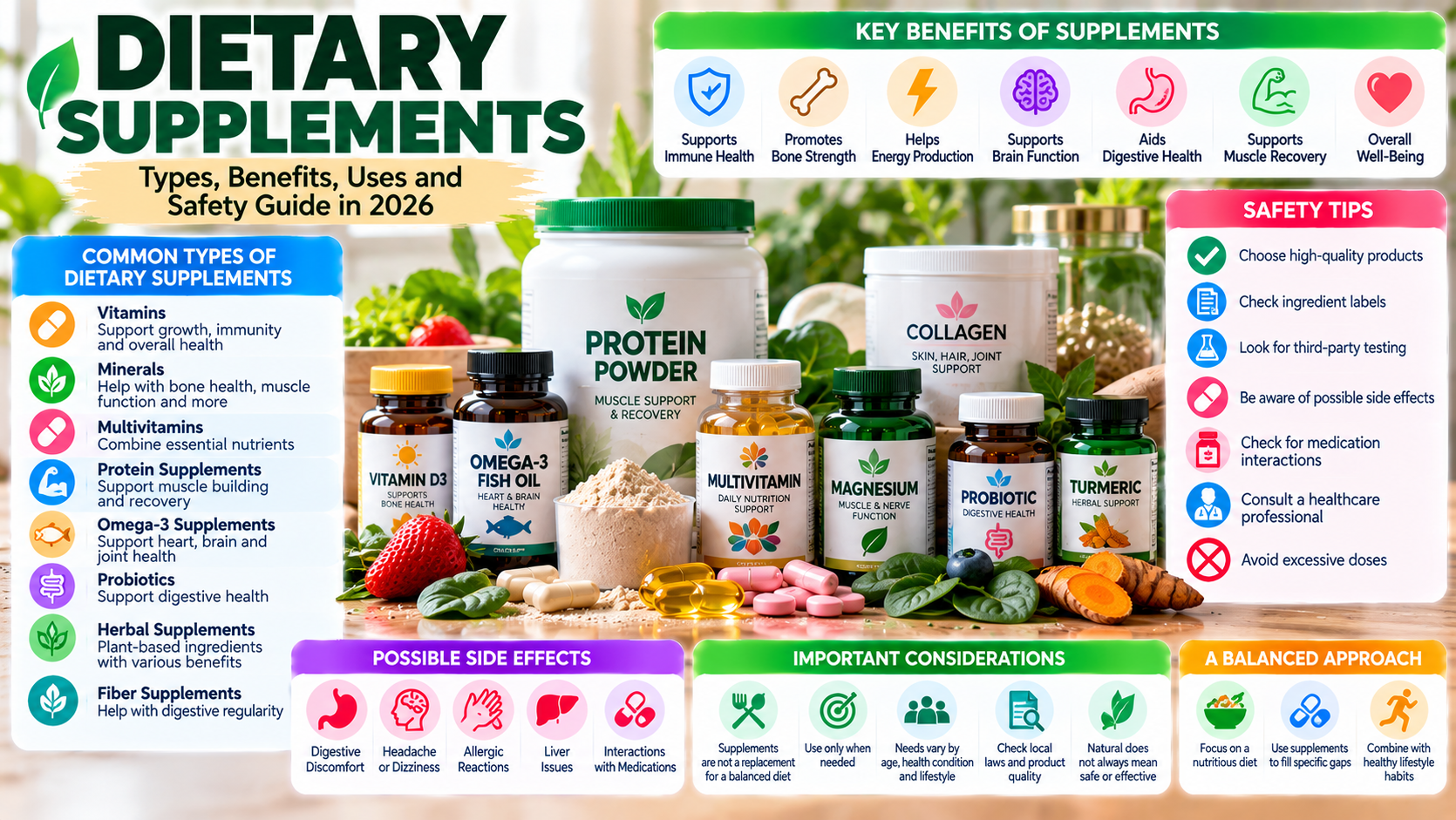
Dietary supplements have become a popular part of modern wellness routines. From multivitamins and minerals to protein powders, probiotics, and herbal products, many people use supplements to support their nutritional needs and overall well-being.
However, supplements are not necessary for everyone, and taking more does not always mean getting better results. Some products can help address nutrient deficiencies, while others have limited scientific evidence or may cause unwanted side effects.
In this guide, we explore what dietary supplements are, their different types, potential benefits, possible risks, and how to choose products responsibly in 2026.
What Are Dietary Supplements?
Dietary supplements are products intended to add nutrients or other dietary ingredients to a person's usual diet. They may contain vitamins, minerals, amino acids, herbs, probiotics, or other substances.
Supplements are commonly available in several forms, including:
Tablets and capsules.
Powders and drink mixes.
Gummies and chewable products.
Liquid drops and syrups.
Softgels and other specialized formulations.
People may use supplements to help meet nutritional requirements, address certain deficiencies, or support specific health goals. However, a supplement's purpose and effectiveness depend on its ingredients, formulation, and the individual's needs.
Supplements are not intended to replace a balanced diet or serve as a substitute for medical treatment. <Cite refs={["turn606919search3","turn606919search9"]}/>
Why Do People Take Supplements?
People choose supplements for different reasons, depending on their diets, health conditions, age, and lifestyle.
Common reasons include:
Addressing a confirmed vitamin or mineral deficiency.
Meeting increased nutritional needs during certain life stages.
Supporting bone health.
Supporting normal immune function.
Supplementing protein intake when dietary intake is insufficient.
Supporting digestive health with selected products.
Following a healthcare professional's nutritional recommendations.
Not every supplement provides a meaningful benefit for every person. The best approach is to identify a specific need rather than taking multiple products without a clear reason.
Common Types of Dietary Supplements
1. Vitamins
Vitamins are essential nutrients involved in many bodily functions, including metabolism, normal growth, and tissue maintenance.
Common vitamin supplements include:
Vitamin D: Supports calcium absorption and bone health.
Vitamin B12: Helps maintain normal nerve function and red blood cell production.
Vitamin C: Supports collagen formation, wound healing, and normal immune function.
Vitamin A: Supports normal vision and immune function.
Vitamin E: Functions as an antioxidant in the body.
The need for a particular vitamin depends on dietary intake, health status, and other individual factors. High doses of some vitamins can be harmful, so supplementation should be appropriate to the person's needs.
2. Minerals
Minerals are nutrients required for functions such as bone development, oxygen transport, fluid balance, and normal muscle activity.
Examples include:
Iron: Needed for hemoglobin production and oxygen transport.
Calcium: Supports bones, teeth, muscles, and nerve signaling.
Magnesium: Involved in muscle and nerve function and many enzyme reactions.
Zinc: Supports immune function, wound healing, and normal growth.
Potassium: Helps maintain fluid balance and normal muscle and nerve function.
Mineral supplements are not suitable for everyone. For example, excess iron can be dangerous, while certain minerals may interact with medicines or affect people with kidney problems.
3. Multivitamins
Multivitamins combine several vitamins and sometimes minerals in one product. They may help people who have difficulty meeting certain nutrient requirements through their diets.
However, multivitamins do not automatically improve health outcomes in everyone. They cannot compensate for a poor diet, and taking several overlapping products can result in excessive intake of particular nutrients.
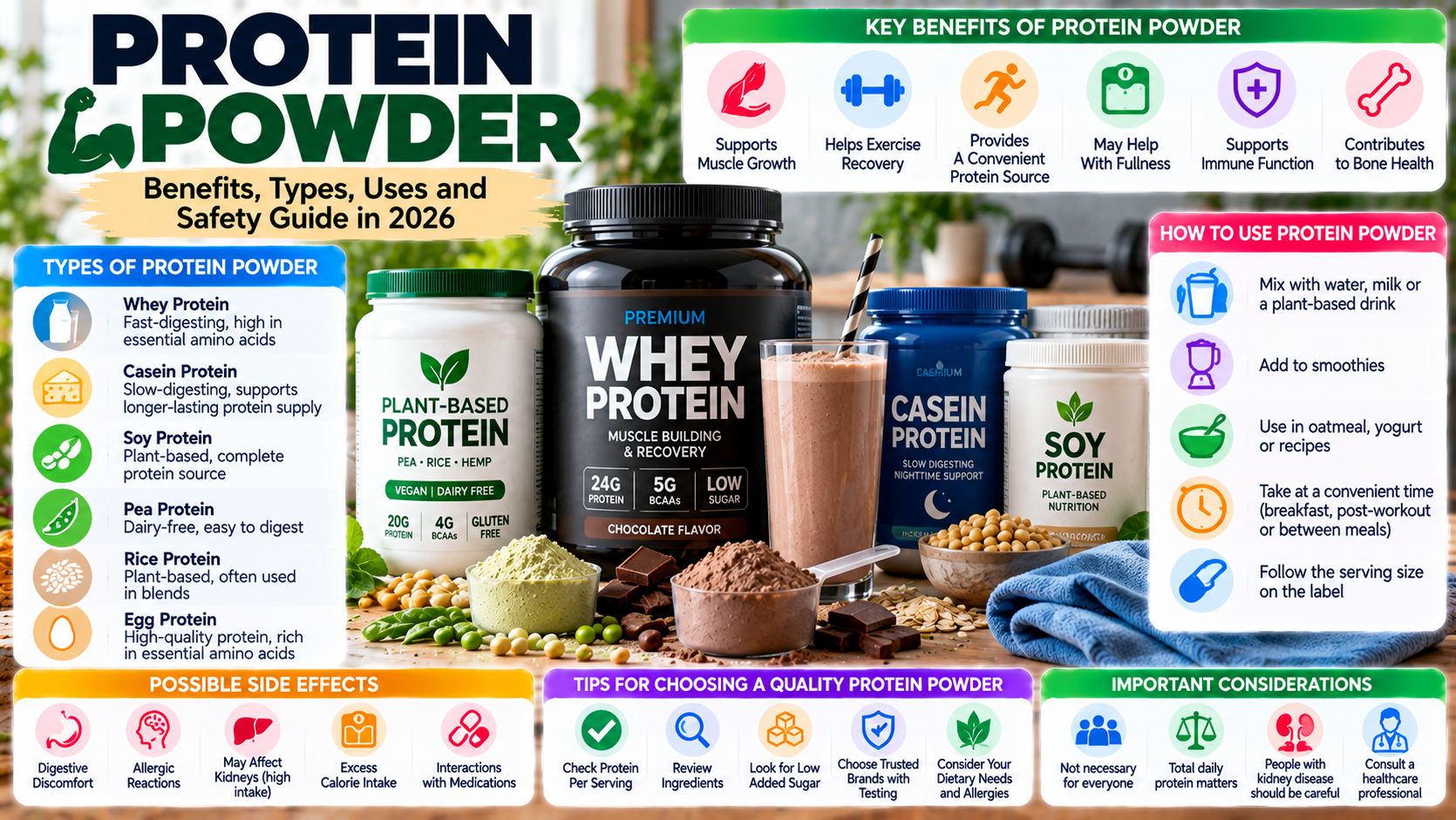
4. Protein Supplements
Protein powders and ready-to-drink protein products are commonly used by people who exercise, participate in sports, or have difficulty obtaining enough protein from food.
Common forms include whey, casein, soy, pea, and other plant-based proteins.
Protein supplements can be convenient, but many people can meet their protein needs through foods such as eggs, dairy products, beans, lentils, fish, meat, nuts, and seeds.
People with kidney disease or other conditions affecting protein requirements should seek individualized dietary advice.
5. Omega-3 Supplements
Omega-3 supplements may contain fish oil, algae oil, or other sources of omega-3 fatty acids.
These fatty acids play roles in cell membranes and normal body functions. Certain prescription omega-3 medicines are used for specific medical conditions, but ordinary over-the-counter supplements should not be treated as interchangeable with prescription treatments.
The need for supplementation depends on dietary habits, medical history, and the reason for use.
6. Probiotics
Probiotics are live microorganisms that may provide health benefits when particular strains are used in suitable amounts.
Different probiotic strains have been studied for different purposes, so results from one product cannot automatically be applied to another.
People with serious illnesses or weakened immune systems should consult a healthcare professional before using probiotic supplements.
7. Herbal Supplements
Herbal supplements contain plant materials or extracts. Common examples include turmeric, ginger, echinacea, and ashwagandha.
Some herbal ingredients have been studied for particular health outcomes, but the strength of evidence varies considerably. Herbal products can also cause allergies, side effects, and interactions with prescription medicines.
A product being described as natural does not guarantee that it is safe or effective.
8. Fiber Supplements
Fiber supplements can help increase dietary fiber intake when food alone does not provide enough.
Certain fiber products may support bowel regularity. However, the effects depend on the type of fiber, fluid intake, and the person's digestive health.
Increase fiber intake gradually and follow the product instructions. Some fiber supplements can affect the absorption of medicines, so check with a pharmacist if you take regular medication.
Potential Benefits of Dietary Supplements
Supplements can be useful when they address a genuine nutritional need. Their benefits depend on the specific ingredient and the person's circumstances.
Correcting Nutrient Deficiencies
A supplement may help restore nutrient levels when a deficiency is identified. For example, healthcare professionals may recommend iron for iron deficiency or vitamin B12 for certain forms of deficiency.
The correct approach depends on the cause and severity of the deficiency. Some symptoms associated with nutrient deficiencies can also occur with other medical conditions.
Supporting Bone Health
Calcium and vitamin D are important for normal bone development and maintenance. People who do not obtain sufficient amounts from food or who have particular risk factors may benefit from appropriate supplementation.
The right amount depends on age, diet, medical history, and other factors.
Meeting Specific Nutritional Needs
Some people have higher nutritional requirements or difficulty obtaining enough nutrients through their usual diets. Examples may include certain older adults, people following restrictive diets, and individuals with conditions that affect nutrient absorption.
A healthcare professional or registered dietitian can help identify appropriate options.
Supporting Sports Nutrition
Protein supplements can provide a convenient source of protein for people who struggle to meet their needs through food. Other sports supplements have different evidence and safety profiles.
Athletes should choose products carefully because some supplements may contain undeclared ingredients or substances prohibited in competitive sports.
Supporting Digestive Regularity
Certain fiber supplements can help increase fiber intake and support bowel regularity. Some probiotic strains may also provide benefits for specific digestive concerns, although the evidence varies by strain and condition.
Supplements should be selected based on a clear purpose rather than broad marketing promises.
Are Supplements Necessary for Everyone?
No. Many people can meet most of their nutritional needs through a varied and balanced diet.
Foods provide a combination of vitamins, minerals, protein, fiber, healthy fats, and other beneficial compounds. Supplements may be useful when dietary intake is insufficient, when absorption is impaired, or when a specific health circumstance increases nutrient requirements.
The National Institutes of Health explains that supplements can help people obtain nutrients they need, but they cannot replace a varied diet. <Cite refs={["turn606919search4","turn606919search8"]}/>
Before starting a supplement, consider:
Whether you have a confirmed deficiency or specific nutritional need.
Whether your current diet already provides enough of the nutrient.
Whether the product overlaps with another supplement.
Whether you take medicines or have an existing medical condition.
Whether a healthcare professional has recommended supplementation.
Possible Side Effects and Risks
Dietary supplements can cause side effects, particularly when taken in excessive amounts or combined with medicines.
Potential risks include:
Digestive discomfort, nausea, or diarrhea.
Allergic reactions to ingredients.
Excessive intake of certain vitamins or minerals.
Interactions with prescription and over-the-counter medicines.
Contamination or inaccurate ingredient labeling.
Delayed diagnosis or treatment when supplements are used instead of medical care.
For example, excessive vitamin A can cause toxicity, too much iron can damage organs, and vitamin K can interfere with the action of warfarin, a blood-thinning medicine. <Cite refs={["turn606919search4","turn606919search10"]}/>
Taking several supplements at once can also make it harder to identify the cause of an unwanted reaction.
Stop using a suspected supplement if you experience a concerning reaction and seek appropriate medical advice. Severe allergic symptoms require urgent medical attention.
How to Choose Quality Supplements
Choosing a supplement requires more than comparing brands, prices, or marketing claims.
1. Identify Your Specific Need
Start by identifying the nutrient or health goal you want to address. A healthcare professional may recommend blood tests or other assessments when appropriate.
Avoid taking high-dose products simply because they are popular online.
2. Read the Supplement Label
Check the following information:
Active ingredients and their amounts per serving.
Serving size and directions.
Other ingredients, including fillers and allergens.
Expiration date and storage instructions.
Manufacturer or distributor information.
Warnings and potential interactions.
Pay attention to the total amount you consume from all supplements combined.
3. Look for Independent Quality Testing
Independent certification or laboratory testing may provide additional information about ingredient identity, purity, and manufacturing quality.
However, quality certification does not guarantee that a supplement is effective for a particular health goal. Verify what the testing program actually covers.
4. Be Cautious of Exaggerated Claims
Avoid products that promise rapid weight loss, guaranteed muscle growth, complete detoxification, or cures for serious diseases.
Strong health claims should be supported by reliable evidence, not testimonials or social media trends.
5. Consider Potential Interactions
Tell your doctor or pharmacist about every supplement you take, including vitamins, herbal products, powders, and gummies.
This is especially important before surgery, during pregnancy or breastfeeding, or when taking prescription medicines.
Supplements vs. Food: What Is the Difference?
Feature | Dietary supplements | Whole foods |
|---|---|---|
Main purpose | Add specific nutrients or ingredients to the diet | Provide nutrients and energy as part of meals |
Nutrient variety | Often focused on selected ingredients | Can provide a broad range of nutrients |
Convenience | Usually easy to measure and carry | Requires food selection and preparation |
Fiber and food compounds | Depends on the product | Often provides fiber and a range of naturally occurring compounds |
Risks | Excess intake, interactions, contamination, or inaccurate labeling | Risks depend on food safety, allergies, and individual dietary needs |
Best role | Address specific nutritional needs when appropriate | Foundation of a balanced eating pattern |
Supplements and food are not necessarily competing options. A supplement may be useful alongside a balanced diet when a specific need exists.
Who Should Be Extra Careful With Supplements?
Certain groups should seek professional advice before taking supplements.
Pregnant or Breastfeeding People
Nutrient requirements may change during pregnancy and breastfeeding, but not all supplements are suitable. Some herbal ingredients and high-dose vitamins may pose risks.
Children and Teenagers
Children have different nutrient requirements from adults. Adult supplements may provide excessive amounts of certain ingredients, so use age-appropriate products only when appropriate.
People With Chronic Health Conditions
People with kidney disease, liver disease, digestive disorders, or other chronic conditions may need specific adjustments to their supplement choices.
People Taking Prescription Medicines
Supplements can affect how medicines work, increase side effects, or change treatment effectiveness. A doctor or pharmacist can review possible interactions.
People Preparing for Surgery
Some supplements can affect bleeding, blood pressure, or responses to anesthesia. Tell your healthcare team about all products you use before a planned procedure.
Frequently Asked Questions About Dietary Supplements
What are dietary supplements used for?
Dietary supplements are used to add nutrients or other dietary ingredients to the diet. They may help address deficiencies or meet particular nutritional needs, but they are not intended to replace a balanced diet or prescribed medical treatment.
Are supplements safe to take every day?
Some supplements can be taken regularly when appropriate, but safety depends on the ingredient, amount, duration, health status, and other medicines. Taking excessive amounts may cause harm.
Can supplements replace a healthy diet?
No. Supplements provide selected nutrients or ingredients but cannot fully replace the variety of nutrients and food components available from a balanced diet.
Do multivitamins improve overall health?
Multivitamins may help people who have difficulty meeting certain nutrient requirements. However, benefits vary, and they have not been shown to provide every person with broad protection against disease.
How do I know if I need a supplement?
Your dietary habits, symptoms, medical history, and sometimes laboratory tests can help determine whether supplementation is appropriate. A healthcare professional can help identify the right product and amount.
Are natural supplements always safe?
No. Natural ingredients can cause side effects, allergies, and interactions with medicines. Product quality and concentration also vary.
Can I take several supplements together?
Combining supplements may be appropriate in some circumstances, but it can increase the risk of excessive nutrient intake and interactions. Review the full ingredient lists and ask a healthcare professional if you are unsure.
How should I store supplements?
Follow the storage instructions on the label. Keep products in their original containers when possible, protect them from excessive heat and moisture, and store them out of reach of children.
Final Thoughts
Dietary supplements can play a useful role in nutrition when they address a specific need. Vitamins, minerals, protein products, probiotics, fiber, and herbal supplements all have different purposes, levels of scientific evidence, and safety considerations.
The best approach is to focus on a balanced diet, identify genuine nutritional gaps, select quality products, and avoid unnecessary or excessive supplementation. Consult a qualified healthcare professional before starting a supplement if you have a medical condition, take medication, or are pregnant or breastfeeding.
Disclaimer: This article is for educational purposes only and does not constitute medical advice. Dietary supplements are not intended to diagnose, treat, cure, or prevent disease. Seek professional guidance for personalized recommendations.