Collagen powder has become a popular dietary supplement among people interested in skincare, healthy aging, hair and nail care, and joint health. It is commonly sold as hydrolyzed collagen or collagen peptides and can be mixed into water, coffee, smoothies, and other drinks.
Collagen is a structural protein naturally found in the skin, bones, cartilage, tendons, and other connective tissues. The body produces its own collagen, but production gradually changes with age. Collagen supplements are marketed as a way to support skin appearance and joint function, although scientific evidence varies depending on the intended benefit.
In this guide, we explore what collagen powder is, its potential benefits, different types, how to use it, possible side effects, and how to choose a quality product in 2026.
What Is Collagen Powder?
Collagen powder is a dietary supplement made from collagen obtained from animal sources, such as bovine skin, fish skin, or other connective tissues. The collagen is processed into a powder that can be mixed with liquids or added to foods.
Many products contain hydrolyzed collagen peptides. Hydrolysis breaks collagen into smaller protein fragments, making the powder easier to dissolve and consume.
After ingestion, collagen is digested into amino acids and smaller peptides. The body uses these components in different ways, including building and maintaining proteins and tissues. However, consuming collagen does not mean that all of it goes directly to the skin, hair, nails, or joints.
Collagen powder is not a complete protein because it does not provide all essential amino acids in the proportions required to serve as a sole protein source.
Potential Benefits of Collagen Powder
Collagen supplements are associated with several possible benefits, but the strength of evidence differs for each use.
1. Skin Hydration and Elasticity
Collagen powder is widely marketed for skin health. Some clinical trials have reported improvements in skin hydration and elasticity after regular supplementation.
However, the evidence remains mixed. A 2025 systematic review and meta-analysis published in The American Journal of Medicine found that results varied according to study quality and funding source. Its analysis did not find convincing clinical evidence supporting collagen supplements as a treatment or preventive measure for skin aging.
This means collagen powder should not be considered a guaranteed solution for wrinkles, fine lines, or loss of skin firmness.
For overall skin health, daily sun protection, a balanced diet, adequate sleep, and an appropriate skincare routine remain important.
2. Joint Comfort and Mobility
Collagen supplements have also been studied for joint discomfort, particularly in people with knee osteoarthritis.
Some research suggests that certain collagen products may help reduce discomfort or improve physical function. However, the studies differ in their collagen formulations, doses, duration, and participant characteristics.
Collagen powder is not a cure for arthritis and should not replace prescribed treatment, physical therapy, or medical assessment.
3. Hair and Nail Health
Collagen supplements are often advertised for stronger nails and healthier hair. Although collagen contains amino acids used in the body's protein-building processes, strong clinical evidence demonstrating reliable improvements in hair growth or hair thickness is limited.
Nail-related research is also limited, and larger, well-designed studies are needed.
People experiencing significant hair loss or brittle nails may benefit more from identifying underlying causes, such as nutritional deficiencies, hormonal changes, or other medical conditions.
4. Support for Connective Tissues
Collagen is a major component of tendons, ligaments, cartilage, and other connective tissues. Researchers are investigating whether collagen peptide supplementation, particularly when combined with exercise, can support connective-tissue adaptation.
Although early findings are of interest, the evidence is not strong enough to guarantee improved tendon strength, faster injury recovery, or injury prevention for everyone.
5. Support for Normal Protein Intake
Collagen powder contributes protein to the diet. It can be convenient for people who want to add protein to drinks or foods.
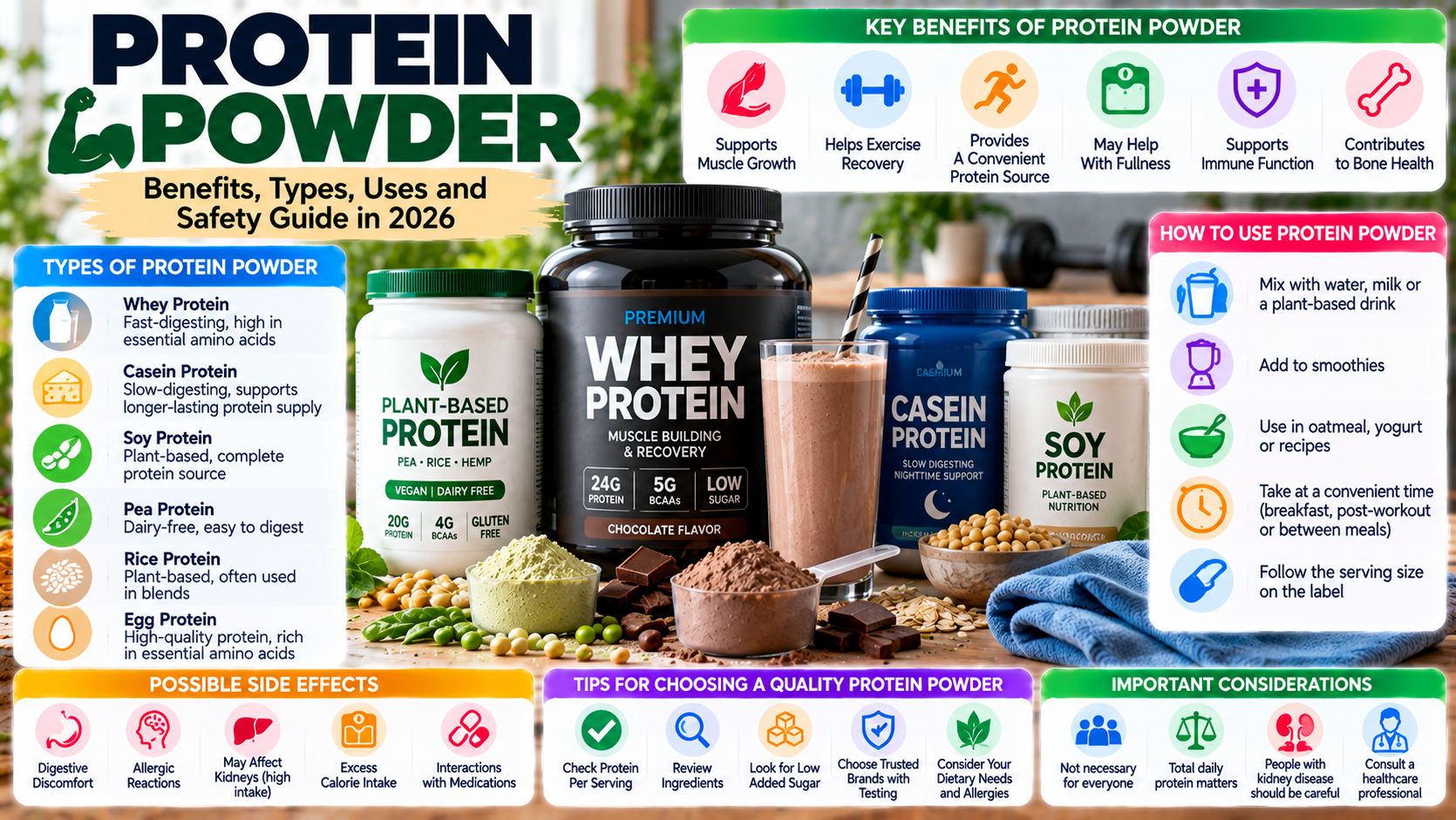
However, it should not automatically replace complete protein sources such as eggs, dairy products, soy, fish, meat, or suitable combinations of plant proteins. These foods can provide essential amino acids that collagen alone does not supply adequately.
Types of Collagen Powder
Collagen supplements are classified by their source, processing method, or collagen type.
Type | Common source | Common use or feature |
|---|---|---|
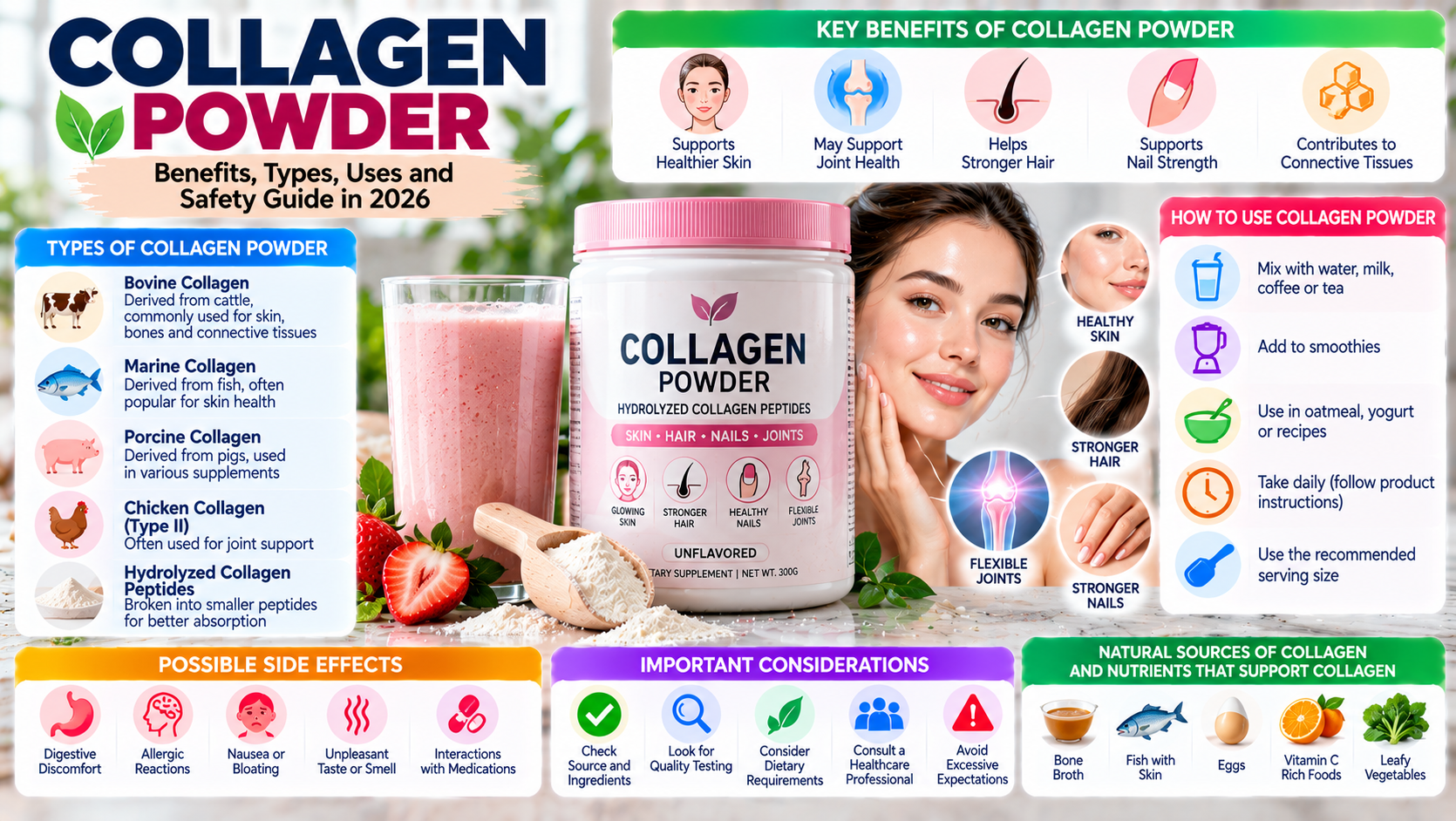
Bovine collagen | Cattle hides and connective tissues | Commonly marketed for skin and connective-tissue support |
Marine collagen | Fish skin and scales | Often marketed for skin-related benefits |
Porcine collagen | Pig skin and connective tissues | Used in some collagen supplements |
Chicken-derived collagen | Chicken cartilage or connective tissues | Often used in products marketed for joint support |
Hydrolyzed collagen peptides | Processed collagen from different sources | Designed to dissolve and be consumed more easily |
Undenatured type II collagen | Commonly derived from chicken cartilage | A distinct supplement form studied mainly for joint-related uses |
These categories are not interchangeable. For example, hydrolyzed collagen peptides and undenatured type II collagen are different formulations and have different research backgrounds.
Which Collagen Type Is Best?
There is no single best collagen powder for everyone. The appropriate choice depends on dietary restrictions, allergies, intended use, product quality, and the evidence for the specific formulation.
Marine collagen may be unsuitable for people with fish allergies, while bovine, porcine, and chicken-derived products have their own source considerations.
People who avoid certain animal products for dietary, religious, or personal reasons should verify the source and manufacturing details before purchasing a supplement.
How to Use Collagen Powder
If you decide to use collagen powder, follow the product label and consider these practical steps.
Step 1: Check the Serving Size
Serving sizes vary between products. Some supplements provide a few grams of collagen peptides per serving, while others contain larger amounts.
There is no universally established collagen dose that is appropriate for every purpose. Follow the manufacturer's directions and consult a qualified healthcare professional if you have a medical condition or need individualized guidance.
Step 2: Mix It Into a Drink or Food
Collagen powder can often be mixed into:
Water or milk
Coffee or tea
Smoothies
Yogurt
Oatmeal
Soups or other suitable foods
Check the packaging to determine whether the product is intended for hot or cold liquids and whether it contains added ingredients.
Step 3: Use It Consistently if Appropriate
Studies examining collagen supplementation generally assess outcomes over several weeks or longer. If a benefit occurs, it may not be immediate, and some people may notice no meaningful difference.
Avoid increasing the serving size simply because you do not see quick results.
Step 4: Maintain a Balanced Diet
Collagen supplements cannot replace a balanced diet. The body also needs adequate overall protein, energy, vitamins, and minerals to maintain normal tissues.
Vitamin C is involved in normal collagen formation, so including vitamin-C-rich foods such as citrus fruits, guava, berries, and peppers can support normal nutrition. Taking extra vitamin C supplements is not automatically necessary if your diet already provides enough.
Possible Side Effects of Collagen Powder
Collagen supplements are generally tolerated by many adults, but side effects can occur.
Possible side effects include:
Digestive discomfort: Some people experience bloating, nausea, a feeling of fullness, or changes in bowel habits.
Unpleasant taste or smell: Certain collagen powders have a noticeable flavor or aftertaste.
Allergic reactions: Fish-derived collagen may trigger reactions in people with fish allergies. Other source-related allergies are also possible.
Ingredient-related reactions: Sweeteners, flavorings, herbs, vitamins, or other added ingredients may cause problems for some users.
Unwanted nutrient intake: Products containing added vitamins or minerals may contribute to excessive intake when combined with other supplements.
Stop using a product if you experience a suspected reaction. Seek urgent medical care if you develop breathing difficulties, swelling of the lips or throat, or other signs of a severe allergic reaction.
Who Should Be Careful With Collagen Supplements?
Speak with a healthcare professional before using collagen powder if you:
Have kidney disease or have been advised to limit protein intake.
Have a known fish or other relevant food allergy.
Are pregnant or breastfeeding.
Take medications or use several dietary supplements.
Have a medical condition requiring a specific diet.
Are considering collagen to manage persistent joint pain, hair loss, or another ongoing symptom.
Product quality also matters. Dietary supplements can vary in ingredient accuracy, purity, and contamination risk. Where available, look for independent quality testing and clear information about the collagen source, serving size, and additional ingredients.
How to Choose a Quality Collagen Powder
Before buying a collagen supplement, evaluate the product carefully.
1. Read the Full Ingredient List
Look for the collagen source, amount per serving, and any additional ingredients. Avoid relying solely on front-label claims such as “beauty collagen” or “advanced anti-aging formula.”
2. Check for Independent Testing
Choose products that have been independently tested for identity, purity, and contaminants by a reputable testing program where available. Testing can improve confidence in product quality, but it does not prove that the supplement delivers a particular health benefit.
3. Review Added Ingredients
Some powders contain added sugar, artificial sweeteners, flavorings, vitamins, or minerals. Choose a formulation that fits your preferences and dietary needs.
4. Consider Allergies and Dietary Requirements
Check whether the collagen comes from fish, cattle, pigs, or chickens. Verify relevant certifications and manufacturing information if you have specific dietary requirements.
5. Be Cautious of Strong Marketing Claims
Avoid products promising to erase wrinkles, reverse aging, grow hair rapidly, or repair joints completely. Current evidence does not justify guaranteed results from collagen powder.
6. Compare Value, Not Just Price
Compare the amount of collagen per serving, product testing, ingredient transparency, and cost per serving. A more expensive product is not automatically more effective.
Collagen Powder vs. Collagen-Rich Foods
Collagen supplements are not the only way to obtain collagen-related dietary components.
Food or product | What it provides |
|---|---|
Gelatin | A processed form of collagen used in some foods |
Bone broth | Variable amounts of protein and collagen-derived components |
Fish with edible skin | Protein and other nutrients; collagen content varies |
Meat and poultry connective tissues | Collagen-containing tissues and protein |
Eggs, dairy, legumes, and soy | Other protein sources that provide essential amino acids |
Eating collagen-rich foods does not guarantee a specific cosmetic effect. The body digests food proteins, and the resulting amino acids are used according to the body's needs.
A varied diet containing sufficient protein is generally more important than relying on a single supplement.
Frequently Asked Questions
Does collagen powder really work?
Some studies suggest potential benefits for certain skin measurements and joint symptoms, but the evidence is mixed and depends on the formulation and outcome. Benefits are not guaranteed, and high-quality independent research remains important.
How long does collagen powder take to work?
There is no universal timeline. Clinical studies often assess outcomes after several weeks or months, but results vary, and some people may not notice any benefit.
Can collagen powder improve skin appearance?
Some trials report improvements in skin hydration or elasticity, but findings are inconsistent. Collagen powder should not be considered a proven treatment for wrinkles or skin aging.
Is collagen powder good for hair growth?
There is currently insufficient strong clinical evidence to conclude that collagen powder reliably promotes hair growth or prevents hair loss.
Can collagen powder replace protein powder?
Not completely. Collagen is an incomplete protein and does not provide all essential amino acids in suitable proportions. People seeking protein to support muscle growth or general nutrition should consider complete protein sources.
Is it better to take collagen in the morning or at night?
There is no strong evidence that morning or nighttime use is universally better. Follow the product directions and choose a time that fits your routine.
Can I take collagen powder every day?
Some adults use collagen products daily according to the label, but suitability depends on health status, allergies, product ingredients, and individual needs. Ask a healthcare professional if you are unsure whether regular use is appropriate.
Final Thoughts
Collagen powder is a widely available supplement that provides collagen-derived protein peptides. It may offer modest benefits for certain skin measurements or joint symptoms, but the research is mixed, and claims about dramatic anti-aging effects, hair growth, or complete joint repair are not well established.
If you choose to use collagen powder, prioritize transparent ingredients, suitable sourcing, and independent quality testing. Maintain a balanced diet, protect your skin from excessive sun exposure, and seek professional advice for persistent skin, hair, or joint concerns.
Medical disclaimer: This article is for educational purposes only and does not replace professional medical advice, diagnosis, or treatment. Consult a qualified healthcare professional before starting a supplement, particularly if you have allergies, kidney disease, are pregnant or breastfeeding, or take medication.