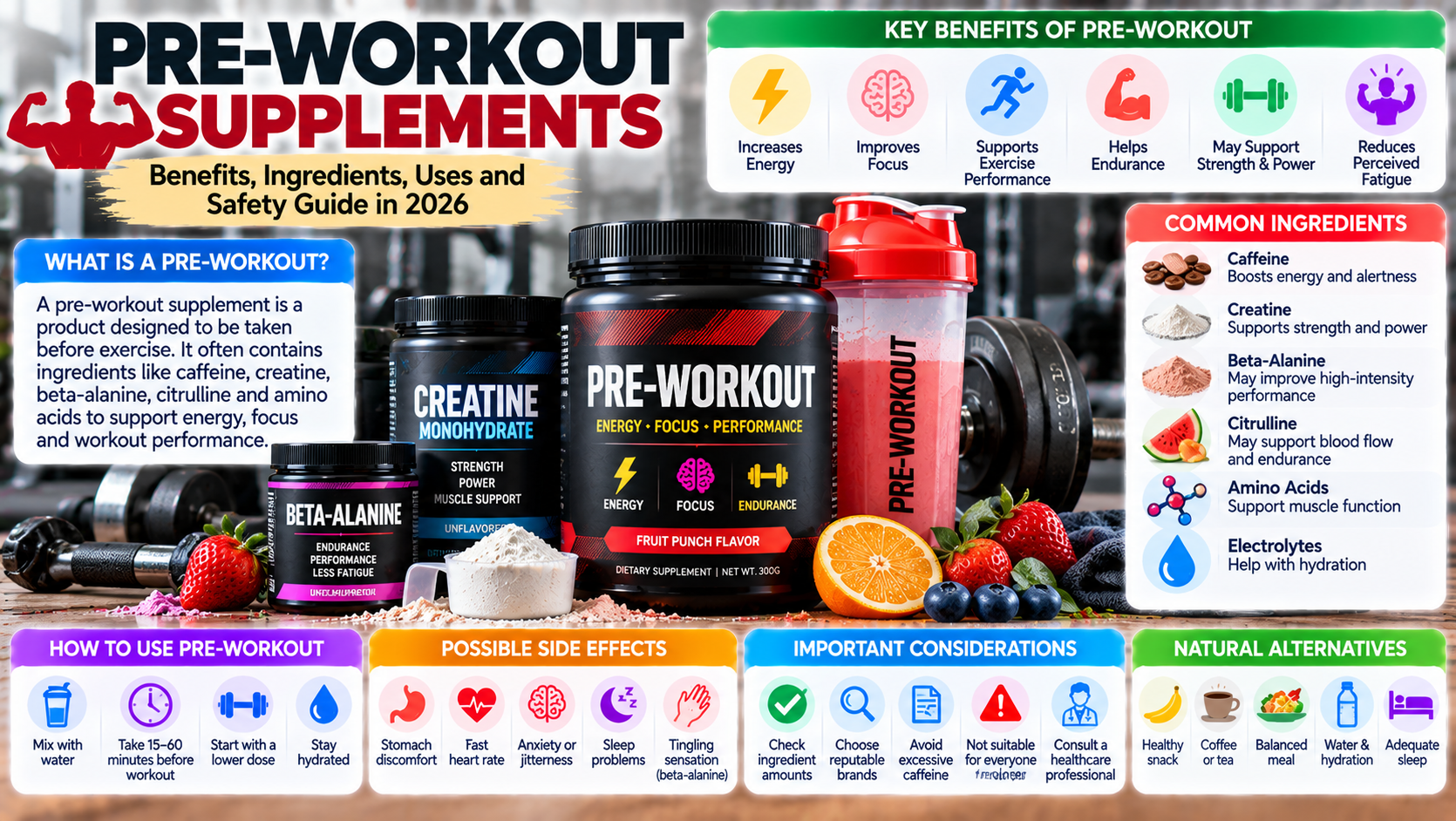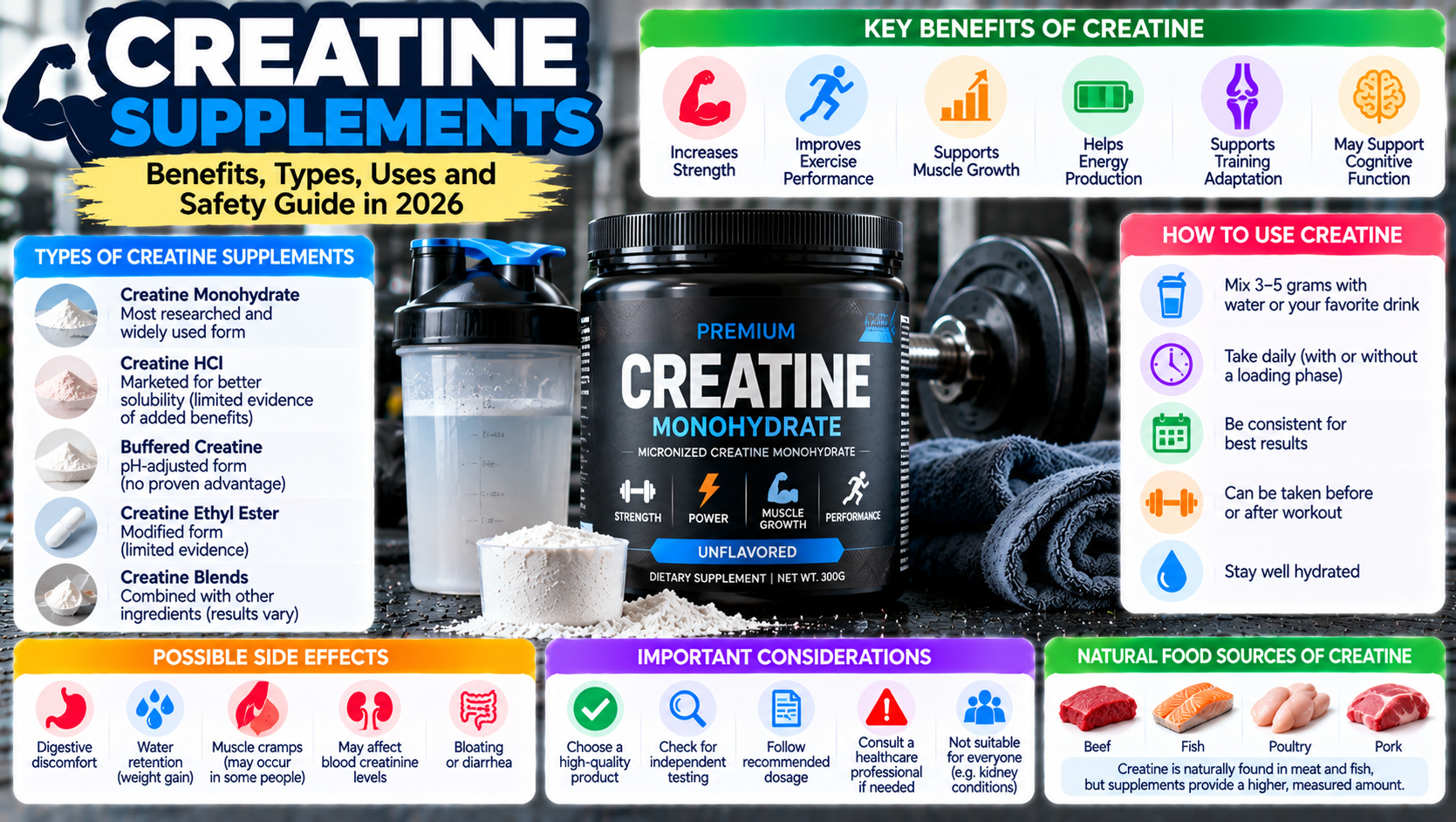
Creatine supplements are widely used by gym enthusiasts, athletes, and people who want to improve strength, exercise performance, and muscle development. Creatine is a naturally occurring compound found in the body and in foods such as meat and fish. It helps supply energy to muscles during short, intense activities.
Among sports supplements, creatine monohydrate is one of the most extensively researched options. Studies suggest it can improve performance during repeated high-intensity exercise and support strength gains when combined with resistance training. However, creatine is not necessary for everyone, and its effects depend on factors such as training, diet, health, and individual response.
In this guide, we explore what creatine supplements are, their potential benefits, different types, how to use them, possible side effects, and important safety considerations in 2026.
What Are Creatine Supplements?
Creatine supplements provide additional creatine to help increase the amount stored in muscles. The body produces some creatine naturally, while smaller amounts are obtained from foods such as beef, poultry, pork, and fish.
Muscles store creatine and phosphocreatine, which help regenerate adenosine triphosphate (ATP). ATP is the primary energy source used by cells during muscular contractions.
During short bursts of demanding exercise, such as weightlifting, jumping, and sprinting, the body's energy requirements rise quickly. Creatine helps support the rapid regeneration of ATP, allowing muscles to perform repeated high-intensity efforts.
Creatine supplements are available as powders, capsules, tablets, and products blended with other ingredients. For most people interested in exercise performance, creatine monohydrate is the most established form.
Potential Benefits of Creatine Supplements
Creatine has been studied for several aspects of physical performance. Its strongest evidence relates to high-intensity exercise and resistance training.
1. Improved Strength and Power
Creatine supplementation may help improve strength and power during activities involving repeated, intense muscular contractions.
When combined with resistance training, creatine can help people perform more training work over time. This may support improvements in exercises such as squats, bench presses, and other strength-training movements.
Results vary between individuals, and creatine does not replace a structured training program.
2. Support for Muscle Growth
Creatine may help increase lean body mass when used alongside regular resistance training. This can result from improved training capacity and changes in muscle tissue over time.
An early increase in body weight can also occur because creatine increases water stored within muscles. Therefore, an increase on the scale does not necessarily mean that all the additional weight is new muscle tissue.
For muscle growth, adequate protein, sufficient calories, consistent exercise, and recovery remain essential.
3. Better Performance During Repeated High-Intensity Exercise
Creatine is particularly relevant to activities that involve short, intense efforts followed by recovery periods. Examples include weightlifting, repeated sprints, and some team sports.
It is generally less useful for endurance activities such as long-distance running or cycling, which rely more heavily on aerobic energy systems.
4. Support for Training Adaptation
By helping muscles perform repeated high-intensity efforts, creatine may allow people to complete more training work over time. This can support long-term improvements in strength and performance when training is appropriately planned.
However, creatine does not guarantee faster recovery from every workout or prevent all exercise-related injuries.
5. Potential Benefits for People With Lower Dietary Creatine Intake
People who eat little or no meat or fish may have lower baseline creatine stores in their muscles. Some may experience a noticeable response to supplementation, although individual results vary.
Vegetarians and vegans should still consider their overall nutrition and personal health needs before starting a supplement.
For further scientific information, see the NIH Office of Dietary Supplements' exercise and athletic performance guide.
Types of Creatine Supplements
Creatine supplements are sold in several forms, but the amount of scientific evidence differs between them.
Type | Description | Evidence and considerations |
|---|---|---|
Creatine monohydrate | The most widely studied form | Strongest evidence for strength and high-intensity exercise |
Creatine hydrochloride (HCl) | A form marketed for solubility | Not established as more effective than monohydrate |
Buffered creatine | Marketed as having a different pH | No convincing evidence of superior performance benefits |
Creatine ethyl ester | A chemically modified form | Has not demonstrated clear superiority to monohydrate |
Creatine blends | Combine creatine with other ingredients | Effectiveness depends on the ingredients and their amounts |
Which Creatine Is Best?
For most healthy adults who choose to supplement, creatine monohydrate is the preferred evidence-based option because it has been studied extensively, is widely available, and is generally less expensive than specialty forms.
More expensive products are not automatically better. Look for clear ingredient information and avoid products that make exaggerated claims about rapid muscle growth or guaranteed performance improvements.
How to Use Creatine Supplements
The appropriate approach depends on individual circumstances, the product, and the intended goal. The following information reflects commonly studied approaches for healthy adults.
Step 1: Choose a Suitable Product
Look for a product that clearly lists creatine monohydrate and the amount per serving. Products with independent quality testing can offer additional confidence in ingredient identity and purity.
Step 2: Understand Daily Dosing
A commonly used maintenance amount for adults is 3–5 grams of creatine monohydrate per day.
Some protocols use a loading phase of approximately 20 grams per day, divided into smaller servings, for 5–7 days, followed by a maintenance amount of 3–5 grams daily. Loading can increase muscle creatine stores more quickly, but it is not essential.
Taking a smaller daily amount without loading can also increase muscle creatine stores over time.
Do not assume that taking more than the recommended amount will produce better results. People with medical conditions should discuss supplementation with a healthcare professional before use.
Step 3: Take It Consistently
Creatine works by increasing muscle creatine stores over time. Regular daily use matters more than taking it at an exact time before or after exercise.
You can usually mix creatine powder with water or another suitable drink according to the product instructions.
Step 4: Maintain Adequate Hydration
Drink enough fluids to meet your needs, particularly during exercise and in hot weather. You do not need to force excessive amounts of water, but dehydration should be avoided.
Step 5: Combine It With Appropriate Training and Nutrition
Creatine is not a substitute for exercise or a balanced diet. A consistent resistance-training routine, sufficient protein, adequate calories, and good sleep are important for strength and muscle development.
Possible Side Effects of Creatine Supplements
Creatine monohydrate is generally well tolerated by many healthy adults when used at commonly studied amounts. However, side effects can occur.
1. Water-Related Weight Gain
One of the most common effects is an increase in body weight due to greater water storage in muscles. This is not necessarily body fat gain.
2. Digestive Discomfort
Some people experience nausea, bloating, diarrhea, or stomach discomfort, especially when taking large amounts at once.
Following recommended serving sizes and avoiding unnecessarily large single doses may help reduce digestive problems.
3. Muscle Cramps or Stiffness
Some users report muscle cramps or stiffness, but research has not consistently established that creatine causes these problems. Exercise load, hydration, heat, and other factors may also play a role.
4. Changes in Blood Creatinine Results
Creatine is metabolized partly into creatinine, a substance measured in blood tests used to assess kidney function. Supplementation can affect creatinine levels and may complicate interpretation of some kidney-related tests.
Tell your healthcare professional that you take creatine before undergoing blood tests. An elevated creatinine result should be interpreted in context rather than automatically attributed to either kidney disease or supplementation.
Is Creatine Safe for the Kidneys?
Research generally supports the safety of commonly studied creatine monohydrate doses in healthy adults. However, this does not mean every product, dose, or medical situation is risk-free.
People with existing kidney disease, reduced kidney function, or a history of kidney problems should seek medical advice before taking creatine. The same applies to people taking medicines that may affect kidney function.
Do not use creatine to treat a medical condition or assume that a supplement is safe simply because it is widely used by athletes.
Who Should Avoid or Seek Advice Before Using Creatine?
Consult a qualified healthcare professional before starting creatine if you:
Have kidney disease or another condition affecting kidney function.
Take medicines that may affect the kidneys or fluid balance.
Are pregnant or breastfeeding.
Are under 18 years old.
Have a medical condition requiring individualized nutrition or supplement guidance.
Take several sports supplements and are unsure about overlapping ingredients.
For children and adolescents, routine use of performance supplements should not be started without appropriate medical and qualified sports-nutrition guidance.
How to Choose a Quality Creatine Supplement
Choosing a reputable product is important because supplement quality can vary.
Check the Ingredient Label
Prefer products that clearly state the creatine type and quantity per serving. Avoid proprietary blends that do not disclose ingredient amounts.
Look for Independent Testing
Where available, choose products certified or tested by a reputable independent organization for ingredient identity, purity, and contaminants. Testing helps assess quality but does not guarantee performance benefits.
Avoid Exaggerated Claims
Be cautious of supplements promising instant muscle growth, dramatic fat loss, or guaranteed results. Creatine supports certain types of exercise performance, but it is not a steroid and does not produce results without appropriate training and nutrition.
Compare Value
Compare the cost per serving, ingredient transparency, product quality, and serving size rather than judging a supplement by its price or packaging.
Creatine Supplements vs. Natural Food Sources
Creatine is naturally present in several animal-based foods, while the body also produces some on its own.
Food or source | Creatine-related information |
|---|---|
Beef | Contains naturally occurring creatine |
Pork | Provides creatine and protein |
Fish | Some varieties contain creatine |
Poultry | Provides protein and smaller amounts of creatine |
Creatine monohydrate supplement | Provides a concentrated, measured amount |
Food can contribute to normal creatine intake, but the amounts are generally lower than those used in common sports-supplement protocols.
A supplement is not necessary for everyone. People who do not use creatine can still improve strength and fitness through appropriate exercise, nutrition, and recovery.
Frequently Asked Questions
Does creatine build muscle?
Creatine can support increases in strength and lean body mass when combined with resistance training. It does not build muscle on its own, and early weight gain may partly reflect increased water stored in muscles.
How long does creatine take to work?
With a loading phase, muscle creatine stores can increase within roughly a week. Without loading, increases occur more gradually over several weeks. Changes in performance depend on the person and their training program.
Should creatine be taken before or after a workout?
There is no universally established best time. Consistent daily intake is more important than precise timing.
Does creatine cause hair loss?
Current evidence does not establish that creatine supplementation causes hair loss. More research would be needed to determine whether there is any meaningful relationship.
Can creatine help with weight loss?
Creatine is not a fat-burning supplement. It may support training performance, but the initial increase in water weight can affect the number shown on a scale.
Is creatine only for bodybuilders?
No. Creatine is studied in several sports and exercise settings involving repeated high-intensity effort. However, its usefulness depends on the activity, individual goals, health status, and training routine.
Can creatine be taken every day?
Many commonly studied adult protocols involve daily use, including on rest days. Whether it is appropriate for you depends on your health, medications, and the product being used.
Final Thoughts
Creatine supplements are among the most extensively studied sports-nutrition products, with the strongest evidence supporting creatine monohydrate for high-intensity exercise, strength, and training-related gains in lean body mass.
For healthy adults who choose to use it, a straightforward product with transparent ingredients is generally preferable to expensive formulas promising superior results. Follow appropriate serving guidance, maintain balanced nutrition and hydration, and seek professional advice if you have a medical condition or take medication.
Medical disclaimer: This article is for educational purposes only and is not a substitute for professional medical advice, diagnosis, or treatment. Consult a qualified healthcare professional before starting a supplement, particularly if you have kidney problems, take medication, or have other health concerns.