Pre-workout supplements have become popular among people who want to feel more energetic, focused, and prepared before exercising. These products are commonly used by gym beginners, athletes, bodybuilders, and fitness enthusiasts who want to improve their workout experience.
However, pre-workout supplements are not essential for everyone. Their effects depend on the ingredients, dosage, individual tolerance, exercise routine, and overall diet. Some products contain ingredients supported by research, while others make claims that are not well established.
In this guide, we explain what pre-workout supplements are, their potential benefits, common ingredients, how to use them, possible side effects, and how to choose a safer product in 2026.
What Is a Pre-Workout Supplement?
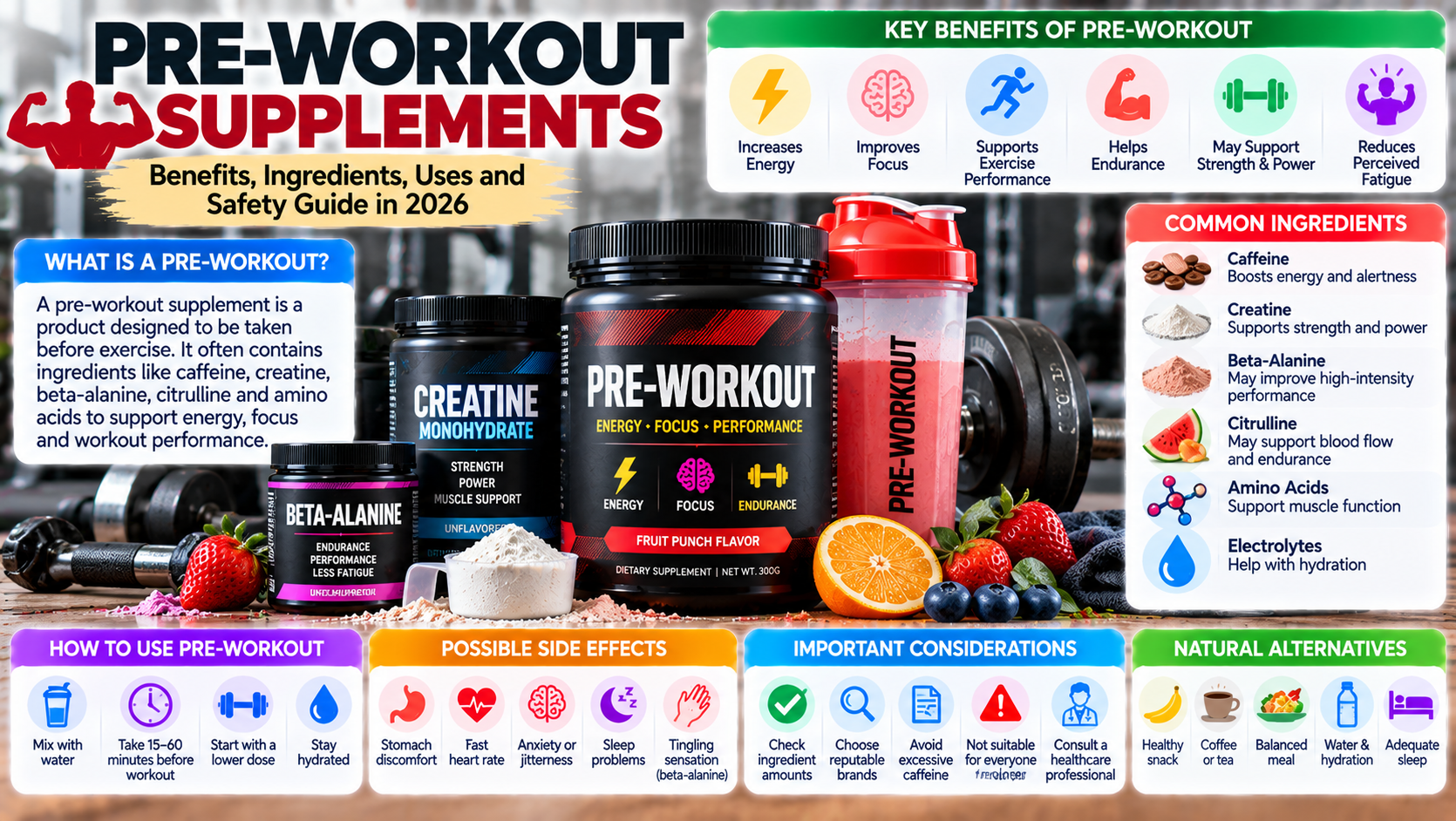
A pre-workout supplement is a product designed to be consumed before physical activity. It may come in powder, capsule, tablet, or ready-to-drink form. Many powdered products are mixed with water and consumed before a gym session.
Pre-workout formulas often contain caffeine, beta-alanine, creatine, citrulline, amino acids, or other ingredients intended to support energy, exercise performance, or training capacity.
Not all pre-workout products contain the same ingredients. Some are stimulant-free, while others contain substantial amounts of caffeine and additional stimulants.
According to the National Institutes of Health Office of Dietary Supplements, the evidence supporting exercise supplements varies by ingredient, and research on individual ingredients does not automatically prove that a multi-ingredient product is effective or safe.
Potential Benefits of Pre-Workout Supplements
The benefits depend on the formula and how it is used. Some ingredients may help with particular types of exercise, but results vary between individuals.
1. Increased Energy and Alertness
Caffeine is one of the most widely studied ingredients in pre-workout products. It stimulates the central nervous system and may reduce feelings of tiredness, helping some people feel more alert before exercise.
This effect may be useful during demanding workouts or when a person feels tired. However, caffeine does not replace adequate sleep, nutrition, or recovery.
2. Improved Exercise Performance
Research suggests that caffeine may improve performance in certain endurance activities and sports involving repeated high-intensity efforts. Some people may also experience improvements in exercise capacity.
The effect is not guaranteed, and taking larger amounts does not necessarily produce better results.
3. Support for High-Intensity Exercise
Beta-alanine helps the body produce carnosine, a compound involved in buffering acid changes in muscles during intense exercise. Supplementation over time may provide modest benefits for some activities involving repeated or sustained high-intensity efforts.
Beta-alanine is not simply an instant energy booster. Its potential effects depend on consistent use over time rather than taking a single serving immediately before a workout.
4. Support for Strength and Power
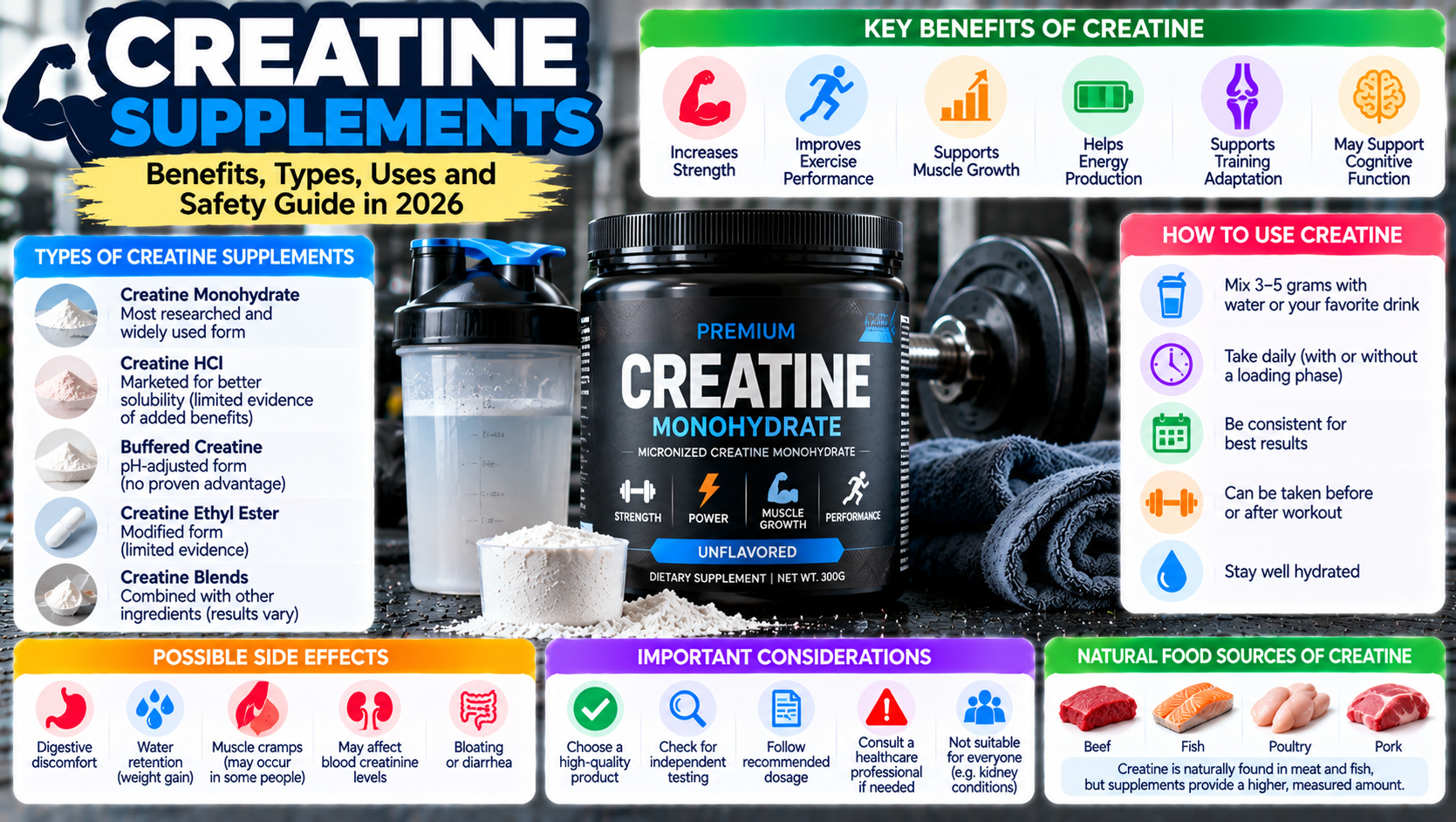
Creatine is one of the better-studied sports supplements for repeated high-intensity exercise. It can help improve strength, power, and training capacity when combined with an appropriate exercise program.
Creatine does not need to be taken immediately before exercise to work. Regular daily intake is more important than precise timing.
5. Better Workout Focus
Caffeine may help some people maintain alertness and feel less fatigued during training. However, products marketed as focus-enhancing formulas may contain several ingredients, and the evidence for the complete formula may be limited.
For more information about sports supplement research, consult the NIH Office of Dietary Supplements.
Common Ingredients in Pre-Workout Supplements
Understanding the ingredients is more useful than choosing a product based only on its branding or marketing claims.
Ingredient | Common purpose | Important consideration |
|---|---|---|
Caffeine | Alertness and reduced fatigue | May cause anxiety, sleep problems, or a rapid heartbeat |
Beta-alanine | Support for certain high-intensity activities | Can cause temporary tingling |
Creatine monohydrate | Strength, power, and repeated high-intensity efforts | Works through regular use, not just pre-workout timing |
Citrulline | Marketed for blood flow and exercise performance | Evidence for performance benefits remains mixed |
Carbohydrates | Provide energy during longer or demanding exercise | Amount needed depends on workout duration and intensity |
Amino acids | Support protein-related functions | Additional benefits may be limited when dietary protein is already adequate |
Electrolytes | Help replace minerals lost through sweat | More useful when sweat losses are substantial |
A product containing more ingredients is not automatically more effective. Check the amount of each ingredient rather than relying on a proprietary blend that hides individual quantities.
How to Use Pre-Workout Supplements
If you decide to use a pre-workout product, follow its label and consider the following steps.
Step 1: Review the Ingredient Label
Check the caffeine content per serving, the amounts of other active ingredients, the recommended serving size, and any warnings. Remember that coffee, tea, energy drinks, and other supplements also contribute to your total caffeine intake.
Step 2: Consider the Timing
Caffeine is commonly consumed around 15–60 minutes before exercise when used for performance purposes. However, the appropriate timing depends on the product, your tolerance, and the activity.
Avoid taking stimulant-containing products close to bedtime because caffeine can interfere with sleep for several hours.
Step 3: Start With a Conservative Approach
If you are a healthy adult and choose a pre-workout product, avoid combining several stimulant-containing products. Do not exceed the label's recommended serving or use pure caffeine powder to make your own formula.
People who are sensitive to caffeine may prefer a stimulant-free option or no supplement at all.
Step 4: Stay Hydrated
Drink water before, during, and after exercise according to your needs and conditions. Long workouts in hot weather may require additional fluid and electrolyte replacement.
Pre-workout supplements do not replace hydration or appropriate meals.
Step 5: Track Your Response
Pay attention to energy, exercise performance, sleep, digestion, anxiety, and heart rate. Stop using the product if you experience concerning symptoms.
Possible Side Effects of Pre-Workout Supplements
Pre-workout supplements may cause side effects, particularly when they contain high amounts of caffeine or multiple stimulants.
Common possible effects include:
Sleep disturbances: Caffeine may make it difficult to fall asleep or reduce sleep quality.
Anxiety and restlessness: Some people experience nervousness, shakiness, or irritability.
Rapid heartbeat: Stimulants can increase heart rate and may trigger palpitations.
Digestive discomfort: Some formulas may cause nausea, bloating, or stomach upset.
Tingling sensations: Beta-alanine can cause temporary prickling or tingling, especially at larger single doses.
Headaches: Some people report headaches after taking certain formulas or changing their caffeine intake.
Blood pressure concerns: Stimulants may be unsuitable for people with certain cardiovascular conditions.
Severe symptoms such as chest pain, fainting, or a very rapid or irregular heartbeat require urgent medical attention.
Who Should Avoid Pre-Workout Supplements?
Pre-workout products are not suitable for everyone. Seek advice from a qualified healthcare professional before using them if you:
Have high blood pressure, a heart condition, or a history of abnormal heart rhythms.
Experience significant anxiety, panic symptoms, or sleep problems.
Are pregnant or breastfeeding.
Take prescription medications or other products that may interact with stimulants.
Are under 18 years old.
Have a medical condition that may affect your response to supplement ingredients.
People with kidney or liver conditions should seek individualized advice before using sports supplements, especially multi-ingredient products.
Avoid stacking pre-workout products with energy drinks, stimulant medications, or other high-caffeine products without professional guidance.
How to Choose a Quality Pre-Workout Supplement
Choosing a suitable product involves more than comparing prices or looking for the strongest formula.
Look for Transparent Labels
Choose a product that clearly lists each active ingredient and its amount per serving. Avoid formulas that conceal ingredient quantities in proprietary blends.
Check the Caffeine Content
Compare the caffeine amount with your intake from all other sources. For most healthy adults, the U.S. Food and Drug Administration cites 400 mg of caffeine per day as an amount not generally associated with dangerous negative effects, but individual sensitivity and medical circumstances vary. This is not a recommended target or a guarantee of safety.
Look for Independent Quality Testing
Where available, choose products independently tested for identity, purity, and contaminants by a reputable certification program. Certification does not guarantee that a supplement will improve performance or be suitable for every individual.
Avoid Exaggerated Claims
Be cautious of products claiming to build muscle instantly, burn fat without effort, or deliver guaranteed results. Supplements cannot replace progressive training, adequate food, sleep, and recovery.
Consider Whether You Need It
If you already have enough energy for your workouts, a balanced diet, and a consistent training plan, you may not need a pre-workout supplement.
Pre-Workout Supplements vs. Natural Alternatives
Some people can prepare for exercise without purchasing a supplement.
Alternative | Potential benefit |
|---|---|
A banana or other carbohydrate-rich snack | Provides readily available energy |
A balanced meal eaten with enough time to digest | Supplies carbohydrates, protein, and other nutrients |
Water | Helps maintain hydration |
Adequate sleep | Supports alertness, recovery, and exercise performance |
A consistent warm-up | Gradually prepares the body for exercise |
Coffee or tea | Provides caffeine, if suitable for the individual |
Natural alternatives are not automatically suitable for everyone, but they can be practical options for people who prefer to avoid commercial pre-workout formulas.
Frequently Asked Questions
What is the best time to take pre-workout?
Many caffeine-containing products are used around 15–60 minutes before exercise. Always check the product label, consider your personal tolerance, and avoid late-day use if caffeine affects your sleep.
Does pre-workout build muscle?
Pre-workout supplements do not directly build muscle by themselves. Some ingredients may support training performance, but muscle growth primarily depends on appropriate resistance training, sufficient nutrition, protein intake, and recovery.
Can beginners use pre-workout supplements?
Beginners generally do not need pre-workout supplements. Learning proper exercise technique, developing a consistent routine, eating adequately, and getting enough sleep are better starting points.
Is stimulant-free pre-workout better?
A stimulant-free product may be preferable for people who are sensitive to caffeine or exercise later in the day. However, stimulant-free does not automatically mean effective or risk-free, so check the ingredients and amounts.
Can I take pre-workout every day?
Whether regular use is appropriate depends on the ingredients, total caffeine intake, health status, and product quality. Daily use is not necessary for everyone, and prolonged use of a multi-ingredient formula may not be well studied.
Is pre-workout safe for weight loss?
Pre-workout supplements are not a reliable standalone weight-loss solution. Sustainable weight management depends primarily on dietary habits, physical activity, sleep, and other individual factors.
Final Thoughts
Pre-workout supplements may help some people feel more alert or improve performance during particular types of exercise, but their benefits depend on the ingredients and individual response. Caffeine, creatine, and beta-alanine have different roles, and they should not be treated as interchangeable ingredients.
Before purchasing a product, review the label, consider your health and caffeine tolerance, and look for transparent ingredient amounts and independent quality testing. Most importantly, remember that consistent training, balanced nutrition, hydration, and adequate sleep remain the foundation of fitness.
Medical disclaimer: This article is for educational purposes only and is not a substitute for professional medical advice, diagnosis, or treatment. Consult a qualified healthcare professional before starting a new supplement, particularly if you have a medical condition or take medication.