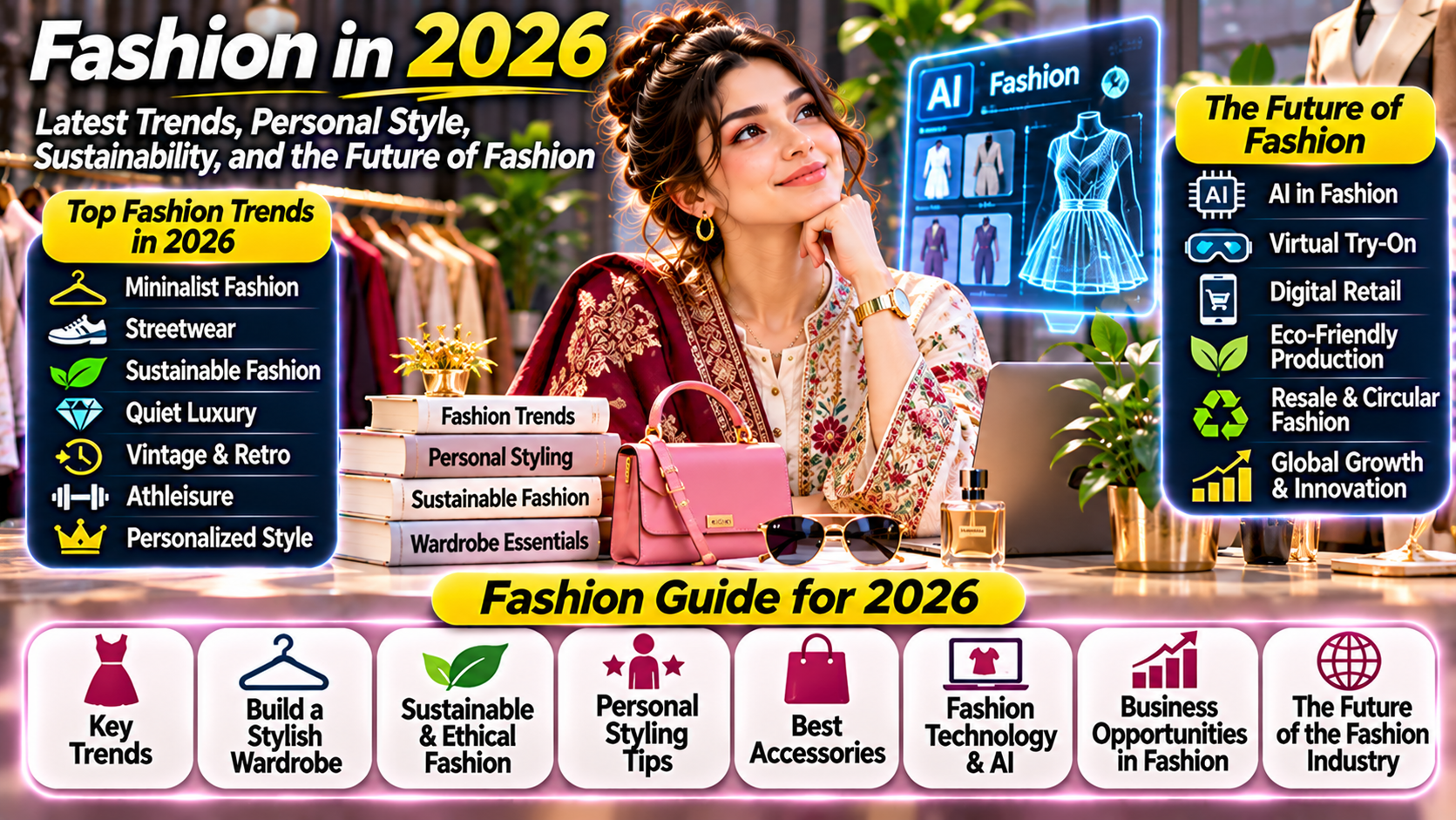
Fashion is more than clothing, accessories, and seasonal trends. It is a form of self-expression that reflects personality, culture, creativity, and changing lifestyles.
From everyday outfits and luxury collections to streetwear and sustainable clothing, fashion influences how people present themselves and interact with the world.
The fashion industry is also evolving rapidly. Digital platforms, artificial intelligence, changing consumer preferences, sustainable materials, and innovative retail experiences are transforming how clothing is designed, produced, marketed, and purchased.
In 2026, fashion is increasingly focused on individuality, comfort, versatility, responsible production, and technology-driven experiences.
Whether you are interested in everyday styling, professional clothing, luxury fashion, or building a personal wardrobe, understanding modern fashion developments can help you make better style choices.
This guide explores fashion trends, popular styles, wardrobe essentials, sustainable clothing, fashion technology, and the future of the global fashion industry.
What Is Fashion?
Fashion refers to the popular styles of clothing, footwear, accessories, hairstyles, and personal presentation adopted by individuals and communities.
It is influenced by several factors, including:
Culture and traditions
Personal preferences
Social movements
Designers and fashion houses
Celebrity influence
Technology and innovation
Economic conditions
Seasonal changes
Social media and digital communities
Fashion is not limited to expensive brands or luxury clothing. It can be expressed through affordable outfits, traditional garments, creative combinations, and individual styling choices.
Personal style allows people to select clothing that reflects their identity, preferences, lifestyle, and comfort.
Why Fashion Matters in 2026
Fashion plays an important role in personal expression, business, culture, and the global economy.
Several developments make the fashion industry particularly interesting in 2026.
1. Changing Consumer Preferences
Consumers increasingly look for clothing that combines style, comfort, quality, and value.
Many shoppers are also paying greater attention to fabric quality, durability, ethical production, and brand transparency.
2. Growth of Digital Fashion Retail
Online shopping has transformed how people discover and purchase clothing.
Fashion brands use websites, mobile applications, social media, and digital marketplaces to reach customers across different countries.
3. Influence of Social Media
Platforms such as Instagram, TikTok, Pinterest, and YouTube influence fashion discovery and styling inspiration.
Creators, designers, celebrities, and everyday users introduce new outfit ideas and trends to global audiences.
4. Sustainable Fashion Awareness
Environmental concerns have encouraged greater interest in recycled materials, secondhand clothing, responsible production, and longer-lasting wardrobe choices.
5. Technology in Fashion Design
AI-assisted design, virtual try-on tools, digital sampling, and advanced manufacturing technologies are changing fashion development and shopping experiences.
Popular Fashion Trends in 2026
Fashion trends change constantly, and their popularity varies across regions, cultures, age groups, and individual preferences.
The following styles represent broad directions influencing modern fashion conversations.
1. Minimalist Fashion
Minimalist fashion focuses on simple designs, clean silhouettes, neutral colors, and versatile clothing.
Common wardrobe choices include:
Tailored trousers
Plain shirts
Structured blazers
Simple dresses
Neutral sweaters
Classic footwear
Minimal accessories
Minimalist outfits can be useful for people who prefer a polished appearance without complicated styling.
2. Streetwear Fashion
Streetwear combines casual clothing, urban culture, sportswear, and contemporary design.
Popular pieces include:
Oversized T-shirts
Hoodies
Cargo trousers
Sneakers
Denim jackets
Relaxed-fit jeans
Statement accessories
Streetwear is popular because it allows people to experiment with comfortable and expressive outfits.
3. Sustainable Fashion
Sustainable fashion emphasizes reducing the environmental and social impact of clothing production and consumption.
It encourages consumers and businesses to consider:
Durable materials
Responsible manufacturing
Recycled fabrics
Secondhand clothing
Repair and reuse
Ethical labor practices
Reduced textile waste
Sustainable fashion is not simply a visual trend. It involves changes in how clothing is designed, produced, purchased, and used.
4. Quiet Luxury
Quiet luxury focuses on understated designs, quality materials, refined tailoring, and subtle details rather than prominent logos.
Typical pieces include:
Well-fitted coats
Classic trousers
High-quality knitwear
Simple leather accessories
Neutral dresses
Timeless footwear
The style emphasizes construction, fit, and versatility.
5. Vintage and Retro Fashion
Vintage-inspired fashion draws inspiration from earlier decades.
Common elements include:
Retro denim
Classic leather jackets
Vintage-inspired dresses
Wide-leg trousers
Traditional patterns
Statement sunglasses
Classic handbags
Vintage styling allows individuals to combine older design influences with contemporary clothing.
6. Athleisure Fashion
Athleisure combines sportswear and everyday clothing.
Popular pieces include leggings, comfortable sneakers, athletic jackets, sweatshirts, and coordinated sets.
This style is especially useful for people who want practical clothing suitable for casual activities and everyday routines.
7. Personalized Fashion
Personalized fashion focuses on individual preferences rather than following every popular trend.
Consumers may choose custom colors, tailored clothing, unique accessories, or outfits that reflect their cultural identity and personal lifestyle.
Different Types of Fashion Styles
Fashion offers many styling directions. Understanding different categories can help individuals identify what suits their preferences.
Fashion Style | Main Characteristics | Common Clothing |
|---|---|---|
Casual Fashion | Comfortable and relaxed | Jeans, T-shirts, sneakers |
Formal Fashion | Professional and polished | Suits, tailored dresses |
Streetwear | Urban and expressive | Hoodies, oversized shirts |
Minimalist | Simple and understated | Neutral basics, clean silhouettes |
Luxury Fashion | Premium materials and design | Designer clothing, fine accessories |
Vintage Fashion | Inspired by previous decades | Retro dresses, classic denim |
Athleisure | Sporty and comfortable | Leggings, sweatshirts |
Bohemian Fashion | Artistic and relaxed | Flowy dresses, textured fabrics |
Traditional Fashion | Cultural and heritage-inspired | Regional and traditional garments |
Business Casual | Professional but less formal | Blazers, chinos, smart shirts |
A person can combine elements from different styles to create a distinctive personal look.
How to Build a Stylish Wardrobe
A stylish wardrobe does not need to contain hundreds of clothing items.
A carefully selected collection of versatile pieces can provide more outfit combinations while making everyday dressing easier.
1. Identify Your Personal Style
Think about the clothing you naturally enjoy wearing.
Consider whether you prefer minimalist, casual, traditional, formal, sporty, or contemporary fashion.
Your wardrobe should reflect your lifestyle rather than simply copying popular trends.
2. Choose Versatile Basics
Start with clothing that can be combined in different ways.
Useful wardrobe essentials include:
Well-fitted jeans
Plain T-shirts
Classic shirts
Neutral trousers
A versatile jacket
Comfortable footwear
A suitable everyday bag
Simple accessories
3. Focus on Proper Fit
Clothing fit can significantly influence the overall appearance of an outfit.
Pay attention to shoulder measurements, sleeve length, trouser length, waist fit, and garment proportions.
A reasonably priced outfit with good fit can look more polished than expensive clothing that does not fit properly.
4. Understand Color Coordination
Choose colors that work well together.
Neutral shades such as black, white, beige, navy, grey, and brown can create versatile combinations.
Add accent colors through shirts, scarves, handbags, footwear, or accessories.
5. Invest in Quality Where It Matters
Prioritize durable materials and construction for clothing items you wear frequently.
Pay attention to stitching, fabric weight, comfort, and care instructions.
6. Avoid Buying Every Trend
Not every fashion trend will suit your personality, body proportions, lifestyle, or budget.
Choose trends selectively and combine them with timeless wardrobe pieces.
Fashion for Different Occasions
Choosing suitable clothing for different situations helps create a balanced and appropriate appearance.
Everyday Casual Fashion
Everyday outfits should prioritize comfort and practicality.
Examples include jeans with basic shirts, relaxed dresses, casual trousers, sneakers, and lightweight jackets.
Professional and Office Fashion
Professional clothing should reflect workplace expectations while maintaining comfort.
Suitable options may include:
Tailored trousers
Blazers
Formal shirts
Structured dresses
Smart shoes
Minimal accessories
Party and Evening Fashion
Evening outfits often include more expressive colors, statement accessories, elegant fabrics, and distinctive silhouettes.
Choose clothing that matches the event, dress code, and personal comfort.
Wedding and Formal Event Fashion
Wedding and formal event clothing often reflects cultural traditions, seasonal preferences, and the formality of the occasion.
Traditional garments, formal dresses, tailored suits, and carefully selected accessories can create an elegant appearance.
Travel Fashion
Travel clothing should combine comfort, versatility, and practicality.
Choose breathable fabrics, comfortable footwear, and pieces that can be mixed and matched.
Sustainable Fashion: Why Responsible Clothing Choices Matter
The fashion industry has environmental and social impacts associated with textile production, manufacturing, transportation, consumption, and waste.
Sustainable fashion aims to reduce these impacts through more responsible practices.
1. Choose Durable Clothing
Clothing that lasts longer may reduce the need for frequent replacement.
Look for quality stitching, suitable fabrics, and reliable construction.
2. Support Responsible Brands
Research how companies source materials, manufacture products, and communicate their sustainability commitments.
Look for transparent information rather than relying only on marketing claims.
3. Buy Secondhand Clothing
Pre-owned fashion can extend the useful life of garments and reduce demand for newly manufactured products.
Thrift stores, resale platforms, and clothing exchanges offer different ways to explore secondhand fashion.
4. Repair and Reuse Garments
Simple repairs, alterations, and creative reuse can help keep clothing in use for longer.
5. Reduce Unnecessary Purchases
Planning outfits before shopping can help avoid buying clothing that is rarely worn.
6. Understand Fabric Choices
Different fabrics have different environmental impacts depending on how they are produced, processed, dyed, and transported.
Natural, recycled, and synthetic materials should be evaluated according to their full lifecycle rather than assuming one category is always sustainable.
The Role of Technology in the Fashion Industry
Technology is changing fashion design, manufacturing, marketing, and shopping.
Businesses are using digital tools to improve efficiency, personalize customer experiences, and explore new creative possibilities.
1. Artificial Intelligence in Fashion
AI can support fashion businesses through:
Trend analysis
Product recommendations
Inventory planning
Design inspiration
Customer service
Demand forecasting
Personalized shopping experiences
For example, recommendation systems can analyze shopping preferences to suggest products that may be relevant to individual customers.
2. Virtual Try-On Technology
Virtual try-on tools allow customers to preview clothing, footwear, eyewear, and accessories through digital interfaces.
These tools can help shoppers explore different options before purchasing.
However, results may vary depending on image quality, garment data, and the technology used.
3. 3D Fashion Design
Three-dimensional design tools allow designers to create and modify digital clothing prototypes.
This can support visualization, product development, and digital sampling before physical production.
4. Smart Manufacturing
Automation and advanced manufacturing systems can help fashion companies manage production processes, improve consistency, and reduce certain operational inefficiencies.
5. Digital Fashion and Virtual Clothing
Digital fashion involves clothing designed for virtual environments, digital identities, games, and online experiences.
It represents an emerging area of fashion innovation rather than a replacement for physical clothing.
How Social Media Is Influencing Fashion
Social media has become an important part of modern fashion discovery and marketing.
Fashion brands and creators use digital platforms to introduce collections, share styling ideas, and communicate directly with audiences.
Instagram supports fashion discovery through photographs, Reels, Stories, shopping features, and creator collaborations.
TikTok
TikTok helps fashion trends spread through short-form videos, outfit transformations, styling tutorials, and creator content.
Pinterest provides visual inspiration for outfits, color combinations, seasonal wardrobes, and fashion planning.
YouTube
YouTube supports longer fashion content, including product reviews, wardrobe guides, styling tutorials, fashion analysis, and shopping advice.
Influencer Collaborations
Fashion companies work with influencers and creators to showcase products and introduce collections to relevant audiences.
Successful collaborations depend on audience alignment, authenticity, and transparent promotional practices.
Fashion Business Opportunities in 2026
The fashion industry offers opportunities for entrepreneurs, designers, retailers, creators, and technology professionals.
Potential business models include:
1. Online Clothing Stores
Entrepreneurs can sell clothing through their own websites or established e-commerce marketplaces.
2. Private Label Fashion
Private label businesses develop products under their own brand identity, often working with external manufacturers.
3. Sustainable Clothing Brands
Businesses can focus on durable garments, recycled materials, responsible production, and transparent supply chains.
4. Fashion Consulting and Styling
Professional stylists can provide wardrobe planning, personal shopping, event styling, and image consulting services.
5. Fashion Content Creation
Creators can build audiences through outfit inspiration, product reviews, fashion education, and styling videos.
6. Fashion Technology
Entrepreneurs can explore virtual try-on tools, inventory software, digital design systems, and personalized shopping platforms.
7. Fashion Accessories
Businesses can develop products such as handbags, jewelry, footwear, scarves, belts, and other accessories.
Common Fashion Mistakes to Avoid
Building a stylish appearance involves understanding what works for your lifestyle and preferences.
Avoid these common mistakes:
1. Following Every Trend
Constantly changing your wardrobe can become expensive and make personal style less consistent.
2. Ignoring Clothing Fit
Poorly fitted garments may affect comfort and the overall appearance of an outfit.
3. Overusing Accessories
Too many statement accessories can make an outfit appear visually crowded.
4. Ignoring Fabric Quality
Low-quality materials may wear out quickly, lose shape, or become uncomfortable.
5. Buying Without a Wardrobe Plan
Purchasing individual items without considering existing clothing can result in fewer useful outfit combinations.
6. Ignoring Personal Comfort
Fashion should reflect personal preferences and practical needs rather than creating unnecessary discomfort.
7. Choosing Brands Only for Their Logos
A brand name does not automatically guarantee quality, fit, durability, or value.
The Future of Fashion in 2026 and Beyond
The future of fashion will be influenced by changing consumer behavior, sustainability, technology, and creative innovation.
Several developments are likely to shape the industry.
1. AI-Powered Personalization
AI may increasingly support personalized product recommendations, digital styling, and customer experiences.
2. Greater Interest in Sustainable Production
Consumers and businesses may place greater emphasis on material sourcing, garment durability, recycling, and supply-chain transparency.
3. Growth of Resale Fashion
Secondhand marketplaces and clothing resale platforms may continue expanding as shoppers explore alternative purchasing options.
4. Digital Fashion Experiences
Virtual clothing, 3D product visualization, and immersive shopping environments may become more widely available.
5. More Individualized Style
Consumers may increasingly prioritize personal identity and practical wardrobe choices instead of following every major trend.
6. Technology-Driven Retail
Retailers may use automation, virtual try-ons, digital payments, and data analytics to improve shopping experiences.
7. Global Fashion Collaboration
Digital platforms will continue connecting designers, manufacturers, retailers, and consumers across international markets.
Frequently Asked Questions (FAQs)
1. What are the biggest fashion trends in 2026?
Fashion discussions in 2026 include minimalist styling, streetwear, sustainable clothing, vintage-inspired designs, quiet luxury, athleisure, and personalized fashion. Popularity varies by region and audience.
2. How can I improve my personal fashion style?
Identify your preferences, choose versatile wardrobe basics, understand color coordination, focus on fit, and select clothing that matches your lifestyle.
3. What is sustainable fashion?
Sustainable fashion focuses on reducing the environmental and social impact of clothing through responsible production, durable materials, reuse, repair, recycling, and improved supply-chain practices.
4. How is AI changing the fashion industry?
AI supports trend analysis, design development, personalized recommendations, inventory planning, customer service, and demand forecasting.
5. What are the essential wardrobe items?
Useful wardrobe essentials include well-fitted jeans, plain shirts, versatile trousers, a suitable jacket, comfortable shoes, and simple accessories.
6. How can I dress professionally?
Choose clothing appropriate for your workplace, focus on fit, select coordinated colors, maintain garment quality, and use accessories that complement your outfit.
7. Is expensive clothing always better?
No. Clothing value depends on fit, fabric quality, durability, construction, comfort, and personal preference rather than price alone.
8. How does social media influence fashion?
Social media introduces new trends, provides styling inspiration, connects brands with customers, and allows creators to influence product discovery and purchasing decisions.
9. What are the business opportunities in fashion?
Opportunities include online clothing stores, private label brands, fashion styling, accessories, sustainable clothing, content creation, and fashion technology.
10. What is the future of the fashion industry?
The industry is likely to see continued development in AI, digital retail, personalized shopping, sustainable practices, resale platforms, and innovative clothing design.
Conclusion
Fashion continues to evolve through creativity, cultural influence, technological innovation, and changing consumer preferences.
In 2026, the industry is increasingly focused on personal expression, comfortable clothing, responsible consumption, and digital experiences.
For individuals, building a stylish wardrobe starts with understanding personal preferences, choosing suitable clothing, and investing in versatile pieces.
For businesses, opportunities exist in fashion retail, design, technology, sustainability, and digital marketing.
The future of fashion will not be defined by trends alone. It will also depend on how brands and consumers balance creativity, quality, innovation, and responsibility.