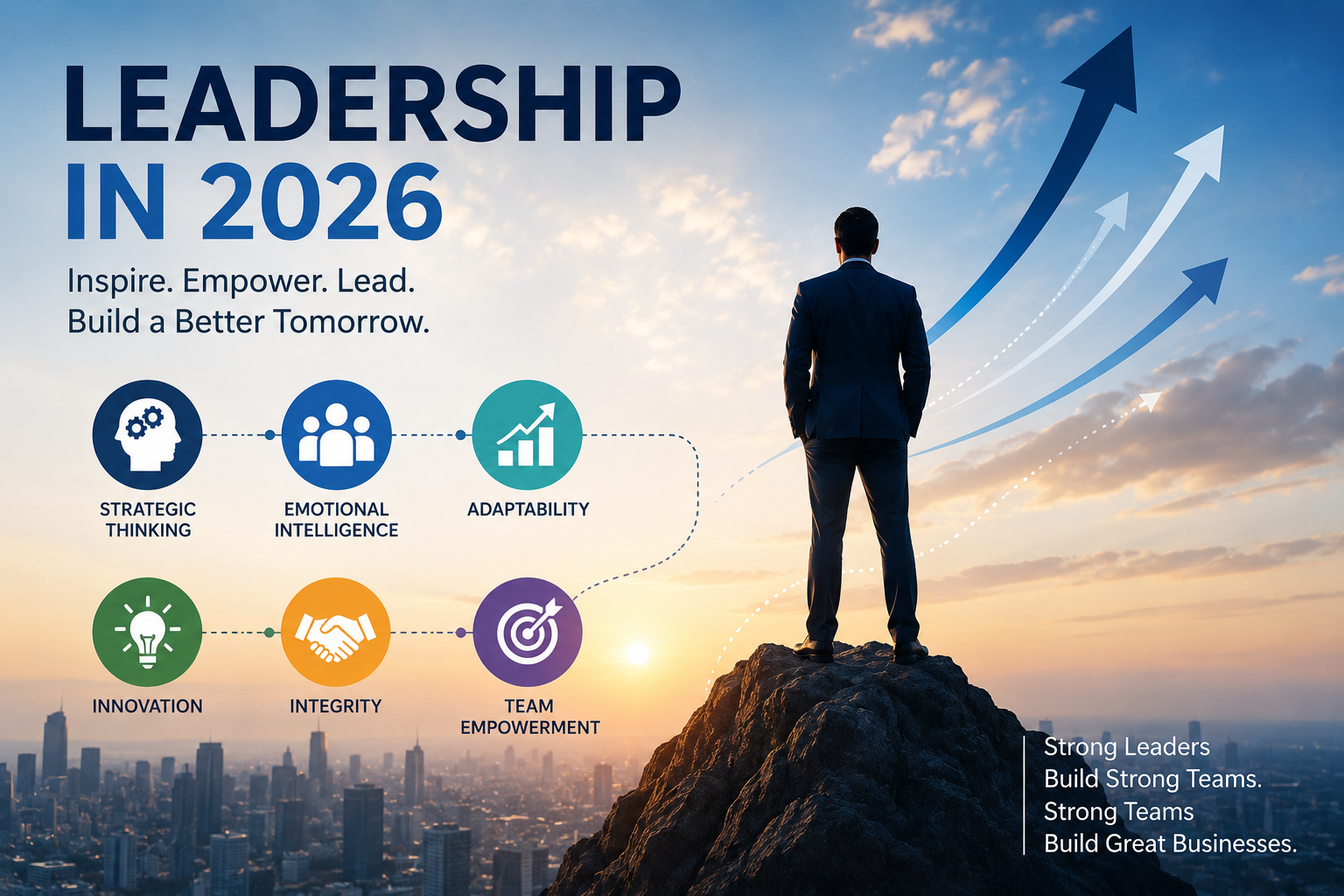
Leadership has always been a defining factor in business success, but in 2026, the role of leaders has become more demanding than ever. Organizations are navigating rapid technological advancements, economic uncertainty, changing workforce expectations, and increasing customer demands. Success is no longer determined solely by financial performance—it is measured by innovation, adaptability, sustainability, and the ability to inspire people.
Modern leaders are expected to guide teams through continuous change while maintaining productivity, building trust, and creating opportunities for growth. Whether leading a startup, a growing small business, or a multinational corporation, effective leadership is essential for long-term success.
This article explores the leadership skills, strategies, and trends shaping successful organizations in 2026 and beyond.
The Evolution of Leadership
Leadership has transformed significantly over the past decade. Traditional management focused on authority, hierarchy, and operational control. Today's leadership is centered on collaboration, emotional intelligence, innovation, and purpose.
Employees no longer seek managers who simply assign tasks. They want leaders who communicate clearly, encourage professional development, support well-being, and provide meaningful direction.
Organizations with strong leadership often experience:
Higher employee engagement
Better customer satisfaction
Increased innovation
Improved productivity
Greater financial performance
Stronger organizational culture
Leadership is no longer about managing people—it is about empowering them.
Why Leadership Matters More Than Ever
Businesses face constant disruption from artificial intelligence, automation, digital transformation, cybersecurity threats, changing regulations, and global competition.
During uncertain times, employees naturally look toward leadership for stability and confidence.
Strong leaders help organizations by:
Creating clear strategic direction
Making informed decisions
Motivating employees
Managing organizational change
Solving complex problems
Building resilient teams
Encouraging innovation
Without effective leadership, even companies with excellent products and strong financial resources struggle to maintain long-term growth.
Essential Leadership Skills in 2026
Strategic Thinking
Successful leaders understand both present challenges and future opportunities.
Strategic thinking involves:
Setting long-term goals
Identifying market trends
Understanding competitive advantages
Managing risks
Allocating resources effectively
Rather than reacting to every challenge, strategic leaders anticipate change and prepare their organizations accordingly.
Emotional Intelligence
Technical knowledge alone is no longer enough.
Emotional intelligence enables leaders to:
Understand employee concerns
Build trust
Resolve conflicts
Communicate effectively
Strengthen workplace relationships
Leaders with high emotional intelligence create healthier workplace cultures and improve employee retention.
Adaptability
The business landscape changes rapidly.
Modern leaders must quickly adapt to:
New technologies
Remote work environments
Economic shifts
Customer expectations
Industry disruptions
Flexible leadership enables businesses to remain competitive despite uncertainty.
Communication Skills
Effective communication is one of the most valuable leadership qualities.
Strong leaders communicate:
Vision
Expectations
Organizational goals
Performance feedback
Company values
Transparent communication reduces confusion while increasing employee confidence.
Decision-Making
Leaders make decisions daily that influence employees, customers, and shareholders.
Effective decision-making requires:
Accurate data
Critical thinking
Risk assessment
Confidence
Accountability
While not every decision will be perfect, successful leaders learn quickly and continuously improve.
Innovation Leadership
Innovation is now essential for sustainable growth.
Innovative leaders encourage:
Creative thinking
Experimentation
Continuous improvement
Learning from failure
Cross-functional collaboration
Organizations that embrace innovation adapt faster to changing markets.
Building High-Performing Teams
Leadership success depends largely on team performance.
Strong leaders focus on:
Hiring the Right People
Recruit individuals who align with organizational values while bringing diverse skills and perspectives.
Creating Trust
Trust improves collaboration, communication, and accountability.
Leaders build trust by:
Keeping promises
Being transparent
Treating employees fairly
Listening actively
Supporting professional development
Delegating Effectively
Micromanagement reduces productivity.
Successful leaders delegate responsibilities while empowering employees to make decisions and solve problems independently.
Encouraging Collaboration
Cross-department teamwork generates better ideas, faster problem-solving, and improved innovation.
Leadership During Organizational Change
Change is inevitable.
Whether implementing AI tools, restructuring operations, or expanding internationally, leadership determines whether change succeeds.
Effective change leaders:
Explain why change is necessary
Address employee concerns
Provide training
Communicate regularly
Celebrate milestones
Monitor progress
Employees are far more likely to embrace change when leaders remain transparent and supportive.
The Role of Artificial Intelligence in Leadership
Artificial intelligence has transformed decision-making across industries.
Today's leaders use AI to:
Analyze business data
Forecast demand
Improve customer experiences
Automate repetitive tasks
Monitor business performance
Optimize operations
However, AI does not replace leadership.
Instead, it allows leaders to spend more time on strategic planning, innovation, employee development, and relationship building.
The most successful organizations combine human judgment with AI-powered insights.
Leading Remote and Hybrid Teams
Remote work continues to shape the modern workplace.
Effective remote leadership requires:
Clear communication
Defined expectations
Digital collaboration tools
Performance measurement
Employee recognition
Regular check-ins
Rather than measuring hours worked, successful leaders focus on outcomes and productivity.
Trust becomes even more important when managing distributed teams.
Creating a Positive Workplace Culture
Culture influences every aspect of organizational performance.
Leaders shape culture through:
Daily behavior
Communication style
Decision-making
Company values
Recognition programs
Positive workplace cultures typically experience:
Higher employee satisfaction
Lower turnover
Greater innovation
Better customer service
Increased profitability
Employees are more engaged when they feel respected, valued, and included.
Ethical Leadership
Business ethics have become increasingly important.
Customers, investors, and employees expect organizations to operate responsibly.
Ethical leaders:
Act with integrity
Promote transparency
Ensure fairness
Protect customer data
Support diversity and inclusion
Comply with regulations
Ethical leadership strengthens brand reputation while reducing legal and operational risks.
Developing Future Leaders
Leadership should not exist only at the executive level.
Organizations benefit from leadership development across all departments.
Leadership development strategies include:
Mentorship programs
Coaching
Professional training
Leadership workshops
Cross-functional projects
Succession planning
Investing in future leaders improves organizational resilience and long-term growth.
Measuring Leadership Effectiveness
Leadership performance should be evaluated using measurable outcomes.
Common indicators include:
Employee engagement
Staff retention
Customer satisfaction
Revenue growth
Innovation performance
Team productivity
Employee development
Goal achievement
Regular feedback helps leaders identify strengths and improvement opportunities.
Common Leadership Mistakes
Even experienced leaders face challenges.
Common mistakes include:
Poor communication
Micromanagement
Ignoring employee feedback
Resisting change
Failing to delegate
Avoiding difficult conversations
Making decisions without sufficient data
Recognizing these mistakes early allows leaders to improve continuously.
Leadership Trends Shaping the Future
Several trends will influence leadership over the coming years.
Human-Centered Leadership
Employees increasingly value empathy, flexibility, and work-life balance.
Data-Driven Decision Making
Analytics continue improving business strategy and operational efficiency.
AI-Augmented Leadership
Artificial intelligence supports faster, more informed decisions.
Continuous Learning
Leaders must constantly develop new skills as technology evolves.
Diversity and Inclusion
Inclusive leadership drives stronger innovation and better business outcomes.
Sustainability Leadership
Organizations are increasingly expected to balance profitability with environmental and social responsibility.
Practical Leadership Tips
Successful leaders consistently practice habits that strengthen both teams and organizations.
These include:
Listen more than you speak.
Set clear and realistic goals.
Recognize employee achievements regularly.
Encourage innovation and new ideas.
Learn from failures instead of hiding them.
Invest in continuous learning.
Build trust through transparency.
Adapt quickly to changing circumstances.
Lead by example.
Focus on long-term success rather than short-term gains.
Conclusion
Leadership in 2026 is about far more than directing teams or managing operations. Modern leaders must combine strategic thinking, emotional intelligence, technological awareness, ethical decision-making, and adaptability to navigate an increasingly complex business environment.
Organizations that invest in strong leadership are better equipped to overcome uncertainty, embrace innovation, attract top talent, and achieve sustainable growth. As technology continues to reshape industries, the most successful leaders will remain those who inspire people, encourage collaboration, and create a shared vision for the future.
Leadership is not defined by position or authority—it is defined by the ability to influence, empower, and help others achieve extraordinary results. Businesses that cultivate these qualities today will be the ones leading tomorrow.